
REVIEW · WALKING TOURS
Bath: 2 Hour Private City Walking Tour
Bath reveals itself best on foot. This private two-hour walk links Roman remains, Georgian streets, river views, and local stories in one easy outing. I like the personal format, and I like that your guide can shape the conversation around Bath’s history, culture, restaurants, bars, and museums. The main catch is simple: you only pass the Roman Baths and other attractions, since admission is not included.
The route covers a generous share of central Bath, from Bath Abbey and Pulteney Bridge to the Royal Crescent and The Circus. I also appreciate the practical value of a private group for up to nine people, though the $214.17 group price makes the most sense when you are sharing it with several companions.
In This Review
- Five useful things to know before you book
- Starting at Bath Abbey’s Main Doors
- Bath Abbey and the Roman Baths: Two Very Different Eras
- The River Avon and Pulteney Bridge
- Theatre Royal and Queen Square
- The Royal Crescent, The Circus, and Georgian Bath
- Royal Victoria Park and the Change in Pace
- What the Guide Adds to the Walk
- What the $214.17 Price Really Buys
- How to Use This Tour as Your First Bath Activity
- Who Will Get the Most From This Private Walk?
- Should You Book Bath’s Two-Hour Private City Tour?
- FAQ
- How long does the Bath walking tour last?
- Where does the tour begin?
- Where does the tour end?
- Are attraction entrance fees included?
- Is the tour private?
- Is the tour wheelchair accessible?
Five useful things to know before you book
- A private group of up to nine: You get a guide for your own party rather than joining a large public group.
- A broad central Bath route: The walk includes Bath Abbey, the Roman Baths, Pulteney Bridge, Queen Square, The Circus, the Royal Crescent, and more.
- No attraction admissions: You see the exteriors and hear the stories, but entry fees for museums and historic sites are not part of the tour.
- Jamie receives especially warm praise: The guide is described as patient, helpful, funny, and well informed, though the assigned guide may vary.
- Useful local advice is part of the value: You can ask for recommendations on places to eat, drink, and visit after the walk.
- Wheelchair accessible and flexible to cancel: The tour is in English, lasts two hours, and allows a full refund when canceled at least 24 hours ahead.
Starting at Bath Abbey’s Main Doors
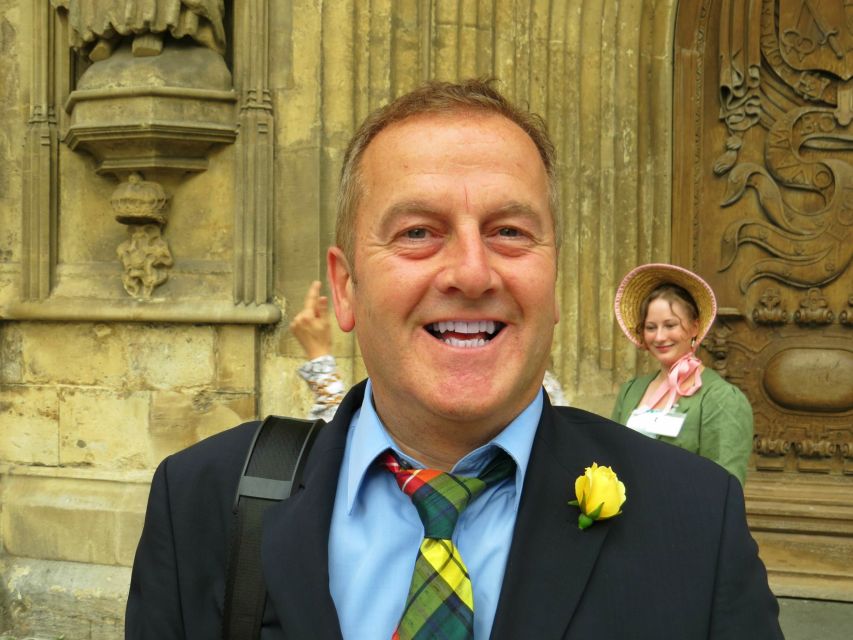
Your meeting point is easy to identify: the main doors of Bath Abbey. Your guide waits there with a sign showing your name, which removes much of the usual first-meeting guesswork in a crowded city center.
That location also puts you right in the middle of Bath’s historic core. Before the walk even begins, you are close to several major sights, so the tour can move straight into the city’s story rather than spending time on a distant pickup or transport connection.
The activity ends back at the same meeting point. That is useful if you want to continue sightseeing in the center, return to your hotel, or use your guide’s suggestions for lunch or an evening stop.
Because this is a private tour, you can ask questions as you go. A large group often turns a walking tour into a one-way speech. Here, your questions can help set the pace and bring out the parts of Bath that interest you most, from Roman life to Georgian architecture or the city’s former residents.
More Walking Tours in Bath
- Bath: City Walking Tour with Optional Roman Baths Entry
★ 4.7 · 1,401 reviews - Bath: Guided Walking Tour
★ 4.9 · 1,198 reviews - Bath: Bridgerton Filming Locations Walking Tour with Music
★ 4.7 · 416 reviews
Bath Abbey and the Roman Baths: Two Very Different Eras
Bath Abbey is one of the first major landmarks on the route. Its location helps explain the city’s compact design, with important buildings and public spaces gathered close together.
The Roman Baths are nearby and form the obvious ancient centerpiece of Bath. On this walk, you pass by the site rather than enter it. That distinction matters. You can learn where the baths fit into the city and appreciate their setting, but you will need a separate admission ticket and visit if you want to see the interior displays and excavated remains.
I see this as both a strength and a limitation. Passing the Roman Baths keeps the tour moving and lets you cover more of Bath in two hours. But if Roman archaeology is your main reason for coming, plan extra time after the walk instead of expecting this experience to replace a full visit.
The guide’s stories are likely to be most useful here because the city’s surviving buildings can otherwise seem like isolated sights. A local explanation gives you a clearer sense of how ancient Bath connects with the later city around it.
The River Avon and Pulteney Bridge
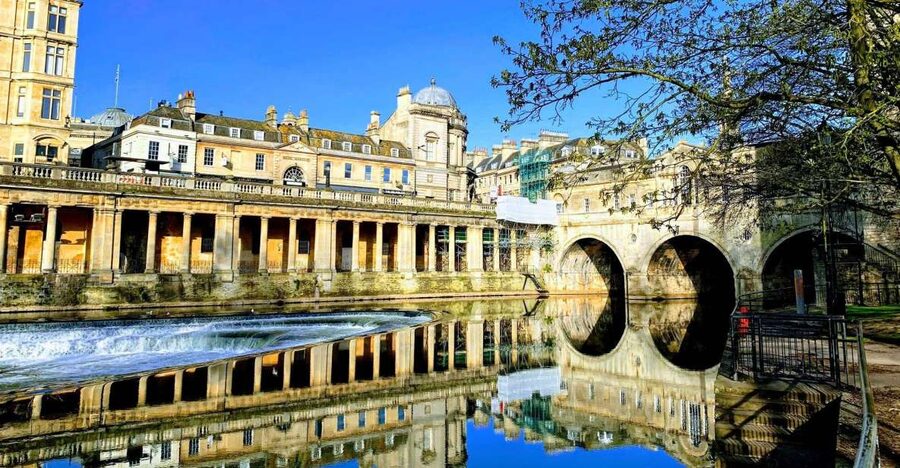
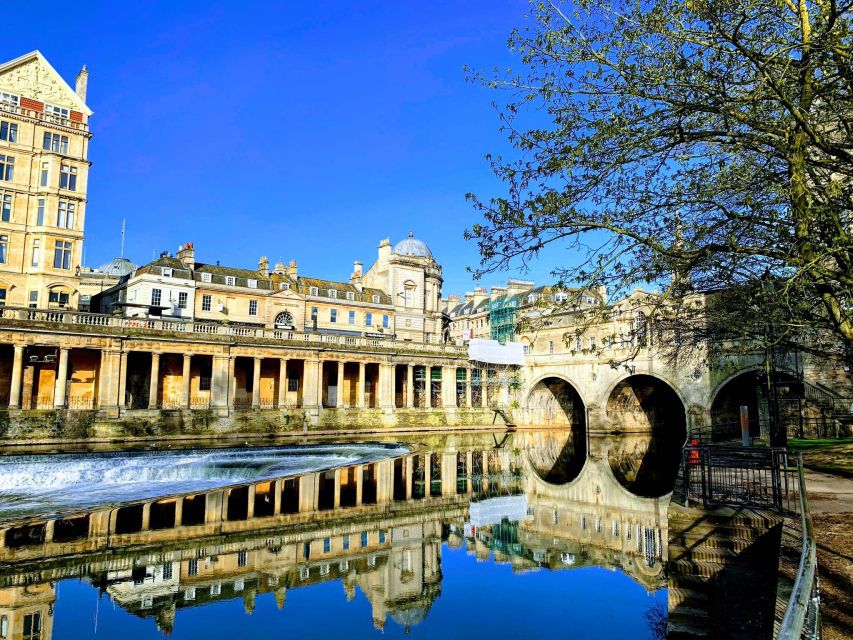
The route continues toward the River Avon and Pulteney Bridge. The river adds a change of pace after the close streets around the Abbey and Roman Baths, while the bridge offers one of Bath’s best-known architectural views.
Pulteney Bridge is especially appealing because it is more than a crossing. Shops line the bridge, making it part of the city’s everyday street life as well as an important landmark. You can look at the structure, see how it relates to the river, and hear how the bridge fits into Bath’s wider development.
This section should suit you if you enjoy seeing how a city functions, not just ticking off monuments. Bath’s appeal comes from the way grand buildings, shops, public spaces, and the river sit close together.
The Guildhall Markets add another practical layer. Markets help show the city as a lived-in place, rather than a collection of preserved facades. Since no food or drink is included, this is also a good place to ask your guide about local options for later.
Theatre Royal and Queen Square
The Theatre Royal brings a cultural stop into the route. Its presence reflects Bath’s long connection with performances and social life, while Queen Square offers a more open setting for understanding the city’s Georgian design.
Queen Square is a useful place to slow down and study the layout. Rather than seeing Georgian architecture as a string of attractive buildings, you can begin to notice the planning behind the streets and squares.
This is where a local guide can add real value. A guide may point out how Bath’s architecture works as a group, helping you understand why the city feels so consistent even as you move from one landmark to another.
The route also includes stories about prominent people who lived in Bath. The exact figures discussed can depend on your guide and the flow of the conversation, but the subject gives the city a human scale. Buildings become connected to residents, visitors, social customs, and public life rather than remaining grand but distant scenery.
A different kind of day out entirely:
- Bath: Guided Ghost Tour
★ 4.8 · 1,036 reviews - Bath: The Jane Austen Centre Ticket
★ 4.4 · 678 reviews - From Bath: Stonehenge & the Cotswolds Day Tour with Entry
★ 4.8 · 543 reviews - Bath: Tootbus Bath Discovery Hop-On Hop-Off Tour
★ 4.5 · 430 reviews
The Royal Crescent, The Circus, and Georgian Bath
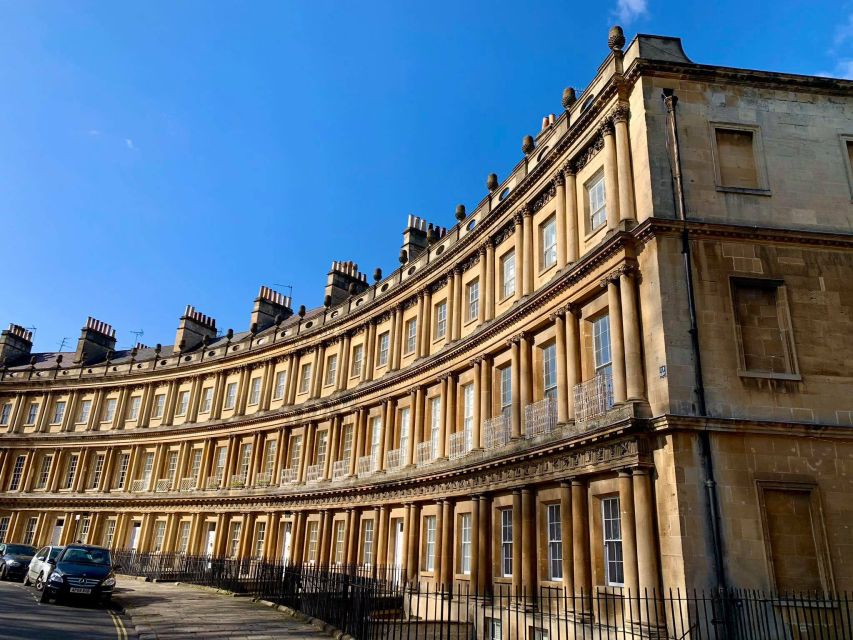
The Royal Crescent is among Bath’s most famous architectural sights. Its curved row of buildings gives the city one of its clearest visual signatures, and it is a strong example of the Georgian style that defines much of central Bath.
You do not enter the homes on this walk. Instead, you see the exterior and learn how the building fits into Bath’s design. That is enough for a good introduction, especially if you want to photograph the frontage and understand its place in the city.
The Circus provides a different but related view of Georgian planning. Its circular arrangement encourages you to look around rather than focus on one facade. I like this part of the route because it shows that Bath’s architecture is not only about individual buildings. The shape of streets, squares, and open spaces matters just as much.
A practical note: two hours is not a long time for such a wide route. You should expect a steady city walk with stops for explanation, not a long pause at every landmark. If you want detailed architectural analysis or extended photo time, you may need to return to the Royal Crescent and The Circus on your own.
Royal Victoria Park and the Change in Pace
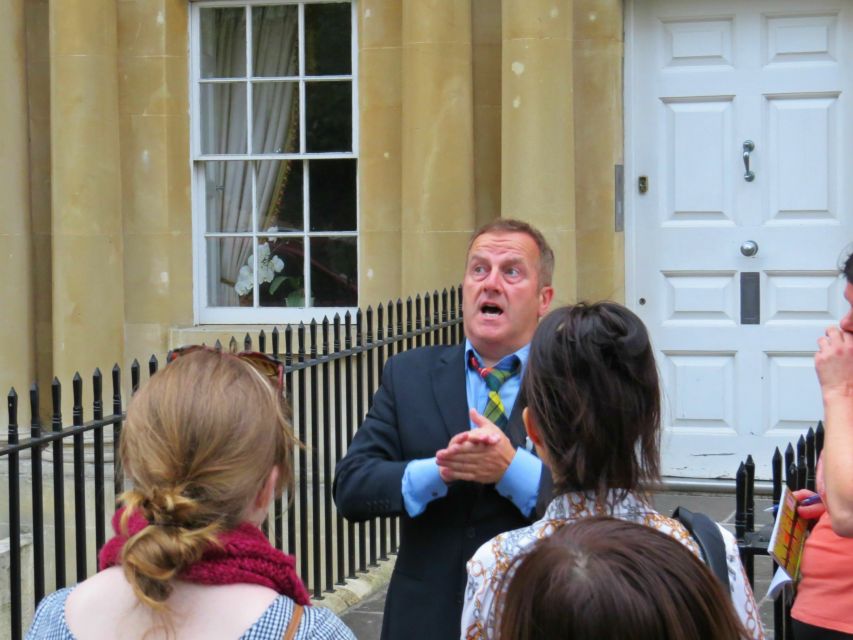
Royal Victoria Park gives the walk a more open setting after the formal streets and squares. It also helps you see Bath as more than a historic center packed with buildings.
The park provides a useful contrast to the stone terraces and public monuments. You can take in the broader setting, listen to the guide’s local perspective, and get a better sense of how Bath’s central attractions connect to its public spaces.
The inclusion of the park also makes the itinerary appealing to families and mixed-age groups. Not everyone wants two hours of tightly packed architecture. A route that includes a park offers some visual variety and room to breathe.
Still, the tour remains a walking activity. Comfortable footwear is sensible, and you should be prepared to cover the city at a consistent pace. The activity is wheelchair accessible, which is an important advantage, although the route’s exact ease may depend on the streets and conditions on the day.
What the Guide Adds to the Walk
The biggest benefit of a private tour is not simply having someone point out landmarks. It is having a person who can connect the sights and respond to your questions.
The guide explains Bath’s history and culture, discusses prominent former residents, and offers a local view of the best bars, restaurants, and museums. That final part can save you time after the tour. A short recommendation from someone who knows the city may help you choose between spending an afternoon inside a museum, taking a meal near the center, or exploring another part of Bath.
Jamie is praised for combining strong local knowledge with humor. One account describes a two-hour walk with Jamie that remained enjoyable even in the rain. Another highlights patience, helpfulness, and a high level of knowledge about Bath and its surroundings.
Those details matter because a private walk depends heavily on the guide. The route itself is strong, but the quality of the experience will come from how clearly the guide explains the city and how well the conversation fits your group. Jamie has received particularly strong praise, but you should not assume that Jamie will be the guide assigned to every booking.
The language is English. If you want a tour in another language, this experience is not presented as a suitable choice.
What the $214.17 Price Really Buys
The price is $214.17 per group of up to nine people. For a full group, that works out to about $23.80 per person, which is a fair rate for a private two-hour service in a major historic city.
For two people, the cost is roughly $107 per person. At that size, you are paying a premium for privacy and direct access to the guide. That may be worthwhile if you value flexibility, have limited time, or want to ask plenty of questions.
For a family or group of friends, the price becomes easier to justify. You can share the cost while avoiding the fixed pace and mixed interests of a larger public tour. The guide’s local recommendations also add value if they help you plan the rest of your stay.
Remember what the price does not cover. There is no food or drink, and no admission to the Roman Baths, museums, or other attractions. Think of this as a city orientation and guided outdoor tour, not an all-inclusive sightseeing ticket.
How to Use This Tour as Your First Bath Activity
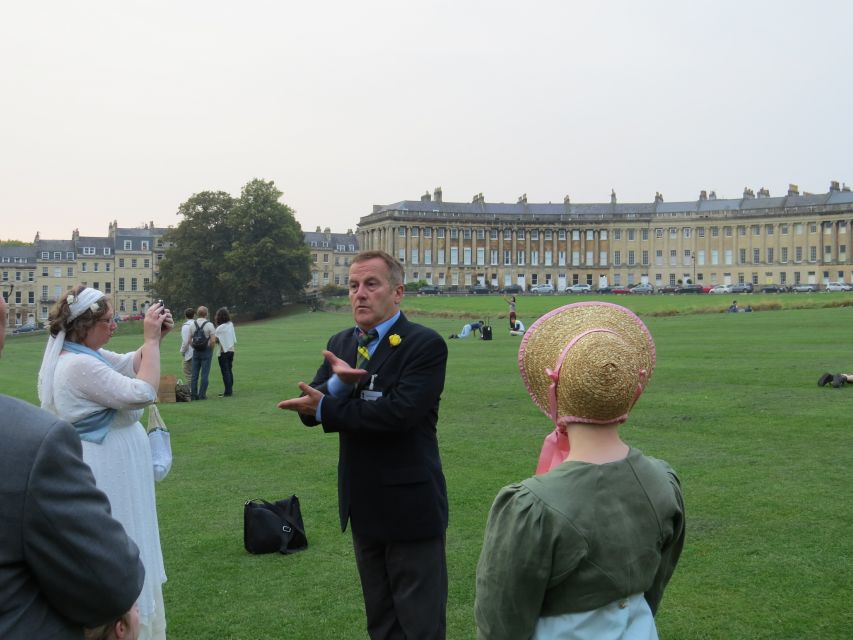
This walk works especially well near the beginning of a Bath visit. In two hours, you can learn the basic shape of the center, see the location of major sights, and decide which places deserve a longer visit.
You might use the tour to identify the Roman Baths for a later indoor visit, return to the Royal Crescent when the light is better, or ask for a museum recommendation that matches your interests. Since the activity ends where it starts, you can continue directly into your own plans.
I would not book it if your only goal is to enter the Roman Baths or spend a long time inside museums. The tour does not include those entrances. I would also think twice if you prefer to explore entirely at your own pace, since the itinerary covers many locations in a fixed two-hour period.
For most first-time visits, though, the route gives you a useful framework. You see the major pieces first, then decide where to spend your independent time.
Who Will Get the Most From This Private Walk?
This tour suits you if you want a clear introduction to Bath without joining a large group. It is a good fit for families, couples, friends traveling together, and visitors who prefer to ask questions as they walk.
It also suits anyone who wants practical local advice. You can use the guide to narrow down choices for restaurants, bars, and museums instead of guessing from a map.
The tour is less suitable if you want extended interior visits, a food-focused outing, or a tour in a language other than English. It is also worth remembering that two hours allows for broad coverage, but not a detailed examination of every stop.
The strongest reason to choose it is the combination of coverage and personal attention. You get Bath’s key sights, a guide for your own party, and a chance to shape the conversation around what you want to know.
Should You Book Bath’s Two-Hour Private City Tour?
I would book this tour if you are new to Bath, have only a short stay, or want a private introduction before exploring alone. The route covers the city’s major visual highlights, from the Roman Baths and Abbey to Pulteney Bridge, Queen Square, The Circus, the Royal Crescent, and Royal Victoria Park.
The value is best when several people share the $214.17 group price. Just budget separately for attraction tickets and meals, and treat the walk as an outdoor overview rather than a full museum visit.
If you want a friendly guide, useful local suggestions, and a broad look at Bath’s ancient and Georgian sides, this is a sensible choice. The especially positive comments about Jamie’s patience, humor, and helpful manner make the experience more appealing, while the private format gives you room to ask questions and set the tone.
FAQ
How long does the Bath walking tour last?
The tour lasts two hours. Check availability for the starting times offered on your chosen date.
Where does the tour begin?
Your guide meets you at the main Bath Abbey doors and holds a sign with your name on it.
Where does the tour end?
The activity ends back at the same meeting point at Bath Abbey.
Are attraction entrance fees included?
No. The tour passes by attractions such as the Roman Baths and does not include admission to museums or other sites.
Is the tour private?
Yes. It is a private group experience for up to nine people.
Is the tour wheelchair accessible?
Yes. The activity is listed as wheelchair accessible. It is conducted in English, and food and drink are not included.
Just added in Bath
- “Stonehenge & Secret England” Tour for 2-8 guests from Bath★ 5.0 · 2 reviews
- Bath: Local Pubs & Historic Sights Walking Tour (3h)★ 4.9 · 29 reviews
- Full-Day Stonehenge and Bath Tour★ 4.4 · 39 reviews
- From Bath: Private Tour to Serene Cotswolds with Pickup★ 5.0 · 3 reviews
- From Bath: Private Stonehenge and Salisbury Tour with Pickup★ 5.0 · 3 reviews
- From Bath: Salisbury and the Jurassic Coast Small Group Tour★ 5.0 · 4 reviews
- From Bath: Cotswolds Private Day Tour with Pickup★ 4.9 · 17 reviews
- City of Bath: British Wine and Cheese Tasting Experience★ 4.9 · 21 reviews
Walking Tours, compared.

Magical London: Harry Potter Guided Walking Tour
Read our review →

University and City Walking Tour with Alumni Guide
Read our review →
Harry Potter Movies Walking Tour (Kids Go Free)
Read our review →
The Great British Rock and Roll Music Walking Tour
Read our review →
Jack the Ripper Walking Tour – Ripper Vision Tours
Read our review →
Other lists this tour turns up in