
REVIEW · WALKING TOURS
Bath: Guided Walking Tour
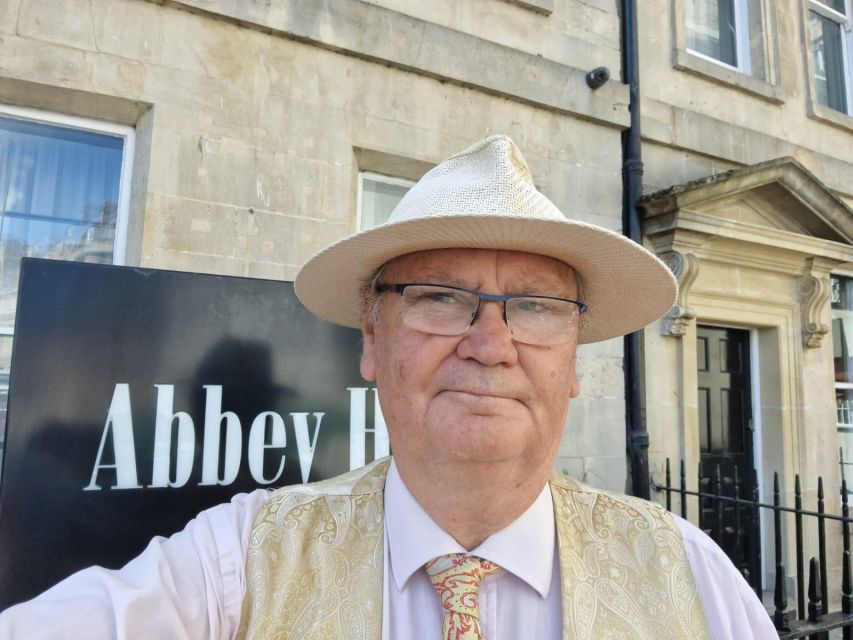
Bath rewards people who explore on foot. This two-hour walk links Roman remains, Georgian streets, literary landmarks, and grand civic buildings in one compact route, giving you a useful first look at the city without paying admission for attractions you may want to visit later. I especially like the route’s range, from Sally Lunn’s and Bath Abbey to the Royal Crescent, and I like that guide Paul Elliott adds historical context rather than simply pointing at buildings. The main drawback is that the pace and route are not suitable for wheelchairs, pushchairs, babies, or children under five.
Paul’s tour is best for someone who wants a broad introduction to Bath before choosing which interiors to enter. You will hear about the Roman Baths without going inside, see Bath Abbey from the outside, and finish near Bath’s modern Thermae Bath Spa. That keeps the price at a reasonable $26, but you should budget separately for any paid attractions.
In This Review
- Key points to know before you book
- Meeting Paul near Bath Abbey
- Sally Lunn’s and Abbey Green
- The Roman Baths and the story of Prince Bladud
- The old East Gate and Pulteney Bridge
- Alleys, the city wall, and a change in scale
- Queen Square and the Jane Austen Centre
- The Assembly Rooms and The Circus
- The Royal Crescent and Royal Victoria Park
- Theatre Royal and Bath Thermae
- Is $26 good value for Bath?
- Who will enjoy this walk?
- My verdict on Paul Elliott’s Bath walk
- FAQ
- Where does the Bath walking tour begin?
- Where does the tour finish?
- How long does the walking tour last?
- What language is the tour conducted in?
- Is admission to the Roman Baths included?
- Are other attraction entry fees included?
- Can I bring a pushchair or baby carriage?
- Is the tour suitable for wheelchair users?
- Can I cancel for a full refund?
Key points to know before you book
- One walk connects Bath’s main historic districts: The route moves from the medieval center through Queen Square and the Georgian quarter to the Royal Crescent.
- Paul Elliott leads the English-language tour: His delivery has earned strong praise for useful history, local tips, and humor.
- The Roman Baths are explained but not entered: You will need a separate ticket if you want to visit inside.
- The Royal Crescent is the grand finale: The route gives you a clear sense of how Georgian Bath was planned and built.
- The walk lasts two hours: Expect frequent stops for explanations and photographs, not a fast march between sights.
- Pushchairs and wheelchairs are not suitable: The route includes alleyways, slopes, and city walls, so check the practical limits before booking.
Meeting Paul near Bath Abbey
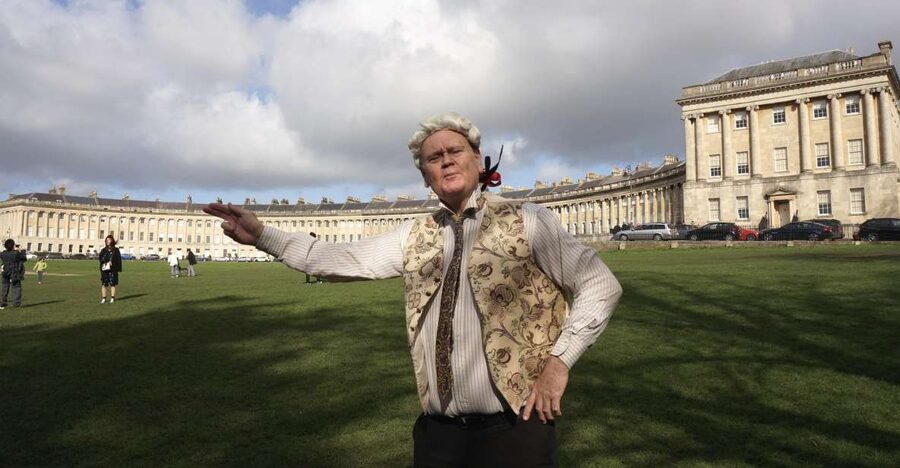
The tour begins at The Abbey Hotel North Parade, in the city center, with a short meeting and introduction. The stated starting postcode is BA1 1LF. This is a sensible place to begin because Bath Abbey, the Roman Baths, Abbey Green, and the River Avon are all close by.
You should arrive ready to walk rather than expecting a bus tour or a formal lecture. The route has many stops, and the guide uses the streets themselves as the classroom. That makes the experience useful on your first morning in Bath, when you want to understand the layout before returning to specific sites.
Paul Elliott is the named guide. Several comments praise his historical explanations, practical suggestions, and friendly presentation. One particularly positive response described him as full of knowledge and tips, while another called the walk informative and appreciated its fun facts. Those details matter because Bath’s buildings can look similar at first glance. A guide who explains the connections between them helps you see more than just attractive stone fronts.
There is also one serious negative account describing an unpleasant exchange involving a group with children and a scooter. The experience was not completed in that case. That complaint is worth considering, especially if you are booking with young children, although it contrasts with the other comments praising Paul’s manner. The stated rules are clear: baby strollers, baby carriages, and pets are not allowed, apart from assistance dogs.
More Walking Tours in Bath
- Bath: City Walking Tour with Optional Roman Baths Entry
★ 4.7 · 1,401 reviews - Bath: Guided Walking Tour
★ 4.9 · 1,198 reviews - Bath: Bridgerton Filming Locations Walking Tour with Music
★ 4.7 · 416 reviews
Sally Lunn’s and Abbey Green
One of the first stops is Sally Lunn’s, described as Bath’s oldest house. It is a useful early stop because it shifts the story away from Bath’s grand facades and toward the older, tighter city that existed before the Georgian expansion.
You will then reach Abbey Green, where an old London Plane tree marks a pleasant open space beside Bath Abbey. The area also occupies the site of the former monastery. Here, the guide can help you picture Bath as a religious center before the city became famous for its Georgian terraces and spa culture.
This part of the walk is compact but important. Bath’s past is not one single period. Roman engineering, medieval religion, Georgian design, and modern bathing all occupy the same small city. I like that the tour begins with these layers rather than rushing straight to the Royal Crescent.
The old streets around Abbey Green also show why comfortable shoes matter. The tour is only two hours, but it involves ordinary city walking, uneven passages, and changes in level. The schedule aims for an easy stroll, though easy does not mean fully step-free.
The Roman Baths and the story of Prince Bladud
The Roman Baths receive a full explanation, but admission is not included and the group does not enter. This is one of the most important points to understand before paying for the tour. You are buying the setting and the explanation, not a ticket to the attraction.
The guide introduces the founding story connected with Prince Bladud, the legendary early figure associated with Bath. This gives you a starting point for understanding why hot water became the city’s defining feature. You will hear the story in the street, then can decide if you want to return for the full indoor visit.
For some people, this arrangement is ideal. You save time and money if the Roman Baths are not a priority, while still learning why the site matters. If the Roman Baths are the main reason you came to Bath, you should treat this stop as an introduction and buy a separate admission ticket.
The tour also explains Bath Abbey and the churches that came before it. That broader view helps you read the building as part of a long religious story rather than as an isolated Gothic landmark. The guide’s job here is not just to identify the Abbey, but to connect the present building with the earlier churches on the site.
The old East Gate and Pulteney Bridge
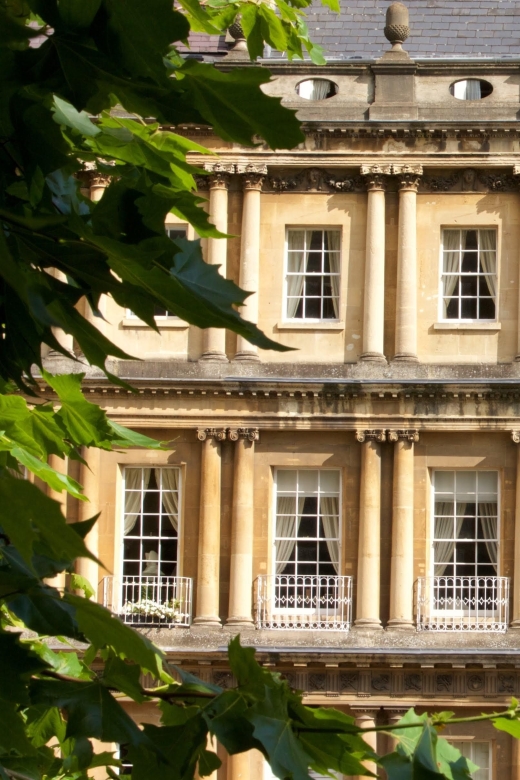
From the central sights, the route heads toward the original East Gate of Bath, which led down toward the River Avon. This is a quieter kind of historical detail. You may not have come looking for a city gate, but it helps explain how Bath was entered, defended, and connected to the river.
The route continues to Pulteney Bridge, one of Bath’s best-known landmarks. Its position over the Avon gives you a strong photo stop and a clear sense of how water shaped the city’s growth. The bridge is part of Bath’s daily urban scene, not a detached monument, which makes seeing it on foot especially useful.
I appreciate this section because it adds structure to the city. You move from the Abbey and Roman center toward the river, following the old logic of Bath rather than jumping randomly between famous addresses. Frequent pauses keep the walking manageable and allow time for photographs.
A different kind of day out entirely:
- Bath: Guided Ghost Tour
★ 4.8 · 1,036 reviews - Bath: The Jane Austen Centre Ticket
★ 4.4 · 678 reviews - From Bath: Stonehenge & the Cotswolds Day Tour with Entry
★ 4.8 · 543 reviews - Bath: Tootbus Bath Discovery Hop-On Hop-Off Tour
★ 4.5 · 430 reviews
Alleys, the city wall, and a change in scale
After the river and central monuments, the tour turns through Bath’s alleyways and climbs toward the top wall of the city. This is where the character of the walk changes. The early stops are close together and heavily tied to Roman and medieval Bath. The climb leads you toward the Georgian city, planned on a much grander scale.
The city wall section is also where you should think carefully about mobility. The route is not suitable for wheelchair users, and it is not recommended for pushchairs or very young children. Anyone who finds slopes or uneven walking difficult should ask for current details before booking.
For everyone else, this transition is one of the tour’s more useful features. You begin to understand that elegant Georgian Bath was not simply placed beside the old city. It expanded beyond the medieval core, using new streets and squares to create a different kind of urban experience.
Queen Square and the Jane Austen Centre
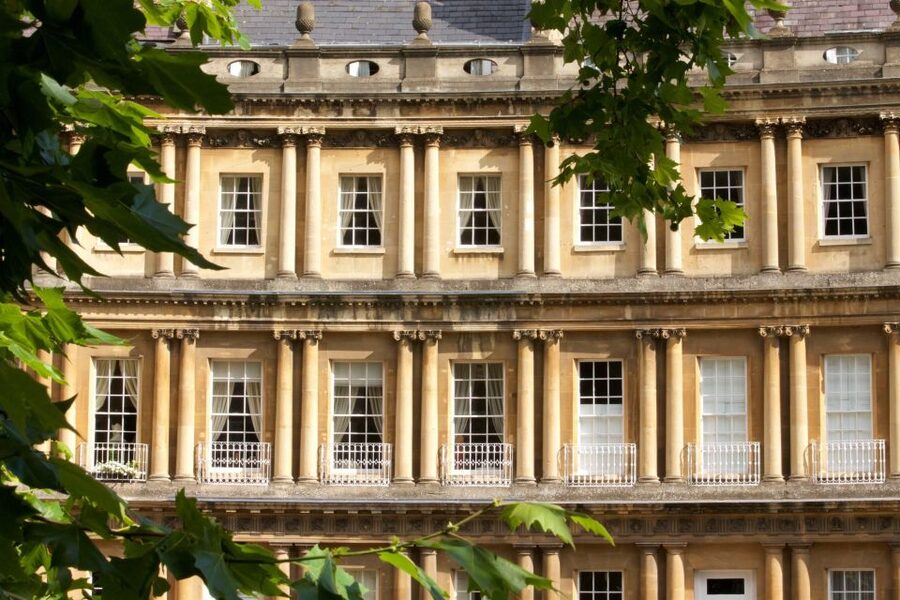
Queen Square marks the beginning of the Georgian portion of the tour. Its formal layout feels different from the older lanes, and the guide explains how the quarter was conceived by John Wood and built using stone from Ralph Allen’s quarries.
That connection is worth remembering. Bath’s uniform golden stone is one of its defining visual features, but the material had to come from somewhere. The Georgian city depended on planning, money, design, and local stone working together. The tour gives you a practical way to understand that process while you are standing among the buildings.
The route passes the Jane Austen Centre on the way to the Assembly Rooms. Jane Austen lived in Bath, and the city appears in her novels, so this is a useful stop for readers and for anyone curious about Bath’s social life during the Georgian period.
The centre itself is not included as an admission visit. You can note its location and return later if you want a more focused look at Austen’s connection with Bath. This is a recurring strength of the walk: it helps you mark places for a later visit without forcing every attraction into the two-hour schedule.
The Assembly Rooms and The Circus
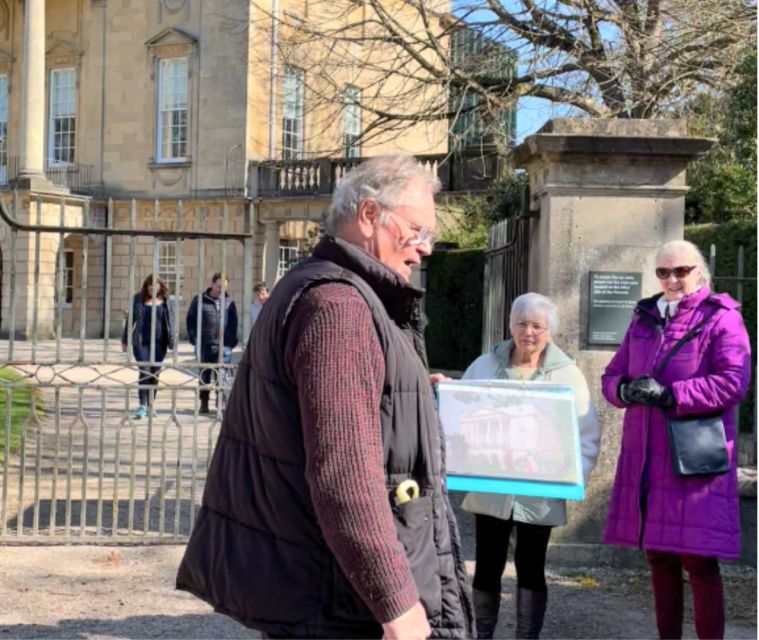
The Assembly Rooms represent the social side of Georgian Bath. These were spaces for dancing, meeting, music, and display, and they help explain how the city became a fashionable resort rather than simply a place with hot springs.
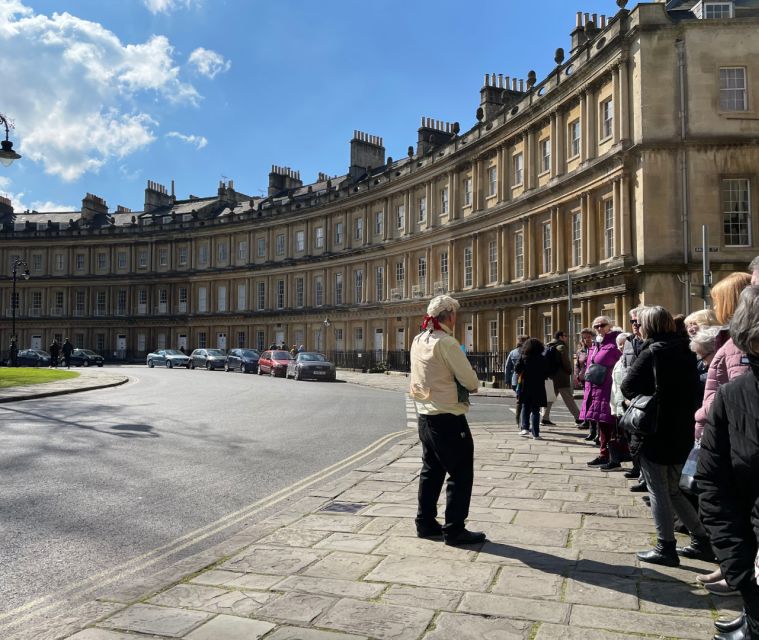
The tour continues to The Circus, one of John Wood’s most memorable pieces of city planning. Its circular form is very different from the straight streets and rectangular squares elsewhere in Bath. You will get more from the stop if you look up and around, comparing the repeated stone fronts and the way the buildings form one unified space.
The guide’s Georgian narrative is especially valuable here. Without context, The Circus can seem like a handsome oddity. With an explanation of John Wood’s plan and Ralph Allen’s stone, it becomes evidence of a deliberate attempt to create a refined, ordered city.
There is a practical trade-off. Outdoor explanations allow the tour to keep moving, but they cannot replace visiting the Assembly Rooms or other interiors. If architecture is your main interest, you may want to return independently after the walk.
The Royal Crescent and Royal Victoria Park
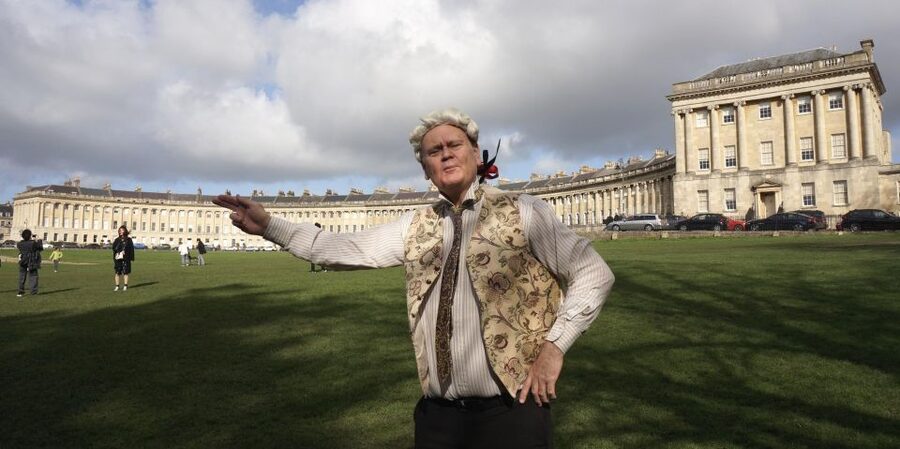
The Royal Crescent is the major architectural finish of the upper part of the route. Its long curved front is one of Bath’s most recognizable views, and seeing it after Queen Square and The Circus makes its design easier to appreciate.
The crescent is not just a single building to photograph. It is part of the same Georgian ambition that shaped the rest of the route. By this point, you have seen the city move from narrow medieval lanes to planned squares and large terraces. The Royal Crescent provides the clearest expression of that change.
The route then goes downhill through Royal Victoria Park. This gives you a welcome shift from dense streets to open space before the final city-center stops. It also creates more photo opportunities, although the downhill section is another reason to wear steady shoes and consider your walking ability.
The tour description calls the route the maximum achievable within an easy two-hour stroll. That is a useful promise to interpret carefully. You will cover a lot, but you will not receive a long stop at every landmark. The experience works as a well-packed overview, not as a slow architectural study.
Theatre Royal and Bath Thermae
The walk returns toward the Theatre Royal, another important part of Bath’s cultural life. Its inclusion rounds out the story. Bath was shaped by religion, bathing, civic planning, and entertainment, and the Theatre Royal represents the social and performance side of the city.
The final stop is at Bath Thermae, the newer bathing facility on Hot Bath Street. The tour finishes at Hot Bath St, Bath BA1 1SJ, UK. Ending near a modern bathing venue brings the story back to the city’s oldest reason for being famous: hot water.
This contrast is one of the walk’s neatest ideas. You begin with Roman bathing and finish beside a modern facility, seeing how Bath has repeatedly reworked the same natural resource for new generations. The tour does not include admission to Bath Thermae, so plan a separate visit if you want to use the pools.
Is $26 good value for Bath?
At $26 per person, the tour offers solid value if you want orientation, context, and a carefully linked route. You are paying for a live English-speaking guide and two hours of walking, not entry to the Roman Baths, Bath Abbey, the Jane Austen Centre, the Assembly Rooms, or Bath Thermae.
That distinction keeps the price honest. A self-guided walk costs less, but you would need to research the history, find each stop, and work out how the Roman, medieval, and Georgian periods fit together. Here, Paul supplies that framework while you see the city at street level.
I would book this early in a Bath visit, then use the rest of your time to revisit the places that caught your attention. If you already know Bath well, the value is lower because the tour covers many headline sights from the outside.
The free cancellation up to 24 hours before the start and the reserve-now, pay-later option make the booking less rigid. Availability determines the starting time, so you should check the schedule before arranging other timed visits.
Who will enjoy this walk?
This tour suits adults, couples, solo visitors, and older children who can manage two hours on foot. It is also a good match for anyone who enjoys history presented with a few amusing facts rather than a nonstop academic lecture.
You will get the most from it if you want:
- A first orientation to Bath’s historic center
- A guide-led explanation in English
- Outdoor views of famous sites
- A route that includes Roman, medieval, Georgian, literary, and modern Bath
- Time for photographs at places such as Pulteney Bridge and the Royal Crescent
It is not the right choice for children under five, babies under one, wheelchair users, or anyone relying on a pushchair. Pets are not allowed, though assistance dogs are permitted. The complaint about the handling of a group with a scooter also suggests that families should confirm the rules and arrive prepared for a firm interpretation of the walking conditions.
My verdict on Paul Elliott’s Bath walk
I like this tour because it gives Bath a clear shape. You begin at the Abbey and Roman center, follow the old city toward the river, climb into the Georgian quarter, and finish near modern bathing facilities. That sequence makes the city easier to remember than a collection of disconnected photo stops.
The strongest praise focuses on Paul’s historical explanations, practical tips, and ability to add humor to the story. The 4.4 rating from 26 reviews reflects a generally positive experience, but the serious complaint about rudeness should not be ignored. This is a walking tour with firm suitability limits, not a flexible family outing.
Book it if you want a lively two-hour introduction and are happy to visit the interiors separately. Skip it if you need step-free access, a pushchair-friendly route, or a very slow family pace. At $26, it is a fair way to get your bearings and decide where Bath deserves more of your time.
FAQ
Where does the Bath walking tour begin?
It begins at The Abbey Hotel North Parade, with the stated starting postcode BA1 1LF.
Where does the tour finish?
The tour finishes at Hot Bath Street, Bath BA1 1SJ, UK, near Bath Thermae.
How long does the walking tour last?
The guided walk lasts two hours and includes many stops for explanations and photographs.
What language is the tour conducted in?
The live tour guide speaks English.
Is admission to the Roman Baths included?
No. The Roman Baths are explained from outside, but admission is not included and must be arranged separately.
Are other attraction entry fees included?
No. The tour includes the guide and walking tour only. Any admission costs must be paid separately.
Can I bring a pushchair or baby carriage?
No. Baby strollers and baby carriages are not allowed, and the walk is not suitable for pushchairs.
Is the tour suitable for wheelchair users?
No. The activity is listed as unsuitable for wheelchair users.
Can I cancel for a full refund?
Yes. You can cancel up to 24 hours in advance for a full refund.
Just added in Bath
- “Stonehenge & Secret England” Tour for 2-8 guests from Bath★ 5.0 · 2 reviews
- Bath: Local Pubs & Historic Sights Walking Tour (3h)★ 4.9 · 29 reviews
- Full-Day Stonehenge and Bath Tour★ 4.4 · 39 reviews
- From Bath: Private Tour to Serene Cotswolds with Pickup★ 5.0 · 3 reviews
- From Bath: Private Stonehenge and Salisbury Tour with Pickup★ 5.0 · 3 reviews
- From Bath: Salisbury and the Jurassic Coast Small Group Tour★ 5.0 · 4 reviews
- From Bath: Cotswolds Private Day Tour with Pickup★ 4.9 · 17 reviews
- City of Bath: British Wine and Cheese Tasting Experience★ 4.9 · 21 reviews
Walking Tours, compared.

Magical London: Harry Potter Guided Walking Tour
Read our review →

University and City Walking Tour with Alumni Guide
Read our review →
Harry Potter Movies Walking Tour (Kids Go Free)
Read our review →
The Great British Rock and Roll Music Walking Tour
Read our review →
Jack the Ripper Walking Tour – Ripper Vision Tours
Read our review →
Other lists this tour turns up in