
REVIEW · HISTORICAL TOURS
Brighton: Piers & Queers LGBTQ History Tour
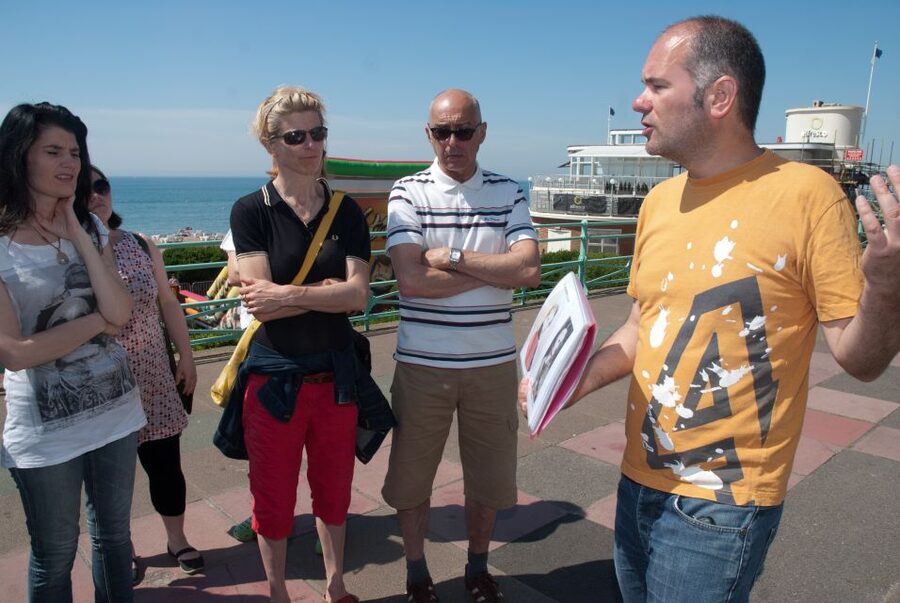
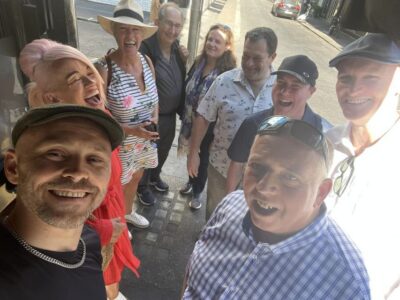
Brighton keeps its boldest stories tucked away. This 1.5-hour walk brings LGBTQ lives into view, from Regency dandies and Anne Lister to 1950s lesbian and gay life. I like the route’s mix of grand seafront views and lesser-known personal stories, and I like that Ric’s friendly, easygoing guiding style makes room for questions rather than turning the walk into a lecture.
The tour also earns points for its small size, capped at 12 people, and for reaching Kemptown, Brighton’s longtime gay district. The main consideration is time: 90 minutes gives you a lively introduction, not a full study of Brighton’s queer past. Some stories will spark further reading rather than answer every question.
Meet Ric by the statue in Regency Square, then expect a route through the seafront, the old Lanes, and Kemptown. Wear comfortable shoes, allow time for a steady city walk, and consider booking it near the start of your stay so you can use Ric’s local suggestions afterward.
In This Review
- Key points to know before you book
- Starting beside Regency Square
- Reading Brighton’s seafront through queer history
- Through the old Lanes and their less obvious stories
- From 1950s life to political activism
- Finishing in Kemptown, Brighton’s gay district
- What $52 buys you in Brighton
- Ric’s guiding style and group atmosphere
- Accessibility, timing, and useful planning
- Who should book the Piers & Queers tour?
- Should you book it?
- FAQ
- Where does the LGBTQ history tour meet?
- How long does the tour last?
- What areas of Brighton does the route cover?
- What subjects are covered?
- Who leads the tour?
- How large is the group?
- Is the tour wheelchair accessible?
- Can I cancel the booking?
Key points to know before you book
- A 200-year story in 90 minutes: The tour links Regency-era figures, Edwardian gender nonconformity, 1950s LGBTQ life, and modern political activism.
- Three distinct Brighton settings: You move from the open seafront to the atmospheric old Lanes, finishing in Kemptown’s gay district.
- Famous names and overlooked lives: Anne Lister, Lord Byron, Oscar Wilde, and Dusty Springfield appear alongside a pioneering doctor, an Edwardian drag king, and a 1923 same-sex marriage.
- A genuinely small group: With no more than 12 people, it is easier to hear Ric and ask questions.
- A guide with local follow-up ideas: Ric sells a book containing 20 guided Brighton walks, useful if you want to keep exploring after the tour.
- Practical flexibility: The walk is in English, wheelchair accessible, and can be cancelled up to 24 hours before departure for a full refund.
Starting beside Regency Square
The meeting point is by the statue in Regency Square, Brighton BN1 2FZ. This is a useful beginning because the tour starts in the grander part of Brighton, where the city’s seaside image and its less conventional social life meet.
From here, Ric sets the tone by placing LGBTQ stories in their time. That matters. A figure who challenged social rules in the Regency period faced a very different set of laws and dangers from someone living openly in Brighton decades later. The walk is not simply a list of famous names. It looks at how people managed love, gender, reputation, work, and public life across more than 200 years.
You will hear about Regency dandies, a term that points to men whose clothing, manners, and public style could unsettle the period’s expectations. You will also meet people whose stories are less familiar but just as useful in understanding the city. One is a pioneering doctor who lived as a man before women were legally allowed to practice medicine. Another is an Edwardian drag king. These accounts give the walk its human scale.
The setting helps, too. Regency Square offers the kind of architecture and seafront grandeur many people associate with Brighton, but the subject matter adds a sharper edge. The city’s polished appearance has long existed beside private lives and public identities that did not fit the usual rules.
More History Tours in Brighton:
- London: Historic Pubs of Central London Walking Tour
★ 4.9 · 1,065 reviews - Portsmouth: Historic Dockyard Ultimate Explorer Ticket
★ 4.8 · 1,052 reviews - York: Witches and History Old Town Walking Tour
★ 4.7 · 928 reviews
Reading Brighton’s seafront through queer history
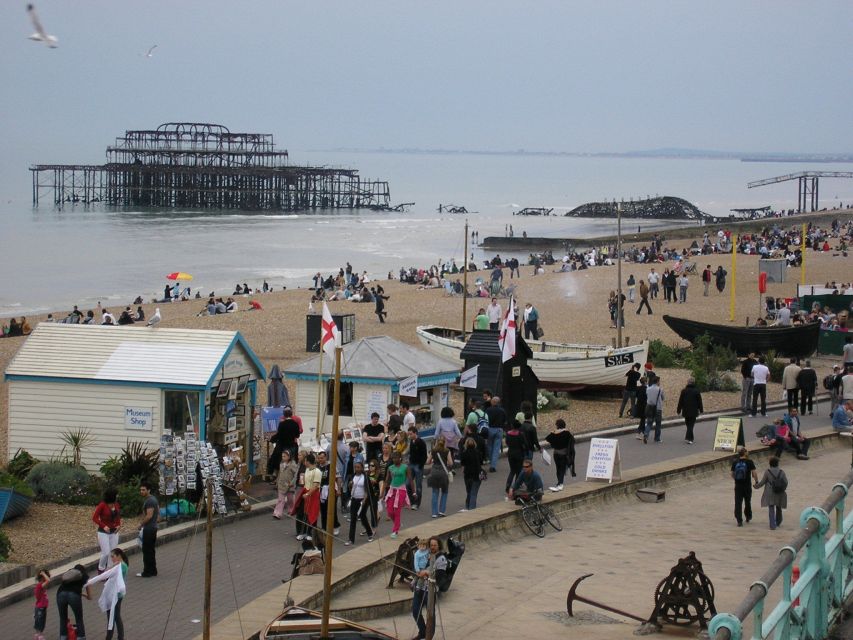
The seafront section gives you a broad view of Brighton, but the real focus is social history. Brighton became a place where people could sometimes find more freedom, privacy, or community than in smaller towns. That does not mean life was easy or safe. The tour keeps both sides in view.
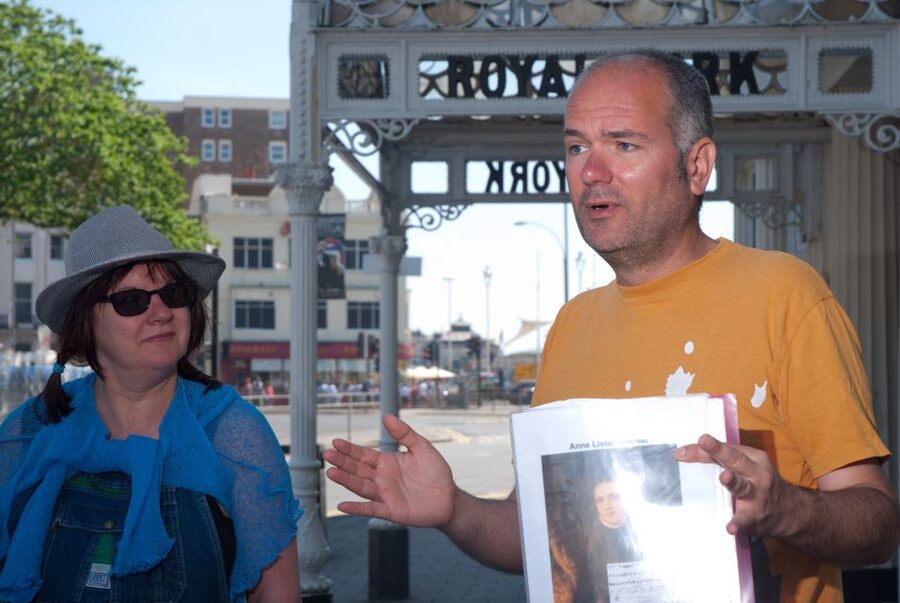
Anne Lister’s visit is one of the better-known stories included on the route. Lister, whose life became the subject of the BBC and HBO series Gentleman Jack, offers a link between Brighton and the wider history of women who loved women. Her trip helps show that same-sex desire and relationships were part of the city’s story long before modern LGBTQ language existed.
Lord Byron, Oscar Wilde, and Dusty Springfield add other points of connection. These names are familiar, but the value comes from seeing them as part of a larger network of people and places rather than as isolated celebrities. Brighton’s queer past is not only a parade of famous figures. It includes people who made choices in difficult conditions and often received little credit for doing so.
I would pay attention to the contrast between the sunny seafront and the harder realities behind the stories. The water, promenade, and grand buildings make an attractive backdrop, but the walk asks you to consider who could be open, who had to be discreet, and how much depended on money, status, gender, and the law.
Through the old Lanes and their less obvious stories
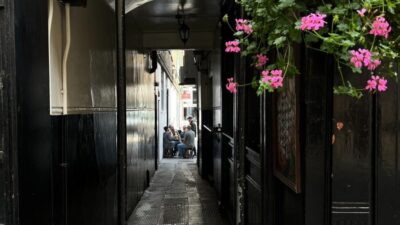
The route then turns into Brighton’s old Lanes. Their narrow streets and older buildings change the mood. This is where the walk can feel less like a standard city introduction and more like a search for traces that are easy to miss when you explore alone.
The Lanes are already a popular part of Brighton, so you will not be seeing an empty or untouched quarter. That is part of the point. A place may look quaint and familiar while carrying stories that are not marked by large plaques or major monuments. Ric’s work is to connect the streets around you with people whose lives are otherwise easy to overlook.
One especially striking subject is the 1923 same-sex marriage. The story gives you a concrete example of people testing social and legal boundaries at a time when the language and rights associated with modern marriage equality did not exist. It also shows why the tour is more interesting when it moves beyond celebrities. A famous name can draw you in, but an ordinary couple making an extraordinary choice often stays with you longer.
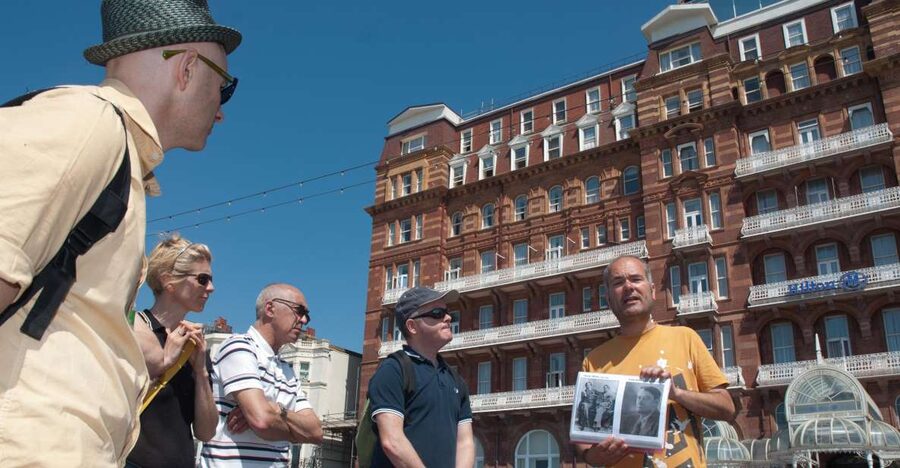
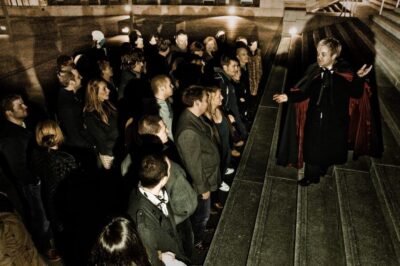
The Lanes section also makes the group size important. In a group of up to 12, you should be able to stay close enough to hear the guide without the walk feeling like a parade. Ric has been praised for being easy to talk to and for answering questions, so this is a good place to ask about a story or building that catches your attention.
Do not expect every location to function as a formal museum site. This is a walking interpretation of the city, not a series of indoor exhibits. You are paying for context, storytelling, and the connections between places. If you want displays, documents, or a large collection of objects, you will need to add a museum visit separately.
From 1950s life to political activism
The tour covers 1950s lesbian and gay life, then moves into political activism. This period gives the walk a useful change of pace. Earlier sections focus on individuals and coded social behavior. The later material looks more directly at community, public pressure, and the fight for change.
The 1950s were not a simple bridge between old prejudice and present-day acceptance. The tour’s inclusion of this period helps show the risks that LGBTQ people faced while also making space for friendships, relationships, and local networks. You get a sense of how people built lives within limits imposed by law and public opinion.
The activism section adds a civic layer. Brighton is often presented as a holiday city with a party reputation, but political organizing is part of its identity as well. You may come away with a clearer idea of why the city became known as the gay capital of Britain, not simply because of nightlife, but because LGBTQ people created community and visibility here.
That phrase, gay capital of Britain, can sound like a slogan if it is left unexplained. This tour gives it more substance by showing the long process behind the label. There are people who lived openly, people who worked quietly, people who challenged gender expectations, and people who pushed for political change. The result is a city identity built over time, not a brand invented for visitors.
A few more options to weigh up in Brighton
- Brighton: Royal Pavilion Admission Ticket
★ 4.7 · 956 reviews - From Brighton: Seven Sisters and South Downs Tour
★ 4.9 · 746 reviews - Brighton: City Sightseeing Hop-On Hop-Off Bus Tour
★ 4.5 · 352 reviews - Brighton: Zip Wire Experience Ticket
★ 4.5 · 260 reviews
Finishing in Kemptown, Brighton’s gay district
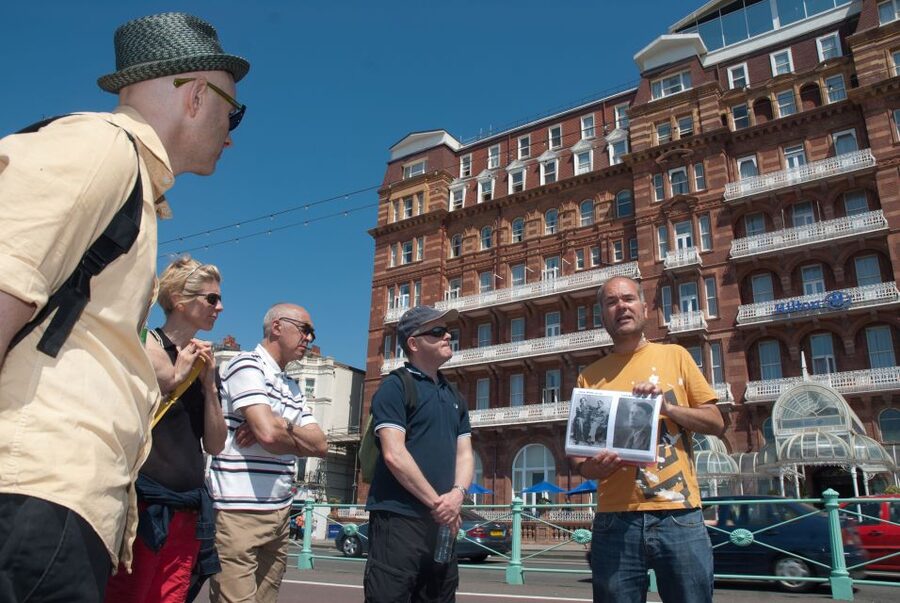
The walk finishes in Kemptown, identified as Brighton’s gay district. Ending here makes sense. After moving through earlier periods and less obvious city corners, you arrive in an area closely linked with Brighton’s present-day LGBTQ identity.
Kemptown is not treated as a separate entertainment stop. It works as the final chapter of the walk. The earlier stories about secrecy, courage, and activism lead into a district where LGBTQ life is more visible. That change gives the route a clear shape and prevents it from feeling like disconnected anecdotes.
If you are new to Brighton, finishing here also gives you a useful base for the rest of your day. You can continue exploring the area, return to the seafront, or follow Ric’s recommendations. One helpful extra is the chance to buy his book of 20 guided walks around the city. You do not need it to enjoy this tour, but it could appeal if you prefer to explore on your own afterward.
The ending does not appear to include a meal, drink, show, or admission to an attraction. Plan it as a walking history experience, not a packaged evening out. That keeps expectations clear and makes the $52 price easier to assess.
What $52 buys you in Brighton
At $52 per person, this is not the cheapest way to walk around Brighton. You can see the seafront and Lanes without paying a guide. The question is whether the stories are worth paying for, and here the answer depends on your interests.
I think the price is reasonable if you want a focused LGBTQ history tour led by a qualified Blue Badge guide. You are getting a live guide, a small group of no more than 12, and a route that links several parts of the city. A private tour would usually cost more, while a large general city walk would likely give less time to this subject.
The value also comes from the research and selection behind the route. Anne Lister, Byron, Wilde, and Dusty Springfield are recognizable names, but the doctor who lived as a man, the Edwardian drag king, and the 1923 same-sex marriage give you material you may not encounter on a general Brighton tour.
Still, 90 minutes is a short window for two centuries of history. If you want detailed discussion of every person or legal change, you may find the pace brisk. The tour works best as a well-chosen introduction. It gives you themes, names, and places to pursue later.
The perfect timing is early in your Brighton visit. One person who took the walk on a honeymoon’s first full day found it useful as an initial look around the city, and that is sound advice. You can get oriented, learn which areas matter, and use Ric’s recommendations for the rest of your stay.
Ric’s guiding style and group atmosphere
Ric is the named guide for the experience, and the strongest praise centers on his manner as much as his subject knowledge. He is described as friendly, approachable, sociable, and easy to listen to. That combination matters on a topic that can involve painful discrimination as well as humor, pride, and resilience.
You should expect a conversational walk rather than a stiff speech. Ric is happy to answer questions, and the group limit makes it more practical to join in. His passion for Brighton and the subject comes through, according to the feedback, but the tone remains welcoming.
That will suit you if you like to ask about details or connect the history to places you have already seen. It may be less suitable if you want a silent audio tour or a purely academic presentation. The strength here is the human guide, so the experience depends partly on enjoying that format.
The tour has a perfect five-star rating from nine reviews, with praise repeated for Ric’s friendliness, information, passion, and ability to make people feel comfortable. That is a small sample, so I would not treat it as proof that every departure will feel identical. It does point to a consistent strength: the guide is central to the experience, and the guide appears to be doing that job well.
Accessibility, timing, and useful planning
The walk lasts 1.5 hours and is listed as wheelchair accessible. The route includes the seafront, the old Lanes, and Kemptown, so you should still consider your own comfort with urban walking and changing street conditions. The available information does not specify the exact distance, rest stops, or the detailed surface conditions, so ask the provider if you need that level of planning.
The tour is conducted in English with a live English-speaking guide. No other language option is listed. If you need translation support, confirm that before booking.
Starting times vary, so check the available departure time when you reserve. Cancellation is free up to 24 hours in advance for a full refund, and you can reserve now and pay later. Those terms are useful if your Brighton plans depend on weather, trains, or a wider South East England itinerary.
The meeting point is specific: the statue in Regency Square, Brighton BN1 2FZ. Give yourself enough time to find the statue rather than arriving at the last minute. Comfortable shoes are a sensible choice, and a jacket can be useful on the exposed seafront.
Who should book the Piers & Queers tour?
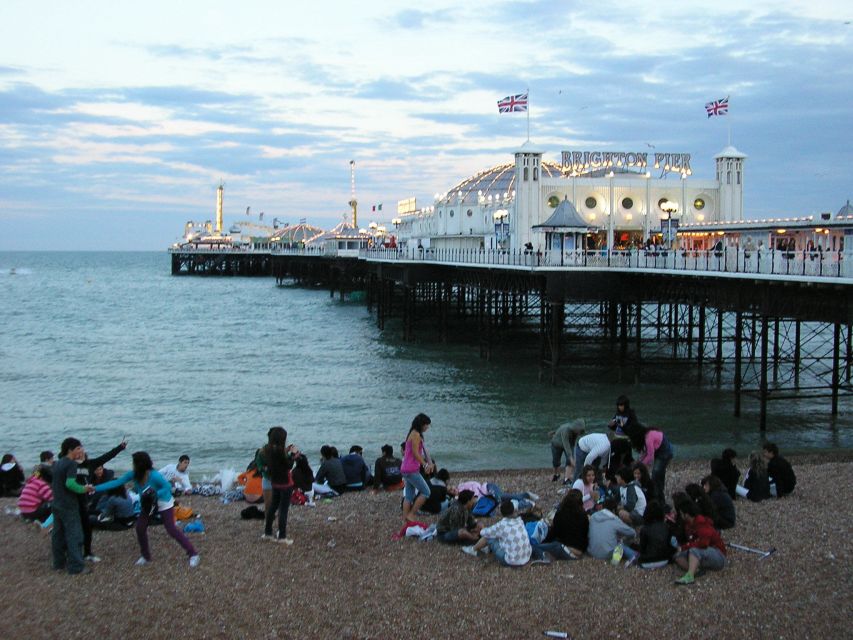
I would recommend it most strongly to anyone curious about LGBTQ history, social history, or the way a city’s identity develops. It is also a good fit if you have visited Brighton before and want something beyond the Palace Pier, shopping, and nightlife.
First-time visitors can use it to get their bearings, especially if they book it near the start of their stay. Couples, solo visitors, and small groups should find the 12-person limit comfortable. The tour also suits people who prefer personal stories to a standard list of buildings and dates.
You do not need to identify as LGBTQ to find value here. The route is about Brighton, but it is also about how people make lives within restrictive societies and how communities push for change. If you enjoy history told through individuals, the balance of famous and overlooked figures should work well.
I would hesitate only if you want a long, exhaustive academic tour, a food-and-drink experience, or a general introduction to every major Brighton sight. This is a focused history walk. Its strength is its subject and its guide, not the number of attractions packed into 90 minutes.
Should you book it?
Book the Brighton: Piers & Queers LGBTQ History Tour if you want a personal, city-based introduction to more than 200 years of LGBTQ life. The route has a strong beginning in Regency Square, a thoughtful middle through the Lanes, and a fitting finish in Kemptown.
The $52 cost is fair for a small-group tour with a qualified Blue Badge guide, particularly if Ric’s approachable style suits you. Go in expecting a lively overview rather than a complete course in queer history, and you should leave with a stronger sense of Brighton, several memorable stories, and good ideas for what to see next.
FAQ
Where does the LGBTQ history tour meet?
Meet by the statue in Regency Square, Brighton BN1 2FZ, United Kingdom.
How long does the tour last?
The walking tour lasts 1.5 hours.
What areas of Brighton does the route cover?
The route begins around the seafront, continues through the old Lanes, and finishes in Kemptown, Brighton’s gay district.
What subjects are covered?
The tour covers more than 200 years of LGBTQ history, including Regency dandies, 1950s lesbian and gay life, political activism, Anne Lister, Lord Byron, Oscar Wilde, Dusty Springfield, and several lesser-known figures.
Who leads the tour?
The experience is provided by Ric’s Tours, with a qualified Blue Badge guide. Ric is the named guide associated with the tour.
How large is the group?
The tour is a small-group, semi-private experience with a maximum of 12 people per tour.
Is the tour wheelchair accessible?
Yes. The activity is listed as wheelchair accessible.
Can I cancel the booking?
Yes. You can cancel up to 24 hours in advance for a full refund. You can also reserve now and pay later.
Just added in Brighton
- Brighton: Seven Sisters Jet Ski Guided Coastline Safari★ 5.0 · 1 review
- Seven Sister Coastal eBike & Drive Tour★ 5.0 · 8 reviews
- Seafront★ 5.0 · 2 reviews
- Brighton City Bike Tour★ 4.9 · 106 reviews
- Brighton: City Highlights Walking Tour★ 5.0 · 1 review
- From Cambridge: Day trip to Brighton & The Seven Sisters★ 4.5 · 2 reviews
- From Brighton: Private Boat Charter★ 5.0 · 5 reviews
- From Brighton: Stratford-upon-Avon & The Cotswolds Day Trip★ 4.6 · 4 reviews
Historical Tours, compared.

Other lists this tour turns up in