
REVIEW · CAMBRIDGE TOURS
Cambridge: The Original Uncomfortable Cambridge™ Tour
Cambridge has more to say than pretty buildings. This 1.5-hour walk gives you a sharp introduction to the city while asking how race, class, gender, and imperialism shaped its university and public spaces. I like the way university researchers lead the conversation, and I like that the tour connects famous sights with questions about statues, names, colonial objects, and local memory. The main consideration is its subject matter: this is not a light sightseeing stroll, and some visitors may want more time inside the colleges themselves.
The tour costs $26 per person, covers about 2 kilometres, and returns to the Cambridge Tourist Information Centre. It is a strong choice if you have only an afternoon in town, although busy weekend streets and uneven cobblestones can slow the pace.
In This Review
- Key points to know before you book
- Starting outside the Tourist Information Centre
- King’s College, beauty with questions attached
- Great St Mary’s and the university church
- The Old Schools and the question of access
- The Backs and Darwin College
- The Corpus Clock and modern controversy
- What makes the guides effective
- A serious tour that stays approachable
- Price, timing, and what you receive
- Accessibility and the walking conditions
- Who will get the most from this walk
- Final verdict: should you book it?
- FAQ
- Where does the Original Uncomfortable Cambridge Tour begin?
- How long does the tour last?
- Where does the tour finish?
- Does the tour go inside the colleges?
- What sights are included?
- Is the tour wheelchair accessible?
- Is the tour offered in English?
- What happens if I need to cancel?
Key points to know before you book
- Cambridge in 90 minutes: The route gives you a useful first look at King’s College, Great St Mary’s, the Old Schools, the Backs, Darwin College, and the Corpus Clock.
- History with the comfortable story challenged: You will hear about the university’s ties to local townspeople, minority groups, women’s education, colonial objects, and the afterlife of empire.
- Led by university researchers: Guides such as Ruari and Oscar bring an academic background but keep the walk conversational and involving.
- A discussion as well as a sightseeing tour: You may be asked what you think about difficult episodes and present-day questions, rather than simply being given dates and names.
- A mostly level route: The walk is wheelchair accessible, with some cobblestones, street crossings, and one ramp on and off a bridge.
- Useful extras included: Your ticket includes an Uncomfortable Cambridge sticker and a reading list prepared by university researchers.
Starting outside the Tourist Information Centre
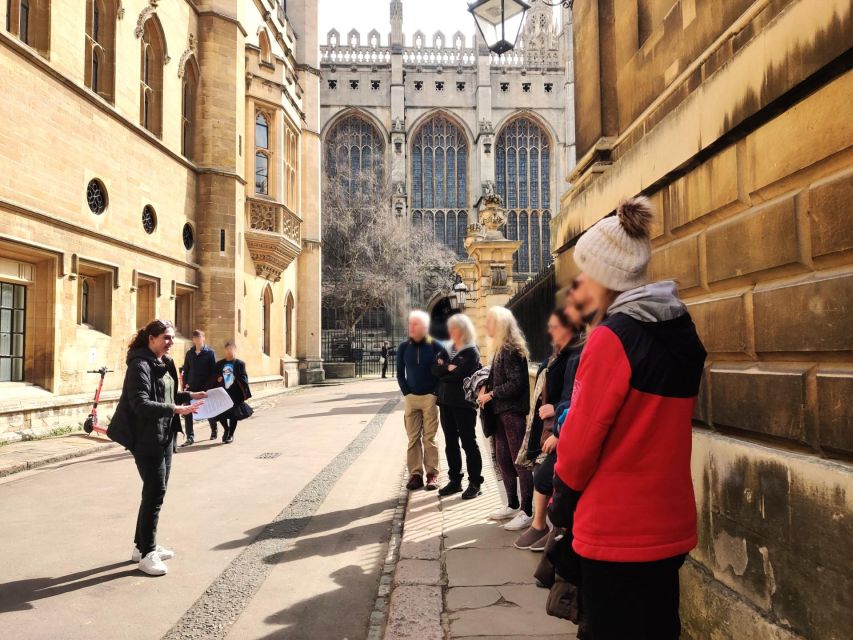
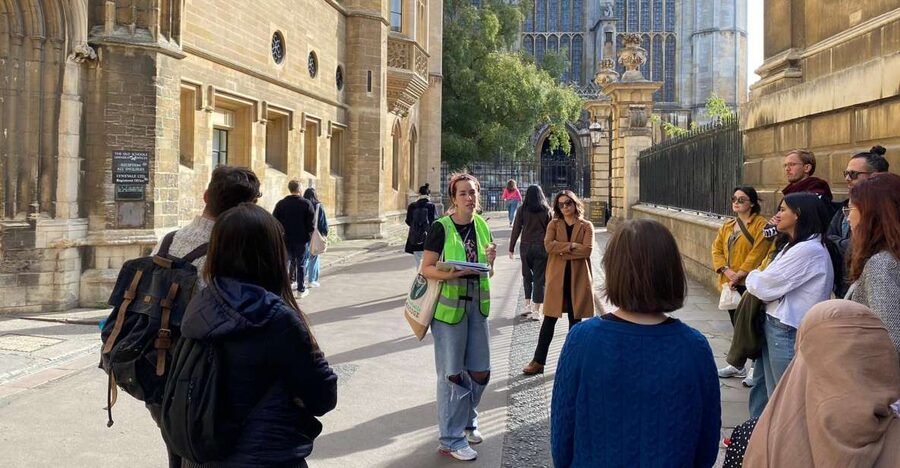
Meet your guide outside the main entrance of the Cambridge Tourist Information Centre. Look for a guide wearing a badge and carrying a green Uncomfortable Cambridge tote bag.
This is a practical meeting point in the city centre. You will not need hotel transport, and the tour begins and ends in the same place, making it easy to continue sightseeing afterward or head for a train.
The route lasts about 90 minutes. That is enough time to get your bearings without giving up half a day, but it also means the guide must keep moving. You should arrive ready to walk, listen, and occasionally pause for a group question.
The tour is conducted in English. You receive a souvenir sticker and a reading list, which is a useful touch for anyone who wants to continue exploring the subjects after leaving Cambridge.
A few more options to weigh up in Cambridge
- Cambridge: Guided River Cam Punting Tour
★ 4.7 · 1,469 reviews - Cambridge: University Alumni Tour with Kings College Option
★ 4.7 · 1,282 reviews - Cambridge: Alumni-Led Walking Tour w/ King’s College Option
★ 4.8 · 1,177 reviews
King’s College, beauty with questions attached
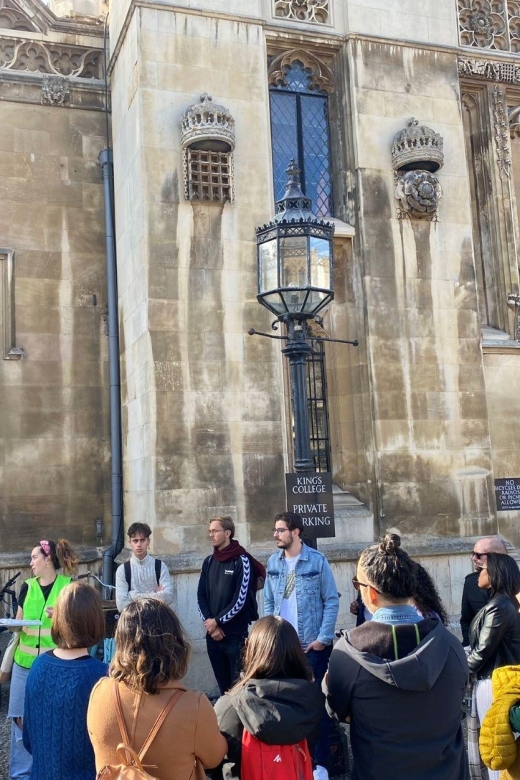
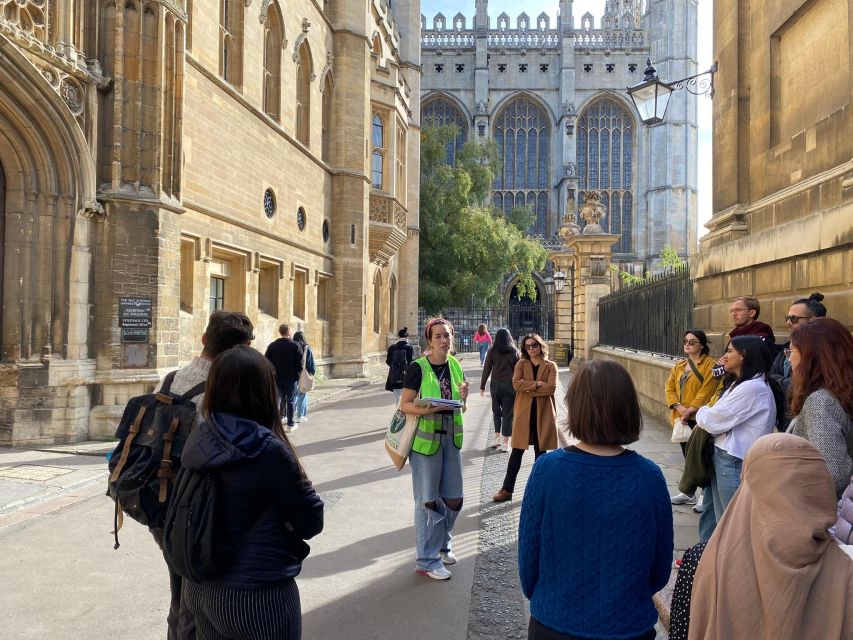
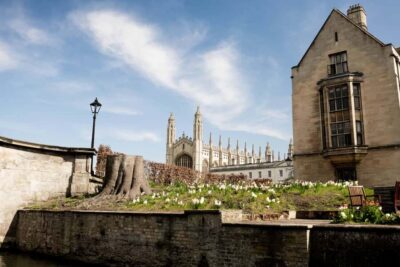
King’s College is one of Cambridge’s defining sights, and it gives the walk an immediate sense of place. Even if you have seen photographs of its chapel and lawns, hearing about the institution beside the building changes how you read the view.
The point here is not simply to admire the architecture. The guide uses the college as a doorway into Cambridge’s wider story, including the way university traditions can hide the people and systems that supported them.
You can expect the guide to connect the famous college setting with questions of class, access, and empire. The aim is not to replace the usual Cambridge story, but to add the parts that guided tours often leave out.
One important limitation: the tour does not enter any colleges. You see the exteriors and public streets, so book this walk for interpretation and context rather than an indoor college visit.
That makes the tour a particularly good first activity. You get the classic Cambridge sights, then learn how to question the polished version of the past when you visit a college chapel or take a later punting trip.
Great St Mary’s and the university church
Great St Mary’s, the University Church, brings another angle to the tour. The church sits at the centre of university life and the city, so it helps explain the close, and sometimes uneasy, relationship between Cambridge’s scholars and the local community.
The walk looks at how university power affected the town’s people. One of the most useful themes is the divide between the university and local residents, a subject that can be easy to miss when you focus only on spires, courtyards, and formal ceremonies.
You are likely to hear the story in an accessible way rather than as a string of dates. Guides encourage conversation, and one guide, Liz, was especially praised for drawing the group into discussion about difficult moments from the past.
This part of the route may suit you if you want history to feel connected to present choices. Instead of treating old events as finished business, the tour asks how those decisions still shape the way Cambridge presents itself.
The Old Schools and the question of access
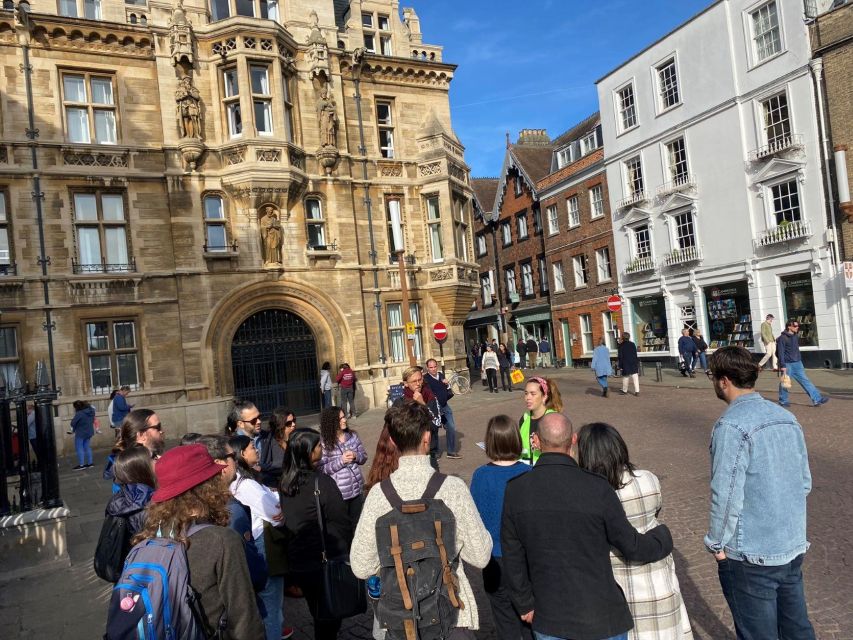
The Old Schools offer one of the clearest places to consider how the university was organised and who had the right to take part. The buildings are closely tied to Cambridge’s academic identity, but the tour turns attention toward the people excluded from that identity.
Here, the discussion includes gender and women’s education. Cambridge’s attitude toward women’s access to education is one of the subjects highlighted on the walk, along with broader questions about who could study, teach, or belong.
That makes this stop valuable for visitors who already know the standard university story and want to test it. You will not simply be told that Cambridge is old and important. You will be asked to think about what its traditions meant for people outside the preferred group.
This is also where the tour’s tone becomes clear. Uncomfortable does not mean hostile or sensational. It means the guide is willing to raise questions that can make a beautiful setting feel less simple.
A different kind of day out entirely:
- Cambridge: City Sightseeing Hop-On Hop-Off Bus Tour
★ 4.4 · 520 reviews - Cambridge: Shared Punting Tour with Guide
★ 4.7 · 427 reviews - Cambridge: Alumni-Led Walking & Punting Tour w/Kings College
★ 4.6 · 418 reviews - Cambridge: Guided Shared River Punting Tour
★ 4.8 · 298 reviews
The Backs and Darwin College
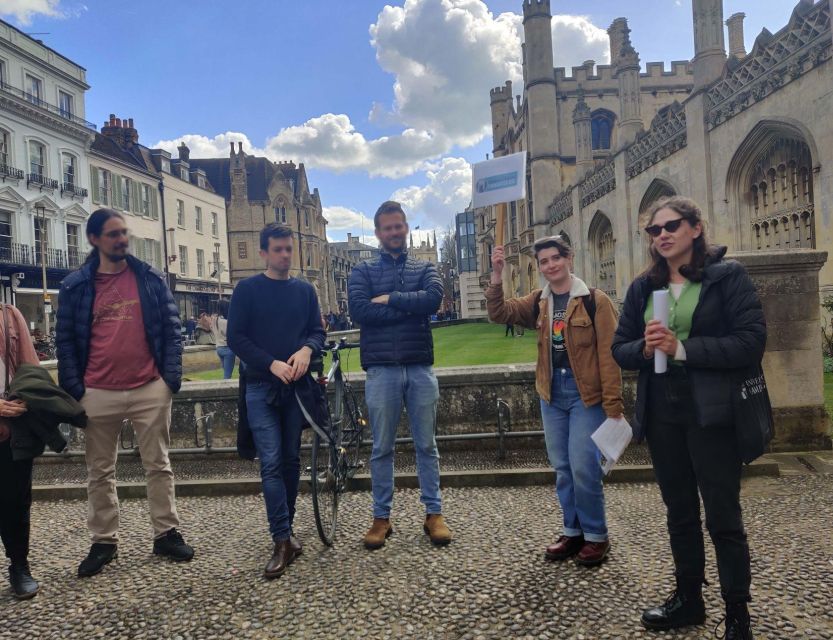
The Backs provide some of the most attractive views on the route. The open spaces beside the colleges give you a change of pace after the central streets, and the scenic section helps break up the denser historical discussion.
Darwin College is included in this part of the walk. The setting lets the guide continue exploring how Cambridge institutions developed and how their public image relates to wider social change.
You should expect views rather than an interior visit. The route remains outside the colleges, so this stop works best as a chance to connect the setting with the discussion, not as a college tour in disguise.
The Backs can also be one of the busier parts of a Cambridge visit, especially at popular times. Keep your clothing suitable for the weather, and wear shoes you can manage on cobbled sections. The walk is mostly flat, but the surface is not always smooth.
The Corpus Clock and modern controversy
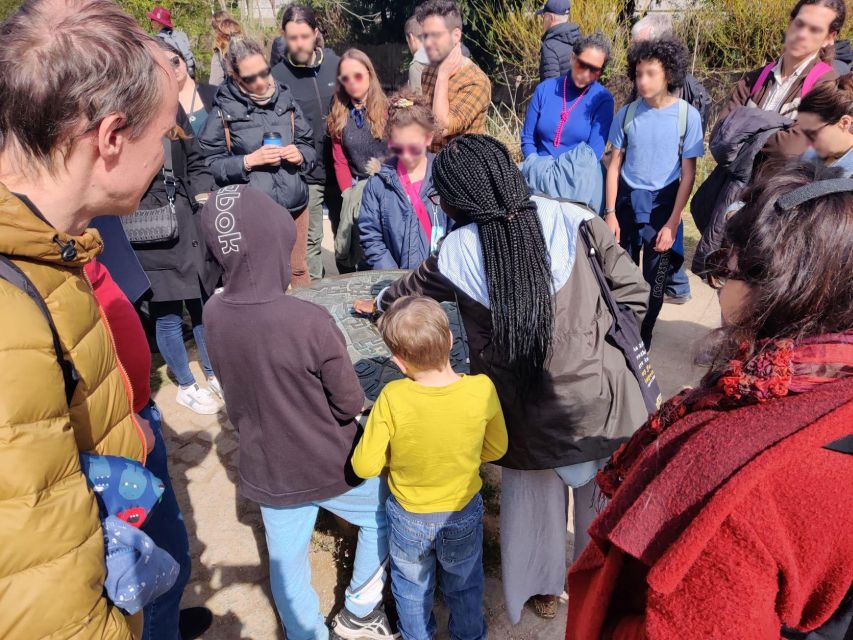
The Corpus Clock adds a memorable final landmark. Its unusual appearance gives the guide a natural way to discuss how Cambridge remembers, displays, and explains its past.
The tour’s broader subjects include statues, names, colonial objects, and the continuing legacy of imperialism at the university and in the city. These issues make the Corpus Clock more than a quick photograph stop. You are encouraged to consider who gets remembered, who gets honoured, and who may be left out.
This is also where the tour can feel most current. One suggestion from a participant was to include more present-day university controversies, which is a fair point. The walk clearly links history to modern questions, but the balance may lean toward historical context rather than a full account of current campus debates.
If you prefer a tour that only confirms the familiar Cambridge image, this section may feel demanding. If you like to look at public symbols with fresh questions, it may be the strongest part of the route.
What makes the guides effective
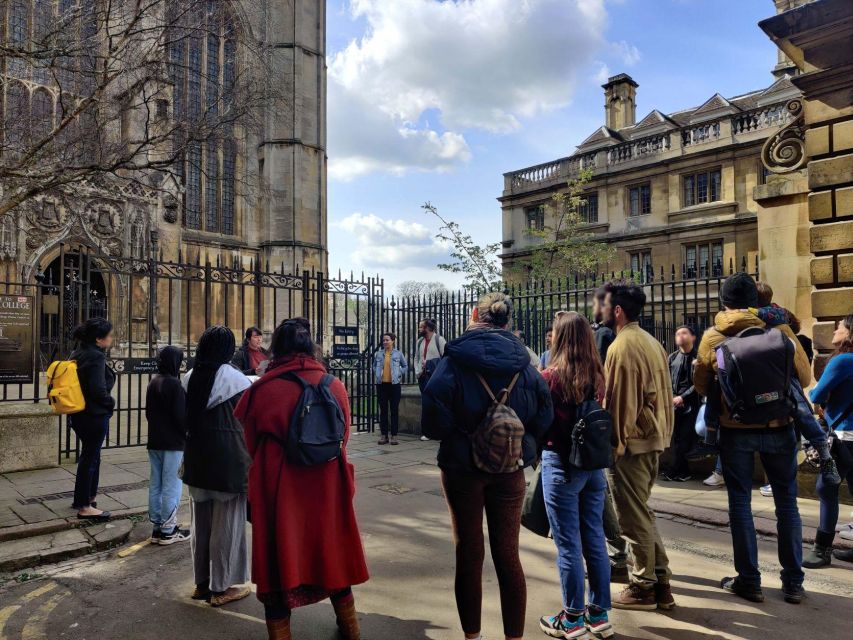
The guides are a major part of the experience. They are university researchers, and the best feedback focuses on their command of the material, friendly manner, and ability to involve the group.
Ruari led one highly praised walk, while Oscar was singled out for making the discussion engaging. The comments about both guides point to the same strength: they do not treat the tour as a lecture delivered over your head.
You may be asked how you feel about a historical situation or whether a public symbol should remain unchanged. That style makes the group part of the experience, though it also means you should be comfortable listening to viewpoints and thinking aloud.
The reported rating is 4.8 from 13 reviews, with repeated five-star marks for the guides’ clear explanations and engaging delivery. One visitor used the tour to see Cambridge quickly during a short afternoon, while another particularly valued the attention to the university’s relationships with townspeople, minorities, and women’s education.
A good guide can make complex subjects understandable without flattening them. That is the central value here. You leave with more questions than you arrived with, but also with a better map of why the city looks and feels the way it does.
A serious tour that stays approachable
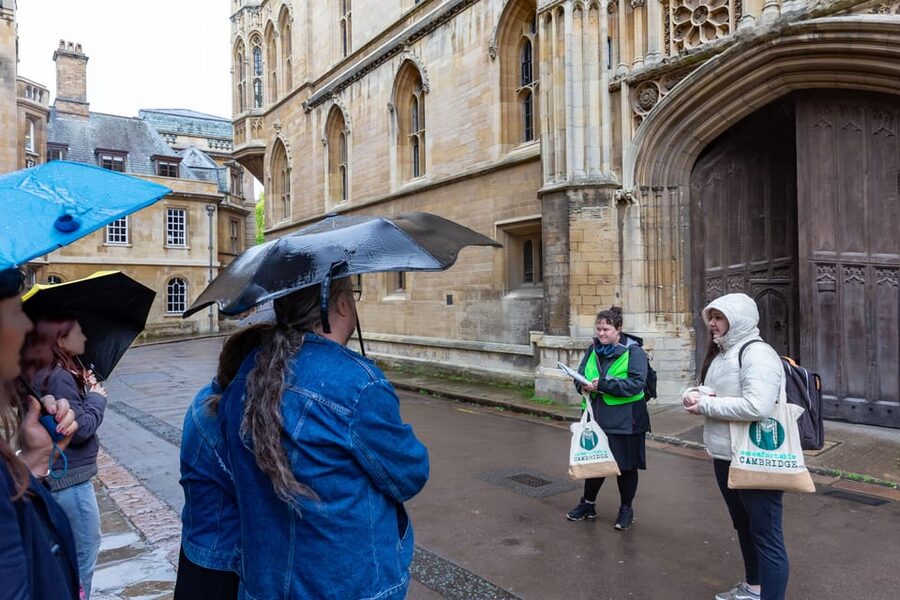
The title may sound as if the walk is designed to shock you. It is better understood as an invitation to examine familiar Cambridge sights from more than one angle.
The guide covers race, class, and gender, along with the university’s colonial connections and imperial legacy. Those subjects are not added as a token final note. They shape the way the buildings and public spaces are explained.
I appreciate that approach because it gives the tour a clear purpose. You are not walking past King’s College simply to collect a photograph. You are learning to ask who built the institution, who benefited from it, and whose experiences were missing from the official story.
The tone will depend partly on the guide and the group. The available feedback points to a friendly and thought-provoking experience, but the material remains serious. Give yourself time to listen rather than trying to rush from one photo stop to the next.
Price, timing, and what you receive
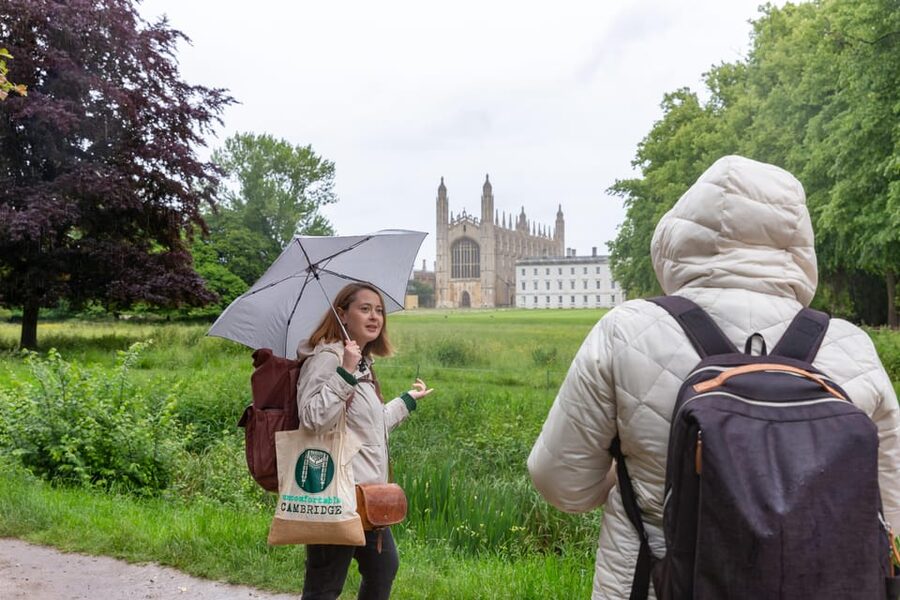
At $26 per person, the tour offers good value for a first visit to Cambridge. You get 90 minutes with a certified Uncomfortable Cambridge guide, a route through several major city-centre sights, a souvenir sticker, and a reading list.
The value is strongest if you want context. A standard sightseeing walk may spend more time on architecture and famous names, while this tour concentrates on how Cambridge’s past is remembered and questioned.
The price is less compelling if your only goal is to enter college buildings. Since no colleges are visited inside, you would need a separate college tour or admission ticket for that.
The short duration is another advantage. You can fit the walk into an afternoon, then continue with a museum, college visit, market stop, or meal. The route returns to its starting point, so you do not lose time figuring out where you are at the end.
Free cancellation or changes are available up to 24 hours before the tour, and you can reserve now and pay later. Those terms help if your Cambridge day depends on uncertain train times or changing weather.
Accessibility and the walking conditions
The route is mostly flat and wheelchair accessible. There are no steps on the stated route, although you will encounter uneven cobblestones, street crossings, and one ramp on and off a bridge.
There are places to sit or lean if needed. Carers attend free without booking, and the tour provider asks you to contact them in advance with specific accessibility needs so they can try to help.
The walk covers about 2 kilometres in 1.5 hours. That is a gentle distance for many people, but the cobblestones and central traffic can make it feel slower than the numbers suggest.
Toilets are available in local pubs along the route. This is useful practical information for anyone who needs a bathroom break, though the tour does not list a dedicated toilet facility of its own.
On weekends, central Cambridge streets can be quite busy. Allow extra room around the group and wear weather-appropriate clothing. The walk takes place outdoors, so rain, wind, or bright sun will affect your comfort.
Who will get the most from this walk
This is a good fit for first-time visitors who want a quick introduction with substance. You will see several famous sights and gain a framework for understanding the city before exploring on your own.
It also suits visitors who have already seen Cambridge and want a different reading of it. The focus on race, class, gender, colonial objects, and imperialism gives familiar buildings a new set of questions.
Students, teachers, history-minded visitors, and anyone interested in public memory will likely find the format rewarding. The reading list is especially useful if you want to continue with the topic after the walk.
The tour may be less suitable for young children who need constant movement or visitors seeking a purely lighthearted outing. The discussion is interactive and thoughtful, not a quick collection of amusing facts.
It also may not satisfy anyone who expects a full college experience. You see the key exteriors and viewpoints, but you do not go inside the colleges.
Final verdict: should you book it?
Book this tour if you want Cambridge to be more than a series of handsome buildings. For $26, you get a focused introduction to the city, strong historical context, and a guide who encourages you to think rather than simply take notes.
I would choose it early in a Cambridge visit, especially if I had only an afternoon. It gives you a useful base for later visits to colleges and museums, and it helps you notice the questions behind the city’s public image.
Skip it if you want interiors, a long architectural tour, or an entirely easygoing introduction. Choose it if you are willing to let a beautiful city become a little less comfortable, and a good deal more interesting.
FAQ
Where does the Original Uncomfortable Cambridge Tour begin?
Meet your guide outside the main entrance to the Cambridge Tourist Information Centre. The guide will wear a badge and carry a green Uncomfortable Cambridge branded tote bag.
How long does the tour last?
The tour lasts 1.5 hours and covers about 2 kilometres.
Where does the tour finish?
The walk returns to the Cambridge Tourist Information Centre.
Does the tour go inside the colleges?
No. The tour visits and discusses major college exteriors and nearby public areas, but it does not go inside any colleges.
What sights are included?
The route includes King’s College, Great St Mary’s, the Old Schools, the Backs and Darwin College, and the Corpus Clock.
Is the tour wheelchair accessible?
Yes. The route is mostly flat and wheelchair accessible, with no steps. It includes some uneven cobblestones, street crossings, and one ramp on and off a bridge.
Is the tour offered in English?
Yes. The live tour guide conducts the experience in English.
What happens if I need to cancel?
You can cancel or change your ticket free of charge up to 24 hours before the tour for a full refund. You can also reserve now and pay later.
Just added in Cambridge
- Haunted Stories of Cambridge – Private Walking Tour★ 5.0 · 1 review
- Grantchester: Walking Tour of TV Show Locations★ 4.9 · 6 reviews
- From Cambridge: Guided day trip to Stratford & The Cotswolds★ 4.7 · 4 reviews
- From Cambridge: Guided Day Tour to Bath and Stonehenge★ 4.8 · 14 reviews
- Cambridge: Shared Chauffeured Punting Tour★ 4.8 · 18 reviews
- Cambridge: Ghost Tour Led by University Alumni Guide★ 4.5 · 108 reviews
- Cambridge: Sightseeing Walking Tour with a Local Guide★ 3.0 · 5 reviews
- Cambridge: Private Chauffeured Punting Tour★ 4.8 · 3 reviews
Cambridge Tours, compared.
University Alumni Tour with Kings College Option
Read our review →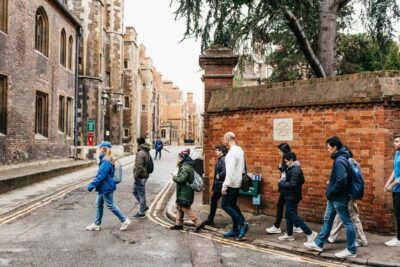
Alumni-Led Walking Tour w/ King’s College Option
Read our review →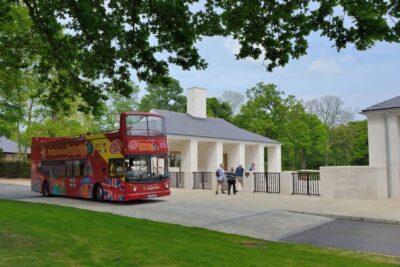

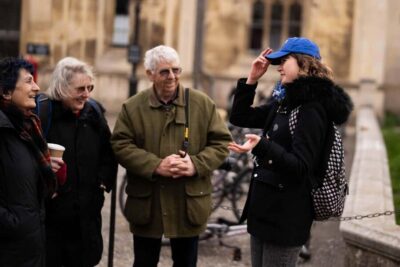
Alumni-Led Walking & Punting Tour w/Kings College
Read our review →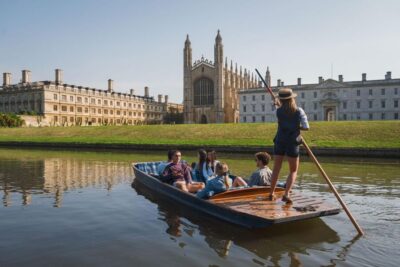
Other lists this tour turns up in