
REVIEW · HISTORICAL TOURS
Inspirational Women: Liverpool Past/Present History Tour
Women changed Liverpool in ways the usual sightseeing route often misses. This two-hour walking tour connects cathedrals, theatres, schools, hospitals, universities, and public buildings with the women who helped shape them. I like its clear focus on women’s social and political work, and I like that it includes both famous landmarks and easy-to-miss sites.
The strongest feature is the guide’s personal storytelling. Pam, who has led this tour, is described as passionate, friendly, and well-informed, with facts you are unlikely to hear on a standard city walk. The main consideration is pace: two hours covers a lot of ground, and some streets have cobbles or uneven surfaces.
In This Review
- Key things to know before you book
- Starting beneath Liverpool Cathedral’s great roof
- Blackburne House and the education of girls
- Rodney Street, Liverpool’s northern medical address
- The Everyman Theatre and the political life of Hope Hall
- Mount Pleasant and women in medicine
- Pembroke Place and the roots of the Red Brick universities
- The Metropolitan Cathedral and the Nightingale nurses
- Lime Street and a less comfortable Victorian past
- Suffrage meetings and the walk to the Walker Art Gallery
- St George’s Hall and the final chapter
- What the $28 price gives you
- Practical details for a smoother walk
- Who will enjoy this tour most?
- Should you book Inspirational Women: Liverpool Past/Present History Tour?
- FAQ
- How long is the Inspirational Women: Liverpool Past/Present History Tour?
- What language is the tour conducted in?
- Where does the tour begin?
- Does the tour enter Liverpool Cathedral?
- Is the tour wheelchair accessible?
- Are children and dogs allowed?
Key things to know before you book

- Liverpool Cathedral opens the story: See the Lady Chapel and its famous stained-glass windows, including women linked to Liverpool’s development.
- The route covers more than monuments: Blackburne House, Rodney Street, Mount Pleasant, Pembroke Place, and Lime Street all add different layers to the story.
- Suffrage is a recurring theme: The Everyman Theatre, local meeting sites, and St George’s Hall all connect to women’s political campaigns.
- Medicine gets proper attention: Learn about women who helped shape health care, education, and medical work despite the limits placed on them.
- The price is modest for a guided city walk: At $28 per person, you are paying for a focused subject, a live English-speaking guide, and cathedral access by donation.
- Plan for city walking: Wear comfortable clothes, bring water, and allow for busy areas, cobbled streets, and occasional uneven surfaces.
Starting beneath Liverpool Cathedral’s great roof
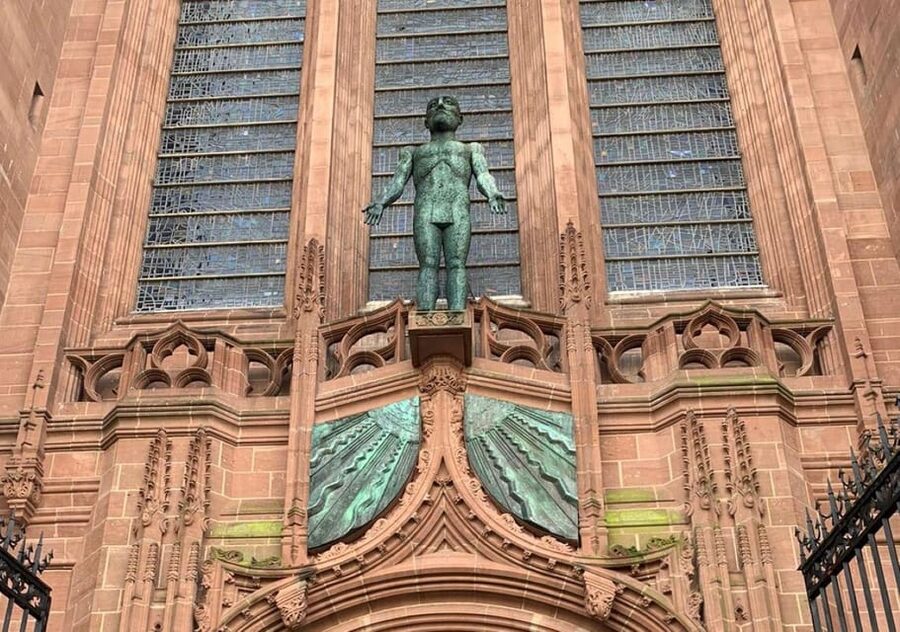
The tour begins at Liverpool Cathedral, an imposing sandstone building that gives the walk a strong opening. You are not simply looking around a famous church. The guide uses the cathedral to introduce women whose work affected Liverpool’s culture, growth, and public life.
The Lady Chapel is the first major stop. Its stained-glass windows are central to the visit, and you will hear about the women represented there and the lasting mark they made on the city. This gives the cathedral visit a sharper purpose than a quick photo stop.
You also see one of the final works by a major female sculptor of the modern era. The information provided does not identify the sculptor, so the value here comes from the guide’s interpretation rather than a list of names. If you enjoy art, architecture, and social history together, this early section sets the tone well.
Admission to Liverpool Cathedral is by donation, which is included in the experience. That matters for value. You get a guided look at one of Liverpool’s key interiors without paying a separate standard entrance fee, though a donation remains part of the visit.
More History Tours in Liverpool
- Liverpool: Haunted History Guided City Tour
★ 4.9 · 404 reviews - Liverpool: A Walk Through Time: Full History Walking Tour
★ 4.8 · 184 reviews - Liverpool: St James’ Cemetery Historical Ghost Tour
★ 4.9 · 169 reviews
Blackburne House and the education of girls
From the cathedral, the walk continues to Blackburne House, a Grade II listed building with a major role in girls’ and women’s education. The stop shifts the focus from religion and art to access: who was allowed to study, where women could learn, and how education changed their choices.
You hear about notable former pupils and the building’s part in educating girls and women. The exact alumni depend on the guide’s presentation, but the central point is clear. Liverpool’s progress was not built only by politicians, industrialists, and wealthy men. Schools and educational institutions gave women tools to work, campaign, teach, and lead.
I like this stop because it adds a practical side to the tour. Women’s history can easily become a string of heroic names. Blackburne House shows the structures that helped create opportunity, even when that opportunity was limited.
Rodney Street, Liverpool’s northern medical address
Rodney Street is often called the Harley Street of the North, a nickname that points to its long medical association. Here, the tour brings in famous female residents and begins to show how women entered a profession that was guarded by custom, institutions, and professional rules.
This is a walking stop rather than a museum visit. You will be looking at the street itself while listening to stories about the people connected with it. That format can be more revealing than a formal exhibit because you see the setting where these lives unfolded.
The medical theme continues later at Mount Pleasant, so Rodney Street works as an introduction. It gives you a reason to notice the buildings and street names around you. Liverpool’s medical story is not confined to one hospital or one landmark. It is spread through the city.
The Everyman Theatre and the political life of Hope Hall
The Everyman Theatre brings a different mood. Its earlier identity as Hope Hall is tied to a Bohemian setting and a strong political edge. The guide connects the site with ground-breaking movements, including the Suffragettes.
That connection makes the theatre more than a cultural stop. You learn how performance spaces, public discussion, social gatherings, and political organizing could overlap. In a period when women’s rights were fiercely debated, a place with an unconventional social character could offer room for ideas that had little welcome elsewhere.
The walk does not treat the suffrage movement as a single event. Instead, it shows how political activity was tied to everyday places in Liverpool. That is one of the tour’s best qualities. The past feels connected to streets and buildings you can still see, not locked away in a textbook.
A different kind of day out entirely:
- Liverpool: Liverpool Football Club Museum and Stadium Tour
★ 4.8 · 10,764 reviews - Liverpool: City & Beatles Tour with Live Guide & Live Music
★ 4.8 · 5,249 reviews - Liverpool: The Beatles Story Ticket
★ 4.7 · 4,197 reviews - Liverpool: Sightseeing River Cruise on the Mersey River
★ 4.4 · 3,427 reviews
Mount Pleasant and women in medicine
At Mount Pleasant, the subject turns firmly toward medicine, education, and health services. You hear about women from Liverpool who faced barriers before they could influence medical work and public health at the turn of the twentieth century.
This part should appeal to anyone interested in the practical work behind social change. Reform is often remembered through laws and speeches, but better health services also depend on people who organize, educate, nurse, campaign, and challenge old systems.
The tour also refers to the challenges these women overcame. That is important context. The walk is not only about success stories. It helps explain why success took effort, and why women’s contributions were often overlooked or credited to institutions rather than to the individuals who pushed them forward.
Pembroke Place and the roots of the Red Brick universities
Pembroke Place is linked to the phrase Red Brick universities, and the stop brings education back into the story. You hear about famous female alumni and several pioneering women connected with the area.
One figure is described as a major philanthropist who campaigned for women’s rights and family welfare in the early 1900s. The tour uses her work to connect personal wealth, public service, and political reform. Philanthropy was not always a substitute for government action, but it could fund services and causes that official systems ignored.
For you, this stop provides useful context about the wider city. Liverpool’s universities and educational buildings are not just impressive architecture. They are part of a long argument about who deserves education, health care, safety, and a public voice.
The Metropolitan Cathedral and the Nightingale nurses
The Metropolitan Cathedral of Christ the King gives the route another major interior and another shift in subject. Here you learn about the site’s history and its links with the Nightingale nurses.
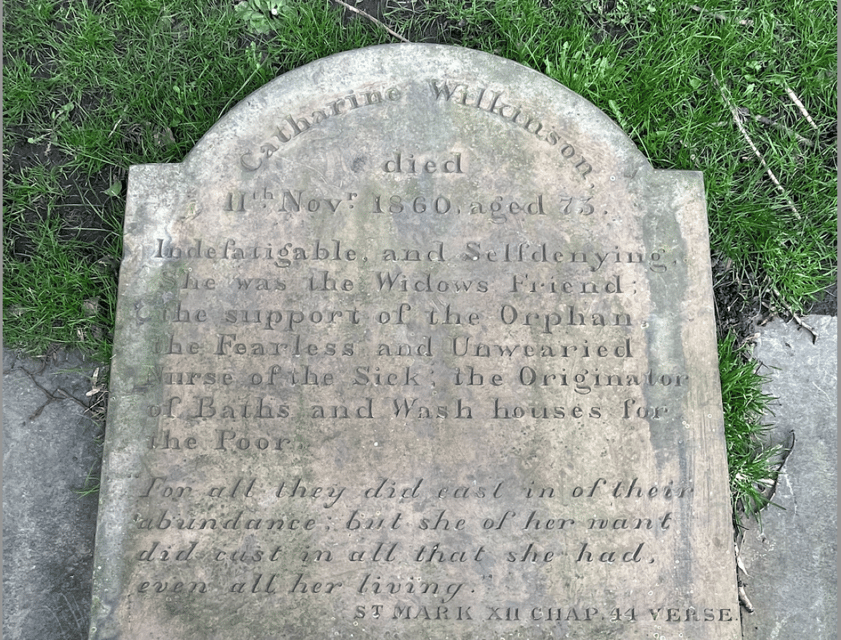
The tour also covers a leading reformer whose work supported women and families through changes to legislation in the nineteenth century. Her story is not presented only as a tragedy. The emphasis includes the substantial work she carried out, which helps avoid the usual habit of reducing historical women to their hardships.
This stop also broadens the meaning of care. Nursing, social reform, family support, and legal change are treated as connected issues. You are likely to come away with a better sense of how women influenced public health without always holding formal political power.
The cathedral itself is a useful contrast with Liverpool Cathedral. Seeing both gives the walk architectural variety, while the guide uses each building to discuss different people and institutions. The result is not a tour of churches with a few women added in. The buildings serve the larger story.
Lime Street and a less comfortable Victorian past
At Lime Street, the tone becomes darker. The area had an infamous reputation in the nineteenth century, and the guide explores one woman who appears in several famous Liverpool songs.
The supplied details do not identify her by name, so this is one place where you should listen closely and make a note if the story interests you. The stop connects women’s lives with popular culture and the less polished side of the city’s past.
It also reminds you that women’s history is not limited to reformers, educators, artists, and public figures. Women appear in songs, local legends, working-class stories, and accounts of places viewed with suspicion. That wider range is useful, though visitors looking only for famous names may find this section less predictable.
Suffrage meetings and the walk to the Walker Art Gallery
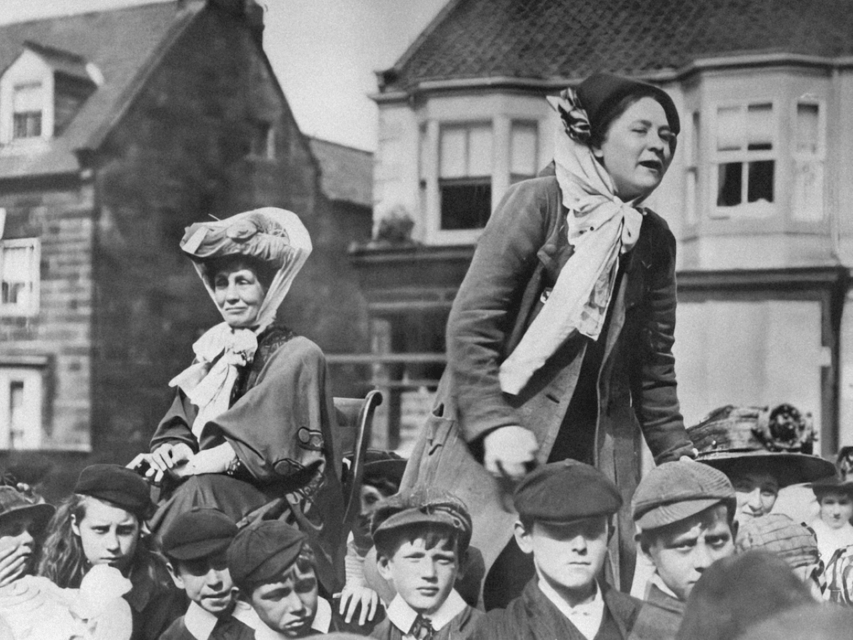
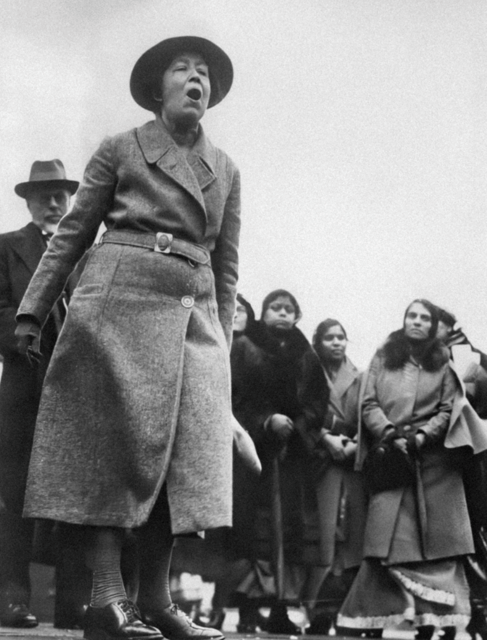
The route passes the site of many social and political union meetings from the early 1900s. You may not find a large marker or an elaborate attraction at this point. The value lies in knowing what took place there and imagining how women used ordinary city spaces to organize.
This is a good example of why a guided walk helps. On your own, you could pass the same location without any clue about its political importance. The guide supplies the missing layer, connecting the pavement beneath you with meetings, campaigns, and the fight for women’s rights.
The walk then reaches the Walker Art Gallery, often called the national gallery of the North. The tour focuses on women connected with the gallery, including women whose work or stories remain on display.
Because the gallery is a public art institution, this stop raises a useful question: who gets represented, and who gets remembered? You hear about women who helped shape the institution and about women still visible inside it. Depending on time and the exact route, the emphasis is on interpretation rather than a long gallery visit, so do not book this expecting an extended art tour.
St George’s Hall and the final chapter
The tour ends in the shadow of St George’s Hall, a Grade I listed Neoclassical building. It is an impressive place to finish, but the guide gives it more than visual appeal.
St George’s Hall has a role in the history of the suffragist movement. The stop also covers its surprising connection with modern-day cookery, adding a lighter and more unexpected note after the political and medical themes.
That mix is typical of the experience. You move from stained glass to schools, from medical streets to theatres, from suffrage meetings to art and food. The route has a clear subject, but it does not become repetitive.
What the $28 price gives you
At $28 per person, this is a reasonably priced specialist walking tour. You get two hours with an experienced live guide, a focused subject, access to Liverpool Cathedral by donation, and a route that includes several sites you may otherwise pass without understanding.
The value is strongest if you want interpretation rather than simple sightseeing. A standard city walk might tell you when a building was built or who designed it. This tour asks what women were doing around those buildings, how they gained influence, and why their work mattered.
There are limits. The walk does not include food or drink, and the price does not appear to include a full admission visit to every building along the route. The experience is primarily outdoors, with selected cathedral and chapel visits. If you want long periods inside museums or churches, you may need to return later on your own.
The two-hour length is also both a benefit and a compromise. It fits neatly into a morning or afternoon and works well as an introduction to Liverpool. At the same time, the route covers many locations, so some stories will be shorter than you might prefer.
Practical details for a smoother walk
Meet five to ten minutes early. Your guide from Liverpool Famous Walking Tours will be wearing purple, which should make the meeting easier in a busy city center.
The tour is in English and is led live. If Pam is guiding your departure, you can expect a warm, personal approach based on the strong description of her style. The guide’s energy matters here because the tour relies on spoken stories and location-based explanation rather than a large number of formal exhibits.
Wear comfortable clothes and bring water. A camera is useful for the cathedral, stained glass, architecture, and street details. The route can include busy areas, cobbles, and uneven surfaces.
The locations are accessible to wheelchairs and strollers, but group walking in crowded areas can still be slower or less direct. Well-behaved dogs are welcome. Children under 16 must be accompanied by an adult.
You can cancel up to 24 hours before the start for a full refund, and you can reserve now and pay later. These terms are useful if your Liverpool plans may change.
Who will enjoy this tour most?
I would choose this walk if you have already seen Liverpool’s main sights and want a more focused subject. It also suits first-time visitors who prefer social history to a broad list of dates and buildings.
It is especially good for:
- People interested in women’s rights and the suffrage movement
- Visitors curious about medicine, nursing, education, and social reform
- Art and architecture fans who want context inside Liverpool Cathedral and around the Walker Art Gallery
- Families with older children who can manage a two-hour city walk
- Solo visitors who want a structured introduction to central Liverpool
- Repeat visitors seeking stories beyond the usual Beatles and maritime themes
You may want to skip it if you dislike walking, want a deep art-gallery visit, or need a tour with plenty of free time at each stop. The subject is specific, and that is its strength. If women’s social, political, medical, and cultural contributions do not interest you, another Liverpool tour may offer better value.
Should you book Inspirational Women: Liverpool Past/Present History Tour?
Yes, if you want Liverpool explained through the women who educated, nursed, campaigned, organized, created, and reformed. I particularly like the way the route joins major buildings with overlooked meeting places and ordinary streets. That gives you a fuller picture than a monument-by-monument tour.
Book it early in your stay if possible. The route can help you decide which sites deserve a longer return visit, especially the cathedrals, Walker Art Gallery, and St George’s Hall. At $28, it is a fair buy for a focused two-hour walk, provided you are ready for city pavements, uneven surfaces, and a steady flow of stories.
FAQ
How long is the Inspirational Women: Liverpool Past/Present History Tour?
The walking tour lasts two hours.
What language is the tour conducted in?
The tour is conducted in English with a live guide.
Where does the tour begin?
The tour begins at Liverpool Cathedral. You should arrive five to ten minutes before the start time.
Does the tour enter Liverpool Cathedral?
Yes. Admission to Liverpool Cathedral is by donation, and the tour includes a visit to the Lady Chapel and its stained-glass windows.
Is the tour wheelchair accessible?
The locations are accessible to wheelchairs and strollers. You should still expect busy areas, group walking, cobbles, and some uneven surfaces.
Are children and dogs allowed?
Children under 16 must be accompanied by an adult. Well-behaved dogs are welcome.
Just added in Liverpool
- Soulful Sunday Roast Dinner with Drag Queens★ 4.6 · 3 reviews
- Liverpool: Private City Highlights Walking Tour★ 5.0 · 4 reviews
- Private City Tour – Liverpool★ 5.0 · 1 review
- From Liverpool: North Wales Sightseeing Tour Shore Excursion★ 4.3 · 34 reviews
- Liverpool: Beatles-Themed Private Taxi Tour with Transfers★ 5.0 · 113 reviews
- Liverpool: Wild West Saloon Immersive Cocktail Experience★ 5.0 · 2 reviews
- Liverpool: The Beatles Tour on Electric Pedal-Assist Ebikes★ 5.0 · 17 reviews
- Liverpool: 1980s Music Walking Tour with Guitarist “Nasher”★ 5.0 · 6 reviews
Historical Tours, compared.

Other lists this tour turns up in