
REVIEW · HISTORICAL TOURS
Oxford: History of Medicine Tour – by Uncomfortable Oxford™
Medicine gets personal fast. Oxford’s 1.5-hour History of Medicine Tour turns the city’s streets into a classroom, linking medieval epidemics, anatomy, public health, and the first penicillin trials. I like the way it connects medical progress with race, class, gender, and empire, and I like that university researchers lead the walks rather than general sightseeing guides. The main caution is simple: this is primarily a discussion tour, not a greatest-hits tour of medical buildings or indoor collections.
You’ll walk about 2 kilometers between famous Oxford landmarks, usually stopping outdoors for guided explanations. That makes the experience thoughtful and unusual, but cold rain can make a long outdoor lecture feel less appealing. If your guide is Jonathan, expect a clear and lively presentation, though you should still book this for its ideas and stories, not for access to William Osler’s house, the original penicillin culture, or college interiors.
In This Review
- Key points to know before booking
- What this Oxford medicine tour is really about
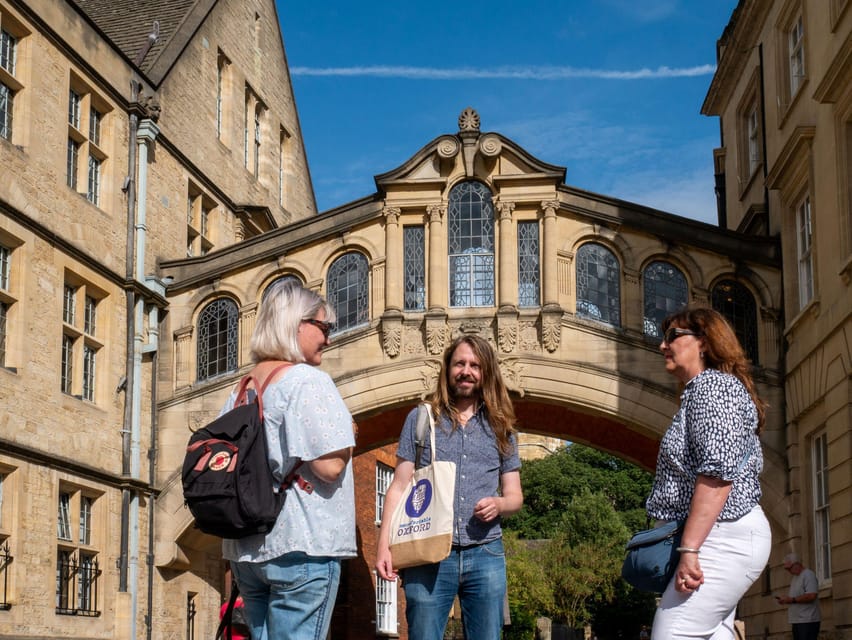
- Meeting beneath the Bridge of Sighs
- New College and the medieval city’s medical problems
- The Bodleian Quadrangle and the business of knowledge
- The Clarendon Building and the university’s authority
- The Kings Arms stop and the human side of medicine
- The Museum of Natural History and anatomy
- The War Memorial Garden and the cost of medical progress
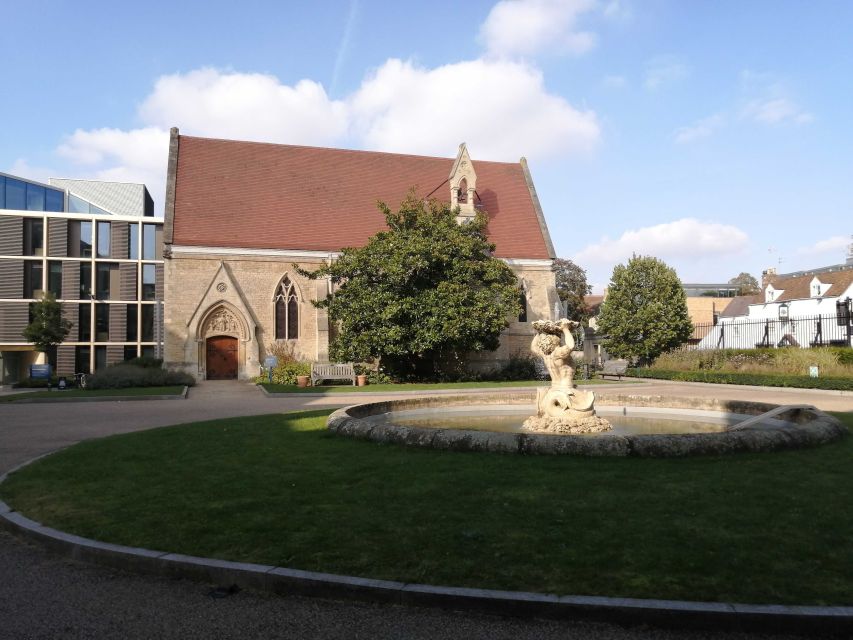
- St Luke’s Chapel and the final stop
- How the guides shape the experience
- What $29 buys you
- Walking conditions, weather, and access
- Who should book this experience?
- Should you book Oxford’s History of Medicine Tour?
- FAQ
- How long does the History of Medicine Tour last?
- How far does the tour cover?
- Where does the tour begin?
- Where does the tour finish?
- Does the tour enter Oxford colleges or the Bodleian Library?
- Is the tour wheelchair accessible?
- What language is the tour conducted in?
- Can I cancel the booking?
Key points to know before booking
- Medical history with a moral edge: The tour looks at plagues, anatomy, public health, and penicillin while asking who benefited and who paid the price.
- Oxford’s landmarks become evidence: The Bridge of Sighs, Bodleian Quadrangle, Clarendon Building, and Museum of Natural History all help explain how medicine developed.
- Expect an outdoor lecture with movement: You walk roughly 2 kilometers over 1.5 hours, with regular places to sit.
- No college or library interiors: The route passes important buildings but does not take you inside them.
- Best for curious visitors aged 12 and older: It suits people interested in ethics, social justice, and the less comfortable side of science.
- Good flexibility for uncertain plans: The $29 price includes an expert guide, with free cancellation up to 24 hours before the tour and a reserve-now, pay-later option.
What this Oxford medicine tour is really about
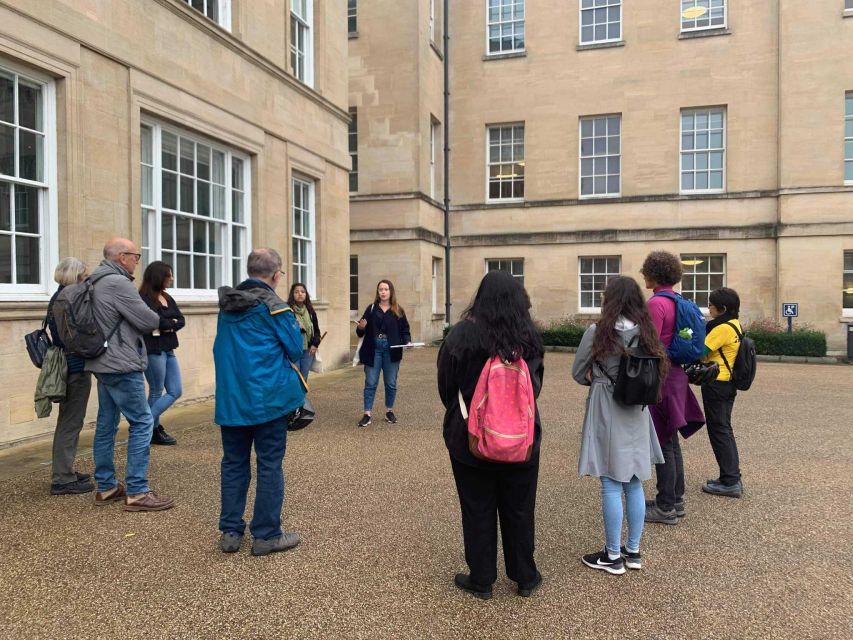
This is not a tidy march from plague to penicillin, with each discovery neatly improving life for everyone. Instead, the tour treats medicine as a long argument about power, evidence, public safety, and control of the body.
That approach gives the walk its character. You hear about epidemic disease in medieval Oxford, then move toward the founding of the medical school, the study of anatomy, and early penicillin trials. Along the way, the guide asks harder questions: Who was allowed medical care? Who could refuse treatment? Who was dissected? Who made the rules?
I appreciate that focus because Oxford can sometimes feel like a polished collection of grand facades. This tour uses those facades to discuss real systems behind them. The university was not simply a place where brilliant discoveries appeared. It was also an institution shaped by class, gender, race, empire, and competing ideas about public health.
The experience is recommended for ages 12 and older. That seems right. The subject matter can be serious, but the tour is presented as an educational walk rather than a graphic shock exercise. Still, parents should know that disease, death, anatomy, and medical inequality are central topics.
More History Tours in Oxford:
- Oxford: Private City Tour & University Historical Highlights
★ 4.9 · 14 reviews - Oxford: Historic Pubs & Taverns Guided Walking Tour
★ 4.6 · 5 reviews - London: Historic Pubs of Central London Walking Tour
★ 4.9 · 1,065 reviews
Meeting beneath the Bridge of Sighs
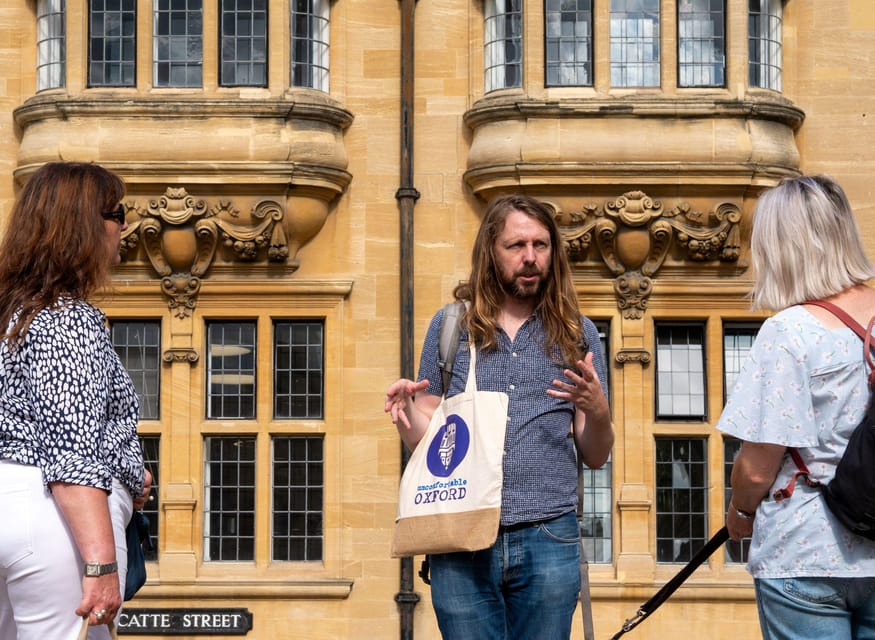
The tour begins under the Bridge of Sighs, also called Hertford Bridge. Look for a guide wearing a bright blue vest and carrying an Uncomfortable Oxford tote bag.
This is a useful meeting point because the bridge is easy to spot, though the area can be busy. Give yourself a few extra minutes to find the exact place beneath it, especially if you are arriving from another part of central Oxford.
The bridge itself is a fitting opening point. It is one of Oxford’s most photographed sights, but the tour quickly moves beyond pretty architecture. From the start, the guide places the university in a wider story about institutions, authority, and the way built spaces shape public life.
The walk is conducted in English. Private and small-group options are available, which may suit you if you want more room for questions or prefer a less public discussion. The exact starting time depends on availability.
New College and the medieval city’s medical problems
After the opening stop, you walk for about 15 minutes to New College. The route through Oxford’s streets is part of the experience, not just a way to fill time between points.
Here, the discussion turns toward medieval epidemic disease and the way illness affected the city. Oxford’s colleges, student population, religious foundations, and surrounding residents did not always experience disease in the same way. Public health was never only a medical matter. It also involved housing, movement, wealth, authority, and social divisions.
You may find this section especially useful if you want more than a list of plague dates. The guide connects disease to health geographies, meaning the way a person’s location, work, class, and access to resources could shape their chances of staying well.
There is no promise of entering New College. You see the exterior and use the surrounding streets as a setting for the talk. If you are hoping for an architectural tour or a college admission, this is the wrong ticket.
The Bodleian Quadrangle and the business of knowledge
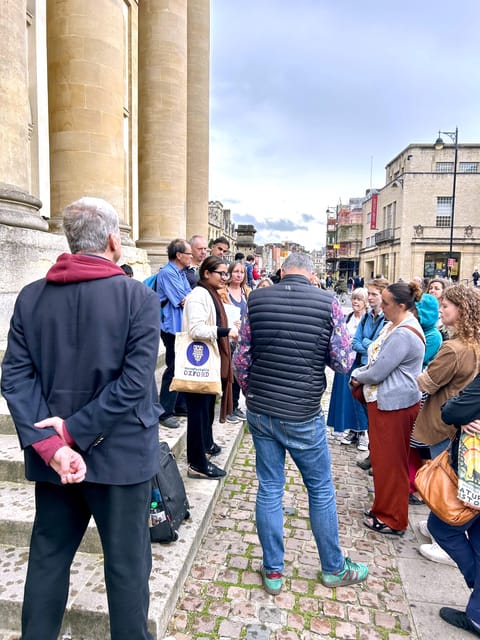
The next walk takes about 15 minutes and leads to the Bodleian Quadrangle. This is one of Oxford’s most impressive academic settings, but the tour does not enter the Bodleian Library.
That limitation matters. The stop is about the university’s role in creating, preserving, and controlling medical knowledge. You hear how academic study, medical training, and institutional authority developed together. The questions are not only about what doctors learned, but also about who was permitted to learn, whose testimony counted, and how accepted knowledge could reflect the values of its time.
This is where the tour’s emphasis on anatomy and dissection becomes especially important. The study of the human body helped medical education move forward, but it also raised serious questions about consent, dignity, and the ownership of a body after death.
For some people, this will be the strongest part of the experience. For others, it may feel less satisfying because you are discussing these subjects from outside rather than examining a collection or entering a historic medical room.
A few more options to weigh up in Oxford
- Oxford: University and City Walking Tour with Alumni Guide
★ 4.7 · 4,429 reviews - Oxford: City and University Tour, including college entry
★ 4.5 · 2,243 reviews - Oxford: Harry Potter Walking Tour Including New College
★ 4.6 · 1,446 reviews - Oxford: University Walking Tour with Christ Church Visit
★ 4.6 · 820 reviews
The Clarendon Building and the university’s authority
The walk continues for another 15 minutes to the Clarendon Building. This grand structure helps the guide explain the authority of the university and its place in Oxford’s public life.
The tour asks you to think about medical progress as something governed by institutions. Universities decide what counts as serious study, who receives training, and which practices gain respectability. Government bodies and public authorities decide how far health rules can reach into private life.
That leads to one of the tour’s main themes: the tension between public health and individual rights. During an epidemic, restrictions may protect a wider population, but they can also limit movement, work, privacy, and personal choice. The disagreement is not new, and Oxford’s history gives the debate a local setting.
This discussion should feel familiar after recent years, even though the tour focuses on a much longer span of history. You are encouraged to notice how quickly medical questions become political questions.
The Kings Arms stop and the human side of medicine
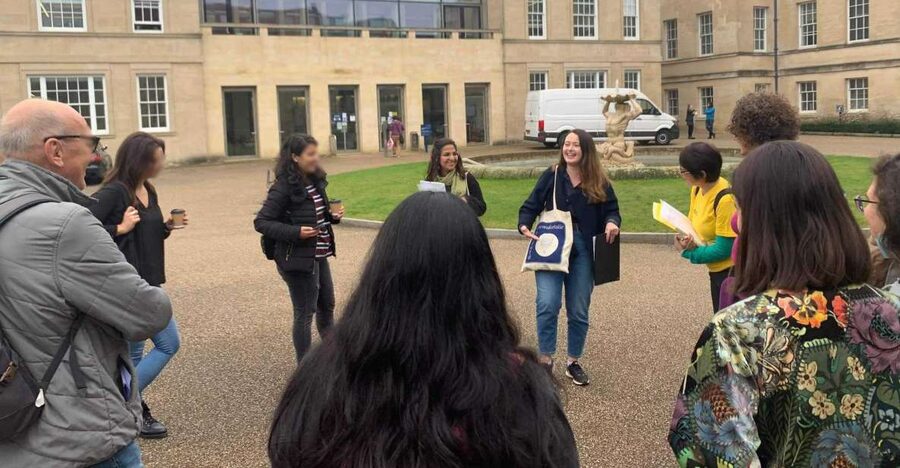
The route includes the Kings Arms Pub, which gives the walk a more ordinary city setting. Rather than looking only at grand university buildings, the tour brings the subject down to street level.
A pub is a useful place to discuss how medical ideas spread through daily life. It also reminds you that public health does not happen only in lecture halls or laboratories. It affects where people gather, how communities respond to illness, and which rules feel reasonable or intrusive.
There is not a meal or pub visit included as part of the tour. Treat this as a stopping point along the route, not a food experience. If you need a break, the walk includes places to sit, but you may want to eat before or after the tour rather than expect a refreshment stop.
The Museum of Natural History and anatomy
The Oxford University Museum of Natural History is one of the most natural stops on a tour about bodies, science, and classification. Again, the tour does not promise entry, so you should not confuse this experience with an indoor museum visit.
From the outside, the museum provides a strong setting for discussion about anatomy and the changing methods of scientific study. The guide can connect medical education with wider scientific efforts to classify bodies, specimens, disease, and human difference.
This is also where issues of race and empire fit into the tour’s wider argument. Scientific institutions did not operate outside politics. Collection practices, theories about human difference, and the distribution of medical resources were influenced by unequal systems that still affect modern life.
I value this part because it keeps the tour from presenting medicine as purely noble or purely harmful. The same institutions could produce useful research and damaging assumptions. You are asked to hold both facts in view.
The War Memorial Garden and the cost of medical progress
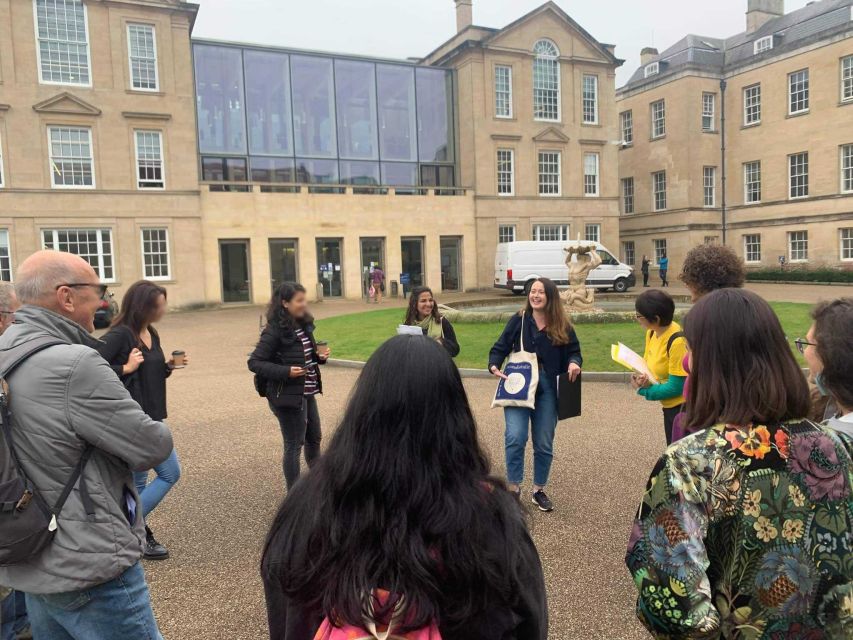
The route then moves toward the War Memorial Garden. This section provides a quieter setting for thinking about bodies, death, memory, and the people affected by public decisions.
The guide may use this part of the walk to connect medical progress with war, social obligation, and the unequal burdens carried by different groups. The tour’s wider themes of gender, class, and race remain important here. Medical systems can save lives, but they can also decide whose lives receive attention first.
This is not a traditional memorial tour, so do not expect a long architectural explanation of the garden itself. The site functions as a place for reflection and discussion. If the weather is poor, you may notice the outdoor format more sharply here. A waterproof jacket and comfortable shoes are sensible in every season.
St Luke’s Chapel and the final stop
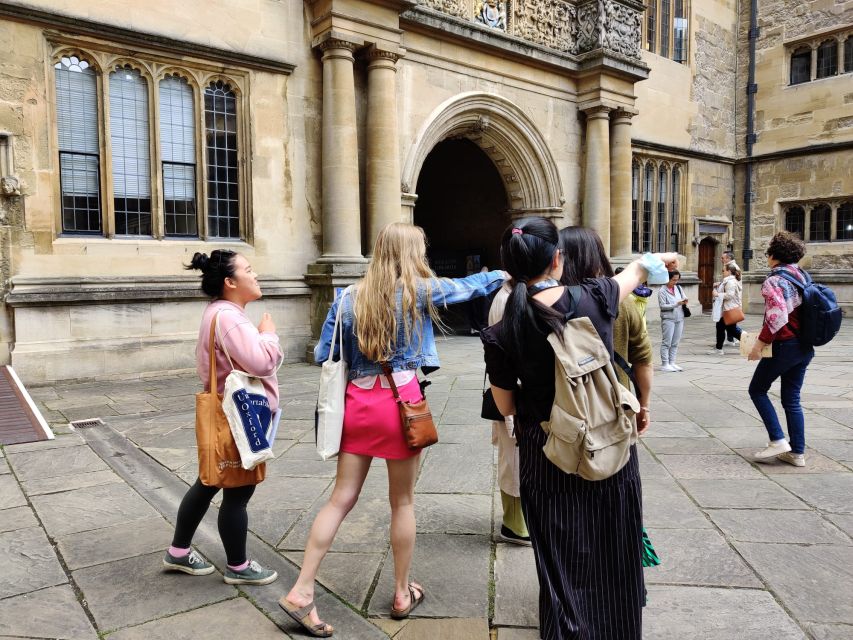
The tour finishes at St Luke’s Chapel, near the Radcliffe Observatory Quarter. By this stage, the walk has moved from medieval disease to modern medical research, including the first trials of penicillin.
Penicillin gives the tour a familiar note of scientific achievement, but the story is not presented as a simple victory lap. The point is to ask how medical advances are tested, distributed, credited, and used. The guide returns to the larger question of who controls the body and who benefits from medical progress.
The finish near St Luke’s Chapel also gives the tour a clear endpoint rather than leaving you somewhere vague in central Oxford. The itinerary can vary slightly depending on the guide and available time, so do not treat each stop as fixed to the minute.
How the guides shape the experience
Every guide is a university researcher who has completed Uncomfortable Oxford’s training program. That matters because the tour depends heavily on explanation, pacing, and conversation. The buildings alone will not tell you the story.
A strong guide can make difficult subjects clear without turning the walk into a dry academic seminar. Jonathan, named in one particularly positive account, was praised for making the material lively and easy to follow. Another booking found the guide enthusiastic and well informed but felt the experience became a lecture delivered in cold rain.
Both reactions are useful. Your enjoyment will depend partly on your mood and expectations. If you like asking questions about ethics and social systems, the discussion format should work well. If you want a fast-moving sightseeing tour with frequent interiors, it may feel too stationary.
What $29 buys you
At $29 per person, the tour is reasonably priced for a 1.5-hour walk led by a university researcher. You are paying for interpretation rather than admission tickets, transport, food, or access to restricted university buildings.
The value is strongest if you want a focused subject and an expert-led conversation. A general Oxford walking tour might cover more famous history and architecture, but it is unlikely to spend this much time on anatomy, medical ethics, public health, and the first penicillin trials.
The value drops if you expect to see physical medical artifacts or specific locations tied directly to famous doctors. One disappointed booking had hoped to see William Osler’s house and the original penicillin culture. Those expectations are not matched by this route.
The 4.2 rating from seven published ratings suggests a generally positive but not universal response. I would read that as a sign to book with clear expectations rather than assume the tour suits everyone.
Walking conditions, weather, and access
The tour covers about 2 kilometers over 1.5 hours, with places to sit along the way. It is wheelchair accessible, though mild uneven cobblestones and busy weekend streets can make movement slower.
The walk operates in all weather. Oxford rain can turn an interesting outdoor talk into a test of patience, so bring suitable clothing and a water bottle if needed. Comfortable shoes matter more than smart shoes here.
Because the route uses public streets, you will encounter normal city noise and foot traffic. If you have hearing concerns, a private or small group may be easier than a larger departure.
The tour does not go inside colleges or libraries. Keep that in mind when comparing it with Oxford admission tours, museum visits, or architecture-focused walks.
Who should book this experience?
I would choose this tour if you enjoy history that asks uncomfortable questions. It is particularly well suited to adults and older children interested in medicine, social justice, university history, public policy, or the ethics of scientific research.
It also works well after a standard Oxford sightseeing walk. Once you know the city’s postcard landmarks, this experience gives them a different purpose. The Bridge of Sighs and Bodleian Quadrangle become places where institutions, authority, and public life can be discussed.
I would not choose it if you want a light holiday activity, a mostly visual tour, or a tour packed with indoor visits. The content is serious, and much of the time is spent listening outdoors.
Book a private or small-group version if you want to ask detailed questions. On a regular group departure, the guide’s skill and the weather will have a larger effect on the experience.
Should you book Oxford’s History of Medicine Tour?
Book it if you want Oxford’s medical past presented as a debate about people, power, and responsibility. The strongest parts are the university researchers, the links between famous landmarks and medical history, and the attention given to race, class, gender, empire, and individual rights.
Skip it if your main goal is to visit medical homes, laboratories, original objects, or college interiors. At $29, it is fair value for a thoughtful expert walk, but only when you understand that the main attraction is the conversation.
FAQ
How long does the History of Medicine Tour last?
The tour lasts 1.5 hours.
How far does the tour cover?
The walk covers about 2 kilometers.
Where does the tour begin?
Meet your guide under the Bridge of Sighs, also called Hertford Bridge. The guide wears a bright blue vest and carries an Uncomfortable Oxford branded tote bag.
Where does the tour finish?
The tour finishes at St Luke’s Chapel.
Does the tour enter Oxford colleges or the Bodleian Library?
No. The route visits or passes the exteriors of places such as New College and the Bodleian Quadrangle, but it does not go inside colleges or libraries.
Is the tour wheelchair accessible?
Yes. It is wheelchair accessible, though the route includes mild uneven cobblestones and busy streets on weekends. There are places to sit during the walk.
What language is the tour conducted in?
The live tour guide speaks English.
Can I cancel the booking?
Yes. You can cancel up to 24 hours before the tour for a full refund. A reserve-now, pay-later option is also available.
Just added in Oxford
- Oxford: City and Universities Express Tour & Audio Guide★ 4.5 · 18 reviews
- London: Small Group Oxford, Stratford and Cotswolds Day Tour★ 4.9 · 104 reviews
- Private tours to Cotswolds, Blenheim Palace, Oxford★ 5.0 · 1 review
- Oxford University: Guided Small Group Walking Tour★ 4.8 · 90 reviews
- Oxford: Alumni-Led Walking Tour w/New College Entry Option★ 4.6 · 124 reviews
- Oxford: University Tour for Prospective Students★ 4.9 · 26 reviews
- Oxford: City, Universities and Pubs Walking Tours★ 4.2 · 6 reviews
- Oxford: University & City Walking Tour with Recent Graduate★ 5.0 · 2 reviews
Historical Tours, compared.




Other lists this tour turns up in