
REVIEW · WALKING TOURS
Oxford: Pre-Raphaelite Walking Tour with Exeter College
Art changes the way you see Oxford. This private walking tour links the city’s university traditions with the Pre-Raphaelite artists who studied, taught, and worked here, giving you more than a standard college walk. I especially like the chance to enter the Oxford Union library, where Arthurian frescoes by young William Morris and Edward Burne-Jones decorate the Victorian interior. The view from Exeter College’s Fellows’ Garden is another strong point, with Radcliffe Square, All Souls College, and the Radcliffe Camera laid out below.
The main consideration is access. Exeter College cannot be guaranteed on every date, especially during university graduations or other closures. The tour also suits adults and older teenagers better than young children, and the $134 price is a serious spend for a 2.5-hour walk. Still, Alisdair’s warm, focused guiding style and his ability to adjust the route can make this worthwhile for anyone with a real interest in art, Oxford, or literature.
In This Review
- Key points at a glance
- Starting on Broad Street with Oxford’s wider story
- Why the Pre-Raphaelites matter in Oxford
- Inside the Oxford Union’s Victorian library
- Exeter College, the chapel, and the Magi artwork
- The Fellows’ Garden view over Radcliffe Square
- What a private small-group format adds
- Is $134 a fair price?
- Who should book this Oxford walk?
- My verdict on the Pre-Raphaelite experience
- FAQ
- Where does the tour begin?
- How long does the tour last?
- What languages are available?
- Is this a private tour?
- Is Exeter College always included?
- What happens if Exeter College is closed?
- Can I enter the Oxford Union library?
- Is the tour suitable for children?
- Can I cancel or pay later?
Key points at a glance
- Pre-Raphaelite focus: Learn how William Morris and Edward Burne-Jones connected Oxford, medieval stories, and art.
- Oxford Union library access: See Victorian interiors and Arthurian frescoes created when the artists were still amateurs.
- Exeter College’s Fellows’ Garden: Enjoy one of Oxford’s finest views, when the college is open.
- Private guiding: The tour is reserved for private small groups, so the route can be shaped around your interests.
- Useful backup plans: If Exeter College is closed, the route may include Keble College chapel and quadrangle or the Ashmolean Museum.
- Flexible booking: You can cancel up to 24 hours ahead for a full refund and reserve without paying immediately.
Starting on Broad Street with Oxford’s wider story
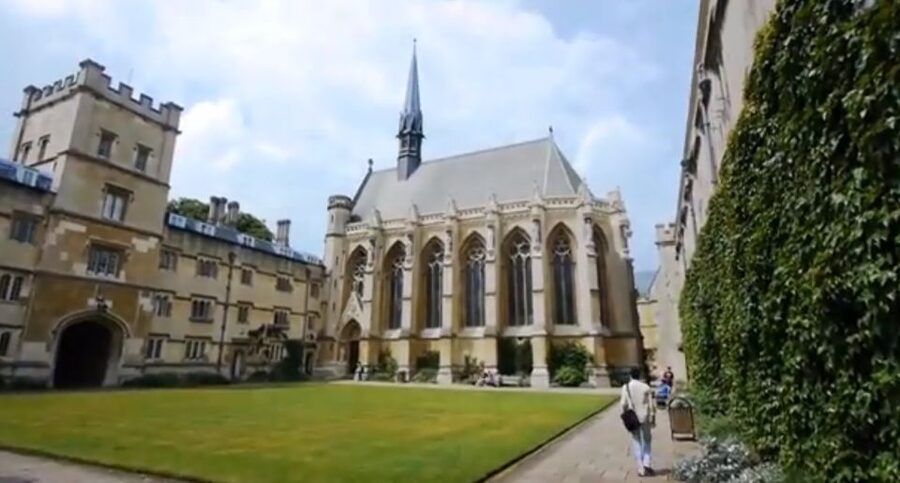
The tour begins outside the Oxford Tourist Information Centre at 15 Broad Street, marked by a red sign and a guide wearing a red lanyard. This is a practical meeting point in the heart of central Oxford, close to the university buildings and the city’s main pedestrian routes.
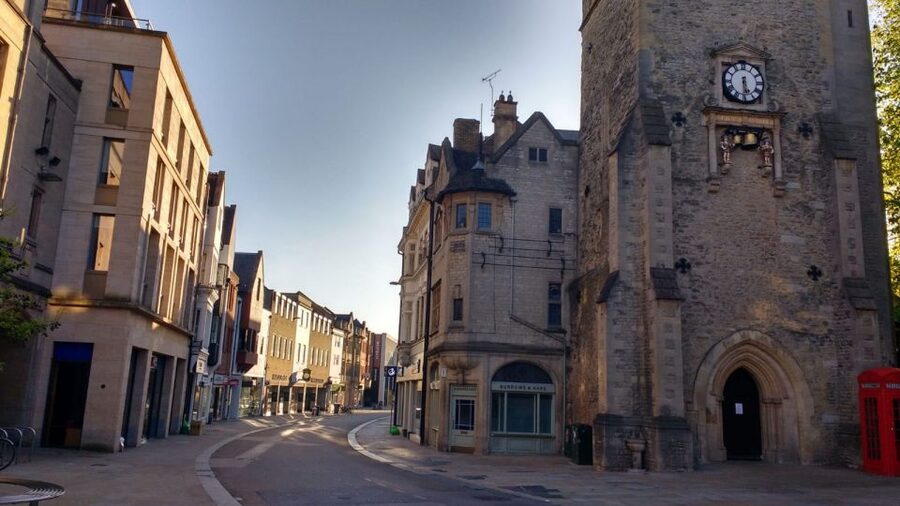
Your guide first sets the stage with Oxford’s general story. That matters because the Pre-Raphaelite movement makes more sense when you understand the university system around it. Oxford has 38 colleges, each with its own traditions, buildings, chapels, gardens, and academic life. The university is not one enclosed campus. It is a collection of institutions woven through the city.
A good guide can make that arrangement easier to understand, and Alisdair appears to be the strongest part of the experience. He is an award-winning local guide with special knowledge of Oxford and the Pre-Raphaelites. One verified account describes him as punctual, personable, and able to point out places the guest would not have found alone. That is important in Oxford, where many of the most interesting spaces are tucked behind college gates or easy to miss from the street.
The walk lasts about two hours in the itinerary description, while the full activity is advertised at 2.5 hours. You should allow the full 2.5 hours, since college entry and time inside the Union library can affect the pace. This is a walking tour, not a hop-on, hop-off outing, so comfortable shoes are sensible.
More Walking Tours in Oxford
- Oxford: University and City Walking Tour with Alumni Guide
★ 4.7 · 4,429 reviews - Oxford: Harry Potter Walking Tour Including New College
★ 4.6 · 1,446 reviews - Oxford: University Walking Tour with Christ Church Visit
★ 4.6 · 820 reviews
Why the Pre-Raphaelites matter in Oxford
The Pre-Raphaelite Brotherhood sought a return to the detail, strong color, and complex compositions of early Italian art from the 1400s. The movement was partly a reaction against the formal academic art of the period. Its members looked back to medieval subjects, Arthurian stories, nature, poetry, and intense visual detail.
You do not need to arrive as an art specialist. The tour is designed to explain the ideas in plain terms while connecting them to the places around you. That balance is useful. A guide who only lists names and dates can make art feel like homework, while a guide who only tells entertaining stories can leave out the reasons the work matters.
The Oxford connection becomes especially interesting through William Morris and Edward Burne-Jones. Both were tied to the university and later became major figures in British art and design. Their interests reached beyond painting into medieval stories, decoration, furniture, textiles, stained glass, and book design.
Oxford provides a natural setting for this subject. Its colleges preserve the kind of Gothic buildings, chapels, libraries, and enclosed gardens that fed the artists’ interest in the medieval past. The tour uses those surroundings as part of the lesson rather than treating the art as an isolated topic.
I like this approach because it gives you two ways to enjoy the walk. You can follow it as an Oxford university tour with an unusual art theme, or you can focus closely on the Pre-Raphaelite story. The private format should make it easier to ask questions and pause when a particular artist or building catches your attention.
Inside the Oxford Union’s Victorian library

The Oxford Union is one of the most valuable stops on the route. Special entry lets you see its Victorian library, a room that is not normally open to the public in the same way. The library contains Arthurian frescoes made by Morris and Burne-Jones when they were still amateurs.
That detail gives the stop a human edge. You are not simply looking at polished work by artists at the height of their careers. You are seeing an early project tied to friendship, ambition, and the young men’s fascination with medieval legend.
The Arthurian subject also fits the larger Pre-Raphaelite story. Medieval tales offered the artists a world of knights, romance, moral struggle, and symbolic figures. Those themes appear again and again in their work. Inside the Union, you can see how this interest took form on the walls of a working academic building.
The library entry is listed as worth from £5 per person, but its real value is the access itself. Many Oxford walks pass the Union from outside or mention its political history without taking you into the rooms. Here, the interior becomes central to the tour.
The Union library is also the stop most likely to appeal to someone who is curious but not already devoted to the movement. The frescoes provide something immediate to look at while the guide explains the artists’ ambitions. You can judge the work for yourself rather than relying only on a lecture.
One practical point is worth keeping in mind. Entry is described as available as and when open, and so far it has not been closed for this experience. Still, university buildings can have changing access rules. The guide may need to adjust the route if an unexpected closure occurs.
Exeter College, the chapel, and the Magi artwork
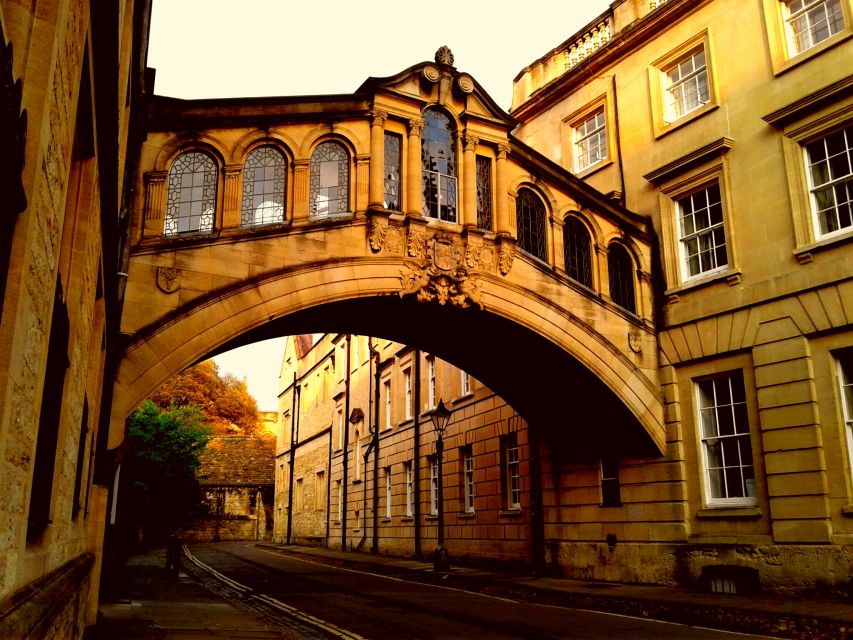
When Exeter College is open, the tour continues inside one of Oxford’s colleges. The visit can include the chapel and its Magi artwork, followed by a passage from the Front Quadrangle toward the Fellows’ Garden.
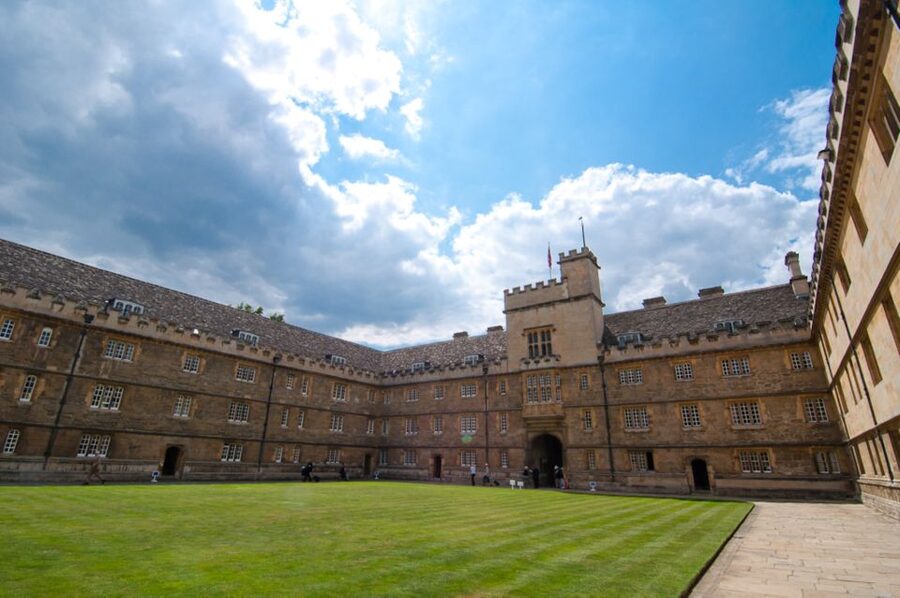
College access gives you a better sense of how Oxford works than a street-only walk. From the outside, a college may look like a single grand building. Inside, it becomes a series of connected courts, rooms, chapels, and gardens used by students and fellows.
Exeter is a particularly fitting choice for this tour because it continues to welcome students of the fine arts. That makes the Pre-Raphaelite theme feel connected to Oxford’s present, not just to a nineteenth-century chapter in art history.
The chapel provides a quieter change of pace after the street walk and the Union library. Your guide can connect the religious setting, medieval imagery, and artistic interests of Morris and Burne-Jones without forcing the comparison. The Magi subject also fits the period’s interest in old stories and carefully observed decorative detail.
Do not treat Exeter entry as guaranteed, though. Graduations and other university events can close some or all college buildings. The guide will warn you if a known closure affects your date, but access may not always be confirmed far in advance.
If Exeter is closed, possible alternatives include Keble College chapel and quadrangle or the Ashmolean Museum. These are not identical substitutes. You will miss Exeter’s Fellows’ Garden and its particular view, but you may still get strong architecture, art, or Oxford context. The guide’s ability to create a worthwhile replacement was especially useful during an earlier period when Exeter was closed.
A different kind of day out entirely:
- Oxford: City and University Tour, including college entry
★ 4.5 · 2,243 reviews - Oxford: Harry Potter Insights Divinity School Group Tour
★ 4.6 · 783 reviews - Morse, Lewis and Endeavour Walking Tour of Oxford
★ 4.8 · 710 reviews - Oxford: City Sightseeing Hop-On Hop-Off Bus Tour
★ 4.5 · 706 reviews
The Fellows’ Garden view over Radcliffe Square

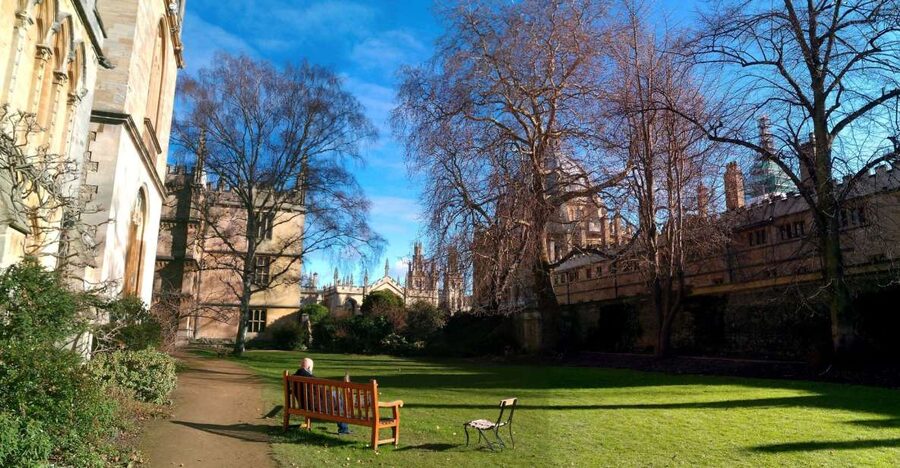
For many people, the high point of the college visit is the Fellows’ Garden. From here, you can look toward Radcliffe Square, All Souls College, and the Radcliffe Camera.
Oxford has plenty of memorable street views, but an enclosed college garden offers a different angle. The buildings appear as part of a carefully framed group rather than as separate sights encountered in traffic and crowds. It is a good place to pause and understand how the university’s architecture fits together.
The view is also a reminder that Oxford’s beauty is not only found in its most famous facades. Gardens and inner courts shape the experience of the city, yet many are accessible only at certain times or through a college visit. That is a solid reason to choose this tour over a general walk that stays entirely on public streets.
Access remains the key variable. If Exeter is unavailable, you should not book expecting this exact viewpoint. Ask about the expected college opening situation before the tour if this view is your main reason for going.
What a private small-group format adds
This is a private group experience rather than a large scheduled walk. That changes the feel of the outing. You are not sharing the guide’s attention with a crowd, and you can ask about a particular artist, college tradition, or building when it interests you.
The small-group format is especially useful for a specialist subject. Pre-Raphaelite art can lead into literature, design, medieval history, Oxford alumni, and university customs. A fixed public tour may need to keep moving, while a private guide can spend more time on the parts that appeal to you.
Alisdair’s style seems suited to this format. The feedback describes extensive subject knowledge delivered without overwhelming the guest. That is exactly what I would want here. Oxford offers too many facts for one short walk, so selection matters more than quantity.
The tour is offered in English or Italian. The guide is local and has bespoke knowledge of Oxford, which should help with both broad city history and the narrower art focus.
It is not aimed at children under 12. I would also hesitate to choose it for a family group whose main goal is a fast introduction to Harry Potter filming locations or famous college exteriors. The art and literary material requires attention, and the best moments come from looking closely and listening.
Is $134 a fair price?
At $134 per person, this is expensive compared with a basic Oxford walking tour. You are paying for a private small-group experience, a specialist guide, and possible entry to two university interiors. The Union library entry alone is listed at from $5, while Exeter College entry can cost up to $3 per person when available.
Those ticket amounts do not explain the whole price. The main cost is the private guiding. You are buying a focused route rather than a general commentary walk, plus the flexibility to ask questions and receive a replacement plan if a college is closed.
I think the price makes the most sense for a couple, family group, or circle of friends who already care about art, architecture, literature, or Oxford. For one person on a tight budget, it is harder to justify unless this subject is a central interest.
The value also depends on access. If Exeter is open and you see both the Union library and the Fellows’ Garden, the tour offers a well-shaped mix of interiors, art, university history, and city views. If one venue closes, the alternatives help protect the experience, but they cannot guarantee the same combination.
Free cancellation up to 24 hours before the start gives you useful flexibility. You can also reserve now and pay later, which helps if your Oxford schedule is still changing.
Who should book this Oxford walk?
I would recommend it to:
- Art lovers who want more than museum labels
- People interested in William Morris or Edward Burne-Jones
- Visitors who enjoy literary and medieval themes
- First-time Oxford visitors seeking both general history and college access
- Returning visitors who have already seen the main streets and want a more focused subject
- Private groups that prefer questions and conversation over a large crowd
I would skip it if you want a fast, broad tour of every famous Oxford sight. I would also look elsewhere if you need guaranteed entry to a particular college or are traveling with children under 12.
The tour works best when you accept a little uncertainty around college access. Exeter is a major part of the plan, but university life can interrupt public visits. The guide’s alternative venues and local experience reduce the risk, though they cannot reproduce every feature of Exeter.
My verdict on the Pre-Raphaelite experience

Book this tour if the idea of seeing Oxford through art, medieval stories, and university tradition appeals to you. The Oxford Union library is a distinctive stop, and the chance to reach Exeter College’s Fellows’ Garden adds an access-led moment that a normal city walk may not provide.
I especially value the combination of Alisdair’s focused guiding, the Arthurian frescoes, and the view over Radcliffe Square. The strongest praise attached to this experience centers on his punctuality, enthusiasm, and ability to explain the subject without burying you in facts.
The decision comes down to priorities. Pay the $134 if you want a private, specialist walk and would enjoy asking questions along the way. If you mainly want famous exteriors, a cheaper general Oxford walk will probably do the job. If you want an informed look at the people and ideas behind Oxford’s artistic life, this is the more memorable choice.
FAQ
Where does the tour begin?
Meet the guide outside the Oxford Tourist Information Centre at 15 Broad Street, Oxford, OX1 3AS. Look for the red sign and a guide wearing a red lanyard.
How long does the tour last?
The full activity lasts 2.5 hours. The walking portion is described as about two hours.
What languages are available?
The live guide is available in English or Italian.
Is this a private tour?
Yes. It is offered for private groups and is described as a private small-group experience.
Is Exeter College always included?
No. Entry depends on whether Exeter College is open. Graduations and other university events can prevent access.
What happens if Exeter College is closed?
Possible alternatives include Keble College chapel and quadrangle or the Ashmolean Museum. The guide may adjust the route depending on what is open.
Can I enter the Oxford Union library?
Entry to the Oxford Union library is included when it is open. The tour has so far not encountered a closure there, but access is still described as subject to opening conditions.
Is the tour suitable for children?
It is not aimed at children, and children under 12 are not considered suitable for the experience.
Can I cancel or pay later?
You can cancel up to 24 hours before the tour for a full refund. You can also reserve the tour and pay later.
Just added in Oxford
- Oxford: City and Universities Express Tour & Audio Guide★ 4.5 · 18 reviews
- London: Small Group Oxford, Stratford and Cotswolds Day Tour★ 4.9 · 104 reviews
- Private tours to Cotswolds, Blenheim Palace, Oxford★ 5.0 · 1 review
- Oxford University: Guided Small Group Walking Tour★ 4.8 · 90 reviews
- Oxford: Alumni-Led Walking Tour w/New College Entry Option★ 4.6 · 124 reviews
- Oxford: University Tour for Prospective Students★ 4.9 · 26 reviews
- Oxford: City, Universities and Pubs Walking Tours★ 4.2 · 6 reviews
- Oxford: University & City Walking Tour with Recent Graduate★ 5.0 · 2 reviews
Walking Tours, compared.

Magical London: Harry Potter Guided Walking Tour
Read our review →

University and City Walking Tour with Alumni Guide
Read our review →
Harry Potter Movies Walking Tour (Kids Go Free)
Read our review →
The Great British Rock and Roll Music Walking Tour
Read our review →
Jack the Ripper Walking Tour – Ripper Vision Tours
Read our review →
Other lists this tour turns up in