
REVIEW · SALISBURY TOURS
Salisbury: Old Sarum Entry Ticket
Old Sarum makes ruins feel surprisingly alive. This open hilltop site lets you picture a medieval town, castle, and cathedral where only stone outlines remain. I especially like the broad views toward Salisbury and the way the visit connects Iron Age defenses with Roman, Saxon, Norman, and royal power. The main drawback is simple: at $13 per group of up to four, the price can feel high if you expect complete buildings rather than foundations and earthworks.
The visit is self-guided, with useful signs and friendly staff to fill in the gaps. You can enter easily, skip the ticket line, and spend the day at your own pace. Bring proper shoes, though, because uneven surfaces and exposed ramparts make this a weather-dependent outing.
In This Review
- Key points to know before you go
- Why Old Sarum feels bigger than its ruins
- Start with the Iron Age ramparts
- See where Salisbury’s first cathedral stood
- Climb toward the royal castle
- Use the signs to build the story
- The view toward Salisbury is part of the experience
- Old Sarum’s decline is as interesting as its rise
- How long should you spend here?
- Is $13 per group good value?
- Who will enjoy Old Sarum most?
- Practical advice for a better visit
- Should you book Old Sarum?
- FAQ
- Where is Old Sarum?
- What does the ticket include?
- How much does admission cost?
- How long is the ticket valid?
- Can I cancel my booking?
- Do I have to pay immediately?
- Where do I enter Old Sarum?
- Is Old Sarum wheelchair accessible?
- What should I bring?
Key points to know before you go
- Over 2,000 years on one hill: Old Sarum brings Iron Age, Roman, Saxon, Norman, and medieval history into one compact site.
- The original Salisbury cathedral site: You can walk around the footprint of the first cathedral and consider why the city later moved downhill.
- A royal castle on the motte: The remains show the defensive importance of Old Sarum and its link to William the Conqueror.
- Excellent views from the ramparts: Salisbury Cathedral and the Wiltshire plains spread out below the hilltop.
- A quiet, self-guided visit: Informative signs do most of the explaining, with staff available on site.
- Best for history and open-air walking: It suits visitors who enjoy ruins, wide views, and thoughtful interpretation more than polished interiors.
Why Old Sarum feels bigger than its ruins
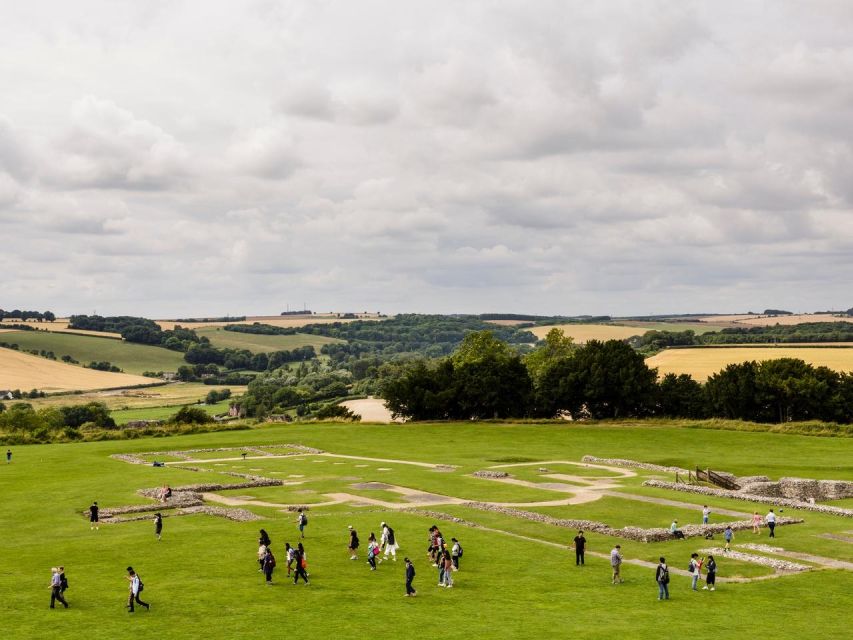
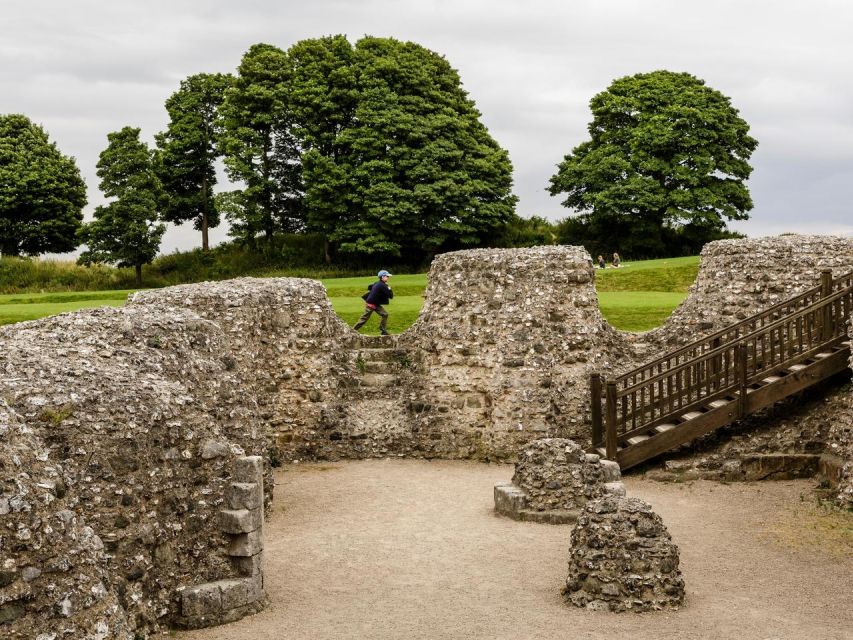
Old Sarum is not a grand intact castle. It is a broad, grassy hill with earthworks, foundations, scattered masonry, and the unmistakable shape of a settlement that once mattered greatly.
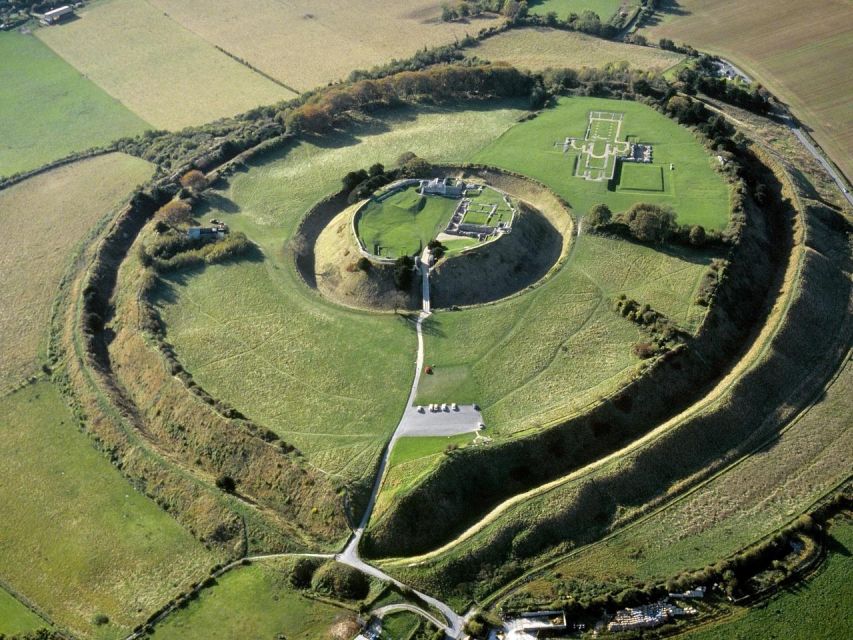
That contrast is part of the appeal. You are not simply looking at a preserved building. You are reading the site through its layout. The circular Iron Age ramparts reveal the hill’s earliest defensive purpose. Inside them, the castle and cathedral show how military power and religious authority later took over the same strategic ground.
I find that this kind of place rewards a slower pace. If you rush around taking photographs, you will see grass and stones. If you pause beside the foundations and use the signs, the site begins to make sense. Roads, walls, religious buildings, government activity, and royal control all occupied this hill at different points.
The setting helps. Old Sarum rises above the surrounding Wiltshire plains, giving you a clear sense of why people chose this location. From the ramparts, you can also look toward Salisbury Cathedral, the successor to the cathedral that once stood here. That view turns a basic ruin visit into a lesson about how cities move and power changes hands.
A few more options to weigh up in Salisbury
- Stonehenge Admission Ticket
★ 4.6 · 6,388 reviews - London: Stonehenge Morning or Afternoon Tour Optional Lunch
★ 4.4 · 3,966 reviews - From London: Stonehenge Morning Day Trip with Admission
★ 4.8 · 3,423 reviews
Start with the Iron Age ramparts
The oldest part of Old Sarum is the defensive ring of earthworks. These ramparts give the site its strong outline and provide the first clue to its long life.
You can walk along or near the ramparts and see how the hill was shaped into a defensible position. The earth banks are more complete in appearance than many of the stone ruins, so they help you picture the original scale of the settlement. They also offer some of the best open views across the surrounding countryside.
The site later absorbed Roman, Saxon, and Norman influence. Each period changed its purpose, but the strategic advantage of the hill remained. That continuity is one of the most interesting parts of the visit. Old Sarum was not important for one brief chapter. It kept being reused because its position made sense.
The ramparts are also where you should pay attention to your footing. The ground is uneven, and the weather can affect the walking surface. Comfortable shoes and clothing suited to the conditions are not optional extras here. They will make the visit more pleasant.
See where Salisbury’s first cathedral stood
The cathedral ruins are the emotional center of the site. Much of the building is gone, but the footprint lets you understand its size and position within the settlement.
This was not a small chapel tucked away on the edge of the fort. The cathedral formed a major part of Old Sarum’s medieval identity. The first cathedral was later replaced by a second cathedral on the site, and the remains help explain the religious importance of the hill before the move to modern Salisbury.
As you walk around the outlines, look for the shape of the building rather than expecting tall walls. The value comes from reading the plan. You can identify the scale of the nave and other sections, then imagine the cathedral working as part of a larger town filled with activity.
The site’s story is also a reminder that medieval towns were not fixed forever. The cathedral and settlement were eventually abandoned in favor of a new location at Salisbury. That decision changed the future of both places. Today, the old cathedral footprint is quiet, while Salisbury Cathedral draws people to the city below.
You will not get the same visual drama as a complete medieval church. Still, if you like architectural history, this is one of the strongest reasons to visit Old Sarum.
Climb toward the royal castle
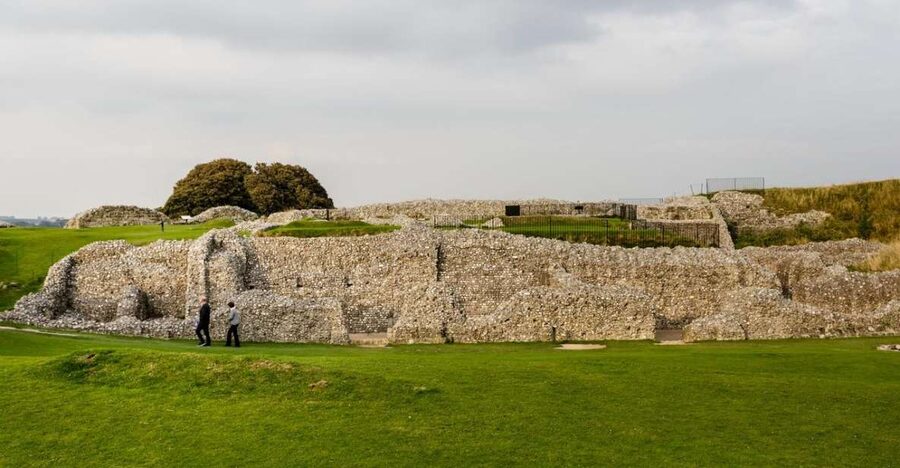
The royal castle occupied the highest and most defensible part of the site, on the motte. Its remains are not preserved as a complete fortress, but the position tells you a great deal.
From the castle area, you can understand how Old Sarum worked as a place of control. William the Conqueror recognized the importance of the site, and it became a major center of government. The castle was not merely a military outpost. It formed part of the machinery of royal authority.
The surviving architecture is fragmentary, so you need to bring some imagination. Signs explain the castle’s layout and help you connect the remaining stonework with the larger structure that once occupied the motte. I would give this section more time than a quick photograph. Stand at the edge, study the ground plan, and compare the castle’s elevated position with the lower areas of the former settlement.
The castle and cathedral together tell a useful story. One represented the crown and government. The other represented the church. Their presence on the same hill shows how closely those institutions were linked in medieval England.
A different kind of day out entirely:
- Stonehenge: App Guided Tour + Admission Included
★ 3.6 · 20 reviews - From London: Stonehenge Summer Solstice Sunset Tour (Jun 20)
★ 5.0 · 7 reviews - Southampton Port to London via Stonehenge,Lacock & Bath
★ 5.0 · 5 reviews - Stonehenge, Salisbury & Wiltshire Road Trip Travel Guide
★ 3.0 · 4 reviews
Use the signs to build the story
This is a self-guided entry visit, not a scheduled guided tour. That means the quality of the signs matters, and here they are a real strength.
The information panels cover the site’s major phases and explain the first and second cathedrals, the castle, and the reasons Old Sarum lost its importance. One visitor gave the signage high praise for being very informative, and that matches what you need at a place where so little survives above ground.
You can read only the sections that interest you, or work through the history in order. I suggest beginning with the earliest defenses, then moving through the medieval remains before stepping back to look at Salisbury Cathedral in the distance. This gives the visit a clear rhythm: origins, power, religion, decline, and replacement.
Staff are also available, and one recent visit singled out their friendly and well-informed help. You should not expect a full guided tour as part of the ticket, but you can ask questions if you need help making sense of a particular ruin.
The view toward Salisbury is part of the experience
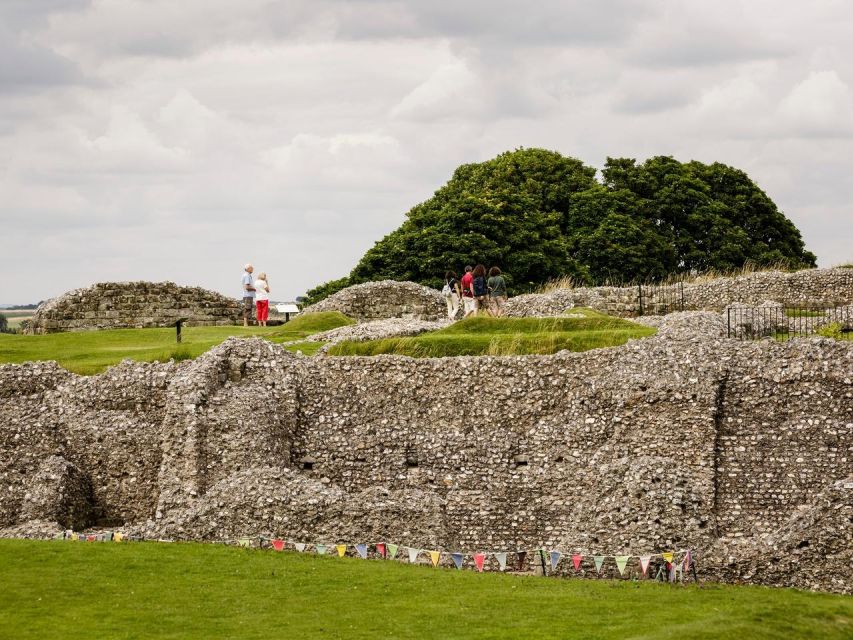
The panorama is not just a pleasant extra. It explains the relationship between Old Sarum and Salisbury.
From the ramparts, you can see across the Wiltshire plains toward Salisbury Cathedral. The modern cathedral is a visual marker of the city that developed after Old Sarum was abandoned. Looking from the old site to the new one gives you a simple, powerful explanation of the move.
The open views also give the visit breathing room. After studying foundations and earth banks, you can step back and see the wider setting. The hill’s height, the surrounding plains, and the city beyond all help you understand the practical reasons the site once mattered.
Bring a camera if you like broad views, but do not treat the ramparts as only a photo stop. The view is most useful when you connect it with the history below your feet. This is where the rise and fall of Old Sarum becomes easiest to grasp.
Old Sarum’s decline is as interesting as its rise
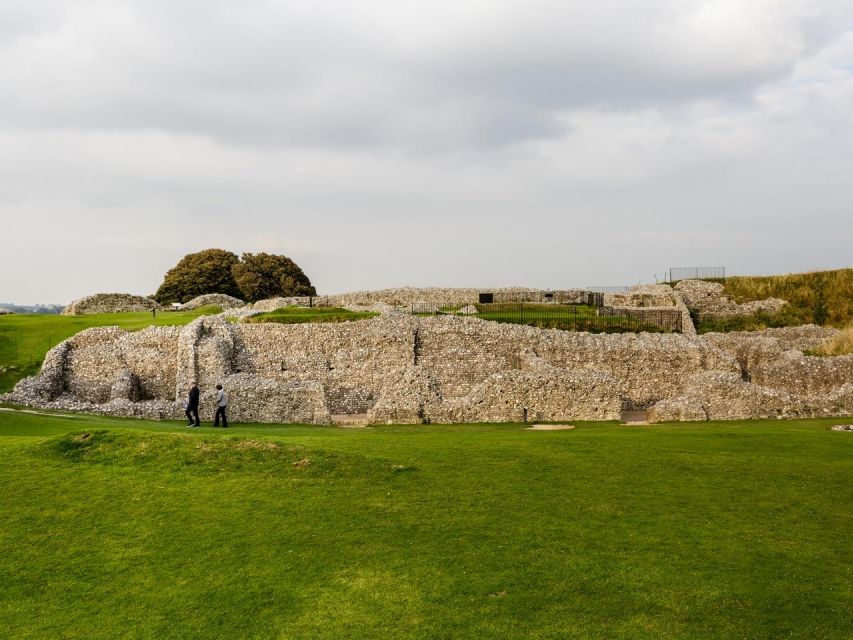
Many historic sites are good at explaining how power began. Old Sarum is especially useful for showing how power faded.
Once the cathedral and settlement moved to Salisbury, Old Sarum gradually lost its central role. The hill no longer served as the main focus of religious and civic life, and its administrative importance eventually ended.
The later story includes Old Sarum’s status as a rotten borough. That term refers to a place with political representation that no longer matched its size or importance. It is an important final chapter because it shows that Old Sarum remained tied to government even after the town itself had declined.
Eventually, its administrative role ceased altogether. The empty foundations and quiet paths make more sense once you know that the site did not simply vanish overnight. Its importance was transferred elsewhere, then slowly reduced.
I like this part of the story because it keeps the visit from becoming a simple castle-and-cathedral stop. Old Sarum also raises questions about who controls a place, why institutions move, and how a town can lose its purpose while its ruins remain.
How long should you spend here?
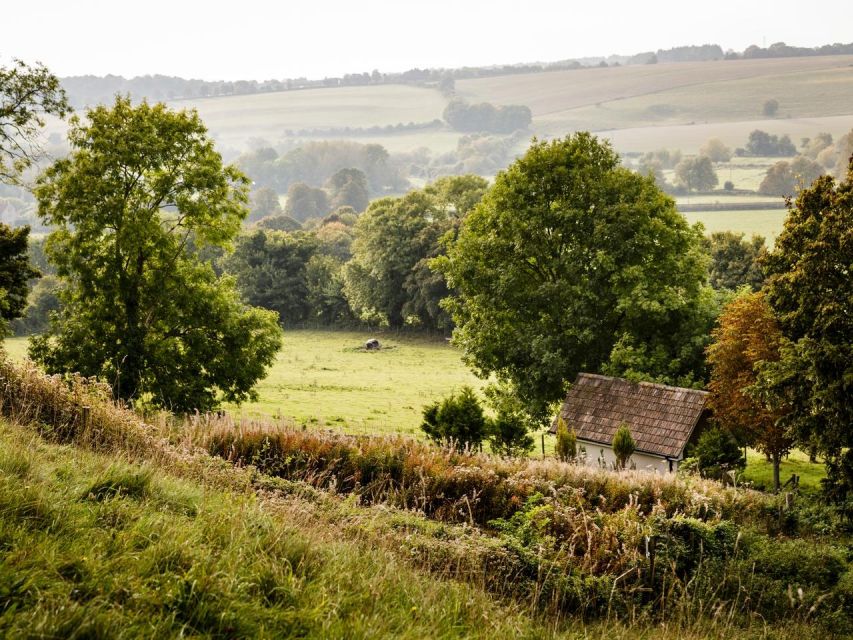
The ticket is valid for one day, but the experience is usually best treated as a focused visit rather than an all-day program. The exact time you need depends on how closely you read the signs and how long you spend on the ramparts.
A quick walk can cover the main remains and views. A slower visit gives you time to understand the cathedral footprints, study the castle area, and follow the site’s changes from the Iron Age through its later political history.
The one-day validity gives you useful flexibility. You do not need to hurry through the site simply because the ticket has a fixed entry window. Check the available starting times when booking, then plan around the weather and your wider Salisbury schedule.
There is no included souvenir purchase, so budget-conscious visitors can keep the cost limited to admission. The main activity is walking and looking, not spending extra once inside.
Is $13 per group good value?
At $13 for a group of up to four, the price can be reasonable, especially if you are visiting as a family or small party. Divided among four people, the cost is modest for access to a major historic site with broad views and a full day of validity.
For one person or a couple, the value is less automatic. You are paying to see ruins, earthworks, interpretation, and the setting. You are not paying for a complete castle interior, a full cathedral, or a long guided program.
That distinction matters. One recent assessment called the area charming and quiet but felt the price was high for what remains. I think that is a fair warning. If your idea of value means intact rooms and dramatic stone walls, you may leave disappointed.
If you enjoy archaeological sites and can bring the past to life from foundations, the ticket makes more sense. The signage adds useful context, and the view toward Salisbury gives the visit a clear purpose beyond looking at scattered remains.
The easy entry also helps. The ticket purchase and admission process have been described as straightforward, and the skip-the-line feature removes a small practical nuisance.
Who will enjoy Old Sarum most?
I would recommend Old Sarum to:
- People who enjoy castles, cathedral ruins, and archaeological sites
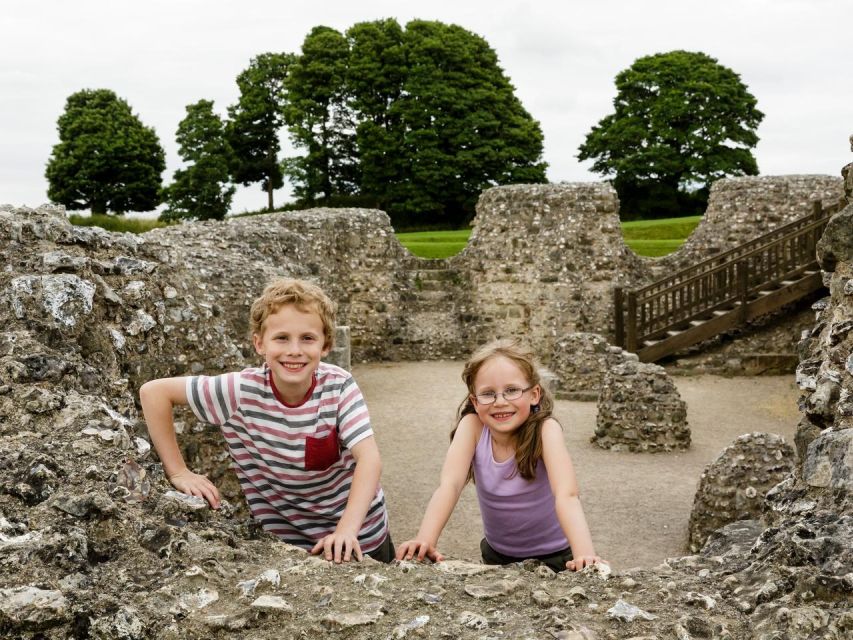
- Families who want an outdoor history stop with room to walk
- Visitors interested in the growth and decline of English towns
- Anyone who wants views of Salisbury from a different position
- History fans who are happy to use signs and imagination
- Small groups who can share the group ticket
You may want to skip it if you have limited mobility on uneven ground, though the experience is listed as wheelchair accessible. You should also think twice if you want a highly guided visit or a large amount of intact medieval architecture.
The site is particularly useful before or after visiting Salisbury itself. Seeing the current cathedral from Old Sarum gives you a stronger sense of the city’s earlier location and later development.
Practical advice for a better visit
Wear comfortable shoes with reliable grip. The site involves walking on uneven surfaces, and open weather conditions can make a hilltop visit feel quite different from a city-center museum.
Dress for the forecast rather than the calendar. Weather-appropriate clothing is specifically advised, and the exposed setting means conditions can affect your comfort.
Allow time to stop at the signs. They are not decoration. They provide the structure needed to understand why the cathedral had two phases, how the castle functioned, and why the settlement was abandoned.
Walk to the ramparts even if your main interest is architecture. The views toward Salisbury and across the Wiltshire plains are among the best parts of the experience, and they clarify the move to the new cathedral site.
If you are visiting with three other people, the group price offers stronger value. If you are alone, compare the cost with your interest in ruins and open-air history before booking.
Should you book Old Sarum?
Book it if you want a quiet, thoughtful historic site where earthworks, cathedral foundations, and castle ruins tell the story. The views toward Salisbury are excellent, the signs are useful, entry is simple, and the ticket works well for a small group.
Think carefully if you want intact buildings or a guided tour. Old Sarum asks you to imagine a great deal, and the price may feel steep for a solo visitor who only wants a short look.
My advice is to treat it as a history-and-viewpoint visit, not a conventional castle tour. Give yourself time to walk the ramparts, study the cathedral footprint, and connect the old hilltop with modern Salisbury below. That is when the site earns its place on your itinerary.
FAQ
Where is Old Sarum?
Old Sarum is in South West England, near Salisbury in the United Kingdom.
What does the ticket include?
The ticket includes entry to Old Sarum.
How much does admission cost?
The listed price is $13 per group of up to four people.
How long is the ticket valid?
The ticket is valid for one day.
Can I cancel my booking?
Yes. You can cancel up to 24 hours in advance for a full refund.
Do I have to pay immediately?
The reserve now and pay later option allows you to book without paying at the time of reservation.
Where do I enter Old Sarum?
Go to the entrance of Old Sarum, which is marked by informational signage.
Is Old Sarum wheelchair accessible?
The experience is listed as wheelchair accessible.
What should I bring?
Bring comfortable shoes and clothing suited to the weather. The visit includes walking on uneven surfaces.
Just added in Salisbury
- Stonehenge, Salisbury & Wiltshire Road Trip Travel Guide★ 3.0 · 4 reviews
- Stonehenge , Lacock , Roman Baths: Private Tour★ 5.0 · 3 reviews
- Stonehenge & Sacred Land Guided Driving Tour★ 5.0 · 2 reviews
- Southampton Port to London via Stonehenge,Lacock & Bath★ 5.0 · 5 reviews
- Salisbury Private Guided Walking Tour★ 5.0 · 2 reviews
- Half-Day tour to Stonehenge from Bath for 2-8 adventurers★ 5.0 · 3 reviews
- From Southampton: New Forest and Salisbury Private Tour★ 5.0 · 1 review
- From London: Stonehenge Summer Solstice Sunset Tour (Jun 20)★ 5.0 · 7 reviews
Salisbury Tours, compared.
Stonehenge Morning or Afternoon Tour Optional Lunch
Read our review →
Stonehenge: App Guided Tour + Admission Included
Read our review →
Southampton Port to London via Stonehenge,Lacock & Bath
Read our review →
Stonehenge, Salisbury & Wiltshire Road Trip Travel Guide
Read our review →
Half-Day tour to Stonehenge from Bath for 2-8 adventurers
Read our review →Other lists this tour turns up in