
REVIEW · HISTORICAL TOURS
St Andrews: Town, Golf, and Old Course History Tour
Golf gives St Andrews its pulse. This 105-minute walking tour shows you how that happened, while also bringing in the university, cathedral ruins, royal connections, and local stories. I especially like the mix of Old Course access and town history, plus the chance to finish with a photo on the Swilcan Bridge. The main drawback is pace: you need comfortable shoes, steady mobility, and enough English to follow a live guide without translation.
I also like that the tour works for mixed groups. A golfer can chase stories about the Open Championship and the Old Course, while a non-golfer gets William and Kate, university life, church ruins, and St Andrews characters. Guides such as Richard and Jim have earned praise for their humor and clear explanations, though one larger group found that fast walking and road noise made some details hard to catch.
In This Review
- Key points at a glance
- Starting at T-Squared Social on North Street
- St Salvator’s College and the university connection
- Cathedral ruins, famous graves, and medieval power
- Walking the Scores toward the Old Course
- The Old Course and the making of golf
- Finishing at the Swilcan Bridge
- How much golf is too much?
- The guides: Richard, Jim, and local perspective
- Price, timing, and practical value
- FAQ
- Where does the St Andrews tour begin?
- Where does the tour finish?
- How long does the tour last?
- What language is the tour in?
- Does the tour include a photo at the Swilcan Bridge?
- Does the tour enter the Old Course?
- Can I bring luggage or golf clubs?
- Is the tour suitable for people with mobility impairments?
- Should you book this St Andrews tour?
Key points at a glance
- The Old Course is the grand finale: Walk beside the 1st tee, first fairway, 18th green, and Swilcan Bridge.
- Golf and town history share equal billing: The route connects St Andrews golf with its university, cathedral, castle, and royal stories.
- The cathedral grounds add a personal touch: You can pay respects to Old and Young Tom Morris, Allan Robertson, Jamie Anderson, and other golfing pioneers.
- The guides make the difference: Richard is praised for his humor, local knowledge, photography, and experience around the course. Jim is also noted for his command of golf and St Andrews history.
- It is a real walking tour: Expect roughly two hours on foot, with no place to leave luggage, golf clubs, strollers, or mobility equipment.
- The Swilcan Bridge photo depends on the calendar: Photos there are offered except on tournament days.
Starting at T-Squared Social on North Street
Meet your guide outside the main entrance of T-Squared Social, at 117 North Street. This starting point gives the tour a modern opening before it turns toward the old town and the links.
You will hear about the bar and restaurant connected with Tiger Woods and Justin Timberlake, along with a little about the Dunhill Championship. That early stop helps set up one of the tour’s useful themes: St Andrews is not just an old Scottish town with a famous golf course. It is also a place where sport, business, university life, celebrity, and local identity keep crossing paths.
Arrive early. This is not a casual drop-in walk. The guide starts on time and does not wait, and being even one minute late can mean missing the tour entirely. That rule is especially important if you are arriving by bus, coordinating a taxi, or trying to fit this into a tight day trip from elsewhere in Fife.
More History Tours in Scotland
- St Andrews: Golf Origins and Old Course History Tour
★ 4.7 · 322 reviews - St Andrews: 90-Minute Historical Walking Tour
★ 4.8 · 23 reviews - Historic Orkney Private Odyssey Tour By a Native Islander
★ 5.0 · 42 reviews
St Salvator’s College and the university connection
The route soon reaches St Salvator’s College, part of Scotland’s oldest university. You will see the quadrangle and visit St Salvator’s Chapel, where the setting shifts from modern golf talk to the academic world that has shaped St Andrews for centuries.
This is one of the strongest parts for non-golfers. The guide explains how the university affects the town’s character, then brings in the story of William and Kate, who met while students in St Andrews. You will also hear about the filming of The Crown when the series came to town.
These details are not thrown in as random celebrity trivia. They show how the university keeps St Andrews connected to modern public life. The town’s old buildings are not museum pieces sitting apart from daily life. Students, ceremonies, visitors, and local businesses still use the same streets and courtyards.
The guide may also point out a less obvious interior or tucked-away sight along the way. This is where an informed local guide adds value. You might walk past a building without noticing its importance, while the guide gives you a reason to look twice.
One practical note: some visitors have found that traffic noise can swallow parts of the commentary, especially if the guide keeps walking while speaking. Stay near the guide and ask for a pause if you miss a point. Richard has been praised for a clear voice, but group size and street noise can still affect how much you hear.
Cathedral ruins, famous graves, and medieval power

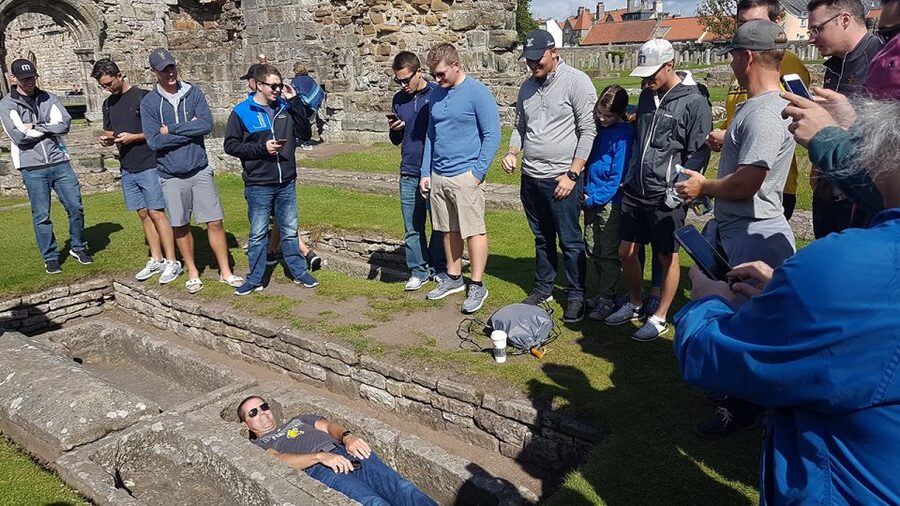
The ruined Cathedral is the next major stop. Its broken walls and open grounds give you a strong sense of St Andrews as a former religious center, not simply the birthplace of modern golf.
The cathedral grounds include the graves of 124 noted golfers. The most important names for golf fans are Old Tom Morris, Young Tom Morris, Allan Robertson, and Jamie Anderson. These are not just names from a record book. Their lives help explain how St Andrews became a place where golf developed through players, caddies, club makers, course workers, and local families.
You will hear how golf grew around the town and how important people connected to the sport were remembered here. I like this part because it puts faces and lives behind the phrase Home of Golf. It also gives non-golfers a better reason to care. The cemetery is a place of local memory, not just a stop for sports statistics.
The Cathedral grounds deserve more time than the schedule may allow. One visitor wished for longer among the graves and on the course. If you are especially interested in golfing pioneers, listen closely during the guide’s explanation, then consider returning later on your own if your schedule permits.
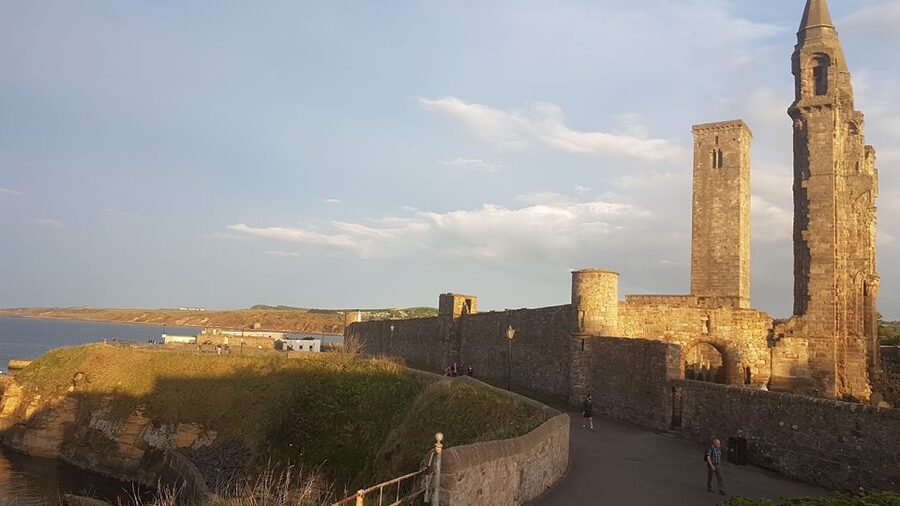
Nearby, you will pass the ruins of St Andrews Castle, including the Bishop’s Palace area. The remains point to the former wealth and power of the Catholic Church in Scotland. Even as a brief photo stop, the castle adds useful context: the same town that later became famous for golf once mattered greatly in Scotland’s religious and political life.
Walking the Scores toward the Old Course
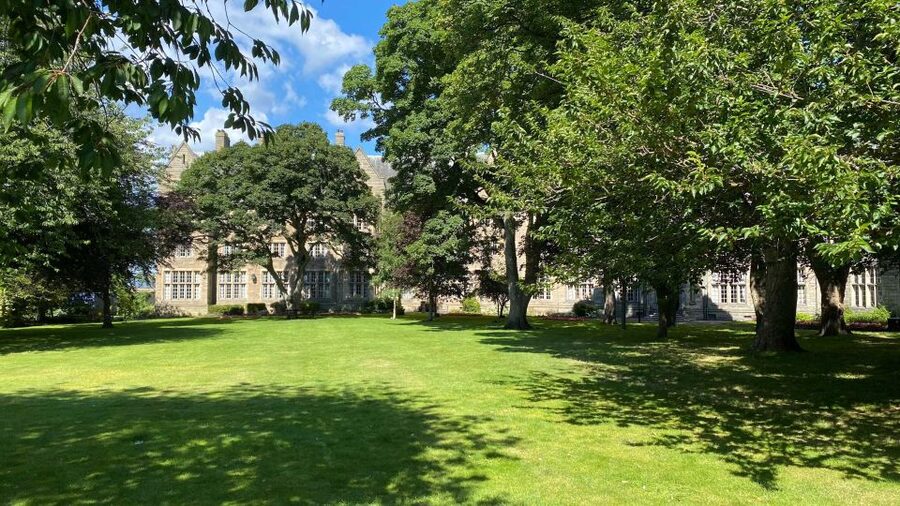
From the cathedral area, the route follows the Scores, a scenic street lined with Victorian university buildings. You will pass the Principal’s House and the residence where William and Kate spent their first year as students.
This section is a pleasant change of rhythm. You are no longer standing among ruins or listening beside a busy road. Instead, you walk through a part of St Andrews where the university’s grand architecture meets the sea-facing edge of town.
The route also helps you understand the town’s scale. St Andrews is compact, but the tour crosses a substantial portion of it. The walking is not difficult in the sense of a mountain hike, yet it is continuous, and you may be on your feet for close to two hours once pauses and photo stops are included.
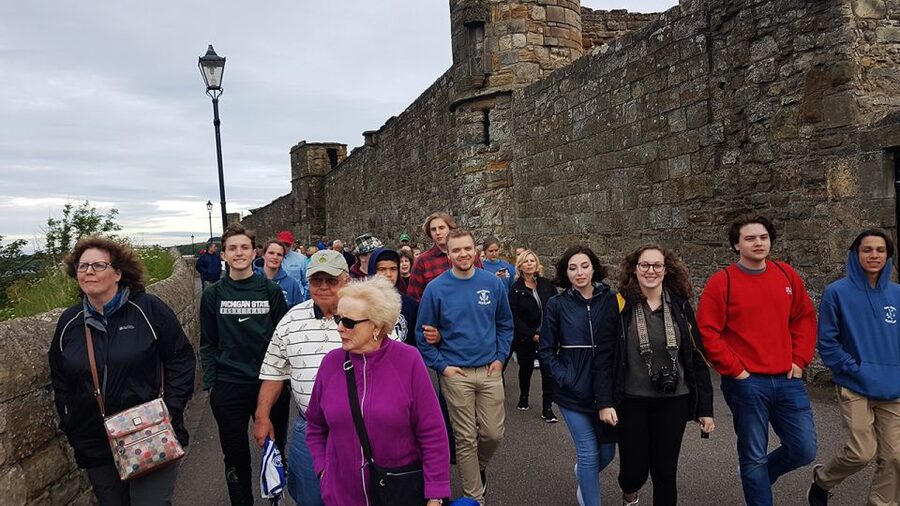
Several people have praised guides for keeping a considerate pace. Still, that is not guaranteed in every group. One group of 13 found the guide walked quickly and spoke too fast. If you have hearing concerns, stay toward the front and tell the guide early. Comfortable shoes and weather-ready clothing are essential, since the tour takes place outdoors in changing Scottish conditions.
More St Andrews tours:
- From Edinburgh: St Andrews and Fishing Villages of Fife Tour
★ 4.7 · 1,071 reviews - St Andrews: Top Sights Guided Walking Tour
★ 4.7 · 223 reviews - Edinburgh: St Andrews, Dunnottar Castle & Falkland Tour
★ 4.7 · 181 reviews - Private St Andrews: Home of Golf Old Course Tour
★ 4.9 · 113 reviews
The Old Course and the making of golf
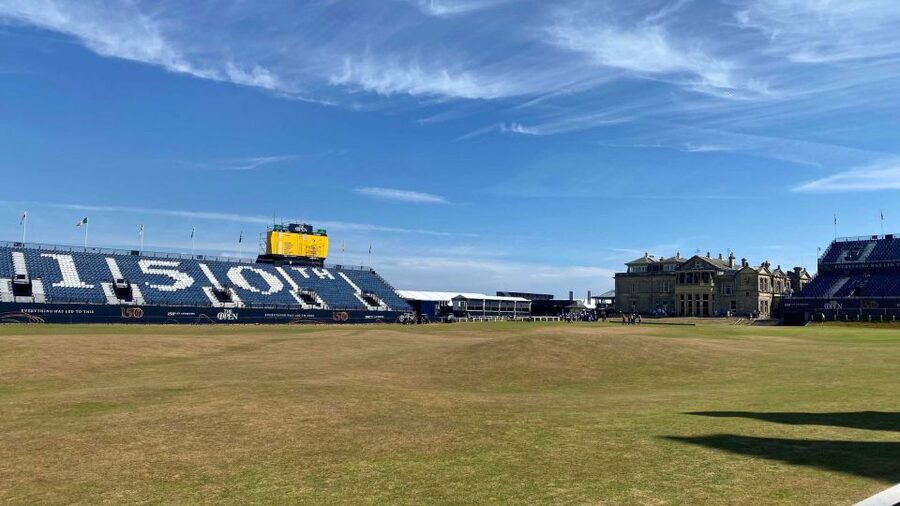
The tour’s main event is the Old Course. You walk by the 18th green, 1st tee, and first fairway while the guide explains how the Open Championship developed and how golf took its modern shape in St Andrews.
This is where the golf material becomes most useful, even if you do not play. You will hear about the oddities of the game, why the course has 18 holes, and how the links came to acquire such a remarkable place in golf history. The discussion also covers the notable buildings overlooking the course and memorable moments connected with the Old Course.
You do not play a round, and this is not a technical course tour for golfers seeking instruction. Instead, you gain a view of the course’s layout and the stories attached to it. Seeing the 1st tee and 18th green in one walk makes the course easier to understand than simply taking a photograph from a roadside viewpoint.
The route includes walking by and across the 1st and 18th fairway. During live play, golf balls are a real safety concern. You must watch the course and follow the guide’s instructions. This is also why the tour is not suitable for people using wheelchairs, mobility scooters, walking frames, or crutches.
The Old Course can be visually impressive, but remember that conditions change. A sunny day can make the Swilcan Bridge photo special, while wind or rain may dominate the experience. The tour does not promise a private or quiet course visit. You are seeing an active sporting venue, and tournament days bring extra restrictions.
Finishing at the Swilcan Bridge
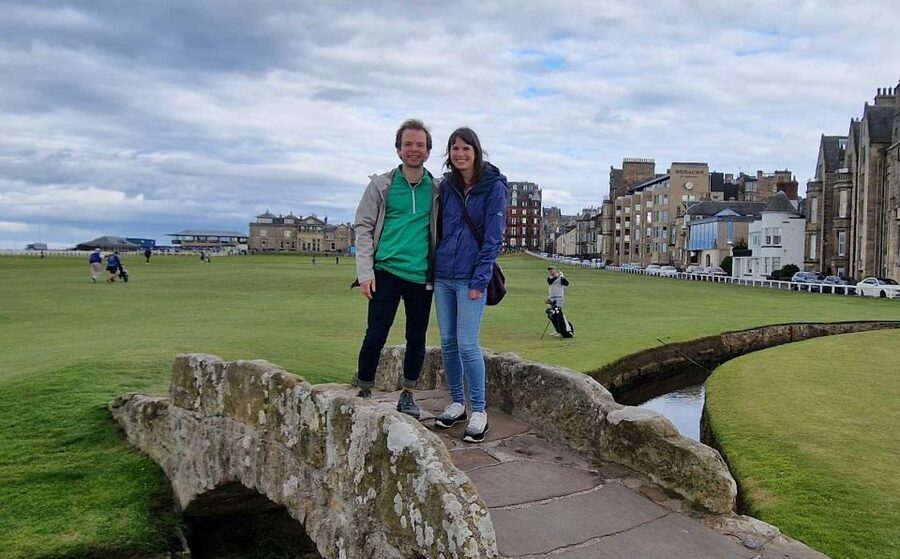
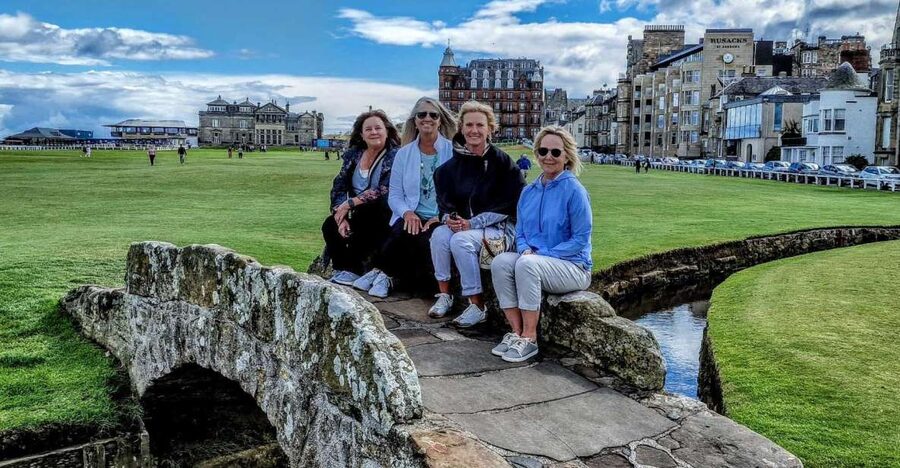
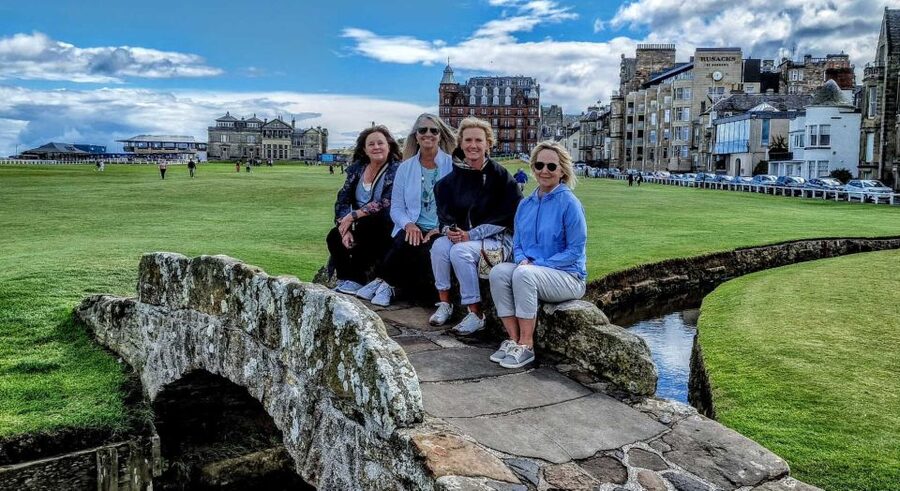
The tour ends at the Swilcan Bridge, the small stone bridge that has become one of golf’s most recognizable photo spots. You can have your picture taken there, except on tournament days.
This photo opportunity is more valuable than it might sound. The bridge gives the tour a clear ending and a personal souvenir, especially if you are visiting with family or a partner. Richard has been praised as a good photographer, and one family came away with several strong vacation photos.
Afterward, you can continue to the Jigger Inn or the Old Course Hotel. The tour does not include food or drinks, but these nearby places offer a natural way to sit down, look back across the course, and talk over what you have just seen. The upstairs bar at the Old Course Hotel has also been suggested as a useful place for a view and a break.
Do not count on the bridge photo during a tournament. If that picture matters to you, check the date and keep your expectations flexible.
How much golf is too much?
The experience is clearly golf-oriented, but it is not only for golfers. That balance is its biggest selling point.
A committed golfer gets early Open Championship stories, course development, famous players, caddies, and an on-site look at the 1st and 18th holes. A non-golfer gets the university, William and Kate, The Crown, cathedral ruins, medieval church power, architecture, and a guided walk through the town.
The tour works particularly well for couples or families with mixed interests. One person can focus on golf history while the other gets a broader introduction to St Andrews. Several people have described it as a favorite experience precisely because it ties the town and course together rather than treating the Old Course as an isolated attraction.
Still, you should not book it expecting equal time at every sight. The tour is built around golf, and the course is the payoff. If you want a long cemetery visit, an extended cathedral exploration, or time by the beach, you will need to return independently.
The guides: Richard, Jim, and local perspective
The guide is central to the value of this experience. Richard receives repeated praise for his local understanding, humor, clear delivery, and willingness to answer questions. He has lived in the area for a long time and has personal experience playing and caddying around St Andrews.
That background gives the tour more color than a string of dates and names. You hear about the game from someone familiar with the course and its working life, not only from a printed script. Richard also appears comfortable adjusting the detail level, going deeper when the group wants more golf and keeping things lighter for people who are new to the subject.
Jim is also praised for explaining both golf and town history in a way that gives visitors plenty to take away. The guide roster may vary, so you should not assume Richard will lead every departure.
English fluency is essential. The provider specifically says that speaking slowly or translating is not suitable for this tour. If you need frequent translation, this is probably the wrong format. The guide speaks while walking, and road noise can make the experience harder for anyone who struggles with spoken English.
Price, timing, and practical value
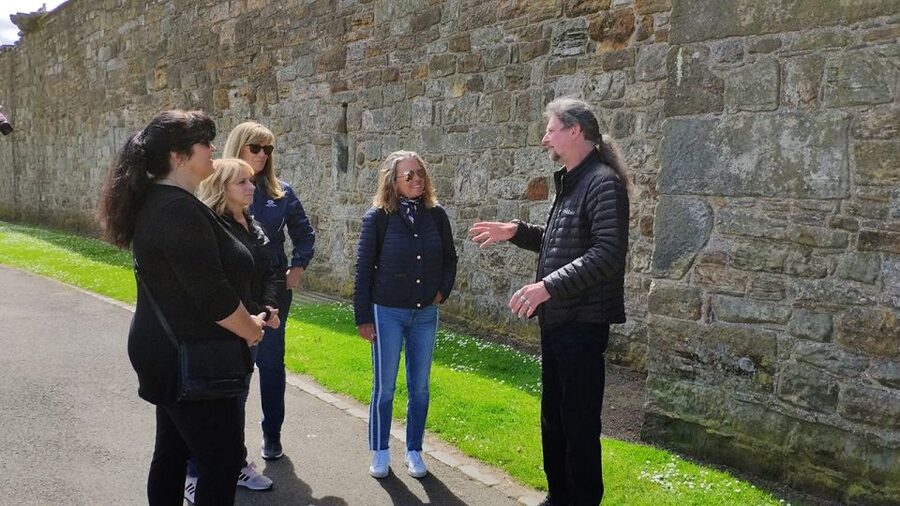
At $27 per person, the tour offers good value if you want both an introduction to St Andrews and a guided look at the Old Course. You are paying for a professional historian guide, local stories, the walking route, and the chance to finish at the Swilcan Bridge, not for admission to a museum or a round of golf.
The 105-minute length is well judged for a first look. It is long enough to connect the university, cathedral, castle area, and course, but short enough to fit into a day of sightseeing. Several people have found the length ideal, while others wanted more time at the graveyard and on the course. That difference comes down to your priorities.
I would book it near the start of your St Andrews visit. It gives you a useful map of the town, points out places you may want to revisit, and supplies context before you explore the cathedral or Old Course area alone.
Free cancellation is available up to 24 hours before the start, and you can reserve now while paying later. There is no luggage storage, so do not arrive with suitcases, golf clubs, strollers, or other bulky items expecting the guide to hold them.
Children under 16 must be with an adult. Children under five are free, but the tour is not suitable for children under two. Pets are not allowed, except assistance dogs, and alcohol or disruptive behavior can lead to removal without a refund.
FAQ
Where does the St Andrews tour begin?
Meet your guide outside the main entrance of T-Squared Social, 117 North Street, St Andrews, KY16 9AD.
Where does the tour finish?
The tour finishes at the Swilcan Bridge beside the Old Course.
How long does the tour last?
The stated duration is 105 minutes.
What language is the tour in?
The live tour is conducted in English, and all participants need a fluent command of English.
Does the tour include a photo at the Swilcan Bridge?
Yes, you can have your photo taken on the Swilcan Bridge, except on tournament days.
Does the tour enter the Old Course?
The route visits the Old Course area and includes the 18th green, 1st tee, first fairway, and a walk by and across the fairway. It is not a round of golf.
Can I bring luggage or golf clubs?
No luggage drop is available. You cannot leave luggage, baby carriages, scooters, or golf clubs during the tour.
Is the tour suitable for people with mobility impairments?
No. The tour is not suitable for wheelchair users, people with mobility impairments, mobility scooters, walking frames, crutches, or other walking difficulties.
Should you book this St Andrews tour?
Book it if you want the Old Course story and the town story in one walk. It is especially good for first-time visitors, mixed golf and non-golf groups, and anyone who wants a guide to connect the university, cathedral, castle ruins, golfing graves, and famous links.
Skip it if you need a slow, fully accessible route, rely on translation, or want to spend long stretches at each individual sight. Also skip it if a tournament-day visit is your main goal, since the Swilcan Bridge photo may not be available.
For $27, I think it is a smart introduction to St Andrews. Arrive early, wear good shoes, stay close enough to hear the guide, watch for golf balls, and leave time afterward for the Jigger Inn or Old Course Hotel. That combination gives you the stories first, then a chance to enjoy the view at your own pace.
More History Tours in St Andrews
- London: Historic Pubs of Central London Walking Tour
★ 4.9 · 1,065 reviews - Portsmouth: Historic Dockyard Ultimate Explorer Ticket
★ 4.8 · 1,052 reviews - York: Witches and History Old Town Walking Tour
★ 4.7 · 928 reviews - London: Soho Music and Historic Pubs Walking Tour
★ 4.9 · 836 reviews
Just added in St Andrews
- Edinburgh: Stirling, Whisky & St Andrews Tour in Italian★ 3.9 · 14 reviews
- Edinburgh: St Andrews, Dunfermline Abbey and Fife Coast Tour★ 4.7 · 64 reviews
- St Andrews: Guided Walking Tour, 12pm, 2pm daily★ 5.0 · 28 reviews
- St Andrews: Private Dark Side Guided City Tour★ 4.6 · 3 reviews
- St Andrews: City Highlights Walking Tour with Cocktail★ 5.0 · 10 reviews
- St Andrews and Falkland Palace Tour from Edinburgh★ 4.8 · 27 reviews
- St Andrews: 90-Minute Historical Walking Tour★ 4.8 · 23 reviews
- Private tour to St Andrews and the fishing villages of Fife★ 5.0 · 2 reviews
Historical Tours, compared.


Other lists this tour turns up in