

REVIEW · SHAKESPEARE & STRATFORD TOURS
Stratford-upon-Avon: Shakespeare’s New Place Entry Ticket
Shakespeare’s vanished home still has plenty to say. I like the way New Place lets you walk across the footprint of the house rather than simply stare at another preserved room, and I enjoy the mix of gardens and contemporary artwork that brings the lost building back to life in your imagination. The exhibition in Nash’s house next door adds useful context about Shakespeare as a family man and businessman.
The main drawback is simple: the original building is gone, so you are visiting its site, not entering Shakespeare’s actual home. Still, I find the setting rewarding if you want a quieter, more thoughtful stop than a standard room-by-room museum, especially with the separate exhibition The Lives of the Women Who Made Shakespeare.
In This Review
- Key points to know before you go
- What you are really visiting at New Place
- Entering through the gate house
- Reading the footprint of Shakespeare’s house
- The gardens and the quieter side of Shakespeare
- Nash’s house and Shakespeare the family man
- Why the missing building is part of the experience
- Is the $20.20 ticket good value?
- How long should you allow?
- Who will enjoy New Place most?
- Practical advice for planning your visit
- Should you book Shakespeare’s New Place?
- FAQ
- Where is Shakespeare’s New Place?
- What does the New Place ticket include?
- Can I enter the original New Place building?
- How long is the ticket valid?
- How much does entry cost?
- Is Shakespeare’s New Place wheelchair accessible?
- Where do I start the visit?
- Can I cancel my booking?
Key points to know before you go
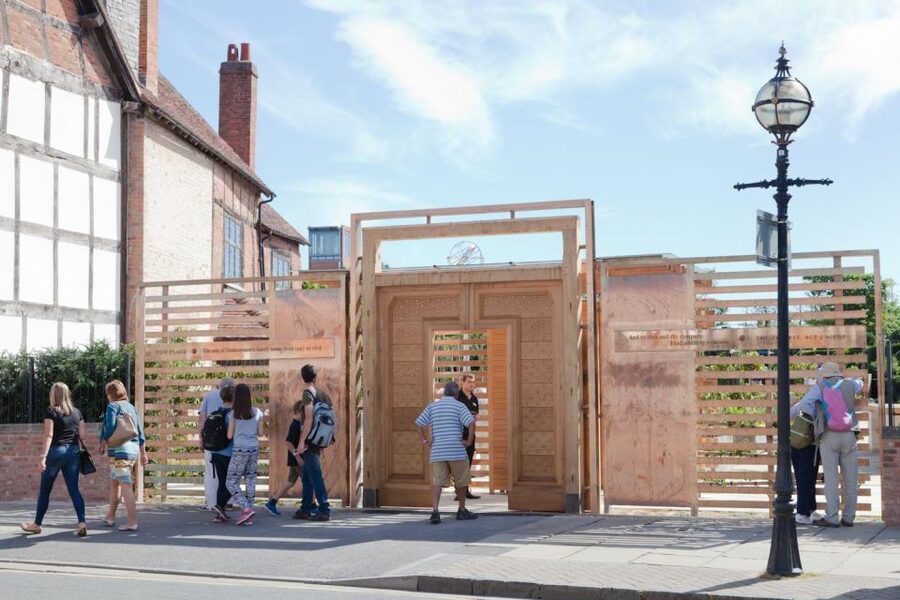
- The house itself no longer exists: New Place was demolished in 1759, so the visit focuses on its footprint, grounds, gardens, and interpretation.
- Shakespeare lived here for 19 years: He bought the house in 1597 and remained there until his death in 1616.
- The site was once a major Stratford home: New Place was the second-largest house in Stratford-upon-Avon at the time.
- Nash’s house adds the human story: The exhibition looks at Shakespeare’s family life, business interests, and the women who shaped his world.
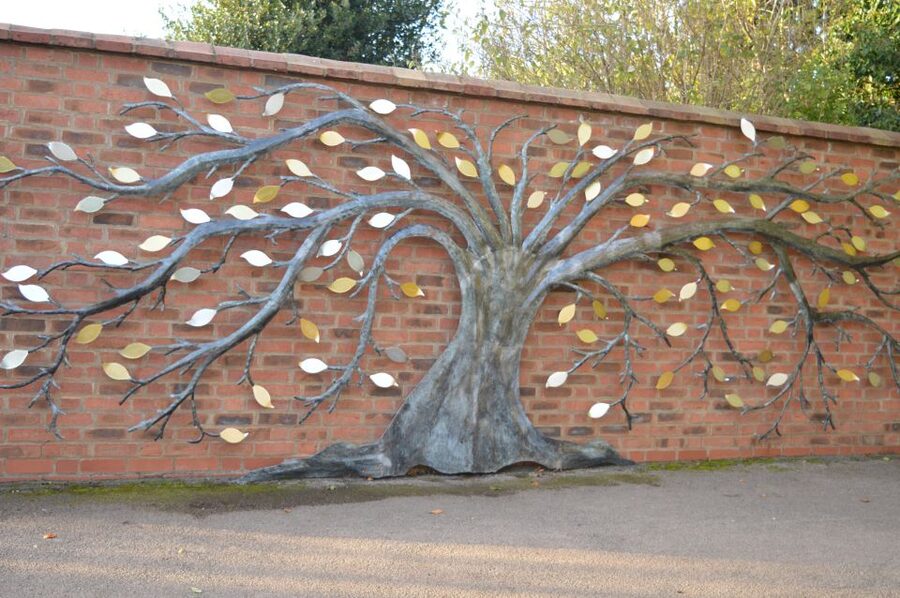
- Contemporary artwork marks the lost building: Art and garden features help you picture the house and its grounds without pretending the original structure survives.
- The ticket is valid for one day: Entry costs $20.20 per person, and you can cancel up to 24 hours ahead for a full refund.
What you are really visiting at New Place
New Place is best understood as a memorial garden and historic site, not a reconstructed Shakespeare house. The building that once occupied this plot disappeared long ago, but the ground still carries a direct connection to Shakespeare’s adult life.
Shakespeare’s family lived at New Place from 1597 until he died there in 1616. That gives the site an unusual importance. His birthplace connects you with his early years, while New Place connects you with the established playwright, property owner, husband, father, and Stratford businessman.
I find that distinction useful. You are not being asked to accept a modern reconstruction as the original. Instead, the visit shows you where the house stood and uses design, planting, artwork, and exhibitions to help you form your own picture of the place.
New Place was the second-largest house in Stratford-upon-Avon when Shakespeare acquired it. That detail matters because it corrects the narrow image of Shakespeare as only a writer hunched over a desk. He had property, family responsibilities, and a firm connection to the town where he grew up.
The site therefore works on two levels. It gives you a physical place associated with Shakespeare, and it fills out the less theatrical parts of his life. If you want only famous quotations and literary displays, you may find the garden understated. If you want to understand the man behind the plays, the setting has real value.
More Shakespeare and Stratford tours:
- The Sinister Side of Shakespeare’s Stratford Walking Tour
★ 4.8 · 547 reviews - Stratford-upon-Avon: Shakespeare’s Birthplace Ticket
★ 4.6 · 476 reviews - Stratford-Upon-Avon: The Famous Walk Talk Show
★ 4.9 · 342 reviews
Entering through the gate house
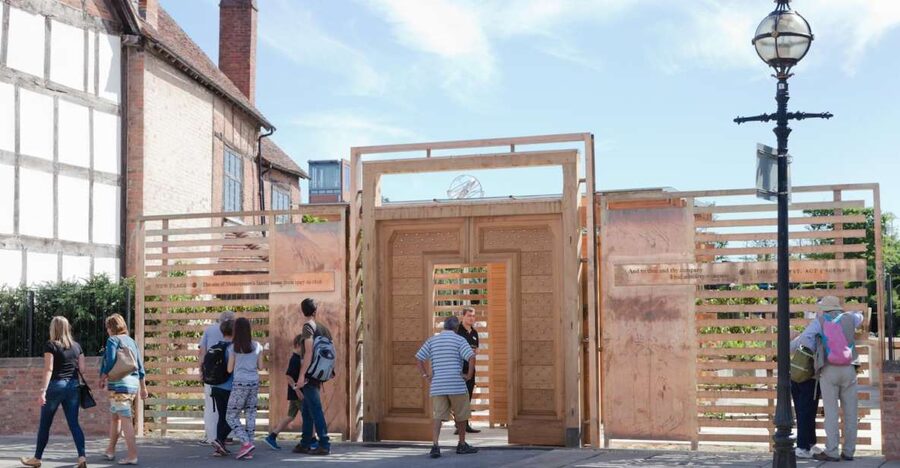
When you arrive, proceed to the gate house. This is the practical starting point for the visit, and the activity ends back at the same meeting point.
The ticket is valid for one day, with starting times depending on availability. That makes it easy to fit New Place into a wider day in Stratford-upon-Avon. You can give the site a focused visit, or take your time moving between the garden and the exhibition next door.
No transport or guided transfer is part of the experience. You arrive at the site yourself and explore what is included with the New Place entry ticket. That keeps the visit straightforward, but it also means you should not expect a tour guide leading you from room to room.
The site is wheelchair accessible, which is an important practical advantage. Since the visit centers on the grounds, garden, artwork, and exhibition, the experience does not depend on climbing through a historic house. For exact access questions beyond the information provided, check current conditions before you go.
Reading the footprint of Shakespeare’s house
The most distinctive part of New Place is the house footprint. You can see the outline of the building and its grounds, presented with artwork and site features that suggest the shape and importance of the lost home.
This takes a little more imagination than visiting a preserved Tudor room. There are no original walls enclosing you, no surviving household furniture, and no building interior to photograph. The reward comes from looking at the ground beneath you and thinking about how the site functioned when Shakespeare’s family lived there.
I like this approach because it respects the facts. New Place was demolished in 1759, so a convincing replica could easily blur history. The garden instead lets you make your own connection with the site. You see what survives, learn what disappeared, and use the artwork to bridge the gap.
The contemporary pieces are not just decoration. They commemorate Shakespeare’s work and help give form to a house that can no longer be viewed directly. As you move through the grounds, pay attention to how the artwork marks the site and guides your understanding of the former home.
This is also where expectations matter most. If you need a complete architectural reconstruction, New Place will feel incomplete. If you appreciate historic places that reveal absence as well as survival, the missing building becomes part of the story.
The gardens and the quieter side of Shakespeare

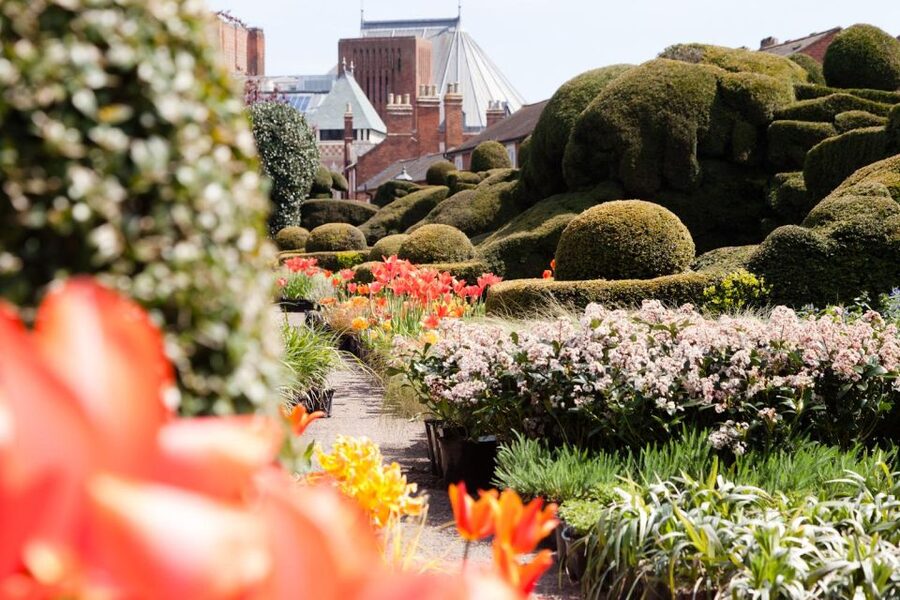
The gardens give New Place much of its atmosphere. They turn the former building site into a place for walking, pausing, and thinking rather than a quick museum circuit.
The garden was designed as a registered garden to commemorate the importance of New Place. That formal recognition reflects the site’s role in Stratford’s story, even though the house itself vanished. You are not simply passing through an attractive patch of greenery. You are walking through a planned memorial to a major chapter of Shakespeare’s life.
I would allow time to move slowly here. The gardens are one of the strongest reasons to choose this experience over a purely indoor exhibition. You can see the house footprint, look at contemporary artwork, and consider how the space changes the way you imagine Shakespeare’s domestic life.
The setting also offers a useful pause between literary facts. Shakespeare’s plays can make his world feel grand and distant. A family garden brings the story back to ordinary ground: a home, property, relatives, work, and the daily business of living in Stratford-upon-Avon.
The gardens will not replace a full historic house visit, and the supplied information does not promise specific plants, seasonal displays, or special events. Go for the overall setting and the connection with New Place, not for a particular flower display that may change.
A few more options to weigh up in Stratford Upon Avon
- Stratford-upon-Avon:City Sightseeing Hop-On Hop-Off Bus Tour
★ 4.4 · 296 reviews - Warwick: Entry Ticket for Warwick Castle
★ 4.7 · 215 reviews - Stratford-Upon-Avon’s Town Walking Tour (10:30am & 2pm)
★ 4.8 · 143 reviews - Kenilworth Castle and Elizabethan Garden Entry Ticket
★ 4.8 · 97 reviews
Nash’s house and Shakespeare the family man
Next door, Nash’s house contains the exhibition that adds the clearest background to Shakespeare’s life. This part of the visit moves beyond the physical site and explains Shakespeare as a family man and businessman of Stratford-upon-Avon.
That focus is valuable because literary fame can swallow the rest of a person’s identity. At New Place, Shakespeare is not presented only as the author of plays. The exhibition connects him with family, property, work, and the town where he made his home.
You should also look for The Lives of the Women Who Made Shakespeare. This exhibition examines the women in Shakespeare’s life, giving attention to people who can be overlooked when the story centers only on the playwright himself.
That subject gives the visit a wider frame. Shakespeare’s life did not happen in isolation, and his household and family relationships formed part of the world in which he worked. The exhibition helps you think about the people around him, not only the words associated with his name.
Nash’s house is especially useful if you are visiting with someone who is less interested in gardens or site archaeology. The indoor exhibition gives the visit a clearer narrative and helps explain why this particular property mattered.
One point to watch: the included ticket covers New Place entry, while the original New Place building is not included because it no longer exists. Do not arrive expecting to enter Shakespeare’s old rooms. The relevant indoor material is in Nash’s house next door, while New Place itself is experienced through its site and grounds.
Why the missing building is part of the experience
The destruction of New Place can initially sound like a flaw. You are paying to visit somewhere that no longer has its principal structure. But that absence is also what makes the site different from a conventional historic house.
The house was demolished in 1759, long after Shakespeare’s death. The garden that now commemorates the site gives you a way to connect with the location without claiming that the original home survives.
For me, the strongest visits to historic places do not hide what has been lost. New Place makes the loss visible. You can stand on the footprint, see how the grounds are interpreted, and understand that the modern garden is a later response to an earlier building.
This approach also gives the site a more personal quality. Instead of being pushed along a fixed route through furnished rooms, you can stop and think about what the place means to you. The contemporary artwork helps, but the final act of imagining the house belongs to you.
That will appeal to some people more than others. Families with young children may find the vanished building harder to grasp than Shakespeare’s preserved birthplace. Readers, history fans, and people who enjoy gardens may appreciate the open-ended format.
Is the $20.20 ticket good value?

At $20.20 per person, the ticket is not a throwaway admission for a brief glance. Its value depends on how you use the visit.
I think the price is reasonable if you plan to explore both the New Place grounds and the exhibition in Nash’s house. You are getting a historic site, the house footprint, contemporary artwork, a registered garden, and exhibitions about Shakespeare’s family and the women in his life.
The ticket makes less sense if you only want to see a surviving Shakespeare building. There is no original New Place interior to tour, and the information provided does not promise a guided tour, special performance, or extended activity. The experience is self-directed and centered on place, interpretation, and reflection.
The one-day validity is helpful. You do not need to rush through the garden as though it were a timed attraction. Check available starting times when you book, then give yourself enough room to enjoy both parts of the visit.
You can also reserve now and pay later, which gives you some flexibility while planning. Cancellation is free up to 24 hours in advance for a full refund. Those terms reduce the risk if your Stratford plans are still shifting.
The overall value is strongest for visitors who want more than a famous name on a sign. You are paying for access to a meaningful site and the chance to connect Shakespeare’s public reputation with his private and civic life.
How long should you allow?
The ticket is valid for one day, but the supplied information does not set a fixed visit length. That is useful because the right amount of time depends on how closely you read the exhibition and how much time you spend in the gardens.
I would treat New Place as a flexible stop within your Stratford-upon-Avon day. Begin at the gate house, visit the site and house footprint, look at the artwork, then continue to Nash’s house for the exhibitions. Afterward, you can return to the garden if you want a quieter finish.
Do not judge the experience only by the time spent inside. The value comes from the combination of physical site and interpretation. A quick walk may cover the ground, but a slower visit gives the lost house and Shakespeare’s family story more room to register.
The activity ends back at the meeting point. That makes the route simple and avoids the confusion of being dropped somewhere else in town.
Who will enjoy New Place most?
I recommend New Place to you if you already have some interest in Shakespeare and want to understand his life in Stratford beyond the plays. It is also a good choice if you enjoy gardens, memorial sites, and contemporary art used to explain a historic place.
Families may find the footprint and artwork more approachable than a strict museum display, though the missing building requires some imagination. The exhibition about the women in Shakespeare’s life can also widen the visit for anyone who wants a fuller account of the people around him.
This is less suited to you if your main goal is to walk through an original Shakespeare-era house. New Place cannot provide that. The building was demolished, and the ticket does not include an original structure because there is none to enter.
It is also not the best match if you expect a guide, a scheduled performance, or a detailed reconstruction. The experience is about exploring the site at your own pace and using the garden and exhibitions to build the story.
Practical advice for planning your visit
Start at the gate house, then treat the visit as two connected parts: the New Place grounds and Nash’s house next door. That order gives you the physical setting first, followed by the exhibition material that explains Shakespeare’s family and business life.
Take time to look at the house footprint before focusing on the garden artwork. Knowing where the home stood makes the contemporary pieces easier to understand, and the site becomes more than a general garden walk.
Keep your expectations clear. You will not enter the original New Place building, and you should not confuse the site with a preserved residence. The house disappeared in 1759, so the experience depends on interpretation rather than surviving rooms.
The ticket is wheelchair accessible, and the activity returns you to the meeting point. For planning flexibility, you can reserve and pay later, and cancel up to 24 hours before the visit for a full refund.
Should you book Shakespeare’s New Place?
Book it if you want a thoughtful Shakespeare experience that combines a lost house site, attractive gardens, contemporary artwork, and exhibitions about the people behind the playwright. The strongest feature is the balance between place and personal story, especially the focus on Shakespeare as a family man and on the women who shaped his life.
Skip it if you need an original building with furnished rooms or a guided tour. New Place asks you to imagine what is gone, but the gardens, footprint, and Nash’s house exhibition make that absence worthwhile. At $20.20, it is a fair choice for a Shakespeare-focused day in Stratford-upon-Avon, provided you value context and atmosphere as much as architecture.
FAQ
Where is Shakespeare’s New Place?
Shakespeare’s New Place is in Stratford-upon-Avon, Warwickshire, United Kingdom.
What does the New Place ticket include?
The ticket includes entry to New Place, including the site, grounds, gardens, contemporary artwork, and the exhibition in Nash’s house next door.
Can I enter the original New Place building?
No. The original New Place building no longer exists. It was demolished in 1759.
How long is the ticket valid?
The ticket is valid for one day. Starting times depend on availability when you check.
How much does entry cost?
The listed price is $20.20 per person.
Is Shakespeare’s New Place wheelchair accessible?
Yes, the activity is listed as wheelchair accessible.
Where do I start the visit?
Proceed to the gate house when you arrive. The activity ends back at the meeting point.
Can I cancel my booking?
Yes. You can cancel up to 24 hours in advance for a full refund. You can also reserve now and pay later.
Just added in Stratford Upon Avon
- Stratford-upon-Avon: Tudor World Museum Entrance Ticket★ 4.4 · 34 reviews
- Stratford-Upon-Avon’s Town Walking Tour (10:30am & 2pm)★ 4.8 · 143 reviews
- Stratford-upon-Avon: City Walking Tour & Exploration Game★ 4.6 · 3 reviews
- Warwickshire: The Explorer Pass by Shakespeare’s England★ 4.6 · 26 reviews
- Shakespeare Distillery Tour & Tasting (Gin & Rum)★ 4.8 · 69 reviews
- Shakespeare’s Schoolroom and Guildhall Entrance Tickets★ 4.4 · 70 reviews
- River Avon Gin Tasting Cruise★ 4.8 · 7 reviews
- Stratford-Upon-Avon: Private Walking Tour with Local Guide★ 4.9 · 11 reviews
Shakespeare & Stratford Tours, compared.

The Sinister Side of Shakespeare’s Stratford Walking Tour
Read our review →



Stonehenge, Stratford-Upon-Avon, and Bath Day Trip
Read our review →

Other lists this tour turns up in