
REVIEW · TOWER OF LONDON TICKETS
Tower of London Crown Jewels and English Royal History Tour
Royal drama lives behind these walls. This three-hour Tower of London tour brings you face to face with the Imperial State Crown, the Koh-I-Noor Crown, and the Sovereign’s Sceptre, while a Blue Badge London guide explains how this fortress shifted from Norman stronghold to palace, prison, armory, and execution site. I especially like the guaranteed timed entry and the mix of famous displays with less polished corners, such as the battlements and torture exhibits. The main consideration is the pace: you will walk over cobbles, stairs, inclines, and uneven ground, so this is not an easy outing for people with mobility or back problems.
I also like that the tour does not stop at the Crown Jewels. You get the White Tower, St John’s Chapel, the Line of Kings, the ravens, St Peter ad Vincula, and views toward Tower Bridge. One verified booking praised Fia for her strong grasp of the subject and close attention to the group’s interests, a useful sign for anyone who wants more than a quick parade past display cases.
In This Review
- Key points to know before booking
- Why the Tower of London rewards a guided visit
- Meeting at Starbucks and getting inside
- The Tower walls, royal refuge, and Norman power
- The White Tower and the Line of Kings
- The Crown Jewels: glitter with a political purpose
- Anne Boleyn, Elizabeth I, and the Tower’s darker chapters
- Battlements, towers, and the Lower Wakefield Tower
- Ravens, Beefeaters, and Tower Bridge
- Is $120 good value for three hours?
- Who should book this Tower tour?
- Final decision: book it for context, not just crowns
- FAQ
- Where does the Tower of London tour meet?
- How long does the tour last?
- What is included in the ticket?
- Is transportation provided?
- Is the tour suitable for wheelchair users?
- Can I cancel the booking?
Key points to know before booking
- The Crown Jewels are the main event: See about 100 objects decorated with more than 23,000 gemstones, including the Imperial State Crown and Sovereign’s Sceptre.
- The tour covers more than one building: The White Tower, battlements, Lower Wakefield Tower, Raven House, chapels, and armory all add different sides of the story.
- Timed entry saves precious London time: You meet outside Starbucks at 3 Tower Place West Building 15 minutes early, then enter as part of the organized group.
- The history is full of royal upheaval: William the Conqueror, Henry VIII, Anne Boleyn, Elizabeth I, Richard III, and Lady Jane Grey all connect to the Tower.
- Expect serious walking: Cobblestones, stairs, hills, inclines, and declines make comfortable shoes essential.
- The price is best for history-minded visitors: At $120 per person, the value depends on how much you want a guide to connect the objects and buildings.
Why the Tower of London rewards a guided visit
The Tower can look compact from outside, but its story is anything but small. William the Conqueror began the White Tower in 1078, using thick stone walls to announce Norman control over London. Later monarchs added halls, chapels, defensive walls, towers, and royal apartments.
That slow expansion matters when you walk through the complex. You are not seeing one perfectly planned palace. You are moving through a fortress that changed jobs again and again. It offered royal shelter, housed arms and ammunition, held prisoners, protected valuable objects, and served as a place of execution.
I find a guide especially useful here because the Tower’s buildings can otherwise blur together. A good explanation gives each stop a purpose. The White Tower represents Norman power. The Crown Jewels express royal ceremony. The battlements show military planning. The Lower Wakefield Tower recalls imprisonment and torture. The ravens bring in a more unusual living tradition.
This tour is led in English by a Blue Badge London guide. The strongest personal detail available comes from a verified booking that praised Fia for paying close attention to the group’s interests. That is the sort of quality that can turn a fixed route into a more engaging visit, especially if you enjoy asking questions about monarchs, battles, or palace life.
More History Tours in London
- London: Historic Pubs of Central London Walking Tour
★ 4.9 · 1,065 reviews - London: Soho Music and Historic Pubs Walking Tour
★ 4.9 · 836 reviews - London: Rock ‘n’ Roll History Tour
★ 4.6 · 645 reviews
Meeting at Starbucks and getting inside
The meeting point is outside Starbucks at 3 Tower Place West Building, London EC3R 5BT. Arrive at least 15 minutes before the scheduled start. This is not a casual meet-up where you can wander in later and catch up inside.
The warning about late arrivals is firm. You must check in with the guide before entering because access is arranged for the organized group. If you miss the start, the ticket cannot be refunded or moved to another time, so allow extra time for London transport and finding the building.
There is no hotel pickup, private transport, food, or drink included. You make your own way to the meeting point, and you finish at the Tower of London. Pack lightly. Oversize luggage, large bags, baby strollers, mobility scooters, non-folding wheelchairs, non-folding strollers, and electric wheelchairs are not allowed or recommended under the stated conditions.
The Tower walls, royal refuge, and Norman power
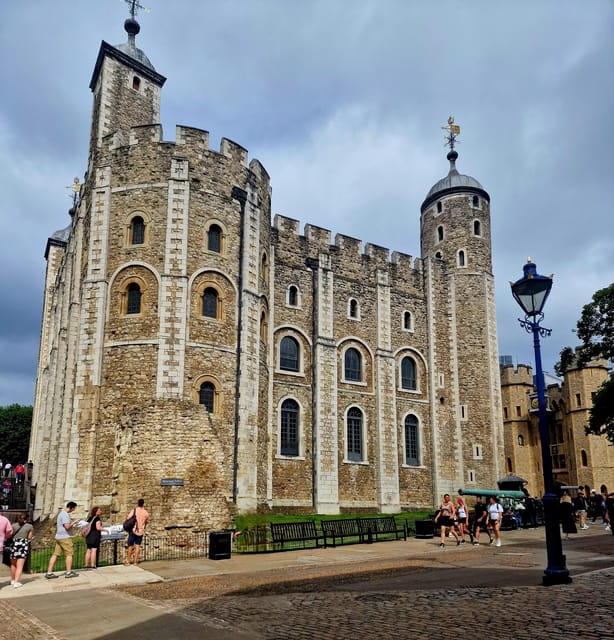
The opening part of the visit introduces the fortress from outside before you enter. This is a useful start because the Tower’s size and position are easier to understand from the surrounding area. Your guide explains how the original Norman project developed into a major royal complex.
Inside, the story moves through several monarchs. Henry III expanded the Tower into a more lavish royal residence, adding grand halls and chapels. Edward I strengthened it further and used it as a military base. By this point, the Tower was not simply a place to keep enemies out. It was also a place where rulers could live, plan, display authority, and hold important prisoners.
Richard II was imprisoned here after being removed from the throne by Henry IV. During the Wars of the Roses, Henry VI was held at the Tower more than once and met a tragic end in Wakefield Tower. Edward IV then reinforced the complex to secure his hold over London.
These stories give the stonework a human edge. A wall may look defensive, but it also witnessed forced abdications, royal fear, and political calculation. The Tower is most interesting when you see all of those roles together.
The White Tower and the Line of Kings
The White Tower receives about an hour of the planned visit, and it deserves the time. This is the oldest major building in the complex, begun by William the Conqueror in 1078. Its purpose was blunt: display Norman strength and control the capital.
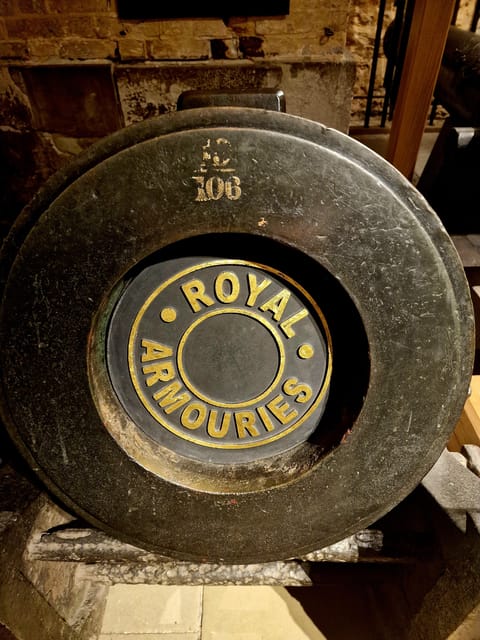
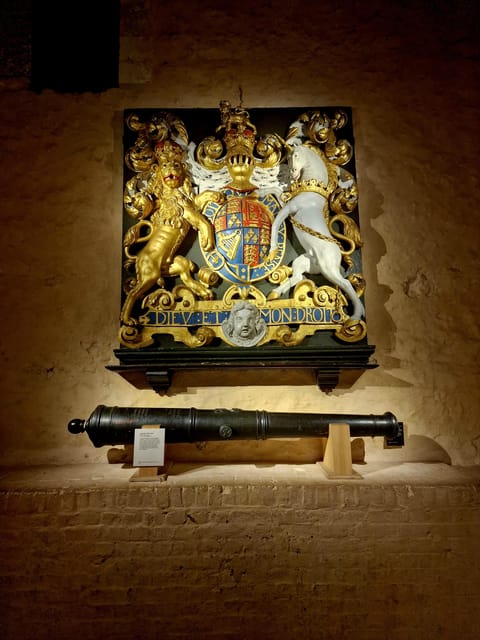
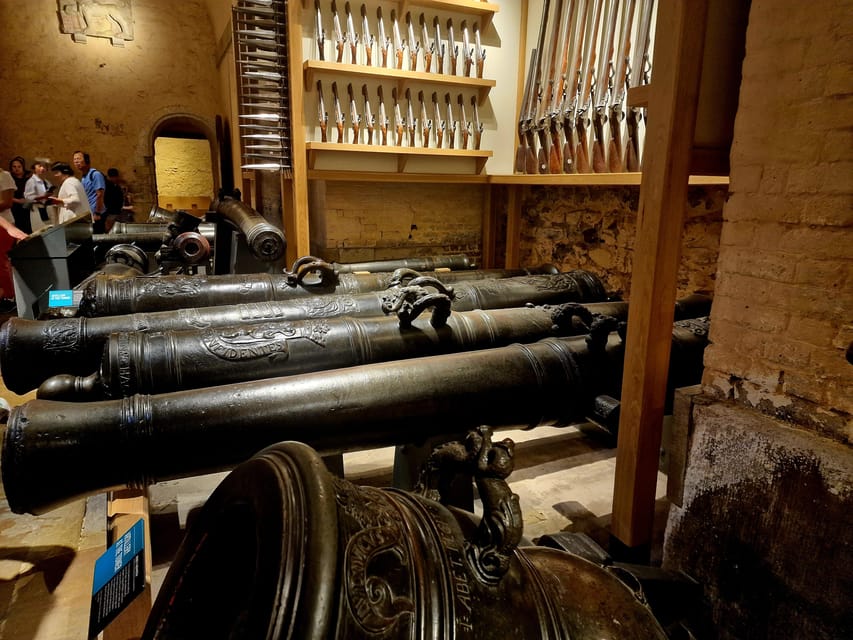
Inside, you visit the Tower Armory and the Line of Kings exhibition. The display includes tournament armor associated with Henry VIII and other kings. Armor can be easy to skim past in a museum, but here it helps explain how monarchs wanted to be seen. These suits were not only practical equipment. They also projected power, wealth, and physical authority.
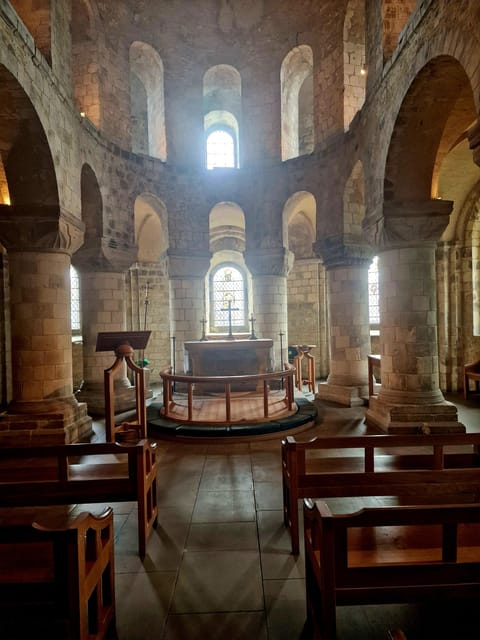
The White Tower also contains St John’s Chapel. Its plain, sturdy design feels very different from the glitter of the Crown Jewels. That contrast is one of the pleasures of the visit. Within the same fortress, you move from royal ceremony to military display and religious space.
Opening hours can affect access to St John’s Chapel and the Church of St Peter ad Vincula. Treat those visits as part of the planned experience, but understand that the tour cannot guarantee entry if either site is closed.
More Tower of London tickets:
- London: Tower of London Entry & Beefeater Private Audience
★ 4.4 · 1,441 reviews - London: Easy Access Tower of London and Crown Jewels Tour
★ 4.7 · 1,189 reviews - London: VIP Tower of London & Tower Bridge Early-Access Tour
★ 4.8 · 862 reviews - London: Tower of London Guided Tour with Boat Ride
★ 4.6 · 704 reviews
The Crown Jewels: glitter with a political purpose
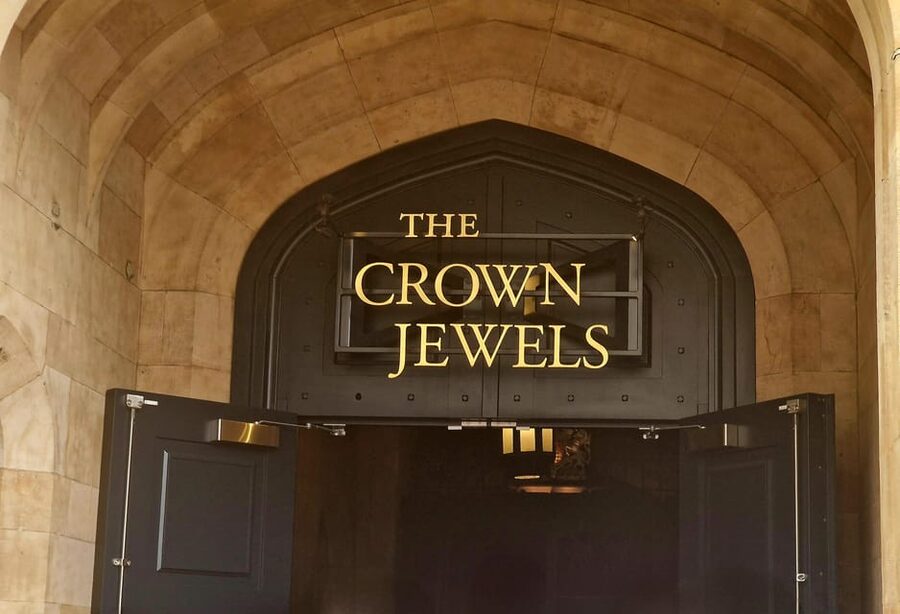
The Crown Jewels exhibition is the part most people have come to see, and it is easy to understand why. The collection includes about 100 objects and more than 23,000 gemstones displayed in a setting designed to impress.
You see the Imperial State Crown, the Koh-I-Noor Crown, and the Sovereign’s Sceptre with Cross. These are not simply expensive decorations. They are working symbols of monarchy, used to communicate continuity, ceremony, and authority.
The Imperial State Crown is the star for many people. Its design carries the visual language of British royal power, with precious stones arranged to catch the eye from a distance. The Sovereign’s Sceptre with Cross brings another layer of symbolism, linking royal authority with Christian tradition.
The display can be busy, and your time in this section may feel more controlled than the outdoor parts of the Tower. That is normal for a popular collection. The benefit of entering with a timed ticket is that you have a planned route through one of London’s most in-demand sights rather than hoping to join at a convenient moment.
Take your time where you can, but listen closely to the guide’s explanation before and after the display. The objects are impressive on their own. Their meaning becomes clearer when you connect them to coronation ceremonies and the long story of English royal government.
Anne Boleyn, Elizabeth I, and the Tower’s darker chapters
The Tower’s reputation as a prison and execution site is tied to some of England’s most recognizable figures. Henry VIII used it as both a royal residence and a grim place of confinement. His second wife, Anne Boleyn, was executed here.
Lady Jane Grey, the Nine Days’ Queen, was also imprisoned and executed at the Tower. Her short reign is a reminder that succession disputes were not abstract arguments. They could decide who lived, who ruled, and who was locked behind the walls.
Elizabeth I was held here by her half-sister Mary I before becoming one of England’s most important monarchs. Standing in a place connected to Elizabeth’s imprisonment gives the royal story a sharper turn. The Tower held someone who would later shape the country for decades.
The mystery of the Princes in the Tower adds another unsettled chapter. Edward V and his brother Richard disappeared while under the guardianship of their uncle, Richard III. The tour presents this episode as part of the Tower’s wider political story, where claims to power often came with suspicion and unanswered questions.
These stories are a major reason to choose a guided visit. Dates and names alone can become a royal alphabet soup. A guide helps you follow who held power, who lost it, and why the Tower kept appearing at the center of the crisis.
Battlements, towers, and the Lower Wakefield Tower
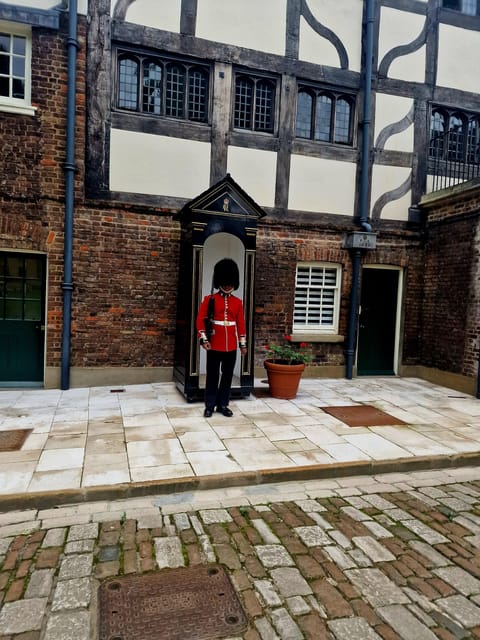
The visit also takes you onto the defensive inner battlements and into large towers that protected the fortress for centuries. This is where the Tower feels most like a military structure rather than a royal display hall.
You can expect stairs, uneven surfaces, inclines, and declines. The battlements are rewarding for visitors who want to understand how the complex was defended, but they are not suitable for everyone. Wear shoes with solid support, and do not plan this tour if you have significant back or mobility problems.
The Lower Wakefield Tower brings the mood down several notches. Here you see terrifying instruments of torture while hearing stories about prisoners who ended up in the Tower. The exhibit is designed to unsettle, and it provides a useful correction to the glitter of the Crown Jewels.
The Tower’s torture history is often simplified in popular stories, but this stop makes the prison function part of the visit. You are reminded that royal power was not only displayed through crowns and ceremonies. It was also enforced through confinement and fear.
Ravens, Beefeaters, and Tower Bridge
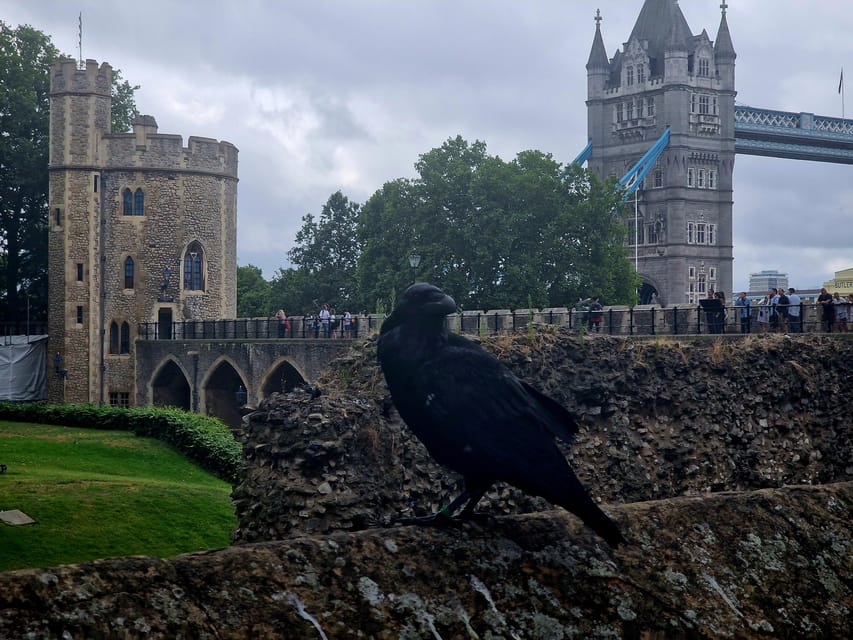
Raven House is one of the tour’s most memorable lighter stops. The Tower has kept ravens for more than 300 years, and these birds are now part of its identity. Their presence feels wonderfully odd beside the armor, chapels, and royal jewels.
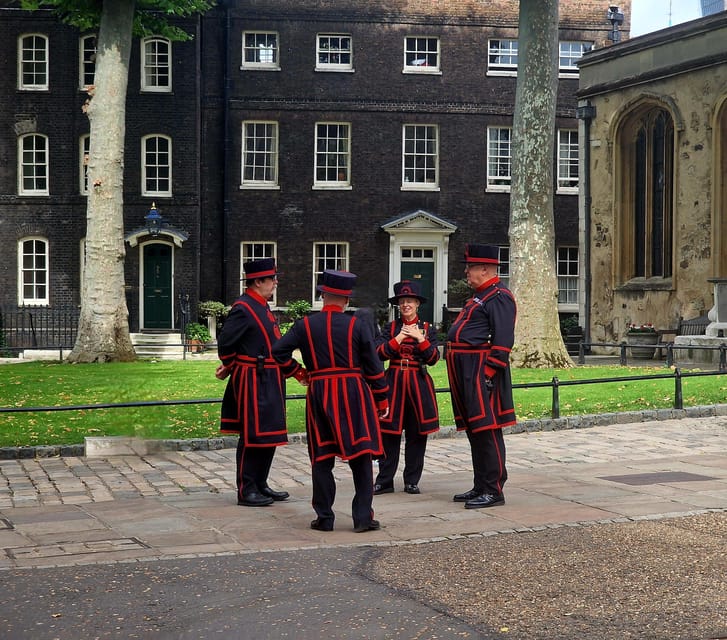
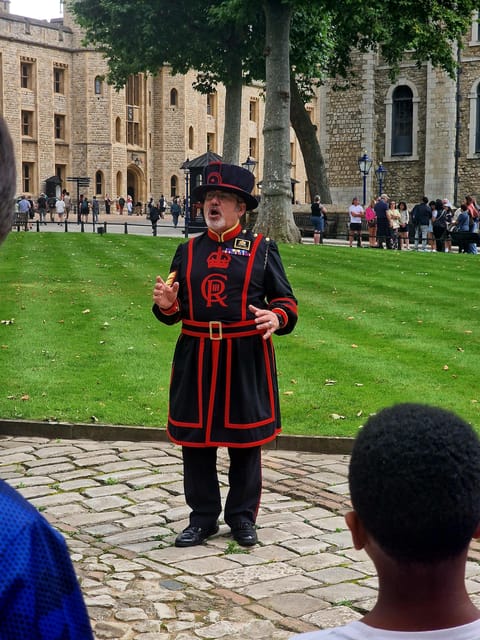
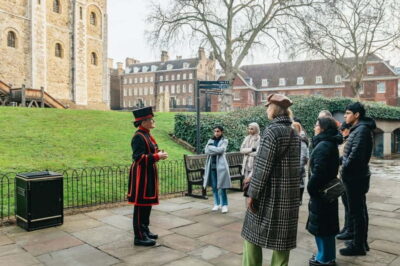
You also have a chance to see the Yeoman Warders, commonly called Beefeaters, carrying out their ceremonial duties. They are among the most recognizable figures at the Tower, and the tour allows time to see them and take a photo.
The Beefeaters add a human face to the fortress. Their uniforms and duties connect the present-day site with its long royal role, while the ravens offer a touch of local tradition that no glass case can provide.
The tour also includes a view of Tower Bridge, England’s most famous bridge. It is not a separate bridge tour, so keep your expectations sensible. You get the landmark as part of the Tower setting, a useful chance to frame a photo and understand how the fortress relates to the River Thames and the city around it.
Is $120 good value for three hours?
At $120 per person, this is not a budget attraction visit. You are paying for timed access, entry to several Tower areas, and the services of a live Blue Badge guide.
The value is strongest if you want structure. In three hours, the tour brings together the Crown Jewels, White Tower, armory, battlements, chapels where open, Raven House, Lower Wakefield Tower, and Beefeater sightings. Trying to plan all of that alone can take extra time and may leave you unsure which buildings deserve priority.
The price is less attractive if you mainly want a quick look at the Crown Jewels. You may prefer a simpler entry option if you do not care about royal biographies, military architecture, or the Tower’s prison history.
There is no food or drink included, so plan around the three-hour visit. Bring water if allowed under the venue rules, and eat before or after rather than expecting a break during the tour. Since the route involves plenty of walking, comfort matters more than dressing for a formal royal occasion.
Free cancellation is available up to 24 hours before the start, and you can reserve now and pay later. That flexibility helps if your London schedule is still changing, but it does not protect you from arriving late on the day.
Who should book this Tower tour?
I would recommend it to first-time London visitors who want the Tower explained rather than simply entered. It also suits anyone fascinated by English monarchs, royal scandals, military history, historic prisons, or ceremonial traditions.
Families with older children may enjoy the mix of crowns, armor, ravens, and dramatic stories, but everyone under 18 must be accompanied by someone aged 18 or older. The walking and stairs may be tiring for young children as well.
This is not a good match for wheelchair users, people with mobility impairments, or anyone with back problems. Mobility scooters and motorized devices are not recommended, and suitable ramps cannot be guaranteed. The tour runs in all weather, so bring clothing suited to rain, cold, wind, or sun.
Final decision: book it for context, not just crowns
Book this tour if you want the Crown Jewels placed inside the full story of royal power. The timed access, White Tower, battlements, armory, ravens, chapels, and prison displays give you much more than a single glittering room.
Skip it if you dislike organized touring, need a slow and accessible route, or only want a short Crown Jewels visit. For the right visitor, $120 buys a clear route through one of London’s most layered historic sites, with a guide to connect William the Conqueror, Henry VIII, Elizabeth I, the Beefeaters, and the ravens into one memorable afternoon.
FAQ
Where does the Tower of London tour meet?
Meet your guide directly outside Starbucks at 3 Tower Place West Building, London EC3R 5BT. Arrive 15 minutes before the scheduled start time.
How long does the tour last?
The tour lasts three hours. The planned visit includes about two hours around the Tower of London and one hour focused on the White Tower.
What is included in the ticket?
Entry includes the Crown Jewels Exhibition, White Tower, Tower Armory, the Line of Kings exhibition, Raven House, the defensive battlements, and Lower Wakefield Tower. St John’s Chapel and the Church of St Peter ad Vincula are included subject to opening hours.
Is transportation provided?
No. Hotel pickup, hotel drop-off, and transportation are not included. You must make your own way to the meeting point and leave from the Tower of London after the tour.
Is the tour suitable for wheelchair users?
No. The tour is not suitable for wheelchair users or people with mobility impairments. It includes cobblestones, uneven paths, stairs, hills, inclines, and declines, and mobility devices are not recommended.
Can I cancel the booking?
You can cancel up to 24 hours before the tour for a full refund. You can also reserve now and pay later. Late arrivals cannot be refunded, rescheduled, or accommodated.
Just added in London
- Women in art – National Gallery★ 5.0 · 3 reviews
- From London: Windsor, Stonehenge & Oxford Private Car Tour★ 3.5 · 4 reviews
- Windsor Stonehenge Bath Private Tour from London with Passes★ 4.8 · 5 reviews
- Windsor Castle Tour with Fish and Chips Lunch in London★ 4.4 · 25 reviews
- Windsor Castle Hampton Court Palace Private Tour with Pass★ 5.0 · 1 review
- Windsor Castle & Hampton Court Palace VIP Black Taxi Tour★ 4.9 · 14 reviews
- Windsor Castle Hampton Court palace Private Tour with Ticket★ 4.4 · 2 reviews
- From London: Windsor Castle, Bath, and Stonehenge Day Trip★ 4.4 · 153 reviews
Tower of London Tickets, compared.
Tower of London Entry & Beefeater Private Audience
Read our review →
Easy Access Tower of London and Crown Jewels Tour
Read our review →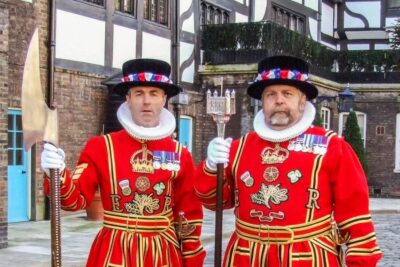
VIP Tower of London & Tower Bridge Early-Access Tour
Read our review →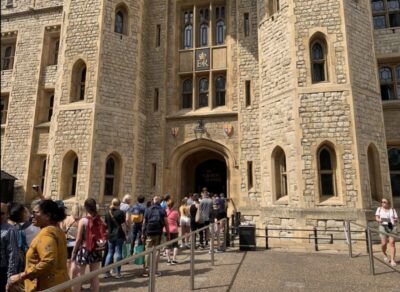
Ultimate Tower of London, Beefeater Welcome & Crown Jewels
Read our review →
Tower of London Tour with Crown Jewels & Beefeaters
Read our review →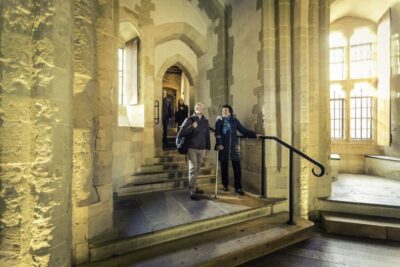
Tower of London: Early Access with Crown Jewels & Beefeaters
Read our review →
Westminster Walking Tour & The Tower of London Entry
Read our review →Other lists this tour turns up in