REVIEW · GUIDED
Aldwych: Hidden Tube Station Guided Tour
London keeps secrets below street level. Aldwych station gives you a rare look at one of them, with abandoned platforms, old lifts, wartime stories, and film locations packed into a 75-minute guided tour. I like the chance to see a disused Tube station that still feels connected to its working past, and I like that the tour is built by historical experts from the London Transport Museum. The main drawback is practical: this is not an easy walk, with stairs, uneven ground, low lighting, and no lift.
The tour costs about $60 per person, which is not cheap for 75 minutes. Still, the price feels easier to justify if you care about London transport, wartime London, architecture, or film locations. Guides such as Colin, Cat, Emily, Jas, and Dom have been praised for making the facts lively rather than dry, so the quality of the guiding matters here.
In This Review
- Key details before you book
- Why Aldwych station is worth seeing
- Meeting at Surrey Street, not the Strand entrance
- The abandoned ticket hall and original entrance details
- Platforms, tunnels, and walkways below London
- Wartime Aldwych and the Blitz shelter
- Priceless treasures stored underground
- Aldwych on screen, from Sherlock to Luther
- Guides who bring the station to life
- Is $60 good value for 75 minutes?
- Who should book Aldwych?
- Should you book the Aldwych tour?
- FAQ
- How long does the Aldwych Hidden Tube Station tour last?
- What language is the tour in?
- Where is the meeting point?
- What should I bring?
- Is the tour step free?
- Can children join the tour?
- Can I cancel the booking?
Key details before you book
- Aldwych opened in 1907 and closed in 1994, leaving behind a station frozen between working Tube history and abandoned infrastructure.
- The route includes the ticket hall, original lifts, platforms, tunnels, and connecting walkways, with plenty of stairs along the way.
- The station sheltered people during the Blitz and stored priceless treasures during the Second World War.
- Film and television locations include Luther: The Fallen Sun, Sherlock, Atonement, The ABC Murders, and Darkest Hour.
- The tour lasts 75 minutes and is in English, with a live guide from the Hidden London team.
- You need sturdy, closed shoes, and the tour is not suitable for children under 10, people with claustrophobia, or people with mobility impairments.
Why Aldwych station is worth seeing
Aldwych is not just an old Tube stop with dusty walls. It tells a very London story about ambitious transport plans, low passenger numbers, wartime survival, and the afterlife of infrastructure that no longer serves commuters.
The station opened in 1907 as part of the Piccadilly line. It was planned as a terminus, but its location never produced the heavy use that transport planners hoped for. That limited footfall became part of its identity. Aldwych carried on for nearly a century, but its quiet platforms and limited role eventually could not justify continued service.
The station finally closed in 1994. Since then, the old rooms and tunnels have remained a useful record of how London built, operated, protected, and sometimes abandoned its underground railway.
I find that more interesting than a simple tale of decline. Aldwych shows how a station can be unsuccessful by everyday transport standards and still become valuable for other reasons. It offered shelter in wartime, protected important objects, and later became a ready-made set for period dramas and thrillers.
A few more options to weigh up in London
- London: The London Eye Entry Ticket
★ 4.6 · 35,875 reviews - From London: Harry Potter Warner Bros Studio Tour
★ 4.7 · 26,588 reviews - London: Westminster to Greenwich River Thames Cruise
★ 4.5 · 22,836 reviews
Meeting at Surrey Street, not the Strand entrance
Your meeting point is outside the Aldwych station entrance on Surrey Street. This matters because the entrance facing the Strand is a different entrance, so check the location before you set off.
You are visiting a closed station, not boarding a train. That means there is no normal public entrance routine, no working lift, and no cloakroom. Bring only what you need for the tour. Large bags, luggage, food, and drinks are not allowed.
A passport or ID card is required. Closed-toe shoes are also required, and sturdy footwear is a sensible choice because the route includes uneven surfaces, staircases, and areas with low lighting. Suitable clothing helps too, particularly since underground conditions can feel different from the street above.
The tour is in English. If you enjoy history told by a guide rather than reading labels at your own pace, that is a strength. If you need a multilingual tour, this particular experience will not fit.
The abandoned ticket hall and original entrance details
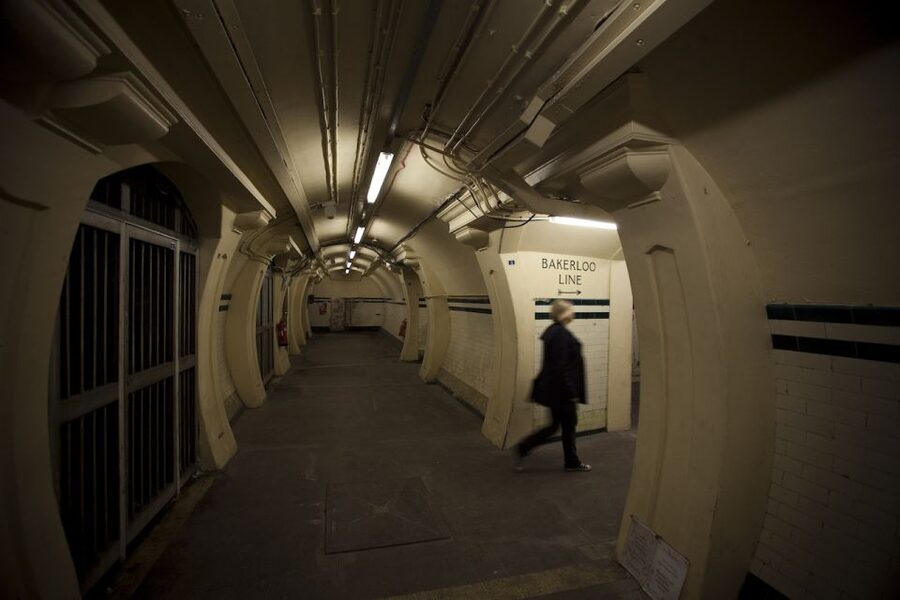
The tour begins with the station’s public-facing spaces, including the abandoned ticket hall. This is where Aldwych first makes its impression. The original architectural features give you a sense of the station as a working place, not simply an empty shell.
A ticket hall is often the most revealing part of an old station because it was designed to move people, collect fares, and manage the rhythm of daily travel. At Aldwych, those functions have stopped, but the physical setting remains.
I like this part of the visit because it gives you a clear starting point. You can understand the station as a piece of public architecture before moving farther underground. The route then shifts from familiar Tube design to spaces that most London passengers never see.
The original lifts are another important stop. They help explain how people once moved between street level and the platforms before the station became a preserved but inactive site. Expect to walk around historic infrastructure rather than use a modern lift to glide downward.
That detail also points to one of the tour’s limits. You need to be comfortable with stairs. This is a walking tour through a working historical site, not a polished museum floor with step-free access.
Platforms, tunnels, and walkways below London
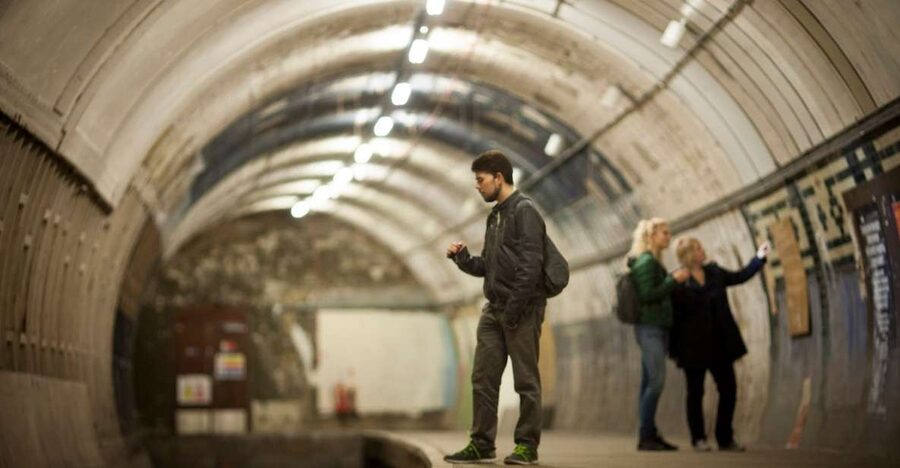
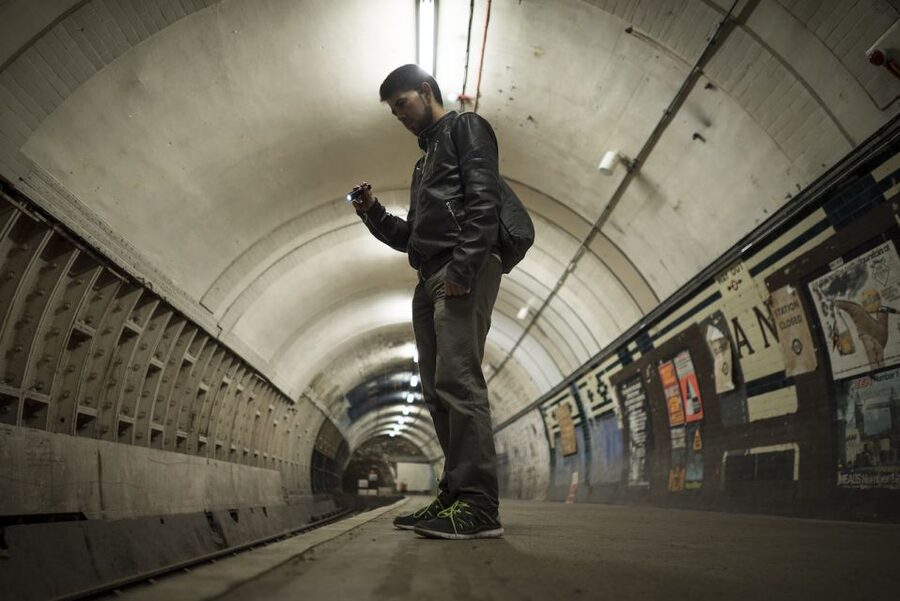
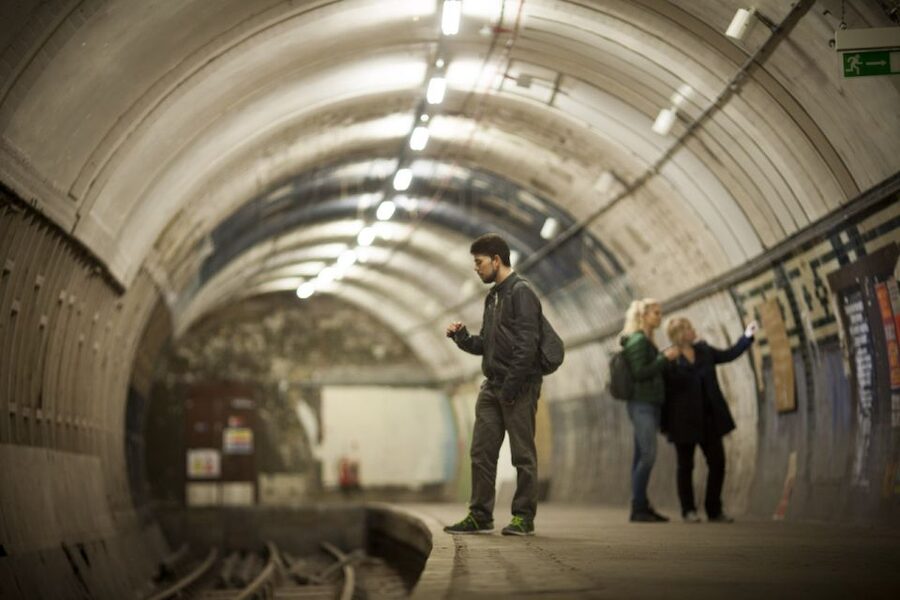
The route continues through abandoned platforms, tunnels, and interconnecting walkways. These spaces are the reason many people book the tour. They offer a look at the parts of a Tube station normally hidden behind locked doors or beyond passenger routes.
A platform at a closed station has a different mood from a busy London Underground platform. There is no rush of commuters and no need to make room for a train. Instead, the shape of the station becomes easier to notice: the confined proportions, the practical layout, and the way the tunnels connect the various parts of the site.
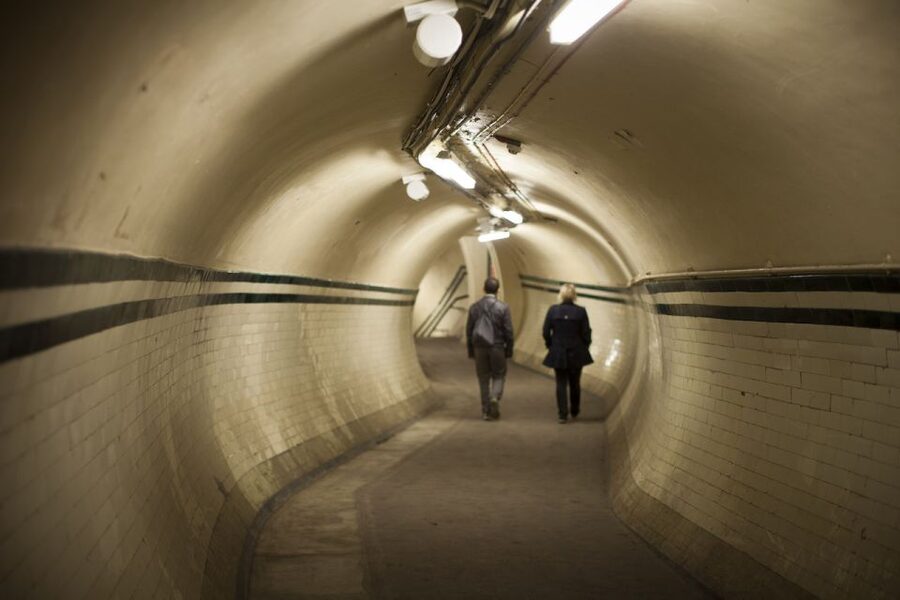
The walkways are just as important as the platforms. They show how much infrastructure exists behind the public areas of a station. You may find the less polished spaces more memorable than the ticket hall because they make the station feel like a working machine that has simply been switched off.
The tour involves plenty of walking, uneven ground, staircases, and low lighting. Take that warning seriously. The setting is part of the appeal, but it also creates real physical demands. People with claustrophobia may find the enclosed spaces uncomfortable, and the tour is not suitable for people with mobility impairments.
There is no elevator. Children under 10 cannot join, and there can be no more than four children aged 10 to 15 for each adult. Families with older children should judge the route by stamina and comfort, not just age.
A different kind of day out entirely:
- Magical London: Harry Potter Guided Walking Tour
★ 4.7 · 22,044 reviews - London: Madame Tussauds London
★ 4.6 · 20,915 reviews - London: Warner Bros. Studio Tour with Transfers
★ 4.7 · 17,586 reviews - London: Tower Bridge Entry Ticket
★ 4.7 · 15,560 reviews
Wartime Aldwych and the Blitz shelter
Aldwych’s wartime role gives the tour more weight than a standard transport history visit. During the Blitz, the station offered refuge to people seeking shelter underground.
Hearing first-hand accounts from people who sheltered there helps turn a familiar piece of London vocabulary into a human story. The Tube was not only a transport system during the Second World War. Its stations also became places where people waited out bombing, spent fearful nights, and tried to maintain some sense of safety.
Aldwych is particularly well suited to telling that story because its low passenger numbers left room for other uses. The quiet station could serve a purpose beyond the daily commute.
The wartime section also explains why the station mattered even when it was not busy. A station with limited commercial success could still become useful in a national emergency. That contrast is one of the most thoughtful parts of the experience.
If you are interested in the history of London during the Blitz, this section may be the strongest reason to visit. The stories are tied to the actual rooms and platforms around you, so the history is easier to picture than it would be in a general city museum.
Priceless treasures stored underground
One of Aldwych’s most surprising roles was the storage of priceless treasures during the war. The tour explains how valuable objects were kept here for protection.
This is a good example of why the station’s history is so varied. Aldwych was a transport site, a shelter, a storage location, and later a film set. Each use left a different layer of meaning behind.
The storage story also gives you a reason to pay close attention to the guide. The setting alone cannot explain what happened there. Details about what was stored, why the station was selected, and how the space was used turn a dark tunnel into a place with national importance.
A particularly memorable part of the tour involves the safe. The contents and wartime purpose are presented as one of the station’s most striking stories. I would not choose this tour for the safe alone, but it is exactly the kind of unexpected detail that makes a short visit feel worthwhile.
Aldwych on screen, from Sherlock to Luther
Aldwych has become a popular film and television location because its closed platforms and old-fashioned interiors can represent several periods without much alteration.
The tour points out locations connected with Luther: The Fallen Sun, The ABC Murders, Darkest Hour, Sherlock, and Atonement. That gives film fans a second way to read the station. You are not only looking at disused railway architecture. You are also seeing a place that directors use to create wartime, period, and thriller settings.
The film connections are best treated as an added bonus rather than the whole point of the visit. The station’s real history is stronger than any single screen appearance. Still, it is fun to recognize how the same rooms can be dressed for different stories.
The range of titles also shows why Aldwych is useful on camera. It has original features, enclosed platforms, old lift areas, and tunnels that can suggest a much wider world. For visitors who enjoy British film and television, these references add another layer to the walk.
Guides who bring the station to life
The guide can make or break a tour in a dark, enclosed place. Here, the strongest feedback centers on enthusiasm, clear information, friendliness, and humor.
Colin and Cat have been praised for a particularly enjoyable early Sunday start. Emily and Jas have also received warm praise, while Emily, Dom, and Dom were described as professional, entertaining, and full of useful facts. Those names matter because this is not a self-guided visit where the building does all the work.
A good guide helps you notice what you would otherwise pass by. A doorway, lift shaft, or stretch of tunnel becomes meaningful once you know how it was used. The best moments are likely to come from the mix of practical transport information, wartime stories, and film trivia.
I also like that the tour is developed by historical experts from the London Transport Museum. That connection gives the experience a stronger foundation than a casual ghost walk or a general London novelty tour. The museum’s archive and collection support the storytelling.
The public recognition from the 2022 Tiqets Remarkable Venue Awards also reflects its appeal, though awards should never replace practical judgment. The real question is whether you enjoy guided history and can handle the physical setting.
Is $60 good value for 75 minutes?
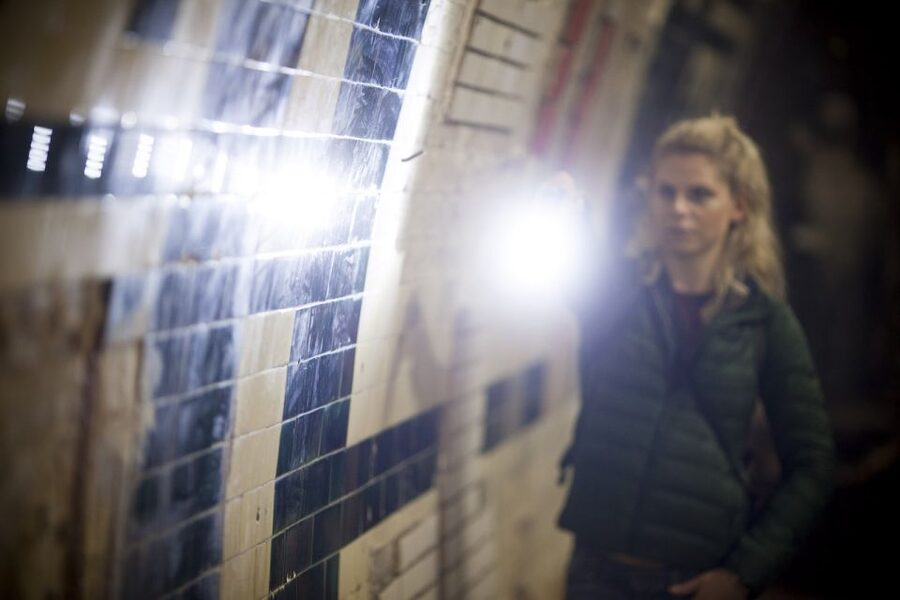
At $60 per person, Aldwych is a premium short tour. You are paying for access to a normally closed site, a specialist guide, and stories that are difficult to gather on your own.
The value is strongest for three groups:
- London Underground enthusiasts who want to see platforms and infrastructure outside the normal passenger network
- History fans interested in the Blitz, wartime shelter, and protected treasures
- Film and television fans who want to connect famous scenes with a real London location
The value is weaker if you only want a general London attraction or dislike guided tours. Seventy-five minutes is not a full morning activity, and the station itself is compact enough that the cost may feel high if you are not drawn to the subject.
Still, the price compares favorably with many specialist London experiences when you consider the access involved. You are not simply entering an old room. You are being taken through a closed station with original features and restricted areas, while a guide explains its changing role.
You can also combine the visit with time at the London Transport Museum. One person specifically paired the Aldwych tour with a museum visit afterward, which makes practical sense. The museum can provide broader Tube history, while Aldwych gives you the physical setting.
Who should book Aldwych?
I would recommend this tour to anyone fascinated by London’s underground railway, wartime history, old buildings, or screen locations. It also suits repeat visitors who have already seen the major attractions and want a more unusual side of central London.
It is a good choice for a Sunday morning if you want an early, focused activity before spending the rest of the day elsewhere. The tour’s short length makes it easier to fit into a larger London plan, though you should leave enough time to arrive at the Surrey Street meeting point.
Families with children aged 10 to 15 can consider it, but adults should be realistic about the stairs and low light. Young children cannot join, and the route is not designed for anyone who needs step-free access.
I would skip it if enclosed spaces make you anxious, if you cannot manage stairs, or if you want a relaxed museum experience. Aldwych is atmospheric precisely because it is old, confined, and partly rough underfoot.
Booking is flexible: you can cancel up to 24 hours before the tour for a full refund, and a reserve-now, pay-later option is available. Those policies help if your London schedule is still changing, but the physical requirements will not change.
Should you book the Aldwych tour?
Book it if you want a close look at a closed London Tube station and prefer real places with several stories to polished attractions. The wartime shelter accounts, protected treasures, original lifts, and film locations give the tour plenty of range.
Skip it if you need step-free access, dislike enclosed spaces, or are looking for a cheap way to fill an hour. At $60, Aldwych asks you to care about the subject.
For the right visitor, it is a memorable use of 75 minutes. The guides give the station a human voice, and the setting does something a normal Tube ride cannot: it lets you stop, look around, and think about what happened beneath London while the city carried on above.
FAQ
How long does the Aldwych Hidden Tube Station tour last?
The guided tour lasts 75 minutes.
What language is the tour in?
The tour is conducted in English with a live guide.
Where is the meeting point?
Meet outside the Aldwych station entrance on Surrey Street. This is not the entrance facing the Strand.
What should I bring?
You must bring a passport or ID card. Wear sturdy, closed-toe shoes and suitable clothing.
Is the tour step free?
No. The tour includes stairs, uneven ground, low lighting, and no elevator.
Can children join the tour?
Children under 10 are not allowed. There is a maximum of four children aged 10 to 15 for each adult.
Can I cancel the booking?
Yes. You can cancel up to 24 hours in advance for a full refund. A reserve-now, pay-later option is also available.
Just added in London
- The Best of British Cooking Class & Dining Experience★ 5.0 · 1 review
- London: Live Comedy Show at Big Belly Bar and Comedy Club★ 4.5 · 80 reviews
- London: British Museum Highlights Guided Small Group Tour★ 4.9 · 113 reviews
- The Beatles London Walking Tour★ 4.2 · 147 reviews
- The Best Highlights of London Walking Tour & Boat Cruise★ 5.0 · 1 review
- Iconic London: Bard, Beatles, Bond & Baker Street★ 4.9 · 15 reviews
- The Authentic Walking Tour with Indian Tasting Meal★ 4.8 · 4 reviews
- London: Tate Britain Official Discovery Tour★ 4.7 · 7 reviews
Guided, compared.

Magical London: Harry Potter Guided Walking Tour
Read our review →
Emirates Stadium Entry Ticket and Audio Guide
Read our review →
City & Beatles Tour with Live Guide & Live Music
Read our review →
University and City Walking Tour with Alumni Guide
Read our review →
Christmas Lights Nighttime Bus Tour with Live Guide
Read our review →