

REVIEW · BRITISH MUSEUM TOURS
London: British Museum Highlights Guided Small Group Tour
The British Museum can swallow a whole day. This small-group highlights tour gives you a clear path through 6,000 years of human history, with a guide explaining why the objects matter rather than simply pointing at glass cases. I love the smart selection of famous pieces, and I like the lively storytelling that makes the museum work for adults and children alike. The tradeoff is time: two to two and a half hours cannot cover a collection this vast.
Guides such as Andy, James, Sasha, Stef, Luis, and Sheldon have earned praise for mixing facts with humor and inviting the group into the discussion. I also appreciate the choice between a private tour and a semi-private group of no more than eight people. At $112 per person, it is not a budget activity, and you may wish for another half-hour once the tour ends.
In This Review
- Key points to know before booking
- Why a guide helps at the British Museum
- The Rosetta Stone and the first big lesson
- Assyrian lion hunts and royal power
- Parthenon sculptures and difficult questions
- The Lewis Chessmen and the appeal of small objects
- The Oxus Treasure and long-distance connections
- The Royal Game of Ur and everyday life
- Mummy of Katebet and Samurai armor
- Two and a half hours with a clear limit
- Private tour or semi-private group?
- Is $112 a fair price?
- How guides shape the experience
- Who should book this British Museum tour?
- Should you book it?
- FAQ
- How long does the British Museum highlights tour last?
- What language is the tour offered in?
- What objects are usually included?
- Is the tour private or shared?
- Is there a minimum number of people required?
- Is hotel pickup included?
- Can I bring luggage?
- Can wheelchair users join the tour?
Key points to know before booking
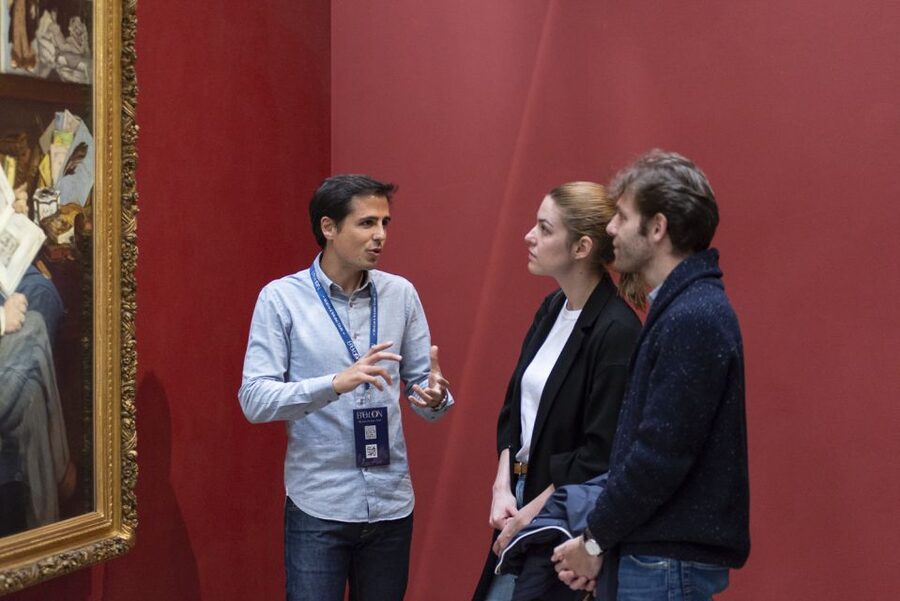
- A focused route through a huge museum: You see major objects without wandering aimlessly through millions of items.
- The Rosetta Stone is the real thing: You examine the ancient stone that helped scholars read Egyptian hieroglyphs, not a language-learning display.
- Guides make the difference: The strongest praise centers on clear explanations, good humor, and stories that give each object a human setting.
- Small groups stay personal: Semi-private tours allow up to eight people, while private tours offer more room for your own questions and pace.
- Expect famous highlights, not every gallery: The route usually includes the Parthenon sculptures, Assyrian reliefs, Lewis Chessmen, and Oxus Treasure, if available.
- Plan for light walking and no large bags: Bring identification, leave luggage behind, and request a private wheelchair tour if needed.
Why a guide helps at the British Museum
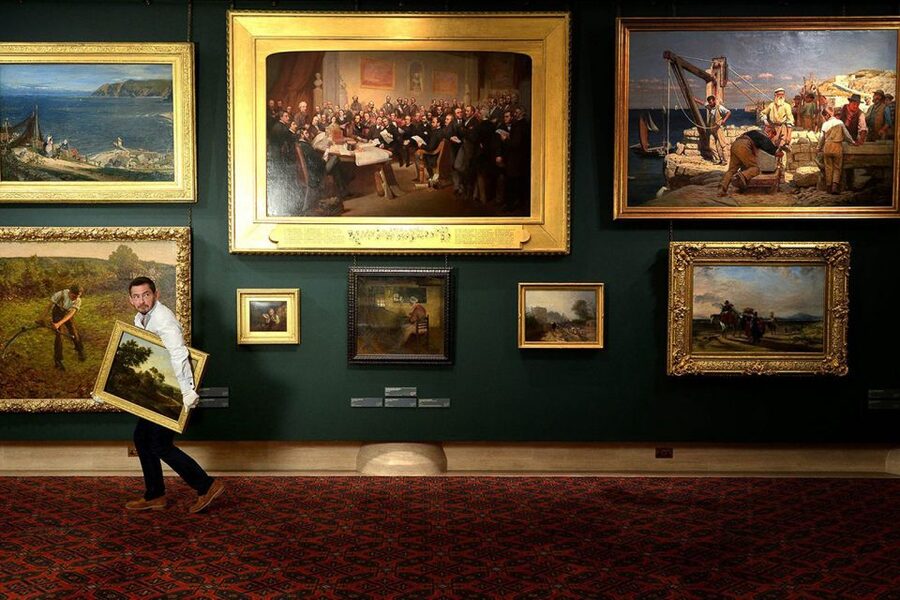
The British Museum is not short on things to see. Its collection covers 6,000 years and objects from many parts of the world. That scale is thrilling for a serious museum fan, but it can also leave you looking at one case after another without knowing what deserves your attention.
A guide solves that problem by choosing a manageable group of objects and linking them through larger ideas. You may move from ancient Egypt to Assyria, then to Greece, medieval Scotland, Persia, Mesopotamia, and Japan. The point is not to inspect every item. It is to understand a few important ones well enough that the rest of the museum begins to make more sense.
I value this approach because museum labels often give you dates, materials, and names, but not always the human story. A good guide explains what an object was made for, who used it, what it reveals about its society, and why it ended up in a London museum.
That last question matters here. The tour can also address the less flattering parts of British collecting and imperial history. Emily, for example, was praised for speaking plainly about how some objects reached the museum. That kind of honesty adds weight to the experience rather than taking away from it.
More British Museum visits:
- London: British Museum Guided Tour
★ 4.3 · 1,182 reviews - London: Tour of the British Museum
★ 4.1 · 678 reviews - London: British Museum Audio Tour & Priority Entrance Ticket
★ 4.5 · 631 reviews
The Rosetta Stone and the first big lesson
The Rosetta Stone is usually the headline stop, and rightly so. You see the actual stone, with its inscriptions in different scripts, and learn how it helped scholars understand Egyptian hieroglyphs.
Its importance is easy to miss if you simply walk past it with a quick photograph. The guide gives you the basic key: the same decree was written in more than one script, allowing scholars to compare the known writing with the mysterious hieroglyphs. The object becomes less like an old slab and more like a breakthrough in understanding an entire civilization.
The Rosetta Stone also sets the tone for the tour. These are not famous objects only because they are old. They matter because they changed what people could know, preserve, or pass on.
You should expect crowds around this major exhibit. A small group helps because the guide can position you, keep the explanation moving, and make sure the stop does not dissolve into a battle for a photograph. Still, the exact amount of time in front of each object depends on gallery conditions and the guide’s route.
Assyrian lion hunts and royal power

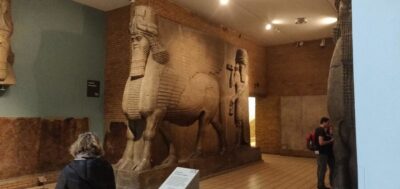
The Assyrian Lion Hunt reliefs offer one of the most gripping parts of the visit. These carved scenes show royal hunts in striking detail, including the movement and suffering of the animals.
The guide can help you read the relief as more than a dramatic wall decoration. It was also a statement about kingship. The ruler is presented as brave, controlled, and powerful enough to defeat a dangerous creature. The hunt tells you how the Assyrian court wanted to see itself.
Look closely at the carved bodies, weapons, horses, and lions. The detail is remarkable, and the wounded animals are shown with a force that can make the scene feel surprisingly immediate. This is a useful reminder that ancient art was often political communication, not just decoration.
I like this stop for groups with mixed interests. History fans can consider royal propaganda and ancient empire. Children can follow the animals and action. A skilled guide can use the reliefs to bring both groups into the same conversation.
Parthenon sculptures and difficult questions
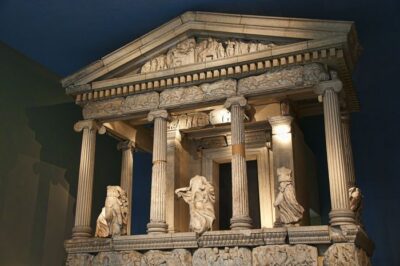
The Parthenon sculptures bring you into ancient Greece, but they also raise modern questions about ownership and museum collections. You may see architectural fragments and sculpted figures associated with the Parthenon in Athens.
The artistic quality is the obvious attraction. Your guide can point out the treatment of clothing, bodies, movement, and the way sculptors suggested life in stone. The pieces were made for a building, so you can also think about how different they look when separated from their original setting.
This is an important part of the tour because it keeps the museum from being presented as a simple parade of beautiful objects. The British Museum’s collections were formed through centuries of travel, excavation, trade, power, and empire. The story of an object includes both its original culture and the path that brought it to London.
You should not expect a full debate on every disputed collection item in two hours. You can, however, ask your guide about the context. Guides praised for candor and clear explanation are especially useful here.
More Museum Tours in London:
- London: Chelsea Football Club Stadium and Museum Tour
★ 4.8 · 4,576 reviews - London Transport Museum Entrance Ticket
★ 4.5 · 1,323 reviews - London: Jack the Ripper Museum Tickets
★ 4.2 · 894 reviews - Afternoon Tea at the British Museum
★ 4.2 · 511 reviews
The Lewis Chessmen and the appeal of small objects
After monumental stonework and royal reliefs, the Lewis Chessmen offer a welcome change of scale. These medieval chess pieces are small, expressive figures, and they remain memorable because each face seems to have a personality.
The pieces are associated with the Isle of Lewis and are carved from walrus ivory. The set gives you a glimpse of medieval gaming, trade, craftsmanship, and social life. It also shows how an object can be historically important without being physically large.
I find this stop particularly good for families. The figures are easy to understand at first glance, and a guide can turn them into a question about who played games, how pieces were made, and what travel and trade looked like in the medieval north.
The Lewis Chessmen also help break up the tour’s pace. You are not only studying grand empires. You are seeing ordinary human interests too: play, competition, design, and humor.
The Oxus Treasure and long-distance connections
The Oxus Treasure introduces the ancient Persian world through a group of precious objects. You might see gold pieces and other items connected with the Achaemenid period, depending on the route and display conditions.
This section is valuable because it shows how art and craftsmanship moved across regions. The objects are refined, detailed, and closely tied to the power and beliefs of their makers. A guide can explain what the treasure suggests about wealth, religion, rulers, and contact between different communities.
The treasure also makes a good companion to the Rosetta Stone and Assyrian reliefs. Each represents a different way societies recorded power and identity. One uses writing, another uses carved royal scenes, and another uses precious materials and symbolic design.
If you enjoy material details, spend a moment looking at the workmanship rather than rushing toward the next famous name. The tour’s best moments often come when the guide helps you notice something you would have missed alone.
The Royal Game of Ur and everyday life
The Royal Game of Ur is another useful reminder that ancient people did not spend every hour building monuments or fighting wars. They played games, made rules, competed, and passed time much as you do.
The board and pieces give the guide an opening to discuss daily life in ancient Mesopotamia. You may learn about the setting in which the game was found and what it can tell us about leisure, status, and craftsmanship.
This stop works well in a highlights tour because it adds balance. You see rulers and armies, but you also see evidence of ordinary behavior. That contrast makes the museum’s broad story feel more human.
The precise objects shown can vary. The advertised highlights are generally included when items are not on loan or being restored, so you should treat the route as a strong guide to the plan rather than an absolute promise for every single case.
Mummy of Katebet and Samurai armor
The Mummy of Katebet brings the focus back to ancient Egypt, this time through a person rather than a famous inscription. The guide can explain what the mummy and its surrounding objects reveal about burial customs, belief, identity, and the treatment of the dead.
This is the kind of stop that benefits from explanation. A display case can seem quiet and still, but the objects around the mummy carry clues about the person’s life and the society that prepared her for death. The subject may be intense for very young children, although the experience is presented as a history lesson rather than a horror attraction.
Samurai armor gives the tour a different visual rhythm. The materials, construction, and appearance reveal a culture in which clothing and protection could also signal rank and identity. The armor is likely to be one of the easiest exhibits for children to remember, but adults can also appreciate the careful workmanship and social meaning.
Together, these stops widen the tour beyond the best-known European and Mediterranean objects. You get a better sense of the museum’s worldwide reach.
Two and a half hours with a clear limit
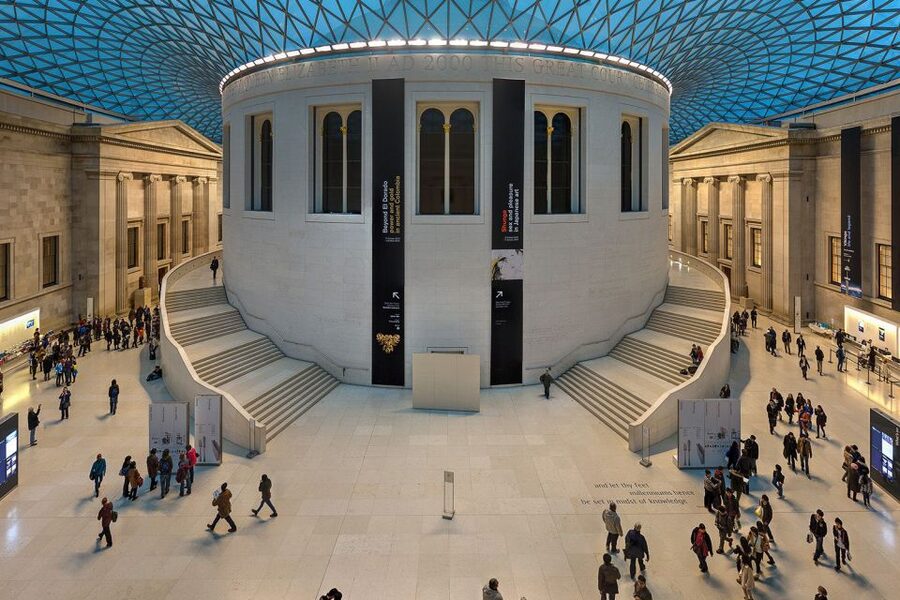
The tour lasts two to two and a half hours. That is long enough for a thoughtful introduction but short enough to fit into a busy London day.
You will do some walking, though the amount is described as small. The real challenge is not distance. It is the museum’s size, crowds, and the time needed to stop, listen, ask questions, and move between galleries.
Several people have wished for another half-hour or more objects. I understand that feeling. A guide who spends several minutes giving context at each major stop may show fewer exhibits, but the objects you do see become easier to remember. If you prefer a rapid checklist, this may feel too slow. If you want meaning and stories, the pace is sensible.
After the tour, you receive suggestions for other galleries or exhibits to see on your own. That matters because the guided visit works best as an introduction, not as your entire British Museum day.
Private tour or semi-private group?
The semi-private option has a maximum of eight people and requires at least two guests to run. That is a useful middle ground: more personal than a large coach-style group, but usually less costly than booking a guide just for your party.
A small group also makes it easier to hear, ask questions, and stay together in crowded galleries. Guides such as Luis have been praised for moving efficiently through busy spaces while still giving the group proper time with each object.
A private tour makes more sense if your party has specific interests, different mobility needs, or children who need extra attention. It is also the only format offered for a wheelchair tour. Wheelchair access must be requested, and the general activity information also lists wheelchair users as not suitable, so confirm the private arrangement before paying.
The meeting point can vary by the option you choose. Check the exact instructions carefully, and do not bring luggage or large bags. You should bring a passport or ID card, as requested for the activity.
Is $112 a fair price?
At $112 per person, this is a premium museum visit. The British Museum itself is not presented here as part of the price, and temporary exhibits, food, drinks, hotel pickup, and hotel drop-off are not included.
The value rests in the guide. If you walk through the museum alone, you can see a great deal, but the scale may work against you. You could spend hours and still miss the objects that give the collection its strongest sense of purpose.
The price makes the most sense for a first visit, a short London stay, or a family that wants the museum to feel approachable. It is also useful if you have already visited and felt overwhelmed by the number of galleries. Several strong guide performances have turned that confusion into a clear route with memorable stories.
The value is weaker if you are a museum regular who enjoys reading every label at your own pace. You may prefer to enter independently and spend the money on a longer visit, especially if you already know which galleries matter most to you.
Free cancellation up to 24 hours before the start and reserve-now, pay-later booking make the commitment less rigid. Still, read the exact option details before booking because the meeting point and group arrangement can differ.
How guides shape the experience
The most repeated strength is the quality of the guiding. Andy has been praised for his history background and ability to make even unfamiliar subjects interesting. Stef is remembered for humor, enthusiasm, and the ability to include both adults and younger people. James is noted for efficient navigation and strong explanations, while Luis is praised for combining detailed knowledge with a warm manner.
That range matters. A museum tour can be accurate yet dull, or entertaining but shallow. The best experience here seems to come from guides who do both jobs: they explain the object and keep the group involved.
Families should pay close attention to this point. Guides including Alex, Luis, Ivo, and others have been praised for connecting with children and teenagers. That can turn a museum that feels intimidating into something your family discusses later, which is a better result than simply checking off the Rosetta Stone.
Guide assignments can change, so you cannot book a particular person based on these names. You can, however, expect the company to place a professional English-speaking local guide with your group.
Who should book this British Museum tour?
You should consider it if you:
- Have never visited the British Museum and want a strong first orientation.
- Have only two or three hours available.
- Want context rather than a self-guided walk with a map.
- Are traveling with teenagers or children who need stories and interaction.
- Prefer a small group with a maximum of eight people.
- Want to ask questions about difficult topics such as collecting and empire.
- Are visiting during a busy London itinerary and need efficient navigation.
You may want to skip it if you:
- Plan to spend a full day reading labels and exploring lesser-known galleries.
- Prefer complete control over your pace.
- Want to include temporary exhibitions, since those are not part of the tour.
- Need a wheelchair tour but have not arranged a private option in advance.
- Are traveling alone, since the booking requires at least two people.
Should you book it?
Book this tour if the British Museum feels too large to tackle alone. The guide gives you a route, a story, and a reason to care about objects that might otherwise blur together. The strongest value is not the number of exhibits. It is the extra meaning you take away from each one.
I would choose the semi-private option for most first-time visitors and the private option for families with special interests or mobility needs. Give yourself extra time afterward to revisit a favorite gallery, because two and a half hours can introduce the museum, but it cannot finish it.
FAQ
How long does the British Museum highlights tour last?
The tour lasts between two and two and a half hours.
What language is the tour offered in?
The live tour guide speaks English.
What objects are usually included?
Highlights generally include the Rosetta Stone, Assyrian Lion Hunt reliefs, Parthenon sculptures, Lewis Chessmen, Oxus Treasure, Royal Game of Ur, Mummy of Katebet, and Samurai armor. Objects can be unavailable if they are on loan or being restored.
Is the tour private or shared?
You can book either a private tour or a semi-private small-group tour. Semi-private groups have a maximum of eight people.
Is there a minimum number of people required?
Yes. At least two people are required per booking. A semi-private tour also needs a minimum of two guests to operate. If that minimum is not met, an alternative date or full refund is offered.
Is hotel pickup included?
No. Hotel pickup and drop-off are not included.
Can I bring luggage?
Large bags and luggage are not allowed. Bring a passport or ID card as requested.
Can wheelchair users join the tour?
Wheelchair tours are available on request, but only as private tours. The guide cannot provide a small-group tour for guests who require wheelchair access, so arrange this before booking.
Just added in London
- The Best of British Cooking Class & Dining Experience★ 5.0 · 1 review
- London: Live Comedy Show at Big Belly Bar and Comedy Club★ 4.5 · 80 reviews
- The Beatles London Walking Tour★ 4.2 · 147 reviews
- The Best Highlights of London Walking Tour & Boat Cruise★ 5.0 · 1 review
- The Authentic Walking Tour with Indian Tasting Meal★ 4.8 · 4 reviews
- Iconic London: Bard, Beatles, Bond & Baker Street★ 4.9 · 15 reviews
- London: Tate Britain Official Discovery Tour★ 4.7 · 7 reviews
- Terrific East-End Private Food tour with a friendly local.★ 5.0 · 1 review
British Museum Tours, compared.
British Museum Audio Tour & Priority Entrance Ticket
Read our review →
British Museum Archaeology Course and Guided Tour
Read our review →
British Museum Guided Tour with Priority Entrance
Read our review →
British Museum Private Guided Tour with Tickets
Read our review →Other lists this tour turns up in