
REVIEW · BRITISH MUSEUM TOURS
London: British Museum Guided Tour
History gets easier with a good guide. This two-hour tour gives you a clear route through the British Museum’s enormous collection, with stops at the Rosetta Stone, Parthenon Sculptures, Egyptian mummies, Sutton Hoo treasures, and Assyrian Winged Bulls. I like the way it turns a huge museum into a manageable story, and I like that the guide can add context you would likely miss on your own. The main drawback is simple: two hours only covers the highlights, and the exact meeting point and guide language can vary by booking option.
The strongest part is the human touch. Guides such as Joe, Paul, Denise, Filomena, Chiara, and Dionysia have been praised for clear explanations, humor, patience, and the ability to adjust the pace. I also like the price, $23 per person, which is fair for a live tour in a museum this vast. Still, you should allow extra time if you want to explore the Egyptian galleries or other rooms after the tour.
In This Review
- Key points at a glance
- Why a guide helps inside this enormous museum
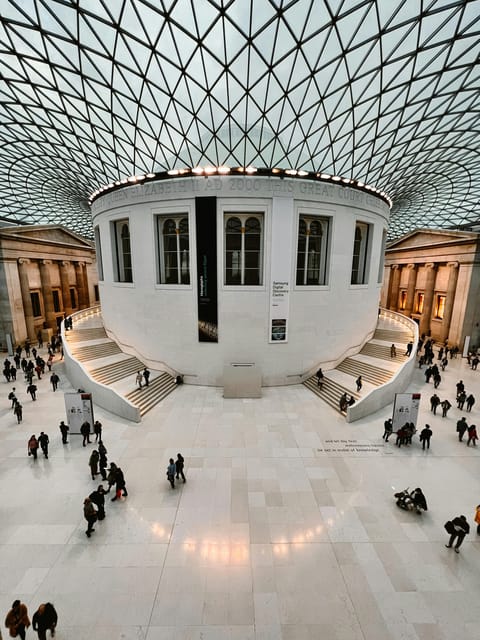
- Starting beneath the Great Court’s glass roof
- The Rosetta Stone and the power of one inscription
- Egyptian mummies, burial customs, and cat mummies
- The Parthenon Sculptures and a disputed collection
- Roman objects and the stories behind ancient power
- Sutton Hoo and the Anglo-Saxon world
- The Winged Bulls from Khorsabad
- Two hours, group size, and the pace of the route
- Is $23 good value for this London museum visit?
- Who will enjoy this guided museum route?
- Should you book the British Museum guided tour?
- FAQ
- How long does the British Museum guided tour last?
- How much does the tour cost?
- Is museum transportation included?
- Where does the tour meet?
- Which languages are available?
- Is the tour wheelchair accessible?
- Are headsets provided?
- Can I cancel the booking?
Key points at a glance
- The Great Court sets the scene: Begin beneath the British Museum’s striking glass roof, with the famous Reading Room at its center.
- The Rosetta Stone is the essential stop: See the object that helped scholars decipher Egyptian hieroglyphics.
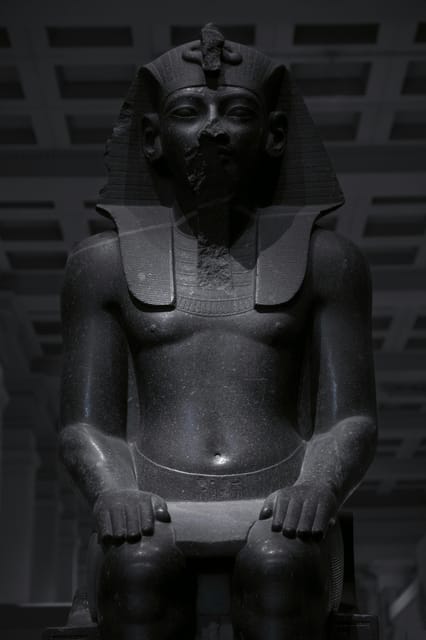
- Ancient Egypt gets real and personal: Mummies, cat mummies, and burial objects give the collection a human face.
- The Parthenon Sculptures raise difficult questions: Your guide can explain both their artistic importance and the dispute over their removal from Athens.
- A guide keeps the museum under control: The collection is too large for a short visit without a plan.
- Plan to stay after the tour: The two-hour route is an introduction, not a full museum visit.
Why a guide helps inside this enormous museum
The British Museum is not the kind of place you casually wander through and fully understand in one visit. Its collections cover thousands of years and many parts of the world. Without a plan, you can spend a lot of time walking between rooms and still miss the pieces you came to see.
I like this tour because it gives you a narrative rather than a list of display cases. The guide connects ancient Egypt, Greece, Rome, Assyria, and Anglo-Saxon England through the ways people worshiped, ruled, traded, buried their dead, and recorded ideas.
That approach matters. A famous object is more interesting when you understand why it was made and how it reached the museum. A guide can also point out details that are easy to overlook, then explain the larger setting without asking you to read every label.
The most praised guides are lively rather than stiff. Joe has been singled out for his storytelling, clear communication, and ability to keep several themes going throughout the visit. Paul has been praised for his warmth, humor, and care with different members of the group. Denise is often described as friendly and engaging, while Filomena has been noted for making space for a visitor who used a cane.
You may get a different guide, of course. The experience depends on the person leading it. But the repeated pattern is encouraging: the value comes less from rushing through objects and more from making them understandable.
More British Museum visits:
- London: Tour of the British Museum
★ 4.1 · 678 reviews - London: British Museum Audio Tour & Priority Entrance Ticket
★ 4.5 · 631 reviews - Afternoon Tea at the British Museum
★ 4.2 · 511 reviews
Starting beneath the Great Court’s glass roof
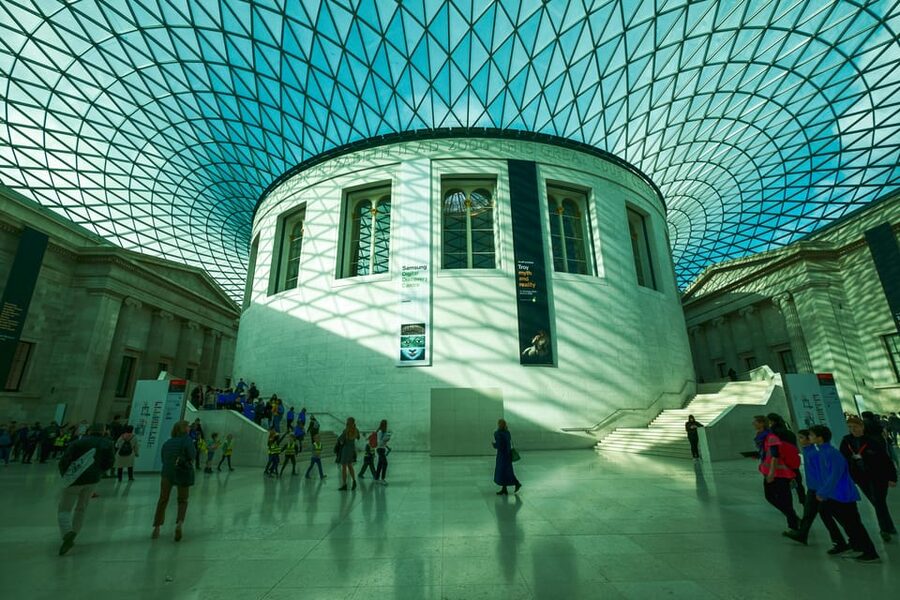
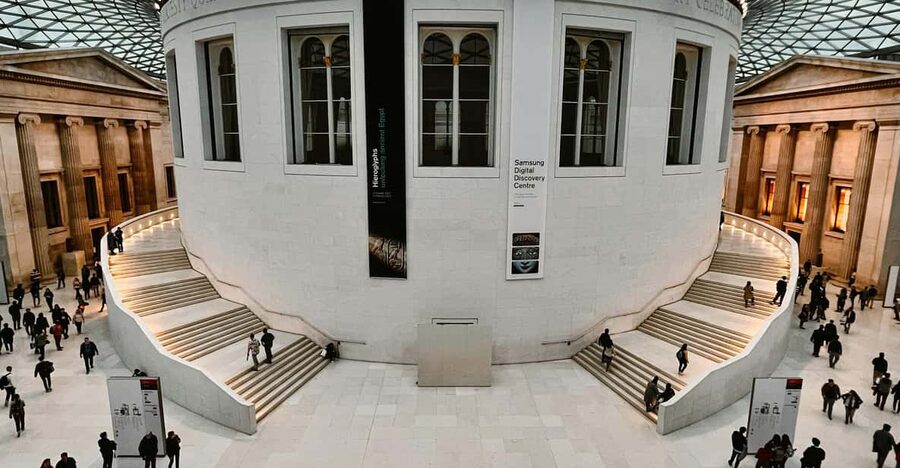
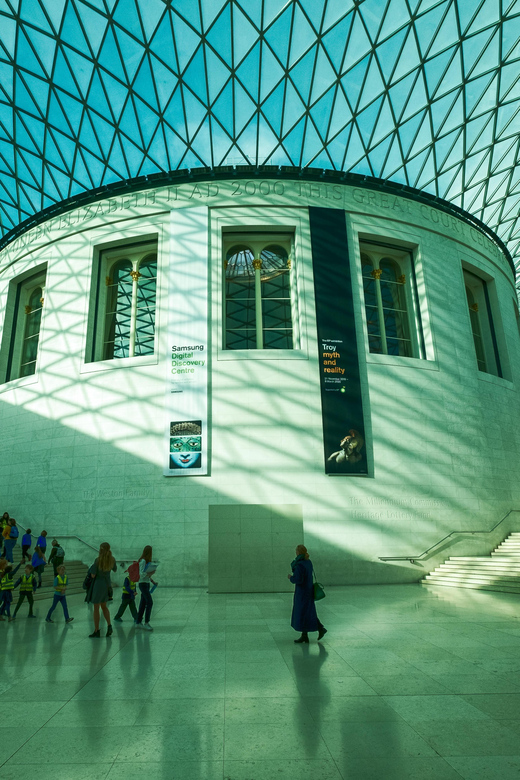
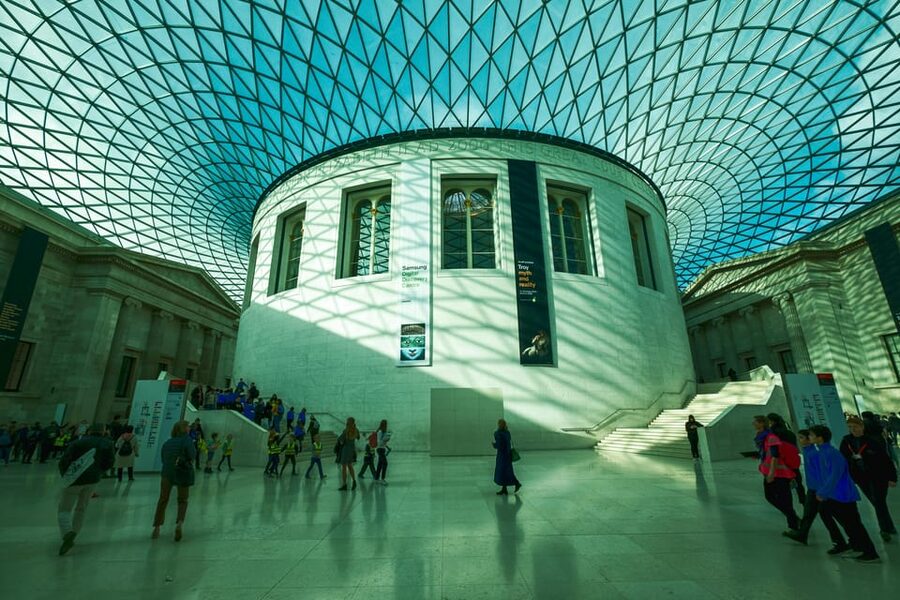
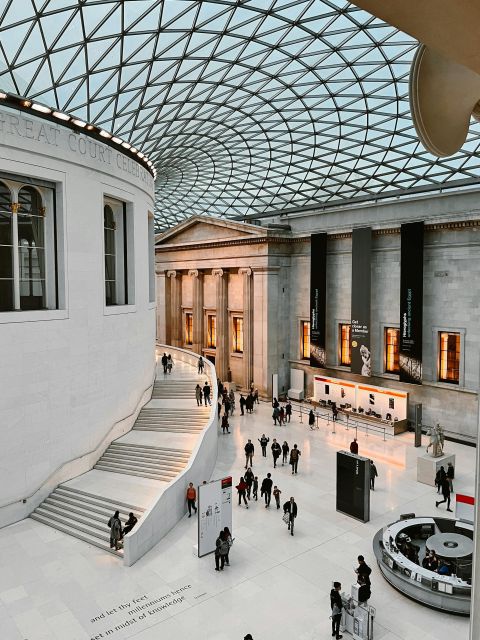
The tour begins with the British Museum’s grand central space, the Great Court. Its glass ceiling is one of the museum’s most memorable sights, and it gives you an immediate sense of the building’s scale.
The famous Reading Room sits within this central area. Even before the artifacts begin, the court helps explain why the museum can feel overwhelming. You are looking at a vast public institution, not a small gallery where every room can be covered in an hour.
Your guide uses this opening to give you a sense of direction. That is useful because the museum’s architecture and collection can compete for your attention. A short introduction helps you settle in before the tour moves toward the objects themselves.
Do not expect a long architectural lecture here. The purpose is to orient you and begin the story. Some people might prefer to reach the artifacts immediately, but I think this opening earns its place. It gives the rest of the visit a frame.
The Rosetta Stone and the power of one inscription
The Rosetta Stone is the object most people expect to see, and it deserves the attention. Its importance comes from the inscriptions that helped scholars work out the meaning of Egyptian hieroglyphics.
Your guide will explain why this stone became such an important key. That explanation turns the object from a dark slab behind glass into evidence of a major breakthrough in understanding ancient Egypt.
The display can attract plenty of attention, so do not expect a quiet, private moment with it. The benefit of arriving with a guide is that you get the essential explanation without trying to work out the significance from a crowded viewing area.
I especially like this stop for first-time museum visitors. It gives you a clear example of how historians reconstruct the past. You are not simply looking at an old object. You are seeing a record that helped modern scholars read a lost writing system.
Egyptian mummies, burial customs, and cat mummies
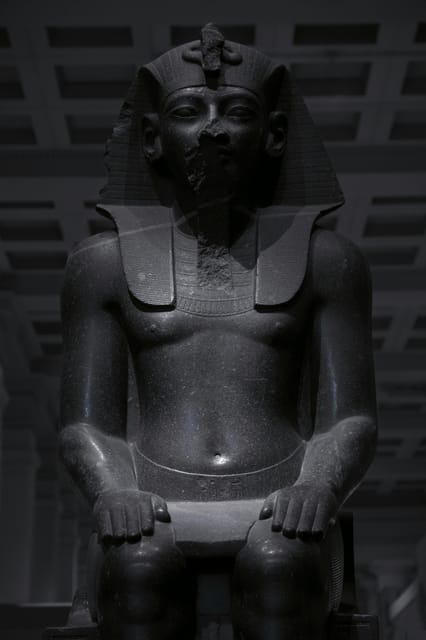
The Ancient Egypt galleries provide some of the tour’s most memorable material. The collection includes Egyptian mummies and burial objects, offering a direct look at how people thought about death, the body, and the afterlife.
This section can be fascinating for adults and children, but it can also be intense. One family found that the 5,000-year-old human remains captured the attention of children who had struggled with some earlier parts of the tour. That is a useful clue for parents: the mummy displays may be the moment when younger children finally connect with the subject.
Cat mummies also appear on the route or in the related Egyptian displays. They add a more surprising detail to the visit and help show that ancient Egyptian religion involved animals as well as human burial practices.
The guide’s role is important here. A mummy can become just another object if you do not know what you are seeing. With explanation, the display becomes a window into beliefs, rituals, and daily life.
Families should set realistic expectations. An 11-year-old who already loves history may follow the tour closely, while younger children may lose interest until something especially visual appears. Some children enjoy the ancient subjects greatly, but this is not guaranteed for every age.
More Museum Tours in London:
- London: Chelsea Football Club Stadium and Museum Tour
★ 4.8 · 4,576 reviews - London Transport Museum Entrance Ticket
★ 4.5 · 1,323 reviews - London: Jack the Ripper Museum Tickets
★ 4.2 · 894 reviews - London: Paradox Museum Entry Ticket
★ 3.9 · 441 reviews
The Parthenon Sculptures and a disputed collection
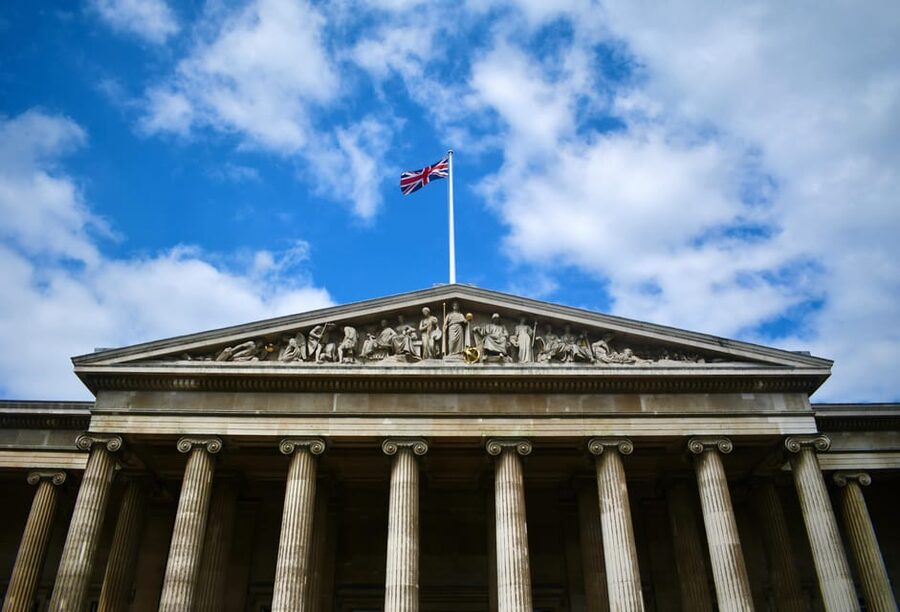
The Parthenon Sculptures, also called the Elgin Marbles, are among the museum’s most famous and debated objects. They were removed from the Parthenon in Athens by Lord Elgin, who served as British ambassador to the Ottoman Empire.
Your guide can explain both sides of the story: the artistic value of the sculptures and the continuing dispute over their ownership and removal. That balance is one reason this stop matters. The museum is not only a place for beautiful objects. It is also a place where questions about empire, collecting, and cultural ownership come into view.
You should not expect the tour to settle the argument. Instead, it gives you the background needed to understand why the sculptures remain controversial. I appreciate that this adds an honest layer to the visit. You can admire the workmanship while also thinking about how the pieces arrived in London.
This stop may appeal most to adults and older children who enjoy historical debate. If you want a long discussion of Greek sculpture or the modern legal dispute, two hours will not allow it. The guide provides an introduction, then you can return to the gallery afterward if you want more time.
Roman objects and the stories behind ancient power
The tour also includes relics from Ancient Rome. These objects help widen the visit beyond Egypt and Greece, showing how the museum traces different cultures and periods in one building.
Roman material can be easy to skim past when the Rosetta Stone and Parthenon Sculptures are waiting nearby. A good guide gives it purpose by explaining what the objects reveal about power, religion, daily life, and the movement of ideas across the ancient world.
The strength of this stop depends heavily on the guide’s choices and timing. Two hours is a tight schedule, so you may see selected examples rather than a large number of Roman pieces. That is not a flaw if you want an overview, but it can feel brief if Rome is your main interest.
I would treat this part as a useful connection between the headline objects. It helps you see that the British Museum is not built around one civilization. Its value comes from placing many cultures in conversation.
Sutton Hoo and the Anglo-Saxon world
The Sutton Hoo burial relics bring the tour into Anglo-Saxon England. They offer a change of pace after the monumental art and ancient writing systems.
This section is valuable because it reminds you that the museum is not only about Egypt, Greece, and Rome. Sutton Hoo opens a window onto early medieval England and burial practices, with objects that carry a strong sense of ceremony and status.
Your guide may use this stop to compare how different societies treated their dead and displayed power. That kind of comparison is one of the tour’s best features. You are not seeing unrelated treasures. You are following recurring human concerns across time.
The section may receive less time than the most famous galleries. If you are especially interested in British archaeology, plan to remain in the museum after the guided route ends.
The Winged Bulls from Khorsabad
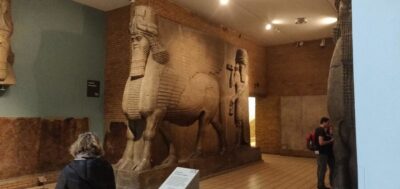
The Winged Bulls from Khorsabad provide one of the tour’s most dramatic visual moments. These large Assyrian figures were made to guard an important entrance, and their size makes them difficult to ignore.
They also help explain how ancient rulers used art to communicate strength. A guide can point out the features that made these figures impressive and explain their place in the Assyrian world.
For me, this is exactly the kind of stop that benefits from a live explanation. The objects are visually striking, but their meaning is not always obvious. You can appreciate the carving at a glance, while the guide supplies the political and religious setting.
As with the Roman and Sutton Hoo sections, the route gives you a taste rather than a full study. The museum contains more than any two-hour walk can cover.
Two hours, group size, and the pace of the route
The stated duration is two hours. That is long enough for a strong introduction and short enough to fit into a busy London day.
The pace can be brisk. You will move between major galleries, stop for explanations, and have some time to look at each featured object. You should not expect to linger at every case or read every label.
Group size can shape the experience. One particularly positive account described a group of six, which allowed the guide to cover a lot while keeping communication easy. Larger groups may feel less personal, especially in busy rooms, though headsets are provided for groups of more than six.
The guide’s ability to adjust matters. Joe has been praised for adapting to the day’s conditions and giving the group options. Paul has worked around galleries that were closed and still delivered a useful route. Those details suggest that flexibility is more valuable than following a rigid script.
If you arrive late, contact can be difficult if you do not have mobile roaming. Free museum Wi-Fi may help once you are inside, but you should not rely on this for a calm start. The meeting point can vary with the option you book, so read those instructions closely and allow time for security and entry queues.
There has also been conflicting information about cancellation deadlines. The booking details state both 24 hours and 72 hours in different places. Check the exact terms attached to your selected option before paying, especially if your plans are uncertain.
Is $23 good value for this London museum visit?
At $23 per person, I consider this a reasonable price for a two-hour guided introduction. The British Museum is free to enter for its permanent collection, so you are paying for the guide, planning, commentary, and the time saved by avoiding a random route.
That value is strongest if this is your first visit or if you have limited time in London. A guide helps you see several major sections without spending your morning figuring out where to go.
The value is weaker if you already know the museum well or prefer to explore alone. You will still need additional time if you want a full look at Ancient Egypt, Assyria, Greece, Rome, or Sutton Hoo.
I would budget the tour as the first part of a longer museum visit. Afterward, you can return to a gallery that caught your attention, see displays skipped by the group, or spend more time with the Egyptian collection.
Who will enjoy this guided museum route?
I would recommend the tour to first-time visitors, families with older children, and anyone who wants a clear introduction instead of an unplanned walk. It is also a good choice if you enjoy stories, comparisons between cultures, and practical explanations.
History fans should find plenty to like, especially if your interests include Egypt, Greece, Rome, Assyria, or Anglo-Saxon England. The tour does not focus on one period, so you get breadth rather than specialist detail.
Younger children may have mixed reactions. Some will enjoy the mummies, cat mummies, and large sculptures. Others may find the amount of information tiring, especially during a full two-hour route.
The museum is wheelchair accessible, and guides have shown care with visitors who need seating or a slower pace. Still, confirm the exact arrangements for your selected option if accessibility is important to your group.
Live guiding is available in English and Italian according to the activity details. Other information lists commentary in German, French, Spanish, Italian, Russian, and Portuguese, so check the language attached to your chosen booking rather than assuming every departure offers all of them.
Should you book the British Museum guided tour?
Book it if you want the museum’s major objects explained by a lively guide and you have only a few hours. The Rosetta Stone, Parthenon Sculptures, Egyptian mummies, Sutton Hoo relics, Roman objects, and Winged Bulls make a strong first route through a collection that can otherwise feel like a maze.
I would be especially happy to book with a small group and then stay afterward to explore. Guides such as Joe, Paul, Denise, and Filomena have shown how much warmth, humor, and flexibility can add to the experience.
Skip it if you prefer slow, independent viewing or already have a detailed plan for the museum. At $23, though, the tour is a sensible buy for most first-time visitors who want to understand what they are seeing instead of merely collecting photographs.
FAQ
How long does the British Museum guided tour last?
The tour lasts two hours. That is enough to see major highlights, but not enough to cover the entire museum.
How much does the tour cost?
The listed price is $23 per person.
Is museum transportation included?
No. Transportation is not included, so you must make your own way to the meeting point.
Where does the tour meet?
The meeting point can vary depending on the option you book. Check the instructions for your selected departure carefully.
Which languages are available?
The activity details list live guiding in English and Italian. Other information lists commentary in German, French, Spanish, Italian, Russian, and Portuguese. Confirm the language for your specific option.
Is the tour wheelchair accessible?
Yes, the activity is listed as wheelchair accessible.
Are headsets provided?
Headsets are provided for groups of more than six people.
Can I cancel the booking?
The booking information gives different deadlines, including 24 hours and 72 hours before the tour. Check the cancellation terms for your exact option, since late cancellations may not receive a refund.
Just added in London
- The Best of British Cooking Class & Dining Experience★ 5.0 · 1 review
- London: Live Comedy Show at Big Belly Bar and Comedy Club★ 4.5 · 80 reviews
- London: British Museum Highlights Guided Small Group Tour★ 4.9 · 113 reviews
- The Beatles London Walking Tour★ 4.2 · 147 reviews
- The Best Highlights of London Walking Tour & Boat Cruise★ 5.0 · 1 review
- The Authentic Walking Tour with Indian Tasting Meal★ 4.8 · 4 reviews
- Iconic London: Bard, Beatles, Bond & Baker Street★ 4.9 · 15 reviews
- London: Tate Britain Official Discovery Tour★ 4.7 · 7 reviews
British Museum Tours, compared.

British Museum Audio Tour & Priority Entrance Ticket
Read our review →

British Museum Archaeology Course and Guided Tour
Read our review →
British Museum Highlights Guided Small Group Tour
Read our review →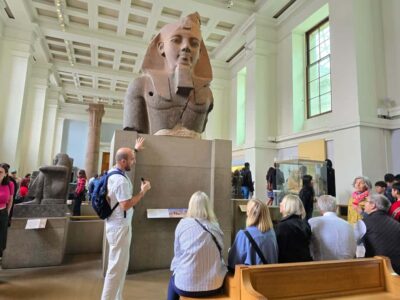
British Museum Guided Tour with Priority Entrance
Read our review →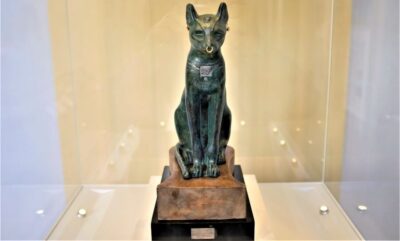
British Museum Private Guided Tour with Tickets
Read our review →Other lists this tour turns up in