
REVIEW · MUSEUMS
London: Paradox Museum Entry Ticket
Reality gets wobbly here. London’s Paradox Museum turns visual tricks, tactile puzzles, and clever room design into a hands-on outing near Harrods. I like the interactive exhibits, which give you something to do rather than simply look at, and I like the staff, who are often praised for helping families take photos. The main drawback is value: although the visit is advertised for 1.5 hours, many people finish in 30 to 40 minutes.
The museum suits families, groups, and adults who enjoy playful science. You can walk across a tube station ceiling, appear to shrink or grow, and test how easily your eyes and brain can be fooled. If the optional Zero Gravity Room is important to you, plan carefully, since it costs extra and may be full when you arrive.
In This Review
- Key points before you go
- A playful museum opposite Harrods
- Start with curiosity, not a strict museum plan
- The Camouflage Room tests your eyes
- The Castle Room bends space and scale
- The Throne Room changes your sense of size
- London’s Tube gives the museum local character
- Why the exhibits work for children and adults
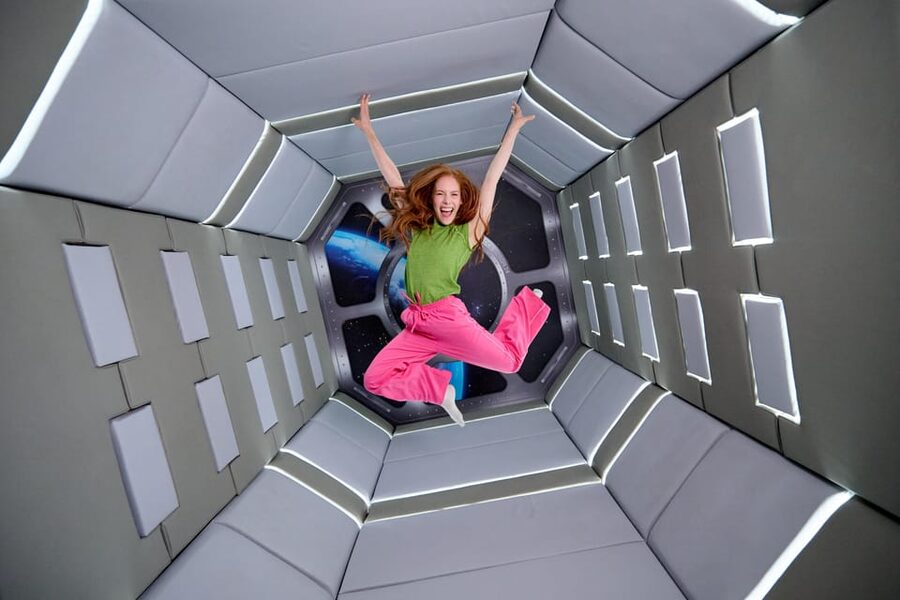
- The Zero Gravity Room needs advance thought
- Staff support helps, but crowds can slow you down
- How long should you plan to stay?
- Is $36 a fair price?
- Who should book this experience?
- Final verdict: book it for fun, not for a long museum day
- FAQ
- Where is Paradox Museum London located?
- How long does the museum visit take?
- How much does entry cost?
- Is the Zero Gravity Room included?
- How much does the Zero Gravity Room cost?
- Can I enter the Zero Gravity Room without booking it in advance?
- Is the museum wheelchair accessible?
- Can I cancel my booking?
Key points before you go
- Expect more than 50 interactive exhibits: This is a hands-on museum built around optical illusions, physical tricks, and photo opportunities.
- The location is easy to find: Paradox Museum London is at 90 Brompton Road in Knightsbridge, opposite Harrods.
- Allow up to 1.5 hours, but prepare for less: Some people complete the museum in about 30 to 40 minutes.
- The Tube-themed rooms are the local highlight: You can create gravity-defying photos and try a tunnel where walking straight feels difficult.
- The Zero Gravity Room costs extra: It is not part of the standard ticket and may sell out on the day.
- Staff can make a real difference: They help with instructions and family photos, though busy periods can bring queues around the most popular displays.
A playful museum opposite Harrods
Paradox Museum London is not a traditional museum with quiet galleries and long labels. It is a short, active stop where you test an illusion, take a photo, read a little about the science, and move on to the next surprise.
That format works well in Knightsbridge. You can pair it with shopping or sightseeing around Harrods, then spend roughly an hour doing something completely different. The entrance at 90 Brompton Road makes it especially convenient if you are already in this part of London.
The ticket costs $36 per person. That is a serious price for an attraction that some people complete in under an hour, so your value depends on how much you enjoy taking photos, trying displays more than once, and explaining the tricks to children. If your group moves quickly from one exhibit to the next, the cost may feel high. If you treat it as a playful photo session with a little science attached, it can work better.
The museum is wheelchair accessible, and the host or greeter speaks English. You do not need a guide, but some exhibits make more sense when you read the instructions or listen to the staff. One useful lesson from the experience is that the best photo often depends on standing in the right place, not simply pointing your camera at the display.
More Museum Tours in London:
- London: Chelsea Football Club Stadium and Museum Tour
★ 4.8 · 4,576 reviews - London Transport Museum Entrance Ticket
★ 4.5 · 1,323 reviews - London: British Museum Guided Tour
★ 4.3 · 1,182 reviews
Start with curiosity, not a strict museum plan
The visit is designed as a self-guided experience. You enter with your ticket, receive instructions, and make your own way through the rooms. There is no guide included, which gives you freedom but also means you need to read the directions carefully.
I would not rush the first few displays. These exhibits are built around small changes in viewpoint, body position, or camera angle. Take a moment to work out what the museum wants you to do, then try the effect from the marked spot.
This matters most if you are visiting with children. They may understand the trick quickly, but adults often need to help with positioning, timing, or photography. Staff are available to explain things, and their help can save you from leaving with a blurry picture or a photo that misses the point entirely.
The museum also rewards a light mood. You are not there to collect facts in the usual way. You are there to notice how your senses can be fooled, then laugh when your own eyes get the answer wrong.
The Camouflage Room tests your eyes
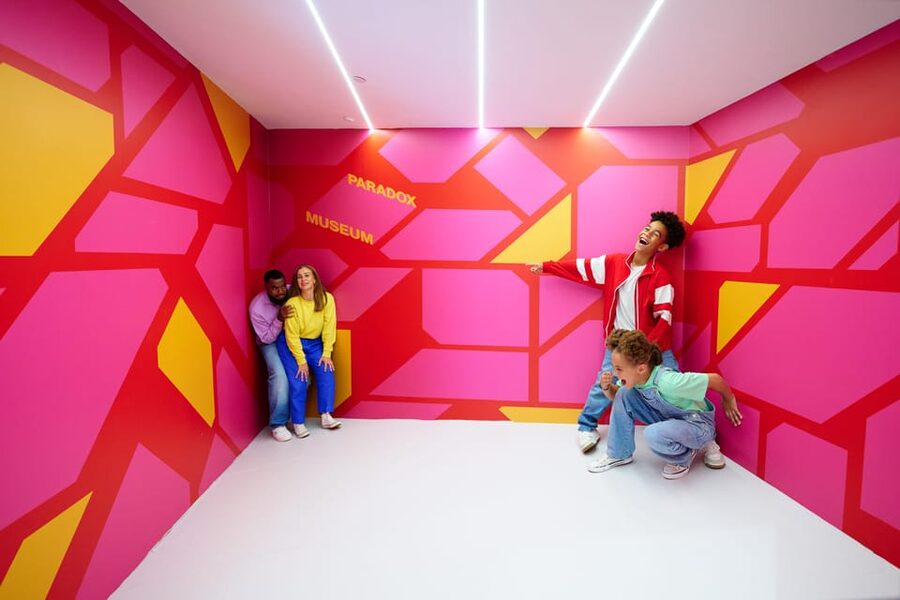
The Camouflage Room focuses on disguise and visual confusion. The exact effect is simple to understand once you see it, but it makes a good early stop because it shows the basic rule of the museum: your brain makes quick assumptions, and those assumptions can be wrong.
This room is also well suited to photos. Groups can take turns finding the best pose and background, while one person acts as the photographer. If you are visiting as a couple or small family, ask the staff for help when needed, especially if the effect depends on a particular camera angle.
I like this kind of exhibit because it gives you a clear result. You are not just reading that camouflage can fool the eye. You are watching a person or object blend into its setting, then seeing how a small movement changes what you notice.
Do not expect a long stop here. The value comes from trying it yourself and perhaps repeating it with different people in your group.
The Castle Room bends space and scale
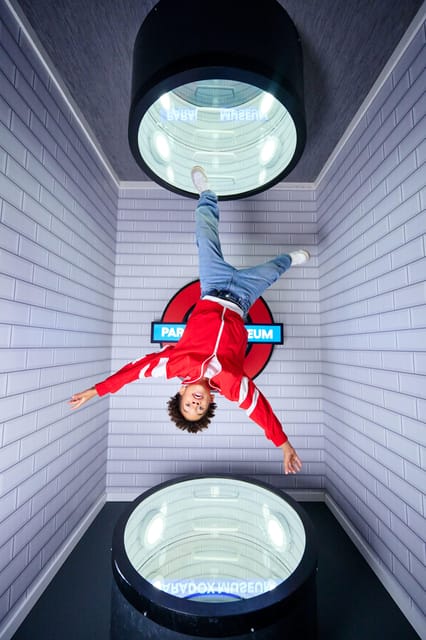
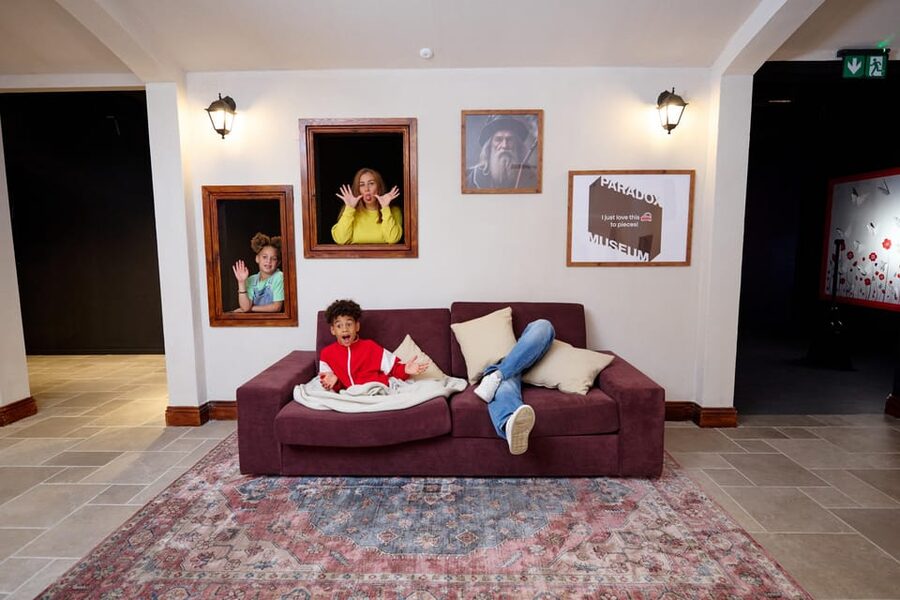
The Castle Room brings together tricky hallways and the Paradox Sofa. It is one of the museum’s more theatrical areas, with a setting that encourages you to question distance, size, and perspective.
The Paradox Sofa is made for group photos. Depending on where people sit or stand, the proportions in the picture can look wrong in a very entertaining way. This is the sort of display that works best when you plan the shot instead of snapping one photo and moving on.
The hallways add movement to the experience. You may find that your sense of direction feels less reliable than expected, which is part of the fun. Children usually respond to these rooms quickly because the effect is physical and visible. Adults may appreciate the explanation more, especially when they see how room shape and viewpoint work together.
A practical tip: keep your phone ready, but do not let photography turn every exhibit into a rushed stop. The museum’s strongest moments come when you first experience the trick with your own eyes, then take the picture.
A few more options to weigh up in London
- London: The London Eye Entry Ticket
★ 4.6 · 35,875 reviews - From London: Harry Potter Warner Bros Studio Tour
★ 4.7 · 26,588 reviews - London: Westminster to Greenwich River Thames Cruise
★ 4.5 · 22,836 reviews - Magical London: Harry Potter Guided Walking Tour
★ 4.7 · 22,044 reviews
The Throne Room changes your sense of size

The Throne Room plays with scale. You can appear like a giant monarch, which creates one of the clearest examples of how perspective changes what a camera records.
This is a good room for families because several people can participate. One person may look unusually large while another seems tiny, depending on where each person stands. The photo usually tells the story better than a written explanation.
The room also shows why this attraction is not just a collection of random photo backgrounds. Each display connects to a basic idea about sight, proportion, or spatial judgment. You do not need a science lesson before entering, but you leave with a better sense of how easily your brain fills in missing information.
If your group includes someone who does not enjoy posing for photos, this room may be less appealing. The museum is at its best when everyone is willing to take a turn.
London’s Tube gives the museum local character

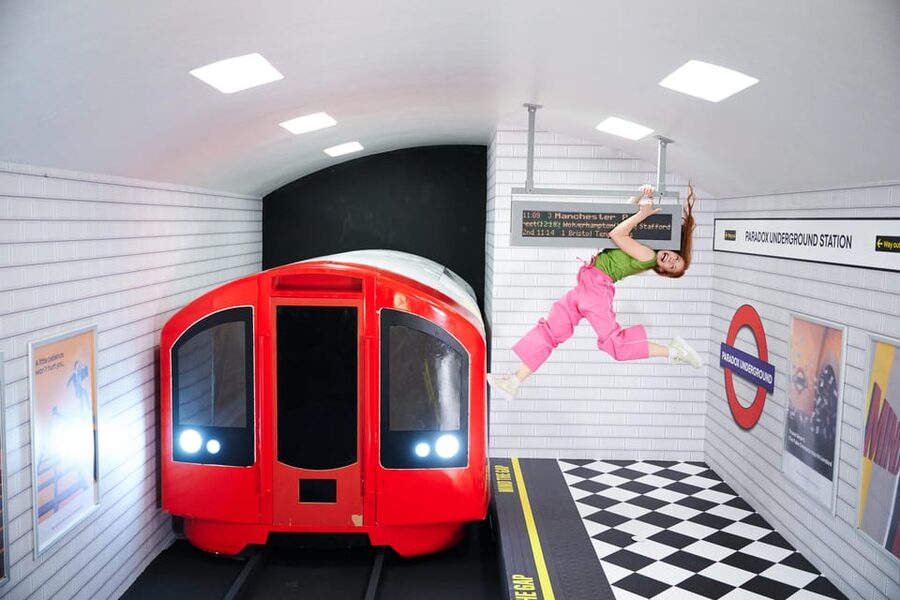
The London Underground references are among the most memorable parts of the visit. One display lets you create a photo that makes it look as if you are walking across the ceiling of a Tube station. Another places you in a Tube tunnel where walking straight becomes difficult.
These exhibits give the museum a stronger sense of place than a generic room of optical tricks. You are not simply taking a strange picture in an anonymous set. You are using a familiar London image, the Tube, and turning it upside down.
The ceiling photo is likely to attract attention, particularly when the museum is busy. Be ready to wait your turn, and keep the walkway clear while you decide how to pose. During crowded periods, some displays can develop queues, and the experience becomes less relaxed if people are unsure where to stand.
The tunnel is a different sort of challenge. It asks you to rely on your senses while your surroundings seem to interfere with your balance and direction. You may find it amusing, mildly disorienting, or simply puzzling. That range of reactions is part of the appeal.
Why the exhibits work for children and adults

The museum is suitable for all ages because the activities operate on several levels. Children can enjoy the surprise and movement. Teenagers can focus on photos. Adults may be more interested in why their vision and balance do not behave as expected.
I especially like attractions that let families learn without forcing everyone to sit still. Here, the lesson comes through action. You see the result, test it again, and begin to understand the trick.
Still, the museum is not equally satisfying for every adult. If you prefer detailed scientific explanations, you may find some displays too brief. One practical criticism is that several exhibits need clear instructions or staff guidance. Read the signs and ask for help rather than assuming the effect will work automatically.
Some people also find that there are not enough displays to fill the full advertised 1.5 hours. The museum can feel short if you do not spend time taking photos or repeating activities. I would judge the visit by the quality of the experience, not the number of minutes inside.
The Zero Gravity Room needs advance thought
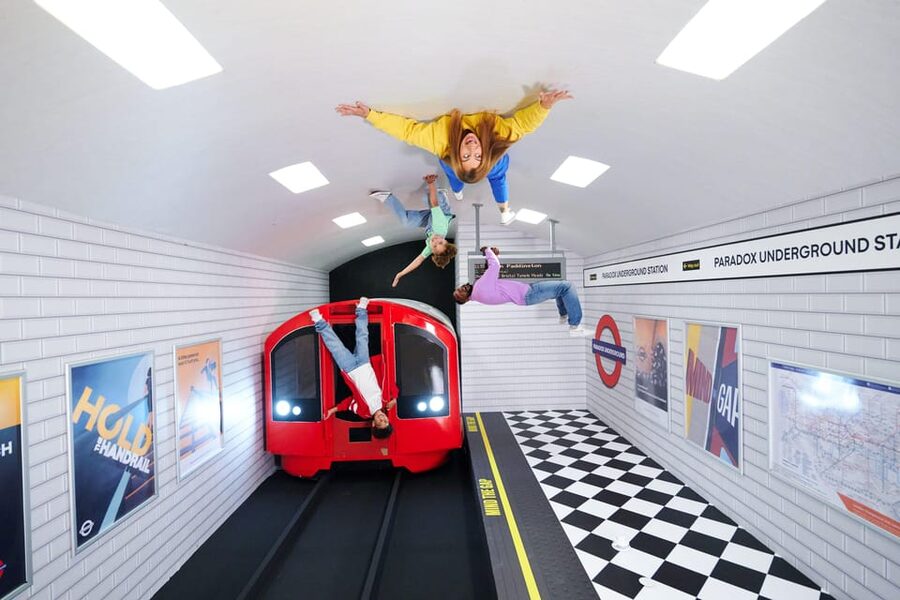
The Zero Gravity Room is an optional add-on. It is not included in the standard entry ticket, and an extra charge of £3.50 has been reported for the experience.
This is important because the room can be a major reason for booking. If you arrive expecting it to be part of the main ticket, you may be disappointed. It may also be full on the day, leaving you unable to add it even if you are willing to pay.
My advice is simple: check the current availability and terms before you commit to the museum, particularly if children are excited about feeling weightless. Do not assume that paying for general admission guarantees a place in this room.
Opinions on the extra cost are mixed. Some people feel the weightless effect should be included, while others see it as a small optional extra. At $36 for entry, I understand the frustration if the add-on becomes another charge.
Staff support helps, but crowds can slow you down
The staff are one of the stronger parts of the experience. They give clear instructions at the desk, help explain displays, and can take family photos. That last service is useful because many exhibits are designed for a picture with the whole group.
Friendly assistance also matters when a child needs help or gets confused by an exhibit. The museum is physical and playful, so a calm staff presence makes the visit easier for families.
The weakness is staffing at busy points. Popular illusions can create queues, and people may not know where to wait or how to keep the path clear. If you visit at a crowded time, expect a little stopping and starting rather than a smooth walk from room to room.
Some displays may also be closed for repair. This has happened before, and a few features have needed fixing. It does not necessarily spoil the visit, but it can reduce value when you have paid a high admission price.
How long should you plan to stay?
The stated duration is 1.5 hours, but your actual visit may be shorter. Several people have completed the route in about half an hour, while others have spent longer moving between activities and taking photos.
I would plan for up to 90 minutes, but keep your schedule flexible. Do not book a tight connection or assume the museum will fill a large part of your day.
Your visit will last longer if you:
- Take photos for each person in your group
- Repeat the best illusions with different poses
- Read the explanations
- Ask staff for help with camera angles
- Add the Zero Gravity Room if space is available
If you move quickly and skip repeat attempts, you may be finished in 30 to 40 minutes. That makes the museum easier to fit between nearby plans, but it also raises the question of whether $36 feels fair.
Is $36 a fair price?
The price is easiest to justify for a family or group that wants a shared activity and plenty of unusual photos. The museum gives you something to talk about, and the interactive format keeps children involved better than a display-only attraction.
The price is harder to justify if you expect a large museum with extensive exhibits and a guaranteed 90-minute visit. Some displays may be closed, some sections can feel brief, and the optional Zero Gravity Room costs extra.
I would compare it with the kind of outing you want. For a serious museum day, spend your money elsewhere. For a playful stop near Harrods that gives you funny photos and simple science demonstrations, it may be worthwhile.
The flexible booking terms help reduce the risk. You can reserve now and pay later, and cancellation is allowed up to 24 hours before the visit for a full refund. Those conditions are useful in London, where weather and changing plans can quickly rearrange your day.
Who should book this experience?
I would recommend Paradox Museum London to families with children, groups of friends, couples who enjoy taking photos, and adults looking for a light break from traditional sightseeing.
It is also a good choice if you are already near Knightsbridge. The location opposite Harrods makes it simple to combine with nearby shopping or a walk through the area.
I would be more cautious if you dislike photo-based attractions, want detailed exhibits, or expect the full 1.5 hours to be packed with activities. I would also check the Zero Gravity Room before booking if that feature is your main goal.
Final verdict: book it for fun, not for a long museum day
Paradox Museum London delivers clever, hands-on entertainment with strong family appeal. The Tube-themed displays, Camouflage Room, Castle Room, and Throne Room give you plenty of chances to test your senses and take photos that look impossible.
The trade-off is duration and price. You may finish much faster than expected, and the Zero Gravity Room is an extra cost with limited availability. Book it if you want a playful, photo-friendly experience near Harrods and are happy with a short visit. Skip it if you need a full afternoon of museum content or want every feature included in the ticket.
FAQ
Where is Paradox Museum London located?
It is at 90 Brompton Road in Knightsbridge, opposite Harrods.
How long does the museum visit take?
The stated duration is 1.5 hours. Some people complete the museum in about 30 to 40 minutes, depending on how long they spend at each exhibit and taking photos.
How much does entry cost?
The listed price is $36 per person.
Is the Zero Gravity Room included?
No. The Zero Gravity Room is an optional add-on available for an additional charge on site.
How much does the Zero Gravity Room cost?
The additional charge has been reported as £3.50. Check the current price when booking or at the museum.
Can I enter the Zero Gravity Room without booking it in advance?
Availability is not guaranteed. The room may be full on the day, so check before your visit if it is important to you.
Is the museum wheelchair accessible?
Yes, Paradox Museum London is wheelchair accessible.
Can I cancel my booking?
Yes. You can cancel up to 24 hours in advance for a full refund. You can also reserve now and pay later.
Just added in London
- The Best of British Cooking Class & Dining Experience★ 5.0 · 1 review
- London: Live Comedy Show at Big Belly Bar and Comedy Club★ 4.5 · 80 reviews
- London: British Museum Highlights Guided Small Group Tour★ 4.9 · 113 reviews
- The Beatles London Walking Tour★ 4.2 · 147 reviews
- The Best Highlights of London Walking Tour & Boat Cruise★ 5.0 · 1 review
- The Authentic Walking Tour with Indian Tasting Meal★ 4.8 · 4 reviews
- Iconic London: Bard, Beatles, Bond & Baker Street★ 4.9 · 15 reviews
- Terrific East-End Private Food tour with a friendly local.★ 5.0 · 1 review
Museums, compared.
Liverpool Football Club Museum and Stadium Tour
Read our review →
Chelsea Football Club Stadium and Museum Tour
Read our review →

Other lists this tour turns up in