
REVIEW · BRITISH MUSEUM TOURS
London: Tour of the British Museum
Ancient wonders, one clever route. This two-hour British Museum tour gives you a clear path through some of the museum’s greatest rooms, with a local guide explaining the stories behind the objects. I especially like the low $14 price and the way the visit covers Egypt, Assyria, Greece, and Easter Island in one outing. The main drawback is the meeting point: queues and a small blue-green flag can make your guide hard to find.
I also like that you can continue exploring after the guided portion ends. Guides such as Puri, Miguel, Eduardo, and Fernando have been praised for their warmth, humor, and command of the subject, though the museum can be crowded and the booking app may be temperamental at busy times.
In This Review
- Key points to know before you go
- Why a guide helps inside the British Museum
- Meeting at Great Russell Street
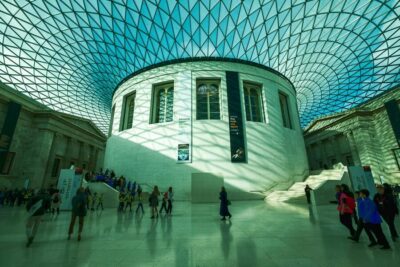
- The museum entrance and the Hall of Enlightenment
- Egyptian funerary customs and the afterlife
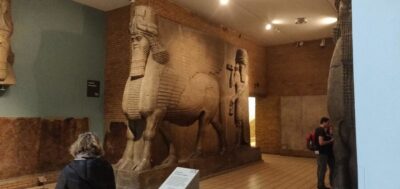
- Assyrian civilization in stone
- The Parthenon sculptures and Greek influence
- Hoa Hakananai’a and the final highlights
- Guide quality and the importance of group size
- Is $14 good value?
- Who should book this museum tour?
- FAQ
- How much does the British Museum tour cost?
- How long does the tour last?
- Where is the meeting point?
- How do I identify the guide?
- Should I arrive early?
- Which languages are available?
- Is the tour wheelchair accessible?
- What should I bring to the meeting point?
- Can I cancel the booking?
- Should you book it?
Key points to know before you go
- A fast route through major civilizations: See Ancient Egyptian objects, Assyrian remains, Parthenon sculptures, Aztec pieces, and the Hoa Hakananai’a moai.
- A very modest price: At $14 per person, the tour costs little compared with many guided museum visits.
- Two hours with a live guide: The pace is designed to show the highlights without trying to cover the entire museum.
- Meet after security: Find the guide on the stairs at the Great Russell Street entrance, opposite Starbucks.
- Look for a blue-green flag: The Paseando por Europa flag may be small, so arrive early and scan the entrance area carefully.
- English and Spanish available: You can book the tour with a live guide in either language.
Why a guide helps inside the British Museum
The British Museum is the sort of place where a map can only take you so far. Its collection spans millions of years, and the building contains far more objects than you could reasonably understand in a single visit. You can wander for hours and still miss the pieces that give the museum its sense of scale.
I like this tour because it gives you a story rather than a string of room numbers. You begin with the idea of human civilization, then move through cultures that shaped art, religion, writing, power, and burial customs. That sequence makes the museum easier to grasp.
The two-hour length is another strength. You get enough time for context and questions, but not so much that the visit becomes a museum endurance test. Several guides have been praised for keeping a comfortable pace, explaining difficult subjects in plain language, and adding humor without turning the tour into a comedy show.
You should still set your expectations correctly. This is a highlights tour, not a complete visit. You will see selected objects and major galleries, but you will not study every case or civilization. If you want a quiet, detailed look at one collection, you may prefer to visit independently after the tour.
More British Museum visits:
- London: British Museum Guided Tour
★ 4.3 · 1,182 reviews - London: British Museum Audio Tour & Priority Entrance Ticket
★ 4.5 · 631 reviews - Afternoon Tea at the British Museum
★ 4.2 · 511 reviews
Meeting at Great Russell Street
The meeting point is outside the main entrance on Great Russell Street, on the stairs opposite Starbucks. You must first pass through the museum’s security checkpoint, then look for a guide carrying the blue-green Paseando por Europa flag.
This detail matters. The entrance area can be busy, and the flag is not especially large. One useful tip is to arrive early enough to handle the security queue and still have time to locate the guide. A visitor who arrived about an hour early found the entrance line wrapped around the corner but moving in roughly twenty minutes.
I would not arrive at the last second. You need to show either the printed confirmation email or the mobile voucher, and a rushed search for the meeting point can make an otherwise simple start stressful. One person also wished there were an easier way to tell the guide that they were already waiting or running late.
The museum is wheelchair accessible, and the walking format works well for visitors who want a direct route through the galleries. Pets, smoking, oversize luggage, and large bags are not allowed. Food and drinks are not included, so plan those separately.
The museum entrance and the Hall of Enlightenment
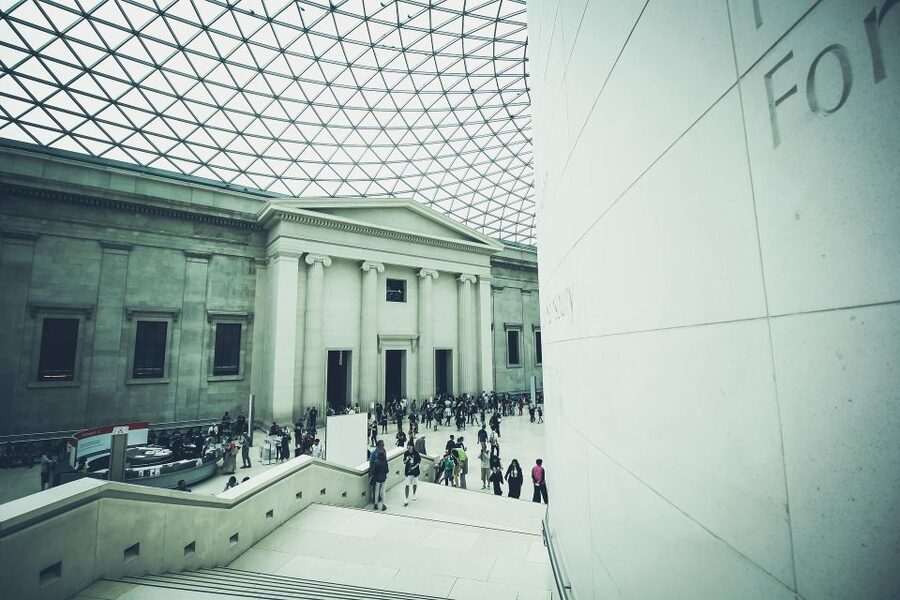
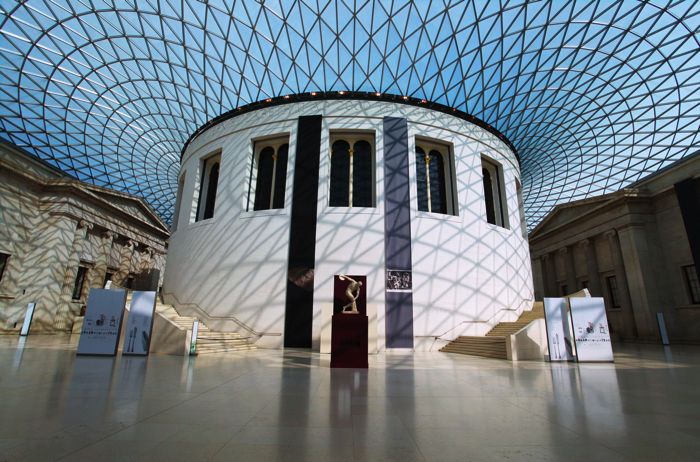
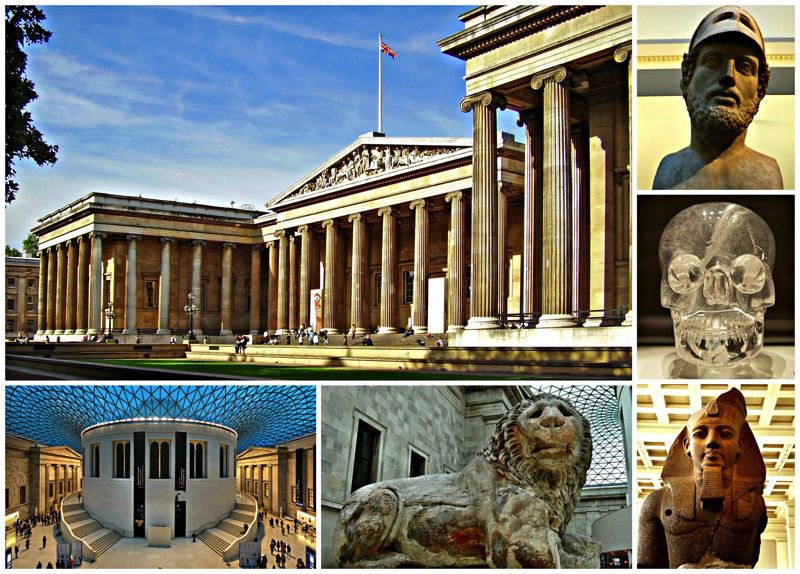
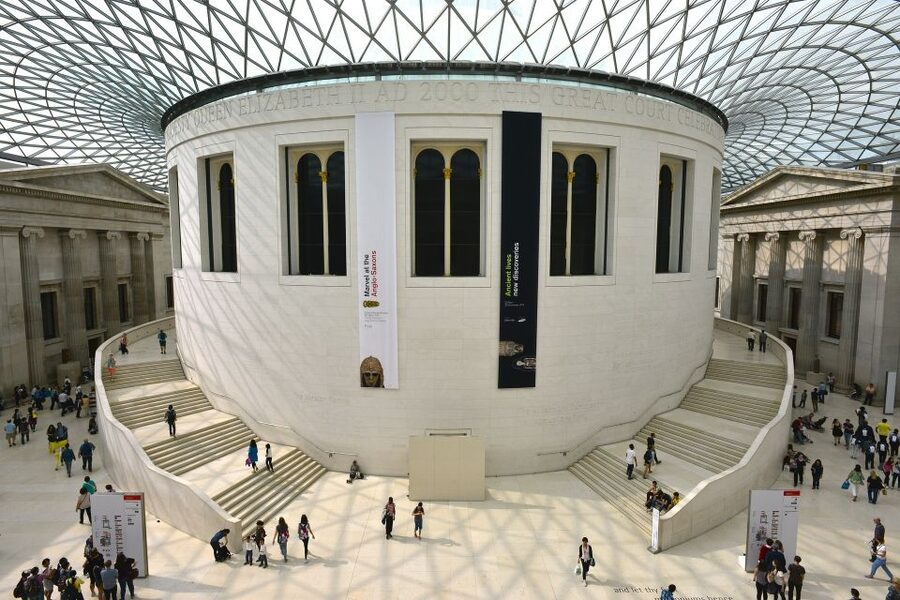
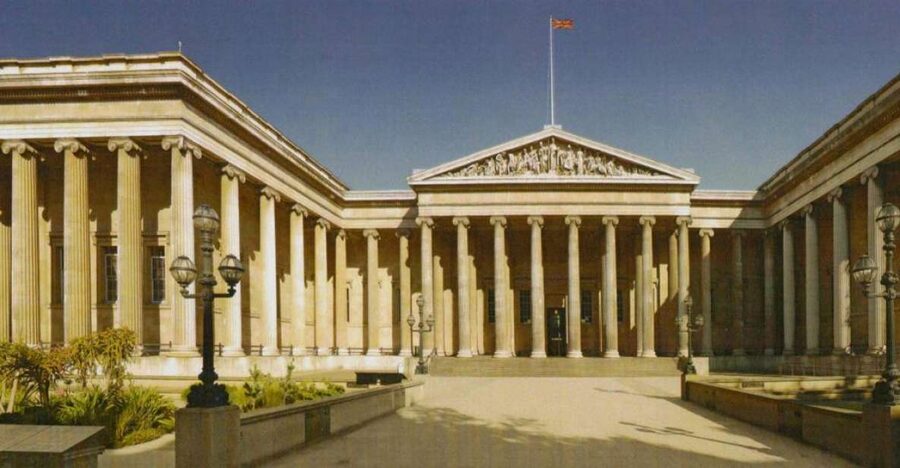
The tour begins with the building itself. Before you focus on the objects, the guide points out the museum’s resemblance to Classical Greek architecture. That is a useful opening because the building prepares you for the collections inside: grand, formal, and designed to place human knowledge at the center.
You then move to the Hall of Enlightenment, described as the oldest room in the museum. It holds more than 60,000 books collected by King George III. Even if books are not your main reason for visiting, this room helps explain how the museum grew from a place of study into a vast public collection.
I appreciate this stop because it gives the tour a beginning. You are not simply rushing toward famous statues. You first see the museum as an institution built around learning, collecting, and organizing the record of humanity.
The room may not produce the same instant reaction as a giant sculpture or an Egyptian mummy. Still, it gives the rest of the visit useful context. If you enjoy libraries, old collections, or the story of how museums developed, allow yourself a moment here instead of treating it as a quick corridor.
Egyptian funerary customs and the afterlife
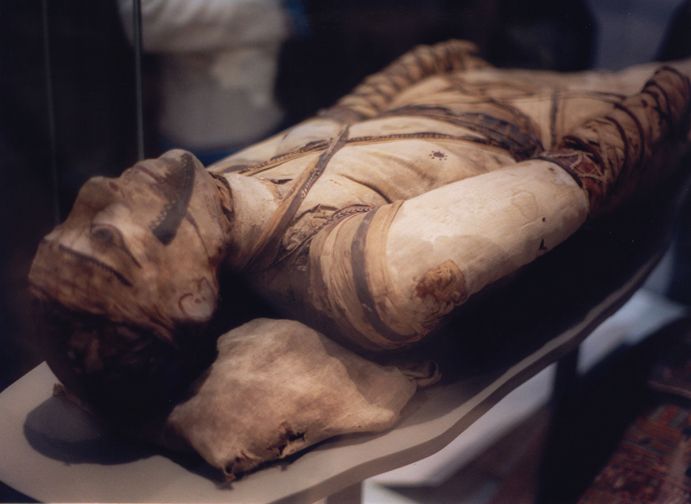
The Egyptian section is one of the tour’s main anchors. Rather than only pointing out a famous object, the guide explains Egyptian funerary rites and the beliefs that shaped them. That makes the display more than a parade of old objects. You begin to see why burial, preservation, and the afterlife mattered so much in Egyptian society.
For me, this is where a guide adds real value. Labels can identify a statue or burial object, but they do not always explain how separate pieces fit into a belief system. A well-informed guide can connect the objects and show why they were made, what they meant, and how they were used.
The pace is also helpful here. You will not have time to inspect every Egyptian display in detail, but you should come away with a basic understanding of the funerary traditions that shaped the collection. If Egypt is your main interest, use the tour as an introduction and return later for a longer independent visit.
This section may be especially useful for families and teenagers. Miguel, one of the guides praised for combining humor with detailed explanations, has been recommended for family groups. The subject can be heavy, but a good storyteller can make it approachable without losing its seriousness.
More Museum Tours in London:
- London: Chelsea Football Club Stadium and Museum Tour
★ 4.8 · 4,576 reviews - London Transport Museum Entrance Ticket
★ 4.5 · 1,323 reviews - London: Jack the Ripper Museum Tickets
★ 4.2 · 894 reviews - London: Paradox Museum Entry Ticket
★ 3.9 · 441 reviews
Assyrian civilization in stone
The route continues to Assyria, where large sculpted remains and reliefs show another side of ancient power. The Egyptian rooms focus strongly on ritual and the afterlife. The Assyrian material brings you toward kingship, warfare, royal display, and the ways rulers wanted their achievements recorded.
This change of subject keeps the tour moving. You are not hearing the same kind of explanation in every room. Instead, the visit shows how different civilizations used art and architecture to express authority, religion, and memory.
The Assyrian section can be easy to pass through if you are exploring alone. Large pieces may look impressive, but their meaning is not always obvious at a glance. I find a guide particularly useful here because the reliefs reward explanation. A short account of who commissioned them and what they were meant to communicate can change how you read the scenes.
You should expect a visual tour rather than a specialist seminar. The guide has only two hours to cover several major cultures, so the Assyrian visit is selective. If you have a strong interest in Mesopotamia, take notes on the rooms or objects you want to revisit later.
The Parthenon sculptures and Greek influence
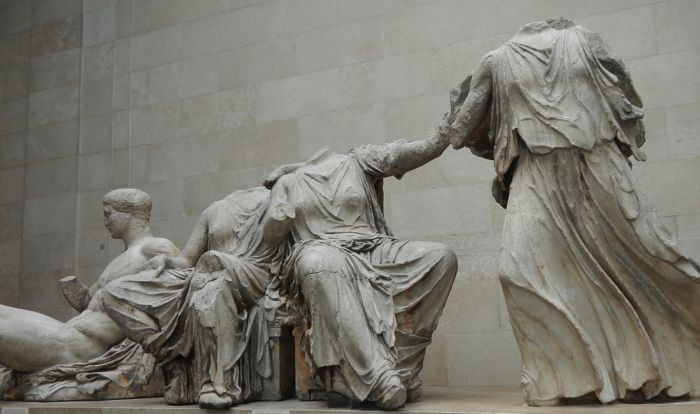
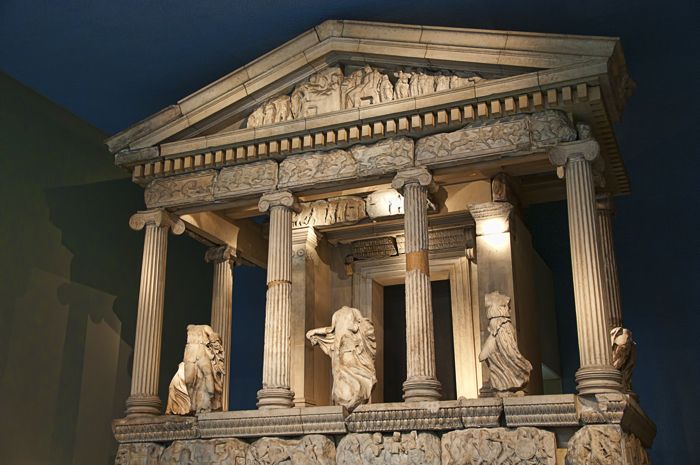
The Greek galleries offer one of the clearest links between the museum’s architecture and its contents. The building’s Classical Greek appearance leads naturally to the section containing a major part of the structure of the Parthenon of Athens.
This is one of the tour’s most recognizable stops. The sculptures are not merely attractive fragments. They connect to a building that has become one of the best-known symbols of ancient Greece, so seeing them in London gives you a chance to think about architecture, sculpture, religion, and the movement of cultural objects.
The guide can help you look beyond the famous name. You will get more from the Parthenon material if you pay attention to how sculpture related to the larger building and how the pieces formed part of a wider design. In a short visit, that kind of connection is more useful than trying to memorize every detail.
There is also a practical consideration. The Greek galleries can be popular, and crowded rooms make it harder to stop exactly where you want. Stay close enough to hear the guide, especially if the group spreads out around a large display.
Hoa Hakananai’a and the final highlights
Near the end, the route reaches Hoa Hakananai’a, a moai from Easter Island that is more than two metres tall. After the smaller details of books, reliefs, and funerary objects, the moai gives the tour a strong visual finish.
Its size alone makes it easy to appreciate, but the guide’s explanation adds the reason it belongs in this particular journey. You have moved from early learning and ancient empires to a monumental figure from a distant island culture. The final stop broadens the tour beyond the Mediterranean and Near East.
The tour then includes Aztec pieces, giving you another major culture and a different artistic tradition before the visit ends. This last section helps prevent the tour from feeling too narrowly focused on Egypt, Greece, and Assyria.
One of the best features of the arrangement is that the guided visit does not have to be your full museum day. Once the two hours are over, you can continue on your own or leave. That flexibility is valuable if you have another appointment, children who have reached their limit, or a particular gallery you want to explore at your own speed.
Guide quality and the importance of group size
The strongest part of this experience is the guide. Puri has been praised for her passion and enthusiasm, while Miguel has been singled out for humor, professionalism, and detailed explanations. Eduardo was appreciated for interactive teaching and a good pace, and Fernando and Ferran have also been remembered for energy and personal attention.
That range of positive feedback points to a consistent benefit: you are paying for interpretation and navigation, not just entry into a building. The guide helps you decide what deserves your attention and gives the objects a human story.
Group attendance can vary. One booking expected eleven people, but only four arrived. A small group can feel personal and make questions easier, though you should not assume every departure will be tiny. A larger group may require you to stay close to the flag and listen carefully in crowded rooms.
The tour is offered in English and Spanish. If language makes a difference to your enjoyment, choose carefully at booking. The best guide in the world cannot compensate for explanations you cannot comfortably follow.
Is $14 good value?
At $14 per person, I consider this a strong value for a first visit. The museum itself is free according to the supplied visitor information, so you are not paying for admission. You are paying for a planned route, a live guide, and two hours of explanation.
That distinction matters. If you already know the British Museum well, you may not need this service. If you have limited time, the price is easier to justify because the tour points you toward major pieces instead of leaving you to guess which rooms matter most.
The value is also better for families, first-time visitors, and anyone who feels overwhelmed by large museums. One person described the tour as a way to avoid losing time in the huge building, and that is exactly the point. You can always stay afterward and explore further.
The price does not include food or drinks, and it does not promise a private tour. You should also allow time for security and the meeting process. Even with those small cautions, the cost is modest for a well-organized museum introduction.
Who should book this museum tour?
I would choose this tour if you have only a few hours in London and want the museum’s major themes explained in a logical order. It is also a good fit if you prefer listening to a guide rather than reading labels, or if you are visiting with teenagers who need a bit of narrative to stay engaged.
It suits visitors who want a broad overview of human civilizations. The route moves from the Hall of Enlightenment to Egypt, Assyria, Greece, the Aztec world, and Easter Island, so you get variety rather than a single narrow subject.
I would think twice if you dislike organized walking tours or want to linger over one object for a long time. Two hours goes quickly, and the tour cannot cover the entire museum. In that case, use it as an introduction, then plan a second visit on your own.
The practical formula is simple: arrive early, pass security, find the small blue-green flag, keep your voucher ready, and stay near the guide. If you do that, this inexpensive tour can turn a potentially confusing museum visit into a clear and worthwhile introduction.
FAQ
How much does the British Museum tour cost?
The tour costs $14 per person. Food and drinks are not included.
How long does the tour last?
The walking tour lasts two hours. Starting times depend on availability.
Where is the meeting point?
Meet on the stairs at the museum’s main entrance on Great Russell Street, opposite Starbucks, after passing through the security checkpoint.
How do I identify the guide?
Look for a guide holding a blue-green flag with the Paseando por Europa logo.
Should I arrive early?
Yes. You should allow extra time for the entrance queue and for finding the guide. The meeting flag may be small and easy to miss in a busy entrance area.
Which languages are available?
The tour is offered with a live guide in English or Spanish.
Is the tour wheelchair accessible?
Yes, the activity is listed as wheelchair accessible.
What should I bring to the meeting point?
Bring the printed confirmation email or the mobile voucher on your phone.
Can I cancel the booking?
You can cancel up to 24 hours in advance for a full refund. The activity also allows you to reserve now and pay later.
Should you book it?
Yes, if you want a guided introduction to the British Museum at a low price. The strongest reasons are the carefully chosen route, the excellent guide feedback, and the chance to see major Egyptian, Assyrian, Greek, Aztec, and Easter Island pieces in only two hours.
Just treat it as a highlights visit, not the final word on the museum. Arrive early for security, watch for the small flag, and stay afterward if you want more time. For a first visit, $14 buys useful direction and enough context to make the museum far less overwhelming.
Just added in London
- London: British Museum Highlights Guided Small Group Tour★ 4.9 · 113 reviews
- The Best of British Cooking Class & Dining Experience★ 5.0 · 1 review
- London: Live Comedy Show at Big Belly Bar and Comedy Club★ 4.5 · 80 reviews
- The Beatles London Walking Tour★ 4.2 · 147 reviews
- The Best Highlights of London Walking Tour & Boat Cruise★ 5.0 · 1 review
- The Authentic Walking Tour with Indian Tasting Meal★ 4.8 · 4 reviews
- Iconic London: Bard, Beatles, Bond & Baker Street★ 4.9 · 15 reviews
- London: Tate Britain Official Discovery Tour★ 4.7 · 7 reviews
British Museum Tours, compared.

British Museum Audio Tour & Priority Entrance Ticket
Read our review →
British Museum Archaeology Course and Guided Tour
Read our review →
British Museum Highlights Guided Small Group Tour
Read our review →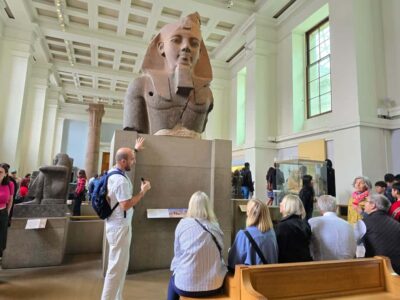
British Museum Guided Tour with Priority Entrance
Read our review →
British Museum Private Guided Tour with Tickets
Read our review →Other lists this tour turns up in