
REVIEW · JACK THE RIPPER TOURS
London: Jack the Ripper Museum Tickets
Step into Victorian Whitechapel. At the Jack the Ripper Museum, six floors recreate the places, evidence, and grim atmosphere surrounding the 1888 murders. I like the strong focus on the women who were killed, and I like that you can move at your own pace instead of being tied to a fixed guided tour.
The museum is small, and the dark subject matter is not softened. The morgue contains actual autopsy photographs, while the wax scenes and sound effects can feel intense. If you prefer a larger museum with more general London history, you may find the visit brief. For fans of true crime, Victorian London, or atmospheric attractions, the roughly 45 to 90 minute visit offers solid value at about $18.86 per person.
In This Review
- Key points to know before you go
- Finding the museum at 12 Cable Street
- The 1888 murder scenes on the lower floors
- Inside Jack the Ripper’s recreated sitting room
- Whitechapel Police Station and the investigation
- Mary Jane Kelly’s bedroom and the women behind the case
- The morgue and the museum’s graphic content
- How long the visit takes
- Is $18.86 good value?
- Who will enjoy this experience most?
- Helpful tips for a better visit
- Should you book the Jack the Ripper Museum?
- FAQ
- Where is the Jack the Ripper Museum?
- Which stations are closest to the museum?
- How long is the museum visit?
- Is transportation included?
- Is the museum guided or self-guided?
- What does the ticket include?
- Does the museum contain graphic material?
- Can I cancel my booking?
- Is the museum accessible to a disabled visitor’s companion?
Key points to know before you go
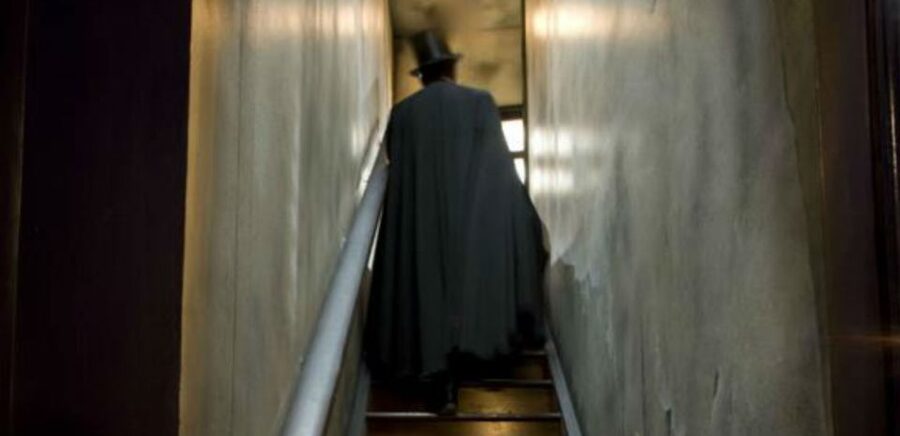
- Six floors in a narrow East End setting: Each level focuses on a different part of the case, from the murder scenes to the police investigation and the victims’ lives.
- A recreated Mitre Square scene: You see a waxwork version of P. C. Watkins discovering Catherine Eddowes’s body.
- Police evidence takes center stage: The recreated Whitechapel Police Station displays crime boards, letters, newspapers, and police objects.
- The victims receive meaningful attention: Mary Jane Kelly’s bedroom and the displays about the women add social context to the crimes.
- The morgue is genuinely graphic: Actual autopsy photos and reports make this unsuitable for anyone sensitive to violent material.
- Flexible self-guided pacing: You can read carefully and spend around an hour and a half, or move through in about 45 minutes.
Finding the museum at 12 Cable Street
The museum is at 12 Cable Street, London E1 8JG, in the East End. The closest listed stations are Tower Gateway, Tower Hill, and Aldgate East. Transportation is not included, so you make your own way there and return to the same meeting point when finished.
The building can look surprisingly ordinary from outside. That is part of the odd charm. You may find yourself checking the address twice before going in, then discovering a carefully staged attraction inside. The friendly welcome at the entrance helps you get oriented, and staff explain the best route through the floors.
This is not a large national museum with broad galleries and grand public spaces. It is a focused attraction in a compact building. The small size works well for the subject because the rooms feel close and theatrical, but it also means you should not expect a full afternoon out.
The museum ticket is valid for one day, with starting times dependent on availability. That gives you some planning flexibility, although you should check the available time before building the rest of your London day around it.
More Jack the Ripper walks:
- London: The Original Jack the Ripper Walking Tour
★ 4.7 · 7,833 reviews - London: Jack the Ripper Small Group Tour
★ 4.7 · 3,159 reviews - German Language : Original Jack the Ripper Tour
★ 4.6 · 1,805 reviews
The 1888 murder scenes on the lower floors
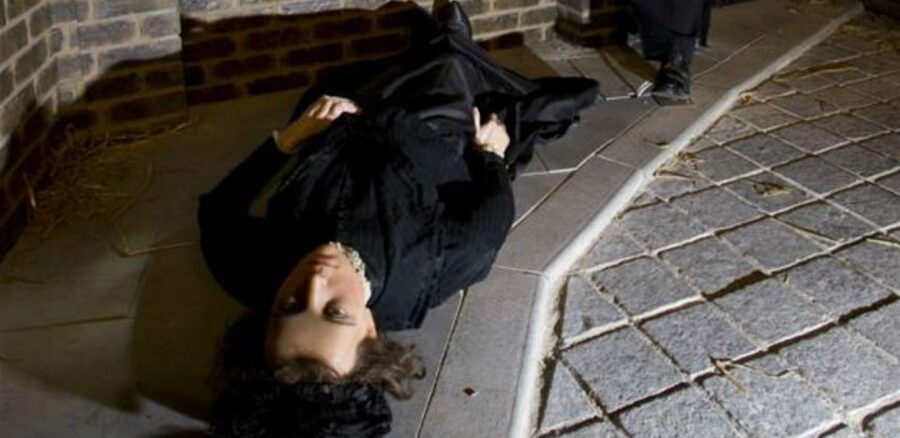
The visit opens with the crimes and the places connected with them. One of the most striking displays recreates Mitre Square, where P. C. Watkins discovered Catherine Eddowes. The waxwork scene presents the moment in a graphic, theatrical way, so it is not a casual display for young children who may be frightened by lifelike figures.
I like this section because it gives the case a physical setting. Names and dates can feel remote when you read them on a page. A staged street scene helps you picture the dark East London environment in which the investigation unfolded.
The museum also uses sound effects and lighting to build tension. One of the attic displays includes a woman singing through a speaker, creating an eerie effect that some people find haunting. I would not call the atmosphere subtle, but the theatrical approach fits the subject and keeps the visit from feeling like a wall of dry text.
At the same time, the staging can feel more like a horror attraction than a traditional history museum. If your main interest is careful forensic analysis, you may want to treat the waxworks as atmosphere and concentrate on the written material, police artifacts, and victim information.
Inside Jack the Ripper’s recreated sitting room
One floor recreates the sitting room of Jack the Ripper, or at least the imagined room associated with the unidentified murderer. Medical instruments, books, maps, letters, and Victorian Ripper memorabilia fill the space.
The room gives you a sense of how the museum presents the case: part historical investigation, part mystery, and part period drama. It puts the suspect at the center for a moment, but the surrounding material keeps the focus on the evidence and the unanswered questions.
A notable object is a drawing of a woman’s body on a metal bed, attributed to prime suspect Walter Sickert and signed in red ink. The display connects the museum to one of the many theories surrounding the case. You should remember that Jack the Ripper’s identity remains unresolved, so objects connected with suspects do not provide a final answer.
That uncertainty is one reason the story still attracts attention. The museum gives you names, letters, police records, and suspect theories, but it cannot turn speculation into proof. I appreciate that the room works best when you see it as a presentation of the case’s mystery rather than a confirmed portrait of the killer.
Whitechapel Police Station and the investigation
The recreated Whitechapel Police Station is one of the strongest parts of the museum. The police station was the center of the investigation, and the museum uses crime boards to show the evidence in a more organized way.
Here you can inspect the From Hell and Dear Boss letters, along with original newspapers and police artifacts. These items help explain how the murders became a public sensation and how investigators tried to make sense of a case filled with fear, incomplete information, and competing claims.
The museum also displays the whistle P. C. Watkins used to call for help after finding the body in Mitre Square. His notebook, handcuffs, and truncheon are displayed alongside it. These objects are especially effective because they are ordinary tools connected to an extraordinary moment.
The collection describes these as some of the most important Ripper-related objects outside Scotland Yard’s private Crime Museum. Even if you are not deeply familiar with the case, this room gives the visit a stronger historical base. The displays move beyond the killer’s image and show the practical work of police officers dealing with a difficult investigation.
I would spend extra time here. The crime boards reward close reading, and this is where you get the clearest sense of how the case was examined rather than simply dramatized.
More Museum Tours in London:
- London: Chelsea Football Club Stadium and Museum Tour
★ 4.8 · 4,576 reviews - London Transport Museum Entrance Ticket
★ 4.5 · 1,323 reviews - London: British Museum Guided Tour
★ 4.3 · 1,182 reviews - London: Tour of the British Museum
★ 4.1 · 678 reviews
Mary Jane Kelly’s bedroom and the women behind the case
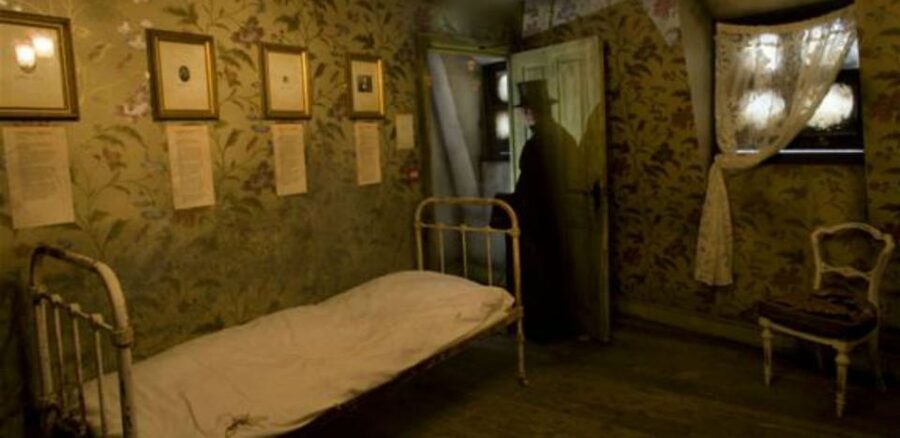
The attic recreates Mary Jane Kelly’s bedroom, the scene associated with the most horrific of the murders. The room includes a metal-framed bed, a straw mattress, domestic photographs, boots, bonnets, and the few possessions of poor Victorian East End women.
This is the part of the museum that gives the experience its emotional weight. Instead of treating the victims as names in a murder puzzle, the displays show them as women with families, homes, clothing, and daily lives.
That change in focus matters. Jack the Ripper has become a famous name, but the women he killed are too often pushed into the background. The museum makes a clear effort to restore some attention to them, and I consider that one of its best choices.
The room is still highly staged, and the sound design can be unsettling. You may hear a woman singing as you look at the bedroom setting, which makes the display feel personal rather than purely factual. It can also leave you in a somber mood, especially after the more theatrical rooms below.
The attic is not simply a horror set. It gives you a glimpse into the limited material circumstances of poor Victorian East London. The worn furnishings and small number of belongings say more than a long explanation could. You see how little privacy, comfort, and security many women had.
The morgue and the museum’s graphic content
The final major section is the morgue. Here you can study actual autopsy photographs and read reports about the murders of the nine women associated with the Ripper case.
This is the point where you should make a personal choice. The photographs are real, not wax recreations, and the descriptions concern severe mutilation. You can skip this section if you find graphic crime material upsetting. The museum’s dark mood begins earlier, but the morgue is the clearest boundary between atmospheric history and disturbing evidence.
For visitors who want the fullest account of the case, the morgue provides direct material connected with the investigation. For others, it may be too much. I would not plan this as a light family attraction simply because some children enjoy horror themes. The subject involves real victims, and the display is explicit.
The museum’s strength is that it offers different levels of engagement. You can look at the rooms, read the panels, examine the artifacts, and decide how much of the graphic material you want to see. That makes the visit more manageable than an attraction that forces every visitor through one presentation.
How long the visit takes
Allow at least 45 minutes if you want to see all six floors without stopping for long. If you read the panels, study the police evidence, and take time with the victim displays, you could spend around 90 minutes.
I prefer the slower pace. The museum is compact, but many rooms contain small details that are easy to miss if you rush. The police notebook, whistle, handcuffs, and truncheon deserve more than a quick glance, as does the material about the women and their families.
There is no need to finish in a fixed group or keep up with a guide. You can move through the floors at your own speed. Some experiences become awkward when you stop to read while others wait, but this format gives you room to choose your level of interest.
A few people may finish in about 45 minutes and feel the museum is small for the price. Others may spend an hour and a half and find it well worth the visit. Your value depends heavily on how much you read and how seriously you approach the historical material.
Is $18.86 good value?
At about $18.86 per person, this is not a major London museum bargain, but it is reasonable for a specialized attraction if the subject interests you. You are paying for six themed floors, original and reproduced artifacts, staged scenes, sound effects, and access to a museum devoted specifically to the Ripper crimes and victims.
The price feels strongest when you take your time. A quick walk through the rooms may leave you wishing for more. A careful visit, especially one that includes the police evidence and victim displays, gives you a fuller experience for the same admission fee.
The museum also fills a particular niche. You will not get this combination of recreated Whitechapel rooms, case materials, and Ripper memorabilia at a general London museum. If you are already planning a Jack the Ripper walk, the museum can add interior displays and objects to the street-level setting.
It is less suitable if you want broad coverage of London’s East End, Victorian politics, or social conditions. The museum touches on those subjects, but the crimes remain the central theme.
Free cancellation is available up to 24 hours before the visit, and you can reserve now and pay later. Those options are useful if your London plans are still shifting. The museum is closed on Christmas Day. A person accompanying a disabled visitor receives free admission.
Who will enjoy this experience most?
I would recommend the museum to you if you enjoy:
- True crime presented through rooms, objects, and visual scenes
- Victorian London and the history of the East End
- Unsolved cases and police investigations
- Horror attractions with a serious historical subject
- Self-guided museums where you can read at your own pace
It also suits people looking for a short indoor activity near Tower Hill, Aldgate East, or Tower Gateway. You can fit it into a day of sightseeing without committing several hours.
Families need to judge the content carefully. Some children have enjoyed the museum, but the wax figures, sound effects, autopsy photos, and descriptions of mutilation make it unsuitable for many younger visitors. The attraction is frightening by design, and the real photographs add a level of seriousness that a fictional horror exhibit would not have.
I would also suggest caution if you are visiting after a long day of intense sightseeing. The museum is not relaxing. You may leave thinking about the victims and the brutality of the case, rather than feeling entertained in the usual sense.
Helpful tips for a better visit
Read the victim information instead of focusing only on the killer. The museum is more meaningful when you understand the lives of the women, not just the mystery of the murderer.
Spend your time in the police station. The letters, newspapers, crime boards, and police objects give the story more substance than the wax scenes alone.
Ask the entrance staff for the suggested route. The staff member at the desk has been praised for giving a clear introduction and explaining how to move through the building.
Do not rush the attic. The bedroom recreation and domestic objects are among the most thoughtful parts of the experience, even though the sound effects can be unsettling.
Think carefully about the morgue before entering. You can still have a worthwhile visit without studying every photograph.
If you prefer a guide, availability can vary. Some sessions have featured guides such as Jasony and George, who were praised for adding historical explanation and a lively presentation. The basic experience, however, is a self-guided visit, so check the details for your chosen time.
Should you book the Jack the Ripper Museum?
Book it if you want a focused, atmospheric look at the 1888 murders and can handle graphic material. The best parts are the recreated Whitechapel Police Station, the authentic police objects, and the attention given to the women whose lives are often overshadowed by the killer’s nickname.
Skip it if you want a large museum, a gentle family outing, or a broad survey of London history. The building is small, the presentation is theatrical, and the morgue is genuinely disturbing.
For the right audience, the ticket offers a memorable hour or so in a compact East London attraction. Go slowly, read the evidence, and keep the victims in view. That approach gives you far more than a quick horror-themed stop.
FAQ
Where is the Jack the Ripper Museum?
The museum is at 12 Cable Street, London E1 8JG, in Greater London.
Which stations are closest to the museum?
The nearest listed underground and train stations are Tower Gateway, Tower Hill, and Aldgate East.
How long is the museum visit?
The ticket is valid for one day. Most people can see the museum in about 45 minutes, while a slower visit with careful reading may take around 90 minutes.
Is transportation included?
No. Transportation is not included, so you must make your own way to 12 Cable Street.
Is the museum guided or self-guided?
The visit is generally a self-guided walk through the six floors. Some sessions may feature guides, so check availability when choosing your time.
What does the ticket include?
The ticket includes admission to the Jack the Ripper Museum.
Does the museum contain graphic material?
Yes. The morgue includes actual autopsy photographs and reports describing the murders and mutilation of nine women.
Can I cancel my booking?
Yes. You can cancel up to 24 hours in advance for a full refund.
Is the museum accessible to a disabled visitor’s companion?
Yes. The person accompanying a disabled visitor receives free entrance.
Just added in London
- The Best of British Cooking Class & Dining Experience★ 5.0 · 1 review
- London: Live Comedy Show at Big Belly Bar and Comedy Club★ 4.5 · 80 reviews
- London: British Museum Highlights Guided Small Group Tour★ 4.9 · 113 reviews
- The Beatles London Walking Tour★ 4.2 · 147 reviews
- The Best Highlights of London Walking Tour & Boat Cruise★ 5.0 · 1 review
- The Authentic Walking Tour with Indian Tasting Meal★ 4.8 · 4 reviews
- Iconic London: Bard, Beatles, Bond & Baker Street★ 4.9 · 15 reviews
- London: Tate Britain Official Discovery Tour★ 4.7 · 7 reviews
Jack the Ripper Tours, compared.
Jack the Ripper Walking Tour – Ripper Vision Tours
Read our review →
French Language : Original Jack the Ripper Tour
Read our review →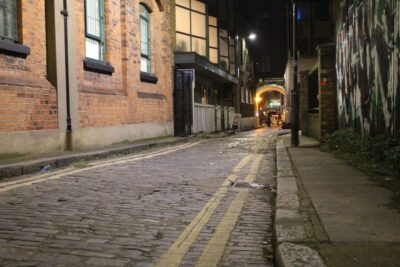

Other lists this tour turns up in