
REVIEW · BRITISH MUSEUM TOURS
London: British Museum Archaeology Course and Guided Tour
Human history starts with a stone tool. This five-and-a-half-hour British Museum course turns a famous collection into a guided story of human civilization, led by archaeologist Rossa, whose energetic teaching has kept adults and teenagers engaged. I especially like the chronological route, from early human tools to Egypt, Assyria, Greece, Rome, Vikings, and the Aztecs. I also like the hands-on touch of playing the ancient Royal Game of Ur. The main drawback is time: five and a half hours is a serious museum session, and the tour covers so much ground that you will see only a fraction of the British Museum.
You meet outside Russell Square Station, walk about five minutes to the museum, and spend the rest of the experience inside. The museum itself has free admission, so the $81 price pays for the archaeologist’s teaching, guided access, and a structured day that saves you from wandering past important objects without understanding them. Bring comfortable shoes, water, and perhaps a packed lunch.
In This Review
- Key points at a glance
- Why this British Museum tour feels different
- Meeting at Russell Square and entering the museum
- From early humans to the first cities
- Egyptian hieroglyphs and the Rosetta Stone
- Assyria, Greece, and Rome
- Vikings, the Sutton Hoo Helmet, and later cultures
- Playing the Royal Game of Ur
- How archaeologists date objects and read the evidence
- Five and a half hours inside: the practical reality
- Is $81 good value?
- Who should book this course?
- Booking details worth knowing
- Should you book it?
- FAQ
- Where does the British Museum archaeology tour start?
- How early should I arrive?
- How long does the experience last?
- Does the price include British Museum entrance?
- Is lunch included?
- What famous objects will I see?
- Is the tour offered in English?
- Is the tour wheelchair accessible?
- What should I bring?
Key points at a glance
- Human history in chronological order: Follow the story from Neanderthal tools and early African origins through the first cities, ancient empires, and later cultures.
- Rossa’s archaeology-led teaching: His clear voice, strong storytelling, and wide subject knowledge are central to the experience.
- Famous objects with useful context: See the Rosetta Stone, Parthenon Marbles, Sutton Hoo Helmet, Lewis Chessmen, and other major pieces.
- Ancient writing made understandable: Learn how Egyptian hieroglyphs and Sumerian cuneiform were deciphered.
- A rare hands-on museum moment: Play the Royal Game of Ur, an ancient Mesopotamian board game whose rules were reconstructed by British Museum scholars.
- Plan for a full half-day: There is a roughly 40-minute break, but the walking and standing make comfortable shoes and light luggage important.
Why this British Museum tour feels different
The British Museum can be free to enter, but free does not mean easy to understand. Its galleries cover thousands of years, several continents, and an enormous number of objects. Without a plan, you can admire a carved figure, a tablet, or a helmet for a few seconds and move on without knowing why it matters.
This course gives the museum a clear backbone. You follow the development of human societies rather than simply ticking off famous displays. The guide connects tools, writing, cities, burial customs, religion, empire, trade, and warfare into one long human story.
That approach suits you if you want more than a parade of museum highlights. The focus is not just on what an object looks like. You learn what it can tell archaeologists, how it was found, how it was dated, and which questions remain unanswered.
The guide’s role is crucial. Rossa is repeatedly praised for holding the attention of both adults and younger teenagers, including children around age 13. His style combines facts with stories, folklore, archaeology, and the personalities of the people who first studied or decoded ancient material.
More British Museum visits:
- London: British Museum Guided Tour
★ 4.3 · 1,182 reviews - London: Tour of the British Museum
★ 4.1 · 678 reviews - London: British Museum Audio Tour & Priority Entrance Ticket
★ 4.5 · 631 reviews
Meeting at Russell Square and entering the museum
The starting point is outside Russell Square Station. Look for the guide holding an iPad with the local partner’s name displayed on the screen. Arrive 10 minutes early, since the group walks roughly five minutes to the British Museum before the main session begins.
This short walk is simple, but the meeting point matters. Russell Square is close to the museum, yet London stations can be confusing when you are juggling family members, bags, or a tight sightseeing schedule. Give yourself enough time to come out of the station, orient yourself, and find the guide without rushing.
The tour includes museum entrance and uses a separate entrance for skip-the-line access. The museum has free general admission, so this does not remove a normal paid ticket cost. Its value is practical: you avoid wasting time in an entry queue and get moving with the guide.
Large bags and luggage are not allowed. A small day pack is reported as acceptable, but keep your belongings light. You will be inside for hours, and a heavy bag becomes irritating long before the ancient civilizations do.
From early humans to the first cities
The course begins with the earliest chapters of the human story. You examine how archaeologists use objects such as stone tools to study people who left no written records.
This opening gives you a useful lesson in archaeological thinking. A tool is not simply an old object in a glass case. Its shape, material, wear, and location can offer clues about how it was made and used. You also consider human origins in Africa and the transition from early communities to more complex societies.
The route then moves toward Mesopotamia, where the first cities and early systems of writing developed. This part helps explain why settled life changed human society so sharply. Farming, storage, trade, administration, and power all created new needs, and those needs helped produce cities and written records.
For many people, this is the strongest part of the day because it explains the foundations beneath the famous later empires. You are not just told that a civilization was advanced. You see how archaeologists build that picture from fragments.
Egyptian hieroglyphs and the Rosetta Stone
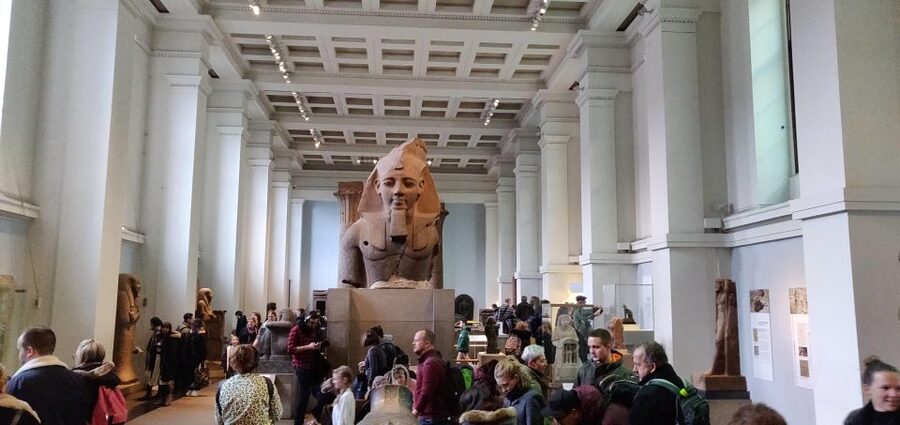
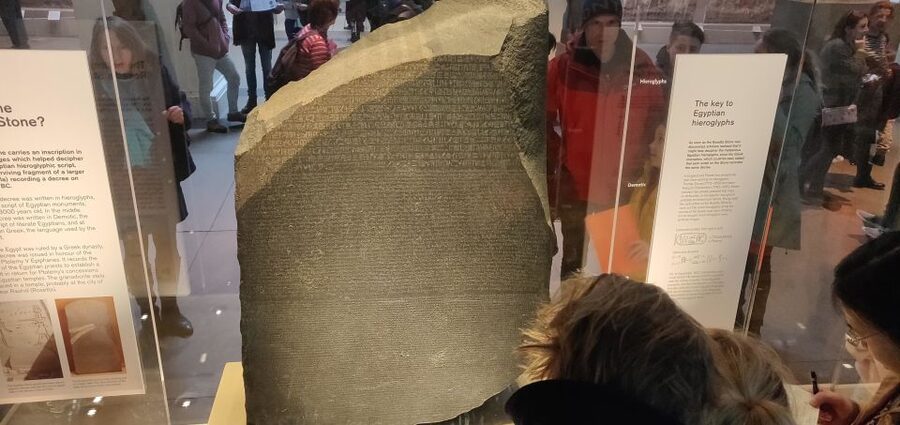
Ancient Egypt receives major attention, including the Rosetta Stone. The stone is famous because its inscriptions helped scholars decipher Egyptian hieroglyphs, but the tour explains the actual process rather than treating it as a magical breakthrough.
You learn about the work of the people who compared scripts and searched for patterns across languages. That makes the Rosetta Stone more than a celebrated slab of stone. It becomes evidence of how patient analysis can give a voice to a society that had been silent to modern readers for centuries.
Egypt also provides a chance to see how objects can carry several kinds of information at once. A statue or inscription may reveal religious beliefs, political authority, artistic choices, language, and social structure. Rossa’s archaeology-based approach helps connect those threads without turning the visit into a dry classroom lecture.
The Egyptian galleries are among the museum’s most popular spaces, so expect other people around you, especially on busy days. One useful strength of this tour is the guide’s voice. A participant on a crowded Saturday found it easy to hear him, which matters when a group is gathered around a major object.
More Museum Tours in London:
- London: Chelsea Football Club Stadium and Museum Tour
★ 4.8 · 4,576 reviews - London Transport Museum Entrance Ticket
★ 4.5 · 1,323 reviews - London: Jack the Ripper Museum Tickets
★ 4.2 · 894 reviews - Afternoon Tea at the British Museum
★ 4.2 · 511 reviews
Assyria, Greece, and Rome
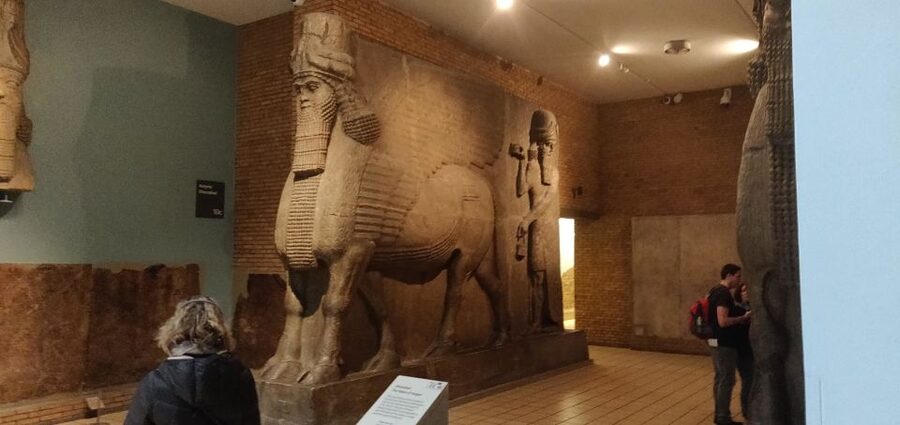
The sequence continues through Assyria, Ancient Greece, and Rome. This chronological order makes it easier to see contact and change between major powers instead of treating each gallery as an isolated room.
Assyrian material can be especially rewarding with a guide because reliefs and palace scenes need explanation. You learn to look for more than kings and battles. Images can communicate power, ritual, conquest, and the political message an empire wanted to project.
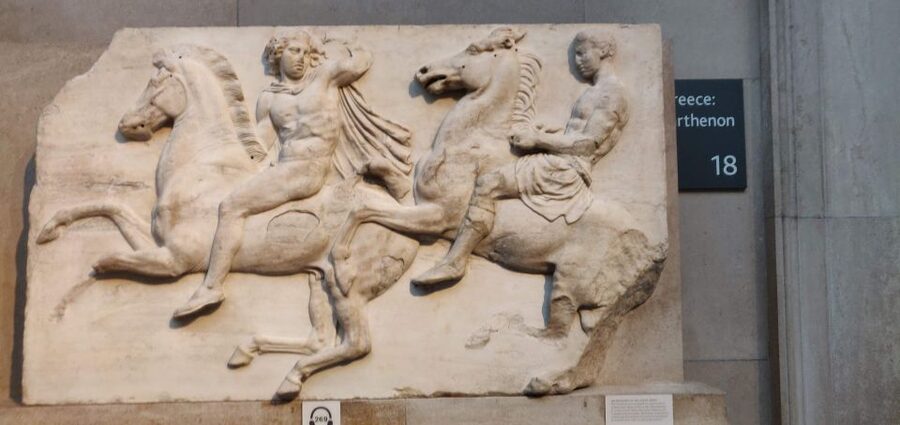
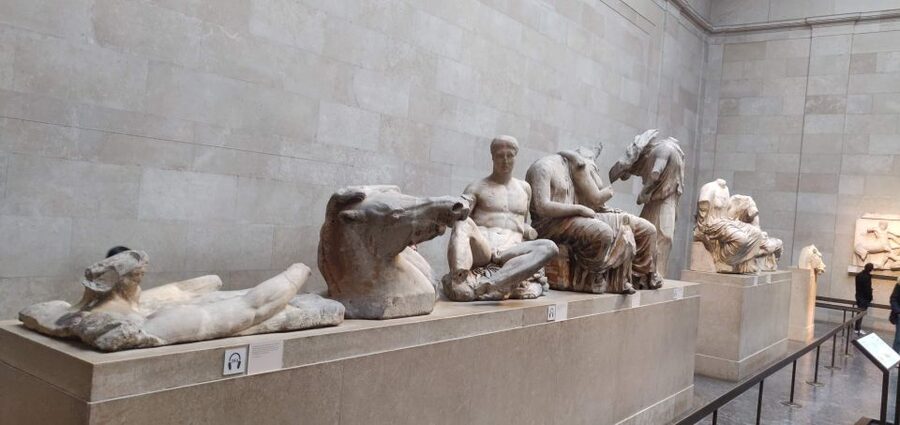
In the Greek galleries, the Parthenon Marbles provide one of the museum’s best-known encounters. The tour places the sculptures within the wider story of Greek art, civic identity, religion, and later collecting. You see why the objects are admired while also being reminded that museum collections have complicated histories.
Roman objects then show how ideas, styles, and systems traveled across a large empire. The value of a guided visit here is comparison. You begin to notice how different societies borrowed, adapted, and reworked earlier traditions.
This section can feel fast. The British Museum is too large for a single course to give equal time to every culture, and the tour’s purpose is to create a human-history framework. If one empire is your main interest, save time after the tour, or return on another day for a slower visit.
Vikings, the Sutton Hoo Helmet, and later cultures
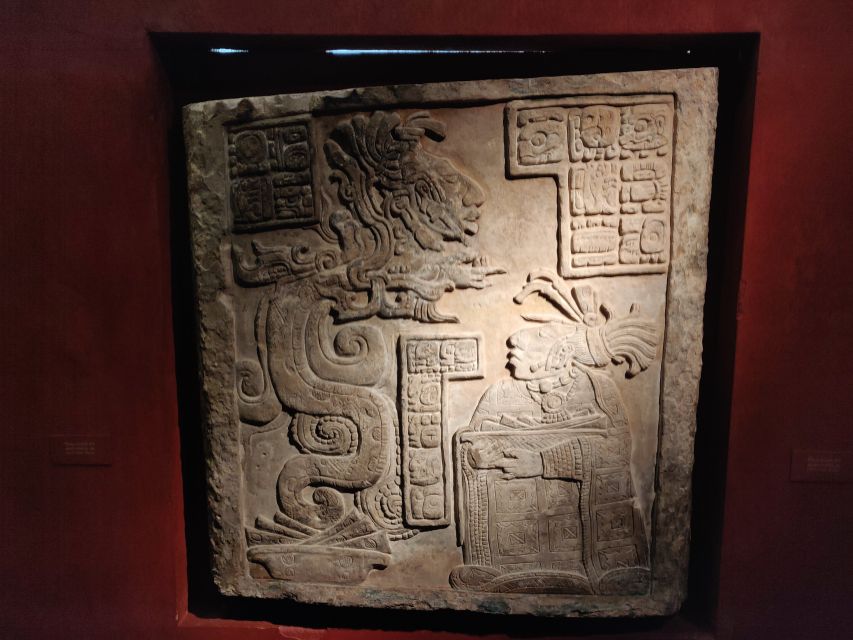
The tour does not stop with classical civilization. You visit the Viking material and see the Sutton Hoo Helmet, one of the museum’s most memorable early medieval objects.
The Sutton Hoo display is a good reminder that archaeology often changes the way people understand a period. Burial objects can reveal social rank, craftsmanship, trade links, belief, and contact between cultures. A helmet is both a practical item and a statement about the person who owned or received it.
The Lewis Chessmen add another engaging stop. Their small size and expressive faces make them easy to enjoy, but they also open questions about games, status, craft production, and medieval trade. They are the sort of objects you might appreciate visually in a quick visit, then understand more fully after hearing their wider setting.
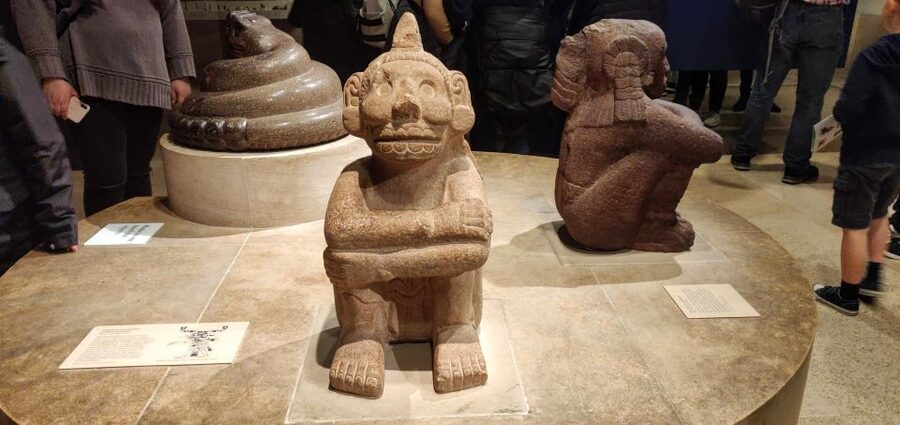
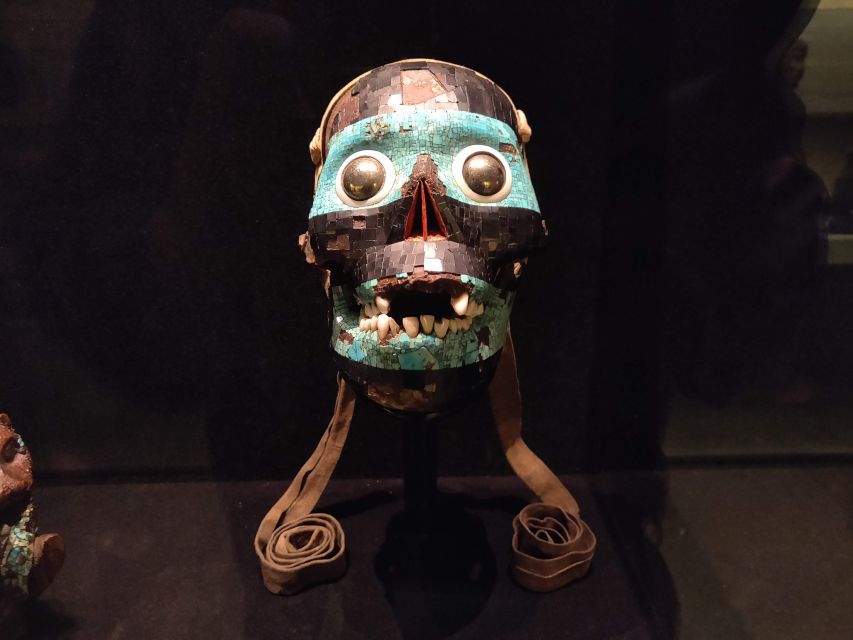
The route also reaches the Aztecs. That broader geographic range is one of the course’s strengths. You are not left with the impression that world history happened only around the Mediterranean and Europe. The museum becomes a place for comparing societies across different regions and time periods.
Playing the Royal Game of Ur
The Royal Game of Ur is the tour’s most welcome change of pace. After hours of looking, listening, and walking, you get to play one of the world’s oldest board games.
British Museum scholars reconstructed the rules, giving the activity a direct link to the course’s discussion of evidence and interpretation. You are not simply told that archaeologists study ancient lives. You see how researchers can move from a surviving object to a reasoned idea about how it worked.
This is also a smart feature for families. Younger visitors may find it easier to remember a game they played than a long explanation of a royal inscription. Adults get a break from standing, and everyone has a reason to look closely at the board.
Do not expect a full workshop with extensive individual practice. It is a short interactive part of a much larger course. Still, it breaks up the long museum route and helps make the archaeology feel real.
How archaeologists date objects and read the evidence
The final part focuses on archaeological science. You learn how sites become buried, how ancient objects are dated, and how researchers judge what an object can tell them.
Burial is not random background detail. Layers of soil and debris can help establish sequence, showing what came before and after something else. Dating methods then add another layer of evidence, helping place objects within a timeline.
The course also explains that archaeology does not solve every question. Some objects remain puzzling, and some conclusions are based on partial evidence. This is an important balance. You are encouraged to enjoy ancient treasures without assuming that every mystery has a neat answer.
The lessons on deciphering Egyptian hieroglyphs and Sumerian cuneiform fit naturally here. Writing gives archaeologists direct evidence, but reading it required years of comparison, testing, and correction. Sumerian cuneiform is especially important because it is regarded as the world’s earliest written language.
This section is best for curious adults, students, and anyone who wants to understand how museums create historical knowledge. It also protects the tour from becoming a simple list of famous objects. You learn how conclusions are reached, not just what conclusions to remember.
Five and a half hours inside: the practical reality
The stated duration is 5.5 hours, including a break. That is long enough to create a satisfying course, but it is not a casual museum stroll.
You will spend much of the time walking or standing. One useful tip is to take a folding stool from the museum entrance. Portable stools can reduce the strain, particularly for older visitors or anyone who finds long periods on their feet difficult.
Plan for the break. A 40-minute lunch period passes quickly, so bring a packed lunch or be ready to use one of the museum’s food outlets. Carry enough water, since staying comfortable helps you keep your attention during the later galleries.
Comfortable shoes are essential. Leave luggage and large bags behind, and keep your day pack small. The activity is wheelchair accessible and suitable for people with limited mobility, but contact the provider in advance if you have specific requirements. The course still covers a large museum over many hours, so discussing your needs early is sensible.
The tour is conducted in English with a live guide. If you need a different language, this experience is not a match based on the available information.
Is $81 good value?
At $81 per person, this is not the cheapest way to enter the British Museum, since general museum admission is free. You are paying for the guide’s expertise, the planned route, the archaeology class, and the time saved by having someone select and explain the key material.
I think the price is reasonable if you would otherwise spend hours wandering without a clear plan, or if you want a serious introduction to archaeology without taking a formal university course. The five-and-a-half-hour length gives Rossa time to explain themes, answer questions, and move beyond surface facts.
The value is weaker if you prefer to set your own pace, stop for long periods at a favorite object, or visit only one gallery. You may feel rushed in places because the course covers such a large span of human history.
A notable advantage is that the tour appears to run even with a very small booking. That can matter during a complicated London trip, when a cancellation would force you to rebuild your day. It also means you should not assume you need a large group for the experience to go ahead.
Who should book this course?
I would recommend it most strongly to:
- Families with older children or teenagers who enjoy stories and questions
- First-time British Museum visitors who want a clear route
- History and archaeology fans
- Adults who want context rather than a quick highlights tour
- Students looking for an accessible introduction to ancient civilizations
- Anyone fascinated by writing, dating methods, and how evidence is interpreted
It is less suitable for you if you dislike long guided sessions, need to spend a great deal of time at one object, or want a quiet, self-directed museum visit. The course is intensive, and its broad scope means no single culture receives everything it deserves.
The guide’s style also matters. Rossa uses energy, stories, and a steady flow of facts. That works well if you like lively teaching. If you prefer a silent gallery and a short audio guide, five and a half hours may feel too much.
Booking details worth knowing
You can cancel up to 24 hours before the start time for a full refund, and you can reserve now while paying later. Starting times vary, so check availability before planning other London activities around it.
The meeting point is outside Russell Square Station, not at the museum entrance. Arrive 10 minutes early and look for the iPad showing the local partner’s name.
The tour ends at the British Museum. That is useful because you can continue exploring afterward if the museum remains open, but do not count on having endless time. One participant found that the museum closed before there was time for a separate self-guided visit, so check the day’s museum hours and keep your post-tour plans flexible.
Should you book it?
Book this British Museum archaeology course if you want the museum to explain itself. The strongest feature is not simply seeing the Rosetta Stone, Parthenon Marbles, Sutton Hoo Helmet, or Lewis Chessmen. It is learning how those objects fit into the long story of human societies and how archaeologists interpret the evidence.
At $81, it is a guided learning experience rather than an admission bargain. I would choose it for a first museum visit, a history-focused day, or a family outing where a strong guide can keep everyone involved. Bring water, lunch, comfortable shoes, and a folding stool if standing is difficult.
Skip it if you want complete freedom or a short highlights walk. For everyone else, Rossa’s archaeology-first approach offers a memorable way to make sense of one of London’s most overwhelming museums.
FAQ
Where does the British Museum archaeology tour start?
It starts outside Russell Square Station. The guide will be holding an iPad displaying the local partner’s name.
How early should I arrive?
You should arrive 10 minutes before the scheduled start time.
How long does the experience last?
The experience lasts 5.5 hours, including the guided museum visit, class, and break.
Does the price include British Museum entrance?
Yes. Entrance is included, although general admission to the British Museum is free.
Is lunch included?
No. Lunch is not included. You can bring a packed lunch or buy food at one of the museum’s food outlets during the break.
What famous objects will I see?
The route includes the Rosetta Stone, Parthenon Marbles, Sutton Hoo Helmet, and Lewis Chessmen, along with galleries covering Egypt, Assyria, Greece, Rome, Vikings, and the Aztecs.
Is the tour offered in English?
Yes. It includes a live English-speaking guide.
Is the tour wheelchair accessible?
Yes, the activity is wheelchair accessible and suitable for people with limited mobility. Contact the provider in advance about special requirements.
What should I bring?
Bring comfortable shoes and enough water. Large bags and luggage are not allowed, so keep your belongings light.
Just added in London
- The Best of British Cooking Class & Dining Experience★ 5.0 · 1 review
- London: Live Comedy Show at Big Belly Bar and Comedy Club★ 4.5 · 80 reviews
- London: British Museum Highlights Guided Small Group Tour★ 4.9 · 113 reviews
- The Beatles London Walking Tour★ 4.2 · 147 reviews
- The Best Highlights of London Walking Tour & Boat Cruise★ 5.0 · 1 review
- The Authentic Walking Tour with Indian Tasting Meal★ 4.8 · 4 reviews
- Iconic London: Bard, Beatles, Bond & Baker Street★ 4.9 · 15 reviews
- London: Tate Britain Official Discovery Tour★ 4.7 · 7 reviews
British Museum Tours, compared.

British Museum Audio Tour & Priority Entrance Ticket
Read our review →

British Museum Highlights Guided Small Group Tour
Read our review →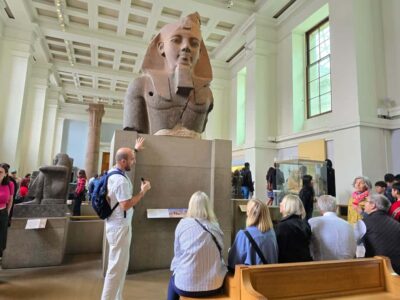
British Museum Guided Tour with Priority Entrance
Read our review →
British Museum Private Guided Tour with Tickets
Read our review →Other lists this tour turns up in