
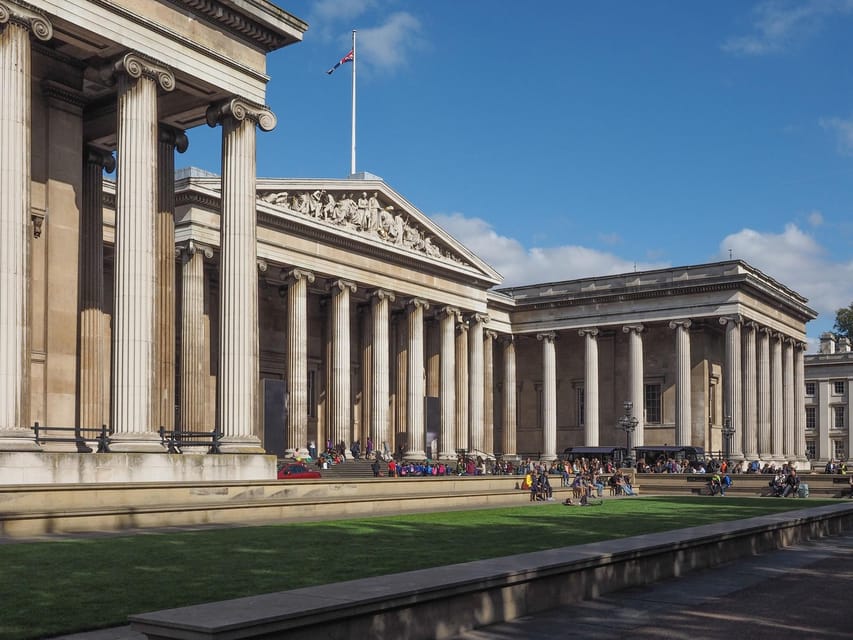
REVIEW · BRITISH MUSEUM TOURS
London: British Museum Audio Tour & Priority Entrance Ticket
Ancient wonders wait behind those doors. I like the reserved entry because it cuts through the uncertainty of arriving at one of London’s busiest museums, and I like the freedom to explore without being tied to a group. The 50-point audio guide gives you a useful route through the huge collection, with commentary in several languages and enough flexibility to pause when something catches your eye.
The main catch is that this is not a live guided tour. You must bring your own charged phone and headphones, download the app before arrival, and find the host at Russell Square first. The museum itself is free, so you are paying $9.09 for the reserved entry help, audio content, app, and a £1 donation, not for admission.
In This Review
- Key points to know before you go
- Meeting the host at Russell Square
- Getting inside with reserved entry
- Starting with ancient Egypt
- Greek sculpture and the Parthenon rooms
- The Lion of Knidos and Roman collections
- The Enlightenment Room and the wider collection
- How the phone audio guide works
- Why the three-hour timing needs flexibility
- Bags, pushchairs, and practical limits
- What the $9.09 price really buys
- Who should book this experience?
- Should you book the British Museum audio tour?
- FAQ
- Is admission to the British Museum included?
- Where do I meet the host?
- How long does the activity last?
- Is this a live guided tour?
- What languages are available in the audio guide?
- What do I need to bring?
- Can I bring luggage into the museum?
- Are pushchairs allowed?
- Can I cancel or pay later?
Key points to know before you go
- Meet at Russell Square: Find the host by the fountain at WC1B 5EH, about a short walk from the museum.
- Follow 50 listening points: The audio route covers major objects from ancient Egypt, Greece, Rome, and the Enlightenment galleries.
- See the Rosetta Stone and Parthenon sculptures: These are among the visit’s essential stops, along with the Lion of Knidos and the statue of Ramesses II.
- Explore at your own speed: You can pause, skip sections, or spend longer in rooms that interest you.
- Bring your own equipment: Headphones and a charged smartphone are required. Large bags and wheeled cases are not allowed.
- Keep exploring London afterward: The package also includes a sightseeing app with a self-guided Political London tour.
Meeting the host at Russell Square
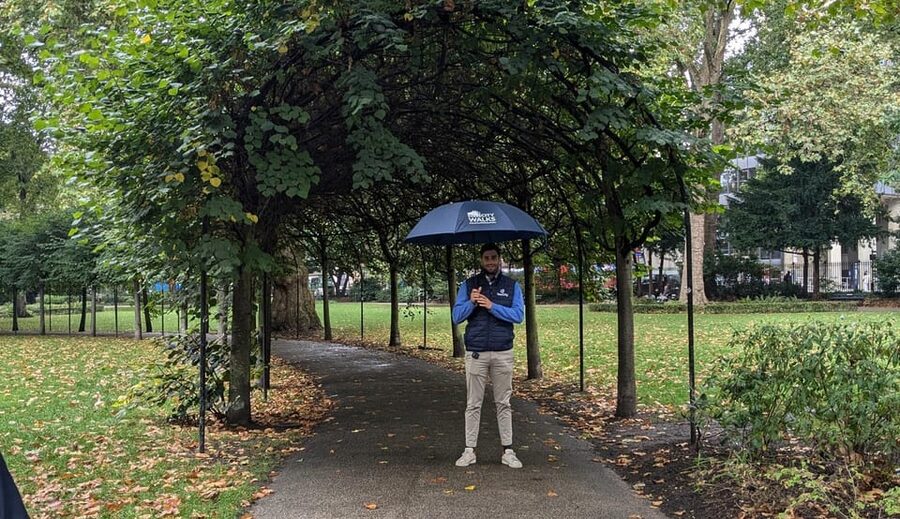
Your visit begins outside the British Museum, not at the museum entrance. Meet a staff member beside the fountain in Russell Square, WC1B 5EH, and arrive about five minutes early.
This first meeting is more useful than it may sound. The host exchanges your voucher, explains how to download or use the app, and helps you understand the route into the museum. Several hosts receive especially strong praise for being prompt, friendly, and clear, including David, Roberto, Davide, Connor, and Regan.
There is one small point to watch: the instructions describe the uniform in two different ways, dark blue in one place and green in another, both marked Vox City. The fountain is the key landmark, but I would still read your voucher carefully before leaving your hotel.
The meeting point also gives you a calmer place to wait than the museum entrance. If there is a large queue, you can avoid standing in it while the host organizes your entry. One particularly useful feature is that an early group may sometimes be available if you arrive ahead of schedule, though you should not count on this.
More Self-Guided Tours in London
- London: Emirates Stadium Entry Ticket and Audio Guide
★ 4.7 · 5,513 reviews - London: Churchill War Rooms Ticket & Political London Audio
★ 4.6 · 224 reviews - London: Royal Walking Tour and Buckingham Palace Audio Tour
★ 4.8 · 154 reviews
Getting inside with reserved entry
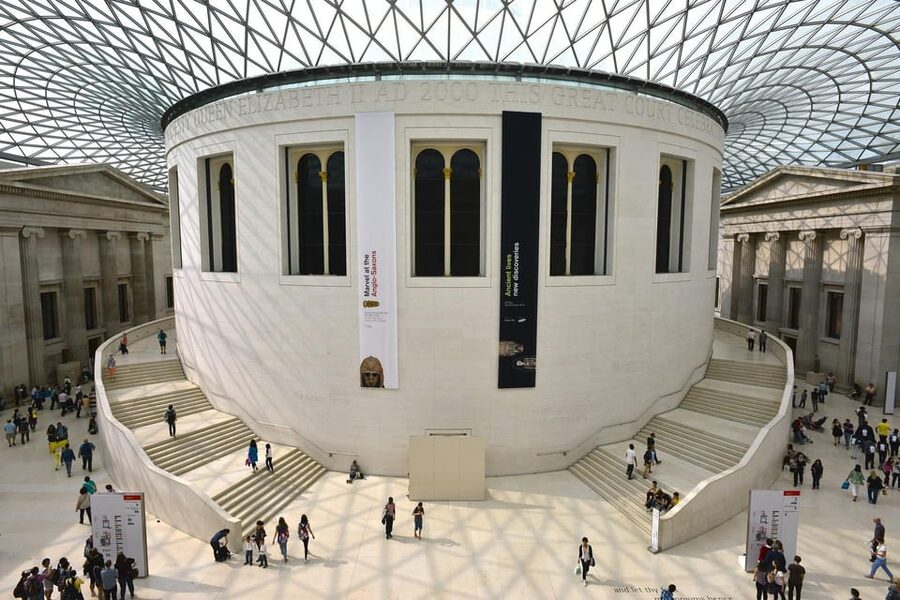
The British Museum does not charge general admission, which makes the phrase priority entry slightly different here than it is at a paid attraction. You are not skipping an admission fee. Instead, you are paying for assistance at the meeting point, a reserved entry arrangement, the audio guide, and the convenience of not having to work out the process alone.
That convenience matters most during busy periods. The British Museum can draw a steady stream of people, and a host who takes you through the entry process can save time and confusion. Once inside, you are free to leave the host and follow the audio guide on your own.
This arrangement suits you if you want independence but do not want to arrive with no plan. It is less suitable if you already know the museum well, have your own detailed route, or are happy to use the museum’s free admission without added help.
The activity is listed as three hours, but you should treat that as a suggested visit length rather than a strict museum limit. The collection is far too large for one short pass. If you want a slower look at the rooms, allow extra time after the audio route.
Starting with ancient Egypt
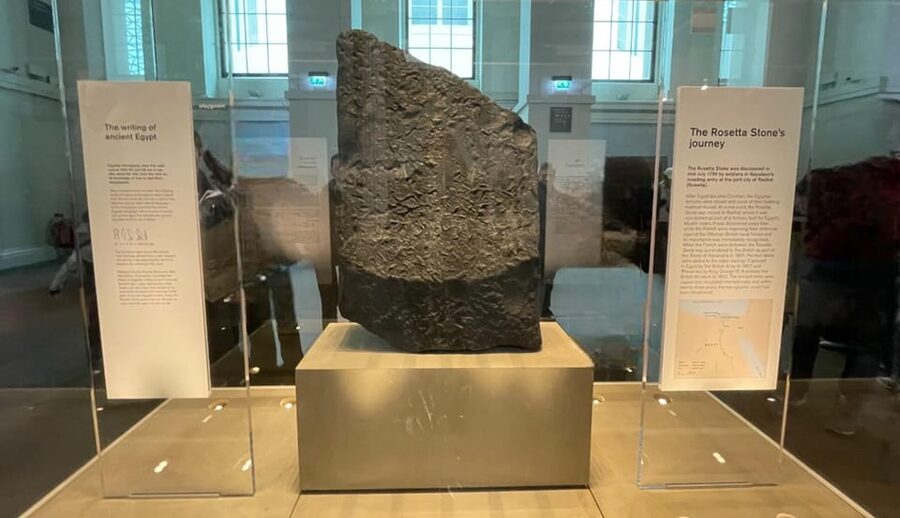
The Egyptian galleries make a strong opening because they contain several of the museum’s most famous objects. The audio guide points you toward the Rosetta Stone, the mummies, and the statue of Ramesses II.
The Rosetta Stone is not just a famous block of carved writing. It helped scholars decipher Egyptian hieroglyphs by presenting the same text in different scripts. The audio commentary gives this object a clear purpose, which is helpful when you are facing a crowd gathered around a slab of stone and wondering why it matters so much.
The mummy displays offer another kind of encounter. They connect grand monuments and royal names with individual bodies and burial customs. You can expect the guide to frame these objects through ancient beliefs and burial practices rather than treating them as curiosities.
Ramesses II provides a very different impression. The scale and authority of the statue make it an easy object to appreciate even if you know little about ancient Egypt. I like this part of the route because it moves from writing, to human remains, to royal power, giving you several ways into the collection.
The Egyptian section can also tempt you to linger. That is one reason the audio format works well here. You can pause the commentary, look more closely, and restart when you are ready instead of trying to keep up with a live group.
Greek sculpture and the Parthenon rooms
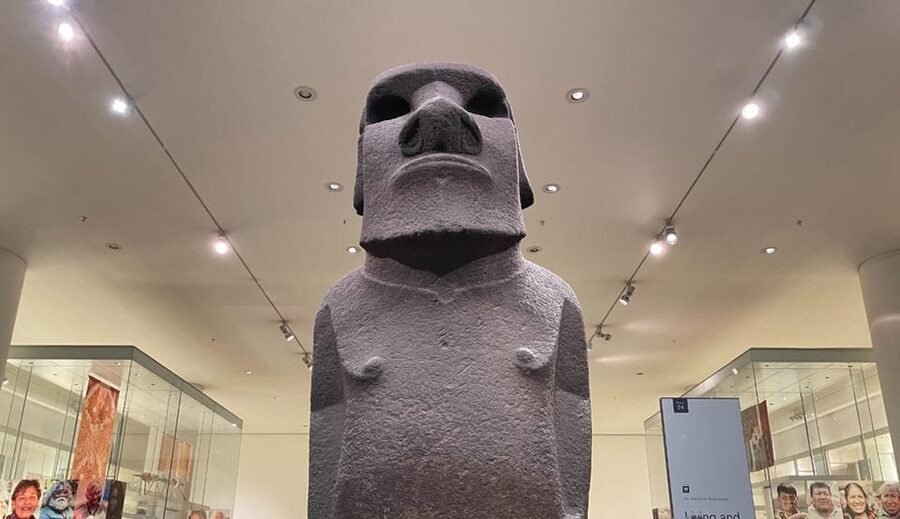
The Greek galleries shift the mood from Egyptian burial culture to sculpture, architecture, and public life. The Parthenon sculptures are the major draw, and they deserve more than a quick photograph.
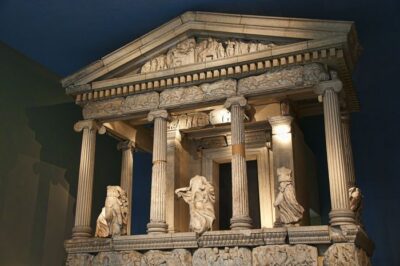
These marble pieces once formed part of the Parthenon in Athens. The audio guide helps place them within the larger temple setting, so you can think about how the individual figures and architectural elements worked together instead of seeing them as isolated objects in London.
The collection’s presentation also raises questions about ownership and cultural heritage. The provided route focuses on the art and its story, but you may want to spend extra time considering the wider debate around the sculptures. A short audio stop cannot cover every part of that issue.
The Discobolus statue gives you a different view of ancient Greek ideals. Its athletic pose captures movement in stone, and it is a good counterpoint to the large architectural fragments in the Parthenon rooms.
This section is a good reason to use the guide selectively. You do not need to listen to every sentence at every stop. Let the commentary explain the main point, then use your own eyes. A museum this large rewards a little wandering.
More British Museum visits:
- London: British Museum Guided Tour
★ 4.3 · 1,182 reviews - London: Tour of the British Museum
★ 4.1 · 678 reviews - Afternoon Tea at the British Museum
★ 4.2 · 511 reviews - London: British Museum Guided Tour
★ 4.5 · 267 reviews
The Lion of Knidos and Roman collections
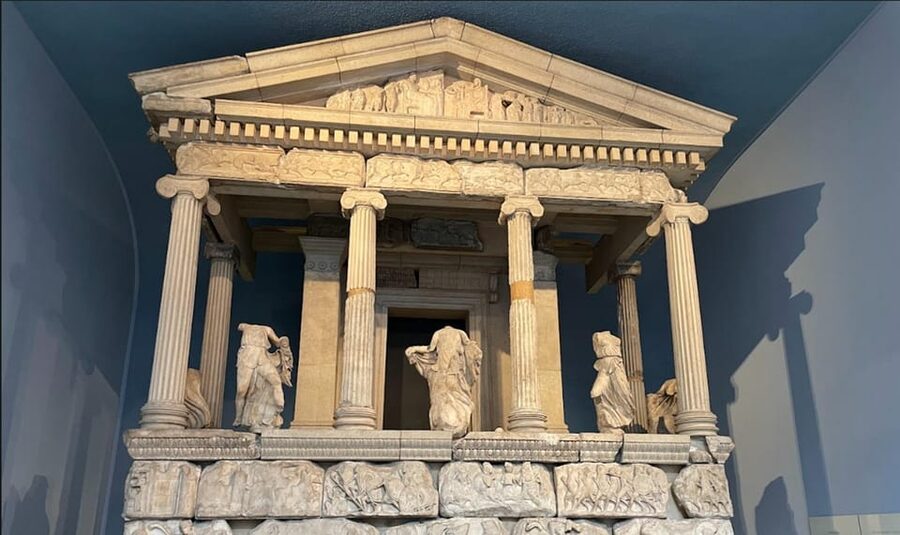
The Lion of Knidos is one of the less obvious stops, and that makes it especially worthwhile. This large marble sculpture once guarded the ancient harbor of Knidos, giving it a practical role as well as an artistic one.
I like the way this object connects sculpture with place. You are not only looking at a finely carved lion. You are also picturing it near a harbor, where its size and pose would have sent a clear message to people arriving by sea.
The Roman galleries continue the tour with statues and mosaics linked to the art and culture of the Roman Empire. These rooms help you see how Roman makers used sculpture and decoration to express status, identity, and public life.
The drawback is simple: these collections can blur together if you rush. The audio guide provides more than 50 points of interest, but the museum contains far more objects than any three-hour route can cover. If you find a Roman mosaic or statue that interests you, stop the audio and give it time.
The Enlightenment Room and the wider collection
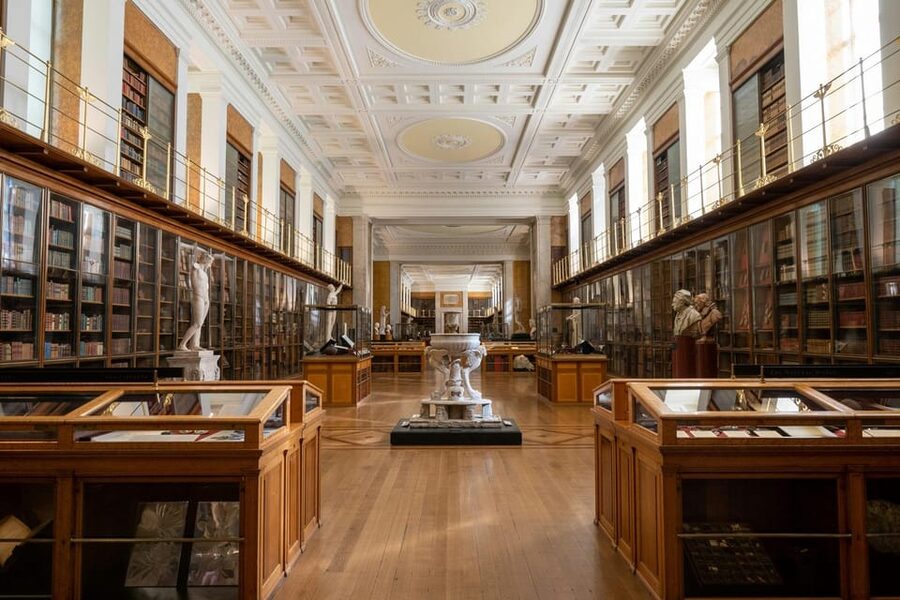
The Enlightenment Room offers a change from monumental sculpture and royal artifacts. It is filled with objects connected to curiosity, collecting, and the pursuit of knowledge.
This room helps explain why the British Museum feels so different from a museum devoted to one country or one art form. You are moving through evidence of people trying to understand the world, classify it, display it, and share ideas about it.
For me, this is an important stop because it gives the museum an intellectual center. The Egyptian and Greek galleries contain the headline objects, but the Enlightenment Room helps you think about how museums themselves are built and why collections take the shape they do.
It is also a sensible place to slow down if the famous rooms feel crowded. You may find the atmosphere calmer, and the audio commentary gives you a useful bridge between individual objects and the museum’s broader purpose.
How the phone audio guide works
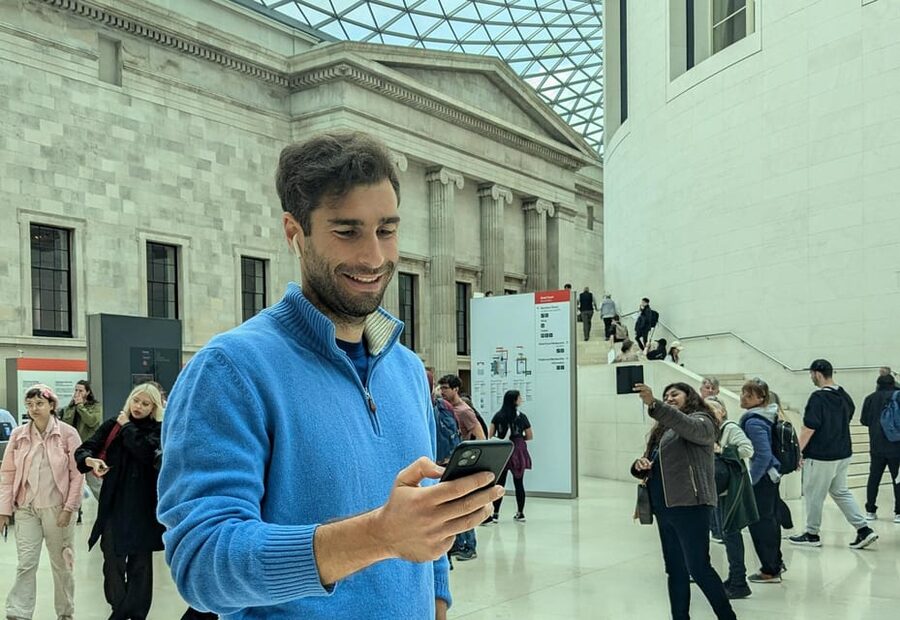
The digital guide is the heart of this package. You scan the QR code on your voucher to download the app and audio guide before you arrive, then listen through your own smartphone and headphones.
The listed audio languages are English, Italian, French, German, Spanish, and Chinese. One part of the information also describes the additional language support as English only, so check the exact language options shown when you open the app before your visit.
Using your own device has clear benefits. You can control the volume, pause whenever you like, and move at your own pace. The app also avoids the need to return a shared headset at the end.
The trade-off is that your phone battery and headphones become part of the plan. Bring a fully charged phone, and do not assume the museum will provide a device or headset. A portable charger could be useful, though it is not listed as a required item.
The guide works best as a framework, not a rulebook. You can follow all 50 points, skip objects that do not interest you, or use the route to get your bearings before exploring other rooms.
Why the three-hour timing needs flexibility

The advertised duration is three hours, with starting times shown during booking. That is enough for a focused introduction to the museum’s main highlights, especially if you use the audio route with purpose.
It is not enough to understand the entire collection. The museum is described by visitors as much larger than expected, and one person found that at least four hours would be useful for getting the most from it. I agree with that practical warning: three hours can introduce the museum, but it cannot finish it.
You should decide what kind of visit you want before arrival. If you want the Rosetta Stone, mummies, Parthenon sculptures, Lion of Knidos, Roman galleries, and Enlightenment Room, three hours may feel full but manageable. If you also want to browse Etruscan material or other less famous rooms, plan to stay longer.
The audio tour ends back at the meeting point according to the activity details, but the museum portion is self-guided once you enter. Confirm the practical end instructions with the host, since your own museum exploration may naturally take longer than the basic route.
Bags, pushchairs, and practical limits
Large bags are not allowed, including wheeled cases and bags heavier than 8 kilograms. Folding bicycles are also prohibited, so do not arrive with luggage meant for a hotel transfer.
The cloakroom charges listed are £2 for coats, £2.50 for bags up to 4 kilograms, £5 for bags from 4 to 8 kilograms, and £1 for umbrellas. These extra costs are modest, but avoiding a large bag is easier than dealing with storage on a busy museum visit.
Pushchairs are permitted inside. Fold-up prams and buggies can be left free of charge in the cloakroom, which makes the experience more workable for families with young children.
The visit is not a private tour, and no pick-up or drop-off is included. You make your own way to Russell Square and return there when the activity ends.
What the $9.09 price really buys
At $9.09 per person, this is a low-cost way to add structure to a free museum visit. The price includes the audio guide, reserved entry assistance, the host at Russell Square, a £1 donation to the British Museum, and the extra Political London self-guided tour in the sightseeing app.
That is good value if you are visiting London for the first time and want help getting started. It is also useful if you prefer audio commentary to reading labels, or if you want to explore alone without paying for a live private guide.
The value is weaker if you already have a charged phone, your own museum plan, and no concern about joining the normal entry process. Since the museum itself is free, you should think of this as a convenience and orientation package.
The included Political London tour adds a little more value after the museum. It gives you another self-guided activity in the same app, so the purchase is not limited to a single audio route inside the building.
Who should book this experience?
I would recommend it to first-time visitors who want the museum’s major sights without committing to a live group tour. It also fits independent explorers, families who need to pause often, and anyone who wants commentary in English, Italian, French, German, Spanish, or Chinese.
It may not suit you if you dislike using your phone in museums, have limited battery power, want a historian beside you, or plan to spend the whole day exploring every collection. In those cases, a free entry visit with your own research may be a better match.
The high rating is easy to understand when you focus on the service at the start. Hosts such as David and Roberto are praised for being easy to find, explaining the map and app clearly, and getting people through the process quickly. That small amount of help can make a large museum feel less daunting.
Should you book the British Museum audio tour?
Book it if you want a low-priced, self-guided introduction with help at the door. The strongest reasons are the simple meeting arrangement, the 50 audio points, and the ability to stop whenever you like.
Do not book it expecting a live tour or a complete museum visit. The British Museum is too large for that. Bring headphones, charge your phone, leave bulky luggage behind, and allow more than three hours if the Rosetta Stone, Parthenon sculptures, Roman galleries, or Etruscan material pull you in.
For many first-time London visitors, this is a sensible middle ground: more direction than visiting alone, and more freedom than following a guide from room to room.
FAQ
Is admission to the British Museum included?
General admission to the British Museum is free. This package adds reserved entry assistance, a digital audio guide, a host at the meeting point, a £1 donation, and a sightseeing app.
Where do I meet the host?
Meet the host beside the fountain in Russell Square, WC1B 5EH. The meeting point is a short walk from the British Museum, and you should arrive about five minutes early.
How long does the activity last?
The stated duration is three hours. Starting times depend on availability, and you may need extra time if you want to explore more of the museum beyond the main audio route.
Is this a live guided tour?
No. A host helps you at the meeting point and explains the entry and app, but the museum visit is self-guided. There is no live guide accompanying you through the galleries.
What languages are available in the audio guide?
The listed audio commentary languages are English, Italian, French, German, Spanish, and Chinese. Check the app when you download it for the exact language options available for your booking.
What do I need to bring?
Bring headphones and a charged smartphone. You must scan the QR code on your voucher to download the app and audio guide before arrival.
Can I bring luggage into the museum?
Large bags, wheeled cases, folding bicycles, and bags heavier than 8 kilograms are not permitted. Cloakroom charges apply to coats, bags, and umbrellas.
Are pushchairs allowed?
Yes. Pushchairs are permitted on-site, and fold-up prams and buggies can be left free of charge in the cloakroom.
Can I cancel or pay later?
You can cancel up to 24 hours before the activity for a full refund. Reserve now and pay later is available, so you do not have to pay at the time of booking.
More Museum Tours in London
- London: Chelsea Football Club Stadium and Museum Tour
★ 4.8 · 4,576 reviews - London Transport Museum Entrance Ticket
★ 4.5 · 1,323 reviews - London: Jack the Ripper Museum Tickets
★ 4.2 · 894 reviews - London: Paradox Museum Entry Ticket
★ 3.9 · 441 reviews
More Audio Tours in London
- London: Gin and Afternoon Tea Bus Tour with Audio Guide
★ 4.8 · 11 reviews - Bath: Roman Baths Entry Ticket with Audio Guide
★ 4.7 · 425 reviews - Canterbury Cathedral: Entry Ticket with Audio Guide
★ 4.6 · 266 reviews - Bristol: Self-Guided Sightseeing Audio Tour
★ 4.4 · 151 reviews
Just added in London
- The Best of British Cooking Class & Dining Experience★ 5.0 · 1 review
- London: Live Comedy Show at Big Belly Bar and Comedy Club★ 4.5 · 80 reviews
- London: British Museum Highlights Guided Small Group Tour★ 4.9 · 113 reviews
- The Beatles London Walking Tour★ 4.2 · 147 reviews
- The Best Highlights of London Walking Tour & Boat Cruise★ 5.0 · 1 review
- The Authentic Walking Tour with Indian Tasting Meal★ 4.8 · 4 reviews
- Iconic London: Bard, Beatles, Bond & Baker Street★ 4.9 · 15 reviews
- London: Tate Britain Official Discovery Tour★ 4.7 · 7 reviews
British Museum Tours, compared.


British Museum Archaeology Course and Guided Tour
Read our review →
British Museum Highlights Guided Small Group Tour
Read our review →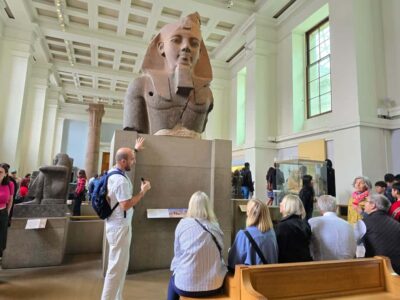
British Museum Guided Tour with Priority Entrance
Read our review →
British Museum Private Guided Tour with Tickets
Read our review →Other lists this tour turns up in