
REVIEW · ROMAN BATHS TICKETS
Bath: Roman Baths Entry Ticket with Audio Guide
Bath keeps its ancient secrets underfoot. This entry ticket brings you into one of Britain’s most absorbing Roman sites, where the Great Bath, temple ruins, and museum objects explain how people worshipped, washed, and sought cures here nearly 2,000 years ago. I especially like the detailed audio guide and the chance to see the site at your own pace. The mineral water tasting adds a small but memorable finish.
The main drawback is that the audio guide is handheld, so you hold it throughout the visit. That can become tiring, especially for parents or anyone with a sore shoulder. The Baths can also grow crowded quickly, and some people with advance tickets have still found themselves in the general entry queue. Arriving at opening time is your best move.
In This Review
- Key points to know before you go
- Why the Roman Baths are worth your time
- Begin with the museum’s Roman objects
- The Great Bath delivers the main visual moment
- Explore the heated rooms and plunge pools
- Let the audio guide set your pace
- Meet Roman characters in the complex
- Finish with the spa water tasting
- Timing, queues, and practical planning
- Who will enjoy this Bath experience most
- Should you book the Roman Baths ticket?
- FAQ
- How long is the Roman Baths ticket valid?
- What does the ticket include?
- Is a guided tour included?
- Which languages are available on the audio guide?
- Is there a children’s audio guide?
- Can I taste the Roman spring water?
- Is the Roman Baths site wheelchair accessible?
- Are pets, strollers, or large bags allowed?
- How late can I enter?
- Does the ticket let me skip the entry queue?
Key points to know before you go
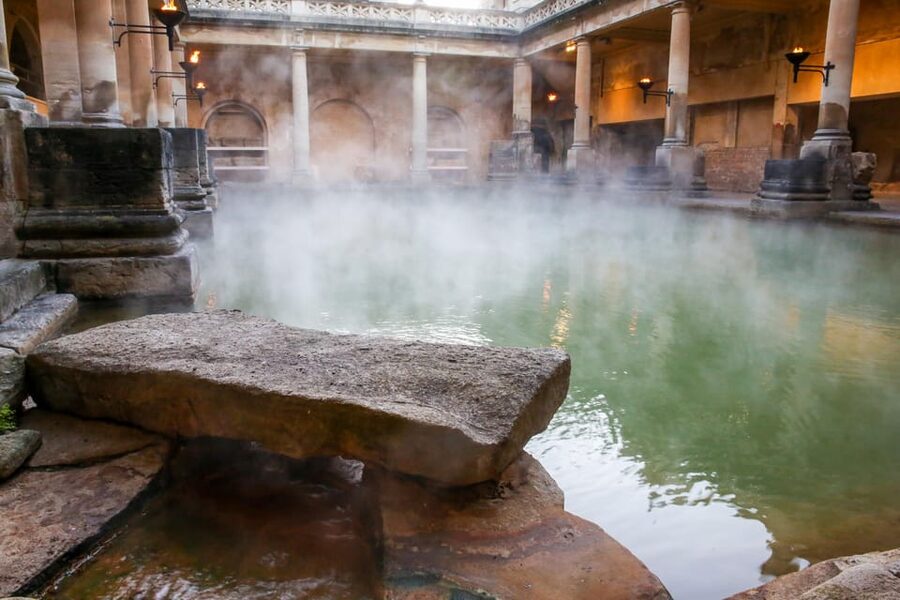
- The Great Bath is only part of the visit: The museum, temple remains, heated rooms, saunas, plunge pools, and other bathing areas make this a substantial indoor and outdoor museum experience.
- The audio guide does the heavy lifting: It is available in 12 languages, with a handheld BSL video guide also offered. The commentary is detailed, clear, and easy to follow.
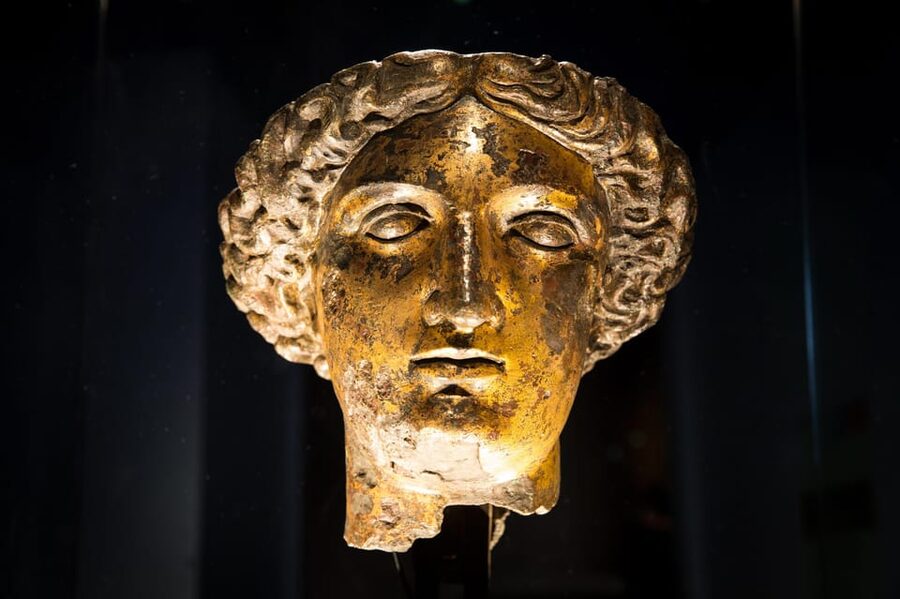
- Look for the gilt bronze Sulis Minerva head: This finely made object once belonged to the goddess’s cult statue inside the temple.
- The site works well for families: A children’s audio version adds a lighter touch, and projections help show how the Roman complex may have been used.
- Try the spa water before leaving: The dedicated tap serves mineral water containing more than 43 minerals.
- Plan for roughly two to two and a half hours: You can move at your own speed, with seating available along the route, but there is no separate rest room or refreshment area for a longer break.
Why the Roman Baths are worth your time

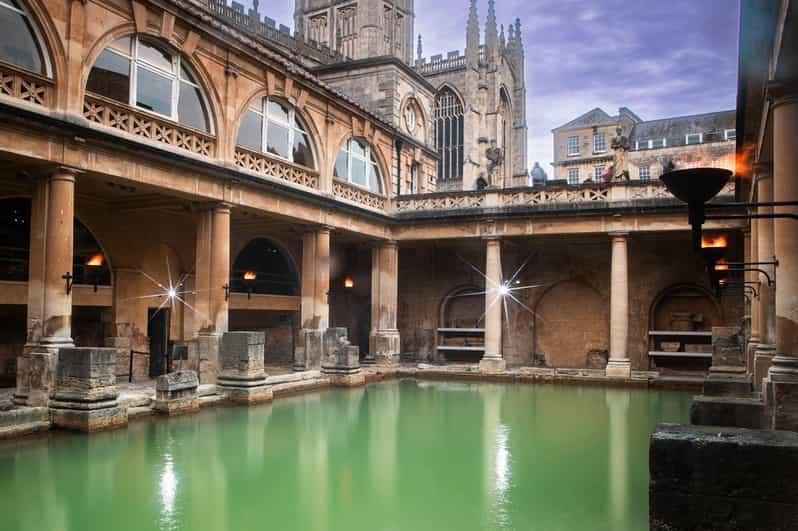
Bath is famous for its Georgian streets and honey-colored stone, but the Roman Baths explain why the city exists in the first place. Natural hot springs rise beneath the center, and the Romans built a religious and bathing complex around them.
This was not simply an ancient swimming pool. It was a place for washing, social life, treatment, and worship. The spring was linked with Sulis Minerva, a local goddess combined with the Roman goddess Minerva. People came hoping for healing and to honor the divine presence believed to live in the water.
I like that the visit gives you both sides of the story. The museum introduces the people who used the site through objects they left behind. Then the route brings you into the actual bathing complex, where the scale and layout make more sense.
The ticket costs $30.31 per person. That is not a bargain basement admission, particularly since this is a self-guided experience rather than a private tour. Still, you get access to a large museum and an extensive archaeological site, plus a strong audio program. If you allow two hours or more, the price feels fair for a major Bath attraction.
More Roman Baths tickets:
- Bath: City Walking Tour with Optional Roman Baths Entry
★ 4.7 · 1,401 reviews - Bath: Guided City Walking Tour with Entry To The Roman Baths
★ 4.8 · 343 reviews - London: Windsor, Stonehenge, Bath, and Roman Baths Day Trip
★ 4.5 · 5,131 reviews
Begin with the museum’s Roman objects
The visit starts with the museum rather than the Great Bath. That is a good arrangement. You learn what the site meant before looking at the stone remains, so the rooms and ruins have a clearer purpose when you reach them.
The audio guide leads you through exhibits about everyday life in Roman Britain. You are not just looking at grand architecture. You can also see personal possessions and objects connected with worship, trade, and ordinary routines.
One major highlight is the Gorgon’s head. It once decorated the pediment of the temple and looked down from about 15 metres above anyone approaching the goddess’s sacred space. The fierce face may represent the mythical Gorgon, but it may also be a water god. That uncertainty gives the object an extra edge. You are looking at a powerful symbol, but its exact meaning remains open to interpretation.
The gilt bronze head of Sulis Minerva deserves plenty of time. It once formed part of the goddess’s cult statue. The workmanship is impressive, and the face has a commanding quality even without the rest of the statue. This is one of the objects that helps you picture the religious importance of the site, rather than seeing the Baths as only a practical bathing facility.
The museum is laid out in a clear route, with labels and arrows helping you stay oriented. Audio points are marked, so you can listen without constantly guessing where to go next. Short video projections in some rooms also help you picture Roman activity and make the displays easier for children to follow.
The Great Bath delivers the main visual moment
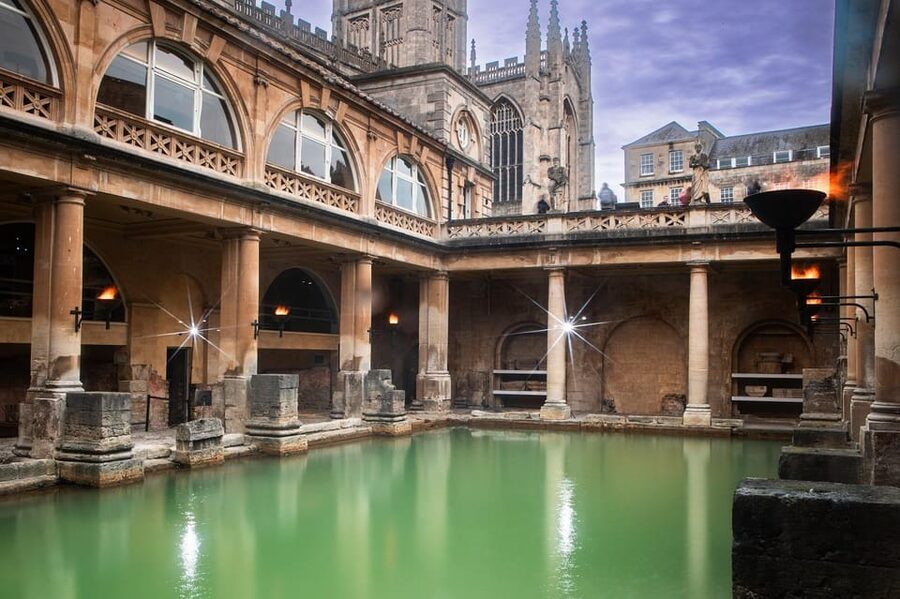
After the museum, you reach the Great Bath. This is the image most people associate with the site, and it earns its reputation.
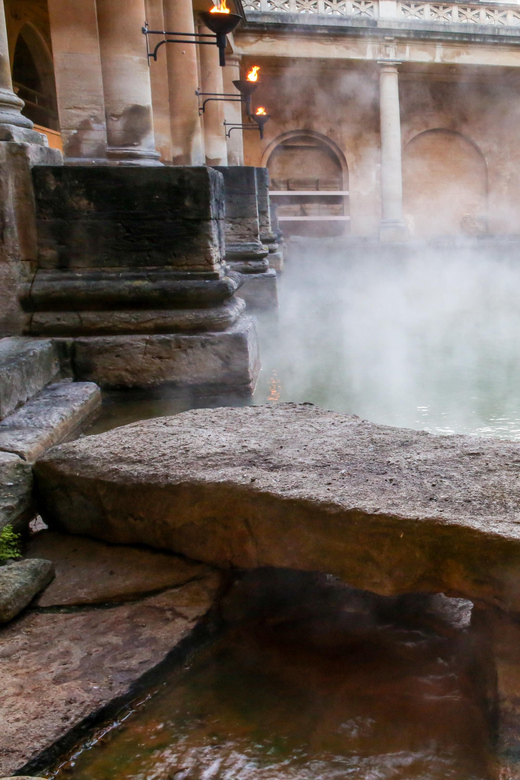
A stone walkway surrounds the large pool, while Bath’s rooftops and the open sky appear above. On a cold morning, steam often curls from the warm water. It is an atmospheric scene, and one of the rare places where the modern city and ancient Roman remains share the same frame.
You walk around the pool rather than enter it. The water is still part of the natural spring system, but this is an archaeological site, not a working public swimming pool. That distinction matters if you arrive expecting a spa day. You will see the ancient bathing complex and sample the spring water, but you will not bathe here.
Take your time around the Great Bath. The audio guide explains how the space fitted into the wider complex, and the raised walkway gives you different angles across the pool. Crowds can make this area feel tight, especially during busy periods, so an early visit makes a real difference.
Explore the heated rooms and plunge pools

The Great Bath is the centerpiece, but the surrounding rooms show how much more ambitious the complex was.
The East Baths include heated rooms and areas connected with massage. You can also see the Roman gym and an ancient sauna called a laconicum. These spaces reveal the Baths as a social and physical-care center, not just a place to sit in hot water.
The heating system is one of the details that makes the site so impressive. The Romans designed different rooms for different temperatures and uses. The audio guide helps you understand how these spaces worked, which is much more useful than simply reading a sign saying hot room or cold room.
The West Baths contain plunge pools. These contrast with the warm spring water and show how a bathing visit involved moving through different temperatures. The Circular Bath adds another shape and setting to the route.
You can spend as much time as you like in each section during the one-day validity of your admission. Most people will find two hours comfortable, while anyone who enjoys archaeology, Roman engineering, or museum displays could easily stay longer. Seating appears at several points, which helps if you have a leg problem or simply need a pause.
One limitation is that the route does not provide a dedicated quiet rest room where you can sit for an extended break and have refreshments. Bring that in your planning, particularly if someone in your group needs frequent rests.
More Self-Guided Tours in Bath:
- Bath : 2 Hour Historic Walking Tour With An App
★ 3.6 · 19 reviews - Bath: Bridgeton Walking Tour with an APP
★ 3.8 · 14 reviews - Bath: City Walking Tour & Exploration Game
★ 5.0 · 2 reviews - London: Emirates Stadium Entry Ticket and Audio Guide
★ 4.7 · 5,513 reviews
Let the audio guide set your pace

The audio guide is the strongest practical feature of this ticket. It is available in English, Dutch, French, German, Italian, Japanese, Chinese, Korean, Polish, Russian, Portuguese, and Spanish. A handheld BSL video guide is also available.
The commentary is detailed without forcing you to follow a fixed group. You can pause, move ahead, or linger beside an object that catches your eye. That freedom is especially useful when the site becomes crowded. You are not trying to keep up with a guide while also taking photographs.
The audio points are clearly marked, and the route has arrows. That makes the visit easy to manage even if you are new to self-guided museums. The commentary also reduces the amount of time you need to spend reading panels, so you can keep your eyes on the ruins.
There is a children’s version, which is worth choosing if you are visiting with younger family members. It gives the same site a more accessible tone. One clever option is to listen to the adult and children’s versions at different points if you have enough time. They offer different details and can make a second pass worthwhile.
The main compromise is the equipment. The guide is held in your hand, and you do not have both hands free while listening. One person found that holding it for the entire route caused shoulder discomfort. Parents managing children, bags, or a camera should keep this in mind.
Meet Roman characters in the complex
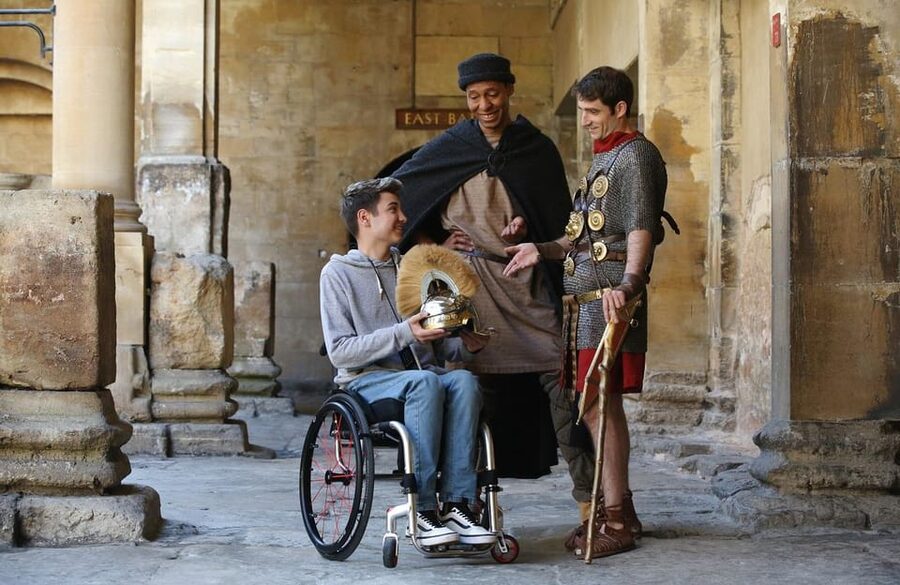
At some points, costumed Roman characters may be present. You can ask questions about life in Roman Britain and take a photograph with them.
This is not a replacement for the audio commentary, but it adds a human touch. A recorded guide can explain the temple, heating system, and artifacts. A costumed character can help you imagine the people who lived, worked, worshipped, and bathed in the complex.
The word may matters here. Their presence is not guaranteed for every visit, so treat this as a bonus rather than the reason to buy your ticket. Children are likely to get the most from this feature, especially when combined with the child-friendly audio guide and visual projections.
Finish with the spa water tasting
Before you return to modern Bath, stop at the dedicated tap and taste the spa water.
The water contains more than 43 minerals and has drawn people to Bath for centuries because of its supposed healing qualities. The flavor may be unfamiliar. This is a small tasting rather than a full spa treatment, but it connects your visit with the reason the site became important in the first place.
I like this ending because it gives the experience a physical conclusion. You have seen the spring, learned about its religious role, and then tasted the water yourself. It is a simple gesture, but it makes the story feel less distant.
If you have mobility concerns, the Baths are about 90 percent accessible to wheelchair users. Elevators help connect the different levels. Since the site includes ancient surfaces and several areas to explore, allow extra time and use the available seating.
Timing, queues, and practical planning
Your ticket is valid for one day, but you need to check availability for the available starting times. Last entry is one hour before closing, so do not plan to arrive at the final moment. A late start can leave you rushing through the museum and bathing rooms.
Opening time is a smart choice. The museum can become busy soon after the doors open, and the Great Bath is more pleasant when you can find space around the walkway. Early entry also gives you time to listen to the audio without constant noise and crowd movement.
Advance purchase helps you plan, but it may not mean walking straight past every queue. Some people with pre-booked tickets have still had to join the general line at the entrance, including those buying tickets on the day. If avoiding queues is your top priority, check the entry instructions carefully rather than assuming your voucher guarantees a separate fast lane.
The Roman Baths are in central Bath, and the meeting point is simply the site itself. You redeem your voucher there. Pets, baby strollers, luggage, and large bags are not allowed, so travel light. These restrictions matter most for families and anyone arriving with a suitcase between hotels.
The activity is listed as a small group limited to six participants, but the visit itself is self-guided. You are not assigned to a moving tour group, and you can set your own speed inside the museum.
Who will enjoy this Bath experience most

I would recommend this ticket to first-time visitors who want the city’s ancient story explained clearly. It also suits anyone who prefers control over timing, since you can stop for photographs, replay commentary, or skip an exhibit without holding up a group.
Families with children around eight and older should find plenty to hold their attention. The costumed characters, projections, and child audio guide help, although the handheld audio unit means parents may need to manage one more object.
History fans could spend several hours here, especially with the large collection and multiple bathing areas. People with limited stamina can still enjoy the visit by using the seats and elevators, but the route is not a quick five-minute stop.
You might prefer a guided tour if you want to ask one expert questions throughout or if holding a device sounds irritating. You should also set expectations correctly: this is a museum and archaeological visit, not access to a functioning Roman swimming pool or a modern spa.
Should you book the Roman Baths ticket?
Yes, if you want a self-guided visit with strong interpretation and the freedom to take your time. The price is reasonable for the amount on display, particularly when you use the audio guide fully and allow two hours or more.
Book an early time if you can. You will have a better chance of seeing the Great Bath without heavy crowding, and you can listen more comfortably. Pack lightly, prepare for a handheld guide, and do not count on a separate skip-the-line queue.
The best parts are the scale of the Great Bath, the Sulis Minerva head, the detailed commentary, and the simple pleasure of tasting the spring water. For a first visit to Bath, this is one of the clearest ways to understand why the city began here.
FAQ
How long is the Roman Baths ticket valid?
The ticket is valid for one day. You should check availability for the available starting times.
What does the ticket include?
It includes entry to the Roman Baths, an audio guide in 12 languages or a handheld BSL video guide, and a spa water tasting.
Is a guided tour included?
No. This is a self-guided visit with an audio guide. A guided tour is not included.
Which languages are available on the audio guide?
The audio guide is available in English, Dutch, French, German, Italian, Japanese, Chinese, Korean, Polish, Russian, Portuguese, and Spanish.
Is there a children’s audio guide?
Yes. A children’s version is available and is designed to make the visit more entertaining for younger listeners.
Can I taste the Roman spring water?
Yes. Spa water is available from a dedicated drinking tap. It contains more than 43 minerals.
Is the Roman Baths site wheelchair accessible?
The Baths are about 90 percent accessible to wheelchair users, and elevators are available to reach different levels.
Are pets, strollers, or large bags allowed?
No. Pets, baby strollers, luggage, and large bags are not allowed.
How late can I enter?
Last entry is one hour before closing time.
Does the ticket let me skip the entry queue?
The provided information does not guarantee a separate skip-the-line entrance. Advance ticket holders may still need to join the general entry queue.
More Audio Tours in Bath
- London: British Museum Audio Tour & Priority Entrance Ticket
★ 4.5 · 631 reviews - Canterbury Cathedral: Entry Ticket with Audio Guide
★ 4.6 · 266 reviews - London: Churchill War Rooms Ticket & Political London Audio
★ 4.6 · 224 reviews - London: Royal Walking Tour and Buckingham Palace Audio Tour
★ 4.8 · 154 reviews
Just added in Bath
- “Stonehenge & Secret England” Tour for 2-8 guests from Bath★ 5.0 · 2 reviews
- Bath: Local Pubs & Historic Sights Walking Tour (3h)★ 4.9 · 29 reviews
- Full-Day Stonehenge and Bath Tour★ 4.4 · 39 reviews
- From Bath: Private Tour to Serene Cotswolds with Pickup★ 5.0 · 3 reviews
- From Bath: Private Stonehenge and Salisbury Tour with Pickup★ 5.0 · 3 reviews
- From Bath: Salisbury and the Jurassic Coast Small Group Tour★ 5.0 · 4 reviews
- From Bath: Cotswolds Private Day Tour with Pickup★ 4.9 · 17 reviews
- City of Bath: British Wine and Cheese Tasting Experience★ 4.9 · 21 reviews
Roman Baths Tickets, compared.

Windsor, Stonehenge, Bath, and Roman Baths Day Trip
Read our review →
City Walking Tour with Optional Roman Baths Entry
Read our review →

Stonehenge & Bath Day Trip with Optional Roman Baths
Read our review →
Guided City Walking Tour with Entry To The Roman Baths
Read our review →
Stonehenge, Bath, Windsor and Roman Baths London Day Tours
Read our review →
Stonehenge , Lacock , Roman Baths: Private Tour
Read our review →Other lists this tour turns up in