

REVIEW · WALKING TOURS
Bristol: Blackbeard to Banksy Guided Walking Tour
Bristol reveals itself on foot. This two-hour walk links medieval streets, wartime scars, Banksy pieces, and the old harbor in one tidy route. I like the strong mix of history and street art, and I like the guides’ lively delivery, with Owen, Luke, Henry, Mike, and others praised for clear stories and good humor. The main consideration is the uneven cobbles in the old city, plus one set of steps, though the steps can be avoided.
At $17 per person, this is an easy-value way to get your bearings, especially if you have only one day in Bristol or are making a day trip from Bath. You will cover plenty of ground, so comfortable shoes and weather-ready clothing matter. The tour is in English and wheelchair accessible, but the old streets still require care.
In This Review
- Five things to know before you go
- Starting beneath Bristol Cathedral
- Banksy, the Hatchet Inn, and Bristol’s public story
- Centrespace and Nelson Street: Bristol’s changing art scene
- St John’s Church and the old market quarter
- Castle Park and Bristol Bridge
- Llandoger Trow and Bristol’s characters
- Queen Square and the route toward the harbor
- What the two-hour format does well
- Why $17 is a fair price
- Who should take this Bristol walk?
- Should you book the Blackbeard to Banksy tour?
- FAQ
- How long is the Bristol Blackbeard to Banksy tour?
- How much does the tour cost?
- Where does the tour begin?
- Where does the tour finish?
- What language is the tour in?
- Is the walking tour wheelchair accessible?
- Are there cobbled streets on the route?
- Are there steps during the tour?
- Can I cancel for a full refund?
- Do I have to pay when I book?
- What should I bring?
Five things to know before you go

- Banksy appears alongside medieval Bristol: You see Well Hung Lover and other street art while learning how the city developed over roughly 1,000 years.
- The route covers the city’s historic core: Bristol Cathedral, the castle site, St Nicholas Market, Bristol Bridge, Queen Square, and the harborside all fit into two hours.
- Guides make the difference: Owen, Luke, Henry, and Mike receive repeated praise for clear voices, humor, local knowledge, and a good walking pace.
- The tour ends at Arnolfini: That puts you on the harborside, a useful spot for continuing your own Bristol exploration.
- Expect old-city surfaces: Cobbled streets can be uneven, and there is one set of steps, with an alternative available if needed.
- It suits a first visit: You get practical suggestions for the rest of your stay, not just a string of dates and names.
Starting beneath Bristol Cathedral

Meet in front of Bristol Cathedral’s main entrance on College Green. Give yourself enough time to find the spot, since this is a central city meeting point rather than a private tour office. The cathedral itself provides a fine opening scene: an imposing medieval church founded in the 12th century.
The first ten minutes are spent around the cathedral, setting up Bristol’s story. That matters because the tour is not simply a search for famous graffiti. You begin with the city’s older bones, then see how later trade, industry, war, politics, and art changed the center around them.
I like this opening because it gives the modern pieces a setting. Banksy’s work feels more interesting when you understand the old streets and institutions around it. You also get an immediate sense of the guide’s style, which recent experiences describe as informative, clear, and playful rather than stiff.
More Walking Tours in Bristol:
- Bristol: Air Raid Shelter & St. Nicholas Market Walking Tour
★ 4.8 · 320 reviews - Magical London: Harry Potter Guided Walking Tour
★ 4.7 · 22,044 reviews - London: The Original Jack the Ripper Walking Tour
★ 4.7 · 7,833 reviews
Banksy, the Hatchet Inn, and Bristol’s public story
From the cathedral, the walk moves into the downtown core and reaches Banksy’s Well Hung Lover. This is one of the tour’s clearest draws, but the real value is the explanation around it. You are not merely pointed toward a wall and sent onward. The guide connects the work to Bristol’s street-art identity and shows how art has become part of the city’s public face.
The stop lasts only about five minutes, so do not expect a full art-history lecture. It is a quick, useful introduction, and you may want to return later if you would like more time for photographs.
The Hatchet Inn follows. This stop shifts the mood from contemporary stencil art to one of Bristol’s older character-filled places. The tour uses it to add another layer to the city’s story and to introduce the sort of local detail that can be missed when you explore alone.
The route then reaches the Cenotaph. Here, the city’s past takes a more serious turn. The memorial gives the guide a place to talk about conflict and remembrance, while the wider walk brings in evidence of the damage Bristol suffered during the Second World War. That balance is one of the tour’s strengths: the city is presented as more than pretty harbor views and famous artists.
Centrespace and Nelson Street: Bristol’s changing art scene
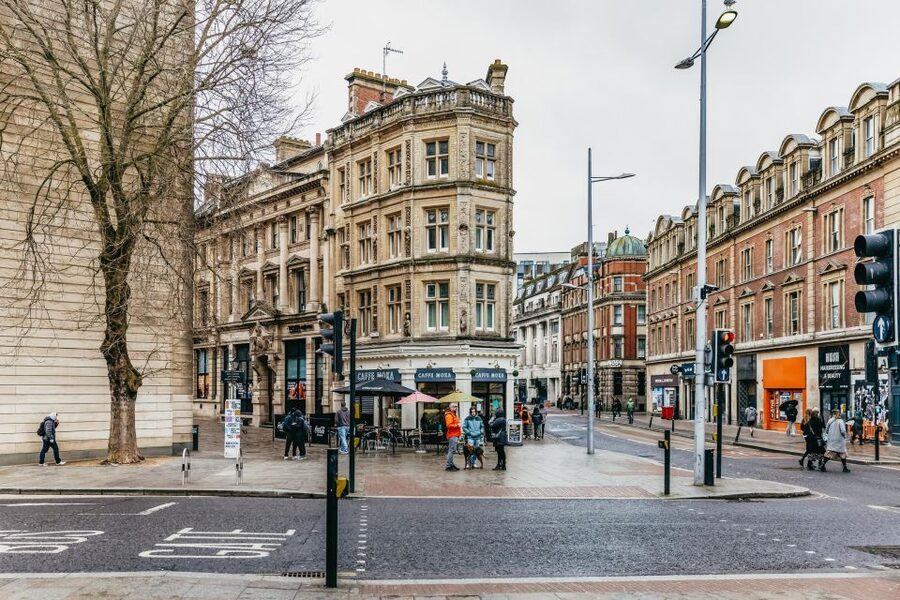
At Centrespace, you spend around five minutes taking in another part of Bristol’s creative identity. The stop helps show that the city’s art scene is broader than Banksy alone. You get a look at how large and small works sit within everyday streets, rather than in a formal gallery setting.
Nelson Street receives about ten minutes and gives street art more room to breathe. This is one of the better sections for people who come mainly for murals and graffiti. The guide points out the scale and variety of the work, including the smallest, largest, and most beautiful pieces promised along the route.
The phrase most beautiful is subjective, of course, and street art changes over time. Paint fades, buildings are altered, and new work appears. Still, the route gives you a useful introduction to Bristol’s outdoor art, and it may sharpen your eye for pieces you would otherwise walk past.
I especially like this part for families and teenagers. One recent outing with a parent and teenage daughter found the mix engaging for both, which makes sense. The art gives younger visitors something immediate to look at, while the guide supplies the wider context.
St John’s Church and the old market quarter
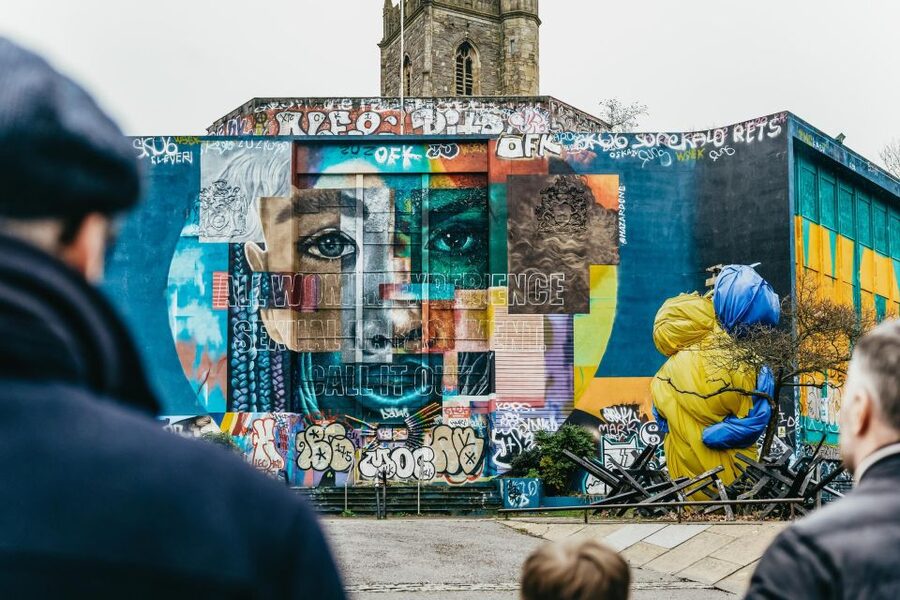
St John’s Church brings the group back to Bristol’s older center. The church is part of the medieval fabric of the city, and the stop helps explain how the original urban core developed. You hear about where Bristol began and how its medieval center took shape.
The tour continues to St Nicholas Market for about ten minutes. This is a practical stop as well as a historical one. Markets show you a city in use, and the guide’s comments can help you understand the area rather than simply pass through it.
This is also a good point to note the walking conditions. The old city has uneven cobbled streets. Most people should manage the route at an easy stroll, but anyone using a wheelchair or dealing with balance problems should be aware of the surface. The tour is wheelchair accessible, and the single set of steps can be avoided if necessary, but accessible does not mean every paving stone is smooth.
The pace receives frequent praise. Guides such as Owen, Luke, Henry, and Mike are repeatedly described as easy to hear, considerate, and good at keeping the group together. That is important in a city center, where a rushed guide can turn a pleasant walk into a chase.
A few more options to weigh up in Bristol
- From Bristol: Stonehenge and Cotswold Villages Day Tour
★ 4.8 · 717 reviews - From Bristol: Oxford and the Cotswolds Full-Day Tour
★ 4.7 · 244 reviews - Bristol: Guided Ghost Tour
★ 4.8 · 193 reviews - Bristol: Wake The Tiger Amazement Park Entry Ticket
★ 4.3 · 156 reviews
Castle Park and Bristol Bridge
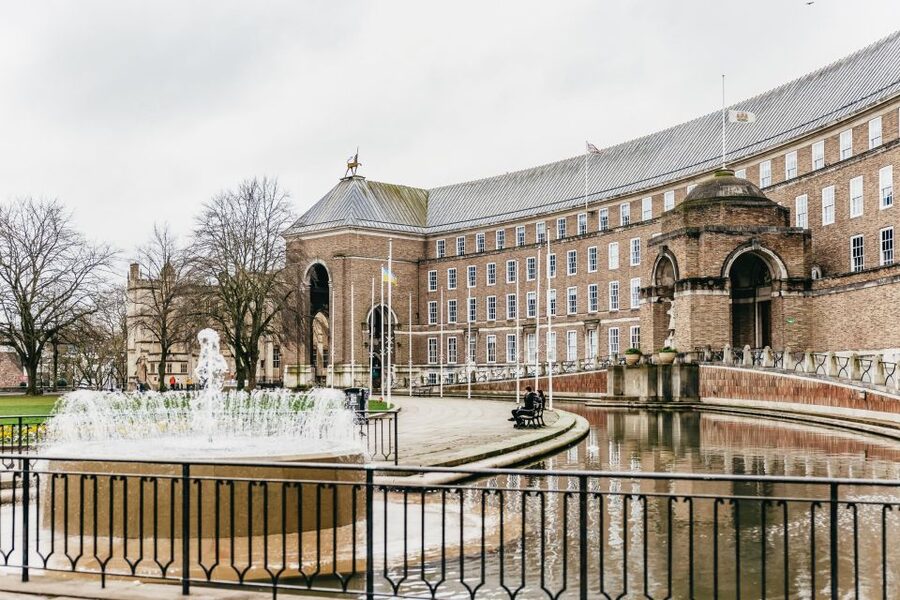
Castle Park is a short photo stop, but it carries plenty of historical weight. The castle site was positioned between the River Avon and River Frome, a strategic location that helps explain why this area mattered. You are shown the remains and setting rather than touring a preserved castle interior.
This is a useful distinction. If you expect rooms, towers, and a grand standing fortress, you may find the stop modest. If you enjoy reading a city through its street plan and surviving traces, it is a good pause.
At Bristol Bridge, another photo stop links the old center to the waterways that shaped Bristol’s trade and growth. The bridge is not treated as an isolated attraction. It forms part of the story of movement through the city, from the medieval core toward the harbor.
The walk’s historical range is broad. Blackbeard, Brunel, Banksy, wartime Bristol, local politics, art, literature, and other Bristol figures all enter the story. Not every subject receives equal time, but that variety keeps the two hours moving.
Llandoger Trow and Bristol’s characters
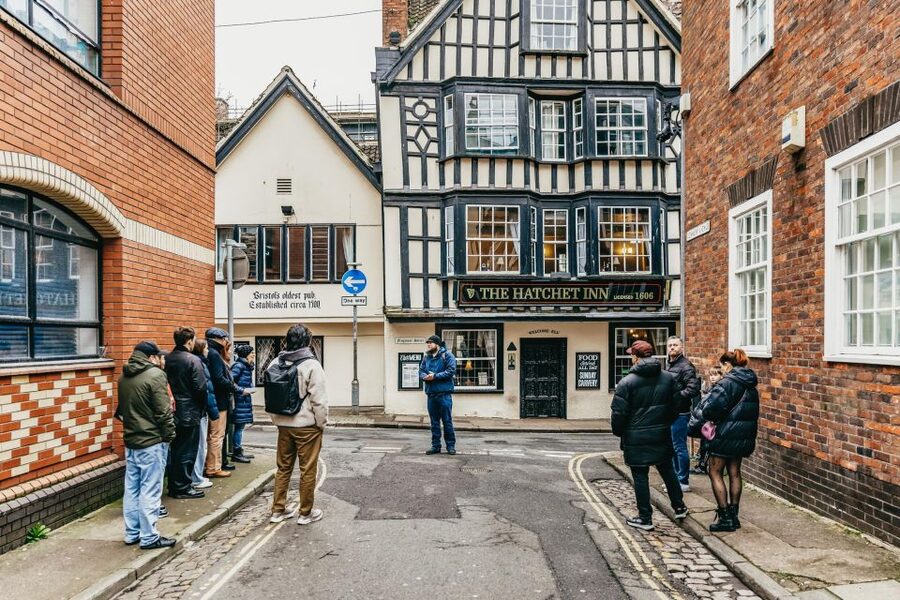
The Llandoger Trow is a five-minute guided stop with a strong connection to Bristol’s maritime past. Places like this help make the city’s port story tangible. You are not only hearing names and dates. You are seeing a building tied to the atmosphere of old Bristol.
Blackbeard is part of the tour’s central promise, though the experience is not only about the famous pirate. The title works because Bristol’s identity has many characters, from seafarers and engineers to artists and public figures whose names do not start with B.
That slightly playful approach comes through in the guide feedback. Owen is praised for being witty and engaging. Luke is described as having a clear voice and a natural delivery. Henry is praised for making sure the group could hear and keep up. Mike is often credited with balancing facts, humor, and entertainment.
You should not book this expecting a solemn academic lecture. The stories are designed to stick. If a guide can make you laugh while explaining why a street, building, or artwork matters, you are more likely to remember Bristol after the walk.
Queen Square and the route toward the harbor
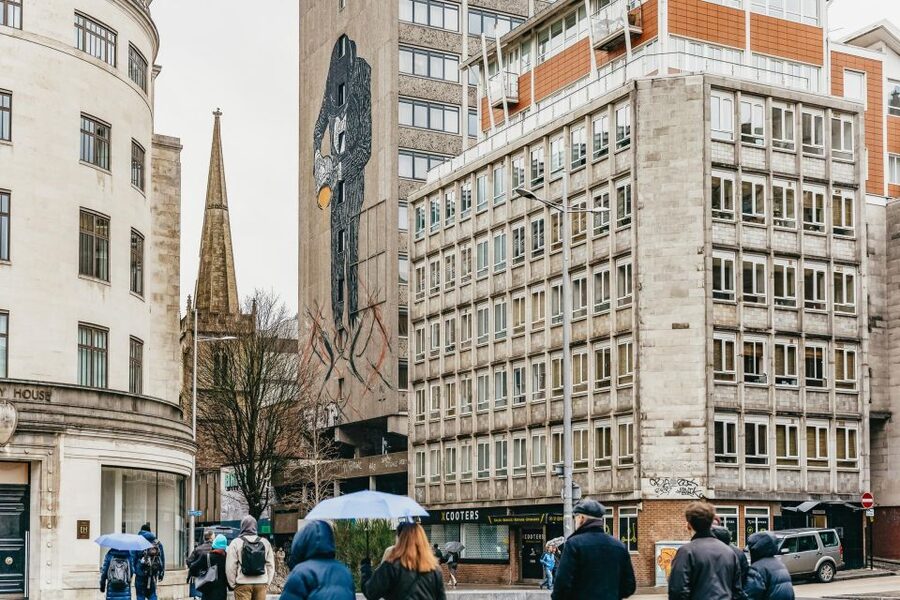
Queen Square offers another historical setting and gives the group a chance to see how Bristol’s grander urban spaces relate to the crowded old center. The five-minute stop is brief, but it adds scale and variety to the route.
From there, the walk moves toward Pero’s Bridge and the harborside. Pero’s Bridge is a modern landmark with a serious historical meaning, and the guide uses it to connect Bristol’s waterfront to the people and trade that shaped the city. This is an important part of the experience because the harbor story is not only about ships and commerce. It also raises questions about Bristol’s past and public memory.
The Matthew of Bristol continues the maritime theme. The ship recalls Bristol’s seafaring links and gives you a strong visual marker near the water. The combination of bridge, ship, and harbor makes the final stretch feel like a proper conclusion rather than an arbitrary endpoint.
You finish at Arnolfini, a useful location on the historic harborside. From there, you can continue exploring on your own, and several guides make a point of offering suggestions for the rest of your stay. If you have just one day, pay attention to these final tips. They can help you decide which places deserve a return visit and where to spend your remaining time.
What the two-hour format does well
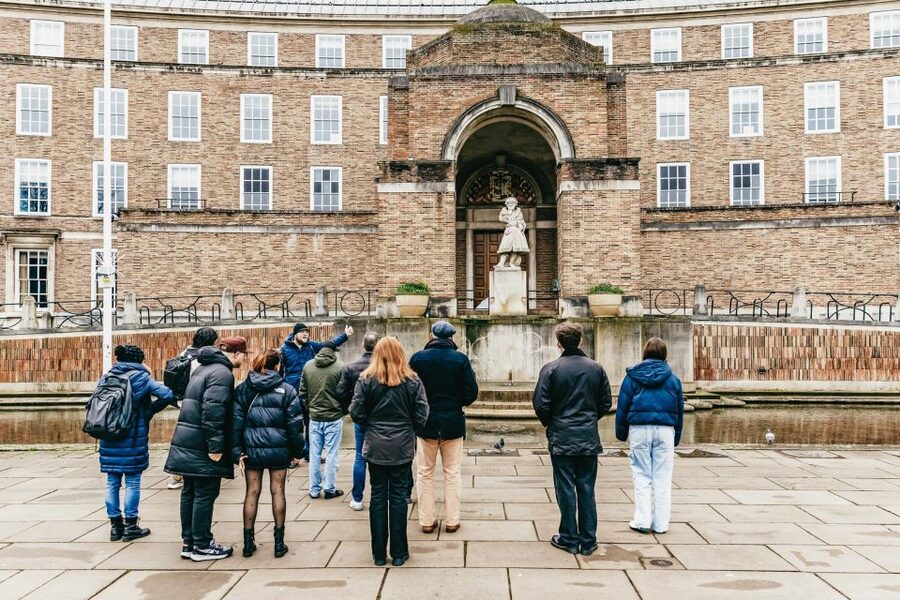
Two hours is long enough to build a clear picture of Bristol but short enough to fit into a packed day. You cover the main historic center, several street-art areas, the castle site, market quarter, bridges, square, and harbor.
The trade-off is depth. Most stops last five or ten minutes, so you will get sharp explanations rather than extended visits. You will not tour the cathedral interior in detail, study every Banksy piece, or spend a long time at the market.
I see that as a sensible design for a first visit. The route gives you a framework. Later, you can return to Well Hung Lover, Nelson Street, St Nicholas Market, or the harborside and look around at your own pace.
The walk is also manageable for people who do not usually take long tours. The route has been described as an easy stroll, and one participant who expected to feel tired after two hours found the pace comfortable. Still, Bristol’s cobbles and weather can affect the experience, so wear supportive shoes and bring suitable clothing.
Why $17 is a fair price
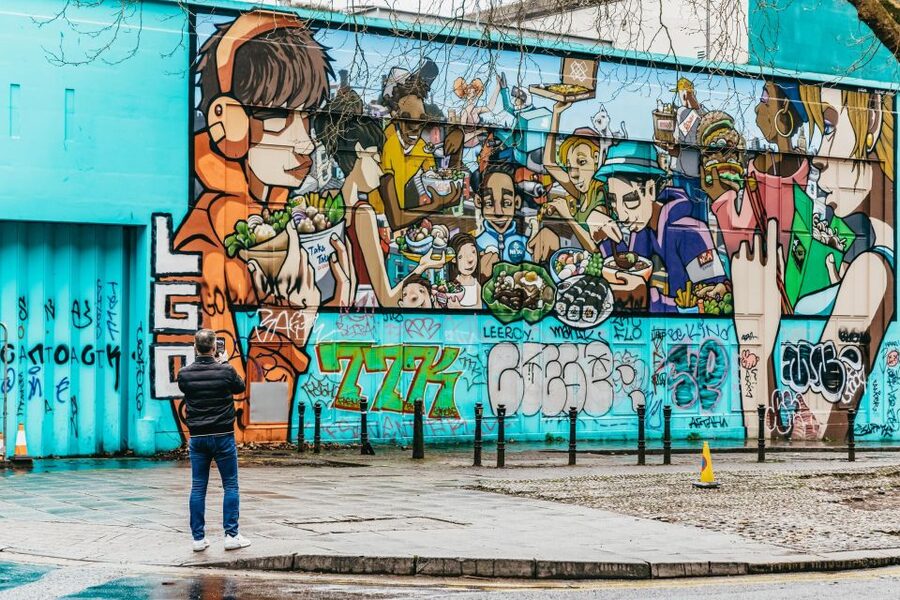
At $17, this tour offers good value if you want both orientation and interpretation. You are paying for a live English-speaking guide who can compress a millennium of local stories into a practical route.
The value is strongest for first-time visitors, day trippers, and anyone who likes learning the meaning behind what they see. A guide can point out details you might miss, explain why the castle site mattered, and turn a random piece of street art into part of Bristol’s larger story.
It is less essential if you already know the city well or prefer to stop for long periods at each attraction. You may also want a specialist Banksy tour if your main goal is detailed analysis of the artist’s work. This experience uses Banksy as one thread in a broader Bristol story.
Flexible booking adds practical value. You can cancel up to 24 hours before the tour for a full refund, and you can reserve now and pay later. Starting times vary, so check availability for the date you want.
Who should take this Bristol walk?
I would recommend it most strongly to:
- First-time visitors who want a quick feel for central Bristol
- People making a day trip from Bath
- Families with older children or teenagers
- Street-art fans who also want history
- Visitors who enjoy local anecdotes more than formal lectures
- Anyone staying only one day and needing a useful starting point
It also works for repeat visitors. One experience specifically found the walk worthwhile for residents as well as newcomers, since a local guide can reveal familiar streets in a new way.
People with limited mobility should read the access details carefully. The tour is wheelchair accessible, but uneven cobbles remain part of the old-city route. One set of steps can be avoided, which helps, but you should still plan for historic paving.
Should you book the Blackbeard to Banksy tour?
Book it if you want a lively introduction to Bristol, not a single-subject art walk. The strongest feature is the balance: cathedral and castle, memorials and markets, pirates and engineers, Banksy and the harbor.
The guides are another major reason to choose it. Owen, Luke, Henry, and Mike are repeatedly praised for clear delivery, humor, enthusiasm, and an easy pace. Guide quality can vary on any walking tour, but the pattern here is encouraging.
Skip it if you dislike group walks, need long visits at each stop, or already know Bristol’s center well. For most first-time visitors, though, $17 buys a smart route, useful local advice, and enough context to make the rest of your Bristol stay more rewarding.
FAQ
How long is the Bristol Blackbeard to Banksy tour?
The walking tour lasts two hours.
How much does the tour cost?
The listed price is $17 per person.
Where does the tour begin?
Meet in front of the main entrance of Bristol Cathedral on College Green.
Where does the tour finish?
The tour finishes at Arnolfini on Bristol’s historic harborside.
What language is the tour in?
The live tour guide speaks English, and English is the listed tour language.
Is the walking tour wheelchair accessible?
Yes, the activity is described as wheelchair accessible.
Are there cobbled streets on the route?
Yes. The old city has uneven cobbled streets, so take care and wear comfortable shoes.
Are there steps during the tour?
There is one set of steps. It can be avoided if necessary.
Can I cancel for a full refund?
Yes. You can cancel up to 24 hours in advance for a full refund.
Do I have to pay when I book?
No. The reserve-now, pay-later option lets you hold a place without paying immediately.
What should I bring?
Bring comfortable shoes and clothing suited to the weather.
Just added in Bristol
- St Mary Redcliffe Church Bristol: Guided Tour★ 4.7 · 67 reviews
- From Bristol: 4-Day Cornwall, Devon & Stonehenge Tour★ 4.3 · 22 reviews
- Bristol: Bristol Zoo Project Entry Ticket★ 4.3 · 18 reviews
- Bristol: Wake The Tiger Amazement Park Entry Ticket★ 4.3 · 156 reviews
- Bristol: The Best Of Bristol, Guided Bike Tour★ 4.8 · 68 reviews
- Bristol: Venomous Snake Tour w/ Guide & Croc Photo★ 5.0 · 1 review
- Bristol : Sightseeing Custom Tour with a Local Guide★ 3.9 · 6 reviews
- Bristol: The House Magicians Comedy and Magic Show★ 4.7 · 37 reviews
Walking Tours, compared.

Magical London: Harry Potter Guided Walking Tour
Read our review →
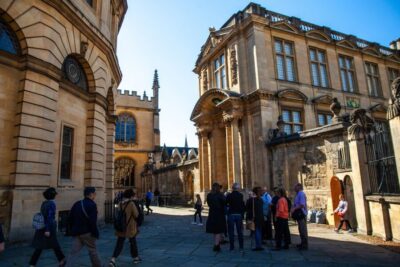
University and City Walking Tour with Alumni Guide
Read our review →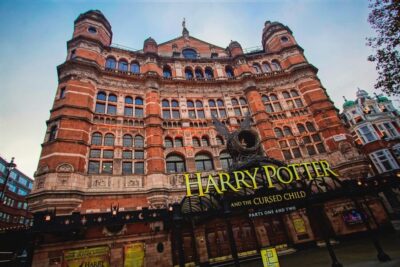
Harry Potter Movies Walking Tour (Kids Go Free)
Read our review →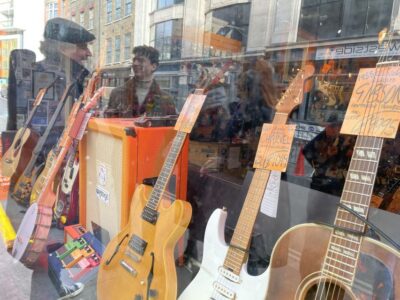
The Great British Rock and Roll Music Walking Tour
Read our review →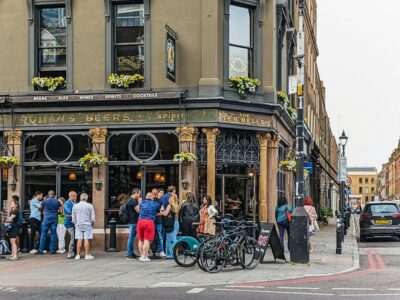
Jack the Ripper Walking Tour – Ripper Vision Tours
Read our review →
Other lists this tour turns up in