
REVIEW · HISTORICAL TOURS
Brixton History & Culture Tour
Brixton tells London’s story in two busy hours. I like the way this small-group walk connects Electric Avenue, street art, Afro-Caribbean history, and music instead of treating them as separate sights. I also like that it begins and ends at the David Bowie mural, a simple meeting point opposite Brixton Underground Station.
The main consideration is time. Two hours is enough for a strong introduction, but not enough for a long market visit, a full meal, or an unhurried look at every mural and cultural stop. You will cover little distance, yet the subject matter comes quickly. Comfortable shoes and an umbrella are sensible companions.
In This Review
- Five reasons this Brixton walk is worth your time
- Meeting David Bowie at the Brixton mural
- Electric Avenue and the market heart of Brixton
- From Victorian suburb to Afro-Caribbean center
- Murals, street art, and public identity
- Music from Bowie to Brixton Academy
- Pop Brixton and the taste of South London
- Why the two-hour format works, and where it falls short
- Group size, weather, and access
- Is $79.47 a fair price?
- Who should book this Brixton walk?
- Should you book the Brixton History & Culture Tour?
- FAQ
- Where does the Brixton History & Culture Tour start?
- Where does the tour finish?
- How long does the tour last?
- What language is the tour offered in?
- How large is the tour group?
- What should I bring?
- Is the tour wheelchair accessible?
- Can I cancel the booking?
Five reasons this Brixton walk is worth your time

- Electric Avenue and the markets bring Brixton’s food, commerce, and local character into the tour from the start.
- Afro-Caribbean history gives context to the community that has shaped Brixton since the 1950s.
- David Bowie’s Brixton connection adds a personal music story to the wider cultural picture.
- Murals and street art show how local identity appears on walls, public spaces, and community projects.
- A maximum of 15 people keeps the walk smaller than a standard city sightseeing group.
- Guides Adrian and Wesley have earned especially warm praise for being organized, charming, and well informed.
Meeting David Bowie at the Brixton mural
The tour starts outside the David Bowie mural opposite Brixton Underground Station. This is a useful meeting point for you because it is easy to identify and ties the opening moment to one of Brixton’s best-known musical connections.
Beginning here also sets the tone. This is not a walk built around grand royal buildings or polished avenues. It is about people, public art, music, migration, food, and the way a neighborhood changes while holding onto its identity.
You return to the same mural at the end. That makes the tour easy to fit into a London day. You do not need to arrange a separate pickup or work out where the walk finishes. If you are meeting friends afterward, the fixed start and finish are convenient.
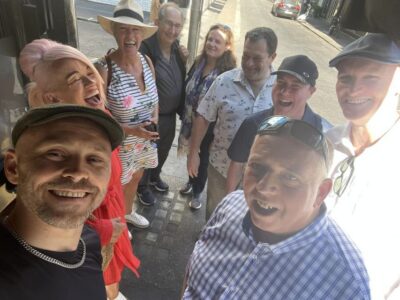
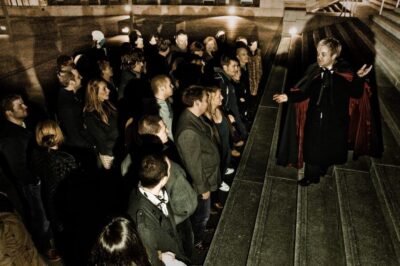
Your guide leads the tour in English. With no more than 15 people, you should have a better chance of hearing the stories and asking questions than you would in a large coach group. Adrian and Wesley are specifically praised for being organized, charming, and generous with local restaurant suggestions. That last detail matters in Brixton, where the food scene is part of the neighborhood’s identity rather than a side note.
More History Tours in London
- London: Historic Pubs of Central London Walking Tour
★ 4.9 · 1,065 reviews - London: Soho Music and Historic Pubs Walking Tour
★ 4.9 · 836 reviews - London: Rock ‘n’ Roll History Tour
★ 4.6 · 645 reviews
Electric Avenue and the market heart of Brixton
Electric Avenue is one of the tour’s main draws. Its name has a strong connection to Brixton’s identity, and the area gives you a quick sense of how trade, food, and community meet here.
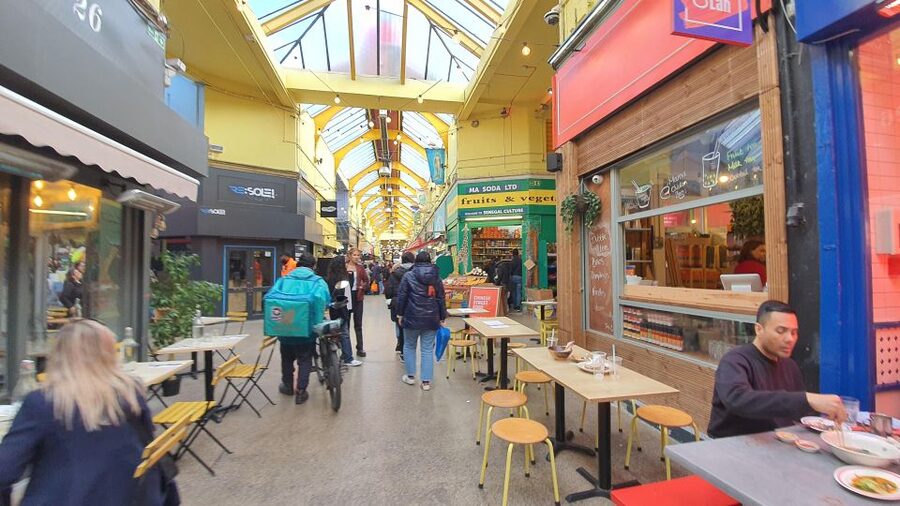
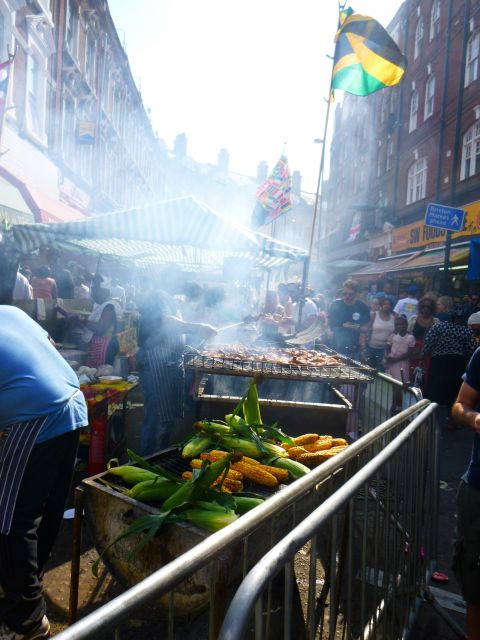
The markets are not simply scenery for photographs. They help explain the neighborhood as a place where different cultures and daily routines share the same streets. You may notice food smells from several parts of the world, colorful displays, and the constant movement that gives the area its character.
The tour focuses on the story behind this setting, so you should not treat it as a dedicated shopping trip. Two hours leaves room to hear the guide and look around, but not necessarily to browse every stall at leisure. If you want to buy food or gifts, plan to return after the walk or allow extra time before your next commitment.
I see this as one of the best parts of the tour for first-time visitors to Brixton. A market can be easy to photograph and hard to understand. A local guide helps connect what you see with the people and events that shaped it.
From Victorian suburb to Afro-Caribbean center
Brixton’s past has changed sharply over time. The tour explains its movement from poverty to a fashionable Victorian suburb, followed by its growth as a major center of Afro-Caribbean life from the 1950s onward.
That shift gives the walk more weight than a simple neighborhood introduction. You are not just hearing isolated facts about streets and buildings. You are following the effects of changing wealth, immigration, identity, and local action across several periods of London’s history.
The Afro-Caribbean story is especially important because it helps you read the markets, food, music, murals, and community activity with greater care. The neighborhood’s cultural character did not appear by accident. It grew through immigration and through people building a life, businesses, traditions, and a public presence in South London.
The tour also addresses the turbulence of the 1980s. The period brought serious tension, but the walk presents it alongside the local struggle for identity and the hope that came from community action. That balance is valuable. You get a sense of both the pressure Brixton faced and the determination that helped shape its future.
I would choose this tour if you want London beyond the usual center. It offers a closer look at how migration and community change one part of the city. The tradeoff is that the tour gives you an overview rather than a full academic history. For most people, that is the right level for a two-hour walk.
Murals, street art, and public identity
Brixton’s murals and street art are treated as part of the local story, not just decoration. The route includes mural art, community projects, and urban art, giving you a chance to see how public walls can carry memory and opinion.
This is a practical advantage if you enjoy photography. The art gives the walk visual variety, while the guide supplies the social context that a quick solo visit might miss. You can look at a mural and then hear why public art matters in a neighborhood where identity has often been debated in public.
The art also fits the wider theme of the tour. Markets show community life through food and trade. Music shows it through sound and performance. Murals show it through images in shared spaces.
Do not expect a gallery-style route with a fixed collection of major works. Street art changes, and the supplied details do not promise a set list of murals or a special art workshop. Think of this as a guided look at Brixton’s public art and community projects within a larger history walk.
A different kind of day out entirely:
- London: The London Eye Entry Ticket
★ 4.6 · 35,875 reviews - From London: Harry Potter Warner Bros Studio Tour
★ 4.7 · 26,588 reviews - London: Westminster to Greenwich River Thames Cruise
★ 4.5 · 22,836 reviews - Magical London: Harry Potter Guided Walking Tour
★ 4.7 · 22,044 reviews
Music from Bowie to Brixton Academy
Music is another major thread. David Bowie is the obvious starting point, but the tour also places Brixton Academy and local musical culture within the neighborhood’s wider story.
The Bowie mural gives the route a clear symbol. It is a place where you begin, but it also helps show how Brixton has become linked with major cultural figures. The mention of local icons, including Bowie, adds a human scale to the tour. Instead of treating music as a list of famous names, the walk connects it to place.
Brixton Academy adds another important stop or reference point for music fans. Its presence supports the idea of Brixton as a place where performance and popular culture have real roots. If you enjoy music history, this part may be the strongest reason to book.
At the same time, the tour is not sold as a concert venue tour or a detailed biography walk. You should expect stories and local context, not access to a backstage area or a long examination of one artist. That makes it suitable for mixed groups, especially if one person loves music and another is more interested in food, art, or London history.
Pop Brixton and the taste of South London

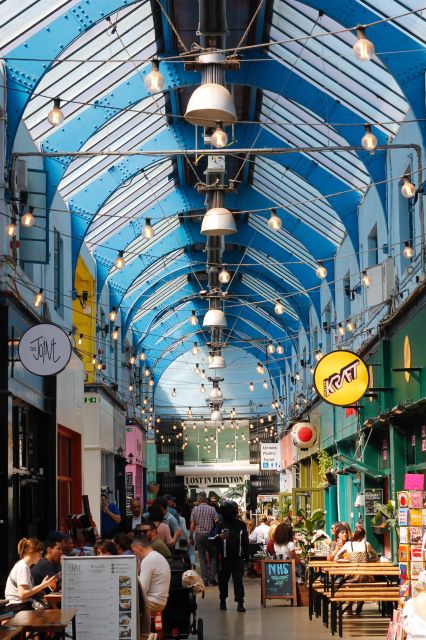
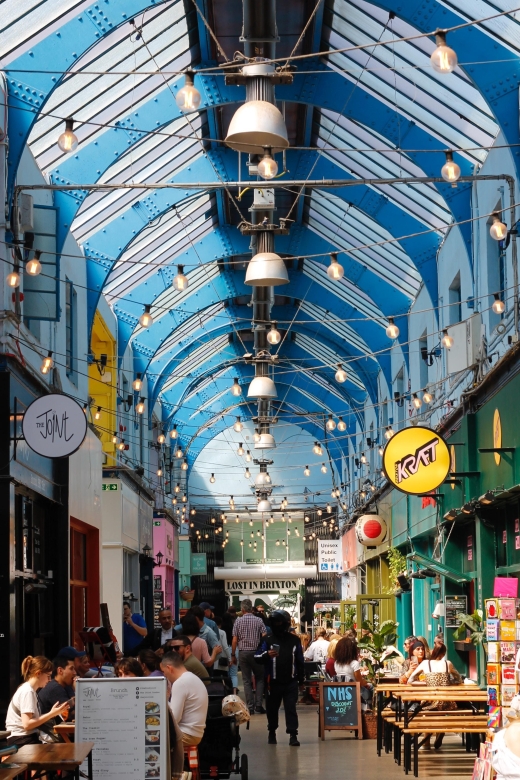
Pop Brixton is included among the area’s cultural highlights. Along with the markets, it gives you a taste of how food and community space help define modern Brixton.
The tour promises mouthwatering smells and world cuisine, but it is still a walking tour, not a food tour with included tastings. I would not book it expecting a set meal or food samples. Instead, use the route to find ideas for where you may want to eat afterward.
This is where Adrian’s restaurant recommendations could be useful. His praise centers not only on information but also on organization, charm, and practical suggestions. A good recommendation can turn a short neighborhood walk into a longer evening in Brixton.
Because the route ends where it began, you can easily continue exploring after the guide leaves. You might return to a market, look for food, or make your own way toward one of the music-related sights. The tour gives you a framework, then leaves room for your own choices.
Why the two-hour format works, and where it falls short
The walk lasts two hours and covers relatively little distance. That is good news if you want a neighborhood introduction without spending half a day on your feet. It should also suit you if you are fitting Brixton between other London plans.
The short format does require focus. The guide moves between Victorian Brixton, Afro-Caribbean immigration, the 1980s, public art, music, markets, and present-day culture. If you like one subject more than the others, you may wish for extra time.
I would schedule this early in your Brixton visit if you can. The route can help you understand what you see later, especially the food areas, murals, and music landmarks. If your schedule allows only one short activity in South London, this walk gives you a useful base.
The tour is also a good choice for people who dislike long walks. The distance is limited, though you will still be outdoors and on your feet for the full two hours. Comfortable shoes are required in practical terms, even if the route is not physically demanding in distance.
Group size, weather, and access
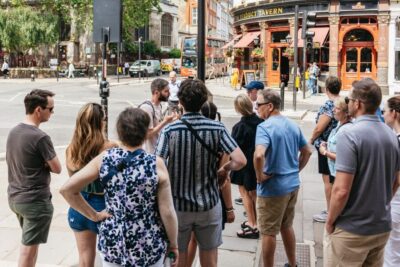
The maximum group size is 15 people. That is small enough to feel personal without requiring the cost of a private tour. It also supports the kind of storytelling this route needs, since the guide may explain sensitive subjects linked to immigration, poverty, unrest, and community identity.
Bring an umbrella if rain is possible. Brixton’s markets and street art may offer some shelter at points, but this is an outdoor walking tour. A wet day could make the experience less comfortable, especially if you want to stop and listen carefully.
There is an important access note to consider. The activity is described as wheelchair accessible, but the information also says it is not suitable for people with mobility impairments. Those statements do not fully agree, so you should confirm the route and current access arrangements before booking if accessibility is essential.
The tour is offered in English only. That is worth noting if you are choosing it for a mixed-language group.
Is $79.47 a fair price?
The listed price is $79.47 per person. For a two-hour neighborhood walk, that is not a bargain-priced stroll. The value depends heavily on how much you want interpretation and local guidance rather than simply seeing Brixton on your own.
You are paying for a professional guide, a small group capped at 15 people, and a route that links several subjects into one story. The price makes more sense if you are interested in Afro-Caribbean history, music, public art, and the social changes behind Brixton’s current character.
It makes less sense if you mainly want time to shop, eat, or photograph murals. You can explore markets and public areas independently, and two hours may feel short if you are comparing the cost with a self-guided walk.
The strongest value comes from the guide. Adrian is praised for being organized and charming, with useful restaurant advice. Wesley is praised for the quality of his information and the strength of his presentation. Since the guide shapes nearly the entire experience, the tour is best for you if stories and local context are worth paying for.
Flexible booking improves the value a little. You can reserve now and pay later, and cancellation is free up to 24 hours before the start for a full refund. That gives you room to adjust a London itinerary if the weather turns poor.
Who should book this Brixton walk?
I would recommend it to you if you want:
- A short introduction to South London beyond the standard central sights
- Afro-Caribbean immigration history presented through a local neighborhood
- Market streets, food culture, murals, and community art in one route
- Music connections involving David Bowie and Brixton Academy
- A small group rather than a large sightseeing crowd
- Restaurant ideas for continuing your Brixton visit
You may want to skip it if you need a long food tasting, a detailed art tour, or a full-day historical study. It is also less suitable if you have mobility concerns that make two hours of outdoor walking difficult, especially because the access information is not fully consistent.
Should you book the Brixton History & Culture Tour?
Book it if you want to understand Brixton as a living community rather than simply pass through its markets. The tour connects food, migration, music, public art, and local struggle in a compact two-hour route, and the small group adds useful personal attention.
I would reserve it early in your Brixton plans, then leave time afterward for food or market browsing. At $79.47, it is best value for you when the guide’s stories matter as much as the sights. If you only want a quick look at Electric Avenue and a few murals, explore independently. If you want the reasons behind what you see, this is the stronger choice.
FAQ
Where does the Brixton History & Culture Tour start?
It starts outside the David Bowie mural opposite Brixton Underground Station.
Where does the tour finish?
The tour ends back at the David Bowie mural, the same place where it begins.
How long does the tour last?
The walking tour lasts two hours.
What language is the tour offered in?
The live tour guide speaks English.
How large is the tour group?
The group is limited to a maximum of 15 people.
What should I bring?
Bring comfortable shoes. If rain is expected, bring an umbrella.
Is the tour wheelchair accessible?
The activity is described as wheelchair accessible, but the information also says it is not suitable for people with mobility impairments. Confirm the current route and access arrangements before booking if this is important for you.
Can I cancel the booking?
Yes. You can cancel up to 24 hours in advance for a full refund. You can also reserve now and pay later.
Just added in London
- The Best of British Cooking Class & Dining Experience★ 5.0 · 1 review
- London: Live Comedy Show at Big Belly Bar and Comedy Club★ 4.5 · 80 reviews
- London: British Museum Highlights Guided Small Group Tour★ 4.9 · 113 reviews
- The Beatles London Walking Tour★ 4.2 · 147 reviews
- The Best Highlights of London Walking Tour & Boat Cruise★ 5.0 · 1 review
- The Authentic Walking Tour with Indian Tasting Meal★ 4.8 · 4 reviews
- Iconic London: Bard, Beatles, Bond & Baker Street★ 4.9 · 15 reviews
- Terrific East-End Private Food tour with a friendly local.★ 5.0 · 1 review
Historical Tours, compared.


Other lists this tour turns up in