REVIEW · LONDON TOURS
Burnings, Butchery & Black Death: London’s Bloody Past
London’s darkest stories hide in plain sight. This two-hour walk around Smithfield connects medieval executions, Black Death burials, animal slaughter, Dickens, and William Wallace with the streets you can still see today. I like the small group limit of 15, which should make it easier to hear and ask questions. I also like the mix of grim facts, old churches, myths, and humor, especially under guides such as Tom, who has been praised for making the subject lively without losing the historical detail. The main drawback is the theme itself: this is not a gentle sightseeing walk, and some stories may be too graphic for younger children.
You cover about two miles between Barbican and Ely Place, with roughly five minutes at each listed stop and extra explanation as you walk. I would choose this tour if you want London beyond royal palaces and famous museums. The route is compact, but the subject reaches across a thousand years, from medieval punishments to the slum world Charles Dickens used in Oliver Twist.
In This Review
- Key points to know before you go
- Starting at Barbican and entering old London
- Charterhouse Square and the Black Death
- Smithfield Market and the business of slaughter
- St John’s Gate and the medieval world
- Cloth Fair and St Bartholomew the Great
- William Wallace and the facts behind Braveheart
- St Bartholomew’s Hospital and the body snatchers
- The Golden Boy of Pye Corner and London’s fires
- From market district to Dickensian slum
- Ely Place and the end of the walk
- The guide’s role makes the difference
- Is $26 good value for two hours?
- Who should book this Smithfield walk?
- Should you book Burnings, Butchery & Black Death?
- FAQ
- Where does the tour begin?
- Where does the tour finish?
- How long does the tour last?
- How far do you walk?
- What language is the tour in?
- How many people can join the tour?
- Is entry to churches included?
- Is the tour suitable for children?
- What does the tour cost?
- Can I cancel the booking?
Key points to know before you go
- Smithfield was a place of both animal and human slaughter: The market area gives the tour its grim central theme, linking butchery, public punishment, and urban life.
- The Black Death story is about disposal as well as disease: You learn how London dealt with tens of thousands of corpses in the 1300s.
- William Wallace appears in a very unheroic setting: The tour explains why the man later called Braveheart was in no condition to shout a grand final slogan during his execution.
- Dickens provides the social history: Smithfield’s transformation into a notorious slum helps explain the darker London of Oliver Twist.
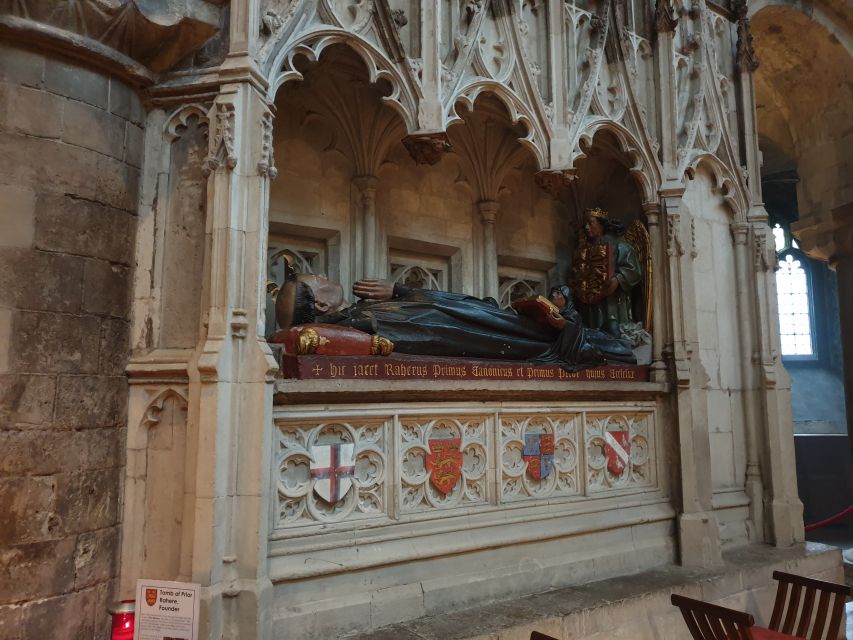
- The route includes important historic buildings: Charterhouse Square, St Bartholomew the Great, St John’s Gate, St Bartholomew’s Hospital, and Ely Place all add physical landmarks to the storytelling.
- The walk is short but not child-focused: It lasts about two hours, covers two miles, and is not suitable for children under 13.
Starting at Barbican and entering old London
Meet your guide just outside the Barbican Station exit on Aldersgate Street. Look for the Historic London Tours sign. This is a useful meeting point because it is easy to reach by Underground, and the walk then moves into the older streets around Smithfield.
The setting changes quickly. Barbican is associated with modern London, while the route ahead leads toward streets shaped by monasteries, hospitals, markets, prisons, fires, executions, and disease. You do not need a full day for this experience. The two-hour length gives you a focused look at one part of the city without taking over your sightseeing schedule.
The group size matters here. With no more than 15 people, you should have a better chance of hearing the guide in narrow streets and asking about details that catch your attention. Several strong comments about the tour singled out the guide’s delivery, humor, and willingness to answer questions. That is especially important on a walking tour built around stories rather than major indoor attractions.
A few more options to weigh up in London
- London: The London Eye Entry Ticket
★ 4.6 · 35,875 reviews - From London: Harry Potter Warner Bros Studio Tour
★ 4.7 · 26,588 reviews - London: Westminster to Greenwich River Thames Cruise
★ 4.5 · 22,836 reviews
Charterhouse Square and the Black Death
Charterhouse Square is one of the early stops, and it introduces the scale of the Black Death in fourteenth-century London. The tour explains how the city disposed of tens of thousands of corpses during the outbreak.
That subject is unpleasant, but it gives you a more realistic view of medieval London than a list of kings and dates. Disease was not an abstract event. It created an immediate problem: where to put the dead when normal burial grounds could not cope. The story also shows how densely populated cities were forced to respond to disasters with limited medical knowledge and limited space.
The listed stop is brief, about five minutes, but the guide uses the surrounding area as a starting point for a larger explanation. I would pay attention to how the story connects public health, religion, burial customs, and the growth of London. This is one of the more serious parts of the walk, and it sets the tone for what follows.
Smithfield Market and the business of slaughter
Smithfield Market is the route’s main stage. For centuries, this area was linked to the slaughter of animals as well as the execution of people. That pairing gives the tour its title and its central idea: Smithfield was a place where London dealt with bodies, food, punishment, and public spectacle.
The walk includes Smithfield Market and later the London Central Markets, also identified as Smithfield Market. You can expect the guide to explain the market’s role and its place in the area’s long development. The route is not simply a visit to a market building. It uses Smithfield to show how a working part of London could carry several identities at once.
The subject is graphic by design. You hear about butchery and human slaughter, not just architecture. If you prefer tours that focus on art, grand buildings, or polished royal history, this may feel too grim. If you enjoy social history and the less comfortable side of city life, Smithfield gives the tour its strongest material.
St John’s Gate and the medieval world
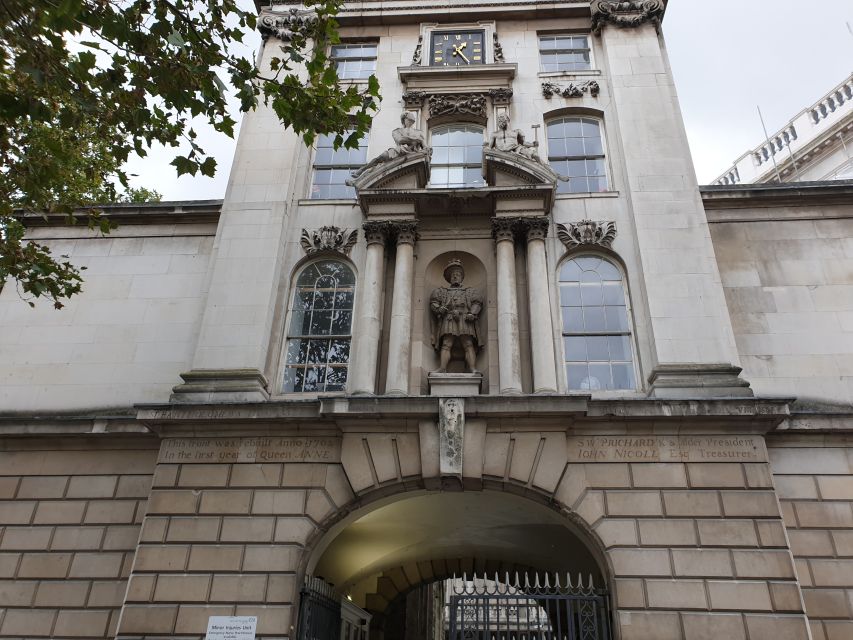
St John’s Gate adds a different layer to the walk. After the opening focus on disease and slaughter, this stop brings in medieval institutions and the people who passed through them.
The tour promises encounters with kings, body snatchers, Charles Dickens, an eighteenth-century ghost, and William Wallace. St John’s Gate helps widen the story beyond one event or one kind of horror. You get a sense of London as a place where religious groups, medical institutions, criminals, the poor, and the powerful occupied the same tight urban space.
The stop is listed at around five minutes, so do not expect a long architectural lecture. Its value comes from the guide’s ability to connect the building to the wider story. Past comments praised Tom for combining facts, myths, and humor, and this kind of stop is where that balance can make a difference.
A different kind of day out entirely:
- Magical London: Harry Potter Guided Walking Tour
★ 4.7 · 22,044 reviews - London: Madame Tussauds London
★ 4.6 · 20,915 reviews - London: Warner Bros. Studio Tour with Transfers
★ 4.7 · 17,586 reviews - London: Tower Bridge Entry Ticket
★ 4.7 · 15,560 reviews
Cloth Fair and St Bartholomew the Great
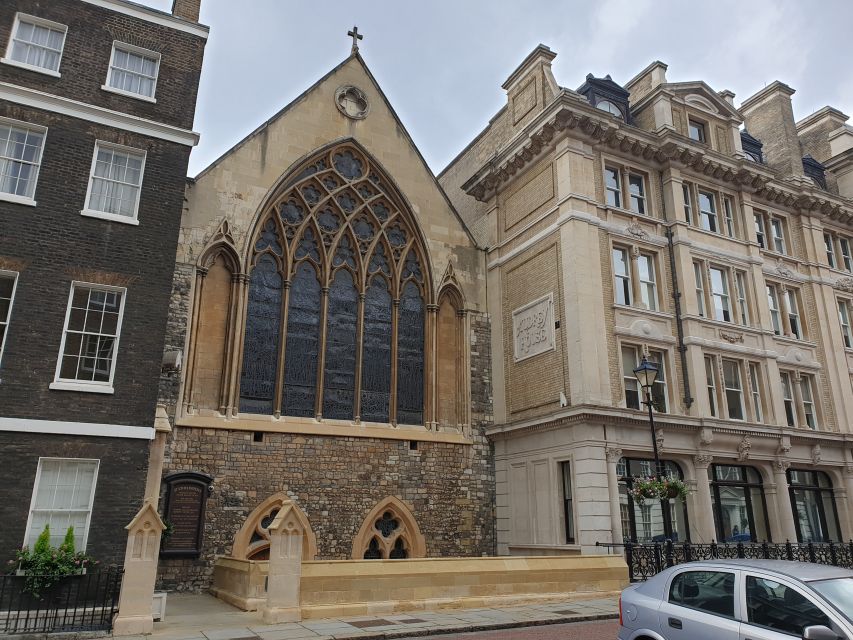
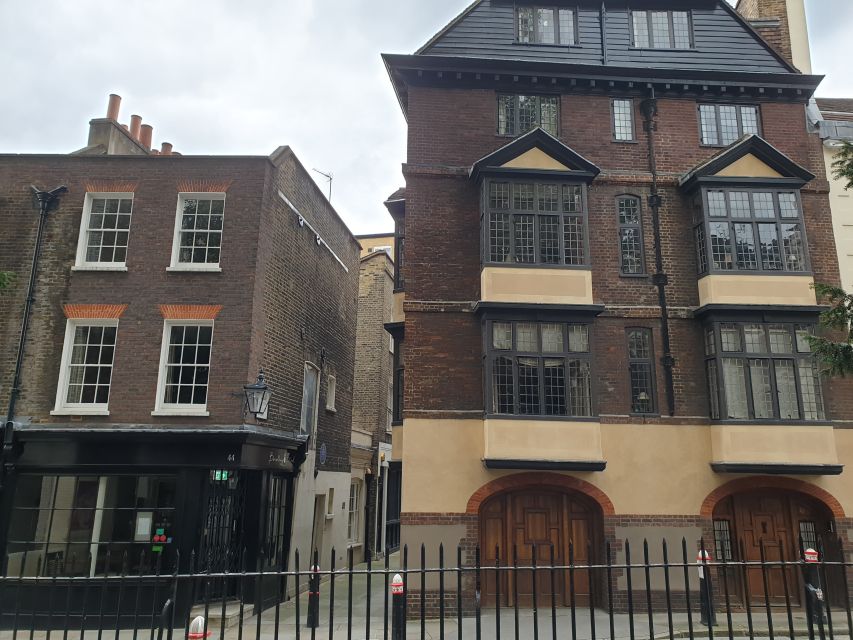
Cloth Fair leads you into one of the most atmospheric sections of the route. The name points to the area’s commercial past, while the nearby church of St Bartholomew the Great provides one of the walk’s major historic settings.
St Bartholomew the Great may be visited if no service is taking place. That condition matters. Church access is not guaranteed, so you should treat the interior as a possible addition rather than the main reason to book. If you do enter, the church gives the stories a stronger sense of place than a street-side explanation alone.
Cloth Fair also helps explain how ordinary working neighborhoods developed around major institutions and markets. This is where the route begins to feel less like a sequence of gruesome tales and more like a study of how people lived in old London. You see how trade, worship, poverty, and death could exist within a few minutes of one another.
William Wallace and the facts behind Braveheart
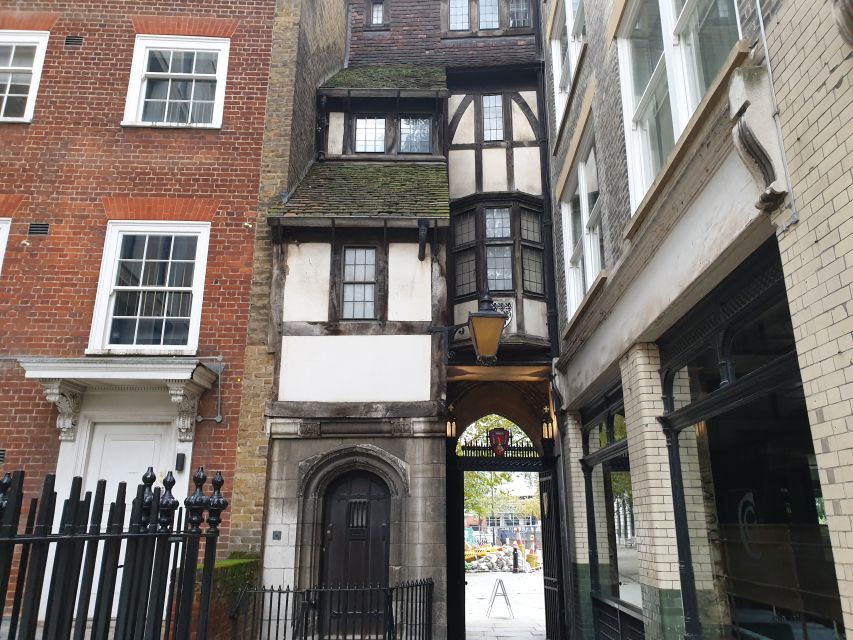
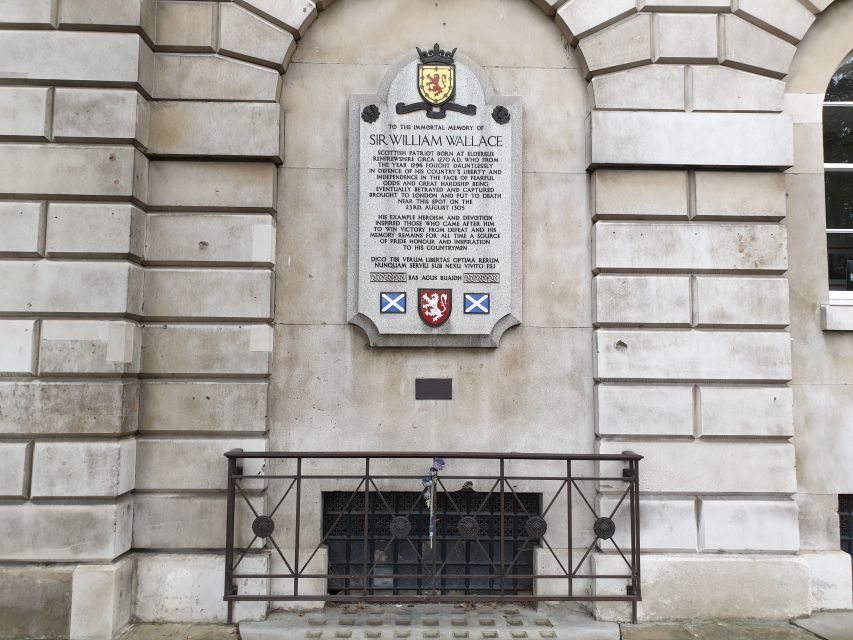
The Sir William Wallace Memorial is one of the tour’s most unusual stops. Wallace is known to many people through the popular image of Braveheart, but the walk focuses on the grim reality of his execution.
The guide explains why Wallace was in no condition to deliver a stirring cry of freedom. That detail is darkly funny, but it also shows how films and popular legends can smooth over the brutal facts of medieval punishment. The attraction here is not a heroic statue or grand battlefield. It is the contrast between a modern cultural image and the historical event behind it.
You should expect a mix of hard fact and humor at this point. That tone will not suit everyone, especially if you want a solemn treatment of execution history. But the humor appears to be used to keep a difficult subject listenable, not to turn the entire walk into a comedy routine.
St Bartholomew’s Hospital and the body snatchers
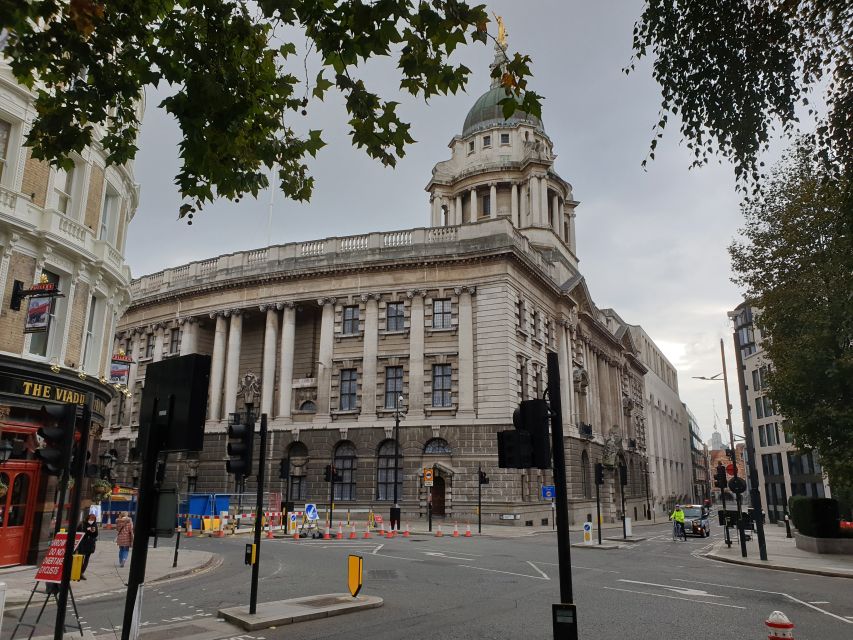
St Bartholomew’s Hospital brings medicine into the story. The route’s mention of body snatchers fits naturally here, since the tour explores the uneasy relationship between medical study, death, and the need for human bodies.
The supplied details do not promise entry into the hospital, so expect the guide to discuss the site from the route rather than assume an indoor visit. Still, the stop helps you see that the area’s bloody past was not limited to punishment or the market. Hospitals also faced the realities of injury, disease, anatomy, and death.
I like this part of the route because it links the sensational stories to a practical question: how did people in earlier centuries understand and treat the human body? The guide’s job is to keep the story grounded in the place, and the positive comments about clear explanations and friendly answers suggest that questions are welcome.
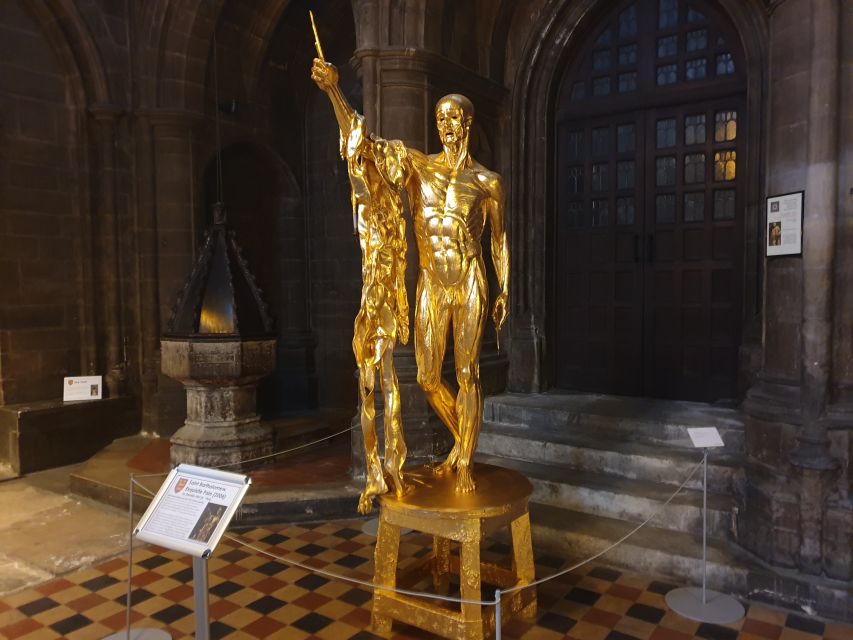
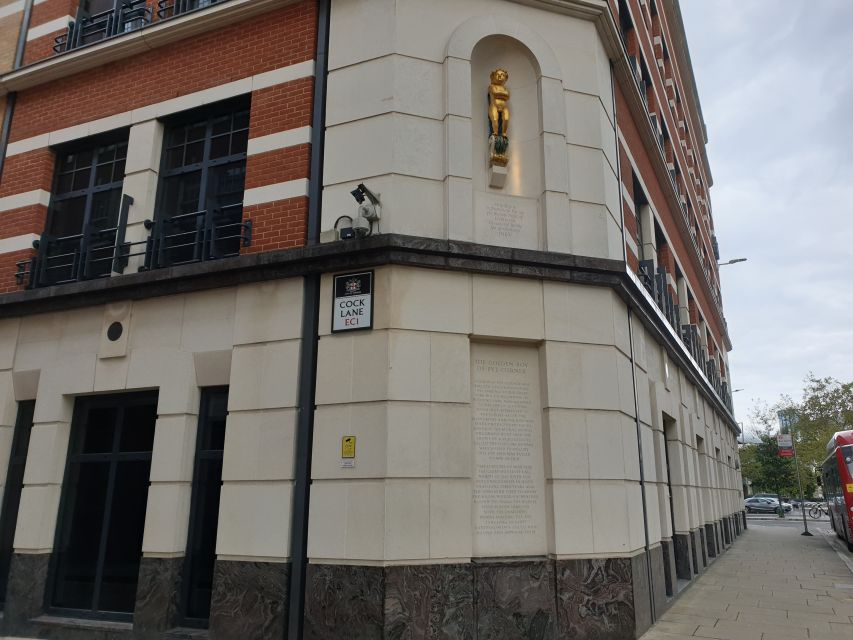
The Golden Boy of Pye Corner and London’s fires
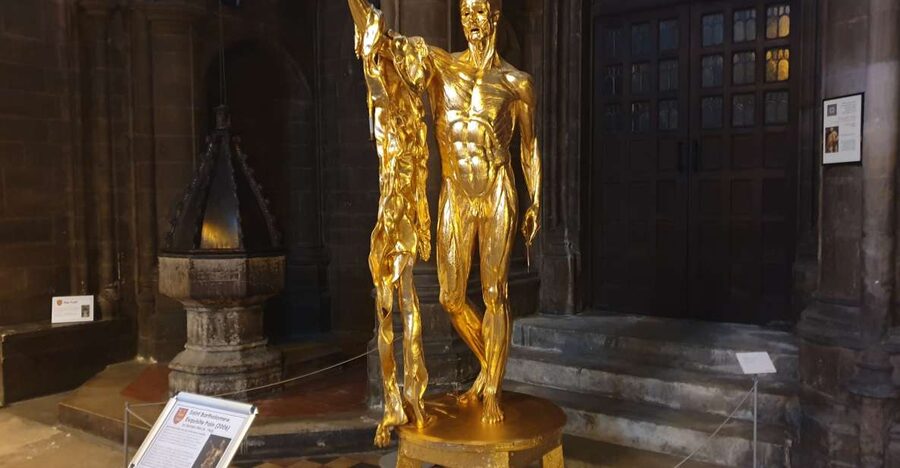
The Golden Boy of Pye Corner is another short stop with a memorable name. The tour uses it as part of the route through Smithfield’s historic streets, adding a story connected to the city’s disasters and changing neighborhoods.
This is a good reminder that the walk is not only about executions and corpses. London’s past also includes fire, rebuilding, public memory, and small markers that preserve a much larger event. A brief stop like this can be easy to miss when exploring alone. With a guide, the marker becomes a prompt to think about why certain moments remain attached to particular corners.
Because most stops last about five minutes, you will not spend long at any one monument. The reward is the cumulative effect: one site explains disease, another punishment, another medicine, another social change.
From market district to Dickensian slum
The tour then returns to London Central Markets and the Smithfield area. Here, the guide explains how the neighborhood became a notorious slum and how Charles Dickens used it as a setting for Oliver Twist.
This is one of the most useful parts for understanding Dickens. The book’s London is not just an invented backdrop of fog and misery. The tour shows how real districts, working conditions, poverty, and overcrowding shaped the city that Dickens described.
You should not expect a literary walking tour devoted only to Dickens. His story is one thread in a much larger route. Still, the connection gives the experience a human scale. After hearing about executions and mass burials, you see how the same urban area continued to affect ordinary people through poverty and poor living conditions.
Ely Place and the end of the walk
The route finishes at Ely Place, near Farringdon Station. This makes the ending convenient for continuing your day by Underground or exploring more of central London.
Ely Place is not just a practical endpoint. It gives the walk a final change of scene after Smithfield’s market and hospital district. By this stage, you have heard about kings, body snatchers, medieval execution methods, Black Death burials, Dickens, a ghost, and Wallace. The finishing location helps close the loop between the old city and the modern transport network around Farringdon.
The tour covers around two miles, so comfortable shoes are sensible. The pace should be manageable for many people, but the route is still an urban walk with regular standing. One particularly useful piece of feedback praised Tom for being attentive and helpful with elderly parents, so the guide may be able to support a slower group. You should still consider your own walking ability before booking.
The guide’s role makes the difference
This experience depends heavily on the person leading it. The most praised features are the guides’ command of the subject, clear English, humor, and friendly response to questions.
Tom received especially warm praise for combining facts, myths, and comedy across the two hours. Other comments described the guide as fluent, kind, entertaining, and willing to explain points in detail. That matters because the route contains many short stops. Without a strong storyteller, the walk could feel like a list of grim facts. With one, the separate sites form a connected story about how London handled death, trade, punishment, poverty, and memory.
The tour is in English and uses a live guide. If you want a self-guided audio experience or a quiet look at buildings, this is not the best match. You are paying for interpretation and conversation as much as for the route itself.
Is $26 good value for two hours?
At $26 per person, the price is reasonable if you value a specialist guide and a small group. You are not paying for a major museum entry or a long coach excursion. You are paying for two hours of explanation across a compact but historically loaded part of London.
The value improves if you are interested in social history, crime, public punishment, medicine, or Dickens. The guide brings together subjects you would probably not connect on your own, and the limited group size should make the experience more personal.
The price is less attractive if you only want famous landmarks or if you dislike graphic history. Church entry is included when services do not prevent a visit, but it is not guaranteed. Treat the churches as a bonus rather than part of the ticket’s essential value.
The activity also allows cancellation up to 24 hours before the start for a full refund, and you can reserve now and pay later. Those terms make it easier to fit the walk into a changing London schedule.
Who should book this Smithfield walk?
I would recommend it to adults and older teenagers who enjoy unusual city stories and do not mind unpleasant details. It suits repeat London visitors especially well, since it explores a district many people pass through without understanding.
It is also a good choice for readers of Dickens, fans of medieval history, and anyone curious about how a city coped with plague, punishment, and poverty. The route gives you real places to attach to those subjects.
I would not choose it for children under 13, families looking for a light introduction to London, or anyone who wants a relaxed architecture tour. The subject includes slaughter, executions, corpses, and slums. The humor helps, but it does not make the material gentle.
Should you book Burnings, Butchery & Black Death?
Book this tour if you want London’s uncomfortable stories told clearly, with a guide who can mix evidence, myth, and humor. The two-mile route is manageable, the group is capped at 15, and the $26 cost is fair for a specialist walking experience.
Skip it if graphic history is not your taste or if you need guaranteed church entry. For the right audience, though, Smithfield becomes far more than a market district. You leave with a sharper sense of how disease, punishment, trade, religion, medicine, poverty, and popular memory shaped London.
FAQ
Where does the tour begin?
It begins just outside the Barbican Station exit on Aldersgate Street. Look for the guide holding a Historic London Tours sign.
Where does the tour finish?
The walk finishes at Ely Place, near Farringdon Station.
How long does the tour last?
The tour lasts about two hours.
How far do you walk?
The total distance is about two miles.
What language is the tour in?
The live guided tour is conducted in English.
How many people can join the tour?
Ticket sales are limited to 15 attendees.
Is entry to churches included?
Entry to churches is included when no service is taking place. A visit is not guaranteed if a service is in progress.
Is the tour suitable for children?
The tour is not suitable for children under 13.
What does the tour cost?
The price is $26 per person.
Can I cancel the booking?
You can cancel up to 24 hours in advance for a full refund. You can also reserve your place and pay later.
Just added in London
- The Best of British Cooking Class & Dining Experience★ 5.0 · 1 review
- London: Live Comedy Show at Big Belly Bar and Comedy Club★ 4.5 · 80 reviews
- London: British Museum Highlights Guided Small Group Tour★ 4.9 · 113 reviews
- The Beatles London Walking Tour★ 4.2 · 147 reviews
- The Best Highlights of London Walking Tour & Boat Cruise★ 5.0 · 1 review
- The Authentic Walking Tour with Indian Tasting Meal★ 4.8 · 4 reviews
- Iconic London: Bard, Beatles, Bond & Baker Street★ 4.9 · 15 reviews
- Terrific East-End Private Food tour with a friendly local.★ 5.0 · 1 review
London Tours, compared.


Westminster to Greenwich River Thames Cruise
Read our review →
Magical London: Harry Potter Guided Walking Tour
Read our review →