REVIEW · GUIDED
Clapham South: Subterranean Shelter Guided Tour
London hides a wartime city below its trains. The Clapham South shelter tour takes you 30 metres underground into a mile-long maze built to protect more than 8,000 people during air raids. I like the original bunks, cramped and practical, and the personal stories that connect wartime London with the first Caribbean arrivals on HMT Empire Windrush. The main drawback is the physical setting: low light, uneven ground, stairs, and narrow underground spaces make this a poor fit for anyone with claustrophobia or limited mobility.
The 75-minute visit is led in English by two guides, including one who takes the role of a 1940s ARP Warden. That role-play helps turn a static shelter into a lived place, while the original graffiti and wartime artefacts add detail you cannot get from a museum label. At $51 per person, it is not a cheap underground walk, but the price makes sense if you value expert interpretation and access to a normally closed site.
In This Review
- Key points to know before you go
- Why this shelter matters beneath Clapham South
- Meeting the tour near Clapham South Tube station
- Descending 11 stories into the shelter
- Following the shelter’s wartime layout
- Seeing the original bunks and cramped sleeping areas
- Entering the recreated warden’s cabin and canteen
- Reading the graffiti left below London
- Hearing the Windrush and Festival of Britain stories
- Is $51 a fair price for 75 minutes?
- Who will enjoy this underground London experience?
- Should you book the Clapham South shelter tour?
- FAQ
- How long is the Clapham South shelter tour?
- How far underground does the tour go?
- Where is the meeting point?
- What language is the tour conducted in?
- Are children allowed on the tour?
- Is the route suitable for people with mobility impairments?
- Is the tour suitable for someone with claustrophobia?
- What should I wear and bring?
Key points to know before you go
- Thirty metres below Clapham South: You descend 11 stories beneath the Tube station into a wartime shelter with more than a mile of tunnels.
- Original sleeping quarters: See the cramped bunk beds where thousands sheltered overnight during air raids, with some beds now used as benches.
- Two kinds of history: The tour covers both wartime shelter life and the post-war years, including Caribbean arrivals from HMT Empire Windrush.
- Recreated 1940s rooms: The warden’s cabin and canteen have been restored to show how the shelter worked during the war.
- A demanding underground route: Expect lots of walking, dim lighting, uneven surfaces, and static escalators. Open-toed shoes are not allowed.
- Strong guide-led storytelling: The ARP Warden role-play and lively delivery have been praised for making the setting feel real.
Why this shelter matters beneath Clapham South
London has eight deep-level air raid shelters built below its streets. Clapham South is one of them, and its scale is hard to grasp until you begin walking through the corridors.
The shelter opened in 1944, late in the Second World War, after being secretly constructed far below ground. It was designed to hold more than 8,000 people, with sleeping areas, a canteen, and medical stations. This was not simply a tunnel where people waited out a raid. It was planned as an underground settlement with the basic services needed to keep a large crowd safe overnight.
That purpose gives the tour its weight. You are not only looking at old infrastructure. You are seeing a place built around fear, routine, and cooperation. Families arrived during air raids, found their assigned sleeping areas, and tried to make a night underground feel normal.
I find the post-war story just as important. The shelter later housed some of the first Caribbean migrants to Britain, including people who arrived on HMT Empire Windrush. You can also hear about people who visited for the Festival of Britain. This wider story prevents the tour from becoming a narrow wartime exhibit. The tunnels continued to matter after the bombs stopped falling.
A few more options to weigh up in London
- London: The London Eye Entry Ticket
★ 4.6 · 35,875 reviews - From London: Harry Potter Warner Bros Studio Tour
★ 4.7 · 26,588 reviews - London: Westminster to Greenwich River Thames Cruise
★ 4.5 · 22,836 reviews
Meeting the tour near Clapham South Tube station
The meeting point is in front of the Marks & Spencer Food Hall on Balham Hill, SW12 9EA. From Clapham South station, turn right after exiting and allow about two minutes to reach the meeting point.
Arrive 15 minutes before your booked time. That extra time matters because the tour begins as a timed entry into a controlled underground site, not as a casual walk where you can join the group whenever you like.
The experience does not include travel to or from Clapham South. You need to arrange that part yourself. The location is in South London, so build the journey into your day rather than treating the tour as something directly beside central London’s main sights.
The shelter has no cloakroom. Leave large bags and luggage elsewhere, and bring only what you need. Food and drinks are not allowed inside. You should also carry a passport or ID card, as identification is listed among the items to bring.
Descending 11 stories into the shelter
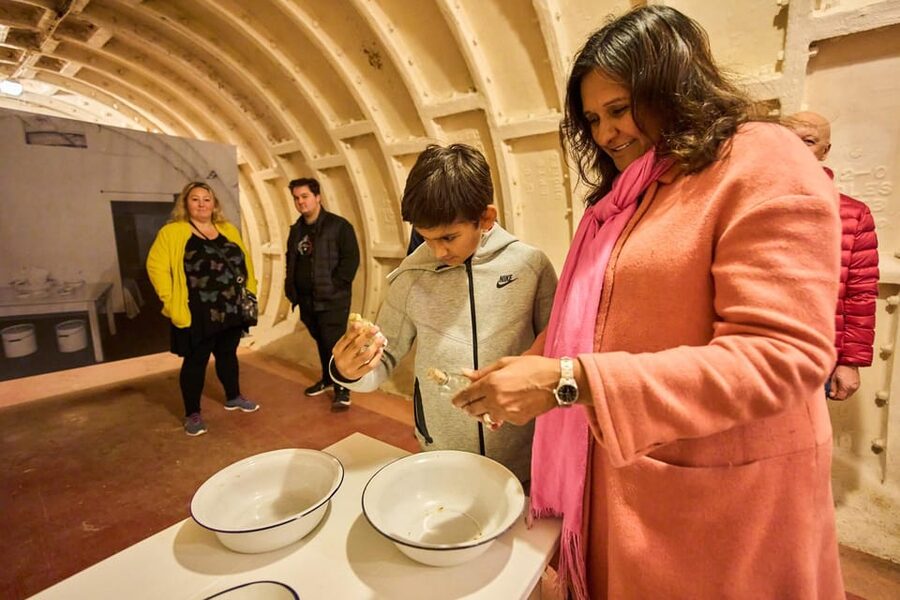
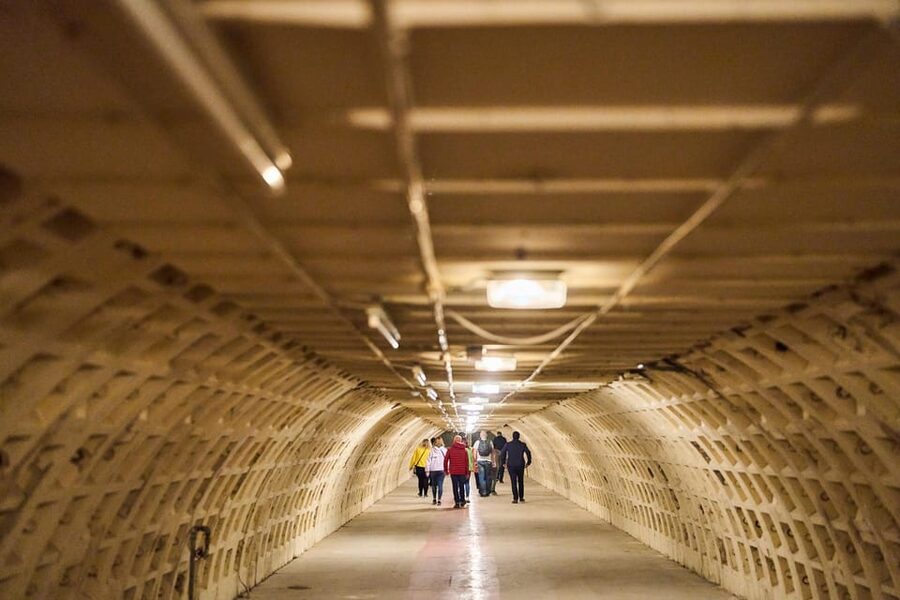
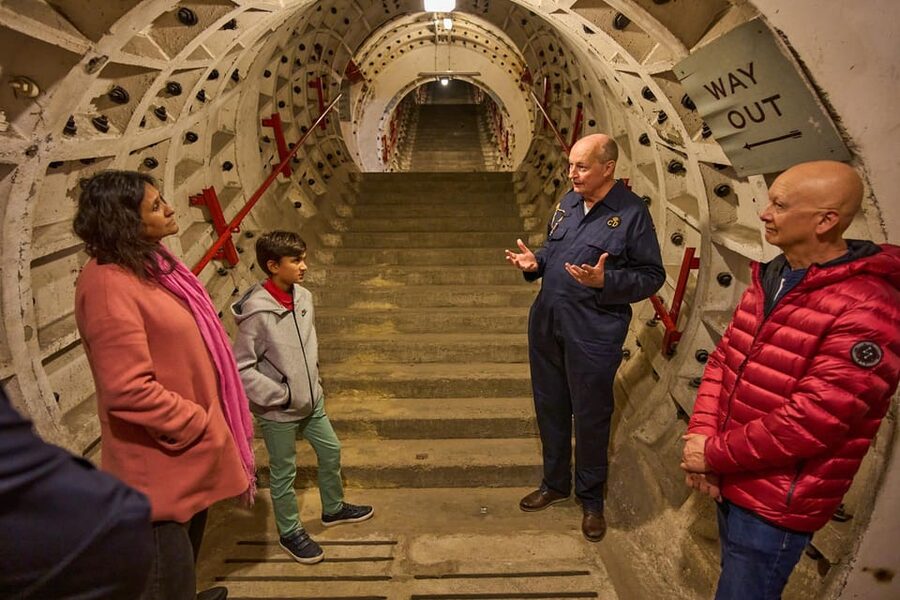
The first major moment is the descent. You go 11 stories underground, roughly 30 metres below street level, beneath the Tube station.
This is where the tour shifts from ordinary London sightseeing to something more physical. You hear Northern line trains passing above your head, a useful reminder that the city continues its daily business overhead while you move through a sealed wartime world below.
The route includes walking up and down static escalators. It is not step free, and the lighting is low. You should expect a lot of walking rather than a short viewing stop. Uneven ground adds to the sense that this is a preserved working site, not a polished gallery.
That setting is part of the value, but it is also the clearest limitation. If enclosed spaces make you uneasy, the long descent and underground corridors may be uncomfortable. The tour is not suitable for people with claustrophobia, mobility impairments, or children under 10.
Wear sturdy, comfortable shoes. Open-toed shoes are not allowed, and weather-appropriate clothing is sensible because conditions underground can feel different from those at street level. The practical rule is simple: dress for a long walk through an old service site, not for a quick museum visit.
Following the shelter’s wartime layout
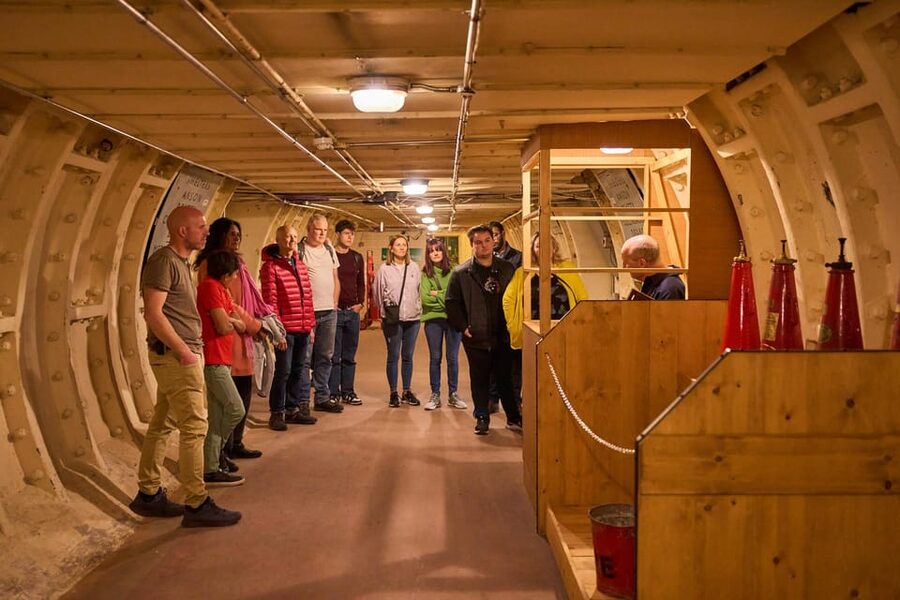
Once underground, the guide explains how the shelter operated. The tunnels stretched for more than a mile and were fitted with the facilities needed for thousands of people.
You hear about the canteen, medical stations, and sleeping quarters. These details matter because they show how carefully the shelter was organised. A site holding over 8,000 people needed more than bunks. It needed food, first aid, crowd control, and a system for getting people through the night.
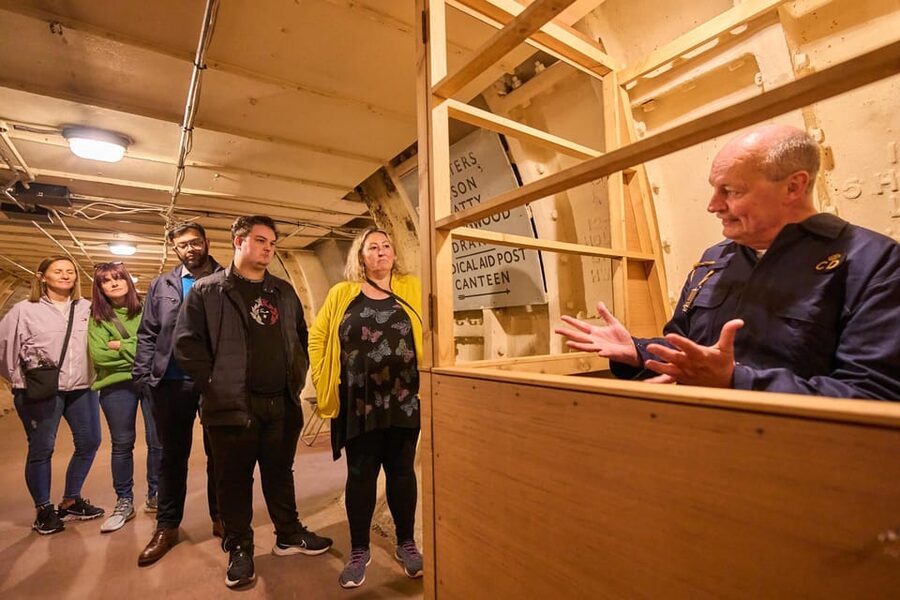
The two-guide format helps here. One guide provides the historical explanation, while the second portrays a 1940s ARP Warden. The warden character places you in the setting of an ordinary South London family spending its first night underground.
The role-play is not presented as a theatrical show separate from the history. It is used to explain the warden’s vital work and the rules of shelter life. That is a useful approach for anyone who finds dates and construction details hard to remember. You begin to picture the practical questions: where people slept, how they were directed, and what happened when an air raid sent them below ground.
The guides have drawn particular praise for their enthusiasm, preparation, and passion. I would value that here because the shelter itself is mostly made up of corridors, concrete, bunks, and dim rooms. Without a strong guide, the site could feel repetitive. The live interpretation gives the spaces a human scale.
A different kind of day out entirely:
- Magical London: Harry Potter Guided Walking Tour
★ 4.7 · 22,044 reviews - London: Madame Tussauds London
★ 4.6 · 20,915 reviews - London: Warner Bros. Studio Tour with Transfers
★ 4.7 · 17,586 reviews - London: Tower Bridge Entry Ticket
★ 4.7 · 15,560 reviews
Seeing the original bunks and cramped sleeping areas
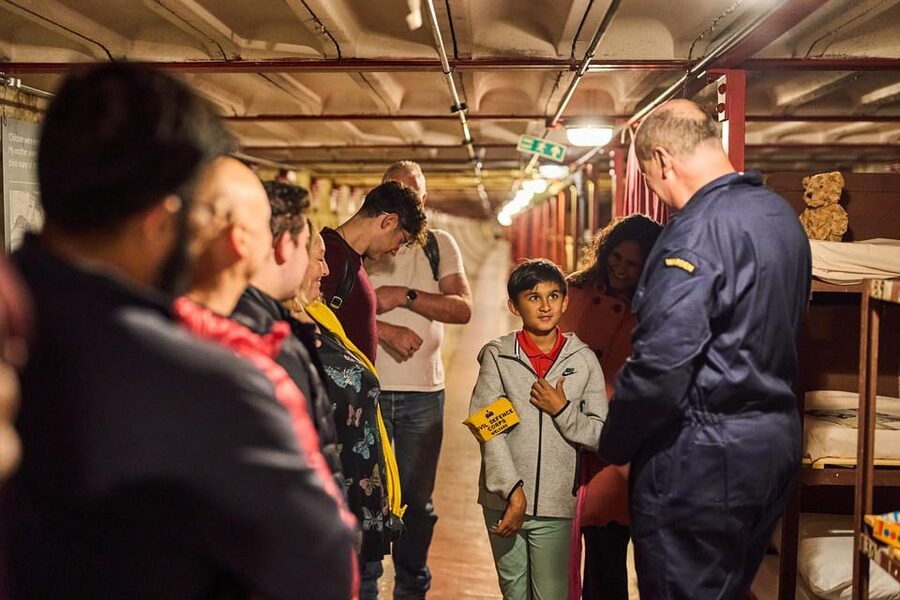
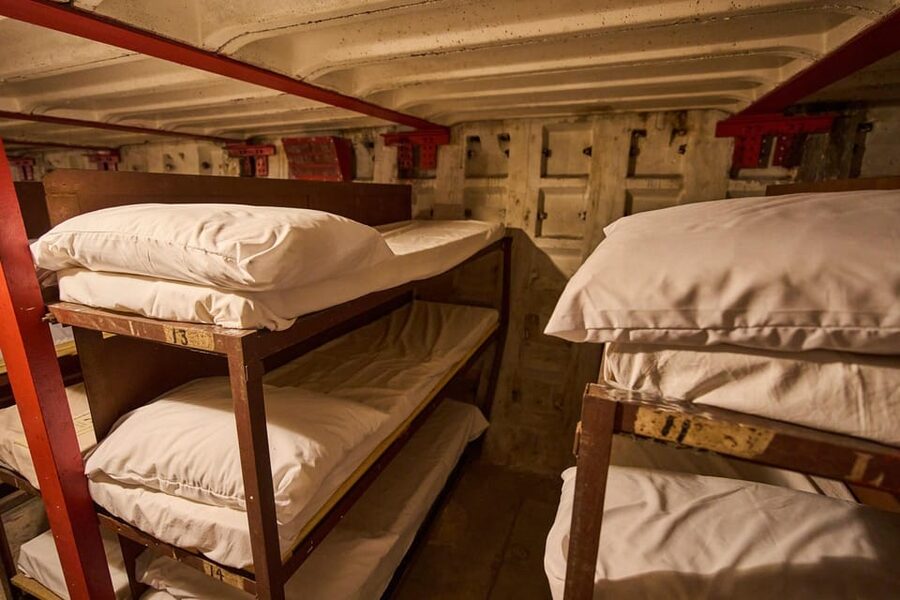
The sleeping quarters are among the most revealing parts of the tour. The original bunk beds show how closely people had to live during an air raid.
These are not roomy beds in private rooms. They were tightly packed sleeping places for people sheltering together overnight. Sitting on the bunk beds, which have been turned into benches in places, helps you understand the lack of comfort without needing an elaborate display.
The cramped layout also changes how you think about safety. The shelter offered protection, but it did not offer privacy or peace. Thousands of people had to share the same underground system, often while trains rumbled overhead and the threat above remained uncertain.
I like this part because it avoids turning wartime history into a list of military events. The focus is on the ordinary act of getting through one night. You see where families rested, where people waited, and how little personal space was available.
The beds also connect the wartime story to the post-war years. Some people who arrived from the Caribbean spent their first nights in London in this shelter. That makes the bunks more than war relics. They are linked to the first days of a major migration story.
Entering the recreated warden’s cabin and canteen
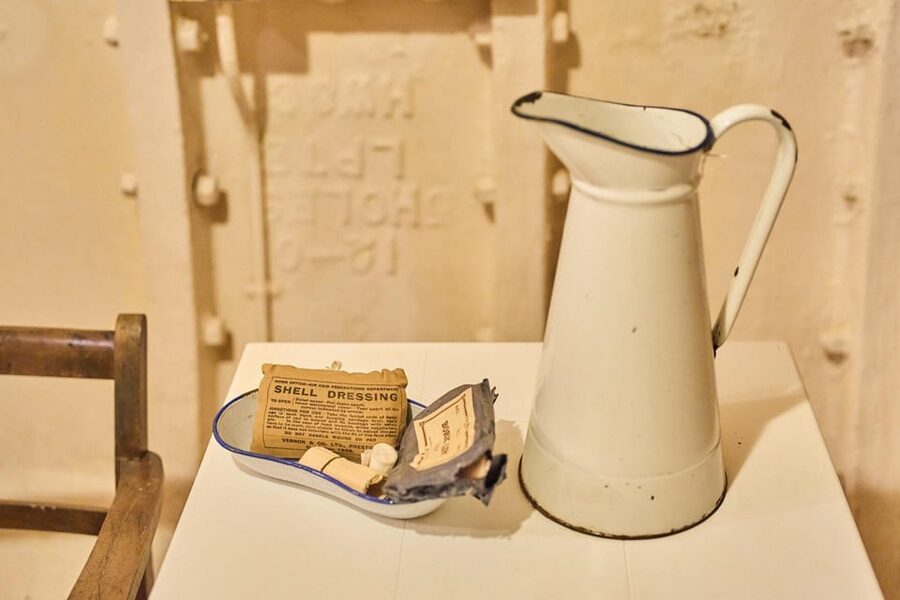
The newly refurbished warden’s cabin and canteen are designed to show the shelter as it looked during the 1940s. Historical specialists recreated these spaces using findings from the London Transport Museum’s archives.
The warden’s cabin gives the ARP Warden role a physical setting. Rather than hearing only about emergency staff, you can see the kind of space connected with their work. The canteen helps explain how a large underground population could be fed and supported.
These rooms are valuable because they give the tour a change of pace. Long tunnel sections can blur together, but a recreated room offers a clear picture of daily operations. I would pay close attention to the small practical details rather than rushing through for a photograph.
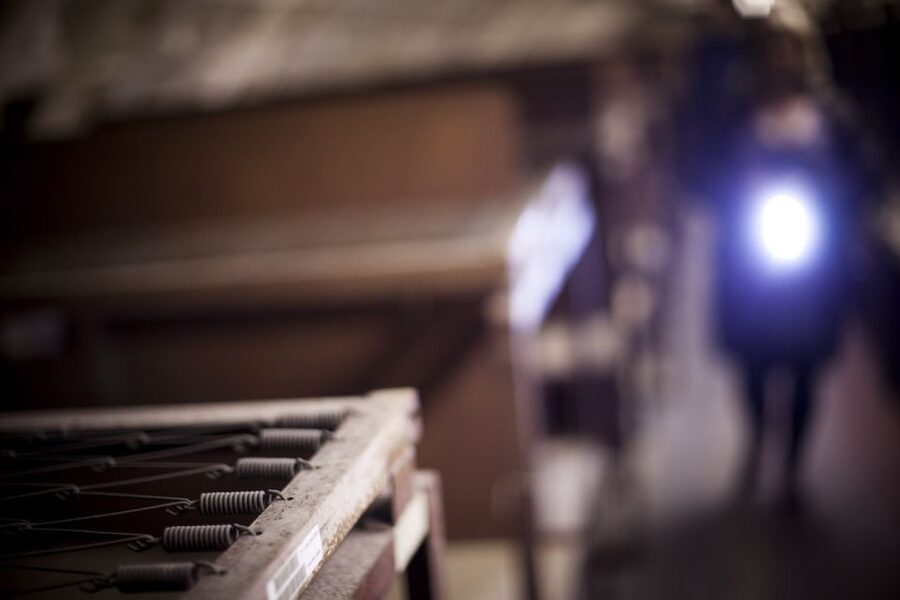
You can also handle genuine Second World War artefacts, including wartime torches. That hands-on element is modest but useful. A torch is an ordinary object, yet underground it becomes a reminder of how people navigated darkness and uncertainty.
You are also shown what an Anderson shelter looked like. This adds a comparison between different forms of wartime protection. The deep-level shelter offered a much larger communal space, while the Anderson shelter represents the kind of protection associated with individual homes and families.
Reading the graffiti left below London
The graffiti is one of the most personal traces in the shelter. People who stayed there left marks behind, and those marks remain part of the site’s story.
Graffiti can tell you that the tunnels were occupied by real people rather than used only as a backdrop for official wartime organisation. Names, messages, or simple acts of marking a wall give the place a human presence.
You should not expect every piece to provide a complete story. The value is in seeing evidence of ordinary occupants alongside the formal rooms and equipment. The shelter was a place where people waited, slept, talked, and passed time. The graffiti hints at those moments.
This is also where a guide earns the tour price. A mark on a wall can be easy to overlook, especially in dim light. An expert guide can point out what has survived and explain why it matters without pretending that every fragment answers a major historical question.
Hearing the Windrush and Festival of Britain stories
The post-war accounts broaden the experience in an important way. The shelter was not abandoned as soon as the war ended. It later became connected with the arrival of Caribbean migrants and with visitors to the Festival of Britain.
The Windrush story is especially powerful in this setting. People arriving on HMT *Empire Windrush faced the practical challenge of beginning life in a new country. Hearing that some of the first Caribbean migrants stayed in this former air raid shelter gives a physical location to a major chapter in modern Britain.
That setting can help you understand the difference between a famous national story and an individual arrival. The shelter was not an abstract symbol. It was a place where people had beds, waited, and began their first days in London.
The Festival of Britain connection adds another layer. The same underground site could be tied first to wartime survival and later to post-war arrivals and public life. The shelter’s history is therefore about changing uses, not one frozen moment.
I would choose this tour over a standard transport-themed visit if you want London history that links infrastructure with human stories. It is still a London Transport Museum experience, but the main subject is not trains. It is the city’s ability to build, adapt, and reuse spaces beneath its streets.
Is $51 a fair price for 75 minutes?
At $51 per person, this is a premium short tour. You are paying for 75 minutes, and the experience does not include transport to Clapham South or any other London attraction.
The price is easier to justify because access to the shelter is guided and limited by the nature of the site. You are not simply entering a public museum gallery. The route goes through a normally closed underground complex, with interpretation, recreated spaces, original fittings, and wartime objects.
I would consider it good value if you have already seen London’s major museums and want a focused experience with a strong sense of place. It is less appealing if you measure value by hours of entertainment or want a broad overview of London history.
The guides are central to the calculation. A flat underground corridor would not be worth $51 by itself. The role-play, personal accounts, archive-based reconstruction, and explanations of shelter life make the difference. The enthusiastic delivery has been a major strength, and it is exactly what turns the physical site into a coherent story.
The booking terms also reduce some risk. You can cancel up to 24 hours before the tour for a full refund, and you can reserve now and pay later. Starting times vary, so check availability for the date you want.
Who will enjoy this underground London experience?
I would recommend the tour to adults and children aged 10 or older who enjoy social history, wartime London, unusual architecture, and places that still show their original purpose.
It suits you especially well if you like:
- Real sites rather than recreated museum displays alone
- Personal accounts tied to major historical events
- London’s transport and engineering story
- Guided visits with role-play and hands-on objects
- A short, tightly focused experience that fits into a South London day
It may not suit you if you need step-free access, dislike enclosed spaces, or find uneven surfaces difficult. The dim lighting and static escalators are not minor details. They shape the whole visit.
Families should note the minimum age of 10. The subject matter and physical route are better suited to older children and adults who can manage a long underground walk.
Should you book the Clapham South shelter tour?
Book it if you want a serious, unusual look at London from below street level. The original bunks, surviving graffiti, wartime equipment, and recreated rooms give you plenty to see, while the Windrush material adds a strong post-war story.
I would be most likely to recommend it to a repeat London visitor or anyone who has already covered the big central sights. The $51 price is high for 75 minutes, but the access, guide-led storytelling, and unusual setting make it worthwhile for the right audience.
Skip it if you want an easy museum stop, step-free access, or a relaxed walk with plenty of room. For everyone else, arrive early, wear sturdy shoes, leave your large bag behind, and prepare for a compact but memorable piece of London history.
FAQ
How long is the Clapham South shelter tour?
The guided tour lasts 75 minutes.
How far underground does the tour go?
The tour descends 11 stories, about 30 metres, below Clapham South station.
Where is the meeting point?
Meet in front of the Marks & Spencer Food Hall on Balham Hill, SW12 9EA. It is about a two-minute walk from Clapham South station after turning right when you exit.
What language is the tour conducted in?
The live tour is conducted in English.
Are children allowed on the tour?
Children under 10 are not allowed to join the tour.
Is the route suitable for people with mobility impairments?
No. The route is not step free and includes a lot of walking, uneven ground, low lighting, and walking up and down static escalators.
Is the tour suitable for someone with claustrophobia?
No. The tour takes place in underground tunnels and is not suitable for people with claustrophobia.
What should I wear and bring?
Wear comfortable, sturdy shoes and weather-appropriate clothing. Open-toed shoes are not allowed. Bring a passport or ID card, and do not bring food, drinks, luggage, or large bags. There is no cloakroom.
Just added in London
- The Best of British Cooking Class & Dining Experience★ 5.0 · 1 review
- London: Live Comedy Show at Big Belly Bar and Comedy Club★ 4.5 · 80 reviews
- London: British Museum Highlights Guided Small Group Tour★ 4.9 · 113 reviews
- The Beatles London Walking Tour★ 4.2 · 147 reviews
- The Best Highlights of London Walking Tour & Boat Cruise★ 5.0 · 1 review
- The Authentic Walking Tour with Indian Tasting Meal★ 4.8 · 4 reviews
- Iconic London: Bard, Beatles, Bond & Baker Street★ 4.9 · 15 reviews
- London: Tate Britain Official Discovery Tour★ 4.7 · 7 reviews
Guided, compared.

Magical London: Harry Potter Guided Walking Tour
Read our review →
Emirates Stadium Entry Ticket and Audio Guide
Read our review →
City & Beatles Tour with Live Guide & Live Music
Read our review →
University and City Walking Tour with Alumni Guide
Read our review →

Christmas Lights Nighttime Bus Tour with Live Guide
Read our review →