
REVIEW · HISTORICAL TOURS
Durham History Tour
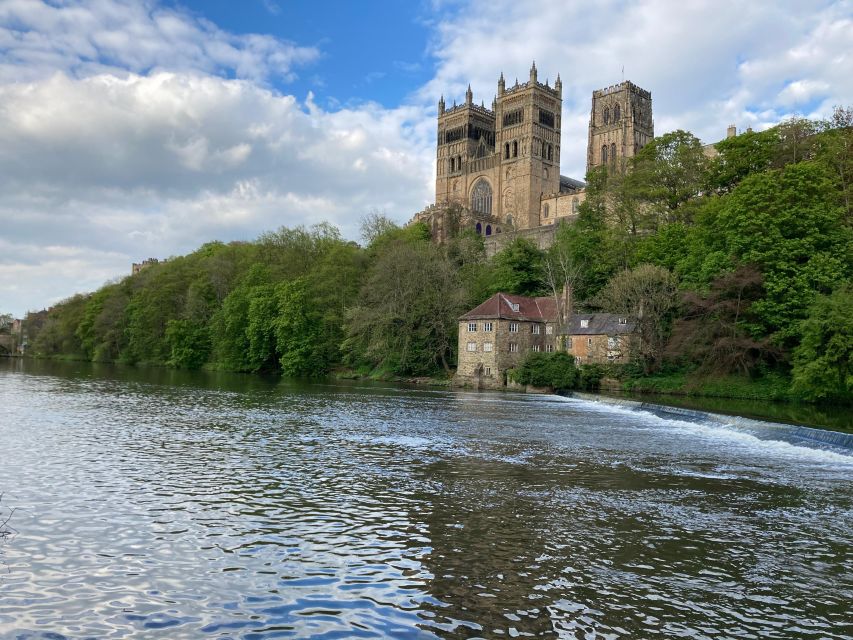
Durham rewards a slower look. This 90-minute walking tour links the city’s medieval bridges, river paths, university streets, and UNESCO-listed cathedral quarter, giving you the stories that a self-guided stroll can easily miss. I especially like the route’s mix of grand sights and quieter corners, plus guide Peter’s warm, lively way of bringing Durham’s past to life. The main limitation is simple: you do not enter Durham Cathedral, Durham Castle, or any other building.
I also like the sensible starting point in the Market Place, the city’s natural meeting spot, and the finish at the cathedral doors. You get a useful introduction before exploring on your own, and the gentle pace leaves time for questions. Bring good shoes and a rain jacket, since this is an outdoor walking tour in a city where weather can change quickly.
In This Review
- Key points about the Durham History Tour
- Starting in the Market Place
- Crossing Durham’s historic bridges
- The Prince Bishops and Durham’s medieval power
- The South and North Bailey streets
- Finishing at Palace Green and Durham Cathedral
- What Peter adds to the experience
- Pace, length, and outdoor conditions
- Is $24 good value?
- Who should book this Durham walk?
- Should you book the Durham History Tour?
- FAQ
- How long is the Durham History Tour?
- How much does the tour cost?
- Where does the tour meet?
- Where does the tour finish?
- Does the tour enter Durham Cathedral or Durham Castle?
- What language is the tour offered in?
- Are dogs allowed?
Key points about the Durham History Tour
- Starts at Durham’s Market Place: Meet at the Man on the Horse statue and look for a black umbrella.
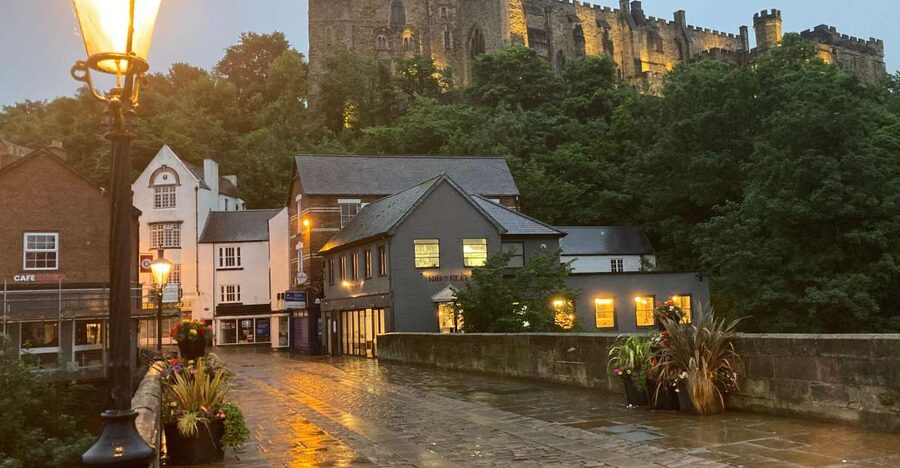
- Covers two historic bridges: The route uses Durham’s river crossings to explain how the city grew around its dramatic setting.
- Explains the Prince Bishops: You’ll hear how Durham’s medieval church leaders shaped both local power and the city’s appearance.
- Walks through the South and North Bailey: These historic streets are now closely linked with Durham University.
- Finishes beside Durham Cathedral: The tour ends at the doors of the cathedral, about four minutes on foot from the Market Place.
- Offers a relaxed local perspective: Peter is praised for clear storytelling, humor, patience, and useful suggestions for places to eat and visit afterward.
Starting in the Market Place
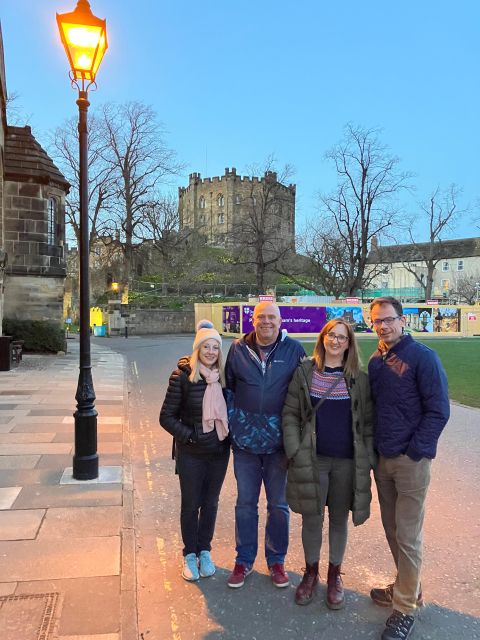
The tour begins at the Man on the Horse statue in Durham’s Market Place. Look for the guide carrying a black umbrella, which makes the meeting point easier to spot in a busy square or on a gray day.
This is a smart place to begin. The Market Place is the city’s central public space, so you start with Durham’s present-day rhythm before moving into its older story. It also gives you a clear sense of direction. From here, the route heads toward the river, the bridges, and the cathedral quarter.
I appreciate tours that begin with a city’s everyday center rather than rushing straight to its most famous monument. Durham’s cathedral and castle may draw the attention, but the Market Place helps you understand that this is still a working city, not just a collection of historic buildings.
Peter’s style seems particularly suited to this opening. His delivery is described as friendly, relaxed, and easy to follow, with room for questions. That matters in a compact tour. You want a guide who can explain dates and names without turning the first half hour into a lecture.
More History Tours in Britain:
- London: Historic Pubs of Central London Walking Tour
★ 4.9 · 1,065 reviews - Portsmouth: Historic Dockyard Ultimate Explorer Ticket
★ 4.8 · 1,052 reviews - York: Witches and History Old Town Walking Tour
★ 4.7 · 928 reviews
Crossing Durham’s historic bridges
Two historic bridges form part of the route, along with quiet paths beside the River Wear. These crossings are more than attractive photo stops. They help explain why Durham developed where it did and how the river shaped movement through the city.
The river bends around the central hill, creating the dramatic setting for Durham Cathedral and Castle. From the bridges and riverside paths, you can appreciate how closely the city’s buildings and water are connected. The views give physical meaning to stories about defense, religious authority, and the city’s medieval growth.
This is one of the tour’s strongest features for anyone who has only seen Durham from a road or train window. You are not simply pointed toward the cathedral and told that it is old. You get different angles and a clearer sense of how the city fits together.
The riverside section also gives the walk a calmer rhythm. Durham’s central streets can feel compact and busy, while the paths beside the water offer a quieter setting for stories about the city’s founding and troubled medieval past. The exact amount of time at each viewpoint can vary, but the route is designed to combine scenery with explanation.
The Prince Bishops and Durham’s medieval power
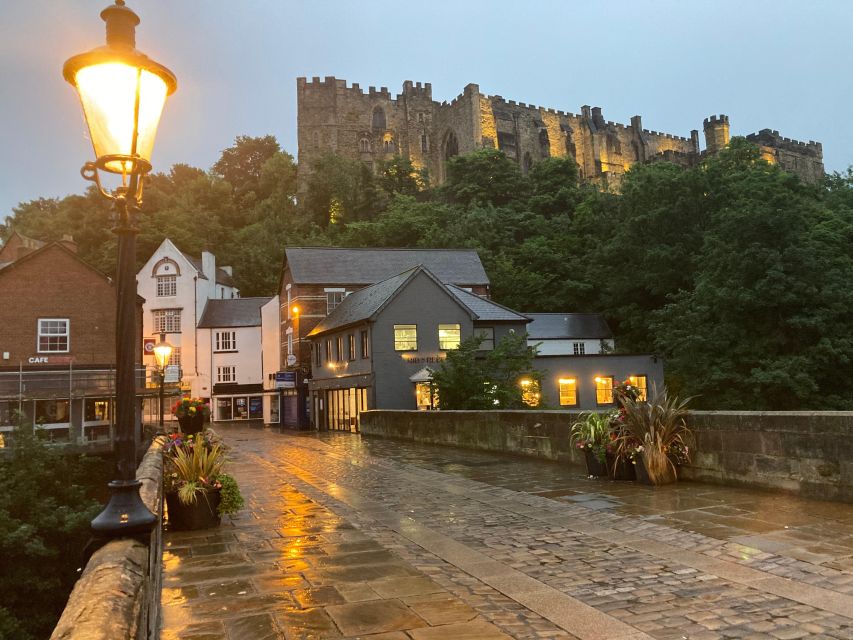
Durham’s story cannot be told without the Prince Bishops. These church leaders held unusual political and administrative power in the region, and their influence helps explain why Durham developed such imposing religious and defensive buildings.
A good guide makes this subject easier to grasp by connecting power to places you can see. The castle, cathedral, narrow historic streets, and elevated central site all become part of the same story. Instead of treating Durham as a list of monuments, the tour shows how authority shaped the city.
This is where Peter’s local interest appears to add real value. His tours are praised for explaining both Durham city and the wider county, with history, geography, legends, and human stories mixed together. I would expect the experience to be strongest for you if you enjoy hearing about the people behind the buildings, not just the construction dates.
The medieval story is also described as tumultuous, so you should expect more than a polished tale of bishops and grand architecture. Durham’s past includes conflict, strong personalities, and moments that changed the city. The guide’s use of legends adds color, but the relaxed format allows you to ask for more context when a story catches your attention.
The South and North Bailey streets
The route continues through the South and North Bailey, two historic streets associated with Durham University. This part of the walk adds a different layer to the city. The cathedral quarter is not only a medieval religious center. It is also part of a living university community.
Walking the Bailey streets helps you see the connection between old buildings and present-day use. You get a closer look at the city’s scale and character than you would from the main roads, while the guide explains how these streets fit into Durham’s wider story.
This section is especially useful if you plan to spend more time in Durham after the tour. It gives you a better mental map for returning to the university area, the cathedral, and nearby streets. Several people have also found Peter’s suggestions for cafes, restaurants, and further places to visit useful, so it is worth asking for recommendations before the walk ends.
The route is described as easy and well paced. That makes it suitable for many people who want a city overview without a hard march. Still, you are walking outdoors for an hour and a half, so sensible footwear is important. Durham has slopes, steps, and uneven historic surfaces in parts of the city, although the supplied information does not provide a formal accessibility rating.
A different kind of day out entirely:
- London: The London Eye Entry Ticket
★ 4.6 · 35,875 reviews - From London: Harry Potter Warner Bros Studio Tour
★ 4.7 · 26,588 reviews - London: Westminster to Greenwich River Thames Cruise
★ 4.5 · 22,836 reviews - Magical London: Harry Potter Guided Walking Tour
★ 4.7 · 22,044 reviews
Finishing at Palace Green and Durham Cathedral
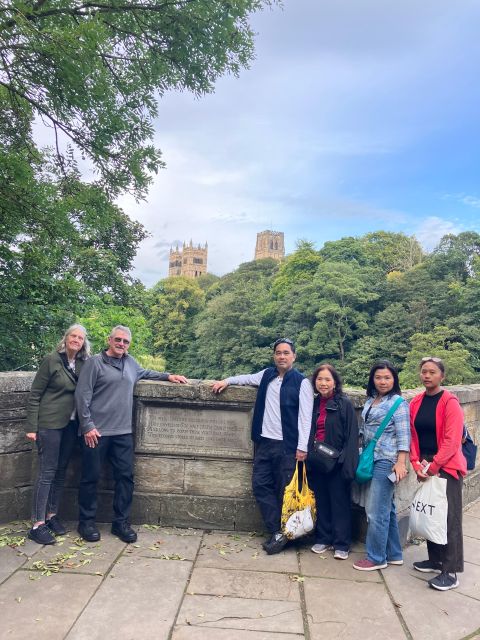
The final stretch reaches Palace Green, the heart of Durham’s UNESCO World Heritage Site. This is the tour’s natural climax. Durham Cathedral and Castle occupy the setting together, creating one of the most memorable views in the city.
The tour finishes at the doors of Durham Cathedral. You do not go inside, so plan to visit the cathedral separately if you want to see its interior. That limitation is worth noting, but it also makes the ending practical: after the guide says goodbye, you are already in the right place for independent sightseeing.
The cathedral is only about a four-minute walk from the original meeting point in the Market Place. That short distance makes the tour easy to fit into a half day. You can meet in the center, walk through the historic core, and finish near the city’s main attraction without arranging transport back to where you began.
I like this structure because the guide’s explanation comes before your independent visit. By the time you reach the cathedral, you have heard why the site matters and how it relates to Durham’s founding and medieval politics. The building may mean more to you after the walk, even though the tour itself stays outside.
What Peter adds to the experience
The guide, Peter, receives the strongest praise for his clear storytelling and personal connection to Durham. His approach is repeatedly described as informative, engaging, funny, patient, and personable. One especially useful quality is his ability to adapt the experience to the people in front of him.
That flexibility can make a major difference on a small city walk. You can ask questions, follow up on a story, or shift the conversation toward places you want to see next. The tour is not presented as a fixed script that ignores the group.
Peter also appears comfortable moving between serious history and lighter local detail. You’ll hear about major events and important figures, but the walk is not limited to formal history. Geography, legends, local characters, and modern Durham all have a place.
Several people have found his restaurant and cafe suggestions helpful. That is a small but useful benefit. A good city guide can save you time after the tour, especially when you want to turn a short visit into a fuller day in Durham.
Pace, length, and outdoor conditions
At 1.5 hours, this is a compact introduction rather than an all-day history program. I think the length is one of its best features. You get enough time to move beyond the obvious sights, but not so much that the walk takes over your entire schedule.
The pace is described as easy, and the route allows time for views, stories, and questions. It works well as an arrival-day activity, a morning orientation, or a break between visits to other attractions.
The tour runs in all kinds of British weather, so conditions may affect your enjoyment. One person found it worthwhile even in drizzle, while another noted that pleasant weather helped make the afternoon especially enjoyable. That is a fair warning, not a criticism. The experience is outdoors from start to finish, with no indoor shelter built into the activity.
Dogs are welcome, which makes this a useful option if you are exploring Durham with a dog. You should still keep in mind that the route includes public streets and riverside walkways, and the guide’s instructions should take priority.
Is $24 good value?
At $24 per person, the tour offers solid value if you want context rather than only photographs. You are paying for a guided walk through the city center, two historic bridges, riverside paths, the Bailey streets, and Palace Green, with a local guide explaining the connections between them.
The value is strongest for a first visit. Without a guide, you can certainly walk from the Market Place to the cathedral, but you may miss the stories behind the bridges, the Prince Bishops, and the people who shaped Durham. The tour helps you make sense of what you are seeing in real time.
It is less useful if you only want to enter the cathedral or castle. Neither building is included, and the tour does not replace an admission visit. Think of it as a city orientation and outdoor history lesson, then budget separate time for indoor attractions.
The flexible booking terms also reduce the risk of fitting it into a changeable schedule. You can cancel up to 24 hours ahead for a full refund, and you can reserve now and pay later. Check the available start times before booking, since the duration is fixed but the departure time can vary.
Who should book this Durham walk?
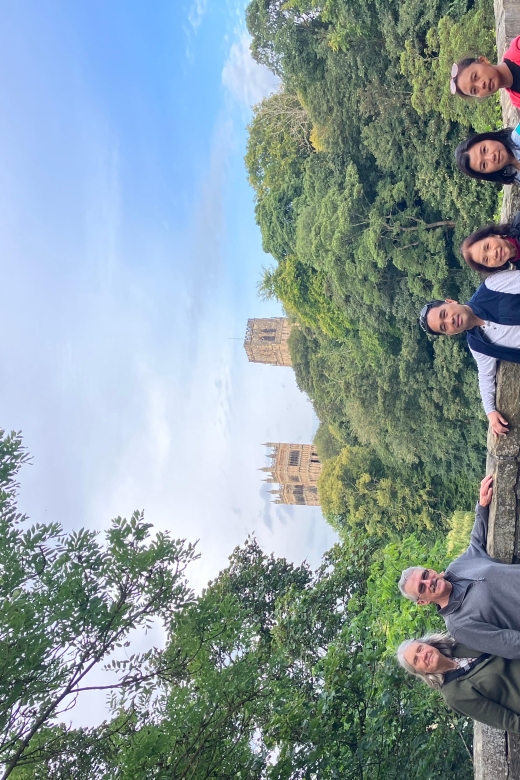
I would recommend it most strongly to first-time visitors, history fans, and anyone who wants a useful overview before exploring independently. It is also a good choice if you enjoy hearing local stories rather than reading a plaque and moving on.
Families may appreciate the short length, relaxed pace, and informal guide style. Dogs are welcome, too. The walk can also suit repeat visitors who want to see parts of Durham they might otherwise overlook, especially the riverside paths and Bailey streets.
You may want something else if you need a fully indoor activity, a specialist architectural tour, or direct entry to Durham Cathedral and Castle. The tour is conducted in English, and no other language option is provided.
For the best experience, arrive ready for outdoor conditions. Wear comfortable shoes, bring rain protection, and keep a little time after the tour for the cathedral and nearby sights. I would also ask Peter for food suggestions, since his local recommendations have been a useful bonus for people planning the rest of their day.
Should you book the Durham History Tour?
Book it if you want Durham to make sense before you explore its major sights. The route is short, the price is reasonable, and Peter’s mix of local pride, humor, history, and geography gives the walk a human touch.
Skip it only if you are focused solely on going inside the cathedral or castle. For most first visits, though, this is a smart way to connect the Market Place, river, bridges, university streets, and UNESCO site in one manageable walk.
FAQ
How long is the Durham History Tour?
The tour lasts 1.5 hours.
How much does the tour cost?
The listed price is $24 per person.
Where does the tour meet?
Meet at the Man on the Horse statue in Durham’s Market Place. Look for a black umbrella.
Where does the tour finish?
The tour finishes at the doors of Durham Cathedral on Palace Green. The cathedral is about a four-minute walk from the starting point in the Market Place.
Does the tour enter Durham Cathedral or Durham Castle?
No. The tour is an outdoor walking tour and does not enter any buildings or attractions.
What language is the tour offered in?
The live guided tour is offered in English.
Are dogs allowed?
Yes. Dogs are welcome on the tour.
Just added in Britain
- Chester: The Dead Good Ghost Walking Tour★ 4.3 · 9 reviews
- The Best of British Cooking Class & Dining Experience★ 5.0 · 1 review
- London: Live Comedy Show at Big Belly Bar and Comedy Club★ 4.5 · 80 reviews
- London: British Museum Highlights Guided Small Group Tour★ 4.9 · 113 reviews
- The Beatles London Walking Tour★ 4.2 · 147 reviews
- The Best Highlights of London Walking Tour & Boat Cruise★ 5.0 · 1 review
- From Edinburgh: Best of Scotland Small-Group Day Tour★ 4.7 · 61 reviews
- The Authentic Walking Tour with Indian Tasting Meal★ 4.8 · 4 reviews
Historical Tours, compared.



Other lists this tour turns up in