
REVIEW · TOURS
Glastonbury Day Tour – ‘The Quest’ – Magdalene, King Arthur
Legends feel close in Glastonbury. This full-day walk links Avalon’s Christian traditions, King Arthur, Mary Magdalene, Joseph of Arimathea, the Chalice Well, and Glastonbury Tor in one thoughtful route. I like the way the guide connects places that can otherwise feel scattered, and I like that you get time at each stop rather than racing through town. The main drawback is that food and entrance fees are extra, so the $101 price is not the final cost.
The tour’s strongest feature is its guide. Tor and Michael earned especially warm praise for clear explanations, good company, and a relaxed approach, while Edward was singled out for fitting the mood of Glastonbury so well. I would, however, confirm the meeting point before you go: it is by St John the Baptist’s Church on High Street, and that detail has caused confusion.
In This Review
- Key points before you book
- Why Glastonbury makes such a good quest
- Starting at St John the Baptist’s Church
- Joseph of Arimathea and the Holy Thorn
- The Wattle Church inside Glastonbury Abbey
- King Arthur, Guinevere, and the old stories
- Lunch and the pause between two halves
- The Chalice Well and the search for the Grail
- White Spring and its unusual water temple
- Climbing Glastonbury Tor for the final view
- What the $101 price really covers
- Who should book this Glastonbury day?
- Should you book The Quest?
- FAQ
- Where does the Glastonbury Day Tour begin?
- How long does the tour last?
- What language is the tour conducted in?
- Is food included?
- Are entrance fees included?
- What should I bring?
- Is the tour wheelchair accessible?
- Can I cancel the booking?
Key points before you book
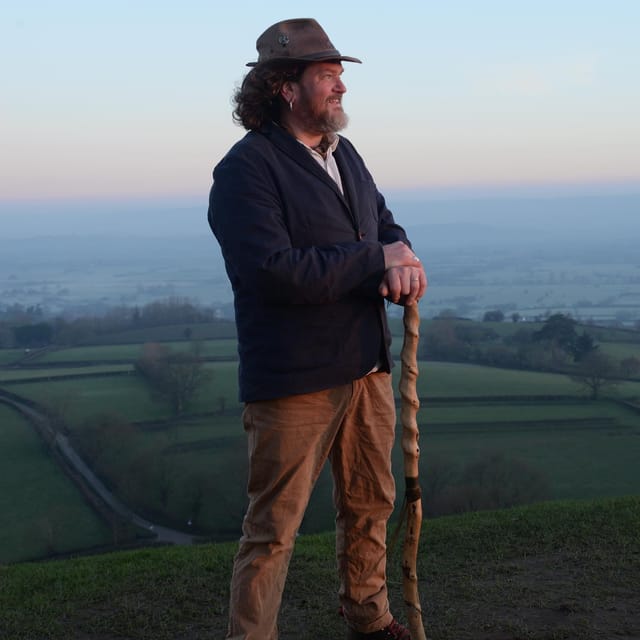
- A full day on foot: The route lasts about one day and includes town walking, gardens, a water temple, and the climb to Glastonbury Tor.
- Christian and Arthurian traditions together: You hear the local stories of Joseph of Arimathea and Mary Magdalene alongside the legends of King Arthur and Guinevere.
- Two very different springs: Chalice Well is a peaceful garden with red-tinged waters, while nearby White Spring is a candle-lit water temple with a more unconventional atmosphere.
- The guide makes the difference: Tor, Michael, and Edward are praised for their warmth, clarity, and ability to bring Glastonbury’s stories together.
- Plan for extra costs: Food and admission fees are not included in the $101 tour price.
- Bring proper gear: Hiking shoes and rain protection matter, especially for the climb up the Tor and England’s changeable weather.
Why Glastonbury makes such a good quest
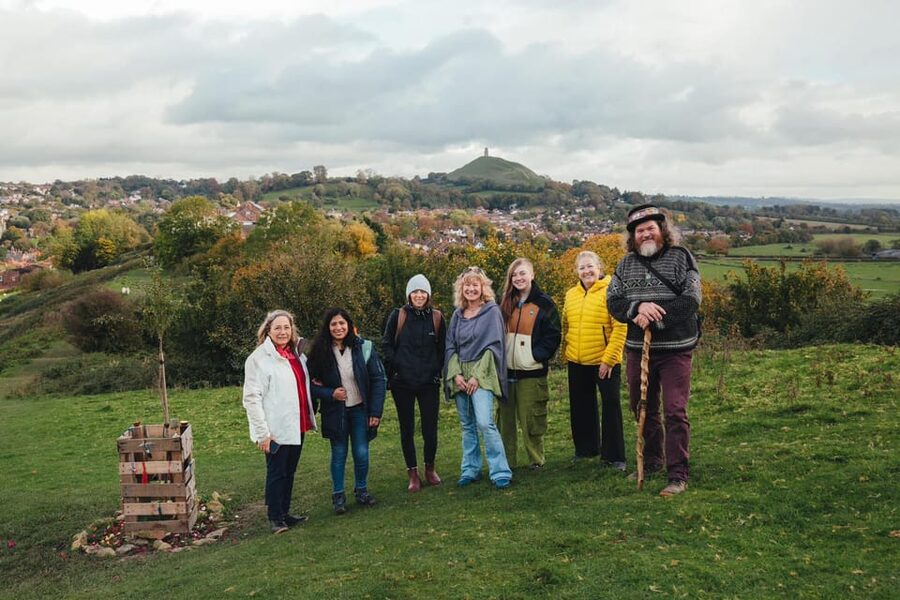
Glastonbury is not a place where every story fits neatly into a museum label. It is a town of ruined abbey walls, old churches, springs, steep paths, Christian devotion, Pagan symbolism, and Arthurian legend. You can accept these traditions as faith, folklore, local culture, or imaginative storytelling. The tour works best when you enjoy holding several ideas at once.
The central theme is Avalon, the legendary island linked with Glastonbury. The guide presents Avalon as both a spiritual center and a place shaped by many traditions. The route gives you a way to understand how Christian stories, Druidic associations, Arthurian tales, and modern pilgrimage have gathered around the same small town.
I appreciate that this is not just a list of famous sights. The guide explains the proposed links between them. That connection is the real value of the day. Without it, you might visit the abbey, springs, and Tor as separate stops. With a good guide, they become parts of one long story.
Still, you should know what sort of tour this is. It presents religious and legendary traditions with real feeling. If you want only firmly documented history, some sections may feel speculative. If you enjoy myth, spiritual symbolism, and the way old stories shape a place today, the tone should suit you well.
Other trips worth a look in Britain:
- London: The London Eye Entry Ticket
★ 4.6 · 35,875 reviews - From London: Harry Potter Warner Bros Studio Tour
★ 4.7 · 26,588 reviews - London: Westminster to Greenwich River Thames Cruise
★ 4.5 · 22,836 reviews
Starting at St John the Baptist’s Church
The day begins at St John the Baptist’s Church, on Glastonbury High Street. This is an important practical detail. The meeting point is not simply the middle of High Street, and a past booking problem was made worse by unclear directions. I would arrive early and make sure you know to look near the church.
The church forms a fitting starting point because the tour uses it to introduce Glastonbury’s less visible stories. Its windows are said to help portray some of the old narratives that shape the town. Your guide sets the scene before leading you toward the abbey and the older traditions associated with Avalon.
This first hour is guided rather than rushed. You get context before reaching the major sites, which helps you understand why the town has attracted pilgrims, seekers, historians, and curious sightseers for so long.
Guides vary, but the names that received the strongest praise include Tor, Michael, and Edward. Tor was described as informative and interesting, while Michael was praised for being friendly and good company. Edward was noted for his close fit with Glastonbury’s unusual atmosphere. That matters here. A dry guide could make this subject feel flat, while a guide who understands the town’s tone can make the stories easier to appreciate.
Joseph of Arimathea and the Holy Thorn
One of the early highlights is the Holy Thorn Tree. The tour explains the tradition that Joseph of Arimathea planted it after receiving a staff from Jesus. In this telling, the staff became a sign of the birth of an early Christian tradition in Avalon.
You do not need to accept the story as established fact to find the site meaningful. It shows how Glastonbury’s Christian identity has been built through objects, places, and repeated acts of remembrance. The story also allows the guide to discuss how early Christian traditions are said to have worked alongside Pagan and Druid practices already associated with the ancient Isle of Avalon.
This is where the tour’s blend of faith and myth becomes clear. You are not simply looking at a tree. You are hearing why the tree matters, who it is linked with, and how it fits the larger story of Glastonbury.
The setting also gives you a quieter pause before the abbey. Take time to listen closely here, since the guide’s interpretation is more important than the physical size of the stop.
The Wattle Church inside Glastonbury Abbey

The route then leads through the hidden chapel of St Margret toward Glastonbury Abbey. The abbey is one of the most important stops of the day, not only for its ruins but for the tradition connected with the Wattle Church.
The tour presents the Wattle Church as England’s first building for Christian worship, said to have been built by Mary Magdalene and Joseph of Arimathea in 62 AD. This is a traditional account, not a claim you should treat as settled archaeology. The value is in understanding how Glastonbury has connected itself with the earliest days of Christianity in Britain.
The abbey grounds give these stories a physical setting. Ruined stone walls and open areas make the town’s long religious association easy to picture. Your guide spends about an hour here, explaining the connections and then giving you room to look around.
Admission is not included, so check the current entry cost when you plan your budget. This is one of the tour’s clearest extra expenses, but it is also one of the places where the guided explanation adds real value. If you visited alone, you could see the ruins. With Tor or another strong guide, you get a clearer sense of why the Wattle Church tradition and Joseph of Arimathea are so important to Glastonbury.
A different kind of day out entirely:
- Magical London: Harry Potter Guided Walking Tour
★ 4.7 · 22,044 reviews - London: Madame Tussauds London
★ 4.6 · 20,915 reviews - London: Warner Bros. Studio Tour with Transfers
★ 4.7 · 17,586 reviews - Edinburgh: Loch Ness, Glencoe & the Scottish Highlands Tour
★ 4.6 · 17,446 reviews
King Arthur, Guinevere, and the old stories
A short distance away, the tour visits the traditional resting place of King Arthur and Guinevere. The guide explains why the site is located there and how Arthur’s story has been linked with the family of Christ in Glastonbury’s traditions.
This section is especially useful if you know Arthur only through books and films. The tour places him in Glastonbury’s local setting, where the legend is tied to the abbey and to the broader idea of Avalon. You begin to see why the town attracts people who are interested in the overlap between medieval storytelling, Christian tradition, and the search for sacred places.
Again, the important thing is not proving every part of the tale. It is learning how the story became attached to this place and why it still shapes the way people see Glastonbury.
St John’s Church returns as part of that same web of stories, with its windows helping illustrate the old narratives. I like this part of the route because it keeps the focus on visual clues and local tradition rather than asking you to sit through a long lecture.
Lunch and the pause between two halves
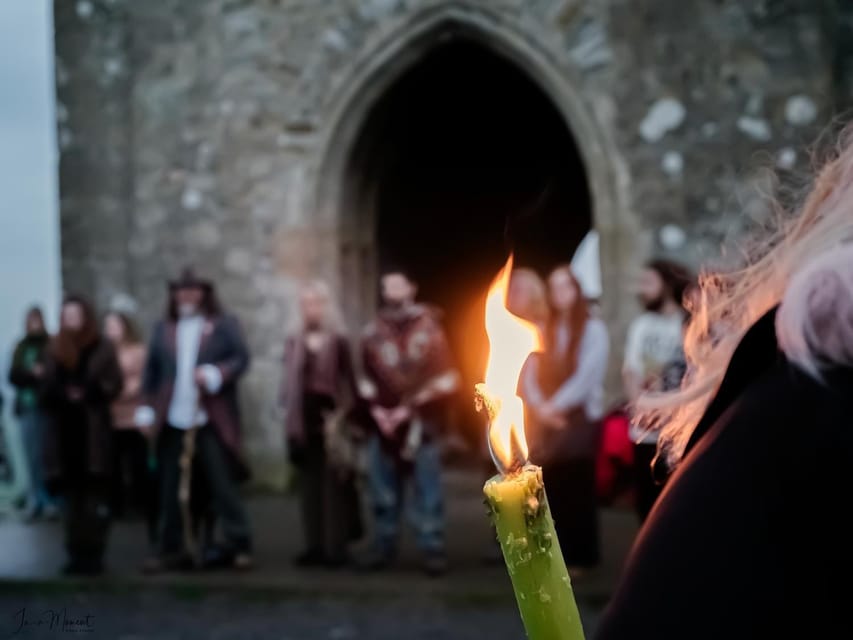
Lunch is not included, and the schedule leaves you to arrange it yourself. That gives you flexibility, but you need to budget both money and time. A full day of walking is easier if you eat properly before the spring visits and the climb to the Tor.
The day changes mood after lunch. The morning centers on churches, abbey traditions, and the early Christian story. The afternoon turns toward the Holy Grail, healing waters, masculine and feminine symbolism, and the physical ascent of the Tor.
That shift is part of the appeal. You get more than one version of Glastonbury in a single day. You also need to be comfortable with spiritual language, since the guide discusses energy and sacred connections as part of the town’s identity.
The Chalice Well and the search for the Grail
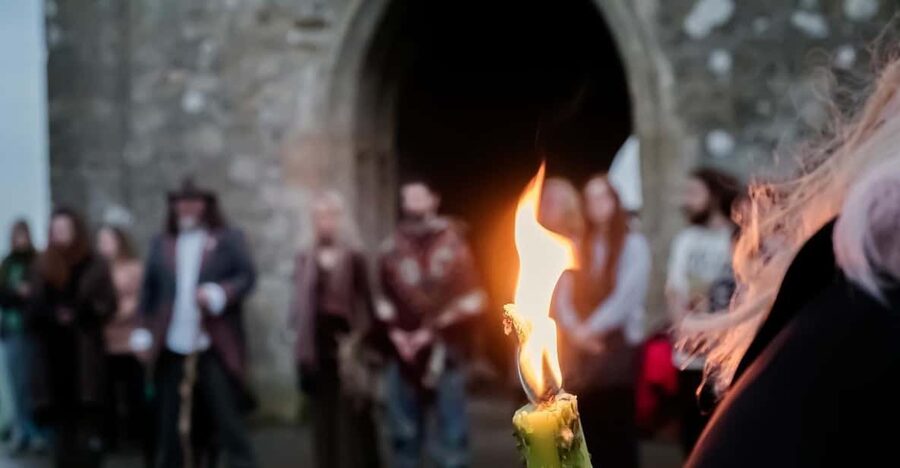
The afternoon quest begins at Chalice Well. The tradition presented here says that the Holy Grail is buried beneath the well. The garden is described as calm, and you are invited to drink the waters, which are regarded by some as healing.
The visit is not just about tasting the water. The guide explains the symbolism attached to the spring and why it has become such an important spiritual place. The red waters are associated with female energy, which sets up the contrast with the White Spring nearby.
You should approach the healing claims as spiritual belief rather than medical advice. Drinking the water is part of the ritual and atmosphere of the visit, not a substitute for treatment or a guarantee of health.
This stop may be the quietest part of the day. You can pause, listen, and notice how different the garden feels from the busy layers of legend around the abbey. If you prefer strictly historical tours, the Grail tradition may be too symbolic. If you enjoy sacred places and local ritual, it gives the afternoon a clear purpose.
White Spring and its unusual water temple
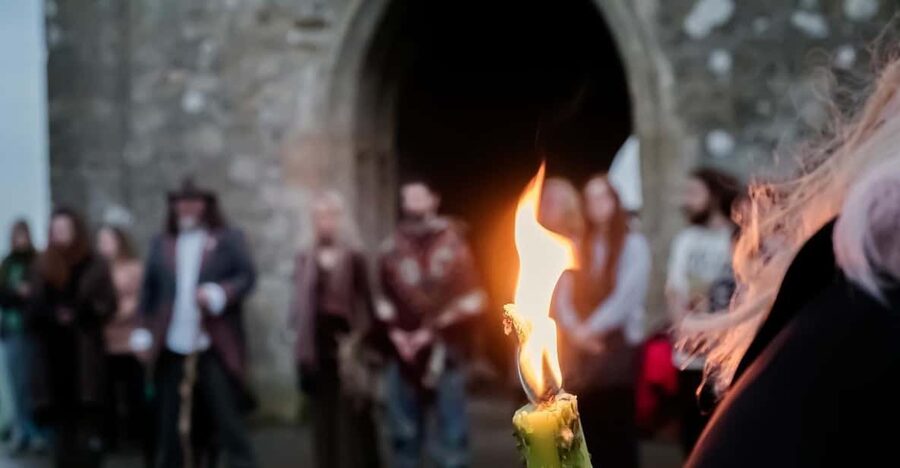
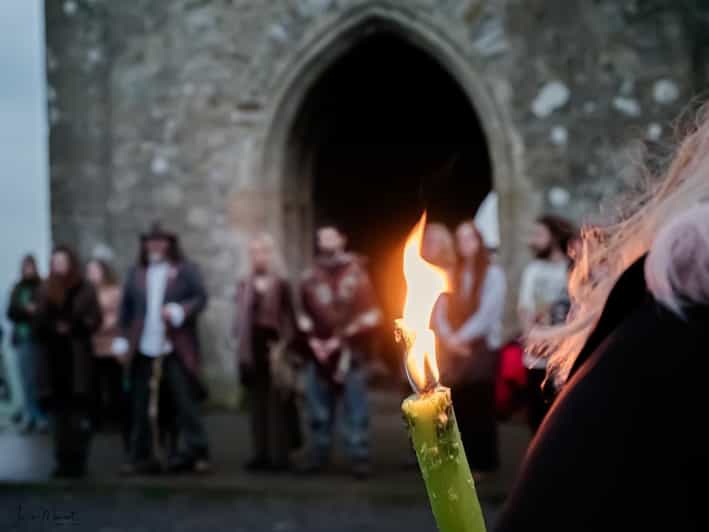
The White Spring is close to Chalice Well, but the mood changes. The tour visits a beautiful candle-lit water temple and presents its waters as the male counterpart to the female energies of Chalice Well.
This is a distinctive part of the day, and it will not suit everyone. The information specifically warns that you may encounter a naked bather. If that would make you uncomfortable, tell the tour provider in advance and ask about the current arrangements.
That warning is useful because the White Spring is not a standard sightseeing stop. It is a functioning spiritual bathing place, and the atmosphere can be more intimate and unconventional than the rest of the tour. You should come prepared for that rather than expecting another formal historic site.
The visit lasts about 30 minutes, so it does not dominate the day. Its value lies in the contrast with Chalice Well and in showing you a living practice connected with Glastonbury’s sacred identity.
Climbing Glastonbury Tor for the final view
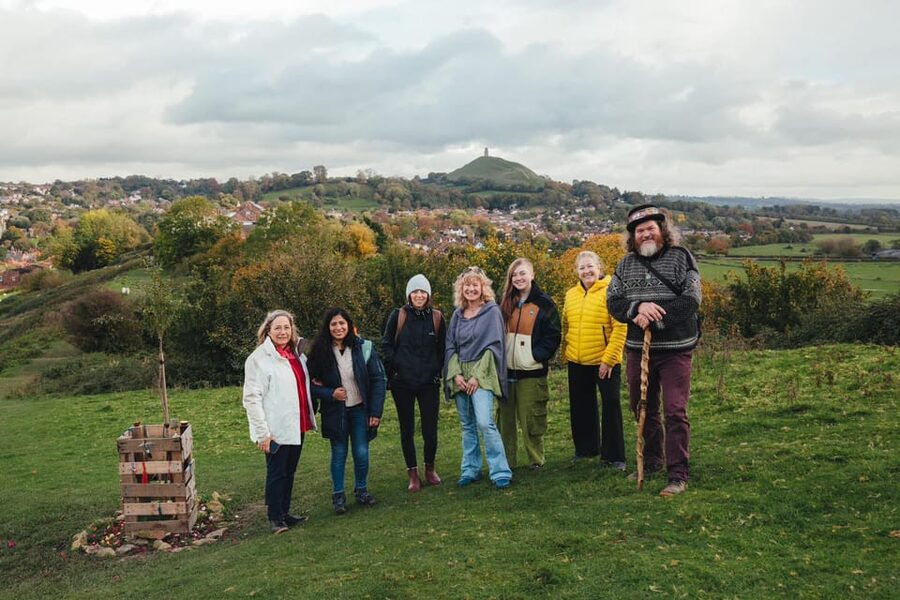
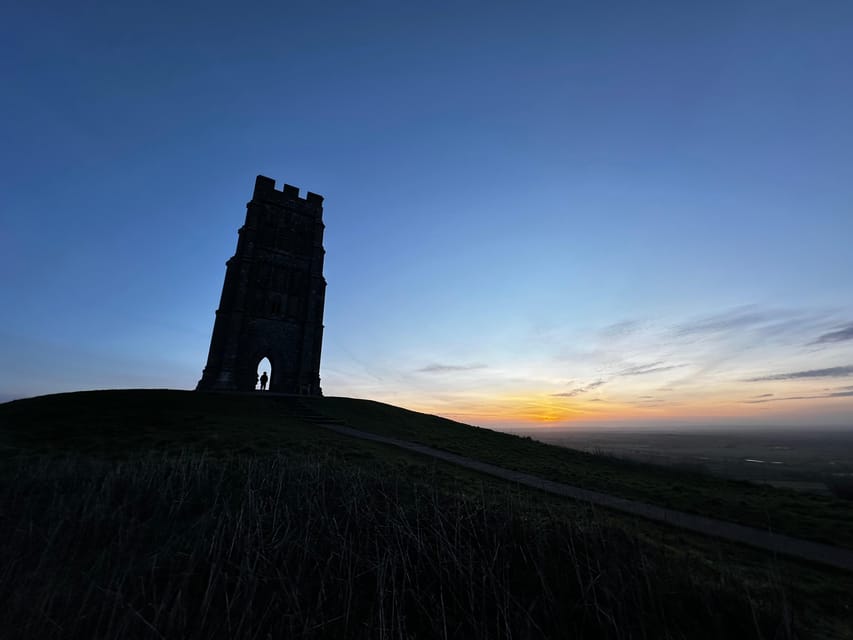
The day ends with a climb to the top of Glastonbury Tor. This is the most physical part of the route and the payoff is the view across the surrounding sacred countryside, reaching toward Wales on a clear day.
The Tor is also where the tour explores the idea of sleeping dragons and the energy associated with the hill. The guide explains why the hill has such a strong place in Avalon’s stories and how its shape and position have encouraged legends over time.
Bring hiking shoes. Rain gear is also essential, since wet weather can make the climb less comfortable. Although the activity is listed as wheelchair accessible, you should discuss your exact mobility needs before booking because the route includes a climb and several walking stops.
I like ending here. After a day spent hearing about Avalon beneath church roofs, among abbey ruins, and beside springs, you reach a high open point where the whole setting comes together. The view gives you a chance to think about the stories rather than simply collect another stop.
What the $101 price really covers
At $101 per person, this is not a cheap walking tour, especially because meals and entrance fees are separate. You should add those costs before comparing it with a self-guided day.
The strongest argument for the price is the guide’s interpretation. The route visits places you can technically reach yourself, and one booking felt that the day could have been done alone. That criticism is fair. Glastonbury is walkable enough that independent visitors can see many of the same points.
The guided connection is what you are paying for. A good guide explains why the Holy Thorn matters, how the abbey traditions connect to Joseph of Arimathea and Mary Magdalene, why Arthur belongs in the story, and how the two springs fit the spiritual theme. You also get the benefit of a planned route and a full day of structure.
The value rises if you are new to Glastonbury, interested in Avalon, or want a guide who can discuss both Christian and Pagan associations without treating the town as an ordinary historic stop. The value falls if you prefer to wander alone, read site signs, and choose your own pace.
The tour is offered with free cancellation up to 24 hours before the start and a reserve-now, pay-later option. That is useful if your England plans are still shifting, but it does not remove the need to check entry costs and meeting details.
Who should book this Glastonbury day?
I would choose this tour if you want one focused day rather than a quick visit to a single attraction. It suits you if you enjoy:
- Arthurian legends and Avalon
- Early Christian traditions connected with Britain
- Spiritual sites and symbolic rituals
- Guided walking with plenty of interpretation
- A small-group feel and direct time with the guide
- A physically active day ending with a hilltop view
It may not suit you if you want a conventional history tour with firm documentary evidence for every story. It may also be a poor fit if you dislike spiritual language, naked bathing in a public water temple, or walking in uncertain weather.
The best guides appear to leave room for questions and personal reflection. Michael was praised for being friendly and fun, and one person enjoyed visiting his personal museum collection during the day. That detail suggests some tours may include a more personal look at the guide’s interests, though you should not assume every departure will follow the same pattern.
Should you book The Quest?
Book it if you want Glastonbury explained as a place where Christian tradition, Arthurian legend, springs, hills, and modern spirituality all meet. The day is full, the route covers the major highlights, and the best part is the guide’s ability to connect them.
Skip it if your main goal is low-cost sightseeing or a completely self-directed visit. You can reach several of the sites yourself, and the extra admission charges make the real budget higher than $101.
For most first-time visitors who are open to myth and spiritual tradition, I think the tour is worth considering. Confirm the church meeting point, ask about the day’s guide, bring waterproof clothing and solid shoes, and reserve enough money for food and entry fees. With those details sorted, The Quest offers a memorable way to understand why Glastonbury still feels like Avalon to so many people.
FAQ
Where does the Glastonbury Day Tour begin?
The tour begins at St John the Baptist’s Church on Glastonbury High Street and returns there at the end of the day.
How long does the tour last?
It lasts one day. The listed visits include about one hour at St John the Baptist’s Church, one hour at Glastonbury Abbey, one hour in Glastonbury, one hour at Chalice Well, 30 minutes at White Spring, and one hour at Glastonbury Tor.
What language is the tour conducted in?
The live tour guide speaks English, and English is the listed tour language.
Is food included?
No. Food is not included, so you need to plan and pay for lunch yourself.
Are entrance fees included?
No. Entrance fees are not included in the tour price.
What should I bring?
Bring hiking shoes and rain gear. The route includes walking and a climb to Glastonbury Tor.
Is the tour wheelchair accessible?
The activity is listed as wheelchair accessible. Because the day includes walking and a climb to Glastonbury Tor, you should confirm that the route suits your particular mobility needs.
Can I cancel the booking?
You can cancel up to 24 hours in advance for a full refund. A reserve-now, pay-later option is also available.
Just added in Britain
- Chester: The Dead Good Ghost Walking Tour★ 4.3 · 9 reviews
- The Best of British Cooking Class & Dining Experience★ 5.0 · 1 review
- London: Live Comedy Show at Big Belly Bar and Comedy Club★ 4.5 · 80 reviews
- London: British Museum Highlights Guided Small Group Tour★ 4.9 · 113 reviews
- The Beatles London Walking Tour★ 4.2 · 147 reviews
- The Best Highlights of London Walking Tour & Boat Cruise★ 5.0 · 1 review
- From Edinburgh: Best of Scotland Small-Group Day Tour★ 4.7 · 61 reviews
- The Authentic Walking Tour with Indian Tasting Meal★ 4.8 · 4 reviews
Tours, compared.

Magical London: Harry Potter Guided Walking Tour
Read our review →

Loch Ness, Glencoe & the Scottish Highlands Tour
Read our review →
Liverpool Football Club Museum and Stadium Tour
Read our review →
Warner Bros. Studio Harry Potter Tour with Transfers
Read our review →
Giants Causeway, Dark Hedges, Dunluce & Belfast Tour
Read our review →