
REVIEW · WALKING TOURS
London: Brutalist Architecture & History Walking Tour
Concrete can tell a story. This 2.5-hour walk gives you a fresh way to read central London, using striking Brutalist buildings to explain post-war politics, social change, engineering, and architectural debate. Guide Evan is the star of the experience, bringing clear explanations, good humor, and a real passion for the built environment.
I especially like the small group of six. It keeps the walk personal and gives Evan room to adjust his explanations to your interests, whether you already know Modernist architecture or are starting from scratch. I also like the tour’s wider view: you are not simply shown concrete buildings, but are asked why they were built, who supported them, and why people later fought to preserve or remove them.
The main drawback is that this is an exterior architecture tour, not an interiors visit. You also use the Tube once and walk for much of the 2.5 hours, so it is not suitable for people with mobility impairments. Some of the discussion may feel broad if you want a technical study of construction details.
In This Review
- Key points to know before booking
- Starting at Russell Square with London’s post-war story
- Institute of Education and the force of monumental design
- The National Theatre and London’s most recognizable concrete icon
- Concrete, construction, and the arguments behind Brutalism
- Politics, economics, and the events that shaped modern London
- A small group makes the walk feel more like a conversation
- Is $47 fair for 2.5 hours?
- Who will enjoy this London architecture walk?
- Should you book it?
- FAQ
- Where does the Brutalist architecture tour meet?
- How long does the walking tour last?
- How much does the tour cost?
- Is public transportation included?
- What language is the tour conducted in?
- How large is the group?
- Which buildings are included?
- Can I visit the interiors of the buildings?
- Is the tour suitable for children?
- What happens if the weather is poor?
Key points to know before booking
- Russell Square is the starting point: Meet outside Russell Square Underground Station on the Piccadilly Line.
- The National Theatre is a major photo stop: Its bold concrete form gives the tour one of its clearest examples of Brutalist design.
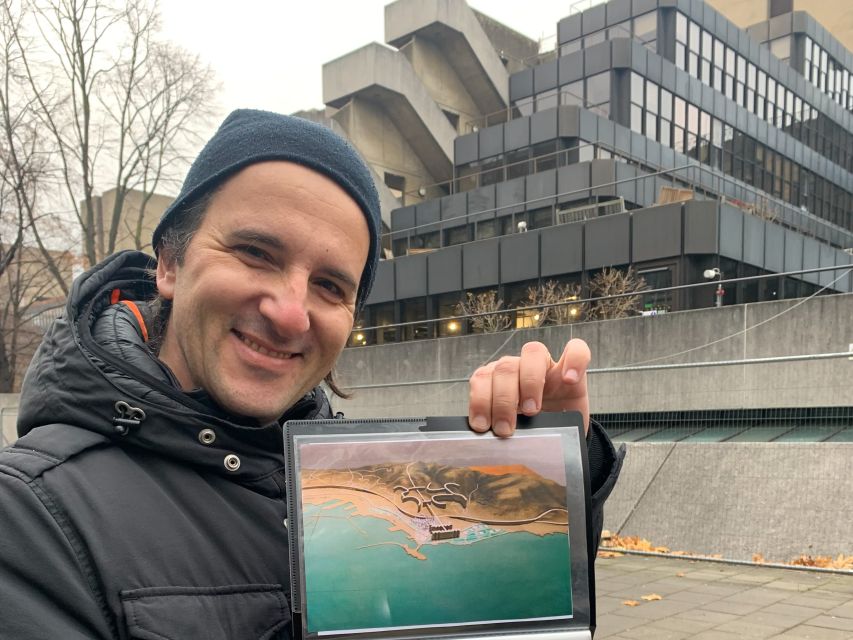
- Evan receives the strongest praise: His friendly, flexible approach suits both newcomers and people with a serious interest in architecture.
- The tour connects buildings to politics: You learn how post-war events, public policy, economics, and social aims shaped London’s architecture.
- One short Tube ride is included in the route: Bring enough Zone 1 credit for one journey, since public transport is not included.
- The experience costs $47: For a six-person group and 2.5 hours with a specialist guide, that is fair value if you care about cities, design, or modern history.
Starting at Russell Square with London’s post-war story
The tour begins outside Russell Square Underground Station. That location is practical for reaching the meeting point, and the Piccadilly Line makes it easy to connect from other parts of central London. Before setting out, make sure your Oyster card, contactless payment method, or public transport ticket has enough credit for one Zone 1 Tube journey.
From here, the walk takes you through central London while building a larger explanation of Modernist architecture. The point is not simply to label buildings as attractive or ugly. Brutalism can be hard to like at first glance, and the tour makes room for that reaction. You may admire its force and honesty, or recoil from its heavy forms. Either response is part of the fun.
Evan’s approach appears to work well for different levels of interest. If you know little about architecture, he can explain the basic ideas behind Modernism and Brutalism in plain language. If you already follow the subject, you can ask more specific questions and look closely at the buildings’ details.
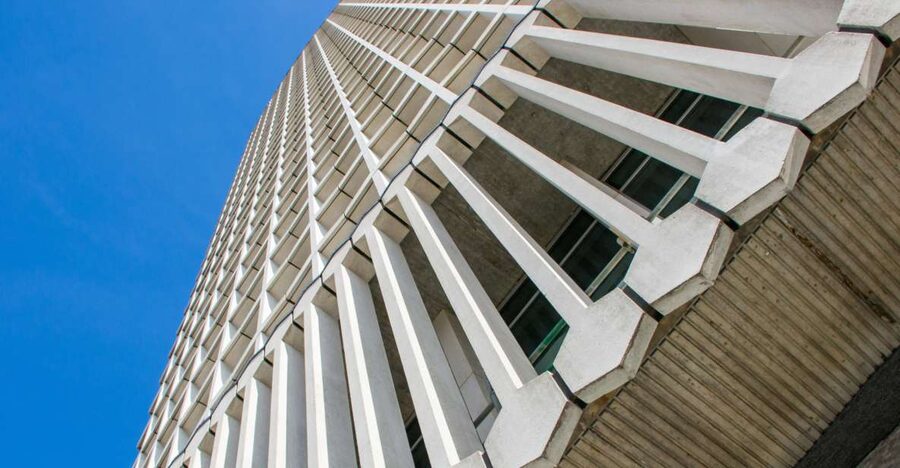
One useful feature is the attention given to concrete. The material is treated as more than a gray surface. You learn about its role in modern engineering and architecture, and about the practical and visual reasons it became so important after the Second World War.
More History Tours in London
- London: Historic Pubs of Central London Walking Tour
★ 4.9 · 1,065 reviews - London: Soho Music and Historic Pubs Walking Tour
★ 4.9 · 836 reviews - London: Rock ‘n’ Roll History Tour
★ 4.6 · 645 reviews
Institute of Education and the force of monumental design
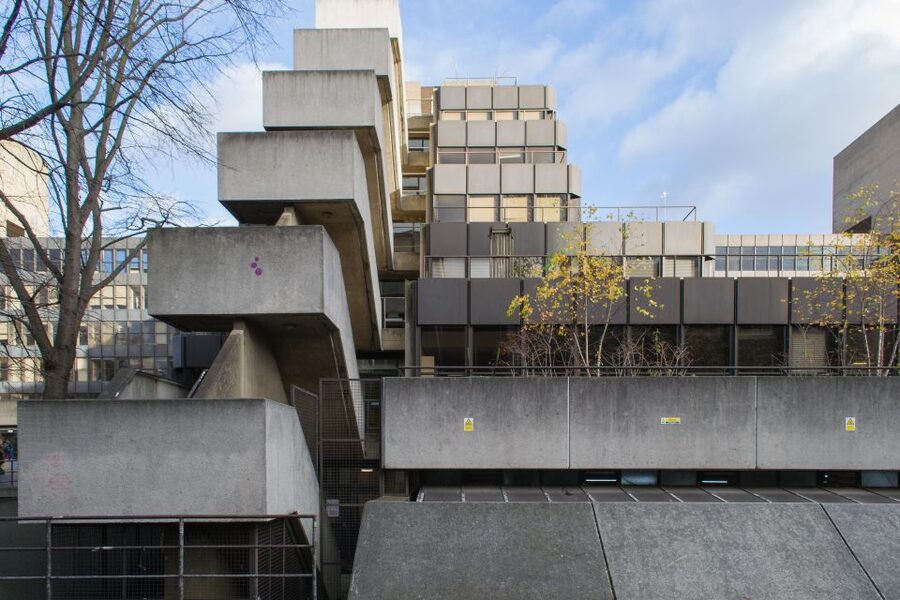
The Institute of Education is one of the notable buildings included on the route. It helps show how Modernist ideas could create large, confident public structures in the center of an old city.
At buildings like this, you can expect the guide to discuss scale, mass, and the relationship between a public institution and its surroundings. Brutalist design often uses strong geometric shapes and exposed materials rather than decoration. That can make a building feel imposing, but it can also give it a clear identity.
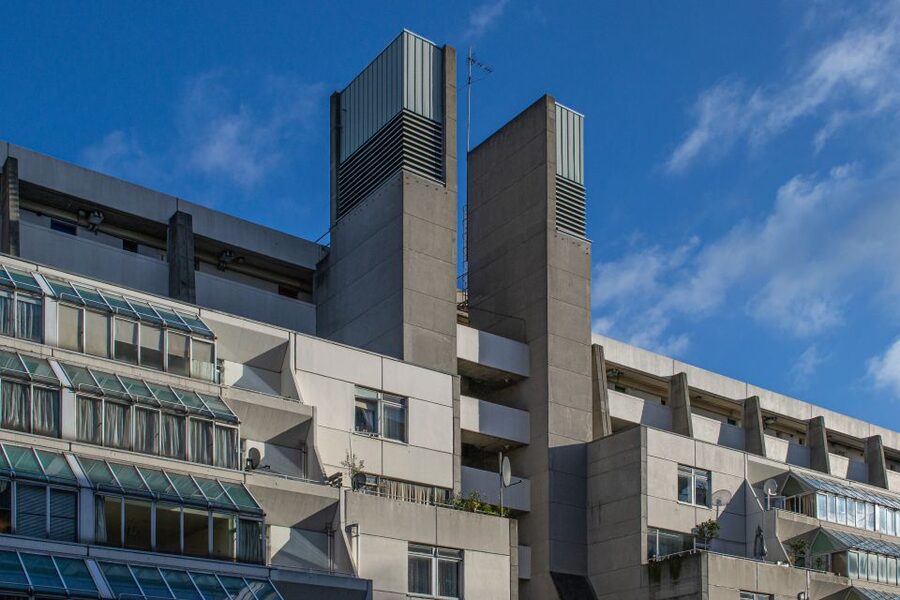
This is where Evan’s eye for detail is particularly useful. One participant specifically praised his treatment of the Brunswick, suggesting that he notices features a casual passerby could easily miss. You should expect the walk to encourage close looking, even when the broader discussion turns to politics or architectural theory.
The experience does not claim that every Brutalist building succeeds. That balance matters. Some structures were admired when new and criticized later. Others gained fresh respect as people began to see them as important records of their period. The tour explains this changing judgment rather than presenting Brutalism as either a perfect style or an architectural mistake.
The National Theatre and London’s most recognizable concrete icon
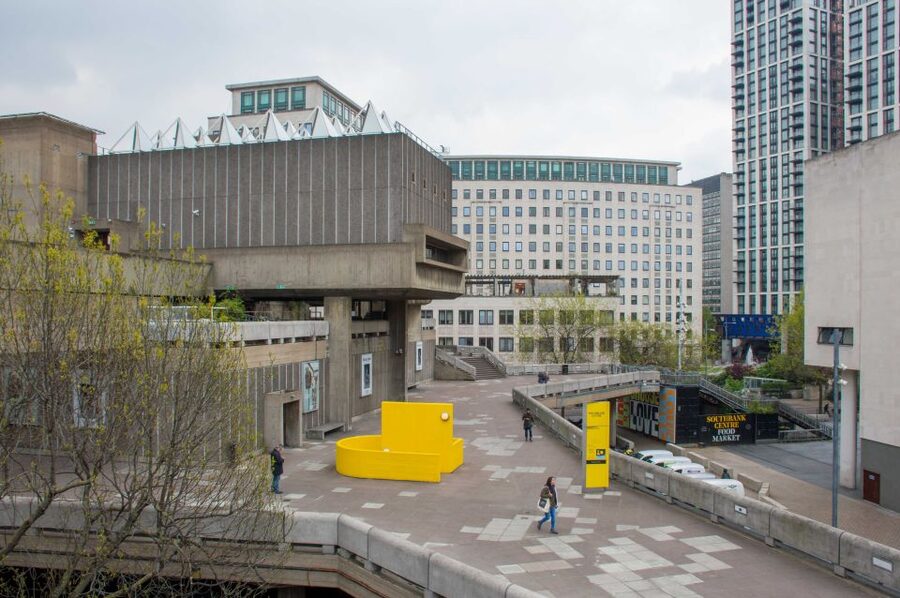
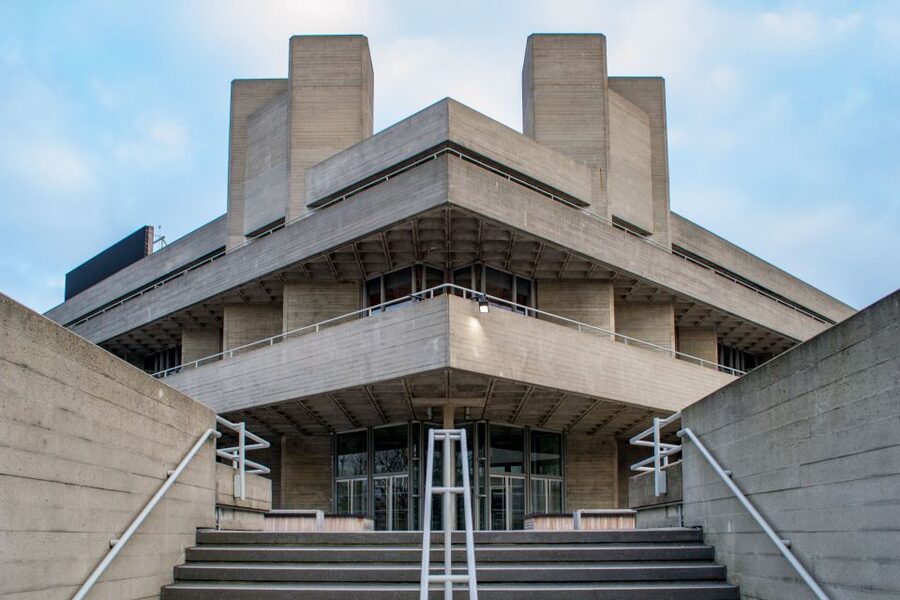
The National Theatre is likely to be the visual centerpiece of the walk. It is also one of the best places to understand why Brutalist buildings provoke such strong reactions.
The building’s broad concrete terraces and layered forms make it easy to photograph from different angles. Bring a camera or phone, but take time to look before snapping. The value of this stop is not just the picture. It is the chance to understand how the building’s shape supports the discussion of monumental architecture, public culture, and post-war confidence.
The tour links the National Theatre to the social, political, and economic conditions that allowed such a building to be planned and built. That context helps explain why large public projects once carried such importance. A building could represent education, culture, civic ambition, or a belief that the state should provide major shared institutions.
You do not go inside the National Theatre or any other building. That is worth knowing in advance. If you want interior design, stage architecture, or access to working spaces, this is not the right format. If you prefer to study buildings from the street and understand how they fit into the city, the exterior focus works well.
Concrete, construction, and the arguments behind Brutalism
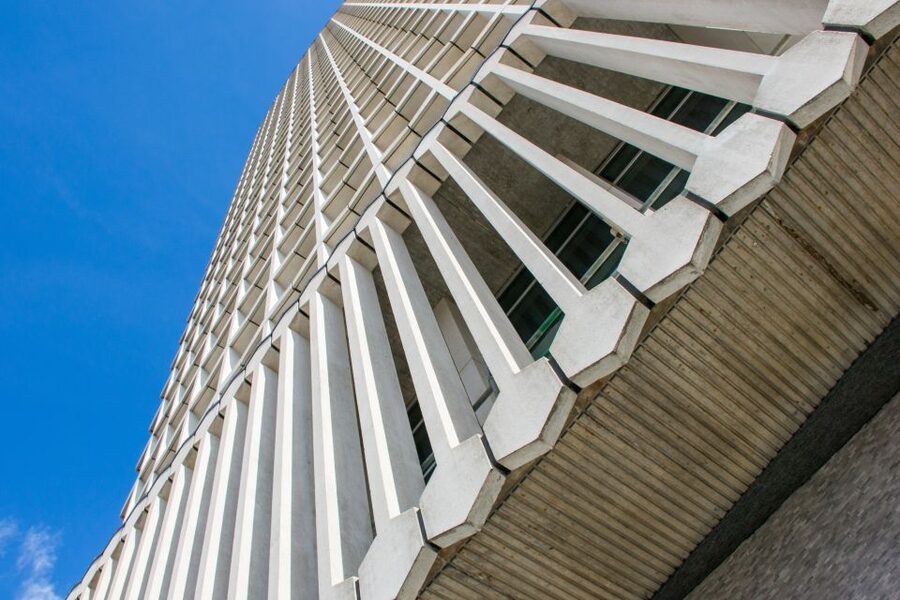
A strong part of the walk is its effort to explain how concrete changed modern construction. The tour discusses concrete in both engineering and architectural terms, helping you connect the material to the shapes you see around you.
You may also hear about construction compromises, workarounds, and the practical problems involved in building these large structures. One criticism of the tour was that the treatment of construction could go further, especially for people hoping for a detailed account of materials and building methods. That is a fair caution.
I would see this experience as an architectural history walk first and a technical construction tour second. You get useful context about concrete, but the main subject is how Brutalist and Modernist buildings fit into society and history. People who want engineering drawings, structural analysis, or a close study of building defects may want a more specialist course.
The best way to get value here is to ask questions. In a group limited to six, you have a better chance to steer part of the conversation than you would on a large city walk. Evan’s ability to adapt the tour to the knowledge of different participants is one of the clearest strengths of the experience.
More Walking Tours in London
- Magical London: Harry Potter Guided Walking Tour
★ 4.7 · 22,044 reviews - London: The Original Jack the Ripper Walking Tour
★ 4.7 · 7,833 reviews - London: Harry Potter Movies Walking Tour (Kids Go Free)
★ 4.7 · 3,071 reviews - London: The Great British Rock and Roll Music Walking Tour
★ 4.9 · 1,783 reviews
Politics, economics, and the events that shaped modern London
Brutalism did not appear in a vacuum. The tour sets London’s buildings against global events and the post-war conditions that influenced Modernist design across Europe.
That wider frame gives the walk more substance. You learn about key figures in European Modernism and the ideas that informed public buildings in London. You also look at the economic and political circumstances that made ambitious projects possible, along with the later reactions that turned some of these buildings into targets for criticism.
This is where the tour moves beyond a standard sightseeing walk. You are encouraged to ask who a building served, how local authorities viewed it, and what residents thought about it. Preservation societies also enter the discussion, since many Brutalist buildings now face questions about repair, reuse, alteration, or demolition.
The result is a useful lesson in how cities make decisions about the past. A building can be unpopular and still have architectural value. It can be expensive to maintain and still matter. It can be part of daily life rather than a protected historic monument, yet still tell us something important about the period that produced it.
One participant raised concerns about a few historical points, including an oversimplified explanation of window tax and an inaccurate description of Isaac Hayward’s politics. I would treat that as a reminder to listen critically, especially if you already study British social or architectural history. The overall walk remains engaging, but no short tour can cover every topic with academic precision.
A small group makes the walk feel more like a conversation
The group size is limited to six, which is a real benefit at $47 per person. You are not trying to hear a guide over a crowd, and you can stop to examine details without being lost in a large line of people.
The small format also suits this subject. Brutalism is not a simple story, and questions often lead to useful side discussions. Evan has been praised for being polite, personable, enthusiastic, and able to adjust the material to the group’s level.
The tour is conducted in English with a live guide. That matters because the experience depends on explanation. You are not just following a route between buildings with a downloaded audio track.
There is a practical tradeoff. A small group may make the experience more intimate, but it also means the tour can feel shaped by the interests of the people present. If the group wants broad architectural history, you may get less building-by-building technical detail. If everyone is focused on construction, politics, or preservation, the discussion may go further in that direction.
Is $47 fair for 2.5 hours?
At $47, this is not the cheapest way to spend a morning in London. You can look at many buildings from the pavement for free. The price makes sense because you are paying for a specialist guide, historical interpretation, and a group capped at six people.
I consider it good value if you would otherwise walk past these buildings without understanding them. Evan’s role is important here. The strongest praise centers on his depth of knowledge, enthusiasm, and ability to explain more than what you might find in a standard guidebook.
The cost does not include public transportation. You use the Tube once for a short journey, so keep enough credit for one Zone 1 trip. You should also remember that the tour does not include interior access.
Free cancellation up to 24 hours before the start and the option to reserve now and pay later make booking less risky. Weather can affect the schedule, since the walk may be postponed or canceled in poor conditions.
Who will enjoy this London architecture walk?
I would recommend it most strongly to:
- People who already like Brutalist, Modernist, or post-war architecture
- Visitors looking for a different side of central London
- Students and design-minded visitors who want social and political context
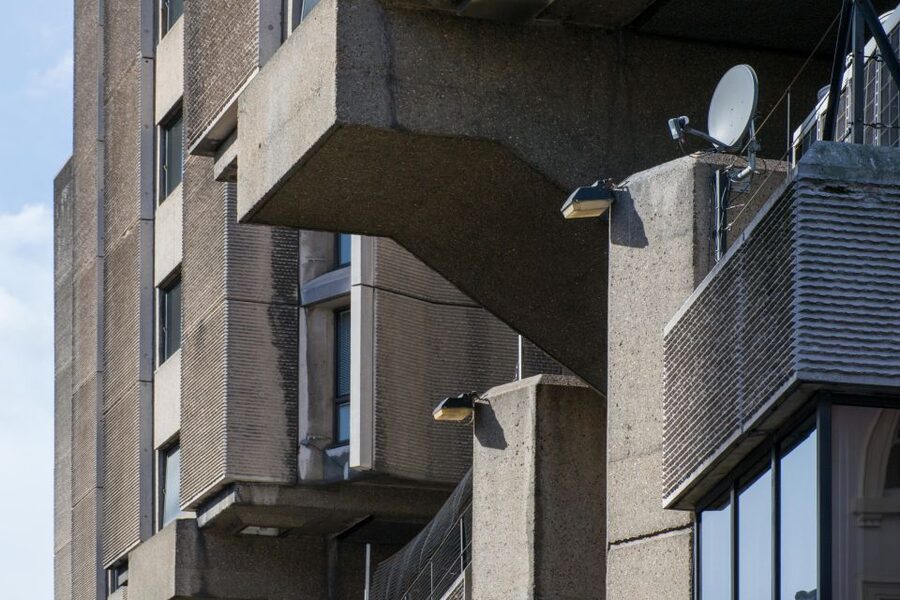
- Photographers interested in bold concrete forms
- Repeat visitors who have already seen London’s usual attractions
- Curious beginners who enjoy learning through conversation
The tour is less suitable if you want famous interiors, a relaxed sightseeing ride, or a route designed around royal and medieval London. It is also not suitable for children under 16 or people with mobility impairments.
You should be comfortable walking for 2.5 hours and viewing buildings from outside. The subject is serious, but the atmosphere sounds informal rather than classroom-like.
Should you book it?
Book this tour if you want London to explain itself through concrete. You will get the most from it if you are willing to look past first impressions and think about why these buildings were built, why they divided opinion, and what should happen to them now.
Evan is the main reason I would recommend it. His enthusiasm, personal manner, and ability to adapt the material make the tour approachable, while the route gives you strong examples such as the Institute of Education, the Brunswick, and the National Theatre.
Skip it if you want to enter buildings or study construction at a highly technical level. For everyone else, especially anyone seeking an intelligent alternative to London’s usual sightseeing circuit, $47 is a reasonable price for a focused and thought-provoking morning.
FAQ
Where does the Brutalist architecture tour meet?
The meeting point is outside Russell Square Underground Station on the Piccadilly Line.
How long does the walking tour last?
The tour lasts 2.5 hours.
How much does the tour cost?
The listed price is $47 per person.
Is public transportation included?
No. The tour uses the Tube once for a short journey, and you need enough credit for one Zone 1 trip.
What language is the tour conducted in?
The tour is conducted in English with a live English-speaking guide.
How large is the group?
The group is limited to six participants.
Which buildings are included?
The route includes notable Brutalist buildings such as the Institute of Education and the National Theatre. The Brunswick is also discussed on the walk.
Can I visit the interiors of the buildings?
No. The tour does not visit building interiors.
Is the tour suitable for children?
No. It is not suitable for children under 16.
What happens if the weather is poor?
The walk may be postponed or canceled if weather conditions are unfavorable. You can cancel up to 24 hours in advance for a full refund.
Just added in London
- The Best of British Cooking Class & Dining Experience★ 5.0 · 1 review
- London: Live Comedy Show at Big Belly Bar and Comedy Club★ 4.5 · 80 reviews
- London: British Museum Highlights Guided Small Group Tour★ 4.9 · 113 reviews
- The Beatles London Walking Tour★ 4.2 · 147 reviews
- The Best Highlights of London Walking Tour & Boat Cruise★ 5.0 · 1 review
- The Authentic Walking Tour with Indian Tasting Meal★ 4.8 · 4 reviews
- Iconic London: Bard, Beatles, Bond & Baker Street★ 4.9 · 15 reviews
- London: Tate Britain Official Discovery Tour★ 4.7 · 7 reviews
Walking Tours, compared.

Magical London: Harry Potter Guided Walking Tour
Read our review →
University and City Walking Tour with Alumni Guide
Read our review →
Harry Potter Movies Walking Tour (Kids Go Free)
Read our review →
The Great British Rock and Roll Music Walking Tour
Read our review →
Jack the Ripper Walking Tour – Ripper Vision Tours
Read our review →
Other lists this tour turns up in