
REVIEW · WALKING TOURS
London: Camden Walking Tour
Camden has more stories than shop signs. This 2.5-hour walking tour connects music venues, street art, literary history, and market culture in one lively route through north London. I like that it does not treat Camden as just a place to shop. It shows how the neighborhood shaped musicians, writers, artists, and local characters.
I also like the strong music focus, from Coldplay and Oasis to U2, David Bowie, Prince, and Amy Winehouse. Guides Carolina, Rachel, and Jamie have been praised for adding music to the walk, including songs that fit each stop. The main consideration is physical: this is a fairly active walk with no allowance for large bags, and it is not suitable for wheelchair users, people with mobility impairments, or those with low fitness.
In This Review
- Five things that make this Camden tour worthwhile
- Meeting beneath the yellow umbrella
- Camden High Street and the neighborhood’s changing face
- Charles Dickens’ childhood home and a Victorian view
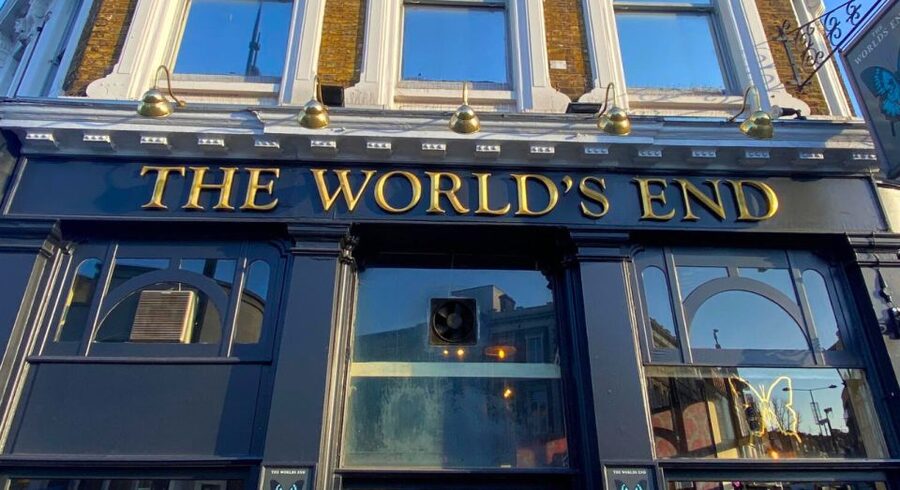
- The World’s End, Electric Ballroom, and The Good Mixer
- Amy Winehouse, Hawley Arms, and a personal Camden story
- Street art between the music stops
- Camden Lock and the canal-side market
- Camden Market as the final stop
- The guides and the tone of the walk
- What $18 buys you in practical terms
- Who should book this Camden walk?
- Should you book the Camden Walking Tour?
- FAQ
- Where does the Camden walking tour start?
- Where does the tour finish?
- How long does the tour last?
- What language is the tour conducted in?
- Is Camden Market included in the tour?
- Is the tour suitable for wheelchair users or people with mobility impairments?
Five things that make this Camden tour worthwhile
- Amy Winehouse’s Camden connection: See her life-size statue, learn about her favorite Hawley Arms pub, and hear how closely her music and identity remain tied to the neighborhood.
- Music with the places: The tour links performers to real Camden venues, with music sometimes played at the location that inspired it.
- Camden Market at the right moment: You reach Camden Lock and Camden Market with time to browse food, art, clothing, and souvenirs.
- A literary Camden stop: A plaque marks Charles Dickens’ childhood home and opens a window onto the writer’s early view of Victorian London.
- Street art as local character: Painted walls and murals help explain why Camden became a center for creative expression.
- A useful price: At $18 per person, the tour is a modest way to get context before exploring the market on your own.
Meeting beneath the yellow umbrella
The meeting point is easy to find if you follow the directions closely. The tour begins outside Camden Town Station, across the road from the station exit at Barclays Bank, 193 Camden High Street, London, NW1 7PJ.
Look for the guide holding a yellow umbrella. That detail matters on a crowded high street, where Camden’s signs, buses, shops, and passing crowds can make a meeting point seem less obvious than it sounds.
The tour is conducted in English with a live guide. Since the route moves through public streets, venues, and market areas, you should wear comfortable shoes and leave large bags and luggage elsewhere. Pets are not allowed.
The tour lasts 2.5 hours. That is long enough to cover several parts of Camden without turning the day into an all-day march, but you should still expect plenty of standing and walking. The route finishes at Camden Market, which is convenient if you want to continue shopping or stop for food afterward.
More Walking Tours in London
- Magical London: Harry Potter Guided Walking Tour
★ 4.7 · 22,044 reviews - London: The Original Jack the Ripper Walking Tour
★ 4.7 · 7,833 reviews - London: Harry Potter Movies Walking Tour (Kids Go Free)
★ 4.7 · 3,071 reviews
Camden High Street and the neighborhood’s changing face
The opening stretch introduces Camden Town as more than a collection of colorful storefronts. You begin in the busy center and hear how the area changed over time, including its place in London’s social and music life.
This early context helps you read the streets differently. Camden can look like pure spectacle at first, with bold signs, unusual clothing, food stalls, and painted walls competing for attention. A guide gives those sights a thread to follow, showing how the neighborhood developed into a meeting place for musicians, artists, night owls, and curious shoppers.
One useful strength here is the balance between past and present. You are not simply told where famous people lived or performed. You also hear about Camden’s changing character and the way its old identity sits beside its newer commercial side.
The route is still a street walk, not a museum visit. You will not spend long inside formal exhibits or historic buildings. If you want detailed architectural tours or lengthy literary lectures, this will feel light. If you want an accessible introduction before exploring independently, the pace makes sense.
Charles Dickens’ childhood home and a Victorian view
A plaque marks the childhood home of Charles Dickens. The stop is brief, but it gives Camden a literary connection that can be easy to miss among the market noise and music references.
The guide explains how Dickens’ early years in the area influenced his view of London and later writing. That matters because it places Camden in a much older story than its modern reputation as a music and shopping district.
I appreciate this stop because it breaks up the celebrity-heavy sections of the walk. Camden is strongly linked with performers, but Dickens reminds you that the neighborhood has long offered material for writers observing class, work, and city life.
Do not expect access to a preserved Dickens house on this tour. The itinerary centers on the plaque and the story connected to the site. Think of it as a short pause that adds depth to the route rather than a full literary attraction.
The World’s End, Electric Ballroom, and The Good Mixer
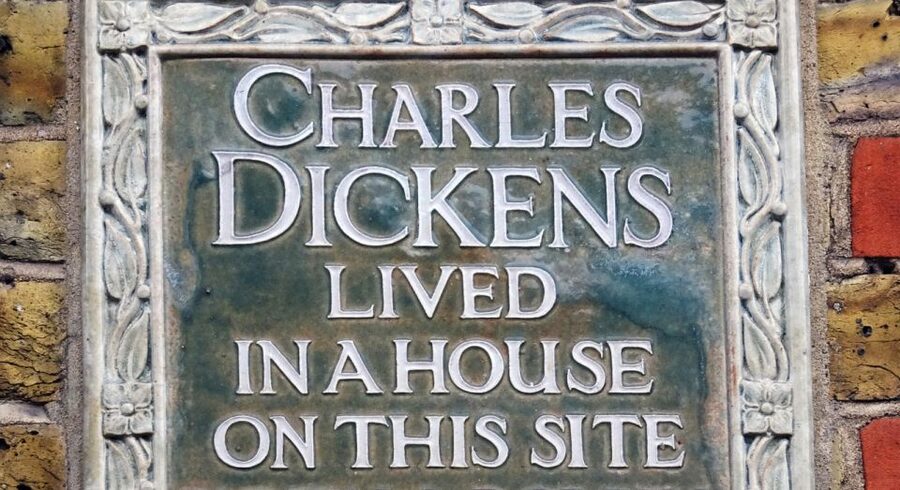
The next part moves through several names familiar to Camden’s nightlife and music scene: The World’s End, Electric Ballroom, and The Good Mixer.
These stops work best when you enjoy hearing how artists and venues connect. The guide shares stories involving Camden’s music culture and performers such as Oasis, U2, David Bowie, Prince, and Coldplay. The point is not simply to list famous names. It is to understand how clubs, pubs, and small performance spaces helped Camden become associated with music.
The Electric Ballroom is especially useful as a marker of Camden’s live-music identity. The Good Mixer adds another pub-based chapter, while The World’s End helps you see how ordinary-looking local venues can carry a large reputation among music fans.
The exact amount of time at each place may vary, but you should expect exterior sightseeing rather than a concert or guaranteed entry. That is an important distinction. You are learning the stories tied to these locations, not receiving admission to every venue.
Some guides bring portable music into the experience. Carolina was praised for playing songs connected to the locations, and that can make the stops more memorable than a spoken explanation alone. Music gives you a quick sense of mood and helps connect a venue name with the sound associated with it.
A different kind of day out entirely:
- London: The London Eye Entry Ticket
★ 4.6 · 35,875 reviews - From London: Harry Potter Warner Bros Studio Tour
★ 4.7 · 26,588 reviews - London: Westminster to Greenwich River Thames Cruise
★ 4.5 · 22,836 reviews - London: Madame Tussauds London
★ 4.6 · 20,915 reviews
Amy Winehouse, Hawley Arms, and a personal Camden story
Amy Winehouse is one of the strongest parts of the walk. Camden was closely tied to her public image and personal life, and the tour treats that connection as a central part of the neighborhood’s modern story.
You see the life-size Amy Winehouse statue and hear about her music, her links to Camden, and the Hawley Arms pub she loved. You may also see an Amy-related mural as the route moves through the area.
The statue is more than a photo stop. It gives the guide a way to talk about how Camden remembers a local figure whose career, style, and struggles became part of the area’s identity. The Hawley Arms adds a more personal detail, shifting the focus from a famous singer to a place associated with her everyday life.
I would approach this section with some care. The material concerns a real person who died young, so the best version of the story should feel respectful rather than sensational. The supplied guide descriptions point toward her connection with Camden, her music, and the places she favored.
For fans of Amy Winehouse, this may be the emotional center of the tour. For everyone else, it still offers a clear example of how Camden turns music history into a street-level experience.
Street art between the music stops
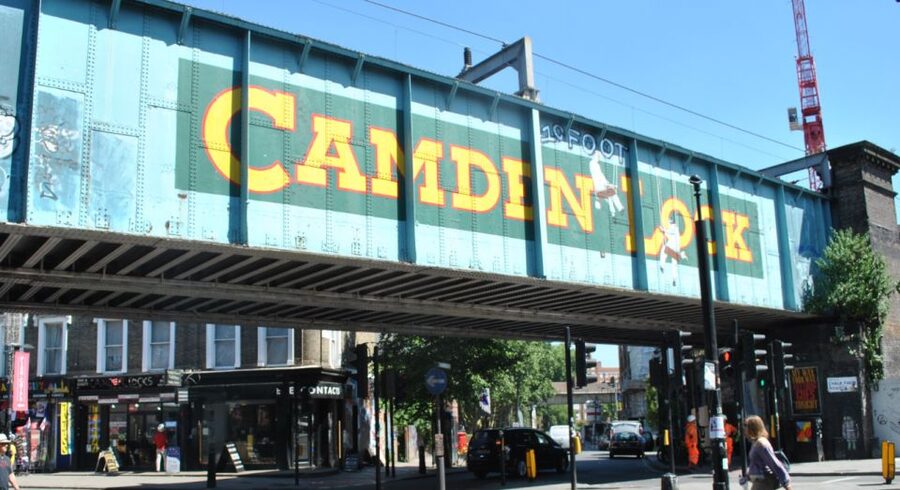
Camden’s street art gives the walk its strongest visual element. Painted walls, murals, and other public works show how the neighborhood uses its streets as creative space.
The guide explains the art as part of Camden’s character rather than treating it as decoration alone. You learn about the artists and the way urban art helps express the area’s independent spirit.
Street art changes, so you should not expect every wall to remain exactly as described. That is part of the appeal, but it also means the visual details are less permanent than a statue or plaque. The tour provides useful context while you are seeing the art in place.
This section also gives you a break from music history. If you are not familiar with every band named on the route, the murals keep the walk engaging. You can simply look around, take photos, and notice how much of Camden’s identity is presented outdoors.
Camden Lock and the canal-side market
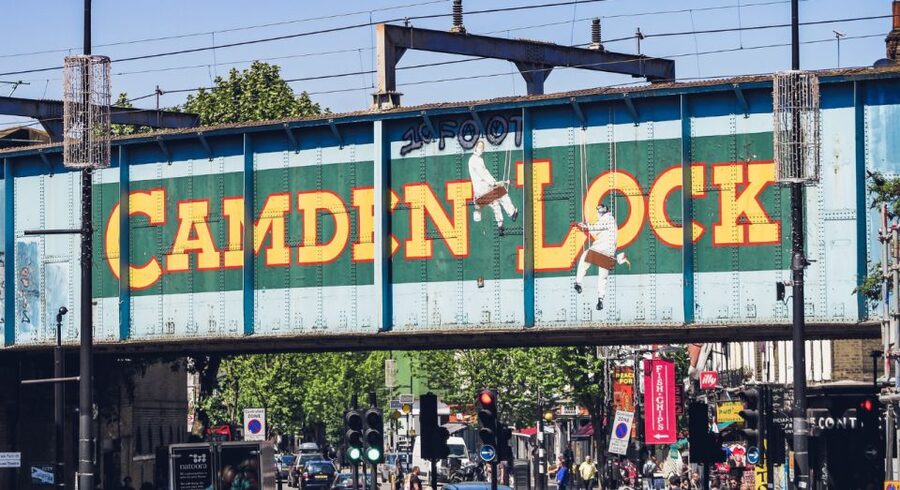
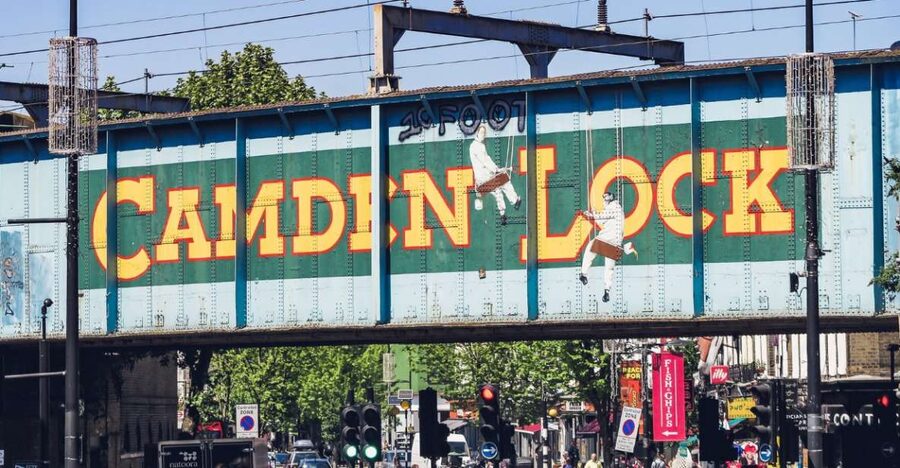
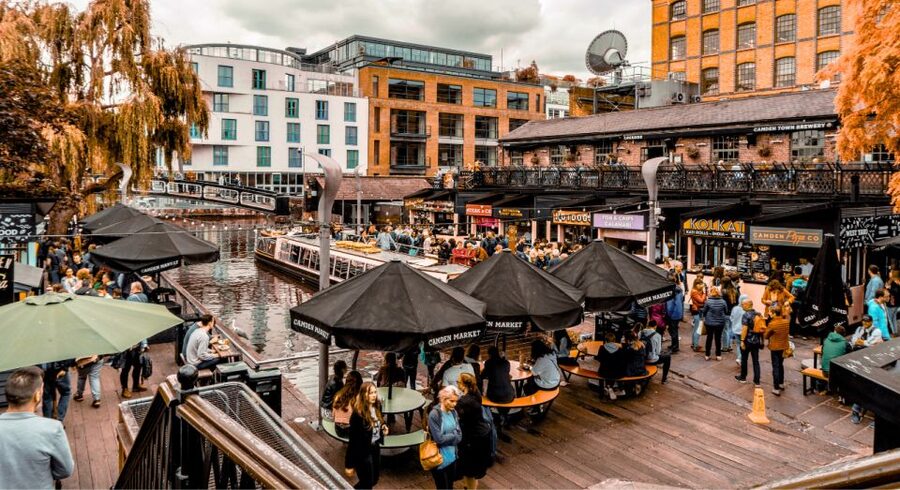
The route continues to Camden Lock, one of the neighborhood’s best-known areas. This is where Camden’s market culture becomes most obvious, with stalls offering food, art, clothing, gifts, and unusual souvenirs.
The guide helps you understand the market as part of the Camden visit rather than just directing you toward a shopping area. You can see how the neighborhood’s creative image turns into actual goods, designs, and food choices.
Camden Lock is also a useful orientation point. Once you arrive, you have a better sense of how the market sections fit together and where you may want to return later. The tour does not appear to include a fixed meal or shopping allowance, so bring your own spending money if you want to sample street food or buy something.
Food is one of the practical pleasures here. You may find global street-food choices, but the exact stalls and menus can change. I would avoid planning a specific dish in advance and instead use the walk to see what looks good when you arrive.
Because this is a popular public market, expect noise, crowds, and plenty of visual clutter. That is part of Camden’s appeal, but it can be tiring if you prefer quiet streets and slow browsing.
Camden Market as the final stop

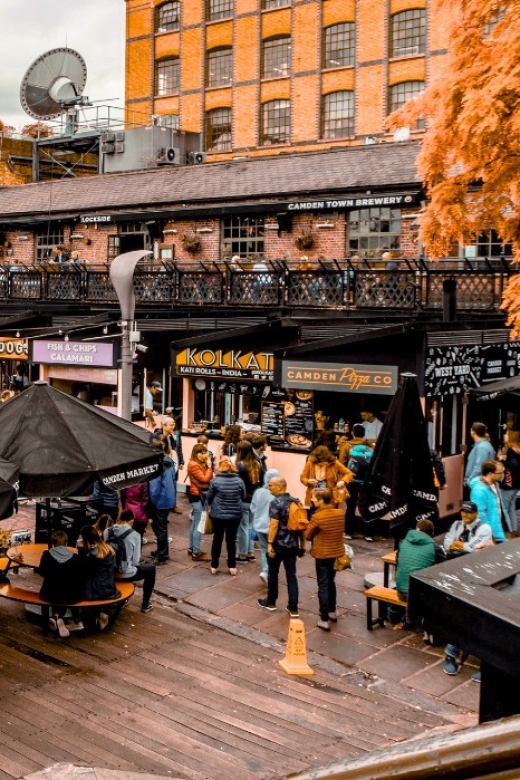
The tour finishes at Camden Market, giving the route a useful ending. You are not left at an isolated landmark or sent back to the starting point. You can continue shopping, eat, take photos, or use Camden as the next stop in your London day.
The market offers three main reasons to stay:
- Unique food from different parts of the world
- Art and creative goods
- Souvenirs and unusual gifts
I like this arrangement because the tour gives you information first and free time second. You can return to the stalls that caught your eye without trying to follow a guide while carrying food or comparing prices.
The drawback is that a market finish can make the final part feel less structured. Once you enter the shopping areas, your attention may shift away from the guide. If you want every last detail of the tour, stay close until the formal walk ends.
The guides and the tone of the walk
The strongest praise centers on the guides’ energy, humor, and use of music. Rachel and Jamie were praised for leading with charm and wit, while Carolina was singled out for passionate storytelling about Camden’s social past and British music scene.
Carolina also used music that matched the places on the route. That small choice can make a major difference. Hearing a song near the venue tied to it gives you a stronger memory than hearing the same fact in a generic lecture room.
The reviews also suggest that the guides appeal to different kinds of visitors. Some focus on Camden’s social changes, some on major artists, and some on the connection between music and place. You should expect an engaging English-language walk rather than a rigid script delivered at every stop.
Since no group size is specified, I would not assume a small private experience. The quality will depend partly on how clearly you can hear and how easily you can stay with the guide in crowded areas. Keep the yellow umbrella in sight and avoid drifting too far behind.
What $18 buys you in practical terms
At $18 per person, this is a good-value introduction to Camden if you want more than unconnected photos and market browsing.
You are paying for a guide who links several different subjects: Dickens, music venues, Amy Winehouse, street art, and market culture. Exploring Camden alone costs nothing beyond your transport and purchases, but you would need to research the stories yourself and work out how the locations relate to one another.
The value is strongest for a first visit. You get a clear route and a local framework, then finish somewhere you can explore independently. Music fans may find the cost especially fair because the tour covers several major names and venues in one outing.
The value is weaker if you already know Camden well or want entry inside performance venues. This is an outdoor sightseeing walk, not a backstage tour, concert, food tour, or museum visit.
Flexible booking also helps. You can cancel up to 24 hours before the start for a full refund, and you can reserve now while paying later. Those terms are useful if your London plans are still shifting.
Who should book this Camden walk?
I would recommend it to first-time Camden visitors, music fans, casual London explorers, and anyone who likes learning the story behind a neighborhood while walking through it.
It suits you particularly well if you enjoy:
- British music from different eras
- Amy Winehouse and modern London culture
- Street art and independent creative scenes
- Markets with food, art, and souvenirs
- Short historical stops mixed with local stories
I would think twice if you have limited mobility, a low fitness level, or need wheelchair access. The tour is specifically not suitable for wheelchair users or people with mobility impairments, and large bags and luggage are not allowed.
It may also be a poor fit if you want a quiet, slow-paced outing. Camden is a busy district, and the route combines crowded streets with constant visual and musical stimulation.
Should you book the Camden Walking Tour?
Book it if you want a guided introduction to Camden’s culture, especially its music, Amy Winehouse connection, street art, and market life. For $18, the tour gives you a useful route, a handful of memorable stories, and a convenient finish at Camden Market.
Skip it if you already know the neighborhood, want indoor attractions, or need an accessible route. For most able-bodied visitors with 2.5 hours to spare, it is a sensible way to make Camden feel like a place with stories, not just a loud and colorful shopping stop.
FAQ
Where does the Camden walking tour start?
It starts outside Camden Town Station, across the road from the station exit at Barclays Bank, 193 Camden High Street, London, NW1 7PJ. The guide will be holding a yellow umbrella.
Where does the tour finish?
The tour finishes at Camden Market.
How long does the tour last?
The walking tour lasts 2.5 hours.
What language is the tour conducted in?
The tour is conducted in English with a live tour guide.
Is Camden Market included in the tour?
Yes. The route includes Camden Lock and Camden Market, where you can browse street food, art, souvenirs, and other goods. Purchases and food are not specified as included.
Is the tour suitable for wheelchair users or people with mobility impairments?
No. The tour is not suitable for wheelchair users, people with mobility impairments, or people with a low level of fitness. Pets, luggage, and large bags are also not allowed.
Just added in London
- The Best of British Cooking Class & Dining Experience★ 5.0 · 1 review
- London: Live Comedy Show at Big Belly Bar and Comedy Club★ 4.5 · 80 reviews
- London: British Museum Highlights Guided Small Group Tour★ 4.9 · 113 reviews
- The Best Highlights of London Walking Tour & Boat Cruise★ 5.0 · 1 review
- The Beatles London Walking Tour★ 4.2 · 147 reviews
- The Authentic Walking Tour with Indian Tasting Meal★ 4.8 · 4 reviews
- Iconic London: Bard, Beatles, Bond & Baker Street★ 4.9 · 15 reviews
- London: Tate Britain Official Discovery Tour★ 4.7 · 7 reviews
Walking Tours, compared.

Magical London: Harry Potter Guided Walking Tour
Read our review →

University and City Walking Tour with Alumni Guide
Read our review →
Harry Potter Movies Walking Tour (Kids Go Free)
Read our review →
The Great British Rock and Roll Music Walking Tour
Read our review →
Jack the Ripper Walking Tour – Ripper Vision Tours
Read our review →
Other lists this tour turns up in