REVIEW · GUIDED
London: Guided Tour of Houses of Parliament & Westminster
Westminster tells Britain’s story in stone. I like the rare combination of Westminster Abbey and Parliament in one guided visit, and I like that you enter the Houses of Commons and Lords with a live guide rather than an audio recording. The main caution is simple: four hours of walking and standing can feel long, especially without a proper break.
This tour is especially strong when your guide brings the buildings to life with small details. Guides including Ben, Holly, Charlotte, Katharine Alcock, and others have been praised for making the history clear and entertaining, but you should arrive ready for stairs, hard floors, security checks, and no photography inside.
In This Review
- Key points to know before you book
- Why these two buildings belong together
- Meeting at Parliament Square
- Westminster Abbey: coronations, tombs, and national memory
- The short transition from church to government
- Westminster Hall: the medieval beginning of Parliament
- The room where the monarch prepares for Parliament
- The House of Lords: ceremony on display
- The House of Commons: rules, ritual, and political theatre
- What the guides add to the visit
- Is $187.23 good value?
- Who should book this tour?
- Final verdict: book it for context, not spare time
- FAQ
- Where does the tour start?
- How early should I arrive?
- How long does the tour last?
- What places are visited?
- Is the tour guided in English?
- Are tickets included?
- Are headsets provided?
- Can I take photographs inside?
- Is the tour suitable for wheelchair users or strollers?
Key points to know before you book
- Two major sights in one morning or afternoon: You visit Westminster Abbey for about 90 minutes, then spend roughly two hours inside the Houses of Parliament.
- A genuinely guided Parliament visit: You see Westminster Hall, the House of Lords, and the House of Commons with a guide who explains the traditions behind the rooms.
- Early Abbey access can be a real advantage: The tour begins with Westminster Abbey at a quieter time of day, subject to the day’s schedule and closures.
- Expect plenty of walking: You need to keep a moderate pace and manage stairs and long periods on your feet.
- The guides are the star of the experience: Names praised in feedback include Ben, Jane, Simon, Rosie, Steve, Holly, Charlotte, Katharine, and several Parliament staff guides.
- The price buys structure and access: At $187.23 per person, it is not cheap, but it combines two admission tickets, guided interpretation, headsets, and a carefully planned route.
Why these two buildings belong together
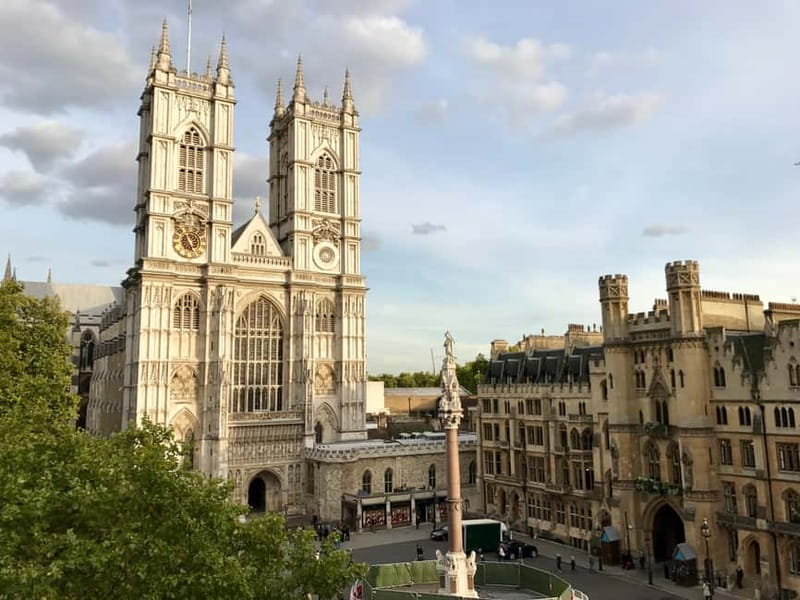
Westminster Abbey and the Palace of Westminster tell different parts of the same national story. The Abbey is where monarchs have been crowned since 1066. Parliament is where the country’s laws are debated and approved today.
That pairing gives you a useful timeline. You begin with monarchy, ceremony, burial, and religious tradition. You then move into the gradual development of constitutional government, political custom, and modern democracy.
I like this approach because neither building is easy to understand from a quick look at the outside. Westminster Abbey is packed with tombs, chapels, memorials, and carved details. The Parliament complex is vast, formal, and full of rooms that can blur together unless someone explains what happened there and why each space matters.
The tour lasts 225 minutes, or three hours and 45 minutes. The published schedule gives about 15 minutes around Parliament Square, 90 minutes in the Abbey, and two hours in Parliament. That is enough time to see the main sights, but not enough for a slow, every-corner visit.
A few more options to weigh up in London
- London: The London Eye Entry Ticket
★ 4.6 · 35,875 reviews - From London: Harry Potter Warner Bros Studio Tour
★ 4.7 · 26,588 reviews - London: Westminster to Greenwich River Thames Cruise
★ 4.5 · 22,836 reviews
Meeting at Parliament Square
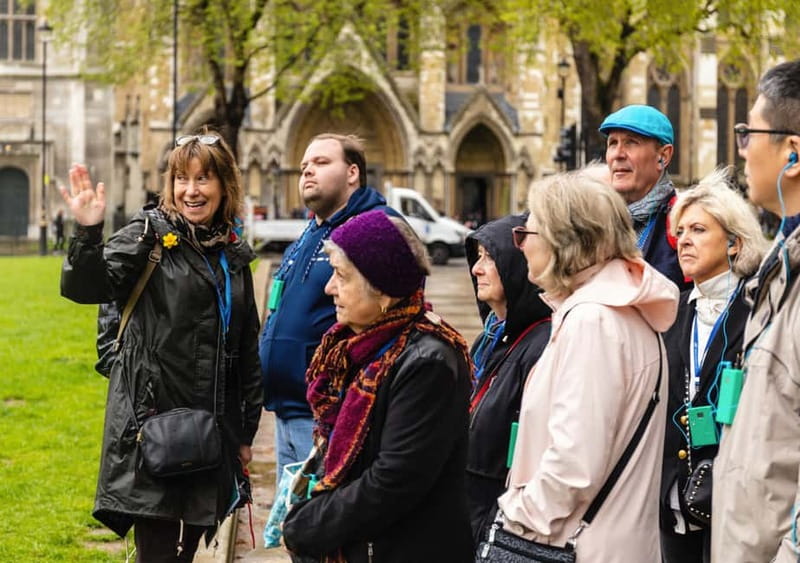
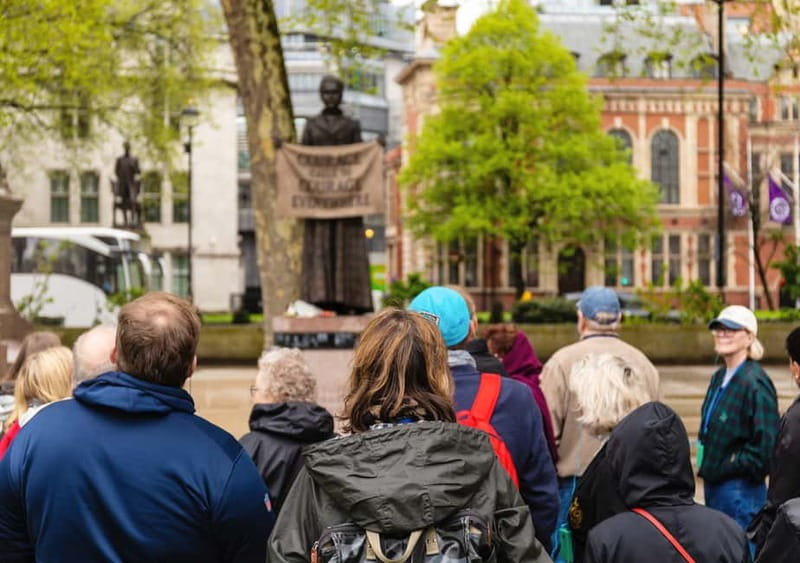
You meet at the statue of Viscount Palmerston in Parliament Square, London SW1P 3JX. Arrive 15 minutes early and look for the guide holding a green Walks sign.
Parliament Square is a useful starting point because you are immediately surrounded by the symbols of British public life. The short introduction helps set the scene before you enter the Abbey, and your guide can explain the landmarks around the square as you gather.
Do not treat this as a casual arrival point. Parliament Square can be busy, and a late arrival could create stress before a timed entrance. There is no hotel pickup, so you need to make your own way there.
The group then proceeds to Westminster Abbey for the first main part of the tour. The activity ends at the Houses of Parliament, although the meeting details also describe the finish as back at the meeting point. You should confirm the exact ending arrangement when booking, but in practical terms you finish at Parliament rather than returning to your hotel.
Westminster Abbey: coronations, tombs, and national memory
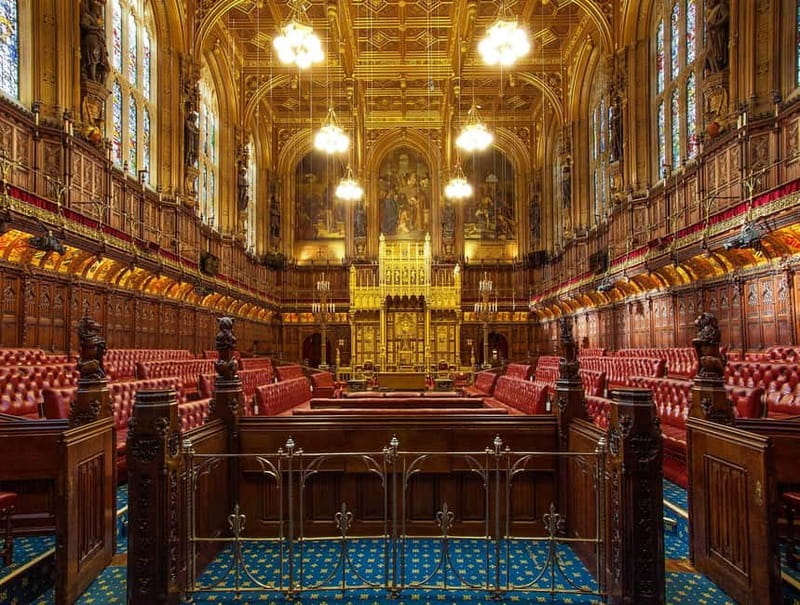
The Abbey is the emotional center of the visit. Its roots reach back more than 1,000 years, and its Gothic interior brings together royal ceremony, religion, national remembrance, and the graves of notable figures.
Your guide leads you through the key areas rather than sending you off with only a map or recording. That makes a major difference here. You might notice a tomb or memorial without understanding its importance, while a good guide can connect it to the monarchy, politics, science, literature, or public life.
The coronation connection is central. Since 1066, Westminster Abbey has been the traditional setting for royal coronations. That gives the building a direct link to the long transition from royal rule toward a constitutional monarchy and parliamentary democracy.
You also see the Abbey as a burial place for kings and queens. Alongside royalty, the building honors figures such as Isaac Newton, Charles Darwin, and William Wilberforce. These names help show that the Abbey is not simply a royal church. It also functions as a national record of achievement and memory.
One especially interesting detail concerns Winston Churchill. He was one of the few non-royals to lie in state in the Abbey after his death. That fact gives you a sense of the unusual public status the building can grant to figures seen as central to the nation’s story.
The Abbey portion is guided for about an hour and a half. That sounds generous, but the building contains far more than you can absorb in one pass. One useful mindset is to treat this as a focused introduction to the most important spaces, not as permission to inspect every memorial at leisure.
Photography is not allowed inside. If you enjoy documenting grand interiors, this will be frustrating, particularly because the Abbey has many details you may want to remember. I suggest paying close attention to your guide and allowing the building itself to be the record.
The short transition from church to government
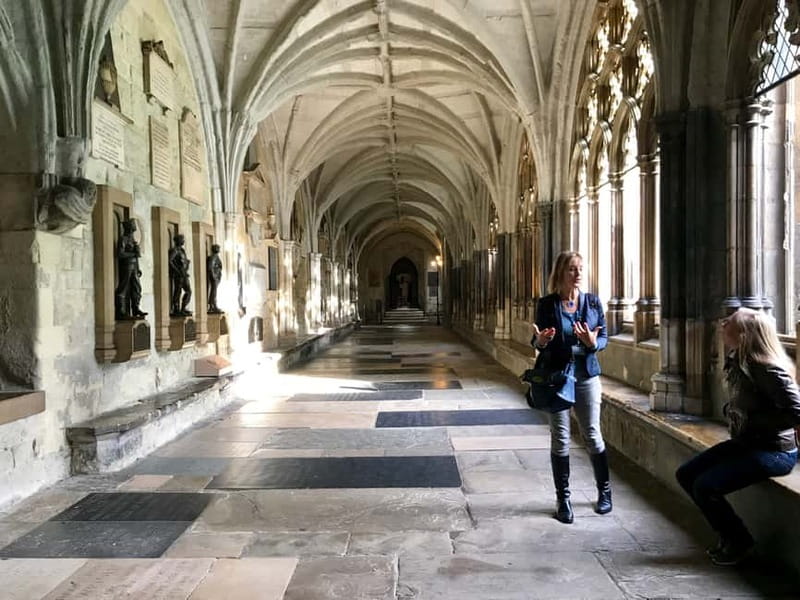
After the Abbey, the tour continues to Parliament. The transition is not just a change of building. It mirrors the story your guide has begun to tell, from crowned rulers and national ceremony to elected representatives and formal lawmaking.
The timing can be tight. One account describes a 20-minute wait outside while headsets were collected and the Parliament coordinator arrived. The guides managed the delay, but it shows why you should not plan a meal, museum visit, or train connection immediately afterward.
A short pause would improve the rhythm. Several people found the complete four-hour sequence tiring, and one particularly practical criticism was the lack of a rest or refreshment break between the Abbey and Parliament. You may want to eat beforehand and carry water, since the tour itself does not include refreshments.
A different kind of day out entirely:
- Magical London: Harry Potter Guided Walking Tour
★ 4.7 · 22,044 reviews - London: Madame Tussauds London
★ 4.6 · 20,915 reviews - London: Warner Bros. Studio Tour with Transfers
★ 4.7 · 17,586 reviews - London: Tower Bridge Entry Ticket
★ 4.7 · 15,560 reviews
Westminster Hall: the medieval beginning of Parliament
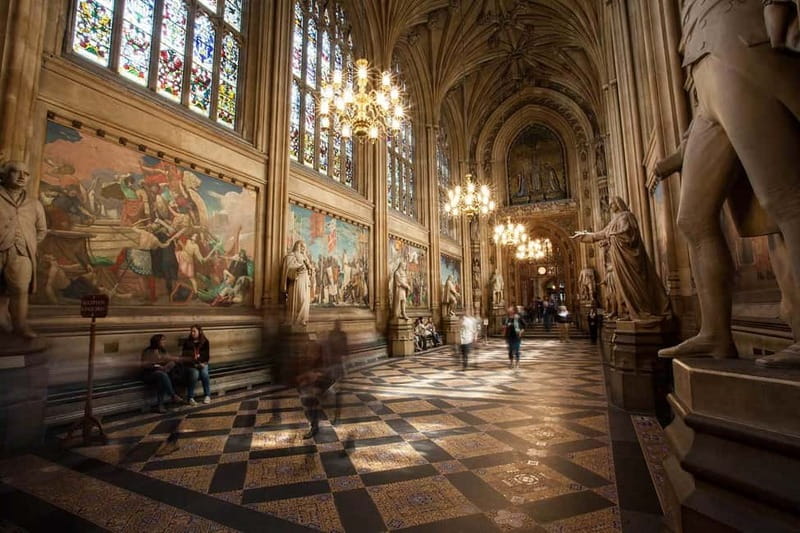
The Parliament section begins in Westminster Hall, the oldest part of the complex. It has hosted state functions for almost 1,000 years and is known for its medieval timber roof, one of the finest surviving examples of its type.
This is where the Parliament tour gains its sense of age. Television usually shows you the Commons chamber, the Lords chamber, or a politician speaking at a dispatch box. Westminster Hall gives you something older and more architectural, a huge reminder that the modern legislature grew from medieval institutions.
Your guide helps you connect the hall’s appearance with its former public and legal roles. The building is not presented as a static museum piece. Its long use for state occasions and legal proceedings makes it easier to understand how tradition remains part of British public life.
You should expect to stand here while the guide speaks. Seating is limited or unavailable in many parts of Parliament, and the route includes several areas where you cannot simply stop and rest.
The room where the monarch prepares for Parliament
The route includes the room where the King puts on the crown and ermine-trimmed robe before opening a new session of Parliament. This is a small but memorable detail because it shifts your attention away from the public ceremony and toward the preparation behind it.
It also explains the role of ritual. The opening of Parliament is a working political event wrapped in layers of ceremony. Seeing the preparation room helps you understand how the monarchy and Parliament continue to operate side by side.
The guide’s storytelling matters most in rooms like this. Without context, it can look like another grand interior. With a good explanation, you see how clothing, movement, speech, and location all carry political meaning.
The House of Lords: ceremony on display
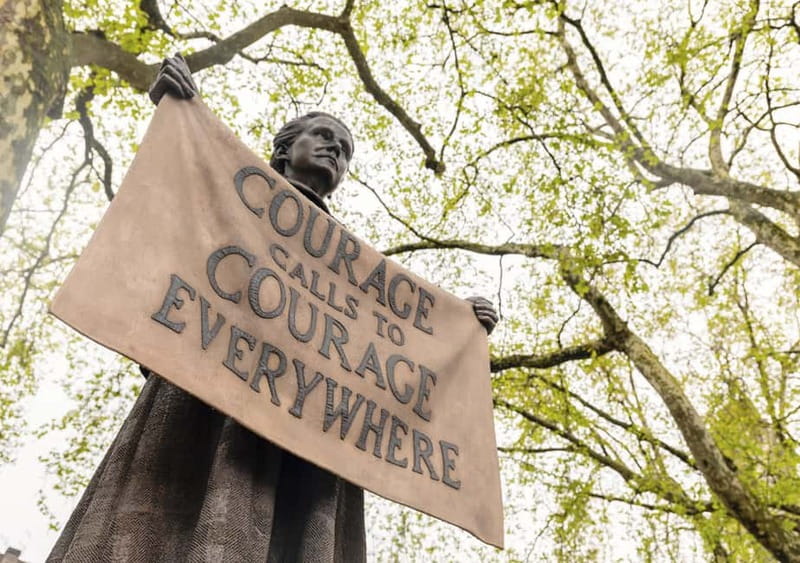
The Chamber of the House of Lords is one of the most impressive rooms in the Palace. Its decoration and formal design reflect the ceremonial role of the upper house and the long connection between Parliament and the Crown.
Your guide explains how the Lords fits into the lawmaking process and points out traditions that are easy to miss on television. The chamber is also a good place to understand the visual contrast between the two houses: the Lords is designed to feel ceremonial, while the Commons is more closely associated with direct political debate.
You may find the room smaller than it appears on television. That is a recurring surprise in the Parliament portion. Screen images make the chambers look broad and spacious, but standing inside gives you a more human sense of scale.
As with the rest of the route, photography is not allowed. That rule can disappoint you, but it also keeps the visit focused on the guide’s explanation rather than on taking pictures.
The House of Commons: rules, ritual, and political theatre
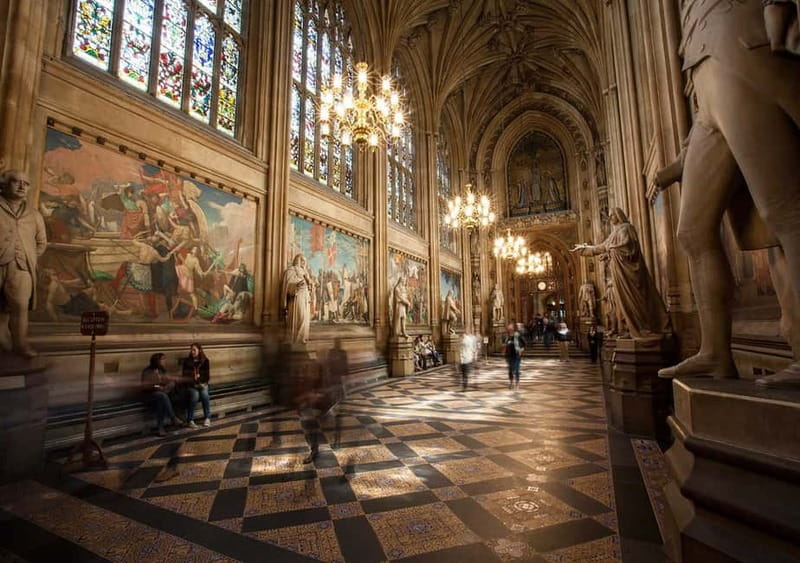
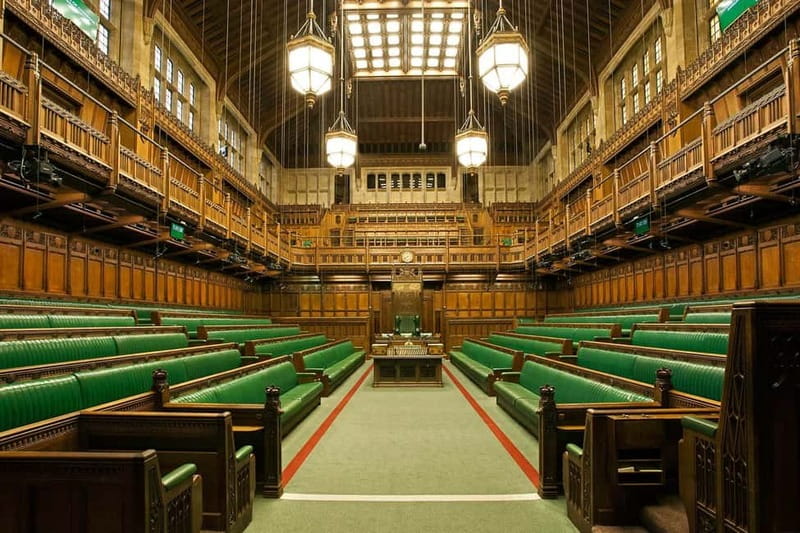
The House of Commons is described as the engine room of British democracy. Here, elected members debate issues, question ministers, and make decisions that affect the country.
The guide also explains the old ceremonies that connect the Commons to its past. The best-known detail is that the King is not allowed to enter the Commons chamber. That rule is a direct reminder of the historic tension between monarch and elected representatives.
You also hear how modern parliamentary business remains tied to ancient procedures. This is one of the tour’s strongest subjects because it helps explain why British politics can look both practical and highly theatrical.
The room may feel smaller than you expect, but that makes the setting more interesting. You are not simply viewing a famous chamber from a distance. You are seeing the physical place where current political life is carried on within rules shaped over centuries.
What the guides add to the visit
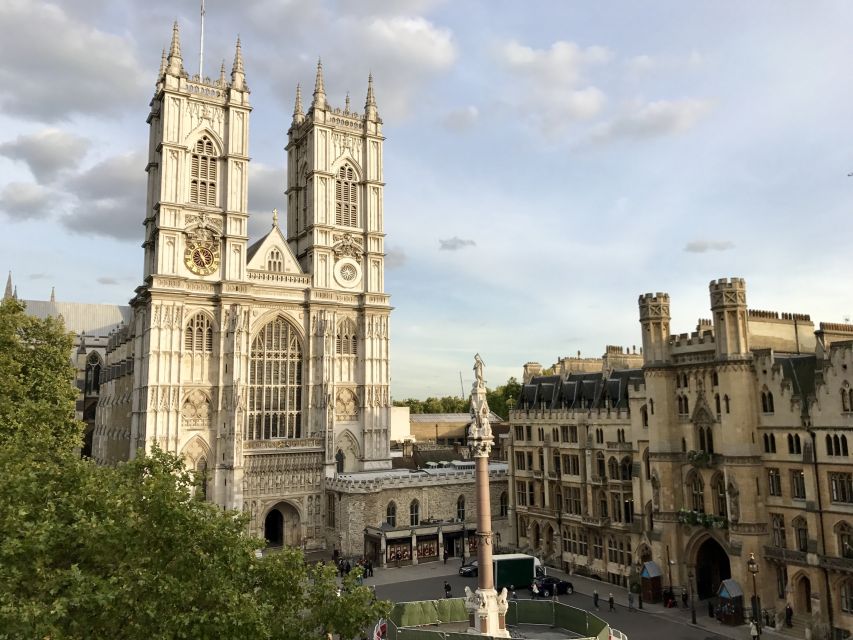
The strongest praise is directed at the guides. Simon and Jane were singled out for their friendly, clear presentation. Rosie and Steve were praised for helping people find places to rest. Ben was noted for bringing the Abbey’s story to life, while Philippa, Julia, and Caroline were praised for their Parliament work.
Other strong guide names include Holly, Charlotte, Katharine Alcock, and several Parliament Visitor Engagement Assistants. Katharine Alcock was especially praised for combining detail with a thoughtful route through a crowded Abbey. Kate Kuechel was praised for making Parliament’s rooms and legal history easier to understand.
You should not expect every tour to have the same guide, so these names are not a promise of who you will meet. They do show the kind of service this experience aims for: clear storytelling, humor, historical detail, and help managing a crowded route.
Headsets are included, and that is important. Westminster Abbey and Parliament can be noisy, with groups moving nearby. The headset lets you hear the guide without standing shoulder to shoulder around a single speaking point.
The tour is in English. If you are traveling with someone who does not speak English, you may need to translate. One guide arranged an audio guide for a visitor at Parliament, but you should not assume that option is always available.
Is $187.23 good value?
At $187.23 per person, this is a premium London sightseeing experience. The price includes the Westminster Abbey ticket, Houses of Parliament ticket, guide, walking tour, and headset.
The value depends on how you normally visit historic buildings. If you are happy with an audio guide or a self-guided visit, you may find the cost high. If you want a clear route and someone to explain the political traditions, the ticket price is easier to justify.
Parliament is the bigger value advantage. Many visitors see the exterior or take a standard audio-guided route, while this experience provides a live explanation of the rooms and ceremonies. The Abbey also benefits from a guide because its memorials and royal connections are easy to overlook.
The main tradeoff is time. You pay for access to two major sites, but you cannot stay all day in either one. The Abbey alone could occupy much longer if you read every inscription and examine every chapel. This tour is best for a first visit or for someone who wants the essential story in one organized outing.
Who should book this tour?
I would choose this tour if you want the main Westminster sights explained in historical and political context. It suits first-time London visitors, people interested in British government, and anyone who prefers a guide to a recorded commentary.
It also works well if you have limited time and want to combine two major admissions in one day. The route puts you close to the heart of London’s public life without requiring you to plan separate visits.
You should think twice if you have arthritis, knee trouble, or difficulty standing. The route includes walking, stairs, and hard surfaces. One person with back and knee problems decided not to continue to Parliament, while another person with foot arthritis found the final stretch painful despite wearing comfortable shoes.
The experience is not suitable for wheelchair users, people with mobility impairments, or strollers. Baby strollers are not allowed. Wear comfortable shoes, arrive rested, and do not schedule demanding activities immediately afterward.
Final verdict: book it for context, not spare time
Book this tour if you want Westminster Abbey and Parliament to make sense as parts of one long political story. The guides, headsets, and access to the Commons and Lords give you much more than an exterior photo stop.
Skip it if you want a relaxed pace, lots of sitting, free time to study every detail, or permission to take interior photos. At $187.23, the cost is serious, but the live guiding can make the difference between seeing impressive rooms and understanding why those rooms matter.
FAQ
Where does the tour start?
It starts at the statue of Viscount Palmerston in Parliament Square, London, SW1P 3JX.
How early should I arrive?
You should arrive 15 minutes before the scheduled start time. Look for a guide holding a green Walks sign.
How long does the tour last?
The tour lasts 225 minutes, or three hours and 45 minutes.
What places are visited?
You visit Parliament Square, Westminster Abbey, and the Houses of Parliament, including the House of Lords and House of Commons.
Is the tour guided in English?
Yes. The live tour guide and tour language are English.
Are tickets included?
Yes. Admission to Westminster Abbey and the Houses of Parliament is included.
Are headsets provided?
Yes. A headset is included so you can hear the guide during the walking tour.
Can I take photographs inside?
No. Photography inside is not allowed.
Is the tour suitable for wheelchair users or strollers?
No. The tour is not suitable for wheelchair users, people with mobility impairments, or strollers. Baby strollers are also not allowed.
Just added in London
- The Best of British Cooking Class & Dining Experience★ 5.0 · 1 review
- London: Live Comedy Show at Big Belly Bar and Comedy Club★ 4.5 · 80 reviews
- London: British Museum Highlights Guided Small Group Tour★ 4.9 · 113 reviews
- The Beatles London Walking Tour★ 4.2 · 147 reviews
- The Best Highlights of London Walking Tour & Boat Cruise★ 5.0 · 1 review
- The Authentic Walking Tour with Indian Tasting Meal★ 4.8 · 4 reviews
- Iconic London: Bard, Beatles, Bond & Baker Street★ 4.9 · 15 reviews
- London: Tate Britain Official Discovery Tour★ 4.7 · 7 reviews
Guided, compared.

Magical London: Harry Potter Guided Walking Tour
Read our review →
Emirates Stadium Entry Ticket and Audio Guide
Read our review →
City & Beatles Tour with Live Guide & Live Music
Read our review →
University and City Walking Tour with Alumni Guide
Read our review →
Christmas Lights Nighttime Bus Tour with Live Guide
Read our review →