REVIEW · LONDON TOURS
London: Hidden Tube Tour of Holborn’s Secret Platforms
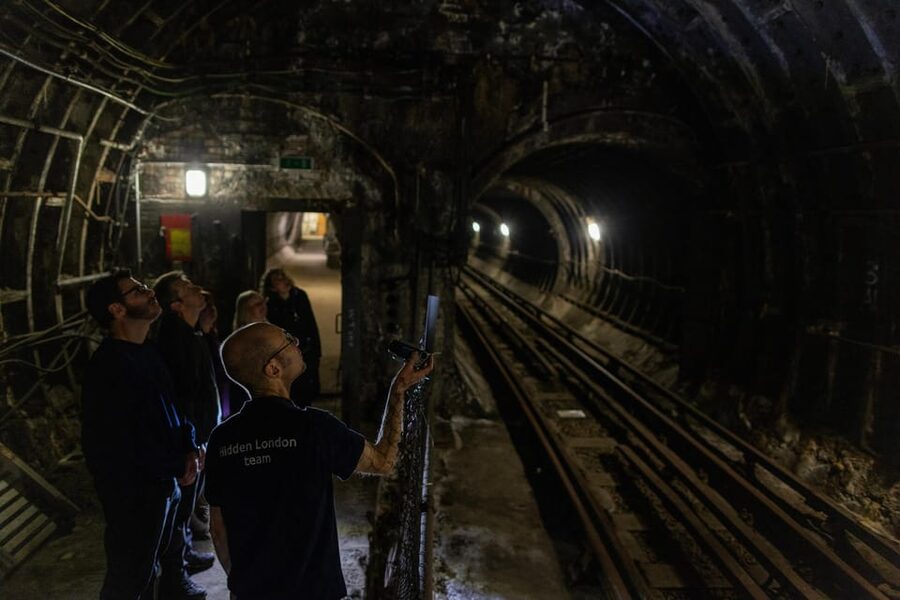
The Tube has rooms it forgot. This 85-minute tour takes you behind concealed doors at Holborn station, into closed platforms, old railway spaces, and parts of the station most passengers never see. I especially like the chance to view the Aldwych branch platforms and the original Edwardian details still in place. I also like that the guide connects the station to London’s wartime and transport history, rather than simply walking you through empty corridors.
The main drawback is the physical nature of the visit. You’ll face stairs, uneven ground, low lighting, and no elevators, so this is not a good fit if you have mobility limitations or feel uneasy in enclosed spaces. The tour is also in English only.
In This Review
- Key details before you book
- Why Holborn is more than a Tube stop
- Meeting at Gate Street and Kingsway
- Entering the closed parts of Holborn station
- The Aldwych branch and its two silent platforms
- The early signalling cabin
- From laboratories to wartime shelter
- The 1930s modernization that changed the map
- A living station, not only an old one
- How demanding is the 85-minute visit?
- Is $60.61 a fair price?
- Who should book this tour?
- My verdict on Holborn’s secret platforms
- FAQ
- Where does the Hidden Tube Tour of Holborn’s Secret Platforms begin?
- Where does the tour finish?
- How long does the tour last?
- What language is the tour conducted in?
- What will I see during the tour?
- Is the tour suitable for children?
- Is the tour suitable for people with mobility impairments?
- What should I bring and what is not allowed?
Key details before you book
- Two closed Aldwych platforms: See parts of the former branch line that have been closed for around 30 years.
- Original Edwardian design: Look for Leslie Green features, vintage posters, and an early 20th-century signalling cabin.
- A station with four original platforms: Holborn opened in 1906 as a complex serving the Piccadilly line.
- Stories from the Blitz: Learn how the station and its staff were affected during wartime.
- A short but active tour: The 85-minute walk includes stairs, uneven surfaces, and dimly lit areas.
- Central London meeting point: Meet on the corner of Gate Street and Kingsway, close to Holborn’s historic transport district.
Why Holborn is more than a Tube stop
Most people pass through Holborn with one goal: change trains, reach work, or walk toward the British Museum. Yet the station has a much stranger story beneath the pavements.
When it opened in 1906, Holborn was arranged as four platforms serving the Piccadilly line. Its creation helped reshape the surrounding area, which moved from a disreputable quarter into an important business district. That change gives the tour a useful starting point. You are not just looking at old railway rooms. You are seeing how a transport project helped alter central London.
The station also played a role in the 1930s modernization program. That work changed the Tube network and led to the closure of nearby British Museum station. The guide explains how planning decisions made nearly a century ago still affect the way you move through this part of London.
I like this kind of context because it gives purpose to the architecture. A tiled wall, a sealed passage, or a platform without trains becomes part of a larger story about growth, technology, and changing travel patterns.
A few more options to weigh up in London
- London: The London Eye Entry Ticket
★ 4.6 · 35,875 reviews - From London: Harry Potter Warner Bros Studio Tour
★ 4.7 · 26,588 reviews - London: Westminster to Greenwich River Thames Cruise
★ 4.5 · 22,836 reviews
Meeting at Gate Street and Kingsway
The tour begins on the corner of Gate Street and Kingsway, WC2B 6AA. The What3Words location is ///towers.rift.forest.
You should arrive ready to walk. The meeting point is in central London, but the tour does not include hotel pickup or drop-off. You make your own way there and return to the same point when the visit ends.
That return to the meeting point is convenient if you have another central London plan afterward. You could continue toward the Strand, Covent Garden, or the British Museum, though the tour itself does not include any of those places.
Bring a passport or ID card, comfortable shoes, and water. Food and drinks are not allowed during the visit, and large bags or luggage are not permitted. Open-toed shoes are also not allowed, which is worth remembering if you are dressing for a warm London day.
Entering the closed parts of Holborn station
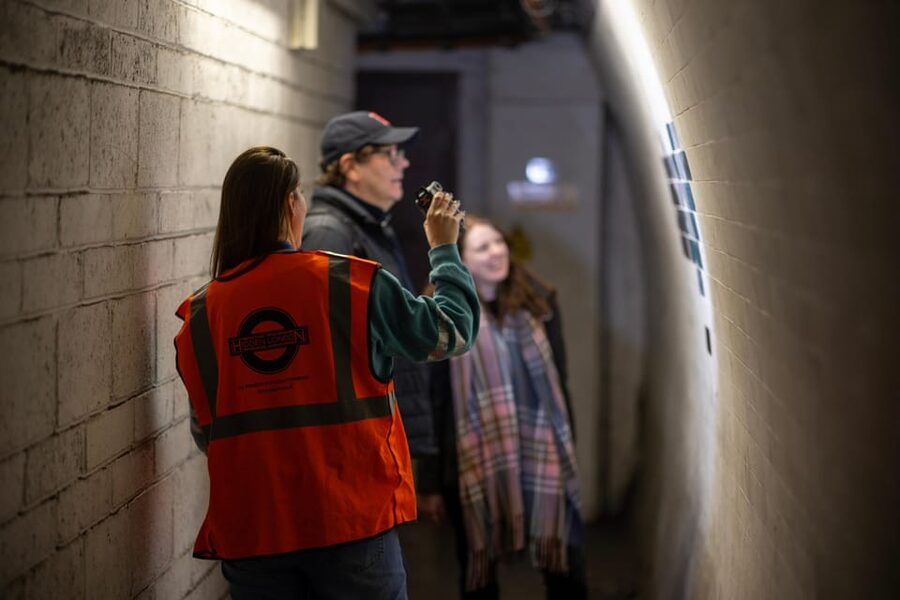
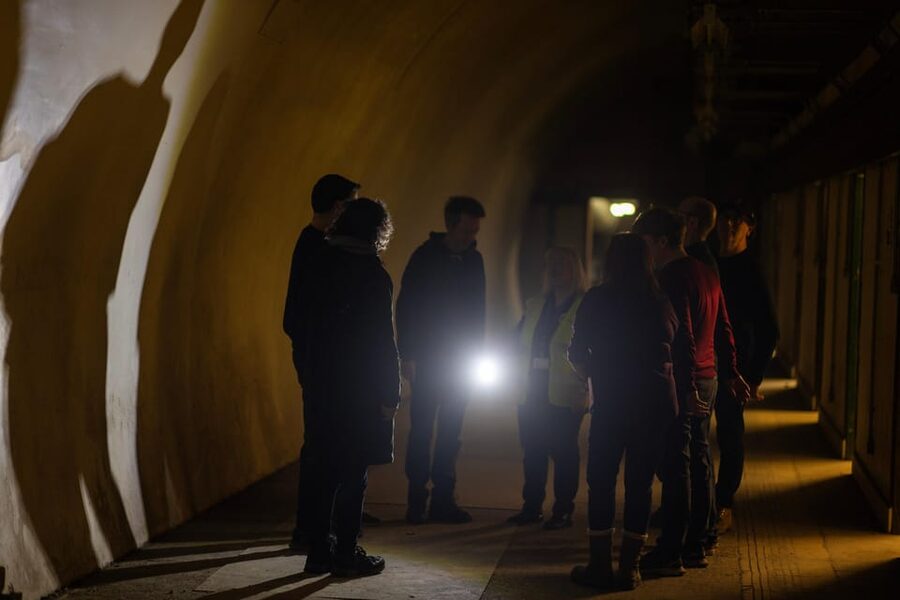
The first major thrill comes when you leave the public parts of the station and pass through concealed doors. Holborn is still a working interchange, so this is not a visit to an isolated museum piece. Trains continue to run, and the guide helps you understand the difference between the busy public station and the spaces tucked behind it.
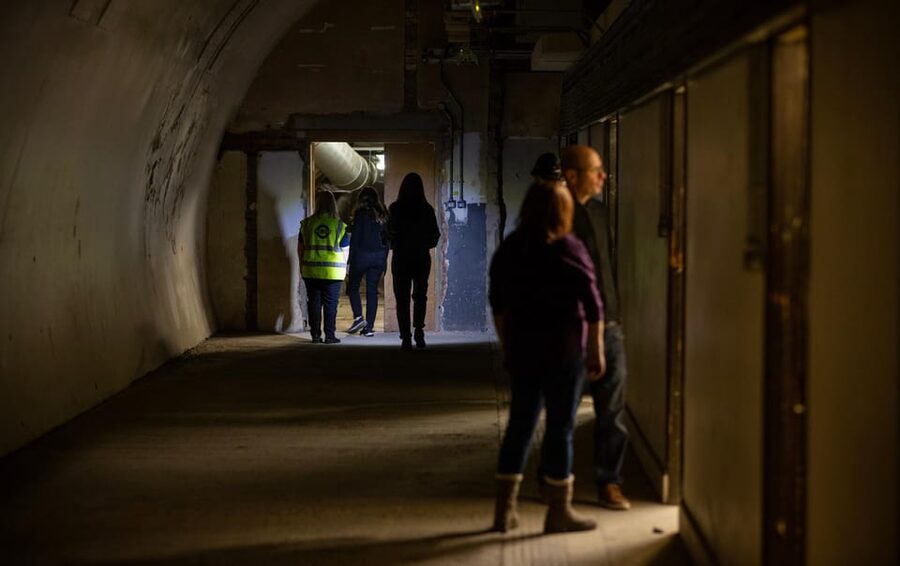
The hidden areas were not designed as a polished visitor attraction. You may encounter low lighting, uneven ground, and stairs. That roughness is part of the appeal, but it also means you need to watch your footing and keep your attention on the guide.
The tour provides an unexpected view of the Piccadilly line. This is one of the strongest parts of the experience because it lets you see the working railway from a position normally closed to passengers. The noise, movement, and engineering of the modern Tube sit alongside old rooms that have not served regular passengers for decades.
You should not expect a leisurely stroll. The visit covers a lot of ground for 85 minutes, and the physical setting limits how slowly the group can move. Wear shoes with a firm sole and avoid bringing anything you would struggle to carry up stairs.
The Aldwych branch and its two silent platforms
The former Aldwych branch is the centerpiece of the tour. You visit two closed platforms, where vintage posters and original architectural features remain in place.
Aldwych was a little-used branch connected with Holborn. The quiet platforms offer a sharp contrast to the active Piccadilly line. Instead of crowds, announcements, and trains arriving every few minutes, you get a sense of a railway space paused in time.
The old posters are especially useful because they make the platforms feel like working parts of the Underground rather than blank abandoned rooms. They help you picture how the station looked when advertising and station design were more closely tied to the era in which they were created.
You also see Leslie Green Edwardian design. Green’s work is closely associated with the early Underground, and the surviving details give the station a strong visual identity. The red architectural elements, tiled surfaces, and period styling are not simply decoration. They show how London’s early Tube companies tried to create a recognizable public image for a new form of transport.
The platforms have been closed to the public for around 30 years. That long absence is important. You are not simply visiting a platform that is occasionally unused. You are entering a part of the station that ordinary passengers have been unable to reach for a generation.
A different kind of day out entirely:
- Magical London: Harry Potter Guided Walking Tour
★ 4.7 · 22,044 reviews - London: Madame Tussauds London
★ 4.6 · 20,915 reviews - London: Warner Bros. Studio Tour with Transfers
★ 4.7 · 17,586 reviews - London: Tower Bridge Entry Ticket
★ 4.7 · 15,560 reviews
The early signalling cabin
Another worthwhile stop is the original early 20th-century signalling cabin. Signalling is easy to overlook when you ride the Tube, since passengers usually see only the train, the platform, and the station signs.
Here, the signalling equipment gives you a closer look at the systems that allowed trains to move safely through the Underground. The cabin also helps explain how railway work changed as London’s network expanded and became more complicated.
The cabin is valuable even if you are not an engineering enthusiast. It puts human scale on the railway. Someone had to watch, communicate, respond, and make decisions in these rooms. The tour’s focus on staff experiences makes the equipment feel connected to real working lives.
Because the tour is led by an expert guide, you are not left to guess what each feature did. The guide explains the spaces and tells first-hand accounts connected with people who worked in or used Holborn and the Aldwych branch. No individual guide names are provided, but the guides are described as expert, and their subject knowledge is the part of the experience most strongly praised, with the tour receiving a full 5 out of 5 rating from seven reviews.
From laboratories to wartime shelter
The closed spaces were used for more than railway operations. Over the years, parts of Holborn and the Aldwych branch served as scientific laboratories, shelter for London Transport staff during wartime, and even a home for a model rail club.
These later uses are what keep the tour from becoming a simple architecture walk. A closed platform can look empty, but its history may include research, recreation, and emergency shelter. The guide shows how London adapted existing underground rooms when the city needed them for new purposes.
The wartime section is likely to be especially striking. You hear how staff may have felt working there during the height of the Blitz and how the Underground’s role extended beyond carrying passengers. The station was part of the city’s working infrastructure, and the people who maintained it faced the same danger and uncertainty as other London workers.
The tour does not present wartime history as a distant museum display. It ties the subject to the rooms around you. Standing in a former transport space while hearing about shelter and staff life gives the story a direct physical connection.
The 1930s modernization that changed the map
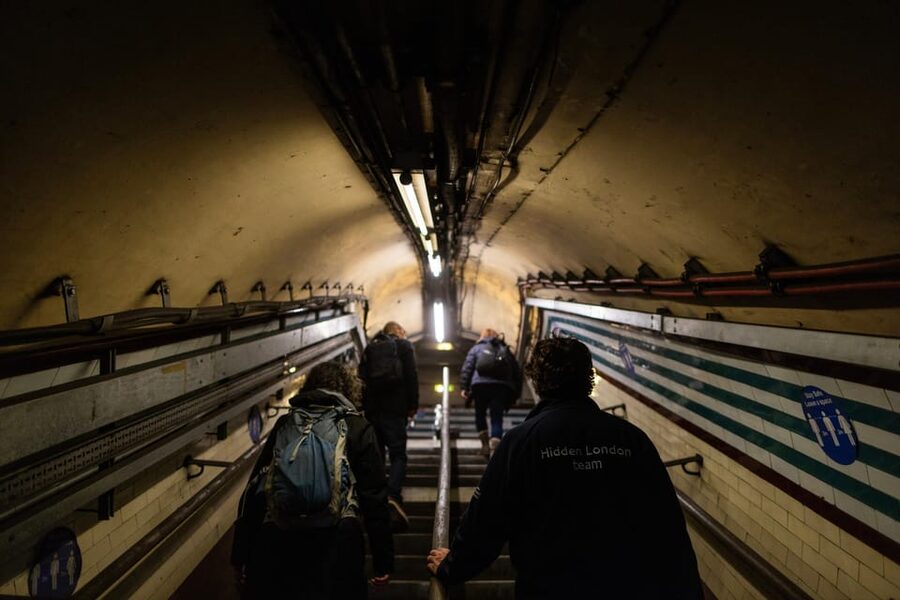
The 1930s modernization program is another key thread. London’s Underground was being improved and reorganized, and those decisions affected nearby stations.
The closure of British Museum station is one example. The guide explains how modernization led to that change, giving you a clearer idea of why some stations disappeared while others became more important. It also shows that the Tube has never been a finished system. Stations are altered, closed, connected, and repurposed as the city changes.
This background is useful if you plan to visit the British Museum afterward. The museum itself is not part of the tour, but knowing that a former station once served this area adds another layer to your walk through central London.
The story also helps you read the station more carefully. Instead of seeing old and new features as random, you begin to notice the results of different construction periods and transport plans.
A living station, not only an old one
The tour ends with the station’s future. Holborn remains part of a large London Underground signaling upgrade, so the visit links early Tube technology with current modernization work.
That balance is one of the experience’s best features. You see the original signalling cabin, then hear how the network is being updated today. The Underground’s story is not just about vanished platforms and vintage posters. It is also about maintaining a huge, heavily used transport system.
This modern connection gives the tour more value than a walk through preserved rooms. You learn that the station is still changing, even as some of its oldest sections remain behind locked doors.
It also gives you a practical sense of why certain areas are inaccessible. Working Tube stations contain active railway systems, safety restrictions, and construction or upgrade work. The tour lets you see selected spaces without treating the whole station as a museum.
How demanding is the 85-minute visit?
The tour lasts 85 minutes, but the short time does not mean the visit is physically easy. You walk through areas with stairs, uneven ground, low lighting, and no elevators.
You should not book this if you need step-free access. It is specifically unsuitable for people with mobility impairments, and the lack of elevators matters here. The tour is also not suitable for anyone with claustrophobia.
Children must be at least 10 years old. There can be a maximum of four children aged 10 to 15 for each adult, so families need to plan their group carefully. Younger children cannot join.
Comfortable closed shoes are essential. Bring water for before or after the tour, but food and drinks are not allowed during the activity. Leave luggage and large bags elsewhere, since they are not permitted.
The English-only format is fine for fluent English speakers, but you should think twice if you rely on translation or need a slower pace. The guide’s spoken explanations carry much of the value, especially during the technical and wartime sections.
Is $60.61 a fair price?
At $60.61 per person, this is not a cheap way to spend an hour and a half in London. You are paying for access to restricted transport spaces, a specialist guide, and a focused story that you cannot get from a normal Tube journey.
The value depends on your interests. If you enjoy railway history, old architecture, wartime London, or unusual access behind public places, the price is easier to justify. The tour brings together several subjects in one compact experience: the birth of Holborn station, the Aldwych branch, signalling, scientific work, wartime shelter, and modern Underground upgrades.
If you are mainly looking for a broad introduction to London, I would spend the money elsewhere. This is a narrow subject, and much of the visit takes place in dim, unfinished, or restricted areas rather than grand historic rooms.
The full 5 out of 5 rating from seven reviews, along with specific praise for the guides’ expertise, supports the idea that the tour delivers well for the right audience. Still, that small review count should not be treated as proof that every visitor will enjoy the physical conditions. The experience is specialized, and the restrictions are real.
The option to reserve now and pay later adds useful flexibility. You can also cancel up to 24 hours in advance for a full refund, which helps if your London schedule is still shifting.
Who should book this tour?
I would recommend it to you if you have already seen London’s major museums and want a more unusual look at the city. It suits people who enjoy transport systems, preserved architecture, industrial spaces, and stories about the workers who kept London moving.
It is also a good choice for a second or third visit to London. You do not need another standard sightseeing loop. Instead, you get a focused experience in a familiar part of the city and leave with a new way to understand the Tube.
Families with older children can enjoy it, provided everyone is comfortable with stairs, darkness, and uneven surfaces. The minimum age is 10, and adults must observe the limit of four children aged 10 to 15 per adult.
I would skip it if you want easy walking, bright spaces, or a relaxed museum visit. I would also skip it if enclosed underground rooms make you uncomfortable. The tour is guided, but the setting remains a working transport environment with restricted areas and limited access.
My verdict on Holborn’s secret platforms
Book this tour if you want London history at close range, with old platforms, railway equipment, wartime stories, and a working Tube station all in one visit. The Aldwych branch, original design details, and signalling cabin give you things to see, while the guide supplies the human stories that make the rooms matter.
Skip it if your group needs step-free access, dislikes confined spaces, or prefers a wide-ranging city tour. For the right visitor, $60.61 buys rare access and a strong 85-minute lesson in how London’s Underground grew, changed, and continues to evolve.
FAQ
Where does the Hidden Tube Tour of Holborn’s Secret Platforms begin?
The tour begins on the corner of Gate Street and Kingsway, WC2B 6AA. The What3Words location is ///towers.rift.forest.
Where does the tour finish?
The activity ends back at the meeting point on the corner of Gate Street and Kingsway.
How long does the tour last?
The tour lasts 85 minutes. Starting times vary, so you need to check availability for the date you want.
What language is the tour conducted in?
The live tour guide conducts the tour in English.
What will I see during the tour?
You will see closed areas of Holborn station, two former Aldwych branch platforms, vintage posters, Leslie Green Edwardian design, and an original early 20th-century signalling cabin.
Is the tour suitable for children?
Children under 10 cannot join. For children aged 10 to 15, there is a maximum of four children per adult.
Is the tour suitable for people with mobility impairments?
No. The tour includes stairs, uneven ground, low lighting, and no elevators, so it is not suitable for people with mobility impairments.
What should I bring and what is not allowed?
Bring a passport or ID card, comfortable shoes, and water. Food, drinks, luggage, large bags, and open-toed shoes are not allowed.
Just added in London
- The Best of British Cooking Class & Dining Experience★ 5.0 · 1 review
- London: Live Comedy Show at Big Belly Bar and Comedy Club★ 4.5 · 80 reviews
- London: British Museum Highlights Guided Small Group Tour★ 4.9 · 113 reviews
- The Best Highlights of London Walking Tour & Boat Cruise★ 5.0 · 1 review
- The Beatles London Walking Tour★ 4.2 · 147 reviews
- The Authentic Walking Tour with Indian Tasting Meal★ 4.8 · 4 reviews
- Iconic London: Bard, Beatles, Bond & Baker Street★ 4.9 · 15 reviews
- London: Tate Britain Official Discovery Tour★ 4.7 · 7 reviews
London Tours, compared.

Westminster to Greenwich River Thames Cruise
Read our review →
Magical London: Harry Potter Guided Walking Tour
Read our review →