

REVIEW · WALKING TOURS
London: Historic Spitalfields Walk
Old London survives in plain sight. This private Spitalfields walking tour pairs 300-year-old Huguenot houses with stories of the Protestants, Jews, Catholics, and Muslims who shaped East London. I like the focus on real streets and working lives, and I like that the walk avoids the usual Jack the Ripper circuit. The main drawback is the price, especially for only two hours if your group has fewer than four people.
The tour begins outside Liverpool Street Station and ends near Old Spitalfields Market, a handy finish if you want lunch afterward. Guide Julia has a clear, engaging way of explaining how immigrants fleeing religious intolerance and pogroms brought skills and craftsmanship to London. You should also plan for rain, since this walk runs in all weather.
In This Review
- Key points at a glance
- Starting at Liverpool Street Station
- Huguenot houses and the work above the street
- A charnel house and the problem of too many graves
- Churches, synagogues, mosques, and a soup kitchen
- Street art under the City towers
- Julia’s role as a Blue Badge guide
- What two hours feels like on foot
- What the $458 group price really means
- Who will enjoy this Spitalfields walk?
- Should you book the Historic Spitalfields Walk?
- FAQ
- Where does the Historic Spitalfields Walk begin?
- Where does the walking tour end?
- How long does the tour last?
- How many people can join the private group?
- What is included in the price?
- Which languages are available?
- Is the tour wheelchair accessible?
- Does the tour operate in bad weather?
- Can I cancel and receive a refund?
Key points at a glance
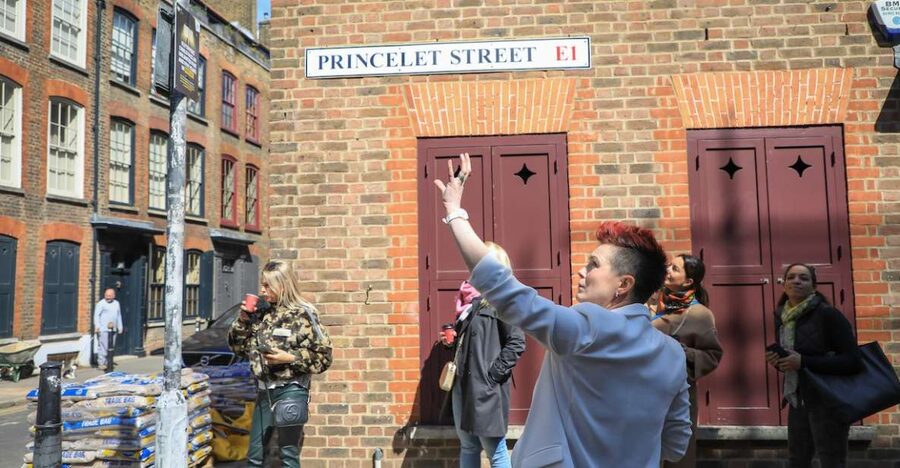
- Huguenot silk-weaving houses: See 300-year-old homes with attic workshops where French Protestant silk weavers once lived and worked.
- An 800-year-old charnel house: Learn how bones were stored when a nearby graveyard could no longer hold more burials.
- A guide-led look at immigration: Hear how several religious and cultural communities left their mark on Spitalfields.
- East End street art: The historic streets are mixed with modern murals and changing public art.
- Private two-hour route: Your group of up to eight gets a dedicated Blue Badge guide rather than joining a large party.
- A useful market finish: The walk ends around the corner from Old Spitalfields Market, with plenty of lunch choices.
Starting at Liverpool Street Station
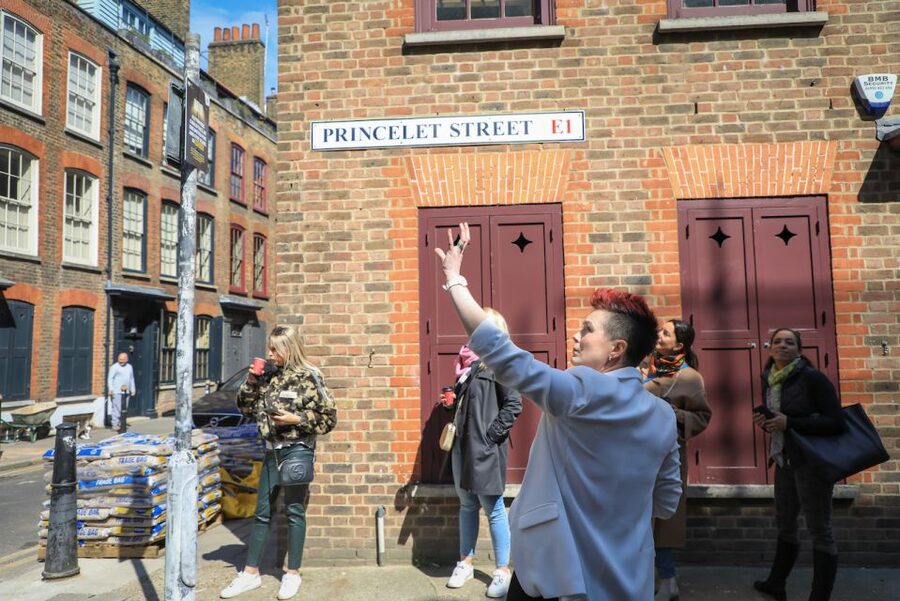
Your meeting point is outside Liverpool Street Station at the Bishopsgate exit, near the top of the stairs and escalators and close to Eataly London. The address shown during booking may not be exact, so use these landmarks instead.
This is a practical starting place. Liverpool Street is right at the edge of Spitalfields, so you move from modern transport links into older streets almost at once. The contrast sets up the whole walk: City of London towers rise nearby, while low brick houses preserve the feel of an earlier East End.
I would allow a few minutes to find the correct exit. The station is large, and the tour begins outside rather than inside. Once you meet the guide, the route follows a circular path, bringing you back toward the same general area without requiring another complicated journey across London.
The format is private for up to eight people. That matters most if you are traveling as a family or small group and want to ask questions without competing with a crowd. It also makes the fixed group price easier to assess. At $458 for the full group, the cost works out to $57.25 per person for eight people. For two people, it becomes $229 each, which is a serious price for a two-hour walk.
More History Tours in London
- London: Historic Pubs of Central London Walking Tour
★ 4.9 · 1,065 reviews - London: Soho Music and Historic Pubs Walking Tour
★ 4.9 · 836 reviews - London: Rock ‘n’ Roll History Tour
★ 4.6 · 645 reviews
Huguenot houses and the work above the street
One of the strongest parts of the route is the group of old houses connected with French Huguenot silk weavers. These homes are about 300 years old, and their design helps you picture a time when a house was also a workplace.
The key detail is the attic workshop. Silk weaving took place above the living quarters, so the upper floors were not simply spare rooms or storage. They were part of the family trade and helped make Spitalfields an important place for skilled textile production.
I find this kind of stop more useful than simply looking at an old facade. A date on a plaque tells you when a building was made. An attic workshop tells you how people used it, how work fitted into home life, and why the area developed its particular character.
The Huguenot story also gives the walk a wider purpose. These French Protestants came to London because of religious pressure in France. They brought technical skills and helped build the city’s economy. The route uses Spitalfields to show immigration as part of London’s daily development, not as a side note.
Do not expect to enter every historic building. The information describes a guided street route, so the value comes from seeing the houses in place and hearing their story from the guide. If you want a tour built around interiors, museum rooms, or long visits inside churches, this will feel more limited.
A charnel house and the problem of too many graves

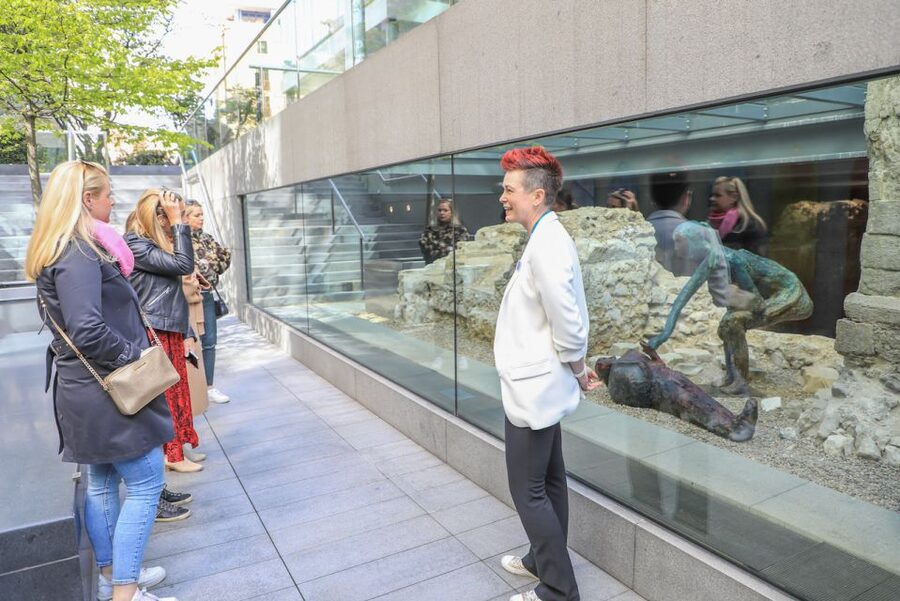
The remains of an 800-year-old charnel house add a darker note to the walk. A charnel house was used to store human bones, in this case after an overflowing graveyard could no longer accommodate more burials.
This is a small but powerful detail because it shows the physical pressures of medieval London. Cities grow, people die, and burial space runs out. The charnel house is a reminder that old London was not only pretty brickwork and picturesque lanes. It was crowded, practical, and often grim.
You will hear about the remains as part of the route rather than visiting a large preserved monument. That makes the guide especially important. Julia’s role is to explain what you are seeing and connect it to the area’s past without turning the stop into a random piece of archaeology.
The subject may not suit very young children or anyone looking for a light sightseeing stroll. Still, it gives the walk a useful change of tone. The tour moves from trade and migration to death and urban planning, showing how many layers can occupy one compact part of London.
Churches, synagogues, mosques, and a soup kitchen
Spitalfields became home to several religious and cultural communities. Along the route, you pass churches, synagogues, and mosques, with the guide explaining why Protestants, Jews, Catholics, and Muslims came to this part of East London and how each group affected it.
The point is not simply to count religious buildings. You get a picture of a neighborhood shaped by arrival, settlement, work, worship, and change. The area’s identity comes from several communities sharing streets over time, sometimes leaving behind buildings and institutions that still help define Spitalfields.
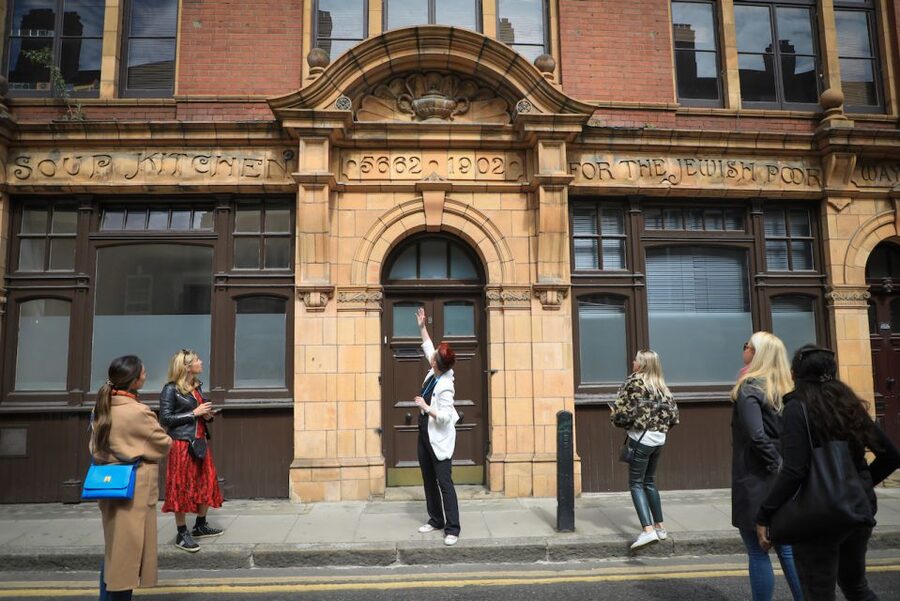
An old Jewish soup kitchen is also part of the walk. It remained in use until the 1990s, which brings the story much closer to the present than the Huguenot houses or medieval charnel house. That date helps you see that local social support was not an abstract Victorian idea. It served people in living memory.
I like this range of dates. You are not being led through one frozen period. Instead, the route moves from medieval London to the 18th century and then toward modern East London. The result is a better sense of how a district changes while still carrying visible traces of earlier residents.
The walk does not promise entry into each church, synagogue, mosque, or soup kitchen. Consider these places viewing and storytelling stops along a street route. The guide’s explanation is what ties them together.
More Walking Tours in London
- Magical London: Harry Potter Guided Walking Tour
★ 4.7 · 22,044 reviews - London: The Original Jack the Ripper Walking Tour
★ 4.7 · 7,833 reviews - London: Harry Potter Movies Walking Tour (Kids Go Free)
★ 4.7 · 3,071 reviews - London: The Great British Rock and Roll Music Walking Tour
★ 4.9 · 1,783 reviews
Street art under the City towers
Spitalfields is also known for street art, and you will see plenty of it during the walk. This gives the route a modern edge and keeps the experience from becoming a parade of old buildings.
The contrast is part of the appeal. You might look at a centuries-old house and then find a colorful piece of street art nearby, with the City’s skyscrapers rising behind both. Old and new are not separated into different parts of London here. They sit close together.
Street art changes, of course. A mural or painted wall may look different on another visit, and not every piece will appeal to you. That is one reason a local guide adds value. A guide can point out what is worth noticing on the day rather than relying on a fixed list of permanent sights.
This section should suit you if you enjoy urban detail and photography, but it may disappoint if you expect a formal gallery-style tour of major works. The art is part of the wider neighborhood story, not the sole subject.
Julia’s role as a Blue Badge guide
The guide can make or break a walking tour, and this experience puts a Blue Badge guide at its center. Julia led the tour described in the supplied material, and her presentation was praised for being clear and well informed.
That praise fits the needs of this route. Spitalfields has many layers, but the evidence is not always obvious. A house may look like an attractive old building unless someone explains the attic weaving rooms. A religious building may seem separate from the rest of the neighborhood unless someone connects it to migration and work.
Julia’s approach also appears to avoid sensational East End storytelling. The tour is designed for people who want immigration, craftsmanship, architecture, and community life rather than another Jack the Ripper walk. That is a useful distinction when several tours in this part of London compete for attention.
The tour is offered in English or German. You should choose the language that lets you follow detailed historical explanations with ease. Since the walk lasts two hours, there is enough time for context, but not enough for a long pause at every stop.
What two hours feels like on foot
The walk is described as light walking, not a strenuous hike. You should still wear comfortable shoes because the experience is entirely outdoors and moves through city streets.
The circular route is efficient. You see a range of sites without spending time on transport between them, then finish near Old Spitalfields Market. That layout works well if you want a focused introduction to the area before continuing on your own.
Rain is the main practical concern. The tour runs rain or shine, so bring suitable clothing and do not assume poor weather will cancel it. London rain can make a historic walk less pleasant, especially when you are listening outdoors, but the route does not require a full day commitment.
The walk is wheelchair accessible, which makes this a useful option for many visitors with mobility needs. The tour data does not provide details about every surface, incline, or restroom stop, so you may want to confirm any specific access needs before booking.
What the $458 group price really means
The price is fixed at $458 per group of up to eight people. For a full group, that is reasonable for a private guide in central London, particularly if you value being able to ask questions and keep the pace suited to your party.
For a couple, the calculation changes. Two hours at $229 per person is expensive compared with a large shared walking tour. You are paying for privacy, a dedicated Blue Badge guide, and a route built around your group rather than a cheaper seat in a larger crowd.
I would book it for a family, group of friends, or several couples traveling together. Eight people sharing the cost receive much better value than one or two people booking alone. If your priority is the lowest possible price, look for a shared walk instead.
The booking terms also reduce some planning risk. You can reserve now and pay later, and cancellation is free up to 24 hours before the tour for a full refund. Those options are useful if your London schedule is still changing, though they do not alter the underlying price.
Who will enjoy this Spitalfields walk?
I would recommend this tour to you if you want:
- A private experience for a small group
- Immigration and community stories rather than crime-tour drama
- Historic homes viewed from the street
- A guide who can explain architecture and local institutions
- A short introduction to East London before lunch or further sightseeing
- A mix of medieval remains, religious buildings, old industry, and street art
It is less suitable if you want a full-day tour, extensive indoor access, or a low-cost activity for one or two people. The two-hour length is convenient, but it also means the walk offers an overview rather than a complete study of Spitalfields.
The finish near Old Spitalfields Market is a real practical plus. You can continue the neighborhood experience with food and browsing rather than ending beside an anonymous station entrance. The exact lunch choice is up to you, but the location gives the tour a useful next step.
Should you book the Historic Spitalfields Walk?
Book this if you want to understand how several immigrant communities, trades, and faiths shaped one small part of London. The Huguenot silk houses, charnel house remains, Jewish soup kitchen, religious buildings, and street art give the route plenty of variety.
I would be most comfortable recommending it to a group of four to eight people, where the private price makes sense. Couples should book only if Julia’s focused local history and a private guide matter more to them than finding the cheapest walking tour.
For a short, rain-or-shine introduction to Spitalfields, this is a thoughtful choice. It gives you more than old buildings to photograph. It helps you read the streets as evidence of work, migration, faith, and change.
FAQ
Where does the Historic Spitalfields Walk begin?
The tour begins outside Liverpool Street Station by the Bishopsgate exit, at the top of the stairs and escalators, close to Eataly London.
Where does the walking tour end?
The circular walk ends around the corner from Old Spitalfields Market.
How long does the tour last?
The tour lasts two hours.
How many people can join the private group?
The price covers a group of up to eight people.
What is included in the price?
A tour guide is included.
Which languages are available?
The tour is available in English and German.
Is the tour wheelchair accessible?
Yes, the tour is listed as wheelchair accessible.
Does the tour operate in bad weather?
Yes. The walk takes place rain or shine.
Can I cancel and receive a refund?
You can cancel up to 24 hours in advance for a full refund. You can also reserve now and pay later.
Just added in London
- The Best of British Cooking Class & Dining Experience★ 5.0 · 1 review
- London: Live Comedy Show at Big Belly Bar and Comedy Club★ 4.5 · 80 reviews
- London: British Museum Highlights Guided Small Group Tour★ 4.9 · 113 reviews
- The Beatles London Walking Tour★ 4.2 · 147 reviews
- The Best Highlights of London Walking Tour & Boat Cruise★ 5.0 · 1 review
- The Authentic Walking Tour with Indian Tasting Meal★ 4.8 · 4 reviews
- Iconic London: Bard, Beatles, Bond & Baker Street★ 4.9 · 15 reviews
- Terrific East-End Private Food tour with a friendly local.★ 5.0 · 1 review
Walking Tours, compared.

Magical London: Harry Potter Guided Walking Tour
Read our review →

University and City Walking Tour with Alumni Guide
Read our review →
Harry Potter Movies Walking Tour (Kids Go Free)
Read our review →
The Great British Rock and Roll Music Walking Tour
Read our review →
Jack the Ripper Walking Tour – Ripper Vision Tours
Read our review →
Other lists this tour turns up in