
REVIEW · WALKING TOURS
London: Iconic Theatres Walking Tour
Theatre stories make London walkable. This 3.5-hour tour links famous West End houses with Shakespeare’s Bankside and the National Theatre, turning a list of buildings into a lively account of actors, hits, scandals, and stage disasters. I like the wide sweep across more than 400 years, and I like that the route includes both grand commercial theatres and major public institutions.
The main consideration is simple: this is a walking tour of public theatre sites, not a ticketed theatre-inside visit. You will see and discuss the buildings from outside, so anyone hoping to tour auditoriums or watch a performance should plan a separate booking. The guide is English-speaking, and Charlie has a reputation for making the subject worthwhile and easy to follow.
In This Review
- Key points at a glance
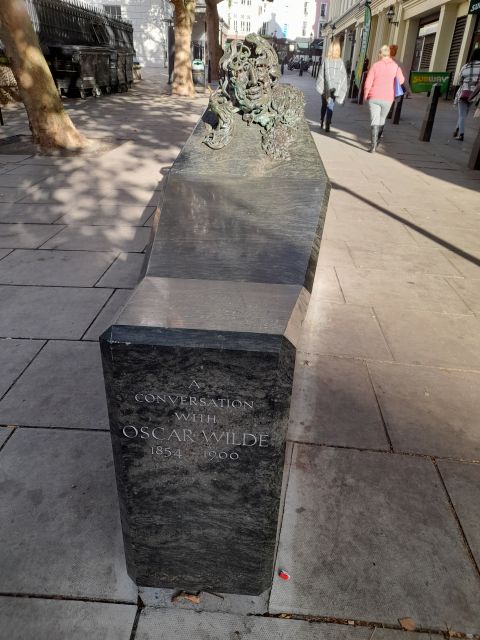
- Starting beside Oscar Wilde at Charing Cross
- From the Duke of York’s to the Theatre Royal Haymarket
- Star names around the Prince of Wales and Piccadilly theatres
- The Palace, Ambassadors, St Martin’s, and The Arts
- Drury Lane, the Fortune, and the Lyceum
- Crossing to the National Theatre and Shakespeare’s Bankside
- The final secret theatre location
- What $33 gets you
- Who will enjoy this walk most
- Practical advice before you book
- Should you book London’s theatre walk?
- FAQ
- Where does the London Iconic Theatres Walking Tour meet?
- How long does the tour last?
- What is the price?
- What language is the tour conducted in?
- Is the tour wheelchair accessible?
- Does the tour include theatre admission?
- Which parts of London does the tour cover?
- Which theatres are included?
- Which historical figures and actors are discussed?
- Can I cancel for a refund?
- Can I reserve now and pay later?
Key points at a glance
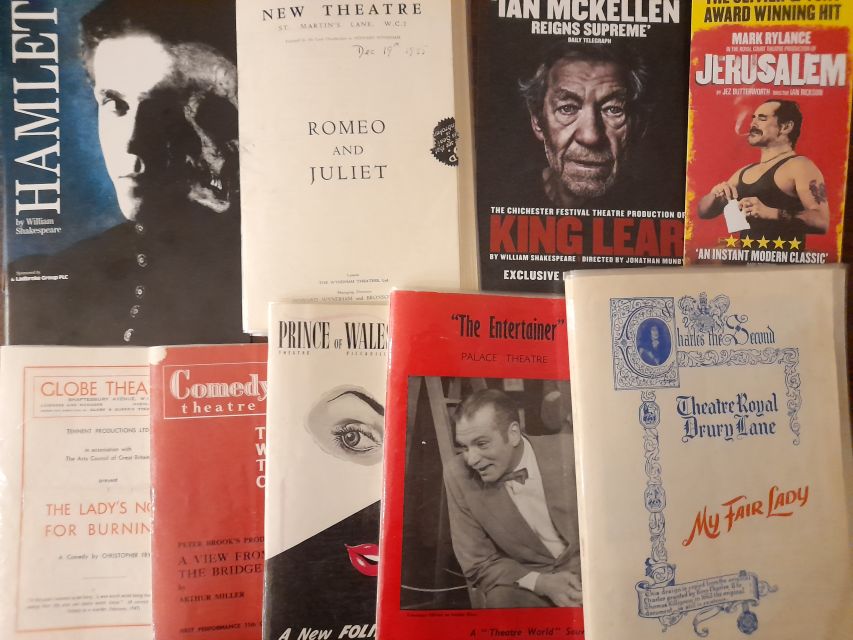
- 400-plus years of stage stories: Hear about William Shakespeare, Laurence Olivier, Julie Andrews, Judi Dench, Daniel Day-Lewis, and many other major names.
- A full West End circuit: Visit a long list of theatres, including the Haymarket, Drury Lane, Lyceum, Palace, Apollo, Gielgud, Sondheim, and Shakespeare’s Globe.
- West End meets Bankside: The tour connects the commercial theatre district with the National Theatre and the Shakespearean setting south of the Thames.
- A story-led walk: The focus is on famous productions, star careers, triumphs, scandals, and notorious failures rather than dry architectural facts.
- Good value for theatre fans: At $33, the price works out to about $9.43 per hour for a guided look at London’s stage world.
- Easy meeting point: Find the guide by the Oscar Wilde statue opposite Charing Cross Station.
Starting beside Oscar Wilde at Charing Cross
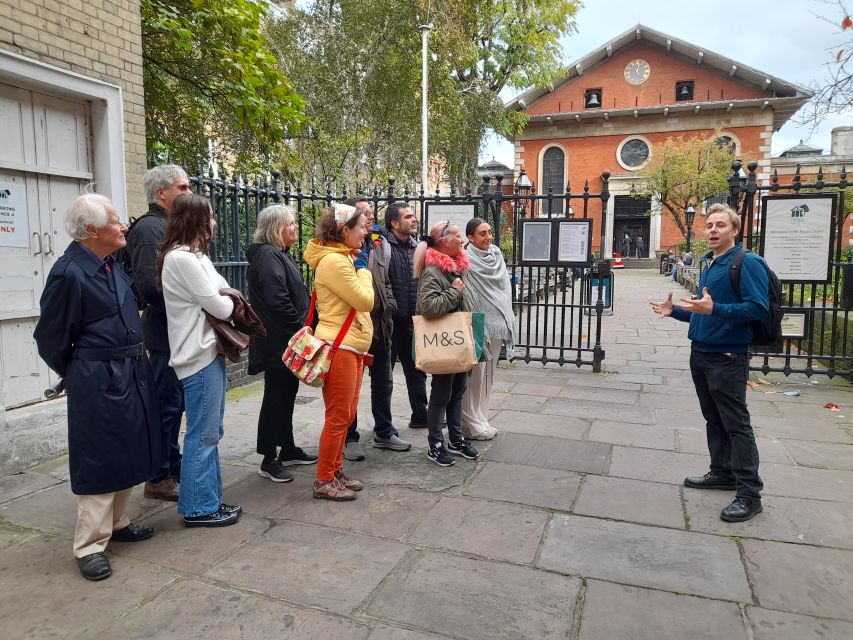
The meeting point by the Oscar Wilde statue, opposite Charing Cross Station, is a sensible place to begin. It puts you close to the West End and gives the group an immediate connection to a playwright whose wit and public life fit the tone of London’s theatre world.
Arrive ready to walk for three and a half hours. The exact starting time varies, so you need to check availability when booking. Since the tour covers many public theatre sites, comfortable shoes matter more than dressed-up evening clothes.
The first benefit of this meeting point is orientation. Charing Cross is close to several major West End streets, so you can quickly move into the area where theatres cluster together. The second is the sense of occasion: you are not starting at a generic bus stop, but beside a statue tied to London’s literary and theatrical story.
The tour is wheelchair accessible, though the route covers city streets and public areas. If you have particular mobility needs, it is still sensible to confirm the current route before setting out, since a long urban walk can involve changing surfaces and busy pavements.
More Walking Tours in London
- Magical London: Harry Potter Guided Walking Tour
★ 4.7 · 22,044 reviews - London: The Original Jack the Ripper Walking Tour
★ 4.7 · 7,833 reviews - London: Harry Potter Movies Walking Tour (Kids Go Free)
★ 4.7 · 3,071 reviews
From the Duke of York’s to the Theatre Royal Haymarket
The West End section takes you past a remarkable run of theatres. The Duke of York’s Theatre and the Noel Coward Theatre introduce you to the smaller and more intimate end of the West End circuit, while the Theatre Royal Haymarket carries the weight of a much older theatrical tradition.
This part of the walk is valuable because the names on theatre fronts can blur together after a few days in London. A guide gives each building a role. You learn why one theatre matters, which stars or productions are linked to it, and how the West End developed as a connected theatre district rather than a collection of unrelated venues.
The Theatre Royal Haymarket, Her Majesty’s Theatre, and the nearby Harold Pinter Theatre help show the variety of London’s stage houses. You may see one theatre associated with a long-running musical, another with serious drama, and another with a famous actor or production. The point is not simply to count buildings. It is to connect places with the people and performances that made them famous.
Because the tour covers many stops, the time spent at each one will be limited. You should expect a moving conversation rather than a detailed architectural inspection of every façade. That is a fair trade for the number of theatres included.
Star names around the Prince of Wales and Piccadilly theatres
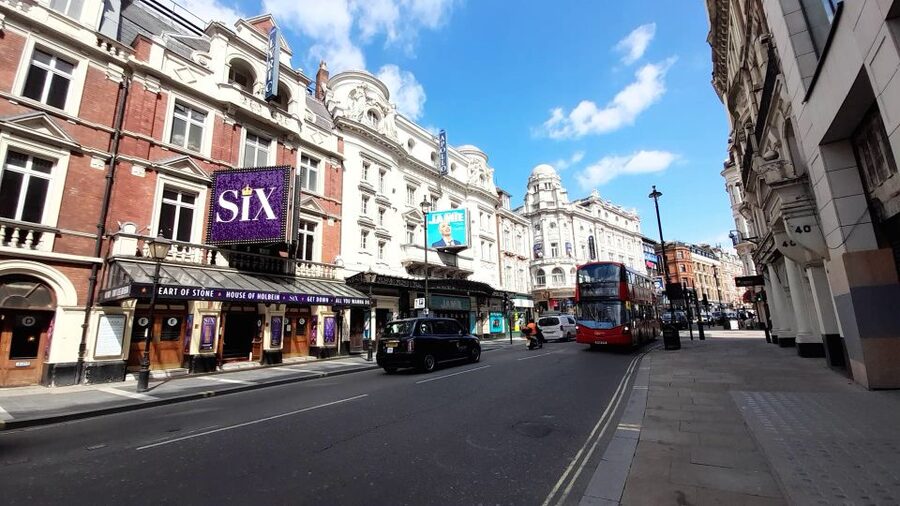
The Prince of Wales, Lyric, Apollo, Gielgud, and Sondheim theatres keep the tour in the heart of the West End. Here, the subject shifts naturally toward modern stage careers and the machinery of major productions.
The star list is broad. William Shakespeare anchors the earliest period, while Laurence Olivier, Julie Andrews, Judi Dench, and Daniel Day-Lewis represent different generations of British and international performance. Hearing those names in connection with specific theatre sites makes the history more memorable than a simple list of famous actors.
I especially like this part for visitors who already have an evening show booked. Nathan, who took the tour during a London trip, found the background useful for theatres where he was seeing performances. That is a practical advantage: the walk can give you a little context before you take your seat later that night.
The tour also promises the major anecdotes and infamous disasters of the English stage. That keeps the mood from becoming too academic. Theatre history is full of triumphs, but failed productions, backstage mishaps, and public scandals often make the best stories. You get a more human view of the stage, where a famous name does not guarantee a successful show.
The Palace, Ambassadors, St Martin’s, and The Arts
The Palace Theatre, Ambassadors Theatre, St Martin’s Theatre, and The Arts Theatre add more detail to the West End picture. These stops help you see how close London’s theatres are to one another and how many different kinds of stage work can exist within a few streets.
The Palace is one of the grand names on the route, while the Ambassadors and St Martin’s give you another chance to compare different theatre identities. The Arts Theatre adds another layer to the story. You are not just hearing about the biggest houses. You are also seeing venues with their own place in the theatre district.
This is where a guide’s delivery matters. A flat list of names would be tiring by the middle of a 3.5-hour walk. Charlie has been singled out for knowing the subject and making the tour worthwhile, which suggests that the experience depends heavily on the individual guide’s storytelling. That is common with specialist walking tours, and it is worth keeping in mind when you book.
You may also find that this stretch is the best time to ask questions. If you want to know how productions move between theatres, why certain venues attract particular types of shows, or which stars are tied to a building, ask as you go. The tour is designed around live guiding, not an audio recording.
A different kind of day out entirely:
- London: The London Eye Entry Ticket
★ 4.6 · 35,875 reviews - From London: Harry Potter Warner Bros Studio Tour
★ 4.7 · 26,588 reviews - London: Westminster to Greenwich River Thames Cruise
★ 4.5 · 22,836 reviews - London: Madame Tussauds London
★ 4.6 · 20,915 reviews
Drury Lane, the Fortune, and the Lyceum
The Theatre Royal Drury Lane, Fortune Theatre, and Lyceum Theatre bring some of the route’s most recognizable names. These venues help explain why London remains such an important stage city.
Drury Lane carries particular weight because it is one of the great theatre names in London. The Fortune offers a contrast in scale and character, while the Lyceum adds another major stop to the route. You will hear how productions, performers, and public taste have changed across the centuries.
This is also a useful section for understanding the difference between seeing a show and understanding its setting. When you attend a performance, you naturally focus on the actors and story in front of you. On this walk, you step back and consider the theatre as a living institution with a long record of successes and failures.
Do not expect every story to appeal equally. If you are mainly interested in Shakespeare, the modern West End material may feel like a detour. If you love musicals and current stage stars, the earliest history may seem less immediate. The broad range is a strength, but it also means the tour cannot give every period equal attention.
Crossing to the National Theatre and Shakespeare’s Bankside
The move beyond the West End is one of the tour’s most useful features. You visit the National Theatre and Shakespeare’s Globe on Bankside, bringing public theatre and Shakespearean London into the same story as the commercial West End.
The National Theatre represents a different kind of stage institution. Its place on the route lets you consider theatre supported as a national cultural project, rather than only as a commercial evening out. That contrast gives the tour more substance than a circuit of famous facades.
Shakespeare’s Globe provides the clearest link to the earliest period covered by the walk. Bankside is central to the story of Shakespeare’s London, and the Globe gives that story a physical setting. The tour’s appeal lies partly in this change of mood: you move from concentrated West End streets to the South Bank setting associated with Shakespeare.
The supplied information does not promise entry into the National Theatre or Globe. Treat these as guided visits to public theatre sites, with the history explained from outside. If you want to see a performance or explore an interior, you will need a separate ticket and plan.
The route’s full order may vary, and the total distance is not stated. Still, the inclusion of both areas makes the 3.5-hour length understandable. You are covering a substantial part of London’s theatre story, not stopping at two or three nearby buildings.
The final secret theatre location
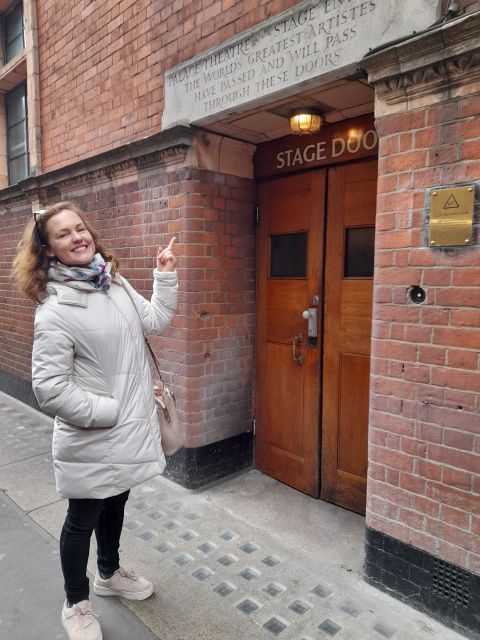
The walk ends at a top-secret theatre location. That gives the final stage a little playful suspense without revealing what you will see in advance.
Since the location is deliberately withheld, you should not book this tour expecting a named final venue. The mystery is part of the format. It may appeal to you if you enjoy a surprise ending, but it can frustrate anyone who wants to plan every photograph or onward connection.
Allow extra time after the tour rather than scheduling a tight reservation immediately afterward. The advertised duration is three and a half hours, but a walking tour with questions and city crossings can feel less precise than a timed museum visit. The guide can explain the route’s practical details on the day.
What $33 gets you
At $33 per person, this is reasonably priced for a specialist guided walk lasting three and a half hours. The hourly cost is modest, especially if you have a real interest in theatre and would otherwise spend time piecing together the same locations yourself.
The value comes from the guide’s selection and connections. You are paying for a single thread linking 400-plus years of English stage history, not just access to buildings. The tour can also improve a theatre-focused London visit by giving you background before a performance.
The price is less attractive if you want interior access, a performance ticket, or a general sightseeing walk. None of those is included. You receive a guided tour of public theatre sites in English.
The small amount of published feedback is entirely positive, with a 5.0 rating from two verified bookings. That is encouraging, and the praise focuses on the two things that matter most here: an engaging guide and useful background information. It is not enough evidence to promise that every guide or every tour will suit every person, so I would book for the subject itself, not only for the rating.
Who will enjoy this walk most
I would choose this tour for:
- Theatre fans who want context for West End shows and famous performers.
- First-time London visitors who want to understand why so many theatre names appear within a small area.
- Repeat visitors looking for a focused walk beyond the usual royal palaces and museums.
- Shakespeare enthusiasts who want the West End story connected to Bankside and the Globe.
- Visitors with an evening performance planned, since the background can make the theatre visit more meaningful.
- People who enjoy stories, especially backstage failures, star anecdotes, and production disasters.
I would think twice if you dislike long walks, need extensive time inside each venue, or want a broad London tour covering landmarks outside the theatre world. This experience stays firmly with the stage.
Practical advice before you book
Wear shoes you can use for three and a half hours. The route is in central London, and the experience is built around walking between public theatre sites.
Meet by the Oscar Wilde statue opposite Charing Cross Station. Check the available starting time before booking, since times are not fixed in the supplied details.
The live guide speaks English, and English is the only listed language. If you need another language, this tour is not presented as a multilingual option.
You can cancel up to 24 hours in advance for a full refund. You can also reserve now and pay later, which helps if your London schedule is still changing.
Should you book London’s theatre walk?
Book it if you want the stories behind London’s theatres, not just photographs of their fronts. The combination of West End venues, the National Theatre, and Shakespeare’s Bankside gives you a useful arc from Shakespeare to modern stars, while the anecdotes keep the history lively.
Skip it if your priority is entering theatres or attending a performance. At $33, the tour offers good value for a focused subject, but its success depends on your interest in theatre and the guide’s storytelling. If Charlie is leading, the available feedback suggests you are in capable hands. Either way, this is a smart add-on for a theatre weekend and a pleasant choice for anyone who thinks London makes more sense when you know the stories behind its doors.
FAQ
Where does the London Iconic Theatres Walking Tour meet?
Meet your guide by the Oscar Wilde statue, opposite Charing Cross Station.
How long does the tour last?
The tour lasts 3.5 hours.
What is the price?
The listed price is $33 per person.
What language is the tour conducted in?
The live tour guide speaks English, and English is the listed tour language.
Is the tour wheelchair accessible?
Yes, the activity is listed as wheelchair accessible.
Does the tour include theatre admission?
The included service is a guided tour of public theatre sites. Theatre admission or performance tickets are not listed as included.
Which parts of London does the tour cover?
The route covers London’s West End, the National Theatre, and Shakespeare’s Bankside, including Shakespeare’s Globe.
Which theatres are included?
The named theatres include the Duke of York’s, Noel Coward, Theatre Royal Haymarket, Her Majesty’s Theatre, Harold Pinter, Prince of Wales, Lyric, Apollo, Gielgud, Sondheim, Palace, Ambassadors, St Martin’s, The Arts, Theatre Royal Drury Lane, Fortune, Lyceum, National Theatre, and Shakespeare’s Globe.
Which historical figures and actors are discussed?
The tour includes William Shakespeare, Laurence Olivier, Julie Andrews, Judi Dench, Daniel Day-Lewis, and many other stage figures.
Can I cancel for a refund?
Yes. You can cancel up to 24 hours in advance for a full refund.
Can I reserve now and pay later?
Yes. The activity allows you to reserve your place and pay later.
Just added in London
- The Best of British Cooking Class & Dining Experience★ 5.0 · 1 review
- London: Live Comedy Show at Big Belly Bar and Comedy Club★ 4.5 · 80 reviews
- London: British Museum Highlights Guided Small Group Tour★ 4.9 · 113 reviews
- The Beatles London Walking Tour★ 4.2 · 147 reviews
- The Best Highlights of London Walking Tour & Boat Cruise★ 5.0 · 1 review
- Iconic London: Bard, Beatles, Bond & Baker Street★ 4.9 · 15 reviews
- The Authentic Walking Tour with Indian Tasting Meal★ 4.8 · 4 reviews
- London: Tate Britain Official Discovery Tour★ 4.7 · 7 reviews
Walking Tours, compared.

Magical London: Harry Potter Guided Walking Tour
Read our review →

University and City Walking Tour with Alumni Guide
Read our review →
Harry Potter Movies Walking Tour (Kids Go Free)
Read our review →
The Great British Rock and Roll Music Walking Tour
Read our review →
Jack the Ripper Walking Tour – Ripper Vision Tours
Read our review →
Other lists this tour turns up in