
REVIEW · WALKING TOURS
London: Kensington and Chelsea Guided Walking Tour
London wears its finest clothes here. This two-hour walk links South Kensington museums, royal parkland, Knightsbridge luxury and Chelsea’s quieter streets in one compact route. I like the way it covers several very different parts of west London without asking you to spend the day on your feet, and I also like the family-friendly pace, with time for photographs and easy stops along the way. The main consideration is the tour’s depth: if you want detailed stories about every building and famous resident, the experience may feel lighter than expected.
I especially like the route’s ending at Sloane Square, which leaves you beside King’s Road, cafés, boutiques and galleries rather than dropping you at an anonymous station. Guide Simona has been praised for being prepared, kind and good at involving children, though one past participant felt the commentary leaned too much on local experience and not enough on documented history.
In This Review
- Key things to know before you book
- Why this west London walk works
- Starting at South Kensington Station and Exhibition Road
- The Victoria and Albert Museum and the Great Exhibition legacy
- Royal Albert Hall and the Albert Memorial
- Kensington Gardens and the exterior of Kensington Palace
- Knightsbridge, Harrods and the price of looking
- Chelsea’s mews streets and private garden squares
- Finishing at Sloane Square and King’s Road
- Timing, languages and practical comfort
- Who will get the most from this tour
- Should you book the Kensington and Chelsea walk?
- FAQ
- Where does the tour begin?
- Where does the tour finish?
- How long does the tour last?
- What areas does the route cover?
- Does the tour enter the Victoria and Albert Museum?
- Does the tour include entrance to Royal Albert Hall or Kensington Palace?
- Is the walking route step-free?
- Is the tour suitable for children?
- Which languages are available?
- Can I book if I am traveling alone?
Key things to know before you book
- The route connects three distinct London districts: South Kensington, Knightsbridge and Chelsea, so you get a broad feel for the area in just two hours.
- The Great Exhibition provides the opening story: Exhibition Road and the Victoria and Albert Museum introduce the Victorian plan for art, science and public education.
- You see major sights from outside: The walk includes the Victoria and Albert Museum, Royal Albert Hall, Albert Memorial and Kensington Palace, but entrance fees are not included.
- Chelsea is the more intimate half: Mews streets, Georgian and Victorian houses, blue plaques and private garden squares replace the grand public buildings.
- The tour is step-free and suitable for children: The pace is relaxed, with chances to pause, take pictures and refill your attention before the next neighborhood.
- Solo booking may need extra planning: The tour generally requires at least two participants, though custom arrangements may be possible by contacting the provider.
Why this west London walk works
At $26 per person, this is priced as an accessible introduction rather than a major paid attraction. You are paying for a guide, a planned route and the stories that connect the streets, not for museum admission, transport or a meal.
That price makes sense if you want help getting oriented. South Kensington, Knightsbridge and Chelsea sit close together on a map, but they do not feel alike. One is shaped by Victorian public ambition, another by luxury retail and grand residences, and the third by private squares, old stables and artistic associations.
You also save the effort of planning a route that takes in all three. I would not choose this walk as a replacement for visiting the Victoria and Albert Museum or the Natural History Museum. Those institutions need several hours each. Instead, use the tour to understand the setting, then return to the museum that interests you most.
The overall rating is 3.6 from five ratings, so the experience has received mixed but generally favorable feedback. The strongest praise centers on the guide’s warmth, preparation and ability to make the walk work for families. The main criticism concerns historical detail. Keep that distinction in mind before booking.
More Walking Tours in London
- Magical London: Harry Potter Guided Walking Tour
★ 4.7 · 22,044 reviews - London: The Original Jack the Ripper Walking Tour
★ 4.7 · 7,833 reviews - London: Harry Potter Movies Walking Tour (Kids Go Free)
★ 4.7 · 3,071 reviews
Starting at South Kensington Station and Exhibition Road
The meeting point is outside South Kensington Station on Thurloe Street, in front of Viandas. Look for the guide holding a sign with the tour name. This is a practical starting point because the station puts you directly beside the district known for its museums and cultural institutions.
The first part focuses on Albertopolis, the Victorian vision of a district devoted to education, art and science. The name may sound grand, but the idea was practical: create public institutions that could teach, inspire and display the achievements of the age.
The Great Exhibition of 1851 is central to this story. Held in Hyde Park, the exhibition displayed industry, design and invention on an enormous scale. Its success helped Prince Albert and his supporters develop the surrounding area as a permanent center for learning.
As you walk along Exhibition Road, the guide explains how this part of London changed from a largely open, semi-rural edge of the city into a district filled with major museums. You will see the exterior setting of the Victoria and Albert Museum, along with the nearby Natural History Museum and Science Museum.
This is a strong opening because it gives you a reason for the museums being together. You are not simply ticking off handsome façades. You are seeing how Victorian civic planning used culture as a public project.
The limitation is straightforward: the tour does not include museum entry. If you want to see the V&A collections, you will need to return separately and allow enough time for the enormous building. The guide can provide context outside, but a two-hour walk cannot do justice to the museum interiors.
The Victoria and Albert Museum and the Great Exhibition legacy
The Victoria and Albert Museum is one of the route’s major visual anchors. Even from outside, its scale helps explain the ambition of Albertopolis. The building represents the idea that design and applied art should be available for public study, not locked away for private collectors.
I like this part of the walk because it connects architecture with social purpose. The Great Exhibition was not just a display of objects. Its success helped fund institutions intended to educate a broad public, and that link between exhibition, money and civic improvement gives the neighborhood its character.
You should listen for how the guide explains the legacy of the Great Exhibition and the role of Prince Albert. The supplied tour details promise history, design and architecture, while the actual level of detail may depend on the guide and the group.
That variation matters. Simona, one of the named guides, received especially warm praise for her preparation and friendly manner. Another participant wanted more stories about buildings and people, and felt the commentary relied too much on personal experience. If you are happiest with a clear overview, the route should suit you. If you want dates, names and long historical anecdotes at every stop, ask about the guide’s approach before booking.
Royal Albert Hall and the Albert Memorial
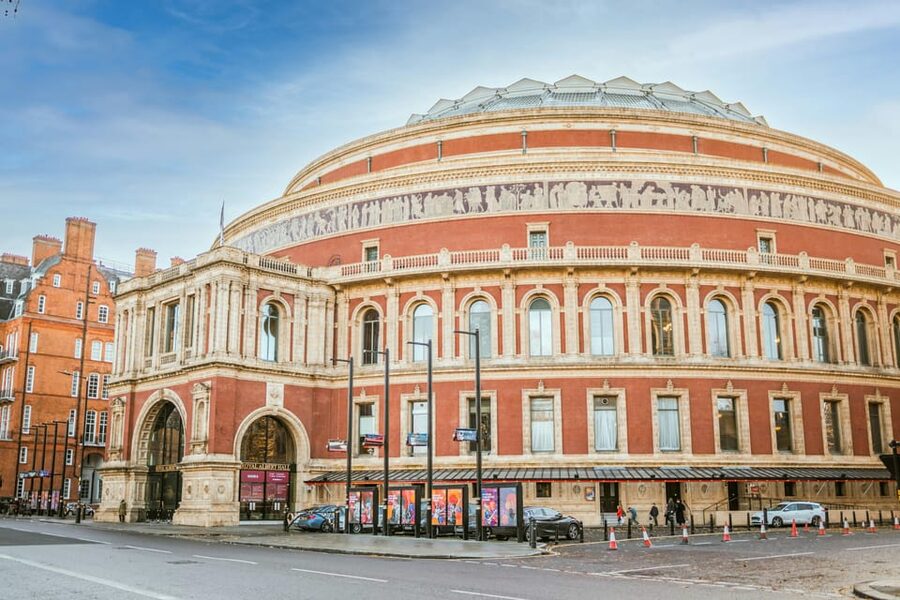
From South Kensington, the route continues toward Royal Albert Hall and the Albert Memorial. These two landmarks carry the Victorian story into the open air.
Royal Albert Hall is associated with performance and public culture, while the Albert Memorial presents a more formal tribute to Prince Albert. Seeing them together helps you understand how the neighborhood was designed to link learning, art, music and ceremony.
The Albert Memorial is ornate and deliberately grand. You do not need a ticket to appreciate its exterior, and a guide can point out the monument’s place within the wider plan for the district. This is also a good spot for photographs, especially if your phone has enough storage left after the museums.
The walk does not promise entry into Royal Albert Hall, so consider the stop an architectural and historical introduction. If attending a concert is part of your London plans, you would need a separate ticket and schedule.
One useful feature here is the relaxed pace. You are not being hurried from one landmark to the next. The route includes opportunities to stop for photographs, and the guide is happy to take pictures with your phone. That is a small service, but it matters if you are traveling alone or want a group photo without handing your phone to a stranger.
A different kind of day out entirely:
- London: The London Eye Entry Ticket
★ 4.6 · 35,875 reviews - From London: Harry Potter Warner Bros Studio Tour
★ 4.7 · 26,588 reviews - London: Westminster to Greenwich River Thames Cruise
★ 4.5 · 22,836 reviews - London: Madame Tussauds London
★ 4.6 · 20,915 reviews
Kensington Gardens and the exterior of Kensington Palace
The move into Kensington Gardens changes the mood. After the stone façades and traffic around the museum district, the route enters open parkland with a quieter rhythm.
The guide discusses royal ambition, garden design and nineteenth-century innovation while walking through the gardens. You also stop near the exterior of Kensington Palace, a former home of Princess Diana. The palace connection gives this section an immediate human interest, but the walk is not presented as a dedicated Princess Diana tour.
You should think of Kensington Gardens as a breathing space in the itinerary. Two hours is not long, but the park keeps the experience from becoming a continuous march past buildings. It also gives children a chance to reset, which helps explain why the tour can work for families.
Because the route is step-free, this section should be manageable for people using wheelchairs, subject to normal outdoor conditions and the exact path used on the day. The official information describes the entire tour as wheelchair accessible. Comfortable shoes still matter. You are walking for two hours, and London pavement is not improved by wearing your smartest shoes.
Knightsbridge, Harrods and the price of looking
The route then heads into Knightsbridge, where the tone shifts from public education to private luxury. Red-brick mansions, embassies and polished department stores show you a different side of west London.
Harrods is the obvious landmark, but the useful point is not simply that you pass a famous shop. Knightsbridge demonstrates how commerce, wealth and architecture shape an area. The grand buildings and luxury retail sit beside the historic streets, creating a neighborhood that feels more formal and internationally focused than nearby Chelsea.
The walk offers an exterior look at Harrods and the surrounding district. Food, shopping and entrance fees are not included, so do not expect time for a full department-store visit during the two-hour route.
You may want to return to Harrods afterward if you enjoy food halls, design or people-watching. You may also be perfectly happy to admire the building from the pavement and keep your budget for a museum café. The tour does not pressure you into shopping, which is useful in a district designed to encourage it.
This is one reason the route has value. You see the contrast between public cultural institutions, royal spaces and high-end retail without paying for a separate attraction in each neighborhood.
Chelsea’s mews streets and private garden squares
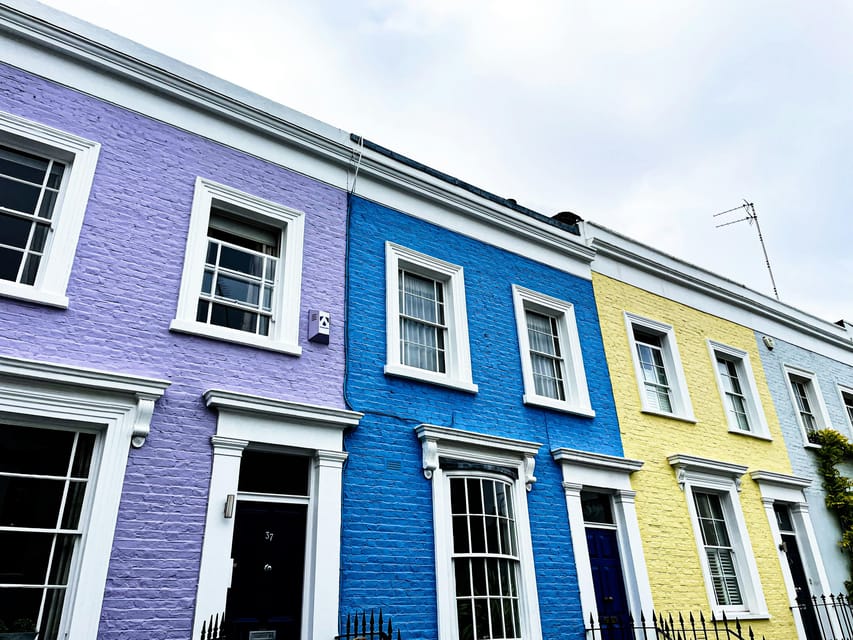
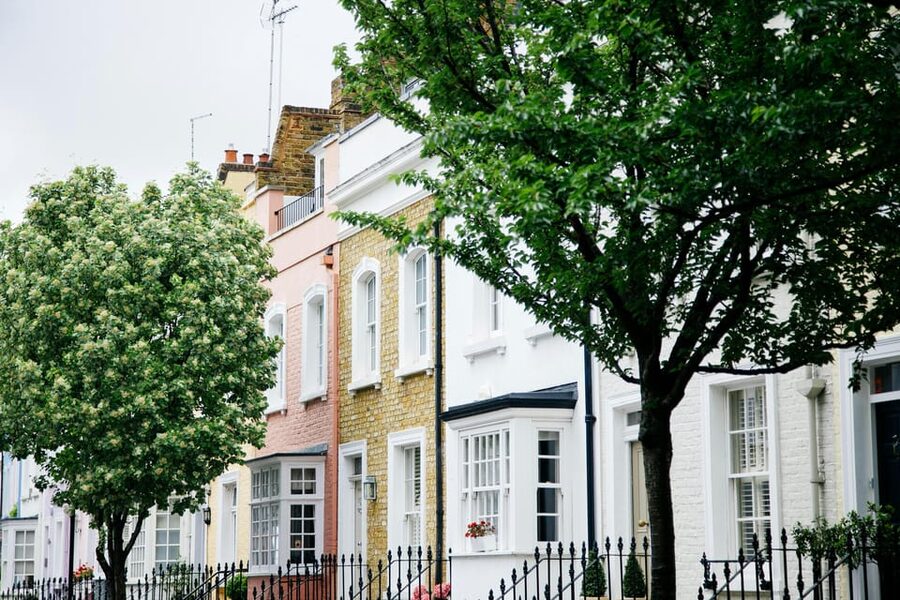
Chelsea is where the walk becomes more personal and residential. The grand public landmarks give way to mews streets, Georgian and Victorian townhouses, blue plaques and private garden squares.
Mews were originally built as service lanes and stable buildings behind larger homes. Their later conversion into sought-after residences is part of what makes them so appealing today. The narrow streets offer a different view of wealth and urban life than the large façades along Knightsbridge.
You will also see private garden squares. These spaces are not ordinary public parks, so the point is to appreciate their layout and architecture from the street. They show how London’s older residential districts were planned around shared green space, even when access was restricted.
Chelsea’s creative identity forms another thread. The neighborhood has attracted artists, writers, designers and radicals over the centuries. The supplied description promises stories behind blue plaques and local figures, though the amount of biographical detail may vary.
This is the part I would most want a guide for. It is easy to walk past a pretty mews, glance at a plaque and move on. A good explanation turns a quiet lane into evidence of how the district changed from service quarters to expensive homes.
It is also the section most likely to expose the tour’s weakness if you want academic-level history. One participant specifically felt there were too few stories about the people and places. You should book with the expectation of a guided neighborhood walk, not a specialist architectural seminar.
Finishing at Sloane Square and King’s Road
The tour ends at Sloane Square, a useful place to finish because you can continue exploring without retracing your steps. Sloane Square is a gateway to King’s Road, once known for fashion and rebellion in the 1960s and still lined with boutiques, cafés and galleries.
This ending gives the walk a modern note. You begin with Victorian institutions and finish in a district linked to changing style and youth culture. The route shows that Chelsea is not only about elegant houses and old plaques. It has also been a place where new ideas, clothes and creative scenes found an audience.
I like having a clear finish in an area with things to do. You can stop for a drink, browse shops or continue toward another part of London. The guide does not include food or drinks, so plan your own pause after the walk.
The finish also helps you judge the tour’s balance. If you mainly want museums, stay around South Kensington and spend your time indoors. If you want to compare several neighborhoods, Sloane Square makes the route feel complete.
Timing, languages and practical comfort
The walk lasts two hours, with starting times available according to the date you select. That length is enough for an introduction but not enough for long interior visits or extensive stops.
The guide can lead the tour in English, German or Italian. If language is important to your choice, confirm the available guide and time when booking rather than assuming every departure offers all three.
The tour is suitable for all ages, including children. Its relaxed pace and photographic stops make it less demanding than a fast sightseeing walk. Bring water, a camera and comfortable shoes. Those are simple suggestions, but they are exactly what you need.
The route is step-free and listed as wheelchair accessible. Hotel pickup and drop-off are not included, so you must reach South Kensington Station independently and arrange your own way onward from Sloane Square.
Cancellation is free up to 24 hours before the start time, and you can reserve now while paying later. These terms are useful if your London schedule is still shifting.
Solo visitors should pay close attention to the minimum booking rule. The tour generally requires two participants. If the booking system does not accept a solo reservation, contact the provider about possible dates or custom arrangements.
Who will get the most from this tour
I would recommend this walk to you if you want a quick, organized introduction to a stylish part of London and prefer streets, buildings and stories to a bus window. It is also a good fit for families who need a manageable route with changes of scenery.
You will likely enjoy it if you want to understand how South Kensington, Knightsbridge and Chelsea differ. The tour gives you public museums, royal parkland, luxury shopping and residential streets in one outing.
It may not be the right choice if your main goal is detailed historical research. The mixed rating reflects that concern. Some people found the guide highly prepared and engaging, while another expected more documented stories about specific buildings and residents.
I would also avoid treating this as a museum tour. The museums and Royal Albert Hall are seen from the outside, and the value comes from the connections between places rather than entry to a collection or performance.
Should you book the Kensington and Chelsea walk?
Book it if you want a friendly, step-free orientation to west London, especially if you are traveling with children, visiting alone with a possible custom arrangement, or want someone else to shape the route. At $26, the cost is reasonable for a two-hour guided walk through several high-value neighborhoods.
Before booking, decide how much historical detail you need. If you want a relaxed overview with architecture, local atmosphere and practical direction, this tour should serve you well. If you expect a specialist guide to provide a long chain of precise stories about every blue plaque, ask about the guide’s focus first.
The strongest version of this experience is a well-paced walk led by someone like Simona, who can explain the setting warmly and involve the whole group. The weakest version may feel like a general stroll with fewer stories than promised. That makes guide availability important, but the route itself is excellent for seeing how London’s culture, royalty, wealth and creative life meet within a small area.
FAQ
Where does the tour begin?
It begins outside South Kensington Station on Thurloe Street, in front of Viandas. The guide will hold a sign with the tour name.
Where does the tour finish?
The walk finishes at Sloane Square, near King’s Road, with its boutiques, cafés and galleries.
How long does the tour last?
The tour lasts two hours.
What areas does the route cover?
It covers South Kensington, Kensington Gardens, Knightsbridge and Chelsea.
Does the tour enter the Victoria and Albert Museum?
No entrance is included. The route visits the museum district and discusses the Victoria and Albert Museum from the outside.
Does the tour include entrance to Royal Albert Hall or Kensington Palace?
No. Entrance fees are not included, and the tour describes visits to the exterior of Royal Albert Hall and Kensington Palace.
Is the walking route step-free?
Yes. The tour is described as step-free and wheelchair accessible.
Is the tour suitable for children?
Yes. It is suitable for people of all ages, including children, and moves at a relaxed pace.
Which languages are available?
The live guide options are English, German and Italian.
Can I book if I am traveling alone?
The tour generally requires a minimum of two participants. If you cannot book alone, you can contact the provider to ask about available times or custom arrangements.
Just added in London
- The Best of British Cooking Class & Dining Experience★ 5.0 · 1 review
- London: Live Comedy Show at Big Belly Bar and Comedy Club★ 4.5 · 80 reviews
- London: British Museum Highlights Guided Small Group Tour★ 4.9 · 113 reviews
- The Beatles London Walking Tour★ 4.2 · 147 reviews
- The Best Highlights of London Walking Tour & Boat Cruise★ 5.0 · 1 review
- The Authentic Walking Tour with Indian Tasting Meal★ 4.8 · 4 reviews
- Iconic London: Bard, Beatles, Bond & Baker Street★ 4.9 · 15 reviews
- London: Tate Britain Official Discovery Tour★ 4.7 · 7 reviews
Walking Tours, compared.

Magical London: Harry Potter Guided Walking Tour
Read our review →

University and City Walking Tour with Alumni Guide
Read our review →
Harry Potter Movies Walking Tour (Kids Go Free)
Read our review →
The Great British Rock and Roll Music Walking Tour
Read our review →
Jack the Ripper Walking Tour – Ripper Vision Tours
Read our review →
Other lists this tour turns up in