
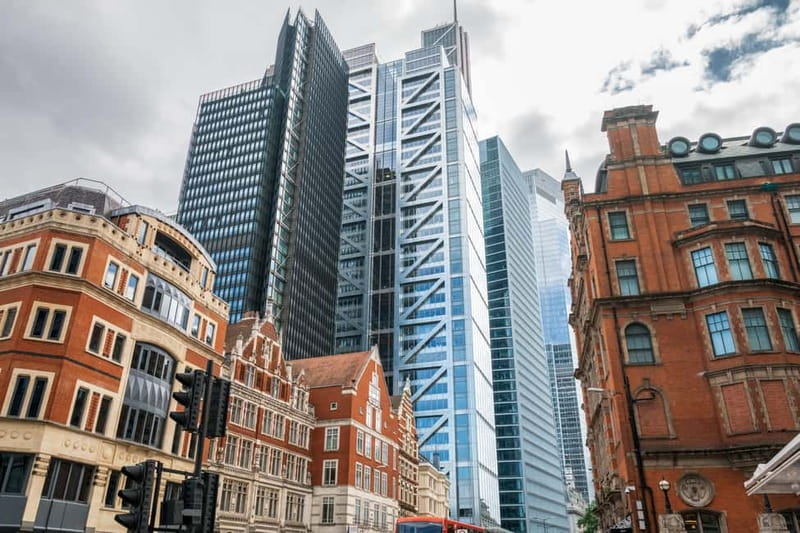
REVIEW · WALKING TOURS
London: Modern Architecture & Building Guided Walking Tour
Modern London rewards a closer look. This two-hour walk links famous towers with practical stories about how the city is built, what lies beneath its streets, and what may rise next. I like the construction-industry insight from guide Sam, who has worked in construction management in London and Sydney. I also like that the route includes the NLA’s scale models of London’s skyline. The main drawback is that you do not enter the buildings, and the walk is not suitable for wheelchair users or people with mobility impairments.
This is a good pick if you want more than postcard views. Sam explains the architects, engineering choices, and city planning behind the buildings, while keeping the pace relaxed enough for questions. The route covers a lot in two hours, so wear comfortable shoes and prepare for London weather.
In This Review
- Key points at a glance
- Why this London architecture walk is different
- Starting beside the Thames at Sugar Quay
- The Shard and the changing Thames skyline
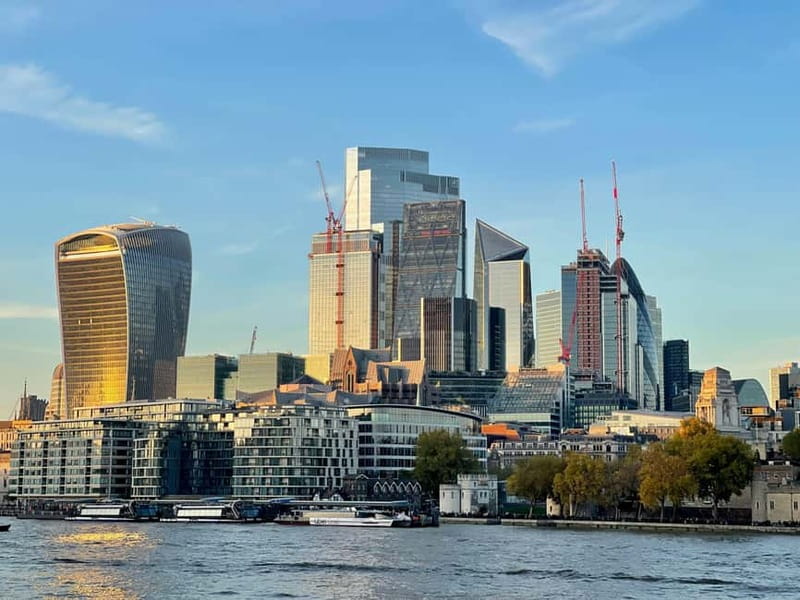
- The Walkie Talkie and the City’s boldest shapes
- The Gherkin, the Can of Ham, and nickname-friendly London
- Liverpool Street and the engineering below your feet
- Barbican: a different idea of modern London
- Ending at the NLA and London skyline models
- Is $52.53 a fair price?
- Timing, walking comfort, and practical planning
- Who should book this walk?
- Should you book the London modern architecture tour?
- FAQ
- How long does the London modern architecture tour last?
- Where does the tour start?
- Where does the tour finish?
- Is entry to the buildings included?
- Can I visit the NLA after the walking tour?
- What language is the tour in?
- What should I bring?
Key points at a glance
- Construction expertise from Sam: His professional background adds useful detail about building methods, engineering, and London’s development.
- A strong City of London route: See The Shard, Walkie Talkie, Gherkin, Lloyd’s of London, the Cheesegrater, Barbican, and more.
- Stories behind familiar buildings: The tour is designed to explain why each structure looks and functions as it does.
- A look below street level: You hear about major past and current engineering projects beneath London.
- Skyline models at the NLA: Tours ending during opening hours include free entry to the London Centre’s scale models.
- Short, focused format: The walk takes about two hours, with another 15 to 30 minutes useful for the NLA afterward.
Why this London architecture walk is different
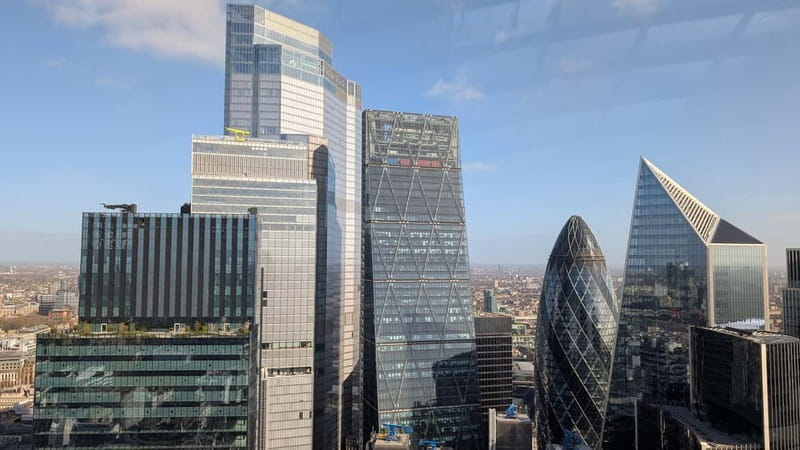
Many sightseeing walks in London focus on kings, churches, and older streets. This one takes a modern view of the city. You follow a route through the City of London, where glass towers, steel frames, historic streets, and major transport links sit close together.
That mix gives the tour its appeal. You are not simply looking up at tall buildings and learning their names. Sam connects them with construction, planning, engineering, and the changing role of the City.
I especially like the way this format can work for mixed interests. A serious architecture fan can ask technical questions about building techniques. Someone who normally has only a mild interest in architecture can still follow the stories and understand why these structures matter.
One review describes Sam as both highly informed and personable, with clear explanations that kept the full two hours moving quickly. Another praises his passion and his ability to point out architectural details that are easy to miss alone. That balance is important: a tour packed with technical facts can become dry, but Sam’s approach appears to keep the subject lively.
The experience is in English, with a live guide. It is listed as a small-group walking tour, which should make it easier to hear the commentary and ask questions than on a large city walk.
More Walking Tours in London
- Magical London: Harry Potter Guided Walking Tour
★ 4.7 · 22,044 reviews - London: The Original Jack the Ripper Walking Tour
★ 4.7 · 7,833 reviews - London: Harry Potter Movies Walking Tour (Kids Go Free)
★ 4.7 · 3,071 reviews
Starting beside the Thames at Sugar Quay
The tour begins at Sugar Quay Jetty, near the Tower of London, on the northern side of the River Thames. This is a useful starting point because the river gives you an immediate view across one of London’s most layered areas.
From here, you see City Hall and the Thames as part of the opening sightseeing section. The river is not just a pretty backdrop. It helps you understand how the City’s modern buildings relate to older landmarks, working routes, and new development along the waterfront.
You then move toward The Shard. The walk is not a visit inside the tower, so do not book this expecting an observation-deck experience. The value is in seeing the structure from street level and hearing how it fits into the city’s collection of tall buildings.
The route gives you a close view of one of London’s most recognizable modern towers without charging an additional admission fee. Bring a camera, but keep in mind that a walking tour provides viewing stops rather than unlimited time for personal photography.
The Shard and the changing Thames skyline
The Shard is one of the tour’s headline sights. Its sharp, glass-clad form is easy to recognize from many parts of London, but standing near it gives you a better sense of its scale and design.
Sam’s role is to add the useful layer that a quick photograph cannot provide. You hear stories and facts about the building, along with wider comments about construction in London. The emphasis is on how the city keeps adding tall structures while working around older streets, transport routes, and existing buildings.
This stop should appeal most to visitors who like seeing a familiar landmark explained in context. If your main aim is to go inside The Shard, this tour will not meet that aim because entry into all buildings on the route is excluded.
The walk continues through the City toward the Fenchurch Building, better known by its nickname, the Walkie Talkie. Its broad upper section creates a sharp contrast with The Shard’s tapering profile. Seeing these buildings in one route helps you compare different answers to the same urban problem: how to add office and public space in a crowded central district.
The Walkie Talkie and the City’s boldest shapes
The Fenchurch Building is a useful stop for discussing how modern towers affect the public spaces around them. Its unusual shape makes it easy to identify, but the tour aims to explain more than its appearance.
You can expect a mix of building facts, design stories, and comments about current and future development across London. The information supplied for the tour does not promise interior access or a special view from the building, so plan on an exterior visit and guided explanation.
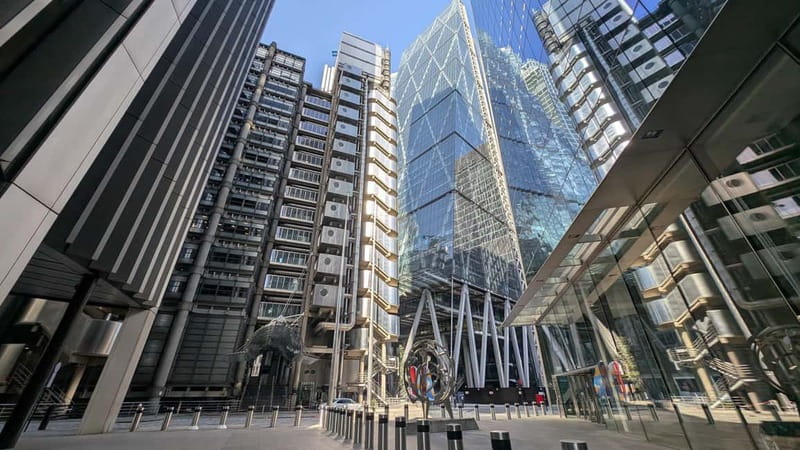
Next comes Lloyd’s of London, a building with an entirely different visual language. Its services, pipes, and structural features are associated with the outside of the building rather than being hidden away. That makes it a good place to think about the relationship between engineering and appearance.
You then see The Leadenhall Building, often called the Cheesegrater. Its angled form is one of the City’s most recognizable modern profiles. The nearby buildings make this section particularly useful for comparisons. In a short stretch, you can see how different architects handled height, structure, light, and the tight limits of a central business district.
A different kind of day out entirely:
- London: The London Eye Entry Ticket
★ 4.6 · 35,875 reviews - From London: Harry Potter Warner Bros Studio Tour
★ 4.7 · 26,588 reviews - London: Westminster to Greenwich River Thames Cruise
★ 4.5 · 22,836 reviews - London: Madame Tussauds London
★ 4.6 · 20,915 reviews
The Gherkin, the Can of Ham, and nickname-friendly London

The route continues to 30 St Mary Axe, the Gherkin. It is one of London’s most familiar modern buildings, and its rounded form offers a clear contrast to the angular Cheesegrater and the Walkie Talkie.
This is where a guide with construction experience can add real value. You hear about the building itself, but also about the choices and practical issues involved in creating large, distinctive structures in the City.
The next stop is 70 St Mary Axe, known as the Can of Ham. It is a smaller and less internationally famous building, but including it shows that the tour is not limited to the most obvious landmarks.
I like this part of the route because it uses London’s informal nicknames as a way into architectural discussion. The names are memorable, but Sam’s commentary helps you look past the jokes and notice the forms, materials, and setting of the buildings.
A useful expectation here is variety rather than a single grand attraction. You will see major icons, newer structures, and buildings that may be easier to overlook if you are walking without a guide.
Liverpool Street and the engineering below your feet

Liverpool Street Station follows the St Mary Axe section. The stop broadens the tour beyond office towers and focuses attention on transport and city infrastructure.
The experience includes discussion of major past and present engineering projects beneath London. The supplied details do not specify every project covered, so you should expect an overview rather than a technical lecture on one particular tunnel or foundation system.
Still, this theme gives the walk more depth. London’s visible skyline depends on work below street level, including transport systems, foundations, utilities, and other infrastructure. You begin to see the City as a three-dimensional place, with construction happening above and below the pavement.
That is one of the strongest reasons to choose this tour instead of simply photographing famous towers. Sam’s professional background in construction management helps connect the buildings with the wider industry that makes them possible.
Barbican: a different idea of modern London
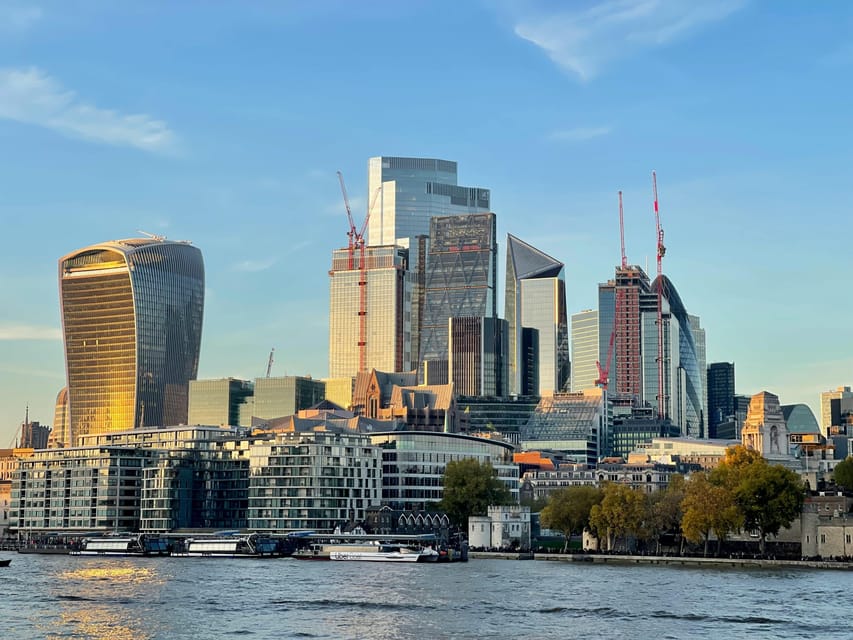
The route reaches the Barbican before finishing at the NLA. The Barbican adds a very different type of modern architecture to the tour.
Instead of focusing only on individual towers, this stop brings in a large planned complex. It gives you another way to think about postwar design, public space, and the relationship between homes, cultural buildings, walkways, and concrete forms.
The supplied description does not promise entry to Barbican interiors or cultural venues. Expect sightseeing and commentary from outside. That is enough to make the stop useful, especially after seeing the glass-and-steel towers of the financial district.
The contrast also keeps the walk from becoming repetitive. You are not simply moving from one office tower to the next. The route presents different periods and ideas within modern London, even though its main focus remains the City’s built environment.
Ending at the NLA and London skyline models
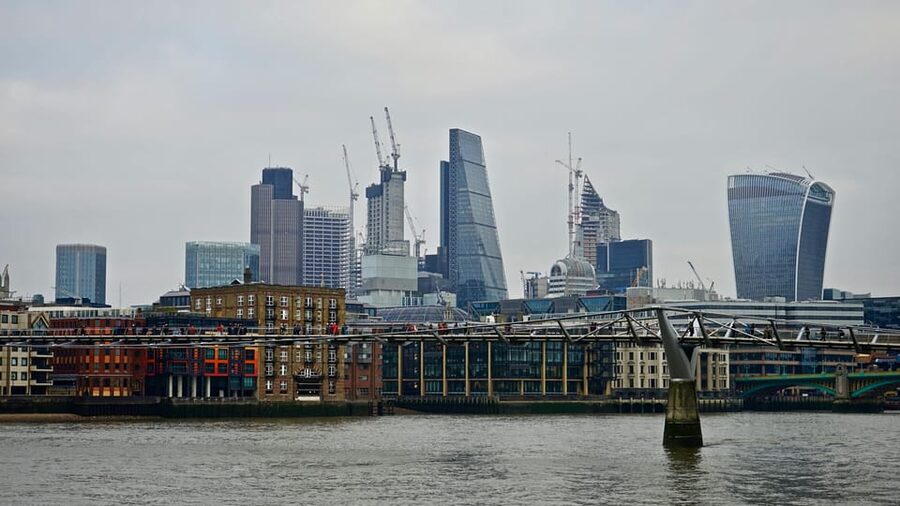
The listed finish is the NLA, inside The London Centre. Entry is free, and you can spend time looking at information and scaled models of London’s skyline.
This is a valuable ending because the walking route gives you close views, while the models let you step back and see the city as a whole. I would allow an extra 15 to 30 minutes here instead of rushing away when the guided portion ends.
There is one important timing detail. The NLA is open Tuesday through Saturday until 17:00. Sunday, Monday, and evening tours cannot enter, so check the starting time and day carefully if the models are a major reason for booking.
The meeting information says the activity ends back at the meeting point, while the route description places the finish at the NLA. Because those details do not fully match, confirm the exact end point when you book. The route itself is clearly described as starting at Sugar Quay and proceeding through the City to the NLA.
Is $52.53 a fair price?
At $52.53 per person, this is not the cheapest way to see London from the pavement. You are paying for a two-hour guided walk, not admission to an attraction or access inside the towers.
The value depends on how much you want the explanation. If you only want exterior photographs, you can visit many of these buildings independently. The tour earns its price through Sam’s construction background, the connected route, the stories behind the buildings, and the discussion of engineering beneath London.
The small-group format also matters. A guide who can answer technical questions and adjust explanations for different interests offers more than a self-guided walk. One review specifically notes that Sam could make the subject engaging for someone with limited interest while still answering detailed building questions for a more committed architecture fan.
The free NLA entry adds a modest extra benefit when your tour runs during its opening hours. It is not a major paid attraction, but the models give you a helpful way to understand the skyline after seeing its individual parts.
I would consider the price fair for visitors who enjoy cities through their buildings and infrastructure. I would look elsewhere if you want interior visits, a general history tour, or a view from the top of The Shard.
Timing, walking comfort, and practical planning
The guided portion lasts about two hours. That is long enough to cover the listed stops but short enough to fit into a busy London day.
Wear comfortable shoes. The activity is a walking tour through central London, and the information specifically advises bringing water, a camera, and weather-appropriate clothing.
The tour proceeds in normal weather and only stops in extreme conditions. London rain can arrive without much warning, so a waterproof layer is a better choice than hoping for clear skies. The route includes outdoor sightseeing, and there is no promise of shelter at every stop.
The experience is not suitable for wheelchair users or people with mobility impairments. That is an important limitation, not a minor footnote. If you have any concern about walking comfort, ask for current route details before booking.
Free cancellation is available up to 24 hours in advance, and you can reserve now and pay later. Those terms help if your London schedule is still shifting, but the more important planning question is the tour day and start time if you want to visit the NLA afterward.
Who should book this walk?
I would choose this experience if you like architecture, construction, city planning, engineering, or unusual views of London. It also suits couples or families with mixed interests because the guide’s storytelling is designed to work for people who are not already architecture specialists.
It is particularly useful early in a London visit. After the tour, you are likely to notice details in the City that would otherwise pass without comment. The route also gives you a clear introduction to several central districts and modern landmarks in one compact outing.
You should skip it if your priority is going inside buildings, visiting observation decks, or taking a slow photography walk. The pace is relaxed, but you are still covering many sights, and the focus is guided interpretation rather than long stops at each building.
Sam receives especially strong praise for being engaging, clear, and able to handle both simple and technical questions. That is the central strength of the experience. You get a personal guide to the forces shaping modern London, not just a list of tower names.
Should you book the London modern architecture tour?
Book it if you want to understand why London looks the way it does. The Shard, Gherkin, Walkie Talkie, Lloyd’s, Cheesegrater, Can of Ham, Liverpool Street, Barbican, and City Hall give you a strong set of stops, while the discussion of underground engineering adds substance.
The best fit is a curious visitor who values explanation and does not need interior access. Pick a Tuesday to Saturday daytime tour if the NLA models matter to you, dress for the forecast, and allow a little extra time after the walk.
At $52.53, it is a specialist tour rather than a bargain sightseeing loop. For anyone interested in the built city, Sam’s experience and the focused route make it a worthwhile choice.
FAQ
How long does the London modern architecture tour last?
The guided walking tour takes approximately two hours. You should allow another 15 to 30 minutes if you plan to look around the NLA afterward.
Where does the tour start?
The tour starts at Sugar Quay Jetty near the Tower of London, on the northern side of the River Thames.
Where does the tour finish?
The route description places the finish at the NLA inside The London Centre. The meeting information also describes the activity as ending back at the meeting point, so confirm the exact end point when booking.
Is entry to the buildings included?
No. The tour provides exterior sightseeing and guided commentary. Entry into the buildings seen along the route is not included.
Can I visit the NLA after the walking tour?
NLA entry is free, and it is open Tuesday through Saturday until 17:00. Sunday, Monday, and evening tours cannot enter the NLA.
What language is the tour in?
The tour is conducted in English with a live English-speaking guide.
What should I bring?
Bring comfortable shoes, water, a camera, and clothing suitable for the weather. The tour continues in normal weather conditions unless conditions become extreme.
Just added in London
- London: Live Comedy Show at Big Belly Bar and Comedy Club★ 4.5 · 80 reviews
- London: British Museum Highlights Guided Small Group Tour★ 4.9 · 113 reviews
- The Best of British Cooking Class & Dining Experience★ 5.0 · 1 review
- The Beatles London Walking Tour★ 4.2 · 147 reviews
- The Best Highlights of London Walking Tour & Boat Cruise★ 5.0 · 1 review
- The Authentic Walking Tour with Indian Tasting Meal★ 4.8 · 4 reviews
- Iconic London: Bard, Beatles, Bond & Baker Street★ 4.9 · 15 reviews
- London: Tate Britain Official Discovery Tour★ 4.7 · 7 reviews
Walking Tours, compared.

Magical London: Harry Potter Guided Walking Tour
Read our review →

University and City Walking Tour with Alumni Guide
Read our review →
Harry Potter Movies Walking Tour (Kids Go Free)
Read our review →
The Great British Rock and Roll Music Walking Tour
Read our review →
Jack the Ripper Walking Tour – Ripper Vision Tours
Read our review →
Other lists this tour turns up in