REVIEW · GUIDED
London: The Lost Tunnels of Euston Station Guided Tour
The Tube has secrets under your feet. This 75-minute tour takes you through the disused tunnels beneath Euston, where dusty passageways, old posters, and forgotten station spaces reveal how London’s Underground once worked. I like the chance to see parts of a working station that most passengers never notice, and I also like the way the tour connects Euston’s past with its future as an HS2 terminus.
The guides, including Scott and Anthony, give the group time for photographs and explain why parts of the station closed and how Tube service changed. The main drawback is practical: you need to walk on uneven ground, use stairs, cope with low light, and manage enclosed spaces. There are no toilets, and the tour is not suitable for children under 10, people with mobility impairments, or anyone uncomfortable in tight spaces.
In This Review
- Key points to know before booking
- Meeting the guide at Euston Square
- What the first passageways reveal
- Vintage posters hidden for decades
- The Leslie Green station connection
- Looking down on Victoria Line trains
- How HS2 changes the meaning of Euston
- Walking conditions and who will enjoy it
- Group size, guides, and the pace of the visit
- Is the $60.61 price fair?
- What to bring and how to prepare
- Should you book the Lost Tunnels of Euston tour?
- FAQ
- Where does the Euston tunnels tour start?
- Which Euston Square entrance should I use?
- How long does the tour last?
- What language is the tour conducted in?
- Where does the tour finish?
- Are children allowed on the tour?
- Is the tour suitable for people with mobility impairments?
- Is the tour suitable for people with claustrophobia?
- Are there toilets during the tour?
- What should I bring?
Key points to know before booking
- Old Euston lies beneath the modern station: You follow passageways once used by the public, not a museum reconstruction.
- Vintage posters are a major highlight: Advertising remnants have been concealed for more than 50 years.
- The ventilation shaft offers a rare view: You can look down at Victoria Line trains from above.
- The tour links past and future: Your guide explains how HS2 is set to reshape Euston.
- Expect a physical 75 minutes: Stairs, dim lighting, uneven surfaces, and dusty corridors are part of the experience.
- Small groups can make a difference: A quieter group gives you more room to hear the guide and take photographs.
Meeting the guide at Euston Square
The tour begins at the south exit of Euston Square station, NW1 2BF, on the corner of Gower Street and Gower Place. Look for the station entrance with the glass façade on the hospital side of Euston Road. There is more than one entrance to Euston Square, so this detail matters. Turning up at the wrong doorway is an easy way to begin a short urban treasure hunt you did not plan.
The meeting point is close to Euston, but do not confuse Euston Square station with Euston Underground station. They are separate stations. Give yourself enough time to find the correct entrance, especially if you are arriving with a larger London itinerary and have just changed trains.
The guide leads in English, and the tour ends back at the same meeting point. That makes it easy to continue by Tube, head toward Euston station, or move on to another central London sight.
A few more options to weigh up in London
- London: The London Eye Entry Ticket
★ 4.6 · 35,875 reviews - From London: Harry Potter Warner Bros Studio Tour
★ 4.7 · 26,588 reviews - London: Westminster to Greenwich River Thames Cruise
★ 4.5 · 22,836 reviews
What the first passageways reveal
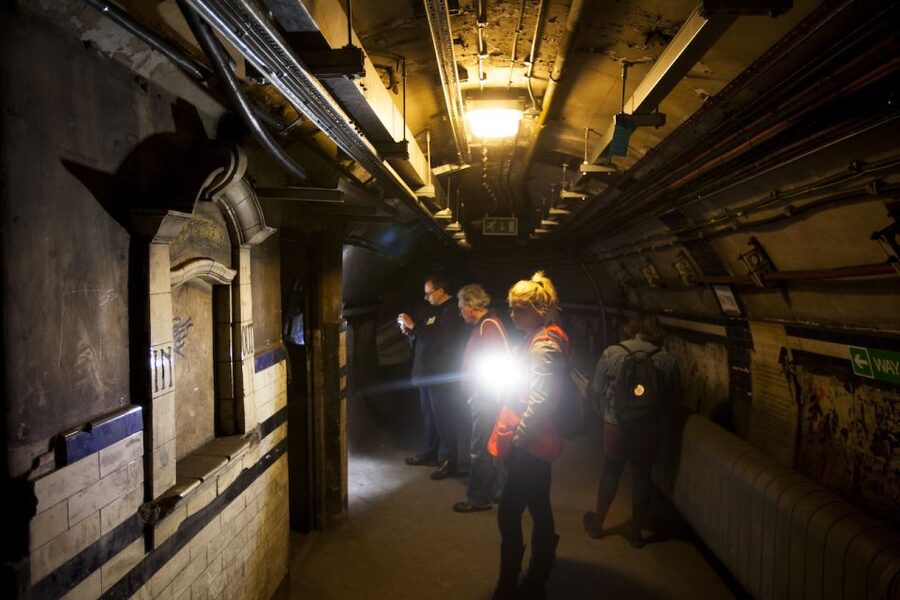
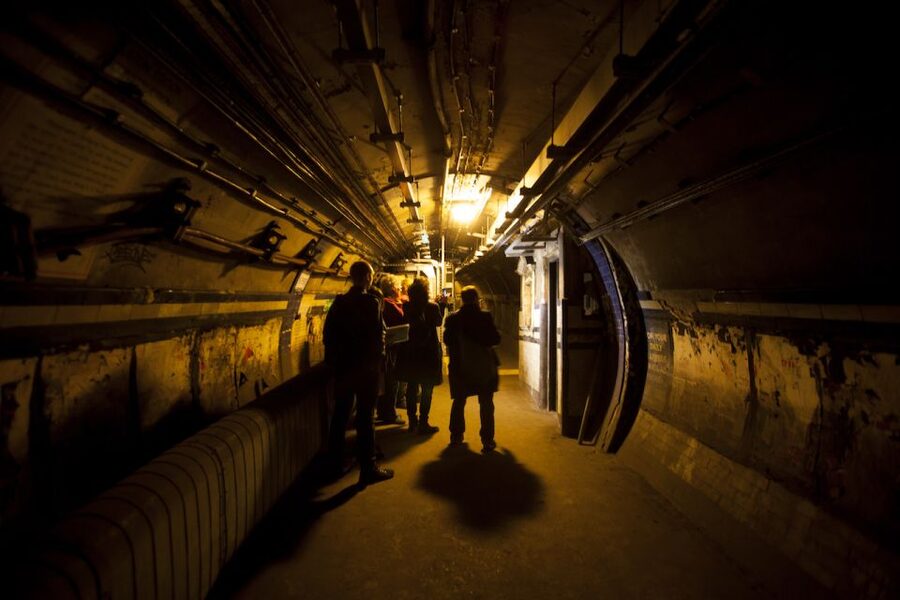
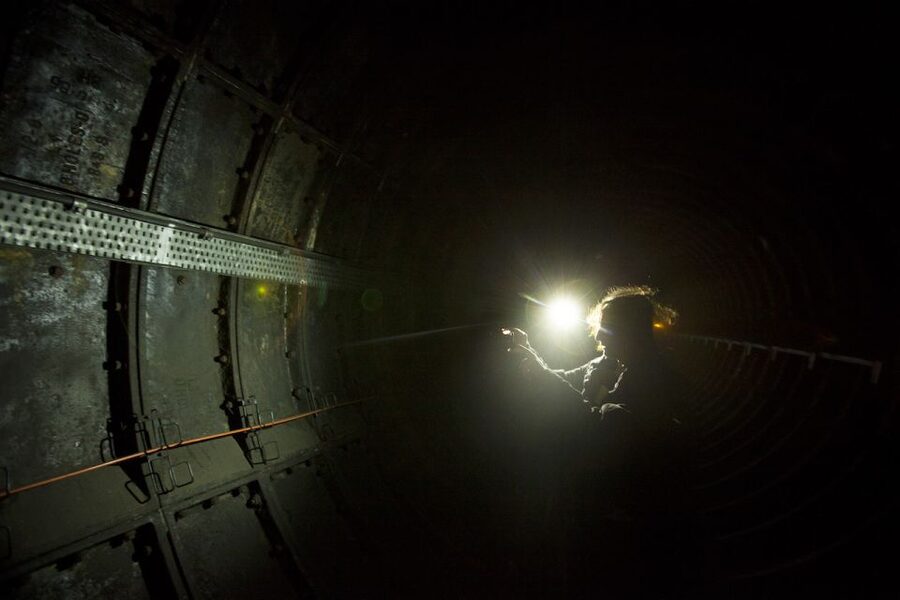
Once inside, the tour leaves the polished, signposted Tube network behind. You enter a disused side of Euston, where dark and dusty corridors replace the bright tiled platforms most people know.
These spaces were once used by passengers. That point gives the tour its appeal. You are not simply looking at a display behind glass. You are walking through old circulation routes and station areas that were part of daily travel before changes in the Underground made them unnecessary.
The guide explains Euston’s early beginnings on the corner of Melton Street and Drummond Street. This helps you see the station as something that grew and changed over time, rather than as a single finished building. London’s transport network is full of layers, and Euston lets you see several of them in one compact visit.
Expect the atmosphere to be spare rather than polished. Dust, darkness, and worn surfaces are not faults here. They are clues to how long the spaces have been out of public use. If you prefer bright galleries and smooth floors, this may feel rough around the edges. If you enjoy seeing places in their original condition, that roughness is the point.
Vintage posters hidden for decades
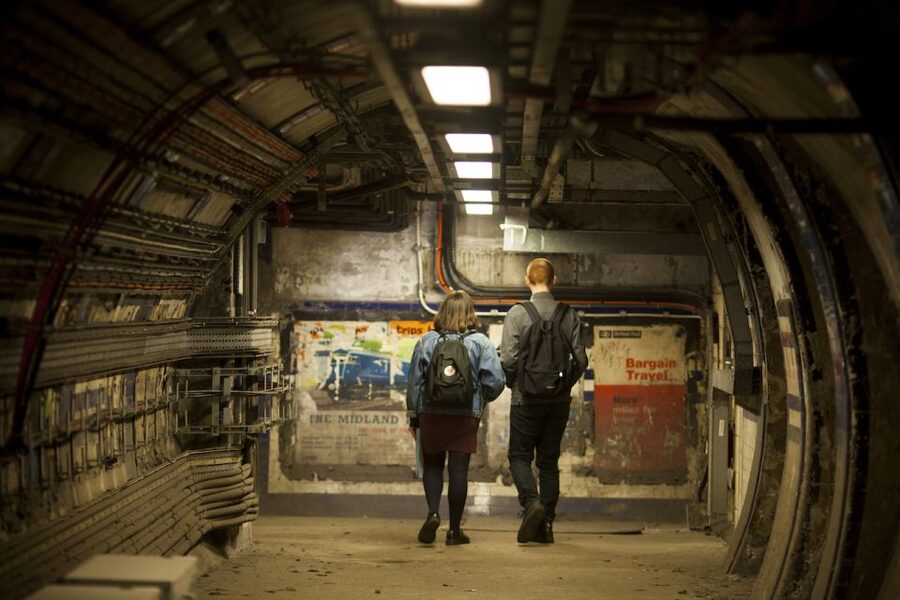
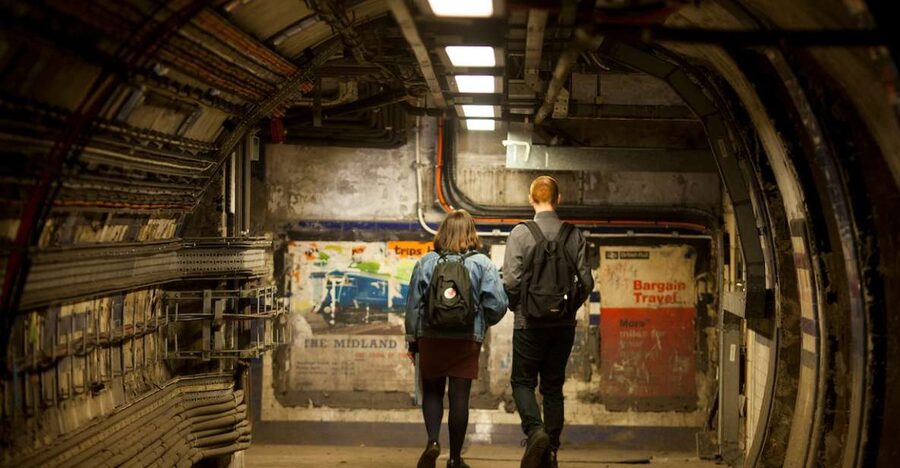
One of the most appealing parts of the route is the chance to see remnants of old advertising posters. Some have been concealed from public view for more than 50 years.
Do not expect a complete collection of bright, readable advertisements. The attraction is in the fragments and the setting. A piece of lettering or a faded image on an underground wall can tell you that this corridor once carried commuters, shoppers, and other passengers who paused to look at advertisements while moving through the station.
I like this kind of evidence because it makes transport history feel ordinary and human. A grand station plan can explain dates and construction, but an old poster shows how the space looked during everyday use. Your guide adds the context, pointing out what you are seeing and why it survived behind later changes.
Photography is allowed enough for the guides to give visitors time for pictures. Scott and Anthony are specifically praised for not rushing this part of the experience. Still, low lighting can make photographs tricky, so bring a steady hand and keep your expectations realistic. The value is in seeing the actual surfaces, not necessarily in producing perfect images.
The Leslie Green station connection
The tour also draws attention to the iconic Leslie Green station and its surroundings before they disappear through redevelopment. Leslie Green stations are known for their distinctive early Underground design, so this section gives the tour a strong architectural angle as well as an engineering one.
The important point is timing. Euston is not a sealed time capsule. Its underground areas are tied to an active station and a major transport project. Some of what you see may change or vanish as work connected with HS2 progresses.
That gives the visit a sense of urgency without turning it into a theatrical ghost story. You are seeing a part of London that may not remain accessible in the same form. The guide explains what is changing and why, helping you understand the station as a working piece of infrastructure rather than an abandoned curiosity.
For architecture fans, this may be the most rewarding section. For general visitors, it provides a useful explanation of why old station design matters. The tour does not ask you to admire empty rooms for their own sake. It shows how design, passenger movement, and new transport demands shaped the building.
A different kind of day out entirely:
- Magical London: Harry Potter Guided Walking Tour
★ 4.7 · 22,044 reviews - London: Madame Tussauds London
★ 4.6 · 20,915 reviews - London: Warner Bros. Studio Tour with Transfers
★ 4.7 · 17,586 reviews - London: Tower Bridge Entry Ticket
★ 4.7 · 15,560 reviews
Looking down on Victoria Line trains
The secret ventilation shaft is the tour’s most memorable visual stop. From this point, you can look down on Victoria Line trains.
This changes the way you see the Underground. Usually, you stand beside a train or wait on a platform. Here, you get a higher view into the machinery and movement of the network. The trains below provide a sharp reminder that these disused areas sit beside a system still carrying millions of passengers.
The view also gives the tour a welcome moment of motion. Much of the route passes through quiet corridors, faded walls, and closed-off spaces. Seeing Victoria Line trains below connects the silent past with the active present.
The exact experience depends on the group and the guide’s pacing, but this is the point where the station’s layered design becomes easiest to understand. Old routes, ventilation spaces, active tracks, and future construction all occupy the same broad transport complex.
How HS2 changes the meaning of Euston
Euston is set to become the London terminus for HS2, the high-speed line planned to connect the capital with the Midlands. The tour uses this future project to explain why the station is likely to change so much.
This is more than a short mention of a new railway. The future of Euston affects the old spaces around it. Areas that survived for decades may be altered or removed as the station adapts to new demands.
I find this link between old and new especially useful. You are not looking at an isolated piece of transport history. You are standing inside a station that continues to be rebuilt, expanded, and argued over. The guide helps you consider what progress means when it affects actual walls, tunnels, and passenger routes.
The experience is also a good choice if you want to understand London beyond its famous landmarks. The city is often presented through palaces, museums, and grand squares. Euston offers a different story: infrastructure, crowded routes, engineering changes, and the practical need to move people across Britain.
Walking conditions and who will enjoy it
This is a walking tour in the most literal sense. You move through passageways, climb and descend stairs, and deal with uneven ground and low lighting. Comfortable shoes are essential, while weather-appropriate clothes are sensible for the journey to and from the meeting point.
Large bags and luggage are not allowed, and food and drinks are prohibited. Open-toed shoes are also not allowed. These rules are easy to follow, but they make the tour a poor choice if you are carrying suitcases between hotels or heading straight to a train with a full travel load.
There are no toilets during the activity. Use facilities before meeting the guide, since the 75-minute route does not include a convenient stop.
The tour is not suitable for people with mobility impairments or claustrophobia. That is not a minor warning. Low ceilings, dark corridors, stairs, and enclosed passageways shape the experience from beginning to end. Children must be at least 10 years old, and no more than four children aged 10 to 15 are allowed per adult.
For the right visitor, the physical setting adds authenticity. For anyone who needs step-free access or dislikes enclosed places, it can turn an interesting idea into an uncomfortable outing.
Group size, guides, and the pace of the visit
The quality of a tour like this depends heavily on the guide. The information needs to be clear because the surroundings may be dark, quiet, and difficult to interpret on their own.
Scott and Anthony receive particular credit for being friendly, informative, and willing to pause for photographs. That matters in a small underground space. A guide who rushes can make the route feel like a corridor inspection. A guide who explains what you are seeing turns each wall and junction into part of Euston’s story.
One reported group had only four people, creating a quiet and personal visit. You should not assume every departure will be that small, but a compact group is clearly an advantage here. It helps you hear the guide, take pictures, and move through narrow areas without feeling crowded.
The tour lasts 75 minutes, which is a good length for this subject. It is long enough to cover the station’s origins, old passenger routes, posters, architecture, ventilation shaft, and HS2 plans. It is short enough that the physical conditions should remain manageable for most fit visitors.
Is the $60.61 price fair?
At $60.61 per person, this is not a cheap way to spend an hour in London. You are paying for a specialist guided experience rather than a standard Tube fare or a general station visit.
The value comes from access and interpretation. You cannot simply wander into these disused tunnels on your own, and the old spaces would be hard to understand without a guide. The tour also comes from London Transport Museum, with content prepared by historical experts using the museum’s archive and collection. That gives the visit more substance than an unscripted walk through an empty corridor.
I would consider the price fair if you have a strong interest in London transport, urban history, architecture, or places normally closed to the public. It is less convincing if you are looking for a broad introduction to London or a major landmark with a large collection of objects.
The public rating of 4.6 from 31 reviews supports the idea that the tour generally delivers what it promises. The strongest praise centers on friendly guides, useful explanations, time for photographs, and the unusual setting. Those are exactly the things that justify the cost.
Free cancellation up to 24 hours before the start and the option to reserve now and pay later reduce the financial risk. Still, the main decision is not the booking policy. It is whether you genuinely enjoy dark, uneven underground spaces.
What to bring and how to prepare
Wear closed, comfortable shoes with a good grip. You will be walking on surfaces that are not arranged like a normal museum floor, and stairs are part of the route.
Choose comfortable clothing that suits the weather. Even though much of the tour is underground, you still need to reach the meeting point and return outdoors afterward.
Keep your belongings light. Large bags and luggage are not permitted, so this is not a convenient activity on a transfer day. Bring identification, since a passport or ID card is listed among the items to carry.
I would also arrive early enough to identify the correct Euston Square entrance without rushing. The glass façade on the hospital side of Euston Road is the key marker. Save the meeting point details, including the what3words location, baked.bend.worry, if that system is useful to you.
Should you book the Lost Tunnels of Euston tour?
Book it if you want a focused, unusual look at London’s Underground and you are comfortable with stairs, darkness, and uneven ground. The old passenger routes, faded posters, Leslie Green connections, and view of Victoria Line trains give the 75-minute visit a clear sense of place.
I would especially recommend it to repeat visitors who have already seen the main London sights. It also suits transport enthusiasts, photographers, architecture fans, and anyone curious about how a major city keeps rebuilding itself.
Skip it if you need step-free access, dislike enclosed spaces, plan to bring luggage, or want a relaxed museum visit. At $60.61, the tour earns its price through restricted access and strong guiding, not through comfort or a long list of attractions. For the right audience, that trade is worthwhile.
FAQ
Where does the Euston tunnels tour start?
Meet your guide at the south exit of Euston Square station, NW1 2BF, at the corner of Gower Street and Gower Place.
Which Euston Square entrance should I use?
Use the station entrance with the glass façade on the hospital side of Euston Road. Euston Square has more than one entrance.
How long does the tour last?
The guided tour lasts 75 minutes.
What language is the tour conducted in?
The tour is conducted in English with a live guide.
Where does the tour finish?
The activity ends back at the same meeting point.
Are children allowed on the tour?
Children must be at least 10 years old. No more than four children aged 10 to 15 are allowed per adult.
Is the tour suitable for people with mobility impairments?
No. The route includes substantial walking, uneven ground, low lighting, and stairs, and it is not suitable for people with mobility impairments.
Is the tour suitable for people with claustrophobia?
No. The tour enters dark, enclosed passageways and is not suitable for people with claustrophobia.
Are there toilets during the tour?
No, there are no toilets during the activity.
What should I bring?
Bring a passport or ID card, comfortable shoes, comfortable clothing, and weather-appropriate clothing. Food, drinks, luggage, large bags, and open-toed shoes are not allowed.
Just added in London
- The Best of British Cooking Class & Dining Experience★ 5.0 · 1 review
- London: Live Comedy Show at Big Belly Bar and Comedy Club★ 4.5 · 80 reviews
- London: British Museum Highlights Guided Small Group Tour★ 4.9 · 113 reviews
- The Beatles London Walking Tour★ 4.2 · 147 reviews
- The Best Highlights of London Walking Tour & Boat Cruise★ 5.0 · 1 review
- The Authentic Walking Tour with Indian Tasting Meal★ 4.8 · 4 reviews
- Iconic London: Bard, Beatles, Bond & Baker Street★ 4.9 · 15 reviews
- London: Tate Britain Official Discovery Tour★ 4.7 · 7 reviews
Guided, compared.

Magical London: Harry Potter Guided Walking Tour
Read our review →
Emirates Stadium Entry Ticket and Audio Guide
Read our review →
City & Beatles Tour with Live Guide & Live Music
Read our review →
University and City Walking Tour with Alumni Guide
Read our review →

Christmas Lights Nighttime Bus Tour with Live Guide
Read our review →