
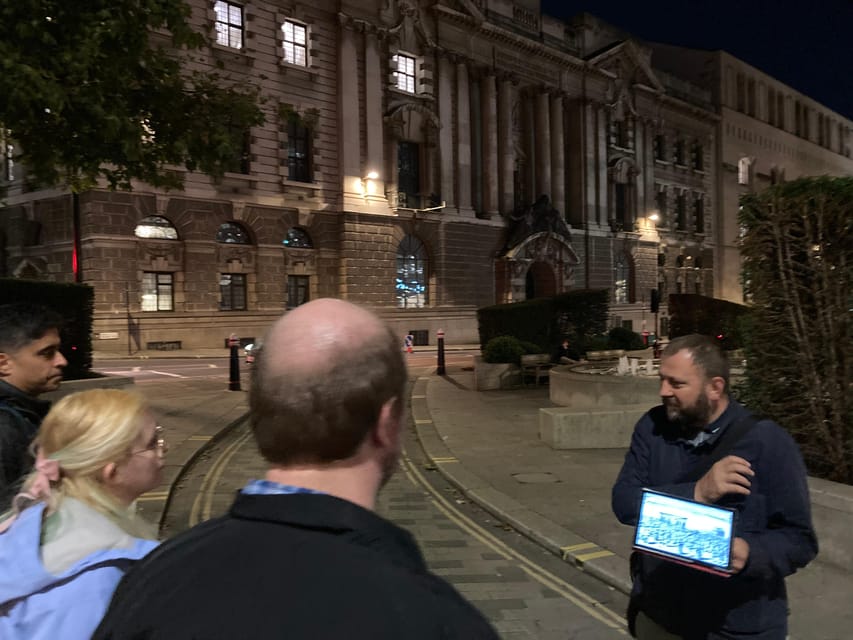
REVIEW · GHOST TOURS
London’s Ghosts & Gruesome Past Nighttime Walking Tour
History gets stranger after dark. This two-hour London walk links haunted Underground lore, plague pits, public execution grounds, old hospitals, and notorious crimes in one compact route through the city. I like the way it gets beyond Jack the Ripper and connects gruesome stories to real places you can still see today. I also like the mix of 900-year-old churches and Victorian medical history, rather than a tour built only around ghost tales.
The main caution is right in the name: this tour leans gruesome more than supernatural. You will hear about grave-robbery, brutal medical treatment, corpses, executions, and serial murder, while the ghost stories add atmosphere rather than dominating the evening. One especially praised guide is Matt, whose storytelling, enthusiasm, and clear enjoyment of the subject helped make the experience memorable.
In This Review
- What makes this London night walk different
- Starting at Farringdon Station with a ghost story
- Smithfield Market and centuries of public death
- Charterhouse Square and London’s plague pits
- St. Bartholomew the Great and a haunted churchyard
- William Wallace and the city’s older conflicts
- St. Bartholomew’s Hospital and the medicine of desperation
- Holy Sepulchre Church and the business of grave-robbing
- Old Bailey and the final serial-killer story
- Is $49 fair for two hours?
- Who should book this experience?
- Should you book London’s Ghosts & Gruesome Past?
- FAQ
- How long does the tour last?
- Where does the tour begin?
- Where does the tour end?
- What language is the tour conducted in?
- Is the tour wheelchair accessible?
- Can I cancel the tour for a refund?
What makes this London night walk different
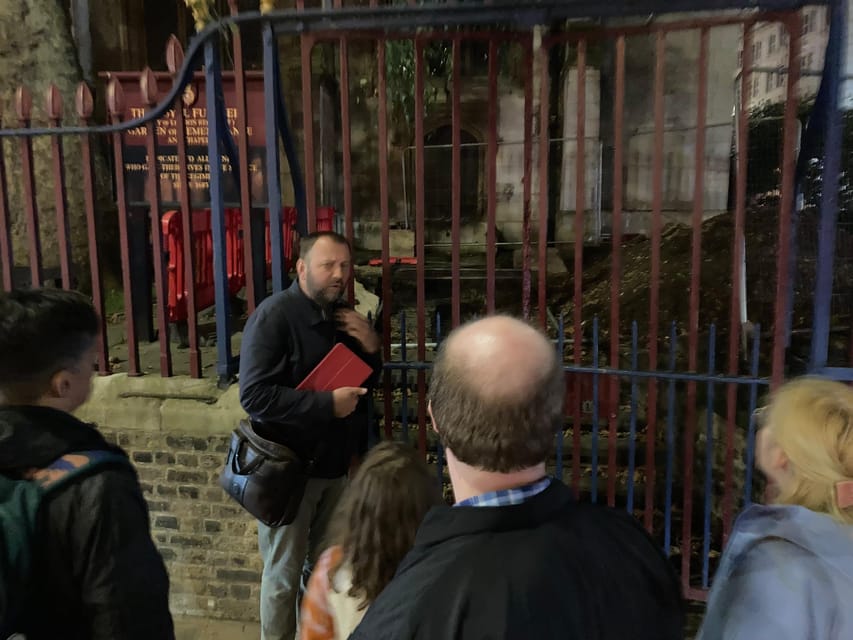
- Blood, bones, and old medicine: Learn why people once drank blood, ate bones, or smeared strange substances on themselves in the hope of getting well.
- A ghost at Farringdon Station: Begin by minding the gap while hearing the story of a girl said to haunt the Underground.
- Smithfield’s execution past: Walk through an area tied to centuries of public torture and death.
- Grave-robbery brought into focus: See how old hospitals created demand for stolen bodies from nearby burial grounds.
- A serial killer beyond Jack the Ripper: Finish with the story of England’s most prolific or worst serial killer, according to the tour’s historical framing.
- A strong storyteller-led format: The guide, rather than a museum display, carries the evening through the dark streets.
Starting at Farringdon Station with a ghost story
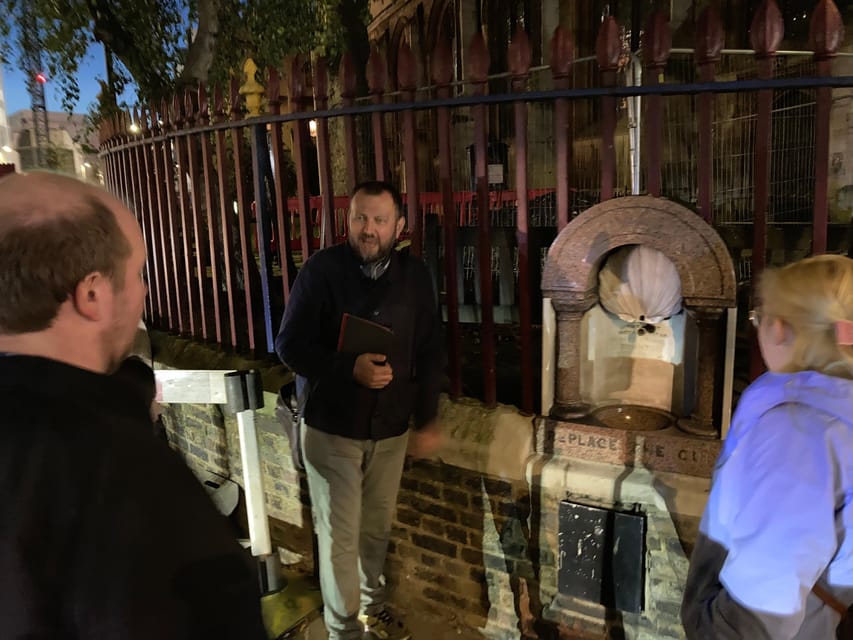
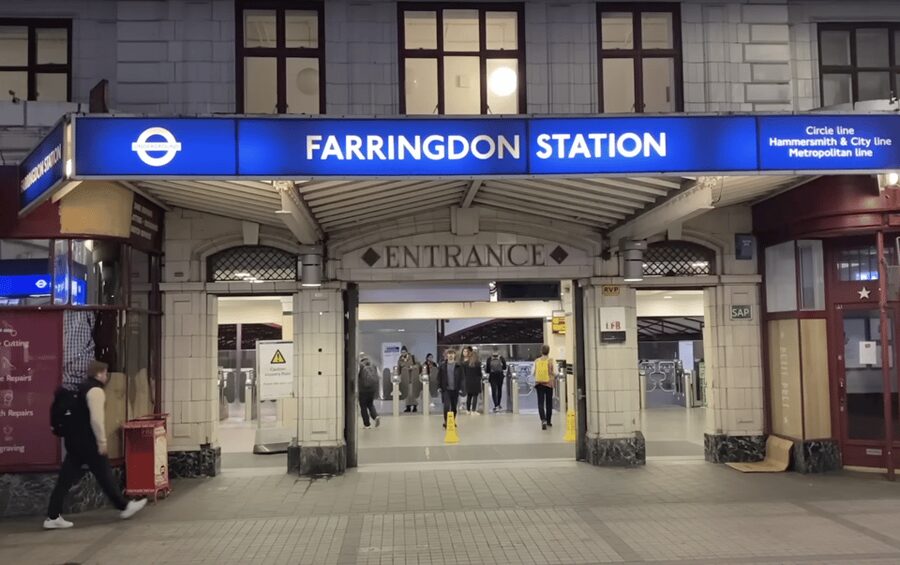
The meeting point is outside Farringdon Underground Station, at the main station entrance and exit between the old and new stations. That detail matters. Farringdon has more than one nearby entrance, so you should allow time to find the correct spot instead of arriving at the last minute.
The walk opens with the ghost of a girl said to haunt the station. It is a smart beginning because it puts you in the right frame of mind immediately, with trains moving beneath you and the city carrying on around you. The guide uses the location to introduce London’s Underground as a place with its own stories, not just a way to get from one sight to another.
Do not expect a theatrical haunted-house production. This is an outdoor storytelling walk, and the effect comes from hearing old tales while standing in the places connected to them. That approach will suit you if you like history with a chill around the edges. If you want constant ghost sightings and jump scares, the evening may feel too grounded in documented cruelty and old urban life.
The tour is conducted in English by a live professional guide. Matt received especially warm praise for being informative, entertaining, and passionate. That combination matters here. A dry lecture about burial practices would be hard work, but a good storyteller can make even medical history and court records hold your attention.
More Ghost Tours in London
- London: Entry Ticket to London Dungeon
★ 4.5 · 4,305 reviews - London: Comedy Horror Ghost Tour on a Bus
★ 4.4 · 2,084 reviews - London: Ghost Walk and River Thames Boat Ride
★ 4.5 · 1,251 reviews
Smithfield Market and centuries of public death
From Farringdon, the route reaches Smithfield Market, one of the evening’s most important historical settings. The area is associated with public executions that took place over many centuries. Heroes, martyrs, criminals, and innocent people could all become part of the grim public spectacle.
Your guide explains how punishment was made visible to the public. This was not hidden state violence. It happened in places where crowds could gather, watch, and react. That helps you understand how different older London was from the city you see today, even though the streets and nearby buildings remain part of the same urban fabric.
Smithfield works well as a stop because it gives the tour a wider frame. The subject is not simply ghosts. It is the way London dealt with crime, religion, rebellion, and public fear. You may find this section more historical than spooky, but it gives weight to the stories that follow.
The stop is also listed as a photo stop and visit, though the guide’s storytelling is the main reason to be there. This is not a market tour focused on food or shopping. Its value comes from the contrast between an active city district and the violence once connected to the same area.
Charterhouse Square and London’s plague pits
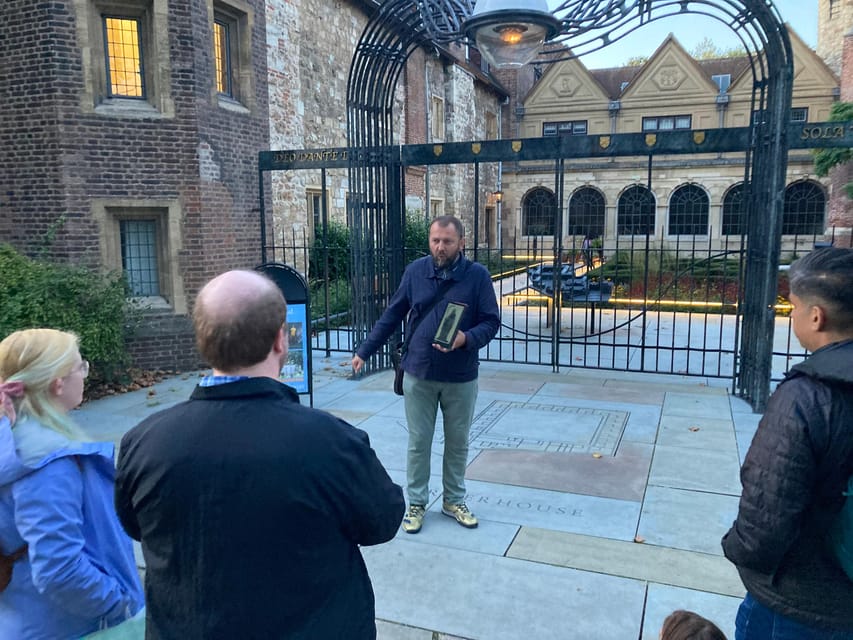
Charterhouse Square offers a quieter change of pace. The park sits amid the city, and the guide uses it to explain how plagues altered London. You will hear about how deadly disease could be, what doctors tried to do, and what happened to people who survived.
This part should appeal to you if you enjoy the social side of dark history. Epidemics were not only medical events. They changed burial customs, family life, public behavior, and the way people understood illness. The square gives the story a physical setting without requiring you to enter a museum or spend time reading long panels.
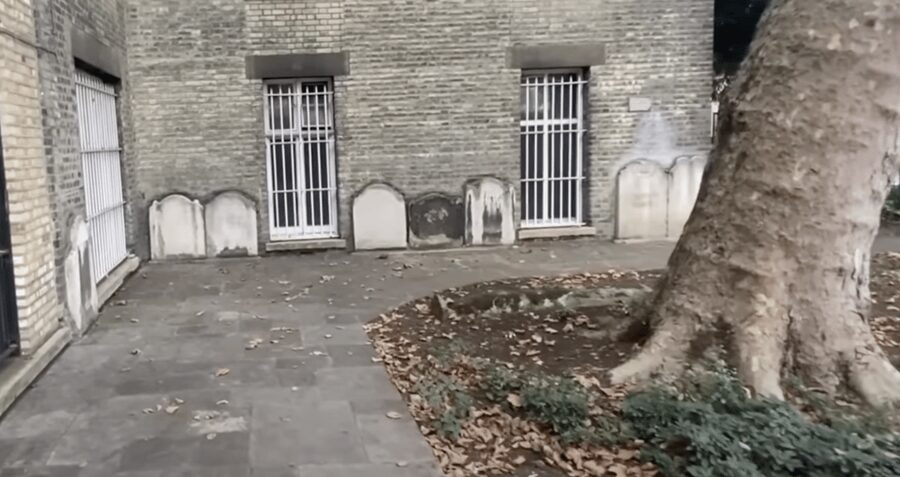
The route also passes over plague pits and through old burial areas. That does not mean you will see exposed remains or a dramatic archaeological display. The point is more unsettling: ordinary streets can cover places where large numbers of people were buried during times of disease.
For some people, this will be one of the strongest parts of the tour. It ties the macabre stories to everyday London rather than keeping them in the world of legends. For others, the medical and burial material may feel heavier than the ghost stories promised by the title.
St. Bartholomew the Great and a haunted churchyard
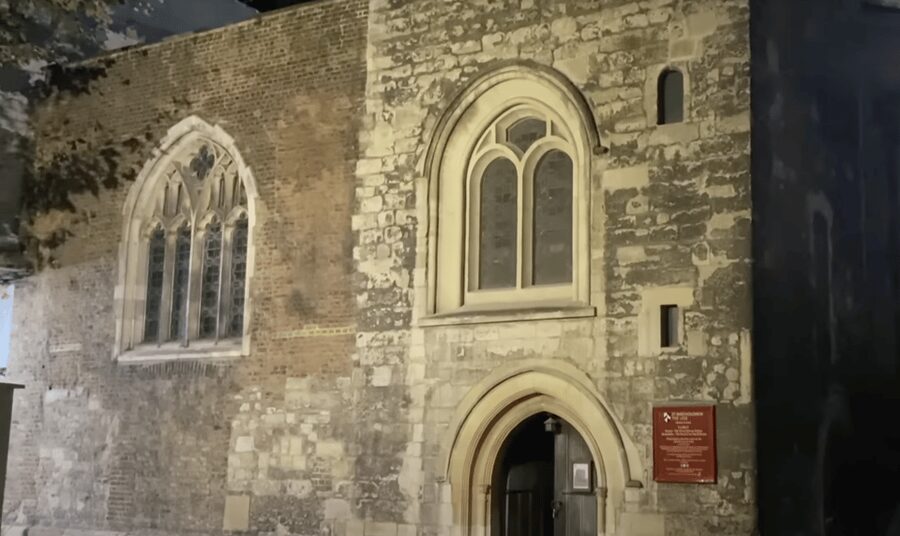
St. Bartholomew the Great brings you to a church with about 900 years of history. The tour connects the church and nearby hospital to stories of the living and the dead, including a burial story involving the church’s founder.
You will hear these tales while surrounded by old tombstones in what is described as one of London’s most haunted graveyards. That setting does much of the work. Even if you are skeptical of ghosts, a churchyard with centuries-old stones can make the past feel close.
I like this stop because it gives the evening a needed pause. The walk is not just a chain of murder stories. Churches, graveyards, hospitals, and public spaces show how people lived with death as part of daily life. The guide can use the site to explain beliefs about burial, memory, and the treatment of the dead.
The listed stop is mainly a photo stop and visit, so do not assume you will have a long interior tour of the church. The emphasis is on the surroundings and the stories connected to them. You should also remember that nighttime sightseeing depends on what can be seen safely and clearly after dark.
More Walking Tours in London
- Magical London: Harry Potter Guided Walking Tour
★ 4.7 · 22,044 reviews - London: The Original Jack the Ripper Walking Tour
★ 4.7 · 7,833 reviews - London: Harry Potter Movies Walking Tour (Kids Go Free)
★ 4.7 · 3,071 reviews - London: The Great British Rock and Roll Music Walking Tour
★ 4.9 · 1,783 reviews
William Wallace and the city’s older conflicts
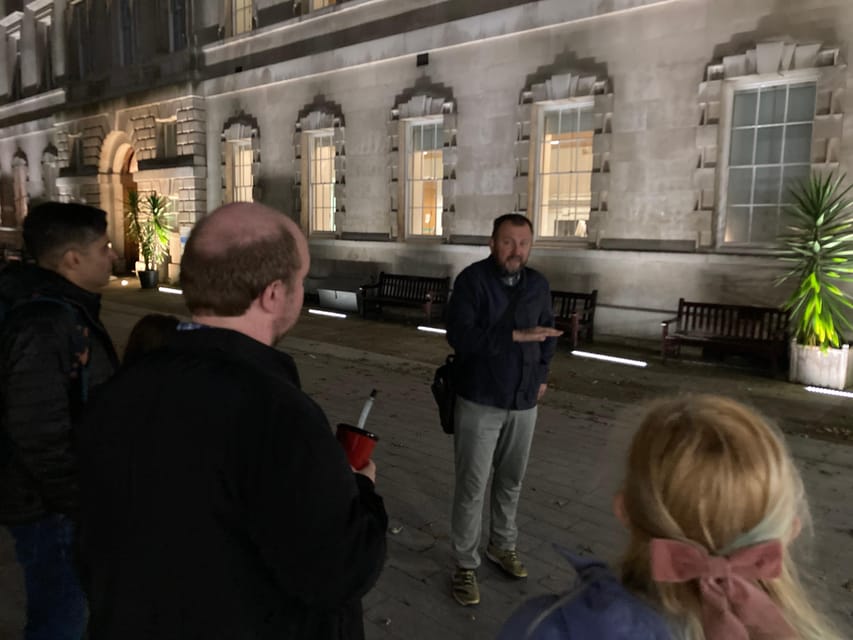
The Sir William Wallace Memorial takes the tour back to the conflict between England and Scotland. Wallace is remembered as a Scottish freedom fighter, and the memorial gives the guide a chance to connect London’s streets with a much older struggle for power.
This stop adds variety. The evening is not limited to Victorian murder and supernatural tales. It also reaches into medieval political and military history. You get a reminder that London’s dark past includes war, resistance, punishment, and national memory.
The memorial itself is another brief visit and photo stop. Its importance comes less from the time spent there than from how it broadens the route. If you know little about Wallace, the guide’s explanation should help place him in the story. If you already know the basics, you may appreciate the chance to see how his memory is marked in London.
St. Bartholomew’s Hospital and the medicine of desperation
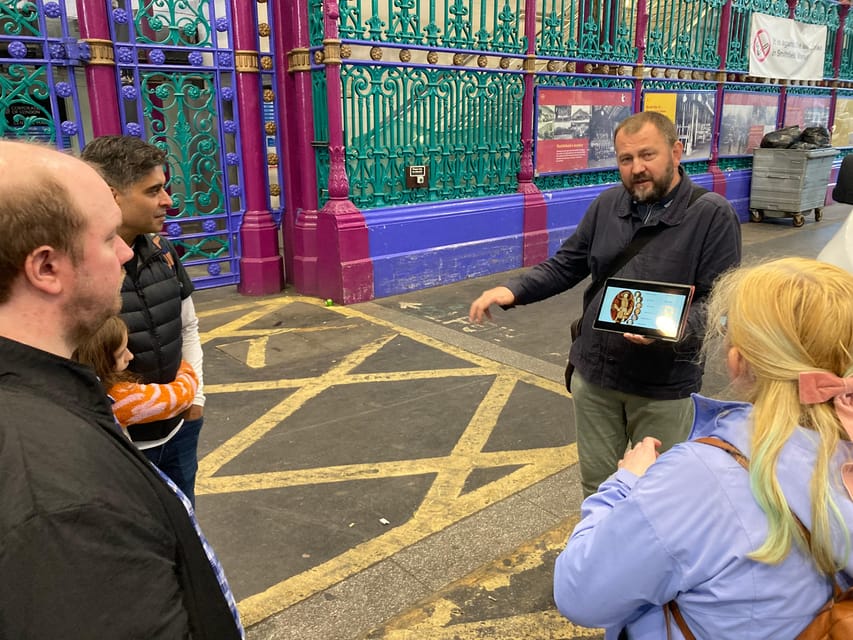
The stop at St. Bartholomew’s Hospital is where the tour’s title about blood and bones gets its most direct explanation. The hospital served London for centuries, and the guide describes the methods, tools, and substances once used by doctors.
You will hear why people might drink blood, eat bones, or smear unusual materials on their skin in an effort to recover. These practices can sound absurd from a modern viewpoint, but the tour places them in a time when medical knowledge was limited and serious illness offered few reliable choices.
This is also where the stories of hospitals and grave-robbery begin to connect. Medical education and surgery required bodies for study, while burial grounds held those bodies. The route makes you consider the grim trade that grew between people willing to steal corpses and those willing to buy them.
I find this kind of history more useful than a simple list of shocking facts. It explains why such behavior happened. The old hospital becomes more than a spooky building. It shows how medicine developed through methods that were often painful, dangerous, and morally troubling.
You should be comfortable with strong subject matter before booking. The tour deals with bodies, illness, death, and disturbing medical practices. It is not designed to soften those details.
Holy Sepulchre Church and the business of grave-robbing
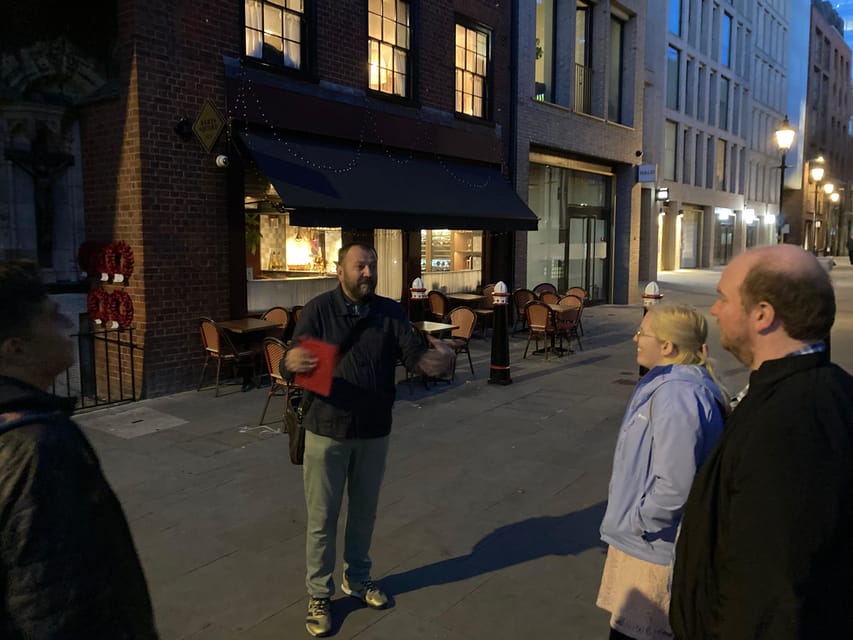
At Holy Sepulchre Church, the guide points out empty burial pits associated with body-snatching. The story becomes especially clear because the route has already taken you past the hospital and a pub. The implication is simple and grim: stolen bodies had buyers, and the demand was connected to medical study.
This is one of the most effective sections because the surrounding stops provide the context. You are not hearing about grave-robbers as isolated villains from a crime story. You are seeing how a market could form around the needs of hospitals and surgeons.
The tour also covers the Barber Surgeons, including their salacious history. The name refers to the old connection between barbering and surgical work, a reminder that medical professions did not always have the neat boundaries they have today.
For me, the strongest value here is the link between place and behavior. Empty graves, an old hospital, and a nearby drinking spot become pieces of the same story. You can walk away with a better sense of how London’s institutions shaped the city’s darker trades.
Again, the churchyard is listed as a photo stop and visit. You should expect an outdoor stop, not a full church service or extended indoor visit. The guide’s explanation is the main event.
Old Bailey and the final serial-killer story
The tour saves its most notorious subject for the Old Bailey, the famous courthouse. Here, the guide introduces the person described as England’s worst serial killer, making it clear that the evening’s final criminal is not Jack the Ripper.
That choice gives the tour a useful twist. Jack the Ripper is London’s familiar name, but the city’s criminal past includes other killers whose records may be even more horrifying. The Old Bailey provides an appropriate setting for a story about crime, trial, and punishment.
The courthouse stop also brings the evening back to the legal system. Earlier, you heard about public executions at Smithfield. Here, you encounter the institution associated with serious criminal cases. The route links the way London punished people in the past with the court that still represents justice in the public mind.
You should expect this final section to be grim rather than ghostly. The supernatural material is present, but the tour’s strongest stories concern things people actually did to one another. That is why the experience may appeal to you more as dark social history than as a pure ghost walk.
The listed route finishes at St. Paul’s Cathedral, while the activity information also describes the walk as ending back at the meeting point. Because those details do not perfectly match, confirm the exact end location when you book. Either way, the route keeps you in central London, with the city’s major streets and transport network close by.
Is $49 fair for two hours?
At $49 per person, this is not the cheapest way to spend an evening in London. The value depends on what you want from a walking tour.
I think the price is reasonable if you care about a live storyteller, a carefully linked route, and access to stories you would probably miss while sightseeing on your own. You are paying for interpretation, not admission to a major attraction. There is no museum ticket or grand interior included, so the guide’s quality matters a great deal.
Matt’s strong feedback is encouraging because this format rises or falls on the person leading it. A passionate storyteller can make the walk feel focused and lively. A less engaging guide would leave you looking at dark churchyards without much to hold your attention.
The two-hour length is also practical. You get a full evening activity without sacrificing half a day of sightseeing. Starting times vary, so check availability and choose a slot that fits your dinner plans and other evening activities.
Free cancellation up to 24 hours before the tour and the option to reserve now and pay later add useful flexibility. Wheelchair access is provided, though the route includes city streets, churchyards, and outdoor areas, so you may want to confirm the exact accessibility arrangements before booking.
Who should book this experience?
I would choose this walk if you enjoy:
- London history that goes beyond famous palaces and royal stories
- Ghost tales supported by real places and old records
- Medical history, burial customs, and the origins of public health
- Dark crime stories that are more unusual than the standard Jack the Ripper narrative
- Guided walks where the storyteller’s personality matters
- A compact evening activity in central London
I would think twice if you want a light, family-friendly ghost walk. The material includes executions, plague deaths, grave-robbing, disturbing medical practices, and serial murder. One piece of feedback praised the tour’s interest and educational value but wished it contained more ghosts and less gruesomeness. That is a fair warning.
The route may also be less satisfying if you need extended time inside historic buildings. Most stops are outdoor visits and photo stops. You are seeing the places while listening to their stories, not touring every interior.
Should you book London’s Ghosts & Gruesome Past?
Book it if you want London’s dark history served with atmosphere, strong storytelling, and real locations. I especially like the way the route connects plague pits, hospitals, empty graves, execution grounds, and courts. Those links give the evening more substance than a string of unrelated ghost stories.
Skip it if you mainly want supernatural scares or a gentle introduction to London. This is a serious, sometimes graphic walk about how people treated illness, death, punishment, and one another. For the right audience, that is exactly its appeal.
Before you go, wear comfortable shoes, arrive at the correct Farringdon entrance, and keep your expectations focused on storytelling rather than staged effects. If Matt is leading your group, you may get the especially animated presentation this tour needs. At $49, it is best for someone who wants to see familiar central London through its least comfortable stories.
FAQ
How long does the tour last?
The walking tour lasts two hours.
Where does the tour begin?
Meet the guide outside Farringdon Underground Station, at the main entrance and exit between the old and new stations.
Where does the tour end?
The route lists St. Paul’s Cathedral as the finish, while the activity information also says it ends back at the meeting point. Confirm the exact end location when booking.
What language is the tour conducted in?
The live tour is conducted in English.
Is the tour wheelchair accessible?
Yes, the activity is listed as wheelchair accessible.
Can I cancel the tour for a refund?
Yes. You can cancel up to 24 hours in advance for a full refund. You can also reserve now and pay later.
Just added in London
- The Best of British Cooking Class & Dining Experience★ 5.0 · 1 review
- London: Live Comedy Show at Big Belly Bar and Comedy Club★ 4.5 · 80 reviews
- London: British Museum Highlights Guided Small Group Tour★ 4.9 · 113 reviews
- The Beatles London Walking Tour★ 4.2 · 147 reviews
- The Best Highlights of London Walking Tour & Boat Cruise★ 5.0 · 1 review
- The Authentic Walking Tour with Indian Tasting Meal★ 4.8 · 4 reviews
- Iconic London: Bard, Beatles, Bond & Baker Street★ 4.9 · 15 reviews
- London: Tate Britain Official Discovery Tour★ 4.7 · 7 reviews
Ghost Tours, compared.




London Dungeon, London Eye, & Madame Tussauds Combo
Read our review →

Other lists this tour turns up in