
REVIEW · WALKING TOURS
Manchester: Media City & The Quays Guided Walking Tour
Manchester’s waterfront has a big story. I like the way this two-hour walk links the old Manchester Ship Canal with the new Media City, and I especially like the use of headsets, which lets you hear the guide clearly beside busy roads and open water. At $18 per person, it offers a useful introduction to an area that can be hard to understand from a casual stroll alone.
The main consideration is the weather. You will walk about 5 kilometers outdoors, and the tour runs rain or shine. The pace is usually comfortable, but one guide, Frank, has been described as a fast walker, so tell your guide if you need a slower rhythm.
In This Review
- Key points to know before you book
- Why Salford Quays deserves a guided walk
- Meeting beneath the Media City screen
- Following the Manchester Ship Canal
- The Lowry Arts Centre and the cultural Quays
- Imperial War Museum North and the bridges
- Media City, BBC Quay House, and the future
- What the guide adds to the experience
- Pace, distance, and accessibility
- Is $18 good value?
- Who should book this walk?
- Practical details before you go
- Should you book the Media City and The Quays tour?
- FAQ
- Where does the tour start?
- Where does the tour finish?
- How long is the tour?
- Which landmarks are included?
- Is the tour suitable for children?
- Is the tour wheelchair accessible?
- What should I bring?
Key points to know before you book
- Starts and finishes at Media City Piazza, beside the Media City Metrolink station and under the large digital screen.
- Covers about 5 kilometers in two hours, with pauses for views, photographs, buildings, and old images.
- Connects industrial Manchester with modern Salford, explaining the Manchester Ship Canal, dock life, Media City, and future building plans.
- Uses headsets, a small but valuable detail that helps you catch every word while walking.
- Includes major landmarks, including The Lowry Arts Centre and Imperial War Museum North.
- Works well for families and mixed-ability groups, with an adjustable route and pace, plus wheelchair access and dogs on leads welcome.
Why Salford Quays deserves a guided walk
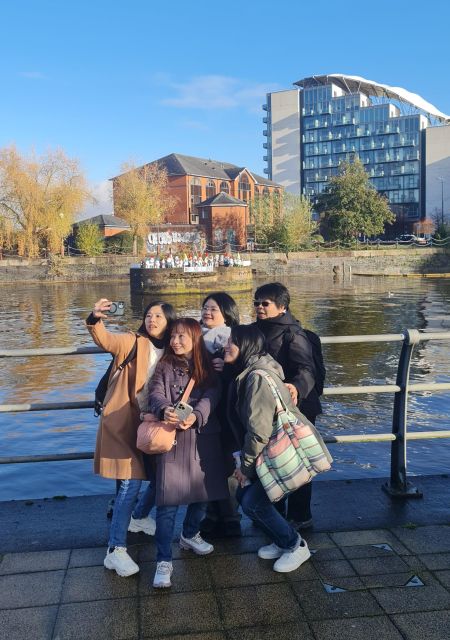
Salford Quays is one of those places that can look simple at first glance. You see water, bridges, modern buildings, public art, and wide paths. Without context, though, it is easy to miss how much the area has changed.
This was once a major dock area connected to the Manchester Ship Canal. The canal allowed ocean-going ships to reach Manchester, changing the city’s trade and industrial prospects. The docks later declined, and the area faced a very different future. Today, the Quays have been reshaped into a cultural, media, residential, and leisure district.
That contrast is the heart of the tour. You are not just being shown attractive waterfront views. You are being helped to read the area. A guide can point out where the docks once worked, explain why certain buildings are here, and show how the old industrial setting now supports broadcasting, art, museums, shops, restaurants, and new development.
I particularly like that the walk does not treat Media City as a finished product. The tour also looks ahead, explaining current plans and the continuing changes around the Quays. That makes it useful even if you have visited before.
More Walking Tours in Manchester
- Manchester: Morning or Afternoon City Walking Tour
★ 4.8 · 120 reviews - Manchester: Music-Themed City Walking Tour
★ 4.4 · 109 reviews - Manchester: Food and Drinks Walking Tour
★ 4.9 · 70 reviews
Meeting beneath the Media City screen
Your meeting point is easy to identify. Meet beneath the large digital screen in Media City Piazza, next to the Media City Metrolink station, opposite BBC Quay House.
This is a practical starting point because you can reach it by tram and you do not need to search through a residential street or find a tucked-away office. The piazza also gives you a clear sense of the modern district before the walk begins. The buildings are large and contemporary, and the screen provides an obvious landmark for the group.
The guide introduces the route and explains how the walk will work. Headsets are supplied, with the guide speaking through a microphone. I consider this one of the strongest details of the experience. On an outdoor walk, people naturally spread out, and wind, traffic, and conversations can make a guide difficult to hear. The earpiece means you can look around while still following the explanation.
The tour begins and ends in the same place, which keeps the logistics simple. You can also plan to eat, shop, or continue exploring around Media City and Salford Quays afterward.
Following the Manchester Ship Canal
The canal is not just scenery here. It is the reason the Quays exist in the first place.
As you walk beside the water, the guide explains the canal’s role in Manchester’s industrial story and the life of the docks. The most useful part is the comparison between then and now. Old photographs help show what the waterfront looked like before its current transformation, giving you something concrete to compare with the buildings and paths in front of you.
Frank, the guide most often praised for this tour, uses photographs to illustrate the changes. That kind of visual aid matters because dock history can otherwise become a list of dates and names. With the images, you can better understand the scale of the former working waterfront and the extent of the redevelopment.
The walk also leaves room for questions. Several people have found the experience valuable because the guide explains not only the past but the reasons behind present-day development. If you are interested in urban planning, industrial heritage, or the changing role of British waterfronts, this section will likely be the intellectual centre of the tour.
One small practical point: the canal-side setting can feel exposed, particularly in colder months. Bring a proper coat, not just a jacket that looks good in a hotel mirror. In winter, warm layers are sensible, and comfortable shoes are essential.
The Lowry Arts Centre and the cultural Quays
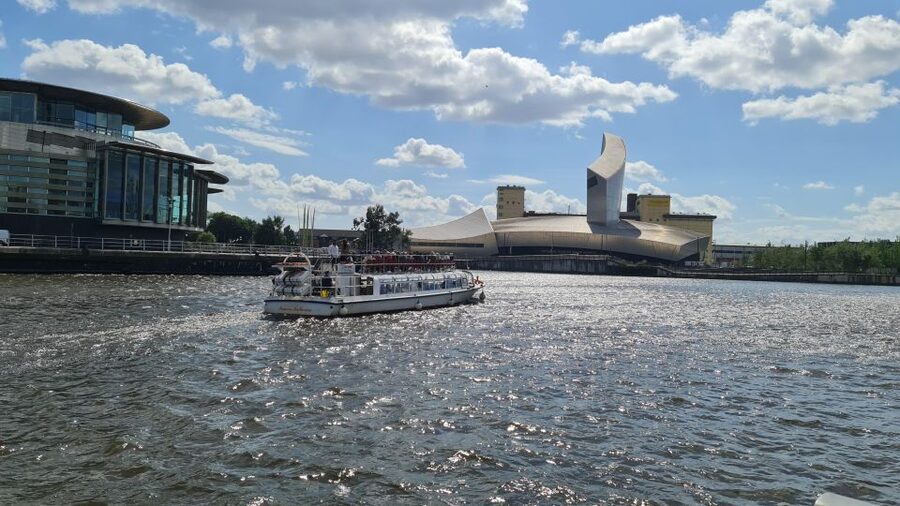
The Lowry Arts Centre is one of the tour’s key landmarks. Its presence makes clear that the Quays are not only a business district or a collection of new apartments. Culture is central to the area’s identity.
The guide explains the place of the arts centre within the wider redevelopment and helps you see how it fits into the waterfront setting. You should not expect a full indoor visit or a performance as part of the walking tour. The focus is on the exterior, the surrounding area, and the story of the Quays.
That distinction matters when you plan your day. If you want to see a show or spend time inside the arts centre, you will need to arrange that separately. The walking tour gives you a useful orientation, so you can return later with a better sense of where everything fits.
The route includes pauses at important points, rather than forcing you to march continuously for two hours. This helps you take in the architecture and public spaces without losing the thread of the story. It also gives you time to ask about details you might otherwise walk past.
A different kind of day out entirely:
- Manchester: Canal & River Cruise
★ 4.4 · 3,761 reviews - Etihad Stadium: The Manchester City Stadium Tour
★ 4.8 · 3,096 reviews - From Manchester: North Wales, Snowdonia, and Chester Tour
★ 4.8 · 1,577 reviews - Manchester: National Football Museum Admission Ticket
★ 4.4 · 1,243 reviews
Imperial War Museum North and the bridges
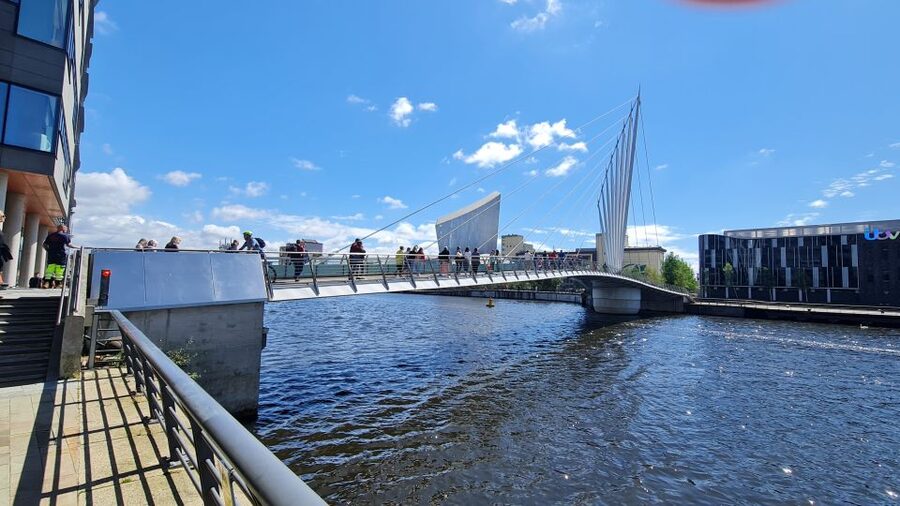
Imperial War Museum North adds another strong cultural and architectural stop. Its striking form is easy to spot, but the tour puts it into the setting of the Quays and the region’s wider story.
Again, this is an exterior stop on a walking route, not a museum admission visit. If you want the full museum experience, allow extra time before or after the tour. The walk can help you decide how much time you want to spend there, especially if you are balancing several Manchester sights in one day.
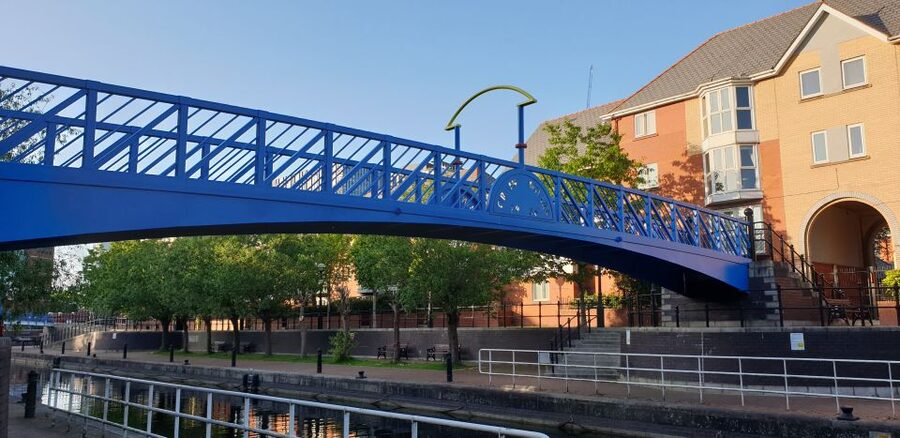
Bridges and canals shape the route. You cross bridges, follow the water, and see how movement through the district has been designed. This makes the walk more varied than a simple pavement route. You are continually changing your viewpoint, with the canal, buildings, and open spaces appearing differently from each crossing.
The bridges are also good places to pause for photographs, though the guide’s main purpose is to explain what you are seeing rather than stage a photo stop at every corner. If photography is your main interest, you will need to manage your own time and keep up with the group.
Media City, BBC Quay House, and the future
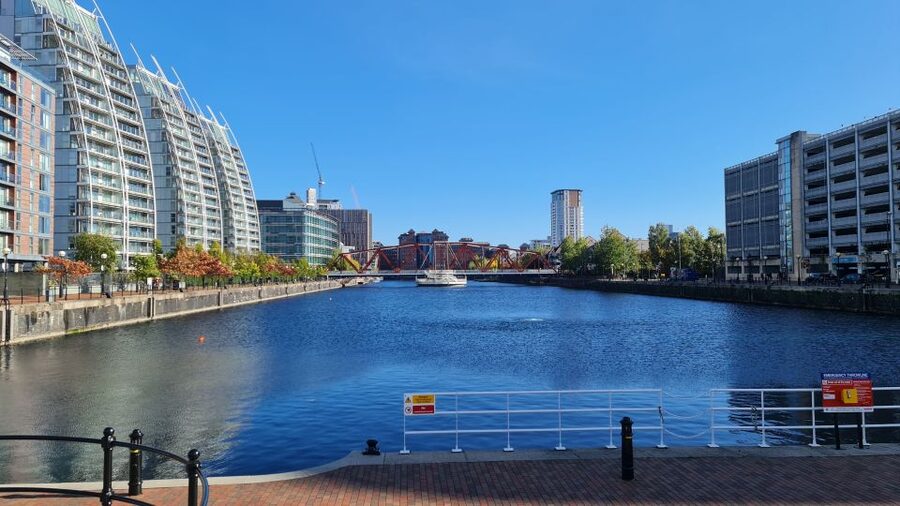
Media City is the modern face of the Quays. It has become a major centre for digital and creative businesses, and the tour explains how that newer identity grew out of the area’s earlier industrial use.
The contrast is especially interesting if you are visiting Manchester for the first time. In the city centre, you can see the legacy of factories, warehouses, and commercial buildings. At Media City, you see a newer model built around broadcasting, creative work, technology, and public space.
BBC Quay House is directly opposite the meeting point, so you begin with one of the area’s most recognisable modern buildings nearby. From there, the guide explains how Media City functions and how the district continues to change.
I appreciate the attention given to future development. Many city tours stop once they reach the present day. This one treats the Quays as an ongoing project and discusses plans for the near future. You get a sense of why the area remains important to Manchester and Salford, rather than seeing it as a redevelopment scheme that has already reached its final form.
The wording around future plans can naturally change over time. If you are especially interested in development, ask questions during the walk. The guide’s value is strongest when you use the time for conversation rather than simply listening from the back of the group.
What the guide adds to the experience

The guide is the deciding factor here. The route itself is pleasant, but the information turns it into a proper introduction to the Quays.
Frank receives especially strong praise for his friendly delivery, local insight, use of old photographs, and ability to answer questions. Several people who already knew Manchester still learned something new from him. That is a useful sign: the tour is not aimed only at first-time visitors.
One person who had lived in Manchester for 25 years still found the canal’s story and the changes at Salford Quays worth hearing. Another local visitor said the area became much more understandable after the walk. You do not need to be an industrial-history enthusiast to benefit.
The tour also appears to work well with very small groups. Some departures have had only one, two, or three people, creating a more personal experience. That cannot be guaranteed, but a small group gives you more chance to ask questions and shape the conversation.
Guides can vary. Frank is the name most often singled out, while Craig is also praised for answering questions well. The safest expectation is an English-speaking local guide with strong knowledge of the area, not a promise that one particular person will lead every departure.
Pace, distance, and accessibility
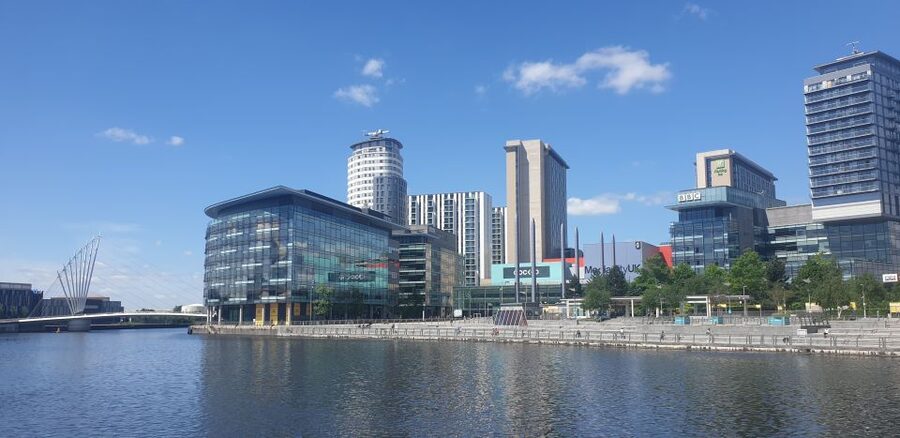
The route covers around 5 kilometers in two hours. That is not an extreme distance, but you should treat it as a real walking tour, not a short orientation around one square.
You will be outside for the whole experience, with stretches beside the canal and across bridges. Wear comfortable shoes and clothing suited to the forecast. High heels are not allowed, and they would be a poor match for the route in any case.
The walk is family-friendly and suitable for all ages. The route can be adjusted to avoid steps, and the pace can be changed to suit the group. It is also wheelchair accessible. If you need a particular adjustment, tell the provider when booking or speak to the guide at the start.
Dogs on leads are welcome. That is useful if you are travelling with a pet, though you should still be prepared for a two-hour outdoor walk and public spaces with other people around.
The tour runs in all weather. Rain will not cancel the experience, so pack a waterproof layer or umbrella when needed. In colder months, the wind near open water can make the temperature feel lower than expected.
Is $18 good value?
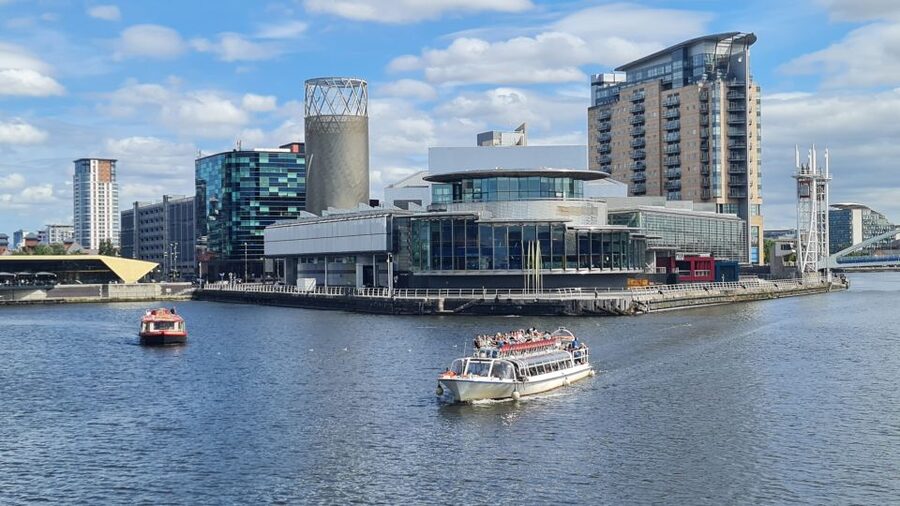
At $18, this is a reasonably priced way to understand a large and changing district. You are paying for two hours of guiding, local interpretation, headsets, and a route that links several important places.
The value is best if you want context. You can walk beside the canal for free, look at The Lowry and the Imperial War Museum North from outside, and take photographs without joining a tour. What you cannot easily gain on your own is the connection between the docks, the canal, the cultural buildings, Media City, and future plans.
The headsets also help justify the cost. You are less likely to miss information while crossing a bridge or walking at the back of the group. The tour does not include food, museum entry, or transport, so budget separately if you plan to spend more time at the Quays.
For a first visit, I think the price is fair. For returning visitors, the value depends on your interest in local history and urban change. The strong guiding is what makes it worthwhile, so I would choose it over a simple self-guided walk if you want answers rather than just views.
Who should book this walk?
I would recommend it to first-time visitors who want a clear introduction to Salford Quays and Media City. It is also a good choice for people who have visited the area before but never understood how the docks became the modern waterfront.
Families can use it as a manageable outdoor activity, especially because the guide can adjust the pace. Local residents may also enjoy it, since the route reveals details that are easy to miss during everyday visits.
It suits people interested in:
- Manchester and Salford’s industrial past
- The Manchester Ship Canal
- Waterfront regeneration
- Architecture and public spaces
- Media City and creative businesses
- The Lowry Arts Centre and Imperial War Museum North
I would think twice if you dislike walking outdoors in poor weather or prefer indoor attractions with lots of time at each site. The tour gives you an informed overview, not extended visits inside the arts centre or museum.
Practical details before you go
You can cancel up to 24 hours before the start for a full refund, and you can reserve now while paying later. Starting times vary, so check availability for your date.
The tour is in English, with an English-speaking live guide and an English audio system through the headset. Allow the full two hours, even if you expect to walk quickly.
Arrive at Media City Piazza and look for the large digital screen beside the Metrolink station. Comfortable shoes, weather-ready clothing, and a willingness to ask questions will improve the experience more than anything else.
Should you book the Media City and The Quays tour?
Book it if you want the story behind the scenery. The canals, bridges, Lowry Arts Centre, Imperial War Museum North, and modern Media City are more interesting when you understand how they connect.
At $18, the tour offers solid value, especially with a strong guide such as Frank and the helpful headsets. Skip it only if you want to explore entirely at your own pace or plan to spend the whole time inside the museum and arts centre. For most visitors, this is a smart two-hour introduction to one of Greater Manchester’s most changed and still-changing districts.
FAQ
Where does the tour start?
It starts beneath the large digital screen in Media City Piazza, next to the Media City Metrolink station and opposite BBC Quay House.
Where does the tour finish?
The walk returns to Media City Piazza, where it began.
How long is the tour?
The tour lasts two hours and covers about 5 kilometers.
Which landmarks are included?
The route passes the Lowry Arts Centre, Imperial War Museum North, the Manchester Ship Canal, Media City, and several bridges and waterfront locations.
Is the tour suitable for children?
Yes. It is family-friendly and suitable for all ages.
Is the tour wheelchair accessible?
Yes. The route can be adjusted to avoid steps, and the pace can be adapted for the group.
What should I bring?
Bring comfortable shoes and clothing suited to the weather. The tour runs rain or shine, and high-heeled shoes are not allowed. Dogs on leads are welcome.
Just added in Manchester
- Bridgewater: Royal Horticultural Society Garden Ticket★ 4.9 · 40 reviews
- Manchester: Visit Manchester Pass with Entry Tickets & Tours★ 3.0 · 5 reviews
- Manchester: Silent Disco Adventure Tour★ 5.0 · 72 reviews
- Manchester: Trax Social Racing Simulator Experience★ 3.1 · 13 reviews
- Manchester: Trax Social Music Quiz Experience★ 5.0 · 1 review
- Manchester: Junkyard Golf Club Tickets for 9 or 18 Holes★ 4.6 · 133 reviews
- Manchester: Sightseeing Walking Custom Tour with a Guide★ 3.6 · 8 reviews
- From Manchester: Lake District Sightseeing Day Trip★ 4.7 · 69 reviews
Walking Tours, compared.

Magical London: Harry Potter Guided Walking Tour
Read our review →

University and City Walking Tour with Alumni Guide
Read our review →
Harry Potter Movies Walking Tour (Kids Go Free)
Read our review →
The Great British Rock and Roll Music Walking Tour
Read our review →
Jack the Ripper Walking Tour – Ripper Vision Tours
Read our review →
Other lists this tour turns up in