REVIEW · TOURS
Midlands: Bomber Command Tour
Warplanes tell complicated stories. At the RAF Museum Midlands, this one-hour Bomber Command tour moves from the force’s formation in 1936 through World War II and into the Cold War, using aircraft and personal objects to make military history feel close and human. I especially like the newly restored Vickers Wellington, one of only two surviving anywhere in the world, and the chance to see Guy Gibson’s Victoria Cross and personal artifacts.
The tour also earns points for value. At $13 per person, you get museum entry and a guided look at some of its most important displays. The main limitation is just as clear: this is a ground tour, so you cannot go inside the aircraft. Children under 12 are not permitted, and the short running time means the visit focuses on key exhibits rather than every detail.
In This Review
- Key Points Before You Book
- Meeting the Guide at RAF Museum Midlands
- Starting With Bomber Command’s Formation in 1936
- The Vickers Wellington: The Main Event
- Guy Gibson’s Victoria Cross and Personal Story
- The Bristol Blenheim and Other Aircraft
- First World War Aircraft and Local Pilots
- From World War II to Cold War Strategy
- What the One-Hour Format Does Well
- Is the $13 Price Good Value?
- Who Should Book This Tour?
- Should You Book the Bomber Command Tour?
- FAQ
- Where does the Bomber Command Tour take place?
- How long does the tour last?
- How much does the tour cost?
- What days and times is the tour available?
- Where should I meet the guide?
- What is included in the tour?
- Can I go inside the aircraft?
- Is the tour suitable for children?
- Can I cancel my booking?
Key Points Before You Book
- The restored Vickers Wellington is one of only two surviving aircraft of its kind worldwide.
- Guy Gibson’s Victoria Cross adds a personal link to the story of Bomber Command.
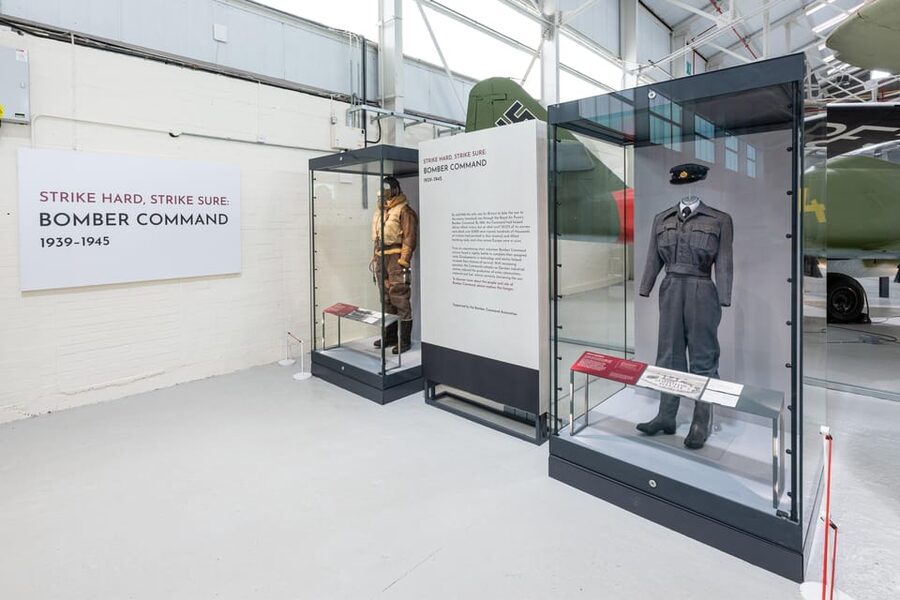
- The tour covers 1936 through the Cold War, not only the wartime years.
- The Bristol Blenheim and First World War aircraft widen the story beyond heavy bombers.
- The $13 price includes museum entry, making this a modest-cost way to add structure to a museum visit.
- Tours run on Tuesdays and Sundays, with pre-booking and early arrival required.
Meeting the Guide at RAF Museum Midlands
You start at the Admissions Desk at the RAF Museum Midlands in Shropshire. Look for signs pointing toward the Bomber Command section or the Vickers Wellington display. The guide meets you at the tour starting point and can be identified by a museum badge or uniform.
Arrive at least 30 minutes early. That may sound generous for a one-hour tour, but it gives you time to enter the museum, find the meeting point, and avoid turning the first few minutes into a frantic search through hangars. Pre-booking is essential, so do not count on joining at the last minute.
The tour is offered on Tuesdays at 11:00 AM and 2:00 PM, and on Sundays at 11:00 AM. Those limited times matter when planning a wider visit. If you are building a day around the museum, choose the tour time first, then fit the rest of your visit around it.
English is the tour language. The museum and tour are wheelchair accessible, but you should communicate any accessibility needs when booking. That is sensible for any museum visit involving large displays and a fixed meeting point.
Other trips worth a look in Britain:
- London: The London Eye Entry Ticket
★ 4.6 · 35,875 reviews - From London: Harry Potter Warner Bros Studio Tour
★ 4.7 · 26,588 reviews - London: Westminster to Greenwich River Thames Cruise
★ 4.5 · 22,836 reviews
Starting With Bomber Command’s Formation in 1936
The tour begins with the creation of Bomber Command in 1936. This opening gives you the basic framework for understanding what follows. Rather than looking at isolated aircraft, you are introduced to the organization as a long-running part of Britain’s air strategy.
That matters because Bomber Command was not simply a collection of aircraft and crews. It was a major military force whose purpose and methods changed with technology, wartime pressure, and national strategy. The tour follows those changes through physical objects, aircraft, and the decisions behind them.
A guide-led introduction is useful here. Museum labels can tell you an aircraft’s name and date, but a structured talk helps connect the machines to the wider story. In only an hour, that focus keeps the visit from becoming a long list of model numbers.
The downside is that the pace may feel quick if you want technical detail. A one-hour tour can explain the main ideas, but it cannot give every aircraft an extended examination. If you enjoy studying engines, construction, or squadron markings, plan to spend extra time in the museum after the guided portion.
The Vickers Wellington: The Main Event
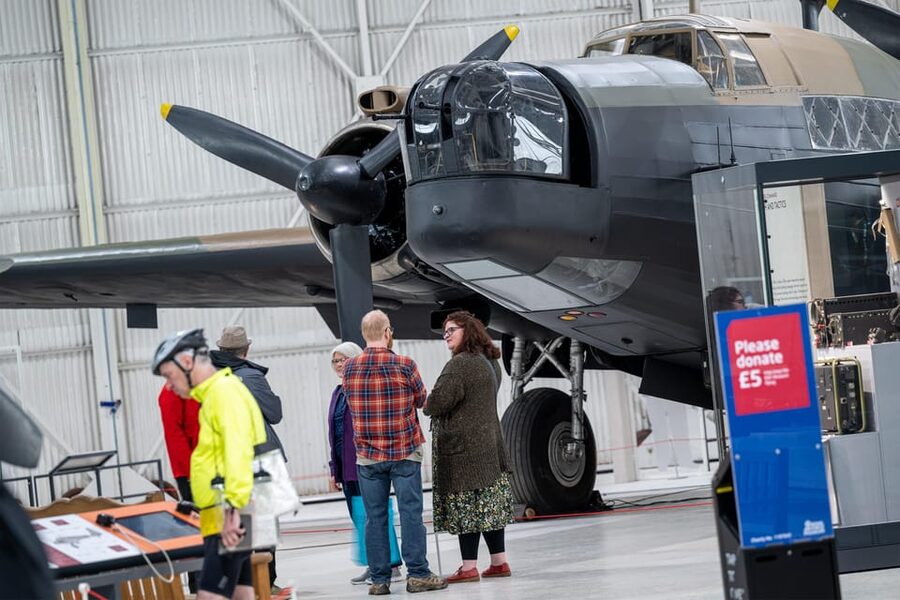
The newly restored Vickers Wellington is the tour’s strongest visual draw. Only two survive worldwide, so simply seeing one is a rare opportunity. The aircraft gives the history a physical center, rather than leaving you with photographs and dates alone.
The Wellington also helps you picture the scale and character of wartime aircraft design. You can examine it from the ground and consider the engineering, size, and working environment represented by the display. You cannot enter the aircraft, but its presence still gives the tour a strong sense of place.
Restoration adds another layer of interest. A restored aircraft is not just a polished exhibit. It reflects the effort required to preserve a machine that helped define an era of military aviation. For anyone interested in conservation, the Wellington is likely to be worth the tour price by itself.
I would set expectations carefully. This is not an aircraft interior experience, and there is no access inside the Wellington or other planes. If climbing through a bomber is your main reason for booking, this tour will not meet that particular goal. If you want to see a rare aircraft while hearing why it matters, it is a better fit.
Guy Gibson’s Victoria Cross and Personal Story
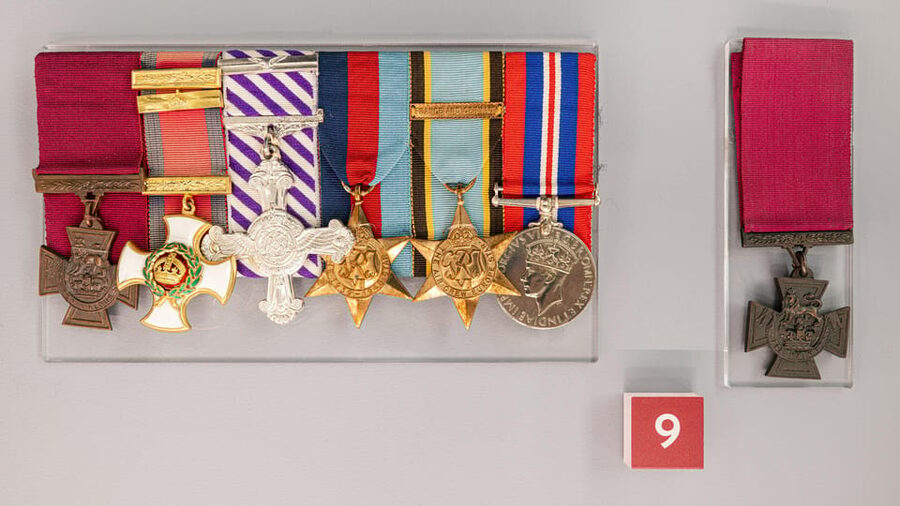
The display of Guy Gibson’s Victoria Cross gives the tour a more intimate focus. Medals can easily become distant symbols in a museum case, but personal artifacts help bring the individual behind the military record into view.
Gibson is closely associated with Bomber Command, and his Victoria Cross represents both personal bravery and the public recognition given to wartime service. Seeing the medal alongside personal items allows the guide to move beyond aircraft specifications and discuss the people who flew and supported them.
This section is especially useful if you are visiting with someone who does not usually seek out military museums. A personal object can make a large subject easier to approach. The story becomes less about hardware alone and more about decisions, risk, duty, and the cost of war.
At the same time, the tour does not present Bomber Command as a simple tale of heroism. Its role in World War II was controversial, and that controversy is an important part of the experience. You should expect an account that recognizes the force’s strategic importance while also acknowledging the difficult moral questions surrounding bombing campaigns.
That balance is one of the tour’s best features. It avoids reducing the subject to either celebration or condemnation. In a short visit, the guide cannot settle every argument, but you are given enough context to understand why Bomber Command remains debated.
A different kind of day out entirely:
- Magical London: Harry Potter Guided Walking Tour
★ 4.7 · 22,044 reviews - London: Madame Tussauds London
★ 4.6 · 20,915 reviews - London: Warner Bros. Studio Tour with Transfers
★ 4.7 · 17,586 reviews - Edinburgh: Loch Ness, Glencoe & the Scottish Highlands Tour
★ 4.6 · 17,446 reviews
The Bristol Blenheim and Other Aircraft
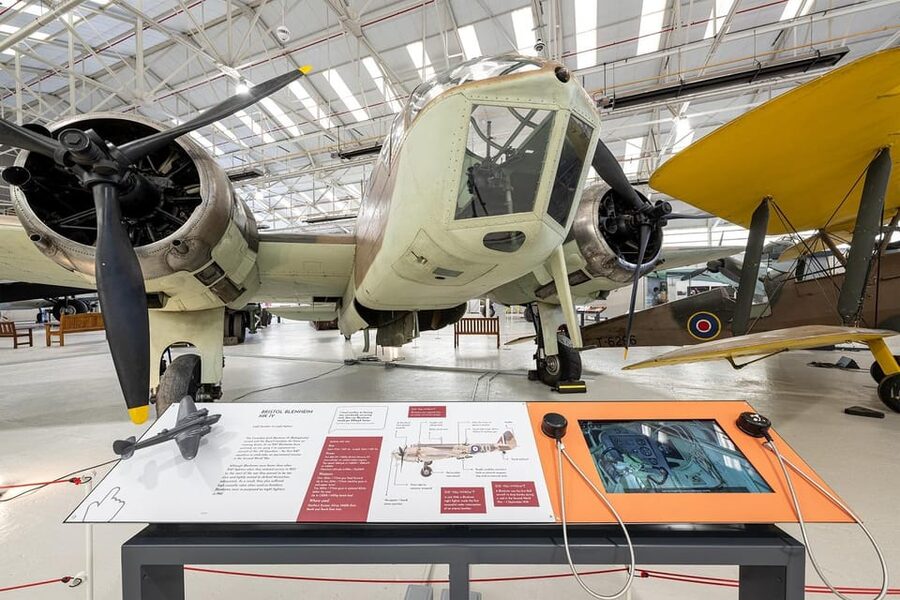
The Bristol Blenheim broadens the aircraft story. Its presence reminds you that Bomber Command’s history includes more than one famous heavy bomber. Different aircraft reflect different periods, roles, and stages in the development of British air power.
You also see other significant aircraft as the tour moves through the museum. The guide uses these displays to explain how bomber forces developed and how aircraft fit into changing military plans. For you, that means the tour has more variety than a single-aircraft presentation.
The display works best if you pay attention to the connections between machines. Notice how the aircraft represent different approaches to range, speed, payload, and strategic purpose. The tour is not designed as a technical engineering class, but it gives you a useful way to look at the collection.
Because the tour lasts only one hour, you may want to return to aircraft that catch your attention. The guided route provides the framework. Your own time afterward lets you slow down and look at details the group could not cover.
First World War Aircraft and Local Pilots
The story reaches back beyond Bomber Command with First World War aircraft, including a Sopwith biplane. This earlier material helps place later bomber development in a longer sequence. Aviation changed quickly from the First World War to 1936, and then again during World War II and the Cold War.
Personal letters from local pilots add an appealing local touch. These are not just national military records. They connect the broad story to people from the surrounding area, giving you a reminder that air power was built and operated by individuals from ordinary communities.
Letters can also change the tone of a museum visit. Aircraft show what was flown, while personal writing can suggest what service felt like. The supplied information does not promise a long reading session for every letter, so expect selected examples rather than an entire correspondence archive.
Still, this is a worthwhile part of the tour. It keeps the focus from becoming only about famous commanders and large military plans. Local voices give the subject a human scale.
From World War II to Cold War Strategy
Many visitors will expect the tour to end with World War II. It does not. The guide also explains how Bomber Command affected military strategy during the Cold War, which gives the experience a broader reach.
This section shows that the organization’s importance did not disappear when the war ended. Air power continued to shape national defense thinking, strategic planning, and the balance between conventional and nuclear forces. The tour’s outline does not specify every Cold War aircraft or policy discussed, so you should expect an overview rather than a specialist lecture.
That overview is useful because it places wartime decisions in a longer story. The aircraft in front of you were part of a changing system, not a closed chapter. You leave with a clearer sense of how military aviation moved from wartime bombing operations toward a different kind of strategic role.
For me, this is one reason the tour offers more value than a basic aircraft walk-through. It asks you to think about how technology changes military planning, and how the same command can have different roles across different decades.
What the One-Hour Format Does Well
A one-hour tour is easy to fit into a larger museum visit. You get a clear route, a live English-speaking guide, and enough time to encounter major aircraft and objects without committing half a day to a single subject.
The short format also forces useful priorities. You see the Wellington, Gibson’s medal and artifacts, the Bristol Blenheim, First World War aircraft, and selected personal letters. The story moves from organization, to wartime role, to postwar strategy.
The tradeoff is limited time for questions and close inspection. If the group has many questions, some displays may receive only a brief explanation. You should treat the guided hour as an introduction, then use the included museum entry to continue independently.
There is no stated group size, so I would not assume a small private experience. The guide meets you at a designated museum point, and the tour follows a planned route. That structure is useful, but it may feel less flexible than wandering alone.
Is the $13 Price Good Value?
At $13 per person, the tour is reasonably priced for a guided museum experience, especially because entry to the RAF Museum is included. You are paying not only to see aircraft, but to have the Bomber Command displays placed in a clear historical sequence.
The value is strongest for first-time visitors, people with limited museum time, and anyone who wants help understanding the controversial wartime role of Bomber Command. A guide can point out the Wellington, Gibson’s Victoria Cross, and other key objects without leaving you to guess what deserves attention.
The value is lower if you already know the collection well or prefer to explore at your own speed. You may find that the one-hour route moves too quickly, especially if you want detailed aircraft information. In that case, the included museum entry still helps, since you can continue looking after the tour.
Parking costs extra, and no food or drinks are included. The museum shop sells souvenirs and merchandise, but those are separate purchases. These are small practical costs, yet it is worth planning for them if you are making a full day of the visit.
Who Should Book This Tour?
I would recommend it to adults and children aged 12 or older who have a serious interest in military aviation, World War II, aircraft preservation, or the moral questions surrounding strategic bombing. It also suits visitors who want a guided starting point before exploring the wider museum.
The tour is a good choice if you value rare objects. The Wellington and Guy Gibson’s Victoria Cross give it two clear anchors, while the Bristol Blenheim, Sopwith biplane, and pilot letters add range.
It may not suit you if you want an interactive aircraft experience, access inside planes, refreshments, or a long technical workshop. It is also not available for children under 12, and the limited Tuesday and Sunday schedule may not fit every itinerary.
One verified booking from August 28, 2025, rated the experience five out of five and described it as very informative. That matches the tour’s main strength: it gives you a focused explanation of an important and difficult subject without asking you to spend a large amount of money.
Should You Book the Bomber Command Tour?
Book it if you want a focused, affordable guided visit built around rare aircraft, personal artifacts, and the changing role of Bomber Command. The Wellington alone is a powerful reason to go, while Guy Gibson’s Victoria Cross and the Cold War section give the hour more substance than a simple aircraft display.
Skip it if you mainly want to climb inside planes or wander without a fixed route. For most museum visitors with an interest in aviation and modern history, though, the $13 fee is a sensible add-on because it includes museum entry and gives you a clear way into one of the RAF Museum Midlands’ most serious collections.
FAQ
Where does the Bomber Command Tour take place?
It takes place at the Royal Air Force Museum Midlands in Shropshire, United Kingdom.
How long does the tour last?
The guided tour lasts one hour.
How much does the tour cost?
The listed price is $13 per person.
What days and times is the tour available?
It runs on Tuesdays at 11:00 AM and 2:00 PM, and on Sundays at 11:00 AM.
Where should I meet the guide?
Meet at the Admissions Desk at the RAF Museum Midlands. Look for signs pointing to the Bomber Command section or the Vickers Wellington display.
What is included in the tour?
The price includes entry to the RAF Museum, a guided tour of the Bomber Command exhibits, and viewing of Guy Gibson’s Victoria Cross.
Can I go inside the aircraft?
No. This is a ground tour only, with no access inside the aircraft.
Is the tour suitable for children?
Children under 12 are not permitted on the tour.
Can I cancel my booking?
Yes. You can cancel up to 24 hours in advance for a full refund.
Just added in Britain
- Chester: The Dead Good Ghost Walking Tour★ 4.3 · 9 reviews
- The Best of British Cooking Class & Dining Experience★ 5.0 · 1 review
- London: Live Comedy Show at Big Belly Bar and Comedy Club★ 4.5 · 80 reviews
- London: British Museum Highlights Guided Small Group Tour★ 4.9 · 113 reviews
- The Beatles London Walking Tour★ 4.2 · 147 reviews
- The Best Highlights of London Walking Tour & Boat Cruise★ 5.0 · 1 review
- From Edinburgh: Best of Scotland Small-Group Day Tour★ 4.7 · 61 reviews
- The Authentic Walking Tour with Indian Tasting Meal★ 4.8 · 4 reviews
Tours, compared.

Magical London: Harry Potter Guided Walking Tour
Read our review →

Loch Ness, Glencoe & the Scottish Highlands Tour
Read our review →
Liverpool Football Club Museum and Stadium Tour
Read our review →
Warner Bros. Studio Harry Potter Tour with Transfers
Read our review →
Giants Causeway, Dark Hedges, Dunluce & Belfast Tour
Read our review →