REVIEW · TICKETS
Milton Keynes: Bletchley Park Entry Ticket
Secrets changed the course of a war here. Bletchley Park gives you a rare look at the wartime site where Britain’s Codebreakers worked in strict secrecy, using machines, mathematics, instinct, and relentless patience to read enemy messages. I especially like the mix of authentic huts and modern displays, and the free return visits for 12 months make the $37 ticket unusually good value. The main drawback is simple: the site is larger than it first appears, so a rushed visit can leave you seeing only part of it.
I also like the free audio guide and the one-hour guided tour, which help turn a spread of buildings into a clear human story. Guides such as John, David, and Sheila have been praised for bringing the people and pressure of the work to life. Plan on at least half a day, wear sensible shoes, and arrive early if you need the limited car parking.
In This Review
- Key points to know before you go
- Why Bletchley Park matters
- Arriving at the Mansion and wartime grounds
- Start with the free guided tour
- The Mansion: the story’s elegant starting point
- The huts and blocks: where the work happened
- Enigma machines and the codebreaking challenge
- The birthplace of modern computing
- Films, interactive displays, and personal stories
- Outdoor spaces and practical comfort
- How long should you spend at Bletchley Park?
- Is the $37 ticket good value?
- Who will enjoy this visit most?
- Useful planning advice
- Should you book Bletchley Park?
- FAQ
- How much does entry to Bletchley Park cost?
- How long is the Bletchley Park ticket valid?
- How much time should I allow for Bletchley Park?
- Is a guided tour included?
- Is an audio guide included?
- What can I see with the ticket?
- Can I reach Bletchley Park by train?
- Is parking available?
- Is Bletchley Park wheelchair accessible?
- Can I bring a pet?
- Can I take photographs?
- Is food available on site?
Key points to know before you go
- The annual ticket is the real value: Your admission allows free returns for a full year, useful because one visit may not cover the huts, Mansion, exhibitions, and outdoor areas.
- The one-hour guided tour is worth joining: Register at the information desk, then use the rest of your day to explore independently.
- The wartime huts are the heart of the visit: These preserved buildings show where codebreakers worked, often in cramped and secretive conditions.
- The Enigma story is explained with machines and displays: You get more than a film version of Alan Turing’s work, though some technical terms may take time to grasp.
- Allow several hours and expect plenty of walking: Many people spend four or five hours here, and some return because they could not see everything.
- Arrive early by car: Parking is free but limited and can fill quickly. Bletchley train station is only a few minutes away on foot.
Why Bletchley Park matters
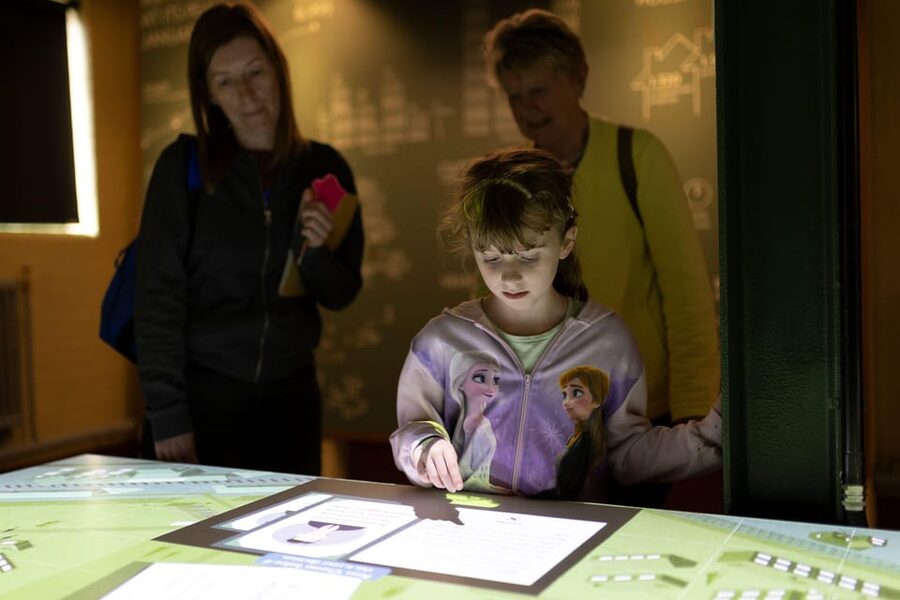
Bletchley Park was once one of Britain’s most secret wartime sites. During World War Two, thousands of people worked here to break the codes and ciphers used by Germany and its allies. Their work produced intelligence for the Allied war effort and helped shape the course of the conflict.
The site matters for more than one famous machine or one famous mathematician. Alan Turing is the best-known name connected with Bletchley Park, but the work depended on a large community of mathematicians, linguists, engineers, clerks, operators, technicians, and support staff. The displays make clear that codebreaking was a team effort, carried out under pressure and hidden from almost everyone outside the site.
That human side is one of the strongest reasons to visit. You learn about the people who worked long hours, followed strict rules, and kept their work secret for years. The result is not just a technical museum. It is a portrait of an unusual wartime community, full of clever ideas, personal strain, and determined teamwork.
A few more options to weigh up in Britain
- London: The London Eye Entry Ticket
★ 4.6 · 35,875 reviews - London: Tower Bridge Entry Ticket
★ 4.7 · 15,560 reviews - London: Westminster Abbey Entrance Ticket
★ 4.6 · 11,254 reviews
Arriving at the Mansion and wartime grounds
Bletchley Park is in Milton Keynes, in South East England. By train, the site is just a few minutes’ walk from Bletchley station, which is likely the easiest option if you do not want to worry about parking.
If you drive, use Sherwood Drive, MK3 6DS, in your sat-nav. The postal address can send you to the wrong place. Free parking is available on site, but spaces are limited. Disabled parking is provided, along with two electric vehicle charging points, so an early arrival is sensible, particularly on busy days or during special events.
Once inside, you have access to the Mansion, the codebreaking huts and blocks, the exhibitions, and the outdoor grounds. Do not treat the entrance as the whole visit. Bletchley Park spreads across a sizeable site, and you will spend much of the day moving between indoor displays and exterior paths.
The welcome desk is the place to collect information about the free audio guide and guided tour. One useful improvement would be a clearer explanation at entry, since it is easy to miss that headphones and tours are available. Ask directly if the information is not offered.
Start with the free guided tour
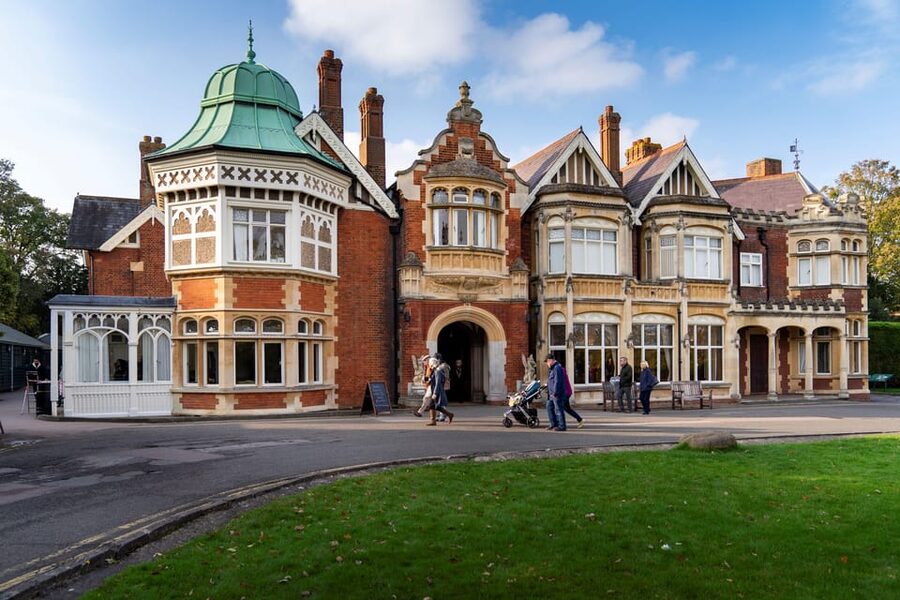
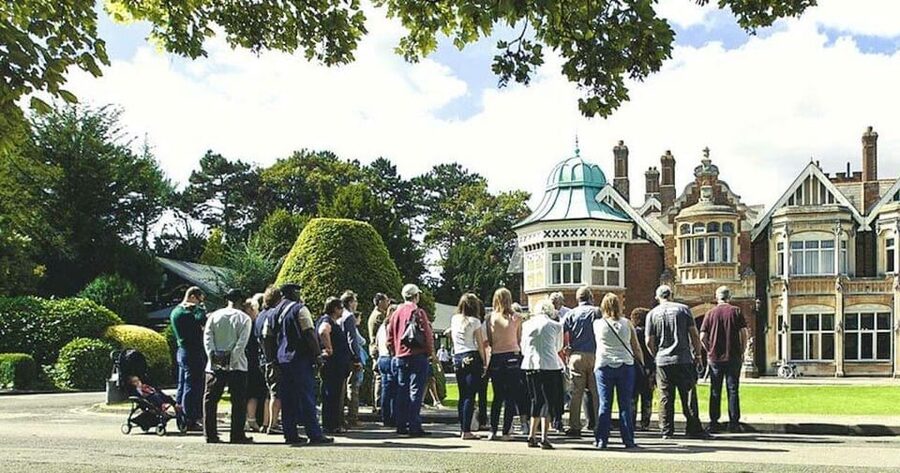
The one-hour guided tour is the best way to get your bearings. Registration takes place at the information desk, and availability can vary, so ask about it as soon as you arrive.
The tour gives you the basic shape of Bletchley Park before you tackle the more detailed displays. It helps explain who worked in which buildings, how the site was organised, and why secrecy mattered so much. Guides use stories and small details to make the buildings feel less like museum structures and more like workplaces under wartime pressure.
John, David, and Sheila have all been singled out for making the visit come alive. Their styles may differ, but the consistent strength is the use of personal stories and clear explanation. One guide may focus on the people, another on the machines or the work process, so the tour is useful even if you already know the broad story.
There is one practical caution. Some people have found a guide difficult to hear, especially in a group setting. If you have hearing difficulties, position yourself close to the guide and ask politely if you need anything repeated. The tour lasts about an hour, leaving plenty of time for the rest of the site.
The Mansion: the story’s elegant starting point
The Mansion provides a striking contrast with the functional wartime huts. Its rooms and exhibitions help explain how Bletchley Park developed from a country estate into a major intelligence centre.
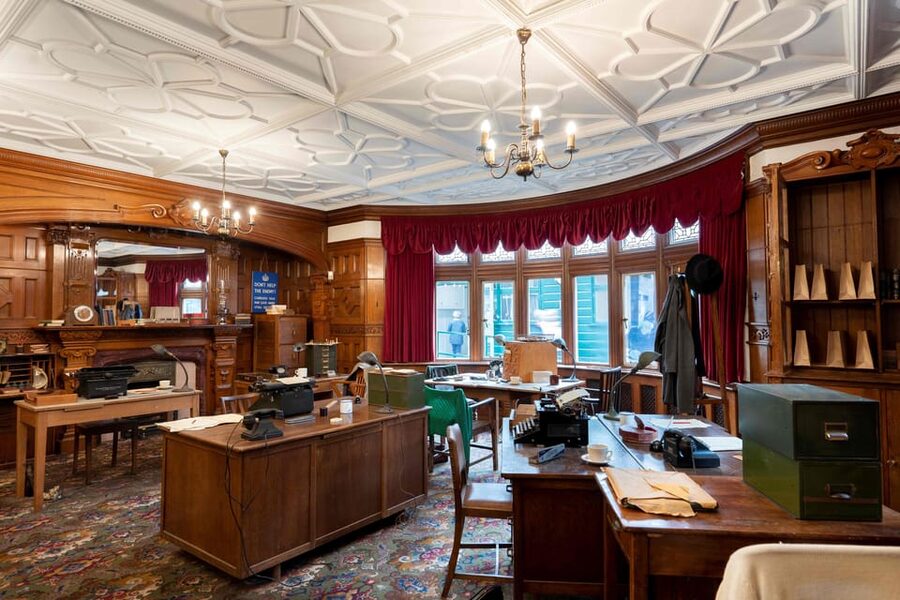
Set-dressed rooms give you a feel for the period without pretending that every object is untouched from wartime use. Films, notices, and displays add context, while the period presentation helps you think about the site as a working place rather than a standard museum gallery.
I like the way the displays connect the Mansion to the wider operation. The grander rooms did not tell the whole story. Much of the real work happened elsewhere, in buildings that were more cramped and practical. This contrast is important because it shows how an elegant estate became the setting for a vast, secret operation.
The Mansion is also a good first stop if you are new to Bletchley Park. The subject can become technical quickly, and the introductory material helps you understand the basic problem before you meet the machines and codebreaking methods.
A different kind of day out entirely:
- From London: Harry Potter Warner Bros Studio Tour
★ 4.7 · 26,588 reviews - London: Westminster to Greenwich River Thames Cruise
★ 4.5 · 22,836 reviews - Magical London: Harry Potter Guided Walking Tour
★ 4.7 · 22,044 reviews - London: Madame Tussauds London
★ 4.6 · 20,915 reviews
The huts and blocks: where the work happened
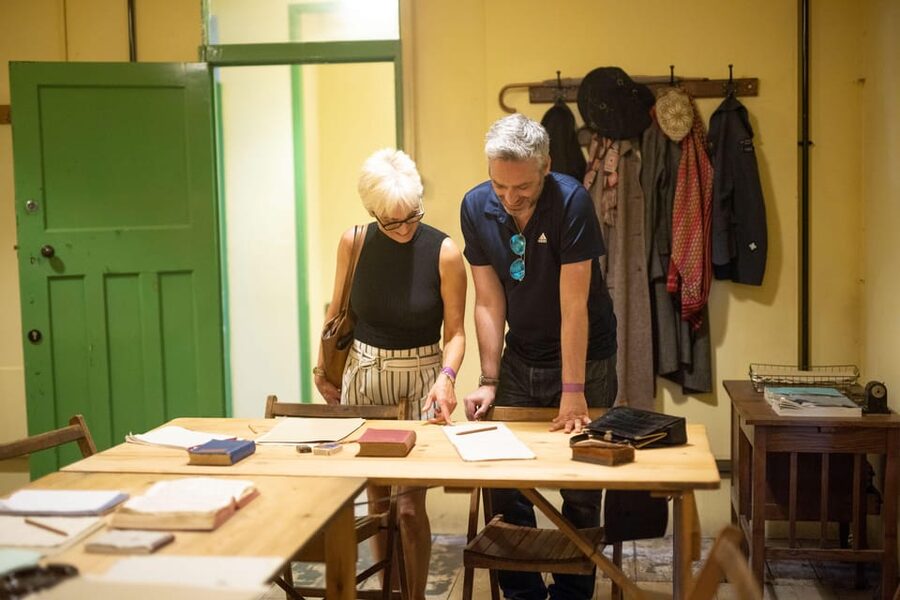
The authentic huts and blocks are the most atmospheric part of the visit. Their modest size and plain appearance can be surprising. There is no grand control room or dramatic war film set. Instead, you see a collection of practical buildings where people worked with messages, patterns, calculations, and fragments of information.
The huts help show how much depended on concentration and routine. Codebreaking was not a single moment of genius. It involved sorting information, testing ideas, checking results, and passing useful intelligence to the next stage. The displays explain these processes through objects, films, written accounts, and recreated rooms.
Some visitors find the amount of information overwhelming, especially on a first visit. That is not necessarily a weakness, but it does mean you should pace yourself. Read the main panels first, then return to the smaller details if a particular hut catches your interest.
The blocks and huts also make the scale of Bletchley Park easier to understand. At its peak, more than 8,000 people worked at the site. Keeping such a large operation secret was a remarkable achievement in itself. You can sense how the work relied on separate departments and strict limits on what each person knew.
Enigma machines and the codebreaking challenge
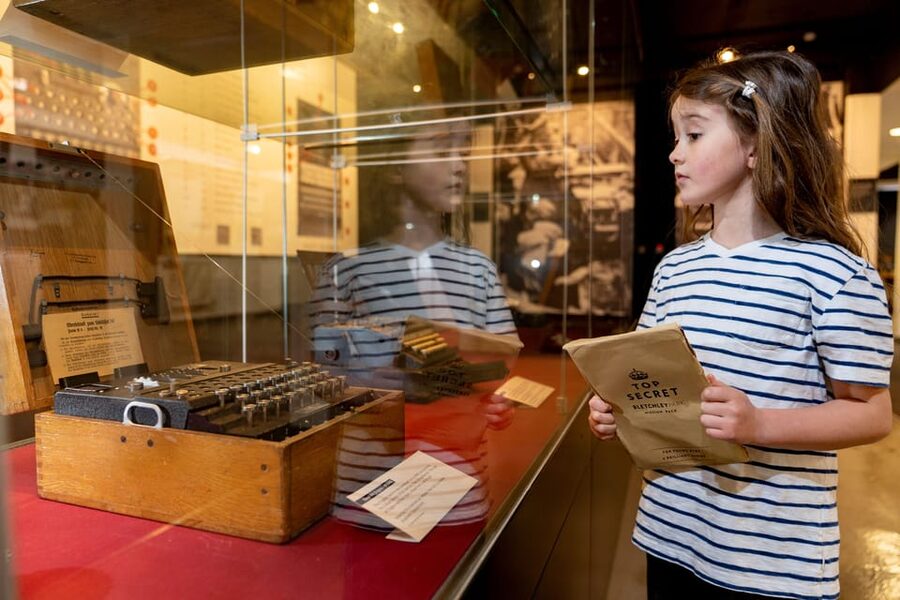
The Enigma story is likely to be your main reason for visiting, especially if you have seen films or read about Alan Turing. Bletchley Park gives you a chance to move beyond the simplified version.
The Enigma machine used rotating settings to scramble messages. The settings changed the possible combinations and made intercepted communications extremely difficult to read. The challenge was not simply to find a machine and press a button. The Codebreakers had to identify patterns, make deductions, test possibilities, and use machines built to speed up the process.
The exhibits explain how human reasoning and mechanical calculation worked together. That combination is a key lesson from Bletchley Park. The machines did not replace the Codebreakers. They helped them handle a problem too large and fast for people to solve by hand.
If terms such as bombe are new to you, take your time. The displays explain the main ideas, but specialist language can still slow you down. A short glossary would make this section easier for newcomers. Use the audio guide if you want a more guided explanation, or ask staff and volunteers when a technical point is unclear.
The birthplace of modern computing
Bletchley Park is also connected with the early development of modern computing. The site shows how wartime demands pushed engineers and mathematicians to build machines capable of processing information at great speed.
This section is valuable even if you are not a computer enthusiast. It links the wartime work to the technology that later shaped everyday life. You can see how the need to solve urgent military problems led to new methods of calculation and information handling.
The computing displays can also broaden the visit beyond the Enigma story. Bletchley Park was not only about one cipher. Different kinds of messages required different approaches, and the site brought together many forms of technical skill.
One visitor found the artificial intelligence exhibition unexpectedly engaging. That is a useful reason to leave time for the newer material, even if you arrive mainly for World War Two history. The site connects past problem-solving with questions about machines and intelligence today.
Films, interactive displays, and personal stories
The exhibitions use a mixture of immersive films, interactive displays, objects, written panels, and recreated rooms. This variety works well for families and for anyone who does not want to spend an entire day reading labels.
Interactive material gives you a more direct sense of the codebreaking challenge. It also helps younger visitors stay involved, although the subject still rewards patience. The site is not a quick entertainment attraction. Its best moments come when you slow down and follow a story from problem to solution.
The personal accounts are especially important. They show that Bletchley Park was made up of individuals, not just famous names and machines. You get a stronger sense of the pressure, secrecy, excitement, and ordinary routines that shaped daily life there.
The design of the displays has received praise for balancing period atmosphere with modern explanation. Information panels are generally clear and large enough to read comfortably. In some places, though, there is a lot to absorb, so the free annual return is more than a marketing extra. It gives you permission to take the site in stages.
Outdoor spaces and practical comfort
The grounds provide breathing room between the indoor exhibits. There are trees, greenery, a lake, paths, seating, and tables, with shaded spots useful on a hot day. The outdoor areas also make Bletchley Park suitable for a longer family visit rather than a tightly packed museum stop.
You should still wear comfortable shoes. The site involves plenty of walking, and some paths have been criticised as needing repair. High heels, bikes, skateboards, skates, and chewing gum are not permitted. Pets are not allowed, apart from assistance dogs.
The site is wheelchair accessible, with accessible toilets and disabled parking. One wheelchair user preferred to explore independently rather than join the tour, and the audio guide offers a useful alternative if you want to set your own pace.
Food and drinks are available at the on-site café and coffee shop. You can build in a proper break rather than leave the grounds in search of lunch. That matters because four or five hours can pass quickly here, particularly if you stop to read the displays.
How long should you spend at Bletchley Park?
The official advice is to allow at least half a day. I think that is the minimum if you want more than a quick look.
Three hours can give you a solid introduction, especially if you take the guided tour and focus on the Mansion, main huts, and Enigma displays. Four to five hours is a more comfortable target. It allows time for the tour, audio guide, exhibitions, food, and outdoor areas.
A full day is justified if you have a strong interest in codebreaking, computing, or World War Two. Special events can extend the visit even further. A 1940s weekend, for example, may include period clothing, music, dancing, performances, and historical characters, adding another layer to the site.
Bad weather can also affect your pace. Much of the visit takes place indoors, but you still walk between buildings. Wet conditions may leave you seeing less than planned, which is another reason to keep the annual ticket and return later.
Is the $37 ticket good value?
At $37 per person, the ticket is not a bargain for a short museum visit. It becomes strong value because admission includes free returns for 12 months.
You receive access to the Mansion, wartime buildings, codebreaking huts and blocks, all exhibitions, outdoor spaces, and the free audio guide when available. The one-hour guided tour is also available without an extra charge, subject to availability. Parking is free when spaces are available.
The annual return option changes how you should plan. You do not need to force every detail into one long day. You can make one visit for the main story, then return for the computing displays, extra huts, or sections you skipped.
The ticket suits local residents particularly well, but it can also help visitors passing through the area. If Bletchley Park fits your route, a five-hour visit can offer good value. If you can return within a year, the price looks even better. Food and drinks cost extra, and parking is limited, so factor in those practical points.
Who will enjoy this visit most?
Bletchley Park is a good choice for:
- People interested in Alan Turing, Enigma, cryptography, or early computers
- Families who like interactive displays and outdoor space
- Anyone interested in World War Two beyond battlefields and military hardware
- Visitors who enjoy museums where you can set your own pace
- Students and technology enthusiasts curious about the roots of modern computing
- Returning visitors who want time to study the displays properly
It may be less satisfying if you want a short, simple attraction with little reading. The technical subject can be confusing in places, and the number of buildings means you need to pay attention to the map and opening times.
Useful planning advice
Check the seasonal closing time before you go. From March to October, the site opens daily from 9:30 am to 5:00 pm, with last admission at 4:00 pm. From November to February, it closes at 4:00 pm, with last admission at 3:00 pm.
Arrive near opening if you are driving, since the car park is not large. Start by asking about the guided tour, then collect the audio guide if available. If you prefer independence, the audio commentary lets you explore without waiting for a tour time.
Keep your ticket details so you can use the free return visits during the year. Bring a phone or camera for personal photographs, as photography is allowed, but tripods and professional equipment need permission.
There are no language options listed beyond English, and the host or greeter service is in English. Unaccompanied minors are not permitted, so children must visit with an adult.
Should you book Bletchley Park?
Yes, if you have any real interest in wartime intelligence, codebreaking, Alan Turing, or the beginnings of computing. The preserved huts, clear exhibitions, free audio guide, and strong one-hour tour give the visit real substance.
Book it as a half-day at the very least, and preferably allow four or five hours. The $37 cost is easiest to justify when you use the annual return benefit. Arrive early by car, join the tour with guides such as John, David, or Sheila if available, and do not worry if you cannot see everything at once. Bletchley Park is designed for a second look.
FAQ
How much does entry to Bletchley Park cost?
The listed price is $37 per person.
How long is the Bletchley Park ticket valid?
The ticket is valid for one day and also allows free return visits for 12 months.
How much time should I allow for Bletchley Park?
You should allow at least half a day. Many people spend four or five hours, and a full day may be useful if you want to see all the exhibitions and outdoor areas.
Is a guided tour included?
A free one-hour guided tour is available, subject to availability. Register at the information desk when you arrive.
Is an audio guide included?
A free multimedia audio guide is available, subject to availability. It provides a more detailed explanation of the site’s history.
What can I see with the ticket?
Admission includes the Mansion, wartime buildings, codebreaking huts and blocks, all exhibitions, and the outdoor spaces.
Can I reach Bletchley Park by train?
Yes. Bletchley Park is a few minutes’ walk from Bletchley train station.
Is parking available?
Limited free parking is available on site, including disabled parking. There are also two electric car charging points.
Is Bletchley Park wheelchair accessible?
Yes. The site has accessible facilities, accessible toilets, and disabled parking spaces.
Can I bring a pet?
Pets are not allowed, but assistance dogs are permitted.
Can I take photographs?
Photography for personal use is allowed. Tripods and professional photography equipment require permission.
Is food available on site?
Yes. Food and drinks are available to buy at the café and coffee shop.
Just added in Britain
- Chester: The Dead Good Ghost Walking Tour★ 4.3 · 9 reviews
- The Best of British Cooking Class & Dining Experience★ 5.0 · 1 review
- London: Live Comedy Show at Big Belly Bar and Comedy Club★ 4.5 · 80 reviews
- London: British Museum Highlights Guided Small Group Tour★ 4.9 · 113 reviews
- The Beatles London Walking Tour★ 4.2 · 147 reviews
- The Best Highlights of London Walking Tour & Boat Cruise★ 5.0 · 1 review
- From Edinburgh: Best of Scotland Small-Group Day Tour★ 4.7 · 61 reviews
- The Authentic Walking Tour with Indian Tasting Meal★ 4.8 · 4 reviews
Tickets, compared.

Buckingham Palace: The State Rooms Entrance Ticket
Read our review →