
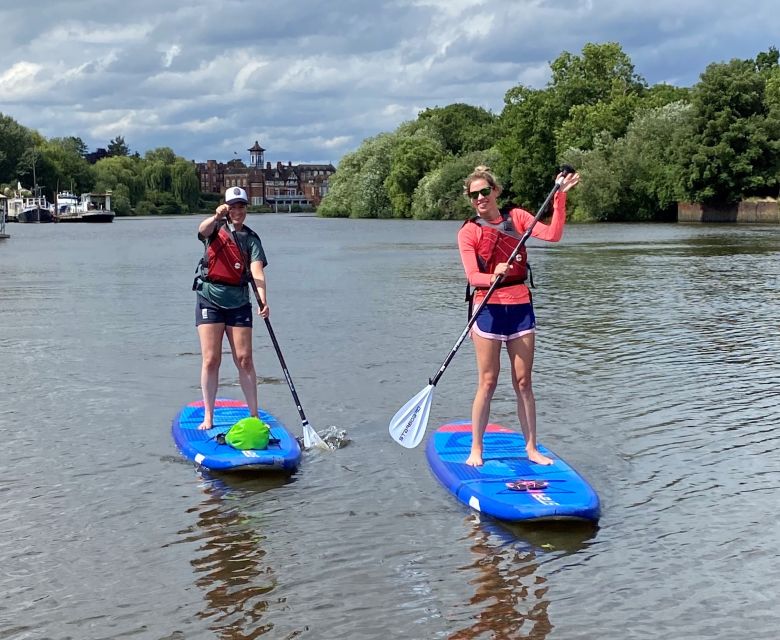
REVIEW · BRITAIN
Paddleboard Experience on the beautiful Thames at Richmond
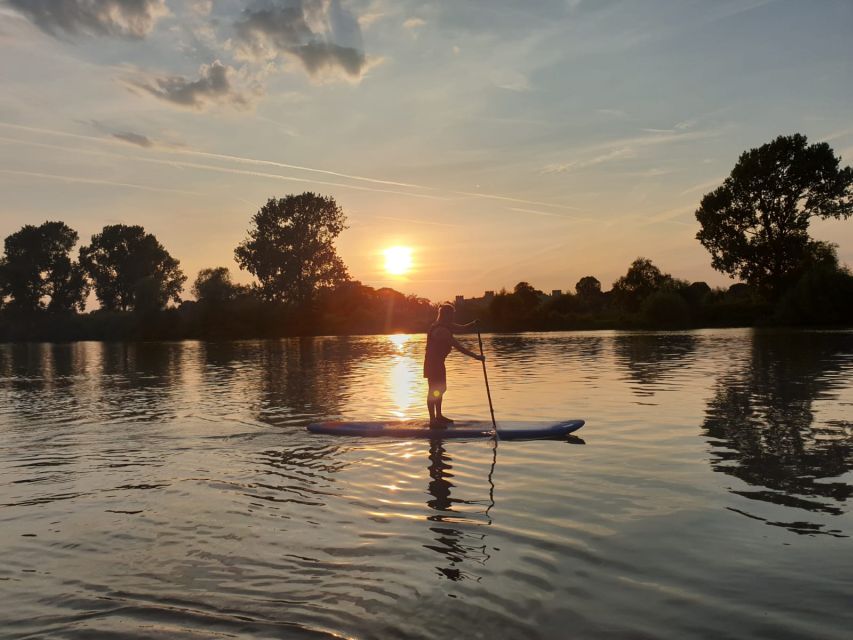
London looks different from a paddleboard. This two-hour session takes you onto a quiet, scenic stretch of the Thames near Richmond, where friendly coaching, river wildlife, and open water replace traffic and crowded pavements. I like the small-group setup and the fact that all paddleboarding equipment is supplied. I also like the choice of route, which changes with the tide and may lead toward Eel Pie Island, Teddington, Richmond Lock, Kew Gardens, or Chiswick.
The main consideration is physical. You need enough flexibility to rise from kneeling to standing, and you must be comfortable falling into the river while wearing a buoyancy aid. You do not need to be a strong swimmer, but this is an active lesson, not a sightseeing cruise where you sit back and let the river do the work.
In This Review
- Key points at a glance
- Starting beside Richmond Bridge
- Learning to stand without panic
- Choosing the river route with the tide
- Richmond from the water
- Coaching that builds confidence
- What to wear and pack
- Price and what you receive for $87.55
- Who should book this Richmond paddle?
- Should you book Paddle Richmond?
- FAQ
- Do I need previous paddleboarding experience?
- How long does the paddleboarding experience last?
- Where does the session begin?
- How much time is spent on shore before paddling?
- Which parts of the Thames will I see?
- Do I need to be a strong swimmer?
- What equipment is included?
- What should I wear?
Key points at a glance
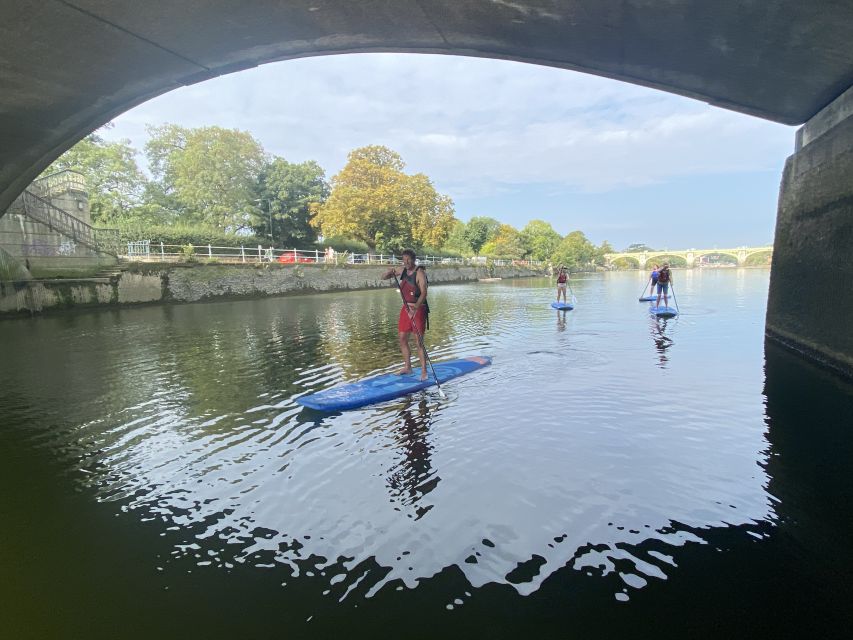
- A real beginner lesson: Your session begins on land with safety guidance and paddleboard practice before you enter the river.
- Richmond’s quieter Thames: The setting can feel surprisingly peaceful for Greater London, with birdlife and broad river views.
- Tide-shaped route: You may paddle upstream or downstream, depending on conditions on the day.
- Small-group coaching: A fully qualified instructor can give practical help rather than leaving you to figure everything out alone.
- Equipment included: Your board, paddle, buoyancy aid, tuition, and river tour are all covered in the price.
- Nigel’s personal touch: One session with Nigel included different paddle strokes, river and wildlife knowledge, and confidence-building help for turning around on the board.
Starting beside Richmond Bridge
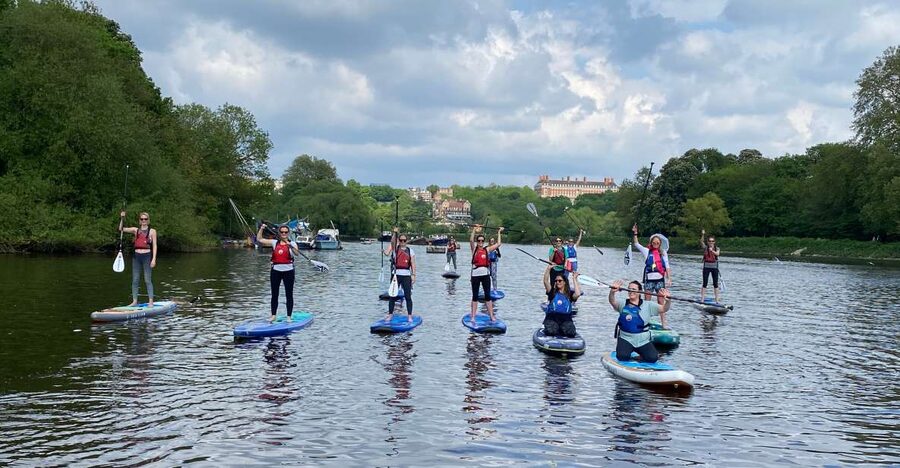
Your session begins near Richmond Bridge, one of the most recognizable points along this part of the Thames. The first 15 to 20 minutes take place on the riverbank, though the exact time can vary with group size.
This land-based opening matters. Standing on a paddleboard looks simple until you try to balance, hold the paddle correctly, and shift your weight without wobbling. The coach uses this time to cover safety and teach the basic movements before you are surrounded by moving water.
You can expect instruction on how to handle the board and paddle, along with guidance on getting from kneeling to standing. That gradual start is useful for first-timers because it gives you a chance to understand the equipment before the river adds its own small challenges.
I would arrive ready to listen rather than rushing to get onto the water. The briefing may feel like the least exciting part of the activity, but it helps you know what to do if you lose balance, need to change direction, or want to look behind you.
The class is aimed at complete beginners as well as people with more paddleboarding experience. That range can work well in a small group, since the instructor can help new paddlers while offering more advanced tips to those who already know the basics. The exact balance of ability levels will depend on the group booked for your time.
Other trips worth a look in Britain:
- London: The London Eye Entry Ticket
★ 4.6 · 35,875 reviews - From London: Harry Potter Warner Bros Studio Tour
★ 4.7 · 26,588 reviews - London: Westminster to Greenwich River Thames Cruise
★ 4.5 · 22,836 reviews
Learning to stand without panic
The first major goal is simply standing up. You begin on your knees, find your balance, and then rise when the coach says you are ready. It takes some flexibility and enough strength to move smoothly from kneeling to standing, so anyone with limited mobility should think carefully before booking.
The buoyancy aid is there for safety, but you should still expect the possibility of getting wet. The activity information makes clear that you do not need to be a proficient swimmer, but you should be comfortable falling into the water while wearing the aid. That is an important distinction.
I like the honest wording here. Paddleboarding always carries a chance of an unplanned swim, especially for beginners. You will enjoy the lesson more if you treat a fall as part of learning rather than as a disaster. Wear clothes that can get wet, and do not bring anything that cannot handle a splash unless you keep it in a waterproof pouch.
The instructor’s role is especially valuable at this point. A good coach can show you how to keep the paddle working as a third point of contact, how to bend your knees, and how to avoid stiffening up when the board moves. The supplied experience places strong emphasis on friendly, qualified coaching, which is exactly what you want during those first uncertain minutes.
Choosing the river route with the tide
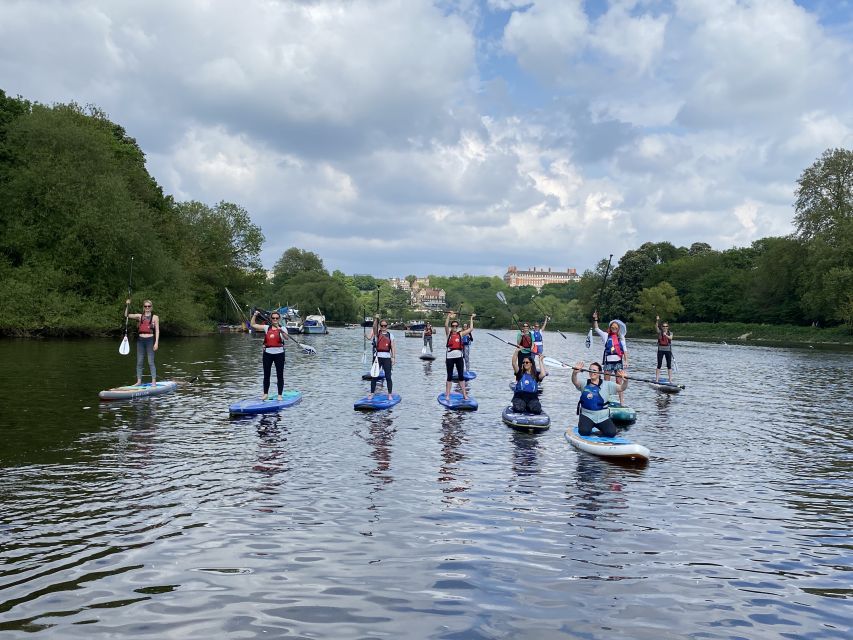
Once the group is comfortable, you head onto the Thames. The direction depends on the tide, wind, and conditions on the day, so you should not expect one fixed route every time.
An upstream outing can take you toward Eel Pie Island and Teddington. This direction gives you a chance to see a quieter stretch of the river and may lead toward a more rural-feeling section near Teddington. Eel Pie Island is also an unusual local landmark, adding interest beyond simply paddling in a straight line.
A downstream session may head toward Richmond Lock, Isleworth, Kew Gardens, and Chiswick. This route brings a different character, with more landmarks and connections to the wider Thames corridor. The group will not necessarily reach every named place, since the distance covered depends on wind and tide.
That flexibility is a strength, but it also means you should keep your expectations sensible. You are booking a two-hour lesson and river outing, not a guaranteed point-to-point expedition. A strong wind or awkward tide can reduce the distance, while favorable conditions may let you cover more ground.
The changing route also gives the coach room to choose a safer option. The Thames can look calm from the bank, but moving water and wind affect a paddleboard quickly. Being on one of the safer stretches of the river is reassuring, though you still need to follow instructions closely.
Richmond from the water
The best part of this activity is the shift in pace. From the board, the river can feel far removed from central London. You may hear birds, see the riverbank from a lower viewpoint, and notice how quickly the city becomes quiet once you are moving with the current.
One participant described the river as peaceful and full of birdlife, with the strange feeling of being in London while surrounded by such calm. That image captures the appeal of this experience better than a list of landmarks. You are not racing between sights. You are giving yourself time to notice the water, trees, banks, and wildlife.
I like that the activity combines a lesson with a tour. A standard paddleboarding class might keep you focused only on technique, while a basic river tour might not teach you enough to feel confident on the board. Here, the two parts support each other.
The setting is also useful for visitors who want a break from museums and busy streets. Richmond offers a completely different way to spend part of a London day, without requiring a full-day trip away from Greater London. The scenery is the main attraction, and the exercise gives the outing a clear purpose.
A different kind of day out entirely:
- Magical London: Harry Potter Guided Walking Tour
★ 4.7 · 22,044 reviews - London: Madame Tussauds London
★ 4.6 · 20,915 reviews - London: Warner Bros. Studio Tour with Transfers
★ 4.7 · 17,586 reviews - Edinburgh: Loch Ness, Glencoe & the Scottish Highlands Tour
★ 4.6 · 17,446 reviews
Coaching that builds confidence
The instructor can make or break a beginner session. Paddle Richmond uses friendly, fully qualified coaches, and the supplied experience is delivered in English. Private groups are also available if you want a more personal format.
Nigel is one instructor named in the experience. His coaching included several types of paddle strokes, information about the river and local wildlife, and patient help with confidence. One particularly useful step was helping a nervous paddler learn to turn around on the board and check what was behind them.
That may sound like a small skill, but it is a real confidence marker. At the start, turning your body or looking behind you can feel risky because any sudden movement may affect your balance. Learning to do it safely helps you move from simply surviving on the board to controlling it.
I would value that kind of teaching more than a rushed route with lots of distance. You can paddle farther another day. A coach who helps you understand steering, turning, and different strokes gives you skills you can use after the session ends.
The small-group format should also make it easier to ask questions. If you are unsure about your foot position, paddle angle, or how to recover after kneeling down, speak up. The class is designed for beginners, so there is no prize for pretending you already know what you are doing.
What to wear and pack
The simplest clothing plan is outdoor sportswear that can get wet. Shorts, leggings, a T-shirt, or a fleece are suitable examples. You usually paddle barefoot, although water shoes, flip-flops, sandals, or trainers are also allowed.
For warm, sunny weather, bring a hat and sun cream. There is little point enjoying a quiet river session and then spending the evening with a painful sunburn. You should also bring a small dry bag if you want spare warm clothing, money, medication, or a phone close by.
A lockable storage space is available for bags and valuables, which makes the practical side easier. Still, I would keep the amount you bring to a minimum. A waterproof phone pouch is a sensible extra if you want to carry your phone on the river.
From November through March, a wetsuit is advisable. Wetsuits are available if requested in advance, or you can bring your own. In colder weather, pack extra layers, a towel, and a complete change of clothes.
Do not rely on the fact that the session lasts only two hours. Wet clothing and wind can make the trip home uncomfortable, even after a short outing. A dry change of clothes is one of those small preparations that can turn a good activity into an easy rest of the day.
Price and what you receive for $87.55
The listed price is $87.55 per person for two hours. That is not a bargain basement activity, but it covers more than access to a board. You receive tuition, a safety briefing, a guided river outing, a paddleboard, paddle, and buoyancy aid.
For a first-time paddler, that package has clear value. You do not need to buy or transport bulky gear, work out where it is safe to paddle, or teach yourself the basics from a short video. The coach also helps you make better use of your time on the water.
The value depends on what you want from the session. If your main goal is a long-distance paddle, two hours may feel brief, particularly if 15 to 20 minutes are spent on shore and conditions limit the route. If you want a guided introduction in a scenic London setting, the combination of instruction and river time makes more sense.
The option to reserve now and pay later adds flexibility, and free cancellation is available up to 24 hours in advance for a full refund. Check the available start times before arranging the rest of your day, since the tide affects the route and the session has set times.
Who should book this Richmond paddle?
This experience is a strong fit for first-time paddleboarders who want instruction rather than a simple equipment rental. It also suits visitors who enjoy gentle outdoor activities, river scenery, and a slower way to see part of London.
You should be comfortable with three things: getting wet, moving from kneeling to standing, and following water-safety instructions. The activity is not suitable for people with mobility impairments, according to the provided guidance.
Experienced paddlers can still enjoy the outing, especially if they want a guided route and local context. The coach may show you different strokes and help refine your turns, though an expert looking for intense training may find a beginner-friendly two-hour class too basic.
A private group is worth considering if you want the pace and attention to suit your own party. The standard small-group option should offer a social setting, while a private booking gives you more control over the experience.
Should you book Paddle Richmond?
I would book this if you want to learn a practical new skill in a peaceful corner of Greater London. The strongest reasons are the qualified coaching, supplied equipment, changing river routes, and the rare feeling of quiet bird-filled water so close to London.
I would skip it if you dislike falling into water, cannot comfortably rise from kneeling, or want a guaranteed route to a particular landmark. For everyone else, $87.55 is a fair price for a well-supported introduction to paddleboarding, especially when the coach adds river knowledge and confidence-building advice rather than simply handing you a board.
FAQ
Do I need previous paddleboarding experience?
No. The session is suitable for complete beginners as well as more experienced paddleboarders.
How long does the paddleboarding experience last?
The session lasts two hours. Starting times vary, so you need to check availability when booking.
Where does the session begin?
It starts near Richmond Bridge, with a safety briefing and land-based instruction on the riverbank.
How much time is spent on shore before paddling?
The shore-based training typically takes 15 to 20 minutes, depending on the group size.
Which parts of the Thames will I see?
The route depends on the tide, wind, and conditions. You may paddle upstream toward Eel Pie Island and Teddington, or downstream toward Richmond Lock, Isleworth, Kew Gardens, and Chiswick.
Do I need to be a strong swimmer?
You do not need to be a proficient swimmer, but you must be comfortable falling into the water while wearing a buoyancy aid.
What equipment is included?
The experience includes the paddleboard, paddle, buoyancy aid, tuition, safety briefing, and guided river tour.
What should I wear?
Wear weather-appropriate outdoor sports clothing, such as shorts, leggings, a T-shirt, or a fleece. You usually paddle barefoot, but water shoes, flip-flops, sandals, or trainers are allowed. In colder months, a wetsuit, extra layers, towel, and change of clothes are advisable.
Just added in Britain
- Chester: The Dead Good Ghost Walking Tour★ 4.3 · 9 reviews
- The Best of British Cooking Class & Dining Experience★ 5.0 · 1 review
- London: Live Comedy Show at Big Belly Bar and Comedy Club★ 4.5 · 80 reviews
- London: British Museum Highlights Guided Small Group Tour★ 4.9 · 113 reviews
- The Best Highlights of London Walking Tour & Boat Cruise★ 5.0 · 1 review
- From Edinburgh: Best of Scotland Small-Group Day Tour★ 4.7 · 61 reviews
- The Beatles London Walking Tour★ 4.2 · 147 reviews
- The Authentic Walking Tour with Indian Tasting Meal★ 4.8 · 4 reviews