
REVIEW · WALKING TOURS
Plymouth: Best of Plymouth Walking Tour
Plymouth’s story begins at the water. This 102-minute walk links the Mayflower Steps, old Barbican lanes, wartime rebuilding, and the open views of Plymouth Hoe in one tidy route. I like the clear sense of place, and I like that local guide Hannah keeps the focus on people, voyages, food, and daily life rather than dates alone. The main drawback is the route itself: cobbles and moderate inclines can make parts of the walk slower for some visitors.
I also appreciate the practical advice built into the tour. You get ideas for places to eat, local sights to visit later, and ways to spend more time in Plymouth. At $21.22 per person, it is a sensible first look at the city, though attraction admission fees are not included.
In This Review
- Key points to know before you book
- Starting beside the Mayflower Steps
- New Street and the Elizabethan House
- Southside Street, pubs, bakery, and Plymouth Gin
- The Barbican’s maritime and creative side
- The Merchant’s House and Plymouth’s darker characters
- St Andrew’s Church and the religious quarter
- The edge of the 1950s city center
- Plymouth Hoe and views across Plymouth Sound
- Smeaton’s Tower and the return to the Barbican
- Is $21.22 good value for 102 minutes?
- Who should choose this Plymouth walk?
- My booking advice
- FAQ
- How long does the Best of Plymouth Walking Tour last?
- Where does the Plymouth walking tour begin?
- Where does the tour finish?
- Is the tour conducted in English?
- Is the walking tour wheelchair accessible?
- Can people with visual impairment take the tour?
- Are attraction admission fees included?
Key points to know before you book
- Starts and finishes at the Mayflower Steps: Look for the large blue flag opposite the Mayflower Steps Memorial.
- Covers Plymouth’s main historic quarters: The route takes in the Barbican, Elizabethan streets, the religious quarter, post-war city architecture, and Plymouth Hoe.
- Led by local guide Hannah: She is a proud Plymothian with experience in visitor engagement, heritage interpretation, and digital walking trails.
- Useful for first-time visitors: You get suggestions for eating, sightseeing, and planning the rest of your stay.
- Family and dog friendly: The tour is designed for a broad audience, including families and people bringing dogs.
- Access can be adjusted: Step-free routes are available, and audio description can be included for people with visual impairment if arranged in advance.
Starting beside the Mayflower Steps
The meeting point is easy to identify. Go to the Mayflower Steps on the Barbican and look for the large blue flag opposite the memorial. Because the tour returns to this same spot, you can leave bags, transport plans, and onward arrangements until after the walk rather than worrying about a distant finish.
The Mayflower Steps memorial recalls the passengers and crew who left Plymouth in 1620. The stop offers a useful opening lesson: Plymouth was not simply a seaside town with a famous view. It was a working port tied to long voyages, naval activity, trade, migration, and exploration.
Hannah’s approach is one of the strongest reasons to choose this walk. Her connection to Plymouth gives the tour a local voice, while her background in heritage interpretation helps turn places into stories. The aim is not just to point at a building and give you a date. You get a sense of how the port changed and how people shaped the town.
The tour is conducted in English. If you are visiting Plymouth for the first time, this opening section helps you get your bearings before the route moves into the older streets.
More Walking Tours in Britain:
- Magical London: Harry Potter Guided Walking Tour
★ 4.7 · 22,044 reviews - London: The Original Jack the Ripper Walking Tour
★ 4.7 · 7,833 reviews - Oxford: University and City Walking Tour with Alumni Guide
★ 4.7 · 4,429 reviews
New Street and the Elizabethan House
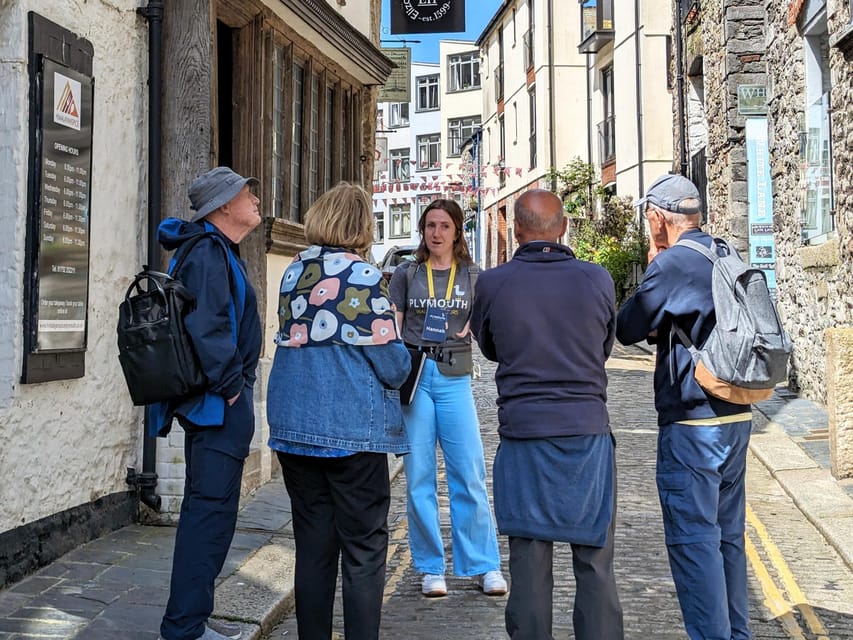
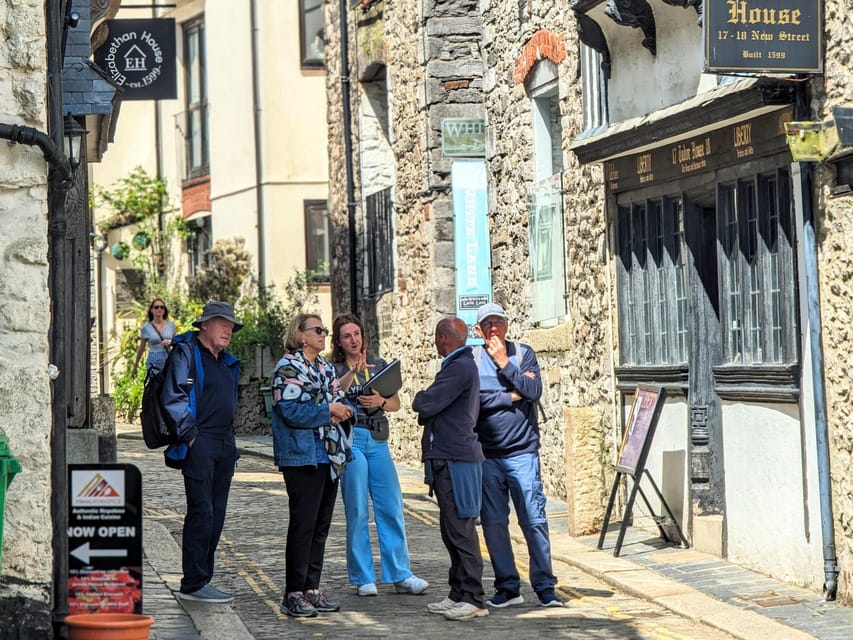
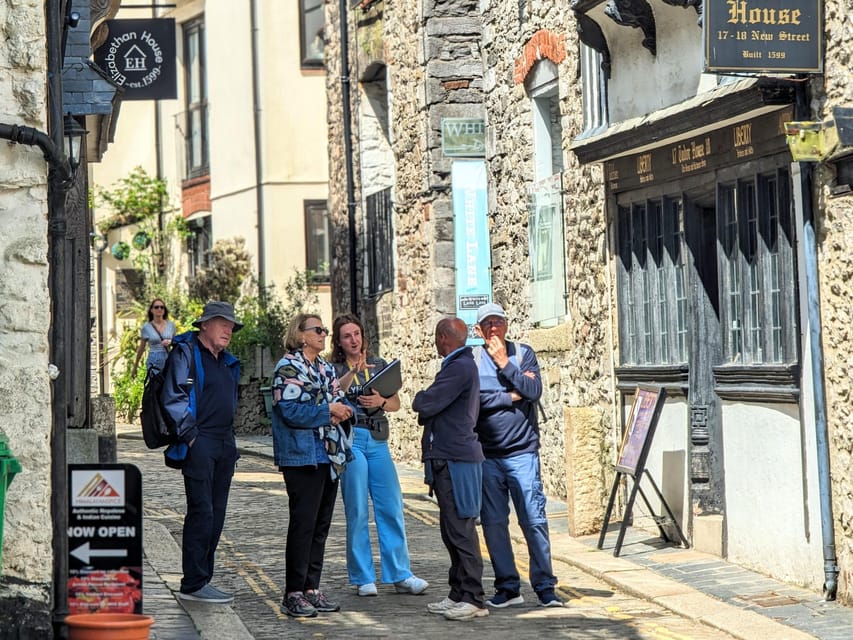
From the waterfront, the walk heads into New Street and Elizabethan street. This change is important. At the Mayflower Steps, Plymouth feels tied to the sea. Here, the attention shifts to domestic life and the town’s older built fabric.
The Elizabethan House is one of the key sights in this part of the walk. You will hear about the people who lived in Plymouth, not only the famous voyages that departed from it. That balance gives the tour more depth without requiring you to spend the entire afternoon inside a museum.
Admission fees are not part of the walking tour, so treat this stop as an exterior visit unless you separately arrange entry. That is worth keeping in mind if you want a longer look at every attraction along the way. The walk gives you the context first, which can help you decide where to return later.
The old streets also bring the route’s first practical challenge. Cobblestones can be uneven, and the historic character of the area comes with a less forgiving surface underfoot. Comfortable shoes are a good idea, especially if you plan to continue exploring after the 102-minute tour.
Southside Street, pubs, bakery, and Plymouth Gin

Southside Street brings several well-known local sights together. The route passes iconic pubs, England’s oldest bakery, and the Plymouth Gin Distillery. Even if you do not go inside any of them, this is one of the best sections for turning a general walk into a useful visit-planning tool.
I like this part because it connects history with ordinary holiday decisions. You can learn which streets matter, note where you might stop for food, and identify places worth revisiting after the guide has finished. The tour is not a food tasting, pub crawl, or distillery visit, so do not book it expecting included samples or admission.
The bakery and pubs also show how the Barbican works as more than a collection of old facades. It remains a social part of Plymouth, with places to eat, drink, browse, and pause. Hannah’s recommendations can be particularly helpful if you have only a short stay and want to avoid spending your first evening choosing a restaurant at random.
The same section may feel busy at popular times, and the old street surfaces can slow the group. The route is short enough to remain manageable, but you should allow extra energy for uneven ground and inclines.
The Barbican’s maritime and creative side
The Barbican is the heart of the walk. Its maritime connections give Plymouth its strongest visual identity, yet the area also has independent shops, coffee shops, nightlife, and links to local art history.
This mix makes the Barbican a good place to hear the city’s story in layers. Ships and voyages are part of the picture, but so are businesses, artists, residents, and people meeting for an evening out. I find that more useful than a tour that treats the district as a museum frozen in one century.
The route is also a practical introduction to returning here later. You can make a note of the independent shops, choose a coffee stop, or come back after dark to see the nightlife. The guide’s role is not only to explain what happened in the past, but also to help you understand how the area functions now.
For families, this section offers plenty to look at without requiring a long indoor visit. Dogs are welcome on the tour, too. Still, keep in mind that crowded streets, cobbles, and narrow passages may require a little extra care with a dog or pushchair.
A few more options to weigh up in Britain
- Plymouth: 1-Hour Scenic Harbour Cruise
★ 4.6 · 122 reviews - Torquay: The extraordinary life of Agatha Christie tour
★ 4.9 · 119 reviews - Torquay: The Fawlty Tours Experience – Guided Walk
★ 4.9 · 49 reviews - Torquay: Kents Cavern Prehistoric Cave
★ 4.8 · 24 reviews
The Merchant’s House and Plymouth’s darker characters
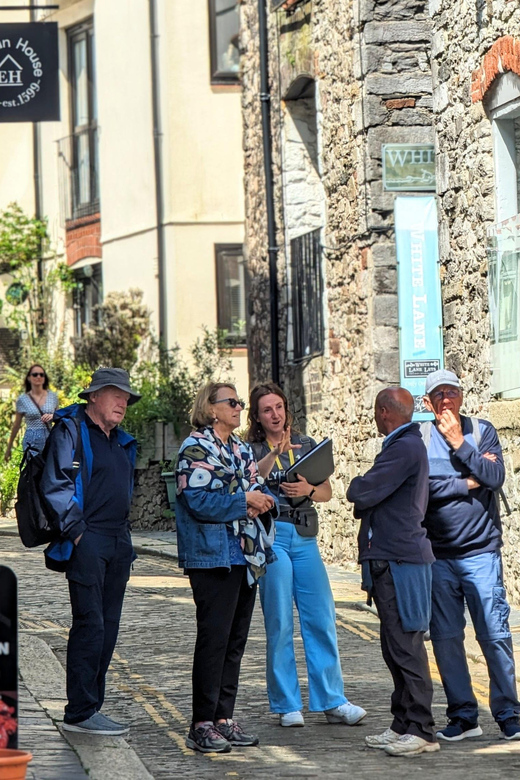
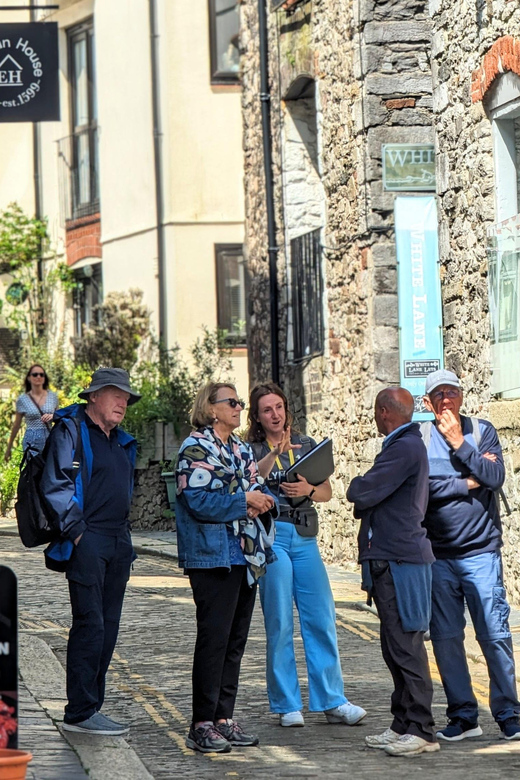
The Merchant’s House adds a more personal and occasionally less comfortable side to the story. It has connections to some of Plymouth’s most notorious historical characters, giving the walk a chance to move beyond celebrated explorers and civic heroes.
This kind of stop is valuable because towns are shaped by complicated people. A good walking tour should leave room for ambition, wrongdoing, wealth, and reputation, not just proud local milestones. Hannah’s experience in heritage interpretation suits this section well, since the point is to connect a building with the people and events surrounding it.
You will not receive general admission to attractions as part of the $21.22 tour price. If you want to enter the Merchant’s House or another site, plan for a separate fee and check opening arrangements independently.
St Andrew’s Church and the religious quarter

The walk then reaches St Andrew’s Church and Plymouth’s religious quarter. This part shows another side of the old town, where faith, community, and public life shaped the city’s development.
The church also helps explain the relationship between the historic core and the later city around it. The tour does not stay in one narrow time period. Instead, it moves through changes in Plymouth, showing how older buildings and institutions sit beside newer streets.
This is one reason the tour works well as an introduction. You get enough information to understand the layout and character of the city, but you are not locked into a single subject such as naval history, architecture, or the Mayflower. If one topic catches your attention, you can return to it on your own.
As with other historic sections, expect some uneven surfaces. If you use a mobility scooter or wheelchair, contact Plymouth Walking Tours before the visit so the route can be adjusted. A stair-free option is available.
The edge of the 1950s city center
A change of mood comes at the edge of Plymouth’s 1950s city center. Instead of treating post-war architecture as something to hurry past, the walk points out some of the best examples in England.
This is a smart inclusion. Many visitors come to Plymouth looking for old streets and sea views, yet the city’s modern rebuilding is central to its identity. The post-war buildings tell a story of damage, planning, replacement, and a new vision for urban life.
You may not love every building, and that is part of the point. Architecture from the 1950s can look plain or severe beside Elizabethan streets and waterfront buildings. Hannah helps place it in context, so you can see why it matters even if you would not choose it for a postcard.
This section also gives the tour a useful rhythm. You move from port history to homes, pubs, churches, and modern civic design before reaching the broad outdoor views of Plymouth Hoe.
Plymouth Hoe and views across Plymouth Sound
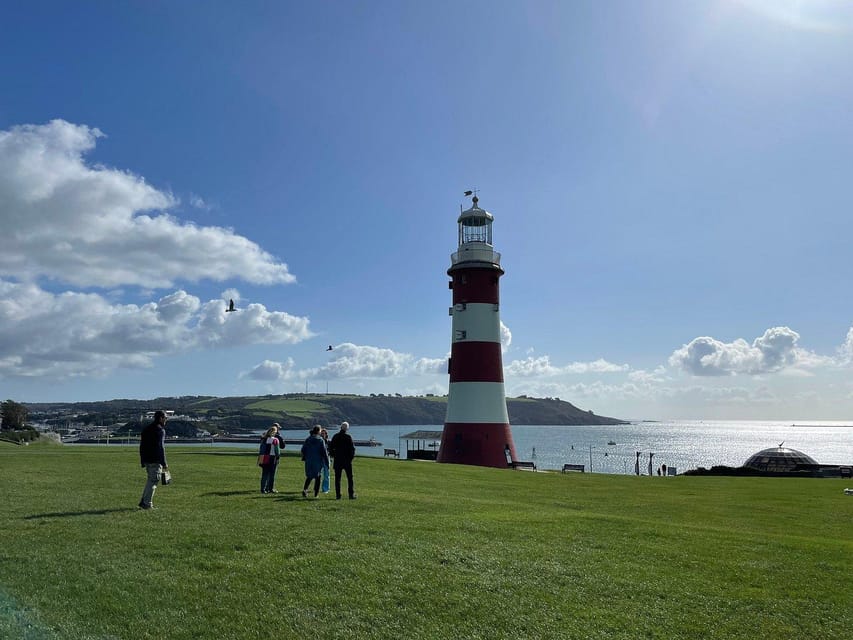
Plymouth Hoe is the tour’s great open-air finish. From here, you get wide views over Plymouth Sound and toward Cornwall, along with Victorian terraces, memorials, and Tinside Pool.
After the tighter streets of the Barbican, the open space feels like a release. The view helps explain why Plymouth Hoe has long mattered to the city. It is not only a scenic viewpoint, but also a public place marked by memorials and Victorian design.
Tinside Pool is another notable feature. The tour does not include admission to attractions, so any entry would cost extra. You can still appreciate the pool and surrounding architecture as part of the walking route.
The Hoe is also where the walk becomes especially useful for planning the rest of your day. You can see how the waterfront sits in relation to the city and decide if you want to return for more time outdoors. If the weather is poor, the views will naturally be less rewarding, but the route still provides historical and architectural interest.
The moderate inclines mentioned for the route matter here and elsewhere. The tour is listed as wheelchair accessible, with stair-free routes available, but access needs vary. Contact the operator in advance if your group needs a modified route or audio description.
Smeaton’s Tower and the return to the Barbican
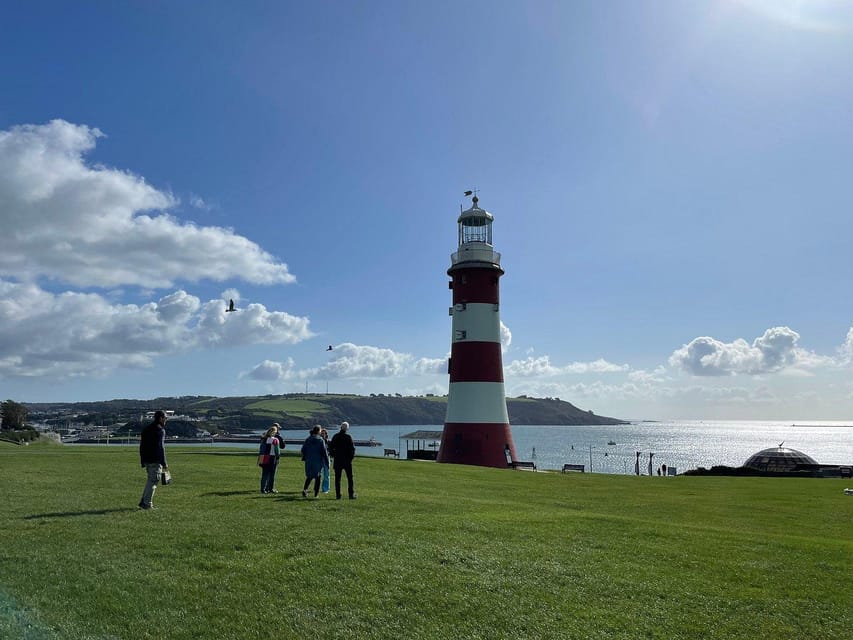
The final major sight is Smeaton’s Tower, Plymouth’s iconic lighthouse. It is one of the Hoe’s most recognizable landmarks and gives the walk a clear visual ending before you return to the starting point.
The lighthouse also brings the maritime story back into view. The tour begins with voyages leaving Plymouth and ends beside a structure linked to the sea and the city’s relationship with it. That gives the route a satisfying shape without making the walk feel like a simple list of monuments.
You finish back at the Mayflower Steps meeting point. This is convenient if you have booked transport, left something nearby, or want to return immediately to the Barbican for food or shopping.
Is $21.22 good value for 102 minutes?
At $21.22 per person, I consider this good value if you want a guided orientation to Plymouth rather than a full day of attraction admissions. The price includes the walking tour and English-speaking guide, while entry fees are separate.
The value comes from the range of ground covered in a little under two hours. You see the Mayflower Steps, Elizabethan streets, Southside Street, the Barbican, Merchant’s House, St Andrew’s Church, post-war architecture, Plymouth Hoe, and Smeaton’s Tower. You also receive local suggestions for eating and planning the rest of your time.
A private tour may offer more flexibility, and one review describes Hannah providing an excellent private experience with discussion of history and culture. However, the supplied details do not set out a separate private-tour price or promise a private format for every booking. Check the available option carefully before assuming you will have the guide to yourself.
The free cancellation period and reserve-now-pay-later option also reduce the risk of booking ahead. You can cancel up to 24 hours before the tour for a full refund, and you do not have to pay at the time of reservation.
Who should choose this Plymouth walk?
I would choose this tour for a first visit, especially if you want the city explained by someone local. Hannah has been praised for being friendly, flexible, and well informed, and one direct comment calls the tour a must for a first visit. Those points match the tour’s design: it introduces the major areas without demanding a full day.
It suits families, dog owners, and people who prefer a conversational walk over a formal museum visit. It also works for anyone deciding where to eat or what to revisit later.
You should think twice if you want admission to historic interiors, a food experience, or a long specialist lecture on one subject. Those are not included. You should also contact the operator before booking if cobbles, inclines, stairs, or visual access are a concern.
My booking advice
Book the Best of Plymouth Walking Tour if you want a friendly, useful introduction to Plymouth’s port, old streets, modern center, and sea-facing landmarks. The route has a good mix of famous sights and less obvious context, and Hannah’s local connection gives it a personal feel.
The strongest reason to book is the combination of history and practical help. You leave knowing where the Mayflower Steps, Barbican, Plymouth Hoe, and Smeaton’s Tower fit together, while also having ideas for food and further sightseeing.
Skip it if you plan to spend your whole visit inside attractions or if you prefer exploring entirely on your own. For most first-time visitors, though, $21.22 is a fair price for 102 minutes of orientation, local stories, and a clear route through Plymouth.
FAQ
How long does the Best of Plymouth Walking Tour last?
The tour lasts 102 minutes. Starting times vary, so check availability when booking.
Where does the Plymouth walking tour begin?
It begins at the Mayflower Steps on the Barbican. Look for the large blue flag opposite the Mayflower Steps Memorial.
Where does the tour finish?
The activity ends back at the same meeting point near the Mayflower Steps.
Is the tour conducted in English?
Yes. The live tour guide speaks English, and English is the listed tour language.
Is the walking tour wheelchair accessible?
Yes. The tour is wheelchair accessible, and stair-free routes can be used. The route includes cobbles and moderate inclines, so contact Plymouth Walking Tours in advance about access needs.
Can people with visual impairment take the tour?
Yes. Audio description can be included on the route if you contact the operator ahead of time.
Are attraction admission fees included?
No. The price includes the walking tour and guide, but admission fees to attractions are not included.
Just added in Britain
- Chester: The Dead Good Ghost Walking Tour★ 4.3 · 9 reviews
- The Best of British Cooking Class & Dining Experience★ 5.0 · 1 review
- London: Live Comedy Show at Big Belly Bar and Comedy Club★ 4.5 · 80 reviews
- London: British Museum Highlights Guided Small Group Tour★ 4.9 · 113 reviews
- The Beatles London Walking Tour★ 4.2 · 147 reviews
- The Best Highlights of London Walking Tour & Boat Cruise★ 5.0 · 1 review
- From Edinburgh: Best of Scotland Small-Group Day Tour★ 4.7 · 61 reviews
- The Authentic Walking Tour with Indian Tasting Meal★ 4.8 · 4 reviews
Walking Tours, compared.

Magical London: Harry Potter Guided Walking Tour
Read our review →

University and City Walking Tour with Alumni Guide
Read our review →
Harry Potter Movies Walking Tour (Kids Go Free)
Read our review →
The Great British Rock and Roll Music Walking Tour
Read our review →
Jack the Ripper Walking Tour – Ripper Vision Tours
Read our review →
Other lists this tour turns up in