
REVIEW · WALKING TOURS
Roman London Walking Tour
London hides below street level. This private walk reveals Londinium beneath modern streets, from Roman walls and baths to an amphitheater beneath an office building. I like the close look at places most visitors miss, and I like having a live guide who can connect scattered ruins into one clear story. The main drawback is the price: at $249.19 per person, it makes the most sense for a private group that values depth and flexibility.
You will walk through the City of London rather than the West End, with several indoor and underground stops along the way. Comfortable shoes matter, and Temple of Mithras entry cannot be guaranteed for short-notice bookings. If Stephen is your guide, expect a friendly London voice, good humor, and a pace that can be adjusted to your group.
In This Review
- Key points about this Roman London walk
- Why Roman London is hidden below your feet
- Starting in the original City of London
- Seeing the Roman wall and fort
- The old baths and the largest Roman building north of the Alps
- Going underground to Roman houses and pavement
- Temple of Mithras beneath a modern office tower
- The London Stone and a vanished civic center
- The amphitheater beneath today’s city
- What the three-hour format feels like
- Is $249.19 per person good value?
- Who should book this Roman London experience?
- Should you book the Roman London Walking Tour?
- FAQ
- Where does the Roman London Walking Tour take place?
- How long does the tour last?
- What is included in the price?
- Is Tube transport included?
- Is the tour private?
- What language is the tour conducted in?
- Will I enter Temple of Mithras?
- What should I bring?
- Can I cancel the booking?
- Can I reserve now and pay later?
Key points about this Roman London walk
- Roman London sits about 23 feet below today’s streets: You will see why modern construction has hidden so much of Londinium.
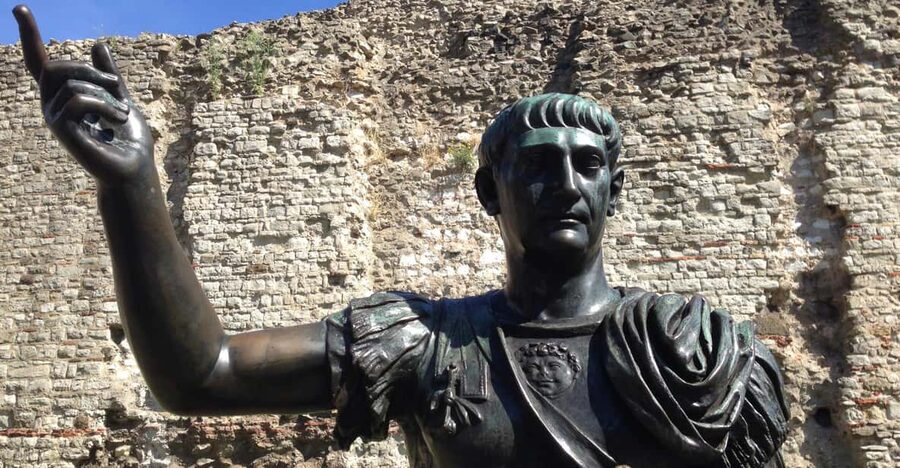
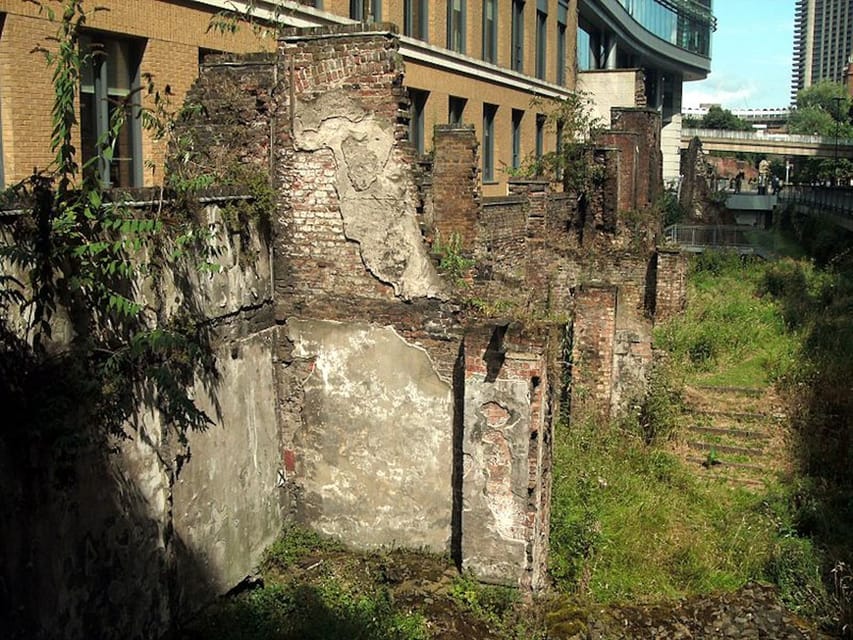
- The original city wall still survives: Several sections show the scale of the Roman settlement and its defenses.
- The walk goes underground: Roman house flooring, a re-laid pavement, baths, and the amphitheater are part of the experience.
- Temple of Mithras is a major highlight: This rebuilt sanctuary sits below a 21st century office tower.
- The route leaves the usual sightseeing circuit: You explore less visited corners of the City of London.
- The private format has real value: Your guide can explain details, answer questions, and adjust the pace to your party.
Why Roman London is hidden below your feet
The Roman city of Londinium grew into modern London, but very little of it remains at street level. Centuries of construction, fires, wars, bombs, and rebuilding left many Roman structures buried beneath the present city.
In several places, the ancient ground level is about 23 feet, or 7 metres, below the pavement you walk on today. That fact changes the way you see London. A modern office, road, or church may occupy the space above a Roman wall or house.
I like this tour because it does not treat Roman London as one grand monument. Instead, it gathers smaller remains across the City of London. You get a more honest picture of the ancient city, one piece at a time.
This is not a walk through a perfectly preserved Roman town. Some remains are fragmentary, some are reconstructed, and some are visible only in underground rooms. That is part of the appeal, but it also means you should arrive ready to use your imagination.
More Walking Tours in London
- Magical London: Harry Potter Guided Walking Tour
★ 4.7 · 22,044 reviews - London: The Original Jack the Ripper Walking Tour
★ 4.7 · 7,833 reviews - London: Harry Potter Movies Walking Tour (Kids Go Free)
★ 4.7 · 3,071 reviews
Starting in the original City of London
The route generally begins at your central London hotel or outside St Paul’s Tube station, near Caffe Nero. The exact meeting point matters because the tour moves into the historic City of London, not the familiar West End area around Buckingham Palace, Westminster, or Soho.
Tube travel to and from the walk is not included. You will need to pay for that separately if you are not staying close enough to walk to the meeting point.
Once you are in the City, the surroundings become a useful part of the lesson. Modern offices, narrow streets, churches, and busy roads occupy the same ground as the first major Roman settlement in London. Your guide helps connect the ancient sites rather than presenting each ruin as an isolated display.
The private group format should make this easier. You can stop to ask about a wall, a street plan, or a Roman building without feeling that you are holding up a large crowd.
Seeing the Roman wall and fort
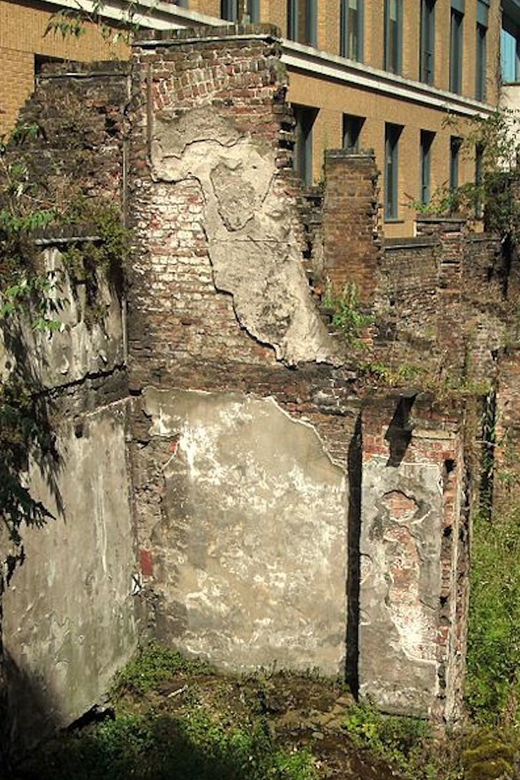
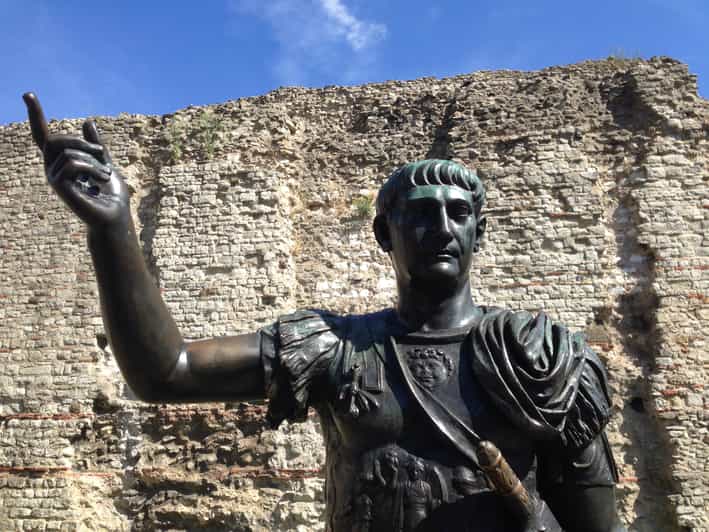
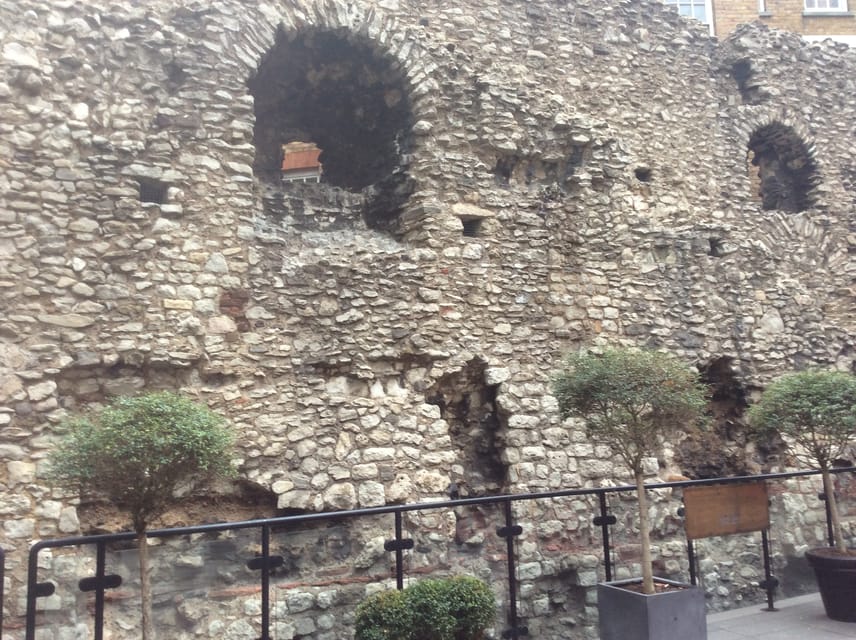
One of the strongest parts of the walk is the original Roman city wall. It once surrounded all of London, and the surviving sections give you a sense of the size and importance of Londinium.
Do not expect a complete circuit or a single towering barrier. The remains have survived in sections, surrounded by later buildings and streets. Their setting is what makes them interesting. You are looking at Roman masonry in a city that has been rebuilt many times over.
The old Roman fort adds another layer. It was connected to the city’s military presence and helps explain that Londinium was not only a place of trade and administration. The fort ruins are not presented as a fully intact structure, so your guide’s explanation is important.
I would pay close attention here and ask questions. The wall and fort can look like simple blocks of old stone if you view them quickly. With context, they become evidence of how the Roman city was organized and protected.
The old baths and the largest Roman building north of the Alps
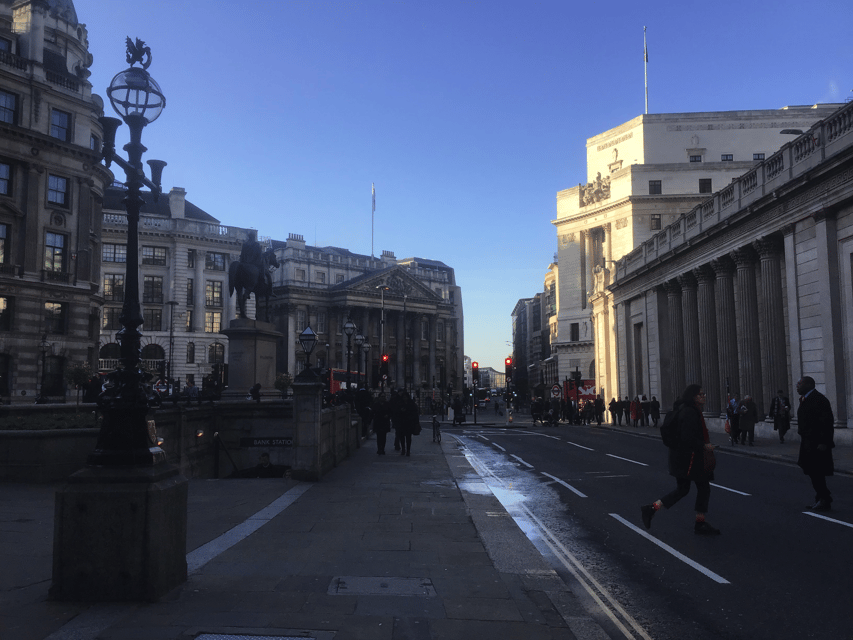
The tour visits the site of London’s old Roman baths. These remains help show how Roman public life worked, including the importance of bathing, social activity, and civic buildings.
The baths are one of those stops where the surviving physical evidence may be less dramatic than the idea behind it. You are not walking into a complete Roman spa. Instead, you are seeing the location and remains of a building that once played a part in daily city life.
The route also reaches the site of what was the largest Roman building north of the Alps. Even if only limited remains can be seen today, the scale of that original structure tells you something about Londinium’s status.
This stop is particularly valuable for visitors who want more than military ruins. The wall and fort show defense. The baths and large civic building point toward administration, commerce, public life, and the ambitions of a growing city.
A different kind of day out entirely:
- London: The London Eye Entry Ticket
★ 4.6 · 35,875 reviews - From London: Harry Potter Warner Bros Studio Tour
★ 4.7 · 26,588 reviews - London: Westminster to Greenwich River Thames Cruise
★ 4.5 · 22,836 reviews - London: Madame Tussauds London
★ 4.6 · 20,915 reviews
Going underground to Roman houses and pavement
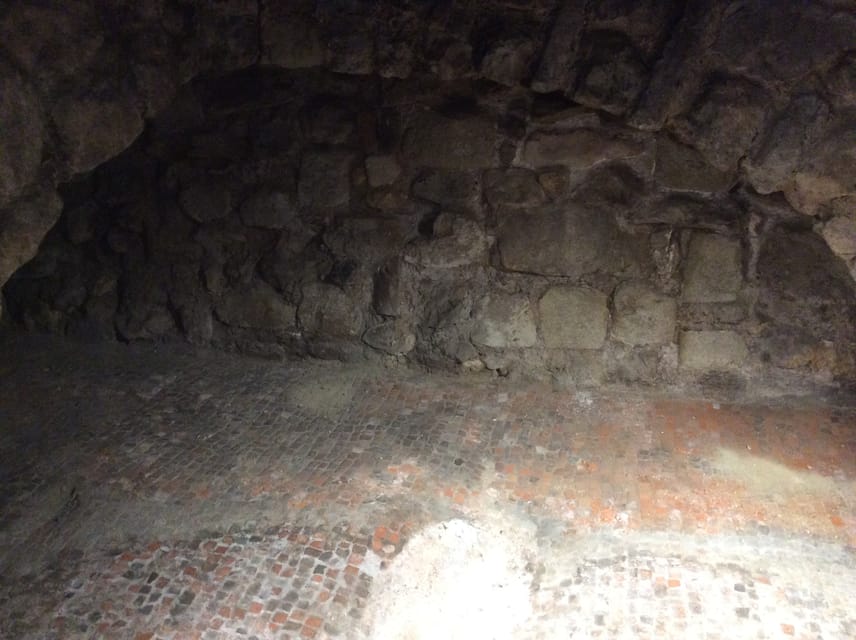
Some of Roman London’s best remains are below street level. This walk takes you underground into a crypt where you can see the flooring of a Roman house and a re-laid Roman pavement, or sidewalk.
That small detail is useful. A house floor and pavement make Roman London feel more like a lived-in city rather than a collection of official buildings. You can picture people moving through rooms and along streets, even though the modern city now sits above them.
The wording re-laid is worth noting. Not every surface is still in its exact original position. Some pieces have been carefully placed again to help visitors understand the ancient arrangement. That does not make the site worthless, but it is a reason to appreciate the explanation rather than treating every visible stone as untouched.
Underground areas can also change the rhythm of the tour. You leave the busy street, enter a quieter space, and see how much of Londinium has been preserved below later construction. If you dislike stairs, confined spaces, or uneven walking surfaces, ask about the route before booking. The available information confirms underground access, but it does not provide a full accessibility description.
Temple of Mithras beneath a modern office tower
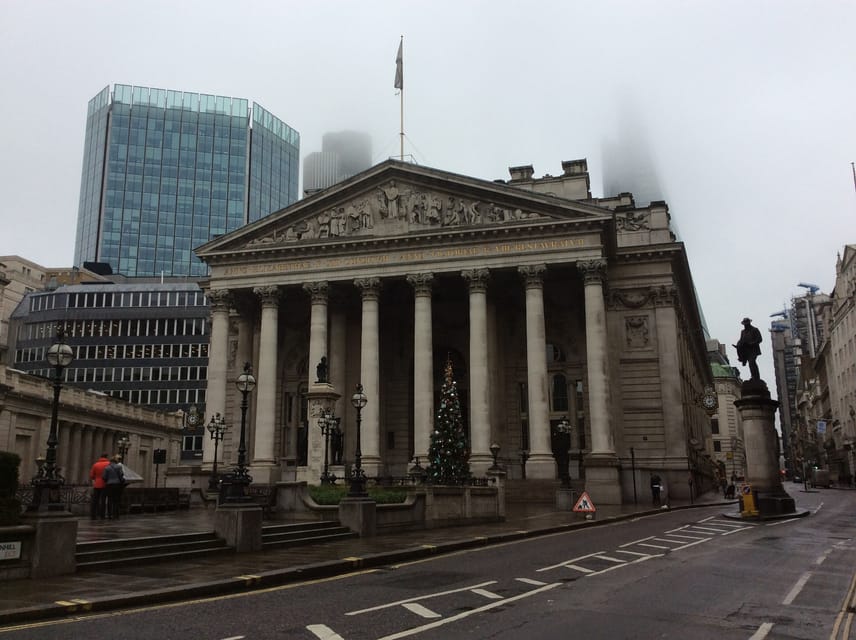
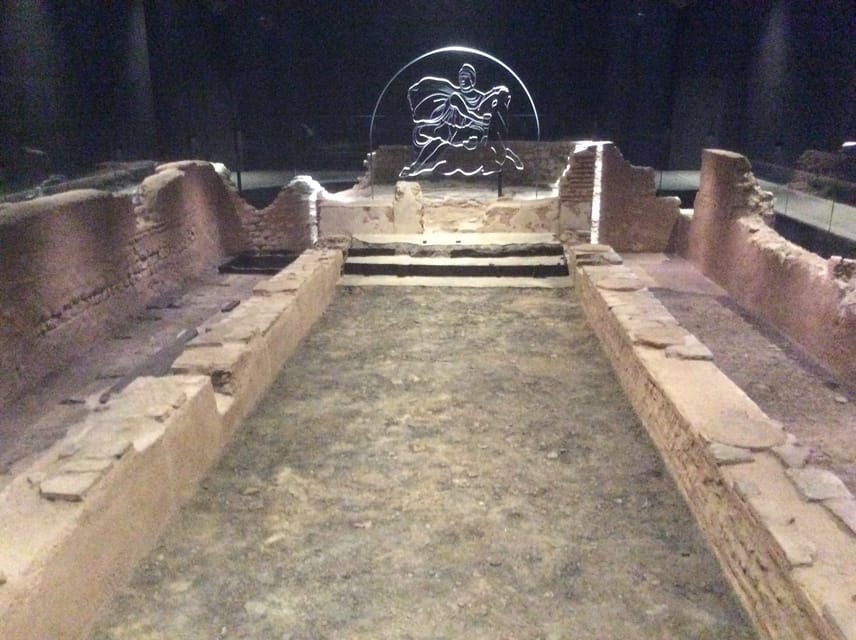
The Temple of Mithras is likely to be one of the most memorable stops. Mithras was a Persian god associated with heavenly light, and the Roman sanctuary was discovered in the 20th century before being moved to a new location.
It has since been carefully put back in place and restored beneath a 21st century office tower. That contrast tells the story of London in a single image: ancient stone below, modern business above.
The temple is not guaranteed for short-notice bookings. If this site is the main reason you want the tour, book ahead and confirm availability rather than assuming entry will be possible.
Even without turning the visit into a large museum experience, the Mithraeum helps you understand the variety of Roman religion. Londinium was connected to a broad empire, and its religious life included traditions that may feel unfamiliar beside the better-known Roman gods.
I like this stop because the setting makes the preservation story clear. The temple did not survive in a quiet archaeological park. It survived under a city that kept growing.
The London Stone and a vanished civic center
The famous London Stone is another compact but important stop. It is not a grand ruin, and you should not expect an elaborate monument. Its value comes from its place in London’s long civic story and from the way a single stone can carry so much historical attention.
The tour also visits the site of the Forum, the center of Roman public life. The forum was the largest Roman building north of the Alps, and its location helps explain how Londinium functioned as an organized city.
Much of the original structure is gone or buried. That can be frustrating if you prefer complete buildings, but it is also where a guide earns the fee. The tour is strongest when it explains what the scattered remains meant, not when it simply points at them.
These stops also broaden the experience beyond archaeology. The London Stone links the ancient city to later London traditions, while the Forum shows the Roman city as a place of law, business, politics, and public gathering.
The amphitheater beneath today’s city
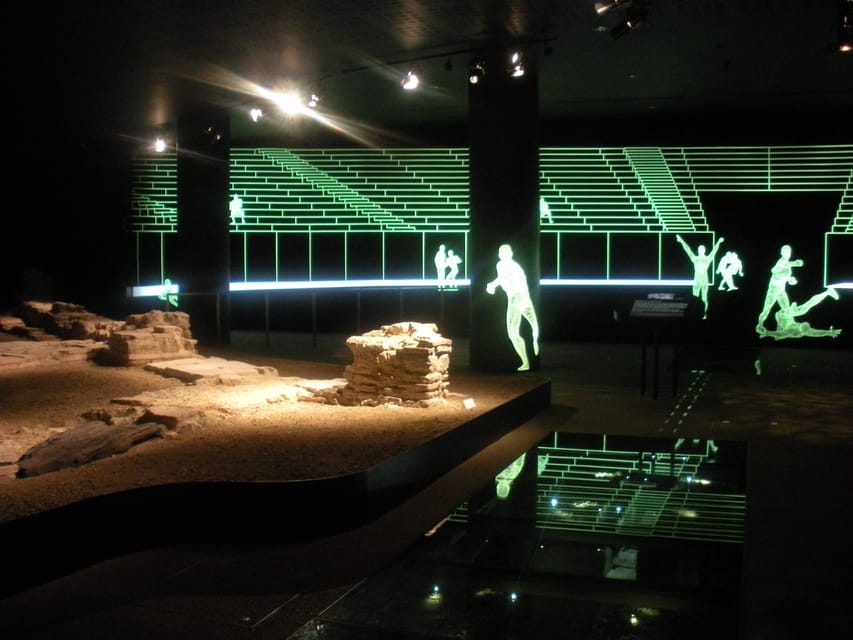
The Roman amphitheater is among the most striking parts of the route. About 7,000 people once watched events unfold in its arena, making it a major public venue for Londinium.
Today, the remains are underground. You may see portions of the arena and related structures rather than a complete circular building rising above the city. Still, the scale is easy to imagine when you learn how many people once gathered there.
The location makes this stop especially powerful. Modern London continues its ordinary business overhead while the remains of a Roman entertainment venue sit below. It is a sharp reminder that the City of London is not just old in a general sense. It is built layer upon layer.
The amphitheater also gives the walk a strong ending or late-tour highlight. After seeing walls, baths, houses, and religious remains, you reach a place designed for large public events. It helps pull the separate parts of Roman London together.
What the three-hour format feels like
The scheduled duration is three hours, with starting times depending on availability. That is enough time for a serious introduction to Roman London without taking up an entire day.
Still, three hours on foot can feel long if you are not used to city walking. Wear comfortable shoes, especially since the route includes streets, underground areas, and several archaeological stops.
The private format is useful here. One person who took the walk at a slow pace described spending almost five hours with the guide, which suggests that timing can sometimes be generous. I would not assume every booking will last that long, but it is worth telling the guide if your group needs a slower rhythm.
Stephen is specifically associated with a pleasant, engaging style and a strong sense of humor. A relaxed guide can make a major difference on a tour with many partial ruins. You need someone willing to explain, pause, and respond to questions rather than rush from one location to the next.
The tour is conducted in English, and the guide is live rather than recorded. That gives you the chance to ask about anything that catches your eye.
Is $249.19 per person good value?
At $249.19 per person, this is not a budget walking tour. The price includes a private guide and entrance fees, but not Tube transport to or from the meeting point.
The value depends heavily on the size and interests of your party. For one person or a couple, the cost is high. For a family or small group that would otherwise book several places separately, the private arrangement can make more sense.
You are paying for access to several sites, a guide who can explain the Roman remains, and a route away from the most familiar London attractions. You are not paying for one huge, complete monument. The experience is about finding and understanding fragments scattered through a modern city.
I would book it if Roman London is a serious interest and you want personal attention. I would skip it if you want a low-cost overview, a relaxed stroll with few stops, or grand ruins that are immediately easy to understand.
Free cancellation is available up to 24 hours before the tour, and you can reserve now and pay later. Those policies give you some flexibility, but they do not change the basic price question.
Who should book this Roman London experience?
This tour suits you if you enjoy archaeology, urban history, and places that require a guide’s explanation. It is also a good choice if you have already seen London’s headline sights and want to explore a less familiar part of the city.
Families with older children may appreciate the underground rooms and amphitheater, especially if the children enjoy ancient history. The private format also lets you keep the pace comfortable.
History-minded visitors should be happy with the range of sites. In three hours, you see evidence of defense, religion, public life, private housing, bathing, and entertainment.
You may want to choose another activity if you need step-free access, dislike underground spaces, or want guaranteed entry to Temple of Mithras on a last-minute booking. The available details do not promise a fully accessible route, so ask before paying if mobility is a concern.
Should you book the Roman London Walking Tour?
Book this tour if you want to understand how Londinium survives beneath modern London, not simply take photographs of one famous ruin. The city wall, Mithraeum, Roman house, baths, Forum, London Stone, fort, and amphitheater create a varied three-hour route.
The price is the key decision. It is a premium choice, but the private guide and included entrance fees may justify it for a group that wants questions answered and the pace adjusted. Book ahead if Temple of Mithras matters to you, wear comfortable shoes, and remember to budget separately for Tube transport.
For a curious visitor who values forgotten corners over famous postcard views, this is a thoughtful and unusual way to meet London’s oldest city.
FAQ
Where does the Roman London Walking Tour take place?
The tour explores the original City of London, away from the West End’s main attractions. Pickup is generally at a central London hotel or outside St Paul’s Tube station by Caffe Nero.
How long does the tour last?
The scheduled duration is three hours. Starting times depend on availability.
What is included in the price?
The price includes a private guided tour and entrance fees to the included sites.
Is Tube transport included?
No. Tube transport to and from the tour is not included in the ticket price.
Is the tour private?
Yes. It is offered for a private group rather than as a shared group experience.
What language is the tour conducted in?
The live tour is conducted in English.
Will I enter Temple of Mithras?
Entry is included where possible, but Temple of Mithras access cannot be guaranteed for short-notice bookings.
What should I bring?
Wear comfortable shoes. The experience is a walking tour with street-level and underground stops.
Can I cancel the booking?
Yes. You can cancel up to 24 hours in advance for a full refund.
Can I reserve now and pay later?
Yes. The reserve now and pay later option lets you hold your place without paying at the time of booking.
Just added in London
- The Best of British Cooking Class & Dining Experience★ 5.0 · 1 review
- London: Live Comedy Show at Big Belly Bar and Comedy Club★ 4.5 · 80 reviews
- London: British Museum Highlights Guided Small Group Tour★ 4.9 · 113 reviews
- The Beatles London Walking Tour★ 4.2 · 147 reviews
- The Best Highlights of London Walking Tour & Boat Cruise★ 5.0 · 1 review
- The Authentic Walking Tour with Indian Tasting Meal★ 4.8 · 4 reviews
- Iconic London: Bard, Beatles, Bond & Baker Street★ 4.9 · 15 reviews
- London: Tate Britain Official Discovery Tour★ 4.7 · 7 reviews
Walking Tours, compared.

Magical London: Harry Potter Guided Walking Tour
Read our review →

University and City Walking Tour with Alumni Guide
Read our review →
Harry Potter Movies Walking Tour (Kids Go Free)
Read our review →
The Great British Rock and Roll Music Walking Tour
Read our review →
Jack the Ripper Walking Tour – Ripper Vision Tours
Read our review →
Other lists this tour turns up in