
REVIEW · HISTORICAL TOURS
Roman Ruins to Blitz Bombings: London’s Fiery History
London keeps its oldest stories underfoot. This two-hour walk through the City of London links Roman ruins, the Tower, the Great Fire, the Bank of England, and St Paul’s in one compact route. I like the way it turns streets you might otherwise hurry through into clues from two thousand years of the capital’s past.
I especially like the small group limit of 15 people, which should make it easier to hear the guide and ask questions. I also like the mix of solid history and odd details, including Boudica’s connection to Harry Potter and the supposed easiest way to tunnel into the Bank of England’s vaults. The main consideration is pace: 2.5 miles in two hours means plenty of standing and walking, with no museum admissions included.
In This Review
- Key details before you book
- Why this City of London walk works
- Roman Wall of Londinium: London before London
- The Tower of London: royal power with a dark edge
- St Dunstan in the East: ruins softened by time
- The Monument and London’s Great Fire
- London Stone and the survival of old markers
- The Bank of England and the City of money
- Guildhall and the old civic London
- St Paul’s Cathedral and Christopher Wren’s London
- Ye Olde Cheshire Cheese and the final stories
- The guide makes the difference
- What $26 gets you
- Who should book this walking tour?
- Should you book Roman Ruins to Blitz Bombings?
- FAQ
- How long does the tour last?
- How far do you walk?
- Where does the tour begin?
- Where does the tour finish?
- Is admission to the Tower of London or St Paul’s Cathedral included?
- What language is the tour in?
- How many people can join the tour?
Key details before you book
- Roman Londinium in the modern City: See surviving pieces of the Roman wall and learn where London’s first settlement took shape.
- A sharp mix of famous and overlooked stops: The route includes the Tower of London and St Paul’s, but also St Dunstan in the East, London Stone, and Ye Olde Cheshire Cheese.
- A guide-led story rather than interior sightseeing: You hear about the buildings and events from outside, but museum and attraction entry is not part of the price.
- A compact central route: The walk begins at Tower Hill Station and finishes near Blackfriars Station, covering about 2.5 miles.
- A polished presentation: Tom has been praised for clear diction, good pacing, useful answers, and choosing entertaining facts without burying you in detail.
- Good value at $26: For a live English-language guide and two hours of context in central London, the price is reasonable, especially for a first visit.
Why this City of London walk works
The City of London is easy to misunderstand. It is the small historic core inside modern London, filled with office towers, narrow lanes, churches, banks, and fragments from much older settlements. If you wander alone, you can see the sights but miss the connections.
This tour gives you those connections. Roman London leads to medieval power, medieval power leads to royal violence, and the Great Fire leads to Christopher Wren’s rebuilding of the city. The route then carries on through finance, war, and some of London’s oldest drinking traditions.
I like this kind of walk because it does not ask you to spend the whole afternoon inside one attraction. You move through the actual streets where the stories happened. You also get a useful first orientation to the City before returning later to places you want to explore in more depth.
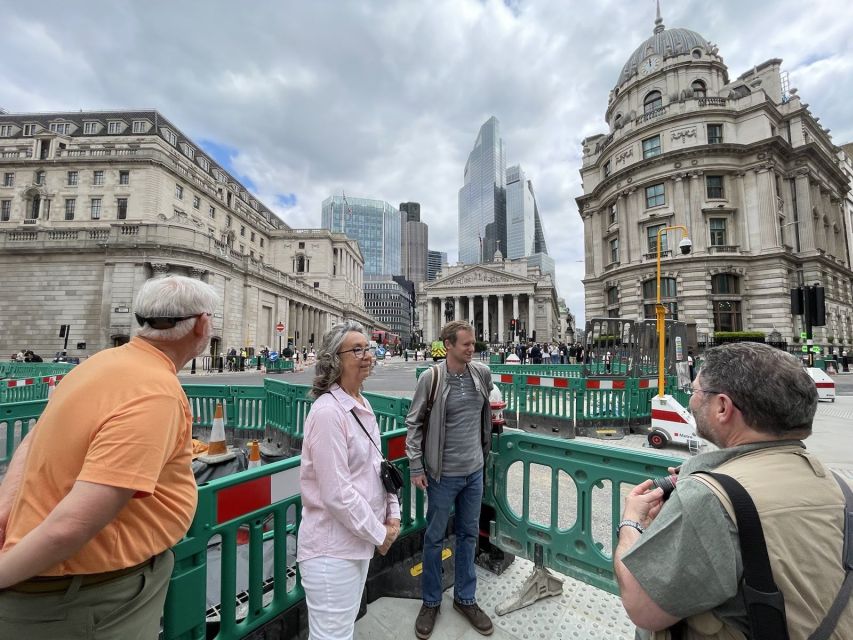
The route begins outside Tower Hill Station. At the exit, look for the steps leading up to the sundial. Your guide will be standing at the base with a Historic London Tours sign. Arrive with comfortable shoes, since the walk lasts about two hours and covers roughly 2.5 miles.
More History Tours in London
- London: Historic Pubs of Central London Walking Tour
★ 4.9 · 1,065 reviews - London: Soho Music and Historic Pubs Walking Tour
★ 4.9 · 836 reviews - London: Rock ‘n’ Roll History Tour
★ 4.6 · 645 reviews
Roman Wall of Londinium: London before London
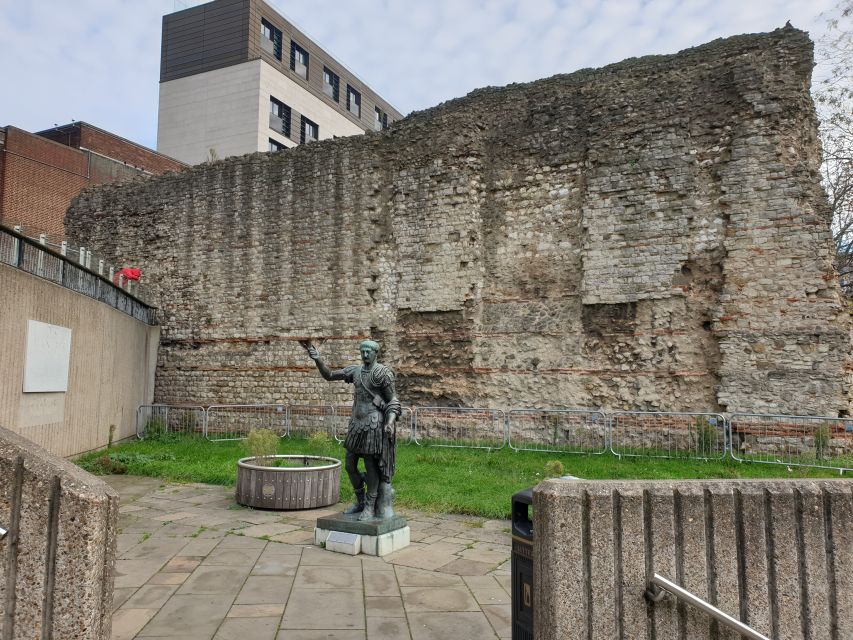
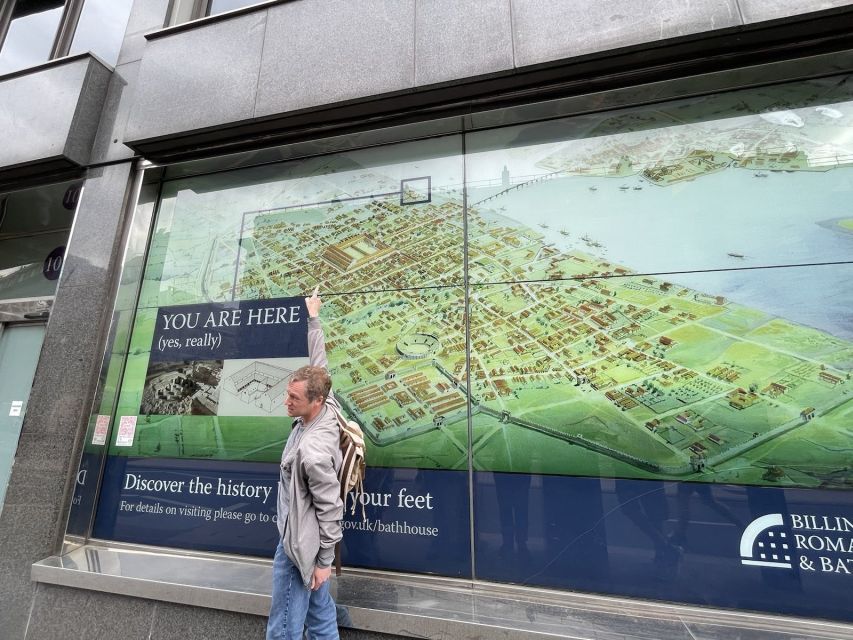
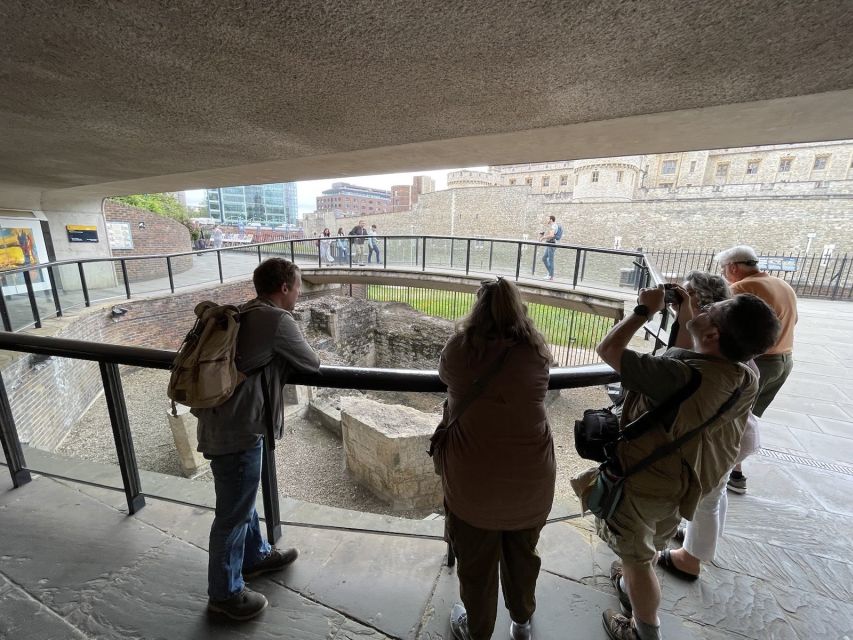
The first historical stop is the Roman wall of Londinium. This is the point where the tour reaches furthest back in time, explaining how the Romans established London about two thousand years ago.
You should expect a short outdoor explanation rather than a long archaeological visit. The stop is listed as about five minutes, so the guide’s job is to help you notice what remains and explain its place in the wider city. That is valuable because Roman London is not laid out like a Roman ruin site elsewhere in Europe. Its remains are scattered among streets and modern buildings.
I like beginning here because it sets the scale for the walk. London is not simply an old European capital with a few historic buildings. It is a city repeatedly built over itself. The Roman wall, even in fragmentary form, gives you a physical starting point for everything that follows.
The Tower of London: royal power with a dark edge
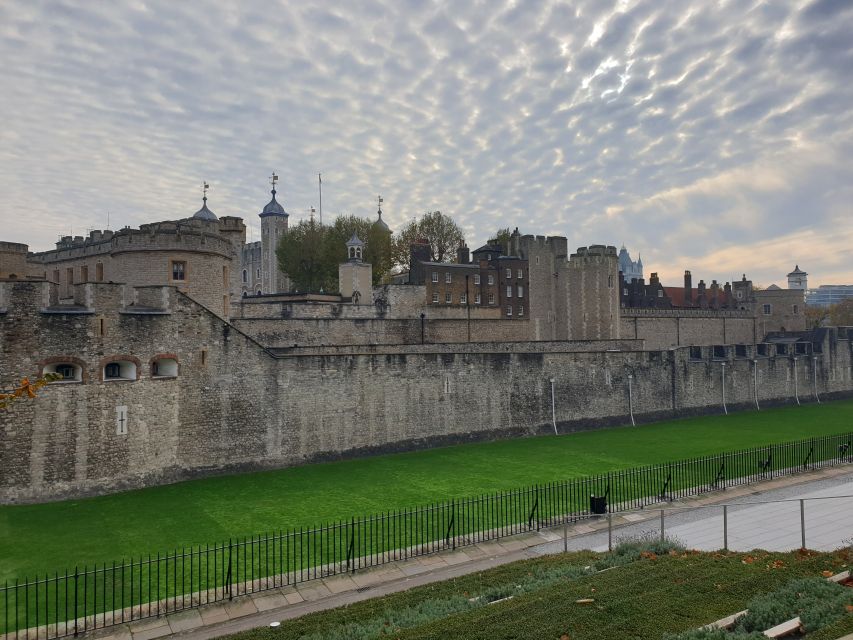
From the Roman wall, the walk turns toward the Tower of London. This is one of the route’s best-known sights, but the emphasis is on its sinister and bloody past rather than an interior visit.
You will hear about the Tower’s role in royal politics, imprisonment, executions, and the stories surrounding Anne Boleyn. The tour description also brings in her ghost, so expect some folklore alongside the documented events. That blend suits London well, provided you keep the two categories separate in your mind.
The stop itself lasts around five minutes, which is enough for a strong introduction but not enough to tour the fortress, see the Crown Jewels, or explore its exhibitions. You should treat the Tower as a dramatic outside chapter, not a substitute for a full Tower visit.
This is an important practical point. If the Tower is high on your London list, budget a separate block of time and admission for it. The walking tour gives you context and a reason to return, but it does not take you inside.
St Dunstan in the East: ruins softened by time
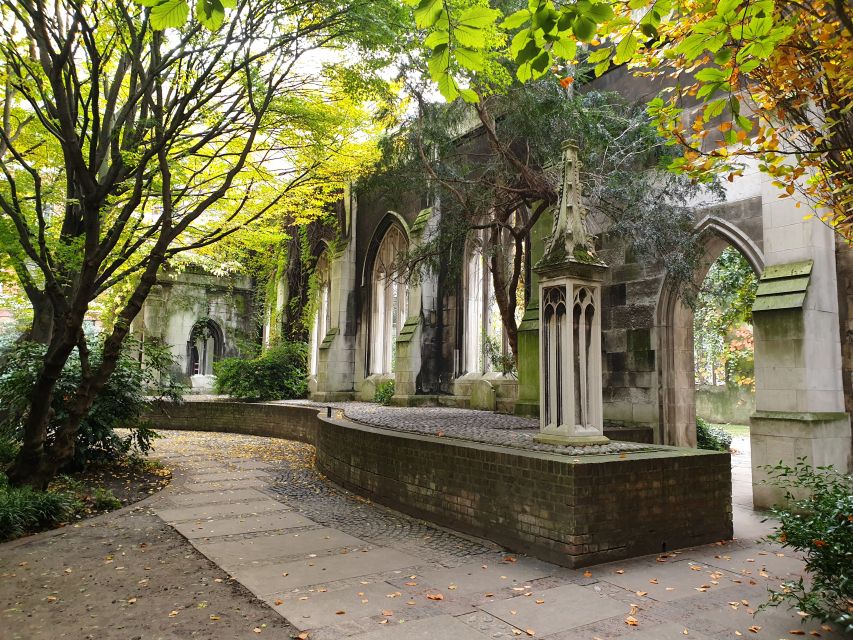
St Dunstan in the East Church Garden provides one of the route’s more atmospheric pauses. The church was damaged during the Second World War, and its remaining walls now form part of a public garden.
This stop helps the tour move beyond medieval and royal stories into London’s more recent destruction. The title refers to Blitz bombings, and St Dunstan gives that theme a clear physical form. You can see how war damaged an old building, while later generations chose to preserve the remains rather than remove every trace.
I find this kind of place more revealing than a spotless restoration. The surviving walls show change without pretending that the past can be brought back exactly as it was. Since the guide is there only briefly, you may want to return on your own if you enjoy quiet ruins and gardens.
A different kind of day out entirely:
- London: The London Eye Entry Ticket
★ 4.6 · 35,875 reviews - From London: Harry Potter Warner Bros Studio Tour
★ 4.7 · 26,588 reviews - London: Westminster to Greenwich River Thames Cruise
★ 4.5 · 22,836 reviews - Magical London: Harry Potter Guided Walking Tour
★ 4.7 · 22,044 reviews
The Monument and London’s Great Fire
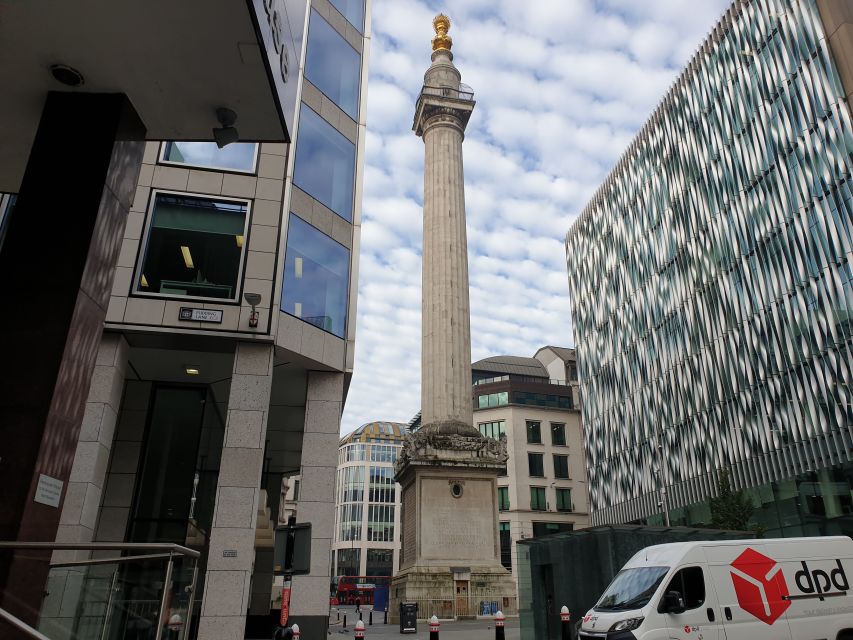
The Monument to the Great Fire of London marks the disaster that reshaped the City in 1666. The column is tied to the fire that destroyed large sections of medieval London and led to major rebuilding.
This is where Christopher Wren enters the story. The fire created a terrible human crisis, but it also opened the way for a new city of stone, churches, and grand civic planning. A good guide can help you hold both sides of that story at once. It was not simply a clean reset, and it was not an architectural success story without suffering.
The stop is short, so you will not be climbing the Monument as part of this experience. Still, the location gives you a useful link between the old street plan and the post-fire city. I like that the tour does not treat the Great Fire as an isolated event. It becomes part of a longer pattern of disaster, rebuilding, and adaptation.
London Stone and the survival of old markers
The remaining part of London Stone is a small stop, but it may be one of the most intriguing. It is easy to pass without knowing what you are looking at. The guide explains its place in London’s identity and the stories attached to this old marker.
Because the visible fragment is modest, the explanation matters more than the object itself. This is a good example of why a guided walk can beat a checklist of famous monuments. You may not spend long here, but you gain a story that helps you read the City with more curiosity.
The tour’s method is strongest at stops like this. A guide points out something small, gives it a past, and sends you onward with a better sense of what else you might have missed.
The Bank of England and the City of money
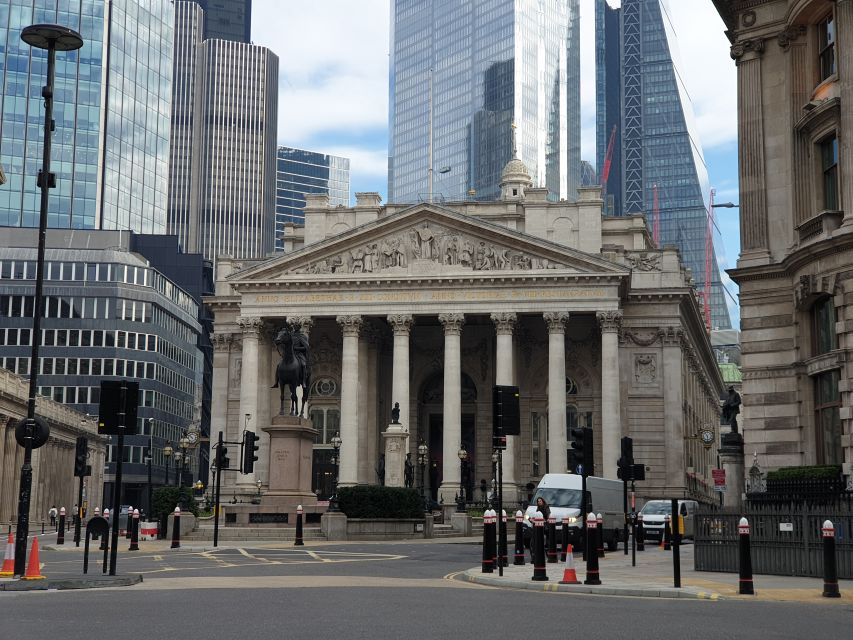
The Bank of England brings the walk into modern London’s financial heart. Here, the guide connects the historic City with the institutions that still shape the capital’s identity.
The promised detail about the easiest way to tunnel into the Bank’s vaults adds a lighter, slightly mischievous note. I would not book the tour expecting a serious financial lecture. Instead, expect a blend of civic history, odd facts, and stories that make a guarded institution feel less remote.
As with the Tower, this is an exterior stop. You will not enter the Bank’s vaults, and no museum admission is included. The value comes from learning how to place the institution within the surrounding streets and understanding why this small part of London has such unusual authority.
Guildhall and the old civic London
Guildhall introduces the City’s political and ceremonial side. The eight-century-old position of Lord Mayor is one of the tour’s useful reminders that the City of London has its own traditions and institutions.
This is not simply the mayor of the whole capital. The distinction can be confusing, and the guide’s explanation should help you understand why the City remains a special local authority within Greater London.
I like this stop because it broadens the tour beyond kings, queens, and disasters. London was also shaped by merchants, civic officials, ceremonies, and local power. If you are interested in how old institutions survive inside a modern capital, Guildhall is a particularly worthwhile part of the route.
The stop is again brief, around five minutes. You will receive orientation and context rather than a full building tour.
St Paul’s Cathedral and Christopher Wren’s London
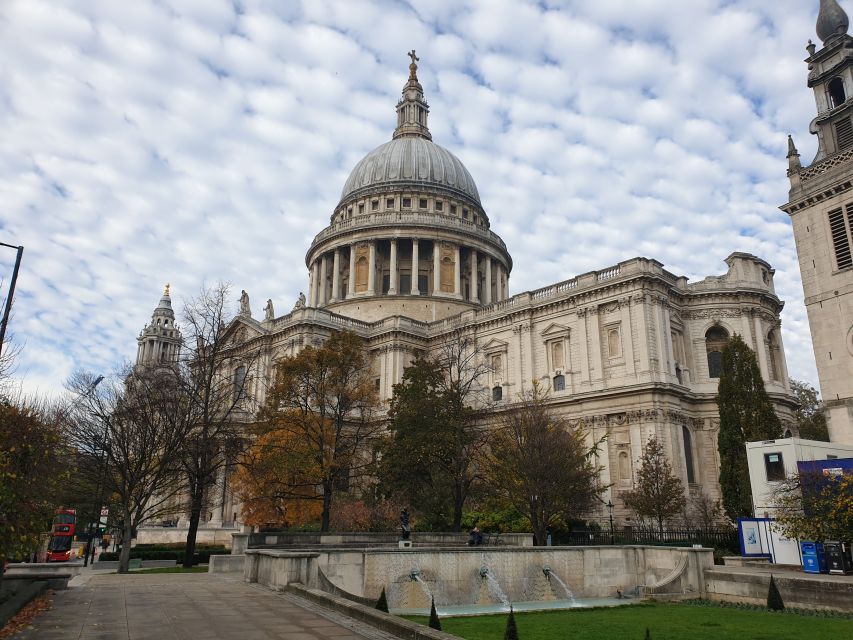
St Paul’s is the grand visual payoff of the later part of the walk. Its dome and scale reflect the rebuilding of London after the Great Fire, and Christopher Wren becomes one of the central figures in that transformation.
You will learn about the cathedral from outside. That means you can appreciate its setting and design, but you will not see the interior, crypt, galleries, or dome viewpoints during this tour. If those are important to you, plan a separate visit.
Still, an outside explanation can change how you approach the building later. Instead of seeing only an impressive dome, you understand its connection to the fire, the rebuilding of the City, and Wren’s wider work. I consider this one of the better uses of a short walking tour: it gives you a framework, then leaves you free to explore at your own pace.
Ye Olde Cheshire Cheese and the final stories
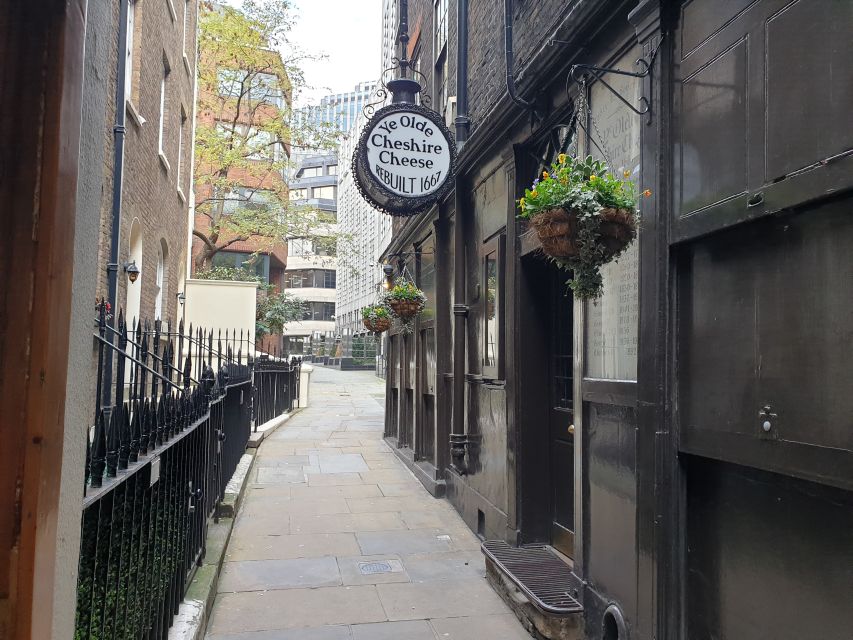
The walk finishes at Ye Olde Cheshire Cheese, one of London’s historic pubs. This makes a fitting end to a route about old streets, civic life, war, fire, and survival.
The pub is included as a stop, not as a meal or drinking session. Do not assume that a table, food, or a drink is part of the $26 price. Its value here is as a final piece of London’s old social world and a useful place to continue exploring after the guide says goodbye.
The finish near Blackfriars Station is practical. You can continue into the City, head toward the river, or use the Underground from nearby stations. The walk does not return you to Tower Hill, so consider that when planning the rest of your day.
The guide makes the difference
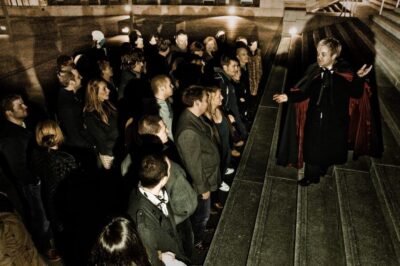
This experience depends heavily on the guide’s delivery. Tom receives especially strong praise for clear speech, an easy manner, and the ability to answer a long list of questions without losing the group.
That matters in the City of London, where a stop can look ordinary until someone explains why it matters. Tom’s approach appears to favor selected facts over an exhausting lecture. He has also been praised for handling an obscure question honestly and pointing the questioner toward a useful website rather than pretending to know everything.
I like that balance. A guide who knows a great deal but does not force every fact into the tour is far more useful than someone trying to prove how much he has read. The comments also point to a good mix of trivia and serious history, with humor used along the way.
The tour is in English only. Clear diction is therefore important, particularly outdoors near traffic and crowds. The small maximum of 15 people should help, but you should still stay close and listen carefully at each short stop.
What $26 gets you
At $26 per person, this is fairly priced for a two-hour guided walk in central London. You are paying for a local English-speaking guide, a carefully linked route, and the time saved by not having to research every Roman fragment, church ruin, or civic building yourself.
The price looks even better if this is your first time in the City. You get a broad overview that includes Roman London, the Tower, the Great Fire, the Blitz, the Bank of England, the Lord Mayor, and Wren’s rebuilding. A private guide would cost far more, while a self-guided walk would require preparation and would not answer your questions in real time.
The limits are clear. Museum and attraction entry are not included, and the stops are short. You will not receive a full tour of the Tower, St Paul’s, the Bank of England, or Guildhall. Think of the experience as a guided introduction, not a collection of interior visits.
The flexible booking terms also help. You can reserve now and pay later, and cancellation is free up to 24 hours before the start time. Check the available departure times when booking, since the exact schedule is not fixed in the information provided.
Who should book this walking tour?
I would recommend it to you if you enjoy city walks, short historical stories, and seeing famous places in context. It suits first-time London visitors who want a clear introduction to the City, as well as returning visitors who have walked past these sights without knowing their back stories.
It is especially good for people who like a balance of fact and folklore. Boudica, Anne Boleyn’s ghost, Harry Potter connections, Roman remains, royal violence, banking, and wartime damage all appear in the same two-hour route.
You should think twice if you want long visits inside attractions, lots of free time for photography, or a slow stroll with few stops. The distance is manageable for most people who can comfortably walk 2.5 miles, but comfortable shoes are essential. You will also spend much of the tour standing outdoors.
Should you book Roman Ruins to Blitz Bombings?
I would book this tour if you want the City of London to make sense quickly. The route is well chosen, the price is sensible, and Tom’s clear, selective presentation sounds like a major strength.
Book it early in your London stay, then use the guide’s suggestions to decide which places deserve a longer return visit. Skip it if you already know the City well or want admission to the Tower and St Paul’s as part of the same outing.
For most visitors who enjoy history but do not want a three-hour lecture, this is a strong two-hour introduction with plenty of memorable details.
FAQ
How long does the tour last?
The walking tour lasts about two hours.
How far do you walk?
The total distance is about 2.5 miles.
Where does the tour begin?
Meet at the exit of Tower Hill Station, at the base of the steps leading up to the sundial. Look for the guide holding a Historic London Tours sign.
Where does the tour finish?
The tour finishes at Ye Olde Cheshire Cheese, near Blackfriars Station.
Is admission to the Tower of London or St Paul’s Cathedral included?
No. Entrance to museums and attractions is not included.
What language is the tour in?
The live guided tour is in English.
How many people can join the tour?
Ticket sales are limited to 15 attendees.
Just added in London
- The Best of British Cooking Class & Dining Experience★ 5.0 · 1 review
- London: Live Comedy Show at Big Belly Bar and Comedy Club★ 4.5 · 80 reviews
- London: British Museum Highlights Guided Small Group Tour★ 4.9 · 113 reviews
- The Beatles London Walking Tour★ 4.2 · 147 reviews
- The Best Highlights of London Walking Tour & Boat Cruise★ 5.0 · 1 review
- The Authentic Walking Tour with Indian Tasting Meal★ 4.8 · 4 reviews
- Iconic London: Bard, Beatles, Bond & Baker Street★ 4.9 · 15 reviews
- London: Tate Britain Official Discovery Tour★ 4.7 · 7 reviews
Historical Tours, compared.




Other lists this tour turns up in