
REVIEW · WALKING TOURS
Royal London: from Saxons to Tudors & Stuarts Walking Tour
Royal secrets hide in plain sight. This two-hour walk links the streets, squares, and royal sites of central London with stories of Saxon rulers, Norman conquest, Tudor marriages, Stuart drama, Shakespeare, and the execution of Charles I. At $29 per person, it offers a focused way to place a thousand years of British monarchy on the map.
I especially like the small groups of no more than six, which should make it easier to ask questions and keep close to the guide. I also like the human side of the history, from Henry VIII’s marriage to Anne Boleyn to the love-torn king whose reign ended at the executioner’s block. The main drawback is simple: you remain outdoors for the entire two hours, and the tour does not include entry to any building.
The meeting point is outside Waterstones at Trafalgar Square. The guide is described as a quirky short lady, and guides Natalie and Nichole have both earned praise for their humor, warmth, and clear explanations. Natalie is also known for a history podcast, so you may get more than the standard list of royal dates and names.
In This Review
- Key points to know before you book
- Starting at Trafalgar Square with England’s royal story
- Finding the site of London’s largest royal palace
- The Tudor marriage of Henry VIII and Anne Boleyn
- A Stuart setting linked with Shakespeare
- The execution of Charles I and the price of royal power
- The mystery of Britain’s greatest royal love story
- How the guide shapes the experience
- What the two-hour format means for you
- Is $29 good value for royal London?
- Who should book this walking tour?
- Final verdict: book it for stories, not interiors
- FAQ
- Where does the Royal London walking tour meet?
- How long does the tour last?
- What language is the tour conducted in?
- How many people can join each walk?
- Does the tour include entry to historic buildings?
- What royal periods does the tour cover?
- Will the tour visit a location linked with Henry VIII and Anne Boleyn?
- Will I learn where Charles I was executed?
- What should I bring?
- Is the tour suitable for wheelchair users or children under 13?
Key points to know before you book
- The route covers a thousand years of royal power, from Saxon England and William the Conqueror to the Tudors and Stuarts.
- The tour stays outside, so you see historic locations from public spaces but do not go inside palaces, churches, or other attractions.
- Charles I’s execution, Henry VIII’s marriage, and Shakespeare’s premieres are all part of the story.
- Groups are limited to six people, giving the walk a more personal feel than a large city tour.
- Comfortable shoes and an umbrella matter, since the walk goes ahead in all weather.
- The tour suits history fans aged 13 and over, but it is not suitable for wheelchair users or people with mobility impairments.
Starting at Trafalgar Square with England’s royal story
The tour begins at the entrance to Waterstones in Trafalgar Square, WC2N 5EJ. This is a practical meeting point in central London, though Trafalgar Square can be busy, so arrive with enough time to identify the correct bookshop entrance and guide.
Starting here gives the walk a useful sense of place. You are not beginning at an isolated monument or a museum display. You are stepping into the center of modern London and then looking backward through the layers of power that shaped it.
The opening theme reaches back to Saxon England, followed by William the Conqueror and the Norman takeover. The questions are the right ones for a short tour: What did William conquer? Who was Edward the Confessor? Why do the Tudors still dominate television and popular history?
You will not receive every detail of every monarch. That would take days, not two hours. Instead, the guide builds a quick royal timeline and uses places around you to explain why particular rulers still matter.
That approach is one of the tour’s strengths. It keeps the story tied to the ground beneath your feet. You are not only memorizing that a king ruled in a certain period. You are learning where royal decisions, marriages, performances, and executions took place.
More Walking Tours in London
- Magical London: Harry Potter Guided Walking Tour
★ 4.7 · 22,044 reviews - London: The Original Jack the Ripper Walking Tour
★ 4.7 · 7,833 reviews - London: Harry Potter Movies Walking Tour (Kids Go Free)
★ 4.7 · 3,071 reviews
Finding the site of London’s largest royal palace
One major stop focuses on the site where the largest royal palace once stood. The important point here is the contrast between the power of the place in its royal heyday and what you see now.
This is typical of central London. A palace can vanish, a street can change, and modern buildings can cover much of the old footprint. A walking guide helps you read the area as a historical site rather than treating it as ordinary city scenery.
You should expect an explanation of the palace’s role in the monarchy and an account of how royal life once occupied this part of London. The value is not a preserved interior. The value is the mental picture you take away: court life, royal ceremony, and political decisions all concentrated in a space that can be easy to overlook today.
Because the tour stays outside, you will need to listen closely and use your imagination. If you prefer rooms, furniture, paintings, and surviving architecture, you may want to pair this walk with a palace or museum visit on another day.
For me, that limitation is also part of the appeal. You move through the city quickly and connect several royal stories without spending your entire afternoon inside one attraction.
The Tudor marriage of Henry VIII and Anne Boleyn
The Tudor section brings the tour into the territory that made the dynasty famous: marriage, succession, religion, ambition, and danger.
You learn where Henry VIII married Anne Boleyn. That location turns a familiar period drama into something more concrete. The marriage was not simply a plot point in a television series. It took place in a real royal setting, within the physical center of English government and court life.
This stop should appeal to anyone who has watched The Tudors, Becoming Elizabeth, The White Queen, Gunpowder, Mary & George, or other royal period dramas. The walk is especially well suited to viewers who want to separate screen drama from the actual places connected with the monarchy.
The guide also places the Tudors in a longer story. That matters because the dynasty can easily take over the whole conversation. Before the Tudors came Saxon and Norman rulers, and after them came the Stuarts. Seeing the Tudor period as one chapter in a longer sequence gives the walk better balance.
Do not expect entry into the marriage site. The tour provides an outdoor explanation, not access to an interior ceremony room. Still, the location carries weight, and the guide’s storytelling gives the stop its interest.
A Stuart setting linked with Shakespeare
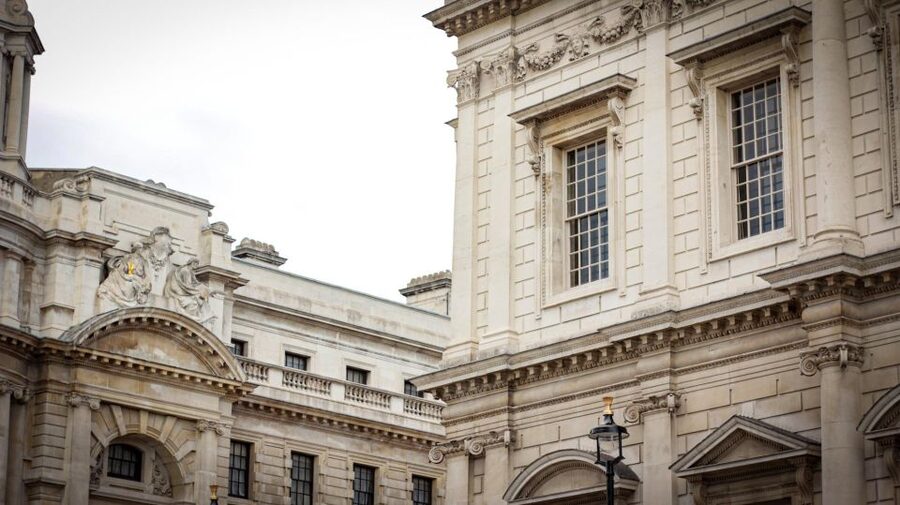
Another highlight is a Stuart site associated with Shakespeare, where his plays were premiered. This adds a welcome change of mood to the tour.
Royal history is often presented as a chain of battles, marriages, religious disputes, and executions. Shakespeare brings performance and public culture into the picture. His plays were not separated from the world of kings and queens. They were performed in a society fascinated by power, succession, rebellion, and ambition.
The stop also shows why the Stuart period deserves more attention than a brief footnote after the Tudors. You hear about a time when the monarchy, theatre, politics, and public opinion were closely connected.
The building itself is described as a Stuart gem, but the walking tour does not include an indoor visit. You will see the location from outside and hear why it matters. If you are a Shakespeare fan, that may leave you wanting more, so consider treating this as a useful introduction rather than a complete theatre visit.
I like the variety here. The tour moves from royal residence and marriage to the world of the stage. That keeps the two hours from becoming a list of rulers with similar names.
A different kind of day out entirely:
- London: The London Eye Entry Ticket
★ 4.6 · 35,875 reviews - From London: Harry Potter Warner Bros Studio Tour
★ 4.7 · 26,588 reviews - London: Westminster to Greenwich River Thames Cruise
★ 4.5 · 22,836 reviews - London: Madame Tussauds London
★ 4.6 · 20,915 reviews
The execution of Charles I and the price of royal power
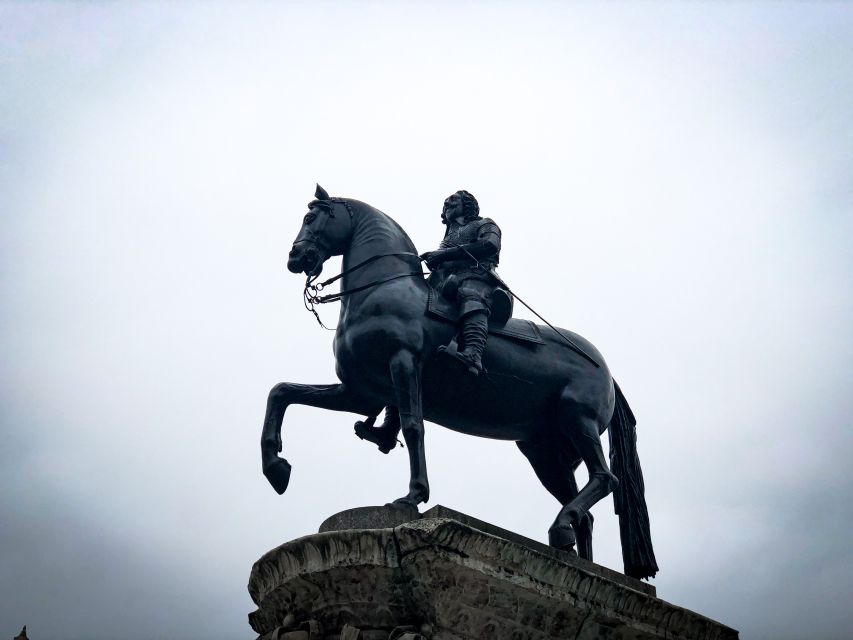
The darkest section follows the footsteps of Charles I, the love-torn king whose story ended with his execution. You also learn where Charles I lost his head.
That blunt detail tells you what sort of tour this is. It does not smooth royal history into a parade of grand buildings and charming personalities. It deals with the cost of monarchy, including the point at which a king’s authority failed and his reign ended in public execution.
The guide’s task here is to explain the setting and connect it to the wider Stuart story. You get a sense of how the monarchy moved from ceremony and court life into conflict and crisis.
The phrase love-torn king adds a personal angle, but you should not expect a full biography of Charles I in this short time. The tour uses selected stories to illuminate places. It is a brisk introduction, not a university lecture or a full political study.
This stop is likely to be especially useful if your knowledge of the Stuarts is weaker than your knowledge of the Tudors. Popular culture often gives Henry VIII and Elizabeth I the most attention. Charles I’s story shows how quickly royal confidence can turn into political danger.
The mystery of Britain’s greatest royal love story
The tour also asks you to consider what may have been the greatest royal love story of all time. The information for the experience does not identify the couple, which is part of the intrigue.
Rather than treating monarchy as a collection of official portraits, the walk looks at the private emotions behind public decisions. Love, loyalty, marriage, and succession could all affect the course of royal history.
This theme adds warmth to a route otherwise filled with conquest and execution. It also gives you something to think about after the walk. Royal romance is often polished by later storytelling, so the guide’s role is to connect the popular version with the places and historical setting.
If you enjoy personal stories more than constitutional detail, this part may be one of the most engaging. If you prefer exact political analysis, you may find the treatment brief because the tour has many periods to cover.
How the guide shapes the experience
The guide makes or breaks a walking tour, and this experience depends heavily on live storytelling. The strongest praise has focused on the guides’ command of British history, humor, confidence, and willingness to answer questions.
Natalie has been singled out for her broad grasp of the subject and her ability to offer a view beyond the usual film and television version of English history. Her podcast is a useful bonus if you want to keep exploring the subject after the walk.
Nichole has also been described as friendly, funny, and insightful. That combination matters. A guide who knows the material but delivers it as a list of dates can make even royal London feel flat. A guide who can explain the story clearly, add humor, and respond to questions makes the same streets much easier to remember.
The group limit of six is a real advantage. You can hear without straining, ask about a confusing succession, and stay connected to the guide. A small group also makes the walk feel less like a moving crowd and more like a conversation.
There is one point to keep in mind: guide quality is part of the experience, so the exact tone may vary. The available feedback is especially strong, but you should still book this knowing that the live guide carries much of the tour’s value.
What the two-hour format means for you
Two hours is enough time to visit several important royal locations without tiring you out, provided you are comfortable walking and listening outdoors.
The pace is described as manageable rather than punishing, but you still need good shoes. London pavement, crowds, and standing in one place can be harder on your feet than the distance alone suggests.
Bring water. There are toilets in Trafalgar Square, but opening hours can change, so do not rely on them as your only option.
The tour runs rain or shine. An umbrella is a sensible addition, and waterproof clothing may be more useful than hoping for a dry forecast. Since there is no indoor portion, bad weather affects comfort more than it would on a museum visit.
The route is not suitable for wheelchair users or people with mobility impairments. Children under 13 cannot join, so this is aimed at older teenagers and adults who can manage two hours on foot.
Is $29 good value for royal London?
At $29 per person, the tour offers good value if you want an introduction to royal London with a live guide and a very small group.
You are paying for interpretation, not admission tickets. No palace, theatre, or historic building is entered, so compare the price with what you want from the day. If you want access to lavish interiors, you will need to budget separately for attractions.
The value comes from the connections. On your own, you might pass the site of a palace, a royal marriage, a Stuart building, or a major execution without understanding how each fits into the larger story. The guide supplies that framework in two hours.
The small group improves the deal. A six-person limit gives you a better chance to ask questions than a large city walk, and the strong guide feedback suggests that the personal approach is central to the experience.
Flexible booking also reduces the risk. You can reserve now and pay later, and cancellation is free up to 24 hours in advance. Those details are useful when London plans depend on weather, transport, or changing museum reservations.
Who should book this walking tour?
I would recommend it to you if you:
- Enjoy British royal history but want more than a television version.
- Like hearing stories tied to exact places.
- Want a short introduction to Saxons, Tudors, and Stuarts.
- Prefer a small group and the chance to ask questions.
- Are comfortable spending two hours outside in changing weather.
- Are at least 13 years old and can walk without mobility assistance.
I would choose another activity if you need indoor shelter, step-free access, or admission to historic buildings. I would also look elsewhere if you want a single-period study focused only on Henry VIII, Shakespeare, or the Civil War.
For history fans, the best plan may be to use this as a first look. The walk gives you the map and the main characters. You can then choose which palace, museum, theatre, or royal site deserves a longer visit.
Final verdict: book it for stories, not interiors
This is a strong choice for a compact introduction to London’s royal past. I like the mix of major names and less familiar rulers, the focus on real locations, and the chance to hear the story from a guide such as Natalie or Nichole in a group capped at six.
The tour’s limits are clear. You stay outside, weather can be uncomfortable, and two hours cannot explain every monarch in detail. But at $29, it offers a lively way to connect Saxon beginnings with Tudor ambition, Stuart theatre, royal romance, and the execution of Charles I.
Book it if you want clear storytelling and a sense of place. Skip it if your priority is going inside grand historic buildings.
FAQ
Where does the Royal London walking tour meet?
Meet at the entrance to Waterstones bookshop in Trafalgar Square, London, WC2N 5EJ.
How long does the tour last?
The walking tour lasts two hours.
What language is the tour conducted in?
The live tour guide speaks English.
How many people can join each walk?
Each walk is limited to six attendees.
Does the tour include entry to historic buildings?
No. The tour takes place outside and does not include visits inside the places of interest.
What royal periods does the tour cover?
The tour covers Saxon, Tudor, and Stuart history, along with William the Conqueror and Edward the Confessor.
Will the tour visit a location linked with Henry VIII and Anne Boleyn?
Yes. The tour explains where Henry VIII married Anne Boleyn.
Will I learn where Charles I was executed?
Yes. The tour includes the location where Charles I lost his head.
What should I bring?
Wear comfortable shoes, bring water, and carry an umbrella because the tour runs outdoors in all weather.
Is the tour suitable for wheelchair users or children under 13?
No. The activity is not suitable for wheelchair users, people with mobility impairments, or children under 13.
Just added in London
- The Best of British Cooking Class & Dining Experience★ 5.0 · 1 review
- London: Live Comedy Show at Big Belly Bar and Comedy Club★ 4.5 · 80 reviews
- London: British Museum Highlights Guided Small Group Tour★ 4.9 · 113 reviews
- The Beatles London Walking Tour★ 4.2 · 147 reviews
- The Best Highlights of London Walking Tour & Boat Cruise★ 5.0 · 1 review
- The Authentic Walking Tour with Indian Tasting Meal★ 4.8 · 4 reviews
- Iconic London: Bard, Beatles, Bond & Baker Street★ 4.9 · 15 reviews
- London: Tate Britain Official Discovery Tour★ 4.7 · 7 reviews
Walking Tours, compared.

Magical London: Harry Potter Guided Walking Tour
Read our review →

University and City Walking Tour with Alumni Guide
Read our review →
Harry Potter Movies Walking Tour (Kids Go Free)
Read our review →
The Great British Rock and Roll Music Walking Tour
Read our review →
Jack the Ripper Walking Tour – Ripper Vision Tours
Read our review →

Other lists this tour turns up in