REVIEW · TICKETS
Royal Observatory Greenwich & Prime Meridian Entrance Ticket
Time begins at Greenwich. This Royal Observatory ticket gives you two memorable reasons to visit: stand on the Prime Meridian with one foot in each hemisphere, then explore the rooms where astronomers tackled the practical problem of measuring time and longitude. I also love the sweeping view over Greenwich Park, the Thames, and London. The main catch is the steep walk uphill, which can be tiring if you have mobility concerns.
This is a self-guided visit, not a guided tour. You get entry to the Royal Observatory and Meridian Line, plus a downloadable audio guide in eight languages. The planetarium costs extra, and some visitors may expect more star-gazing than the visit actually provides. The strongest material here is about navigation, clocks, longitude, and the people who made accurate sea travel possible.
In This Review
- Key points worth knowing before you go
- Why Greenwich changed the way the world kept time
- Reaching the observatory through Greenwich Park
- The Prime Meridian and the two-hemisphere photo
- Inside Flamsteed House and the Octagon Room
- John Harrison’s clocks solve a deadly navigation problem
- Astronomy Centre, meteorite, and the planetarium option
- The finest reward comes outside the buildings
- Audio guide and self-guided pacing
- Is the $32.33 ticket good value?
- Who will enjoy the Royal Observatory most?
- Should you book this Greenwich ticket?
- FAQ
- Where does the Royal Observatory visit begin?
- How long is the ticket valid?
- What does the ticket include?
- Is the Prime Meridian included?
- Can I stand in both hemispheres?
- Is the visit guided?
- Is a planetarium show included?
- Is the Royal Observatory wheelchair accessible?
- What historic room can I see?
- Can I cancel the booking?
Key points worth knowing before you go
- The Prime Meridian is the main photo stop: Put one foot east of longitude 0 and one west, though the modern reference meridian differs slightly from the historic line marked at Greenwich.
- The observatory is reached by a steep hill: The walk through Greenwich Park is scenic but may be demanding, especially from the river or nearby stations.
- John Harrison’s clocks tell the best story: His marine timekeepers helped solve the dangerous problem of finding longitude at sea.
- Flamsteed House includes Christopher Wren’s Octagon Room: This elegant interior is one of the visit’s most atmospheric spaces.
- The London view is part of the ticket’s value: From the hilltop, you can look across Greenwich Park, the Thames, the City, and Canary Wharf.
- The planetarium is not included: You can add a show separately, but the basic ticket already provides a substantial visit for anyone interested in time, maps, or astronomy.
Why Greenwich changed the way the world kept time
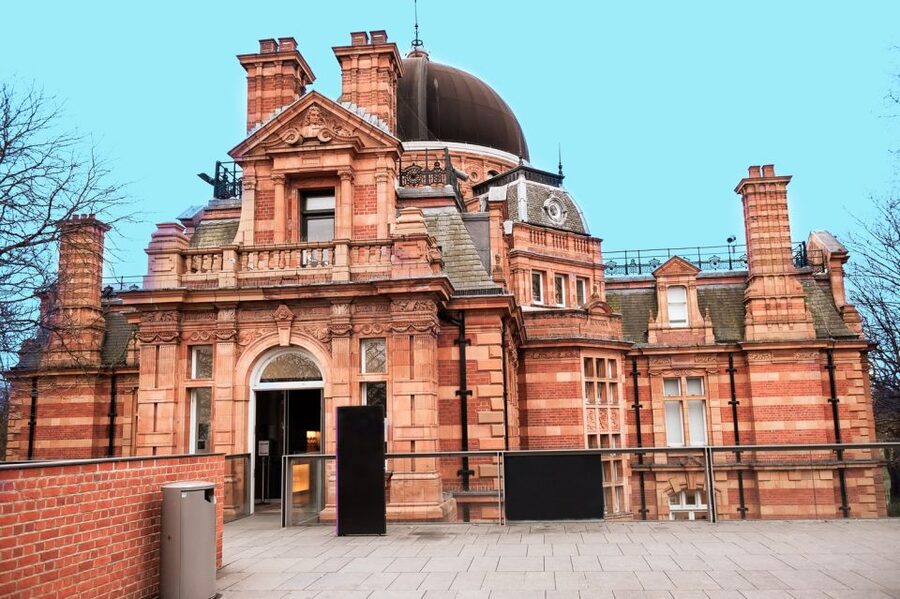
The Royal Observatory was established in the 17th century to improve astronomy and navigation. That may sound dry on paper. In person, the subject becomes very practical: ships needed reliable charts, sailors needed to know where they were, and accurate time was the key to finding longitude.
The observatory’s work helped turn the night sky into a navigation tool. Astronomers mapped stars, tracked the movement of celestial objects, and created better information for sailors crossing the world’s oceans. You are not simply looking at old buildings. You are seeing the place where scientific measurement met the hazards of real travel.
Greenwich became especially important because of its connection with the Prime Meridian. In 1884, the Greenwich Meridian was chosen as the world’s Prime Meridian, the line at 0 degrees longitude from which east and west are measured. That decision put Greenwich at the center of the world’s time and mapping systems.
The ticket lets you explore this story at your own pace. I like that arrangement here because the subject rewards pauses. You may spend ten minutes with a clock, then another ten minutes studying a room or taking in the view. A fixed group schedule could make the experience feel rushed.
A few more options to weigh up in London
- London: The London Eye Entry Ticket
★ 4.6 · 35,875 reviews - From London: Harry Potter Warner Bros Studio Tour
★ 4.7 · 26,588 reviews - London: Westminster to Greenwich River Thames Cruise
★ 4.5 · 22,836 reviews
Reaching the observatory through Greenwich Park
The Royal Observatory sits on top of a hill inside Greenwich Park. That setting is one of the pleasures of the visit, but it also shapes the day.
From the lower parts of Greenwich, you walk uphill toward the observatory. The route offers a gradual change in perspective, with the park opening out around you and London appearing beyond it. The final climb is steep enough to matter. If you have limited mobility, plan this part carefully and allow extra time.
A visit by river can be especially pleasant, but the walk from the Greenwich pier to the observatory involves a significant uphill stretch. The same applies if you arrive near Cutty Sark station. Signage from that station may not feel clear, so use the location details before setting off rather than assuming the first signs will lead you directly to the entrance.
One useful point is that the attraction is listed as wheelchair accessible. Still, accessibility inside the observatory does not remove the challenge of the hill outside. If the slope is a concern, ask locally about the easiest approach before beginning the walk. The supplied information does not give enough detail about every accessible route, so this is one area where advance checking pays off.
Do not treat the walk as wasted time. Greenwich Park is a major part of the experience. The observatory’s hilltop position gives you the kind of city view that is hard to get from street level.
The Prime Meridian and the two-hemisphere photo
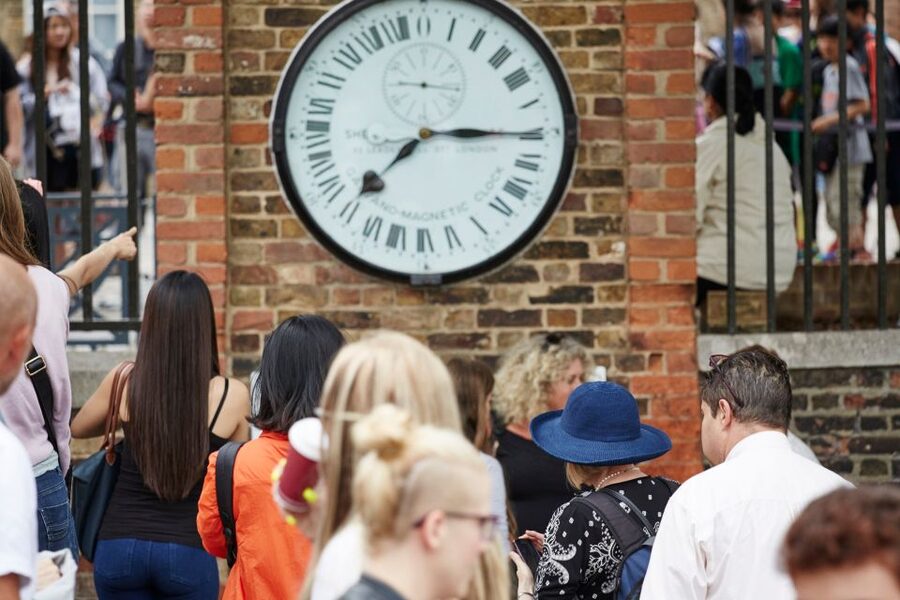
The Meridian Line is the most famous part of the visit, and it is easy to understand why. A marked line crosses the observatory grounds, allowing you to place one foot in the eastern hemisphere and one in the western hemisphere.
It is a simple idea, but it makes an abstract geographic system feel physical. Longitude normally lives on a map or inside a navigation app. Here, you can point to it, photograph it, and make a small ceremony of crossing from one side of the world to the other.
Give yourself time at this stop rather than treating it as a quick photograph. Read the nearby information and consider what the line represents. Every line of longitude is part of a global system used for navigation, mapping, and timekeeping.
The Meridian Line is also the place where expectations need a little adjusting. The attraction focuses on the historic Greenwich Meridian marker. Modern satellite-based measurements place the precise reference meridian slightly away from the traditional line used at the observatory. That does not make the visit pointless. The marked line is the historic and cultural center of the attraction, and the story behind it is more interesting than a debate over a few meters.
The line can become crowded at popular times, but the ticket is valid for one day, with availability and starting times shown when you book. That flexibility may help you choose a quieter moment if the schedule allows.
Inside Flamsteed House and the Octagon Room
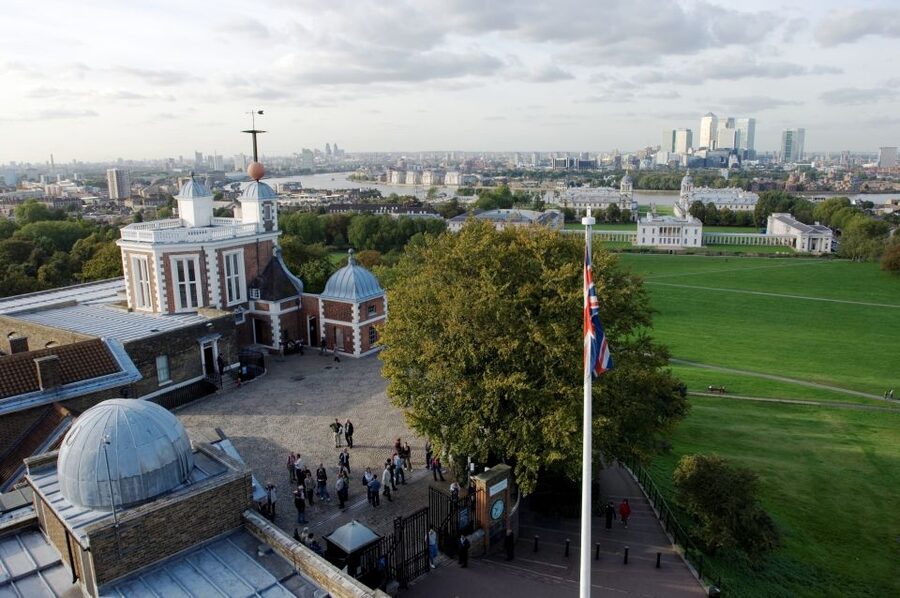
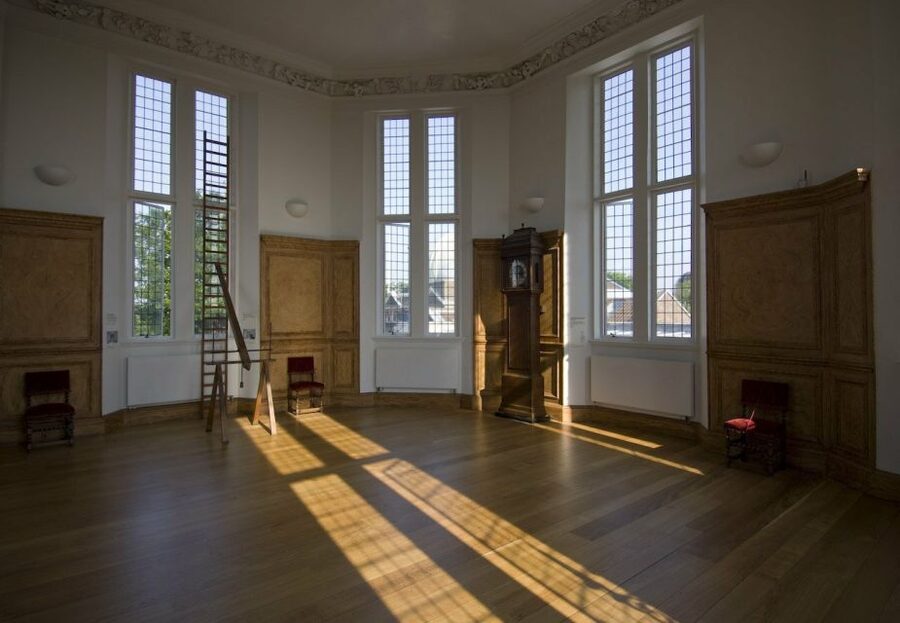
Flamsteed House is the historic heart of the Royal Observatory. It was designed by Sir Christopher Wren and includes the Octagon Room, one of his best-preserved interiors in London.
This is where the visit feels less like a modern science attraction and more like a preserved workplace. The room’s importance comes from its connection with the observatory’s early astronomers and their attempts to make careful observations from a fixed place.
You can walk in the footsteps of royal astronomers and see how the building supported their work. The story is not only about looking through telescopes. It is about recording observations, comparing measurements, and building dependable systems over many years.
The historic rooms are likely to appeal most to you if you enjoy old buildings, scientific instruments, or the human side of discovery. If you are expecting a large collection of dramatic space hardware, the visit may feel quieter than anticipated. Its strength is the link between rooms, instruments, calculations, and global navigation.
Staff may offer talks or add useful explanations during your visit, but this is not sold as a guided tour. Your downloadable guide is the main structured aid, and you control the pace.
A different kind of day out entirely:
- Magical London: Harry Potter Guided Walking Tour
★ 4.7 · 22,044 reviews - London: Madame Tussauds London
★ 4.6 · 20,915 reviews - London: Warner Bros. Studio Tour with Transfers
★ 4.7 · 17,586 reviews - London: Tower Bridge Entry Ticket
★ 4.7 · 15,560 reviews
John Harrison’s clocks solve a deadly navigation problem
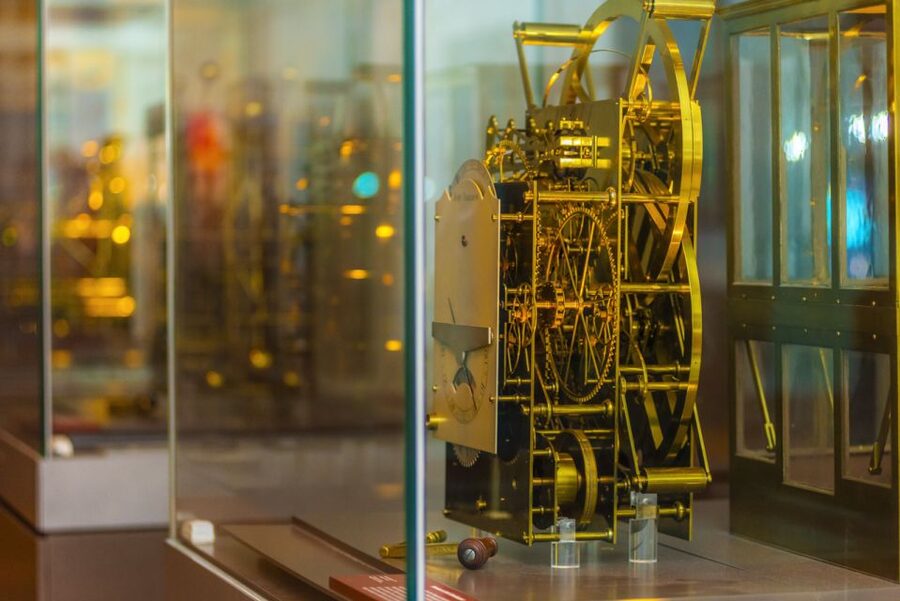
For many people, the best part of the observatory is the display connected with John Harrison. His marine clocks tell a gripping story because the problem was so clear: sailors could estimate latitude by observing the sun, but finding longitude required accurate time.
A ship needed to compare local time with a known reference time. The difference helped determine how far east or west the ship had traveled. At sea, a clock that lost or gained too much time could send a vessel badly off course.
Harrison worked on marine timekeepers designed to remain accurate during a voyage. These instruments helped address the longitude problem and changed the future of ocean navigation. The clocks are beautiful objects, but the important point is their purpose. They were not decorative curiosities. They were precision tools built for rough conditions.
I would give this section more time than you might expect. It connects the observatory to ordinary human danger: a wrong calculation could mean a missed destination, a wreck, or months of additional sailing. The story also makes the rest of the visit easier to follow because you begin to see why time mattered so much to the astronomers.
The display works well for older children and teenagers who enjoy machines, puzzles, or engineering. It also gives adults a clear reason to care about longitude before moving on to the wider astronomical exhibits.
Astronomy Centre, meteorite, and the planetarium option
The modern Astronomy Centre adds a more direct connection to space. Here you can learn about astronomy and touch a meteorite said to be 4.5 billion years old. That tactile element is useful because it gives the subject a physical anchor. Space can feel remote; an ancient piece of it in front of you is easier to grasp.
The center complements the historic rooms rather than replacing them. The older buildings explain how people measured the sky and used it for navigation. The modern exhibits point toward the larger universe those measurements helped us understand.
You can also take a journey through space in the Peter Harrison Planetarium. This is an additional experience, not part of the standard entrance ticket. If you want a planetarium show, check availability and budget for a separate ticket.
That extra cost is worth considering carefully. If your main aim is the Meridian Line, historic rooms, clocks, and the London view, the basic admission should be enough. If you are visiting with children or teenagers who want a more cinematic astronomy experience, adding the planetarium may make the outing feel more complete.
Do not assume the planetarium is included just because it is located within the Royal Observatory. The standard ticket covers the observatory and Meridian Line. The show is separate.
The finest reward comes outside the buildings
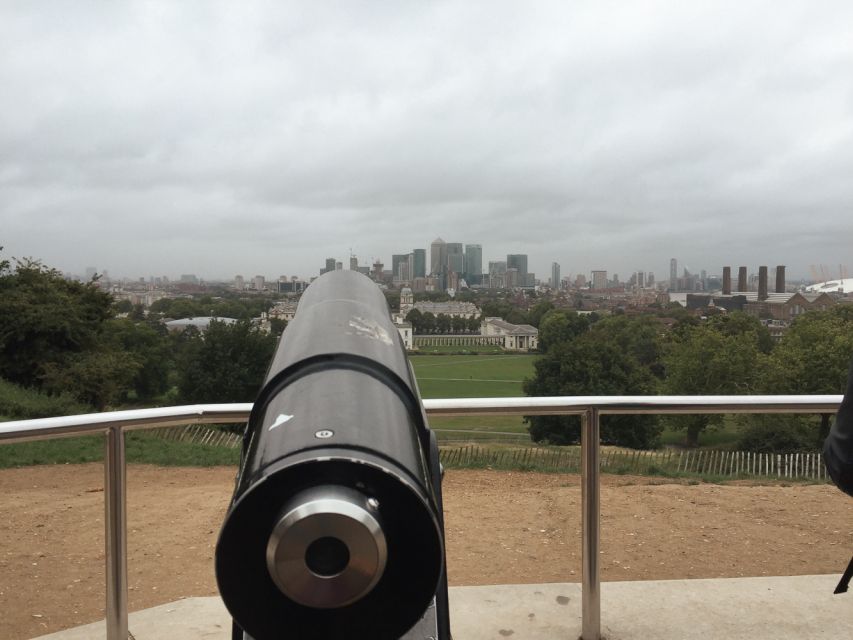
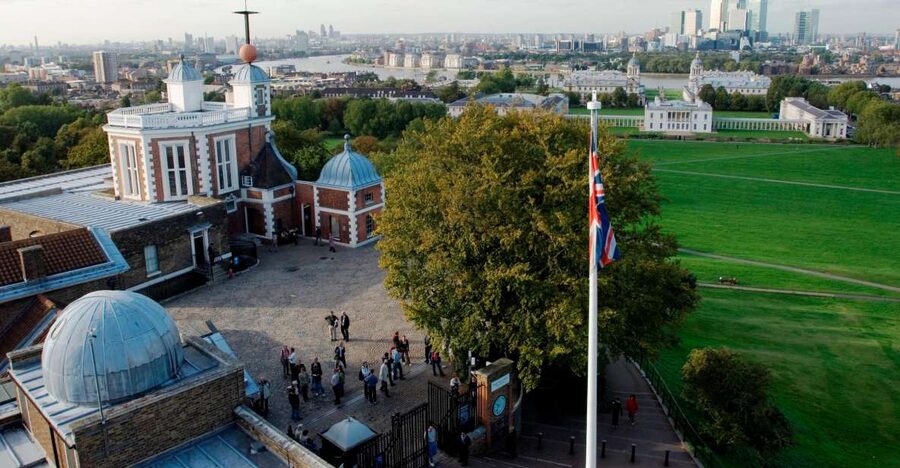
The view from the observatory hill is one of the visit’s strongest features. You look across Greenwich Park toward the River Thames, the City of London, Canary Wharf, and the wider eastern side of London.
The view changes the mood after the indoor displays. Inside, you have been thinking about numbers, clocks, star charts, and longitude. Outside, those ideas become part of a real city spread below you.
Canary Wharf is especially easy to pick out, while the park provides a broad green foreground. On a clear day, the combination of historic grounds and modern London architecture gives you a helpful sense of the city’s shape.
Allow time for this viewpoint. It is not an optional extra that you squeeze in after the museum. The setting explains why Greenwich works so well as a day out. You can combine the observatory with the park, the nearby National Maritime Museum, the Cutty Sark area, and Greenwich shopping streets.
The observatory itself may take a few hours depending on how closely you follow the guide and how long you spend at the line, historic rooms, instruments, and Astronomy Centre. Since the ticket is valid for one day, you can build the visit around the rest of Greenwich rather than forcing every stop into a short block.
Audio guide and self-guided pacing
The downloadable guide is available in English, Spanish, Chinese, French, German, Italian, Korean, and Portuguese. That is useful if you want background without joining a group or reading every panel.
The self-guided format also lets you choose your emphasis. I would focus on the Meridian story, the Octagon Room, and Harrison’s clocks first. Then use the remaining time for the Astronomy Centre and viewpoint.
Bring a charged phone and make sure you understand how to access the guide before entering. An online guide works best when your device is ready. The material can be interesting, but it is not the same as having a live guide beside you to answer questions.
Some people prefer the independence. Others may find the visit less satisfying if they want a continuous spoken explanation. Staff may be available to help, and occasional talks can add useful context, but you should book this expecting a self-guided attraction.
Is the $32.33 ticket good value?

At $32.33 per person, this is not a bargain admission for a quick photo at a line on the ground. It becomes better value when you treat it as entry to a historic observatory, scientific exhibits, a famous interior, navigation displays, and a major London viewpoint.
The value is strongest for people who will spend time inside. If you only want the Prime Meridian photograph, the price may feel high. If you are interested in astronomy, geography, clocks, maritime travel, or the development of modern timekeeping, the ticket offers much more.
The flexible one-day validity helps. You can visit the observatory, pause for food, explore Greenwich Park, and continue around the neighborhood. The ticket also includes a downloadable guide, which supports a more informed visit without requiring a separate guide fee.
Planetarium admission is not included, so add that cost only if the show is important to your plans. Free talks or staff explanations may be available during a visit, but do not rely on them as part of the paid ticket.
Free cancellation up to 24 hours before the visit and the option to reserve now and pay later make the booking less rigid. Those terms matter in London, where weather and transport can alter a day’s plan.
Who will enjoy the Royal Observatory most?
I would recommend this experience to you if you like places where science has a clear human purpose. The observatory is especially good for:
- People fascinated by time zones, maps, longitude, and navigation
- Families with teenagers who enjoy astronomy or machines
- Anyone who wants a famous London view with a strong historical setting
- Visitors already planning to explore Greenwich Park and the maritime attractions nearby
- Travelers who prefer self-guided visits and flexible pacing
You may enjoy it less if you want a large, theatrical space museum or a fully guided tour. The visit is thoughtful and educational, with much of the focus on measurement and navigation rather than spectacular astronomy displays.
The steep approach also matters. I would not plan this as a casual stop after a long day of walking unless you are comfortable with the hill. Wheelchair access is listed, but the outdoor route deserves attention before you arrive.
Should you book this Greenwich ticket?
Book it if the idea of standing on longitude 0 appeals to you and you want the story behind the line. The Prime Meridian is the photo, but the clocks, Octagon Room, astronomy displays, and hilltop view give the visit its real substance.
Skip or rethink it if you only want a fast photo, dislike uphill walking, or expect a planetarium show to be included. For most people interested in London’s scientific and maritime past, the ticket is a worthwhile half-day anchor in Greenwich, especially when paired with the park and nearby attractions.
FAQ
Where does the Royal Observatory visit begin?
The visit begins at the Royal Observatory Greenwich and ends back at the meeting point.
How long is the ticket valid?
The ticket is valid for one day. Available starting times are shown when you check the booking calendar.
What does the ticket include?
It includes entry to the Royal Observatory Greenwich and the Prime Meridian, along with a downloadable multilingual guide.
Is the Prime Meridian included?
Yes. Entry to the Prime Meridian is included with the Royal Observatory ticket.
Can I stand in both hemispheres?
Yes. The marked Meridian Line lets you place one foot in the eastern hemisphere and one foot in the western hemisphere.
Is the visit guided?
No. This is a self-guided visit. The downloadable guide is available in English, Spanish, Chinese, French, German, Italian, Korean, and Portuguese.
Is a planetarium show included?
No. A Peter Harrison Planetarium show is not included in the entrance ticket and requires separate admission.
Is the Royal Observatory wheelchair accessible?
The activity is listed as wheelchair accessible. The approach through Greenwich Park includes a steep hill, so you should consider the outdoor route as well as access inside the attraction.
What historic room can I see?
You can see the Octagon Room in Flamsteed House, designed by Sir Christopher Wren.
Can I cancel the booking?
Yes. You can cancel up to 24 hours in advance for a full refund. A reserve-now, pay-later option is also available.
Just added in London
- The Best of British Cooking Class & Dining Experience★ 5.0 · 1 review
- London: Live Comedy Show at Big Belly Bar and Comedy Club★ 4.5 · 80 reviews
- London: British Museum Highlights Guided Small Group Tour★ 4.9 · 113 reviews
- The Beatles London Walking Tour★ 4.2 · 147 reviews
- The Best Highlights of London Walking Tour & Boat Cruise★ 5.0 · 1 review
- Iconic London: Bard, Beatles, Bond & Baker Street★ 4.9 · 15 reviews
- The Authentic Walking Tour with Indian Tasting Meal★ 4.8 · 4 reviews
- London: Tate Britain Official Discovery Tour★ 4.7 · 7 reviews
Tickets, compared.






Buckingham Palace: The State Rooms Entrance Ticket
Read our review →