
REVIEW · WALKING TOURS
Secrets of Central London Walking Tour
London keeps its best transport stories in plain sight. This two-hour walking tour links Covent Garden, Theatreland, Kingsway, and the Embankment with stories from the 1500s to today. I like the way it treats streets, tunnels, tram routes, and the Thames as one connected story rather than a string of unrelated sights. I also like that the tour comes from the London Transport Museum, giving the guide access to archive material that can bring old transport schemes to life.
The main drawback is that this is an English-only tour with a fairly brisk walking pace. One German visitor found the spoken English too fast, especially when the guide talked while walking. You will also cover uneven ground, cross busy roads, and spend the full two hours outside, so sturdy shoes and reasonable mobility matter.
In This Review
- Key points to know before you book
- Starting at the London Transport Museum in Covent Garden
- Convent Garden and the older story beneath Covent Garden
- Theatreland, street planning, and London’s first professional police
- The oldest shop and the details most people walk past
- Kingsway and the engineering beneath Holborn
- The Piccadilly line and transport changes over time
- Embankment Gardens and the trains under your feet
- What the walk feels like on the ground
- Is $26 good value for two hours?
- Who should book this London walk?
- Should you book the Secrets of Central London Walking Tour?
- FAQ
- Where does the Secrets of Central London Walking Tour begin?
- How long does the tour last?
- Is the London Transport Museum entrance included?
- Does the tour enter disused Tube stations or underground spaces?
- Is the tour conducted in English?
- What should I bring and wear?
Key points to know before you book

- The route covers four central districts: You move through Theatreland, Covent Garden, Kingsway, and the Embankment in one compact urban walk.
- The Thames is treated as London’s first transport route: The river becomes part of the transport story, not just a scenic backdrop.
- You hear about tunnels in Holborn: The tour explains underground engineering connected with the Piccadilly line, tram routes, and later Crossrail works.
- No disused Tube stations are entered: You see selected sites from street level rather than going into closed stations or underground spaces.
- The tour begins at London Transport Museum: Meet outside the main entrance in Covent Garden Piazza 15 minutes before departure.
- The price is $26 per person: That is a fair cost for a live, specialist two-hour tour, but entry to the museum is separate.
Starting at the London Transport Museum in Covent Garden
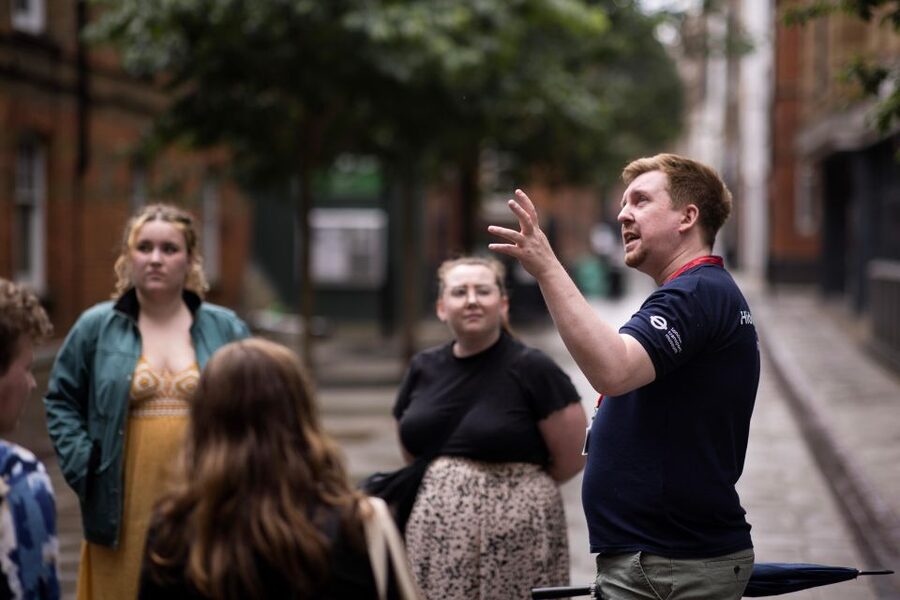
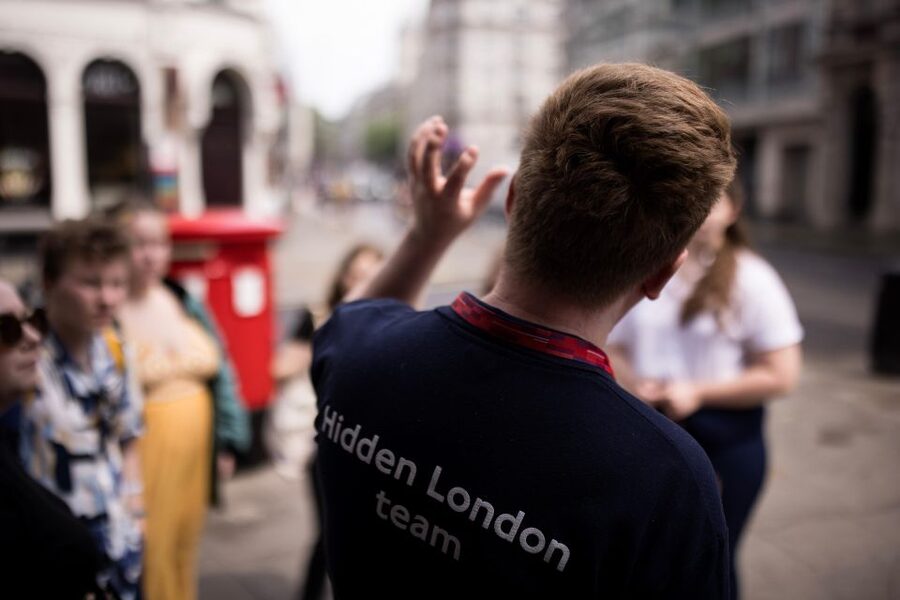
Your meeting point is outside the main entrance of the London Transport Museum in Covent Garden Piazza, postcode WC2E 7BB. A member of the Hidden London team meets you 15 minutes before the scheduled start, so arrive with enough time to find the entrance and get settled.
The museum is a sensible starting point. London’s transport story is all around you here, from crowded streets and old theatre routes to railway tunnels beneath the pavement. You do not need to buy museum admission to join the walk, and entry to the museum is not included in the $26 tour price.
That separation is worth noting. If you want a full museum visit as well, you will need to plan and pay for it separately. If your main goal is a guided look at streets and transport works, you can keep the cost to the walking tour alone.
The tour is conducted in English. If you are not comfortable following spoken English at a normal walking pace, this may not be the best fit. The guide may explain something while the group is moving, and that can make it harder to catch every detail.
More Walking Tours in London
- Magical London: Harry Potter Guided Walking Tour
★ 4.7 · 22,044 reviews - London: The Original Jack the Ripper Walking Tour
★ 4.7 · 7,833 reviews - London: Harry Potter Movies Walking Tour (Kids Go Free)
★ 4.7 · 3,071 reviews
Convent Garden and the older story beneath Covent Garden
One of the early stories concerns Convent Garden, the original name connected with the area. That detail gives you a useful way into London’s past. Covent Garden is now known for its market, theatres, restaurants, and crowds, but the tour asks you to look at the older uses and names beneath the present-day district.
This is the sort of stop that works best when you enjoy small clues. A street name, an old building line, or a familiar public space can point to an earlier London that is easy to miss when you are hurrying to a theatre or shopping appointment.
The route also covers the first theatres that opened in the area. Theatreland is not treated only as a place for modern shows. You get a sense of how entertainment helped shape the streets and how the district became tied to movement, crowds, and public transport.
I like this approach because it makes the city feel practical. London’s theatres needed audiences to arrive and leave. Streets had to carry people, goods, and services. Transport was never an afterthought here. It helped create the character of the district.
Theatreland, street planning, and London’s first professional police

As you continue through Theatreland, the guide connects well-known streets with the practical problems of a growing city. The area has long dealt with crowds, traffic, performances, commerce, and public order, so transport and policing naturally enter the story.
You hear how London’s first professional police force was born. The point is not simply to memorize a date or name. It shows how central London required new systems as its population, street traffic, and public life grew more complex.
For you, this part adds useful context to streets that can otherwise seem purely decorative. The grand theatres and busy lanes are not isolated attractions. They reflect decisions about safety, access, movement, and control.
The exact amount you take from this section will depend on the guide’s delivery and your own interest in social history. If you want a tour focused only on Tube stations, this broader story may feel like a detour. I think it gives the walk more balance, especially because it connects transport with the people using it.
The oldest shop and the details most people walk past
The route includes a glimpse of the oldest shop in the city. The supplied information does not identify the shop by name, so you should treat this as a guided sight rather than arrive expecting a particular storefront or a formal interior visit.
That is part of the appeal. The walk is built around things you can see from public streets, often while other people are focused on restaurants, theatre entrances, or shopping. The guide points out places that are easy to pass without asking why they are there.
You might find that these small discoveries are more memorable than a standard list of major landmarks. A famous building needs little explanation. An old shop, a strange street alignment, or a transport feature hidden in a busy part of town needs a good story.
Do not expect a long stop at every location. Two hours is enough to cover a lot of ground, but not enough for extended visits inside each site. The value comes from the connections between places and from seeing the central districts as part of one transport network.
A different kind of day out entirely:
- London: The London Eye Entry Ticket
★ 4.6 · 35,875 reviews - From London: Harry Potter Warner Bros Studio Tour
★ 4.7 · 26,588 reviews - London: Westminster to Greenwich River Thames Cruise
★ 4.5 · 22,836 reviews - London: Madame Tussauds London
★ 4.6 · 20,915 reviews
Kingsway and the engineering beneath Holborn
Kingsway provides one of the tour’s strongest transport sections. The guide discusses the construction of the Piccadilly line and the Kingsway Tram Tunnel, showing how London repeatedly rebuilt its underground and street systems to meet changing demands.
This is where the walk moves beyond old names and theatre stories. You begin to see central London as a working engineering project. Roads, tunnels, tram routes, and Tube lines had to fit below buildings, public spaces, and existing streets.
The tour also covers the many tunnels beneath the Holborn area. You will not enter them, but learning what lies below changes the way you read the pavement above. A quiet street can conceal a complicated transport route, while a broad road may reflect earlier engineering choices.
The Kingsway Tram Tunnel is especially useful for understanding that London transport did not develop in a straight line. Trams, Underground lines, buses, roads, and later rail projects all left their mark. Some routes survived. Others disappeared from daily use but remain important to the city’s structure.
You should keep your expectations realistic. This is not a technical engineering lecture, and you will not inspect underground construction firsthand. Instead, you get a street-level explanation of projects that are normally invisible.
The Piccadilly line and transport changes over time
The Piccadilly line appears as part of the story of how the city handled growth and movement. The value here is in seeing the line as a product of planning and construction, rather than simply a coloured route on a Tube map.
The guide also explains how familiar streets shaped transport systems. This reverses the usual way of seeing London. Most people think transport lines connect existing places, but the route shows how transport construction also changed the places it served.
Later works, including Crossrail construction in the 2010s, bring the story into the present day. That modern link matters because it shows that the transport system is still being altered beneath the same historic streets.
I find this long view one of the tour’s best features. You move from 1500s London to modern rail construction without leaving a compact part of the city. The result is a practical lesson in how old urban areas adapt, sometimes by building under the streets rather than replacing what is above them.
Embankment Gardens and the trains under your feet
The walk reaches the Embankment, where the mood changes. Embankment Gardens offer a calmer setting, yet you may hear trains running nearby or below you. The tour explains why that happens and connects the peaceful gardens with the transport works under the area.
That contrast is a clever part of the route. London can look quiet at pavement level while transport continues underground. The gardens are not just a pleasant pause. They help you understand how public spaces and major rail routes can occupy the same small section of the city.
The Thames also becomes important here. The tour presents it as London’s first public transport thoroughfare, a useful reminder that people and goods moved along the river long before today’s Tube and rail networks.
This section should appeal to anyone who likes London’s physical contrasts. You see a tranquil public garden, hear the movement of trains, and learn how the river helped form the city’s transport system. It is a simple but effective way to connect visible scenery with unseen infrastructure.
What the walk feels like on the ground

The tour lasts about two hours and involves a lot of walking. You cross roads, pass through busy areas, and encounter uneven ground. The route is wheelchair accessible according to the activity information, but it is also described as unsuitable for people with mobility impairments, so you should assess your own needs carefully and contact the provider if you require clarification.
Wear sturdy footwear. Suitable clothing is also important because this is an outdoor walk, not a museum presentation with regular indoor breaks.
There is no cloakroom, and large bags or luggage are not allowed. Bring only what you need for the walk. You should also carry a passport or ID card, as this is listed among the required items.
The tour is not suitable for children under nine. Older children may enjoy the tunnels, trains, and engineering stories, but the pace and amount of walking may still be tiring. For families, I would judge the decision by attention span and stamina rather than age alone.
Group size is not specified, so I would not book this expecting a private or especially small-group experience. The guide leads the group in English, and you will need to stay close enough to hear while moving through central London.
Is $26 good value for two hours?
At $26 per person, the tour is reasonably priced for a specialist guided walk in central London. You are paying for a live guide, a carefully researched transport theme, and access to stories drawn from the London Transport Museum’s archive.
The value is strongest if you enjoy context. You are not paying for entry to a major attraction or a long list of interiors. You are paying to understand why the streets, tunnels, tram routes, river, and rail lines fit together.
The price is less attractive if you only want famous sights or a relaxed stroll. You can walk through Covent Garden and the Embankment without booking anything. The difference is the explanation, particularly the material about Holborn tunnels, the Kingsway Tram Tunnel, the Piccadilly line, and Crossrail construction.
Museum admission is not included. That is not a problem, but budget for it separately if you want to visit before or after the walk. The reserve-now, pay-later option and free cancellation up to 24 hours before the tour make the booking fairly flexible, provided your plans change within the stated deadline.
Who should book this London walk?
I would recommend it to visitors who have already seen the main sights and want a more specific angle on central London. It also suits transport fans, urban planners, railway enthusiasts, and anyone who enjoys learning why a street looks the way it does.
It is a good choice if you want to combine several central areas in one outing. Covent Garden, Theatreland, Kingsway, Holborn, and the Embankment are close enough to connect on foot, yet each brings a different part of the city’s story.
I would be cautious if English is not your strong language. The route can involve explanations while walking, and one visitor found the pace difficult to follow. Ask yourself if you can comfortably listen to a live English guide outdoors, with traffic and other city noise around you.
I would also skip it if you dislike uneven ground, busy crossings, or two-hour walks. This is not a gentle garden stroll, even though Embankment Gardens provide one of its quieter settings.
Should you book the Secrets of Central London Walking Tour?
Book it if you want to understand London’s transport system from street level, especially the parts you cannot see. The strongest material concerns the Thames, the Kingsway Tram Tunnel, Holborn’s underground routes, the Piccadilly line, and modern Crossrail works.
Skip it if you want to enter abandoned stations, explore underground spaces, or spend most of the time indoors. This tour does not visit disused Tube stations or closed areas.
For the right person, $26 is a sensible price for two hours of focused guiding. Arrive early at the London Transport Museum, leave your luggage behind, wear sturdy shoes, and choose this walk when you are ready to look down at the pavement and wonder what is moving beneath it.
FAQ
Where does the Secrets of Central London Walking Tour begin?
The meeting point is outside the main entrance of the London Transport Museum in Covent Garden Piazza, WC2E 7BB. A member of the Hidden London team meets you 15 minutes before the scheduled start.
How long does the tour last?
The guided walking tour lasts approximately two hours. Starting times vary, so check availability for the date you want.
Is the London Transport Museum entrance included?
No. The tour price includes the guided walking tour only. Entry to the London Transport Museum must be arranged separately.
Does the tour enter disused Tube stations or underground spaces?
No. The walk discusses underground transport sites and tunnels, but it does not visit disused Tube stations or enter underground spaces.
Is the tour conducted in English?
Yes. The live tour guide conducts the experience in English.
What should I bring and wear?
Bring a passport or ID card, wear sturdy footwear and suitable clothing, and avoid luggage or large bags. There is no cloakroom, and the walk includes uneven ground, road crossings, and busy areas.
Just added in London
- The Best of British Cooking Class & Dining Experience★ 5.0 · 1 review
- London: Live Comedy Show at Big Belly Bar and Comedy Club★ 4.5 · 80 reviews
- London: British Museum Highlights Guided Small Group Tour★ 4.9 · 113 reviews
- The Best Highlights of London Walking Tour & Boat Cruise★ 5.0 · 1 review
- The Beatles London Walking Tour★ 4.2 · 147 reviews
- The Authentic Walking Tour with Indian Tasting Meal★ 4.8 · 4 reviews
- Iconic London: Bard, Beatles, Bond & Baker Street★ 4.9 · 15 reviews
- London: Tate Britain Official Discovery Tour★ 4.7 · 7 reviews
Walking Tours, compared.

Magical London: Harry Potter Guided Walking Tour
Read our review →

University and City Walking Tour with Alumni Guide
Read our review →
Harry Potter Movies Walking Tour (Kids Go Free)
Read our review →
The Great British Rock and Roll Music Walking Tour
Read our review →
Jack the Ripper Walking Tour – Ripper Vision Tours
Read our review →
Other lists this tour turns up in