
REVIEW · CASTLE TOURS
Stirling Castle: Skip-the-Line Guided Tour in Spanish
History comes alive behind Stirling’s stone walls. This 1.5-hour Spanish-language tour gives you two things I especially like: skip-the-line entry and a small group limited to 10 people, which makes it easier to hear the guide and ask questions. I also like the mix of serious Scottish history and oddball stories, from Mary, Queen of Scots, to John Damian’s attempt to fly.
The main consideration is time. Stirling Castle is a large and important site, but 90 minutes gives you a guided introduction rather than a full, slow visit to every corner. The meeting point is in front of The Portcullis Hotel, where you look for the black umbrella, and you should arrive at least 15 minutes early.
In This Review
- Key points to know before booking
- Why Stirling Castle matters in Scottish history
- Starting on the esplanade with a Spanish guide
- The royal palace and Scotland’s Renaissance court
- The Great Hall and the business of royal celebration
- John Damian, the bird-man of Stirling
- Arthurian legend and the castle’s ghost stories
- What the 90-minute format does well
- Is the $45 price good value?
- Weather, bags, and accessibility
- Who should choose this tour?
- Should you book the Stirling Castle Spanish tour?
- FAQ
- How long does the Stirling Castle tour last?
- What language is the tour conducted in?
- Where is the meeting point?
- How early should I arrive?
- Is entry to Stirling Castle included?
- How many people are in the group?
- Is the tour wheelchair accessible?
- Can I bring luggage or a large bag?
- Does the tour operate in bad weather?
Key points to know before booking
- A Spanish tour with a small group: The group is limited to 10 participants, and the live guide speaks Spanish.
- A castle tied to Scotland’s biggest names: The tour covers William Wallace, Robert the Bruce, Mary, Queen of Scots, royal life, and the Scottish Wars of Independence.
- Skip the ticket line: Your admission is arranged through the tour, saving time at one of Scotland’s busiest historic attractions.
- A 90-minute route: You see the royal palace and Great Hall while hearing stories about sieges, legends, and ghosts.
- A few wonderfully strange tales: John Damian’s flight attempt and the claim that Stirling was home to King Arthur’s Knights of the Round Table add humor to the history.
- Weather matters: The tour runs in normal rain or snow, but the route may change to limit exposure, and the castle closes in extreme weather.
Why Stirling Castle matters in Scottish history
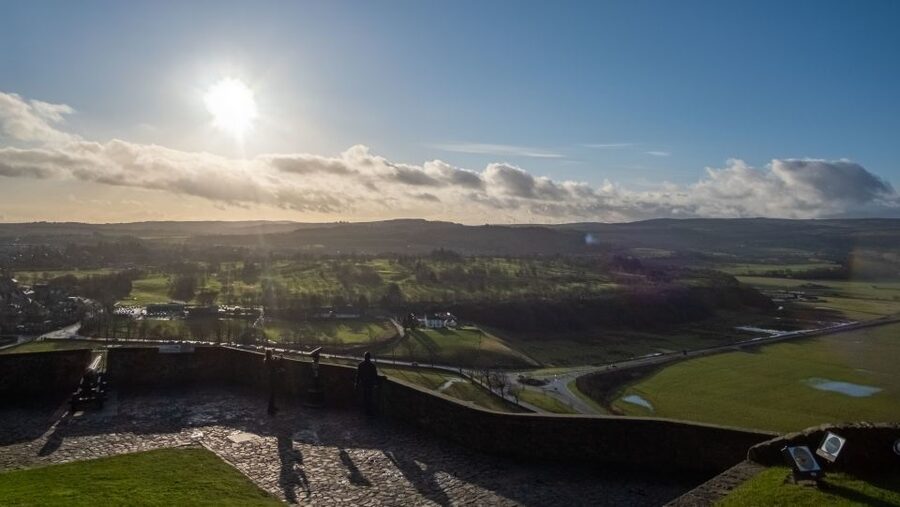
Stirling Castle is not simply an old royal residence with attractive rooms. Its position made it a powerful stronghold, and control of Stirling mattered greatly during Scotland’s medieval conflicts.
The castle endured repeated sieges. That fact explains much of its importance: this was a place where military power, royal authority, and control of central Scotland met. The tour begins on the esplanade with this wider story, giving you a useful frame before you enter the buildings.
The Scottish Wars of Independence in the 14th century form a major part of the explanation. William Wallace and Robert the Bruce are linked to this period, and the castle’s story helps you understand why Stirling became such a key setting in the struggle between Scotland and England.
If you know the film about William Wallace, you may recognize some of the historical setting and the connection to the Battle of Stirling Bridge. Still, the tour is not just a film-location stop. The guide places the castle within a longer story of sieges, royal rule, and changing Scottish identity.
I like this opening approach because it keeps the castle from feeling like a collection of unrelated rooms. You first learn why the site mattered, then see how the people who lived there used it.
More Castle Tours in Scotland
- Inverness: Isle of Skye and Eilean Donan Castle Day Trip
★ 4.8 · 4,136 reviews - Loch Ness: Urquhart Castle Round-Trip Cruise
★ 4.4 · 3,070 reviews - From Inverness: Loch Ness Cruise and Urquhart Castle
★ 4.7 · 2,241 reviews
Starting on the esplanade with a Spanish guide
Your meeting point is in front of The Portcullis Hotel. Look for the guide holding a black umbrella, and arrive at least 15 minutes before the scheduled start.
The tour begins outside on the castle esplanade. This is where the guide introduces the origins of the fortress and explains its military past before leading the group inside.
That opening is useful because the castle’s buildings can otherwise seem confusing. Walls, gates, courtyards, and royal rooms developed over different periods, and a guide can connect them in a way that signs alone may not.
The Spanish-language format is the main reason to choose this tour over an English visit. Historical names and political events can be hard to follow in a second language, especially when the story includes Wallace, Bruce, Mary, rival claims, and several sieges. Hearing the explanation in Spanish should make the sequence easier to retain.
The small group also matters. With no more than 10 people, you are less likely to lose the guide in a noisy courtyard. The format should suit you if you prefer to ask a quick question or hear a story without standing at the back of a large crowd.
The strongest praise in the supplied comments goes to the guides, especially Fernando and Alejandro. Fernando was praised for turning the visit into a lively historical performance, using jokes and poems to hold attention. Alejandro was described as charming and clear in his explanations. Those details suggest that the quality of the experience depends heavily on the individual guide, but they also point to a tour style that aims to entertain as well as inform.
The royal palace and Scotland’s Renaissance court
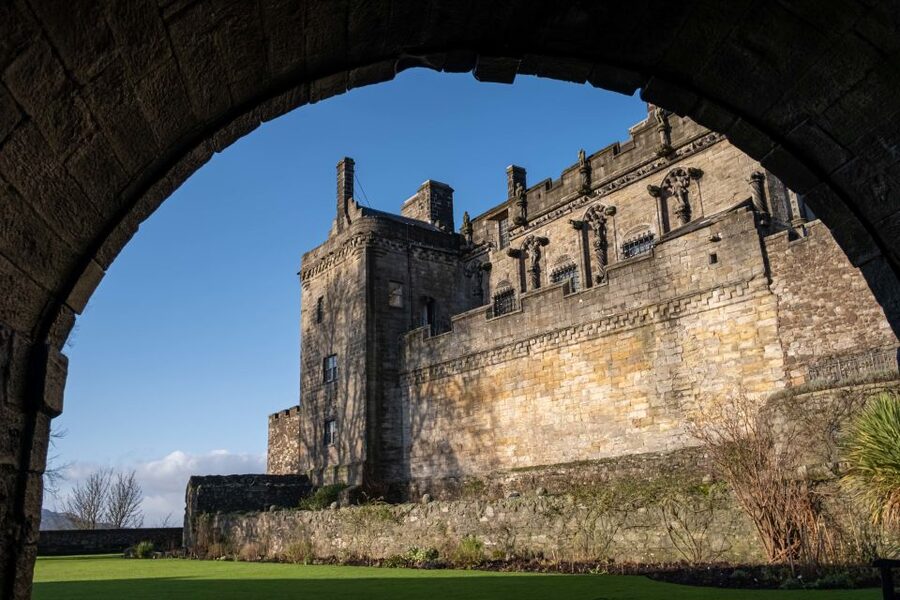
Inside the castle, the route takes you to the royal palace. This was a royal residence for centuries and a favorite home for several Scottish kings.
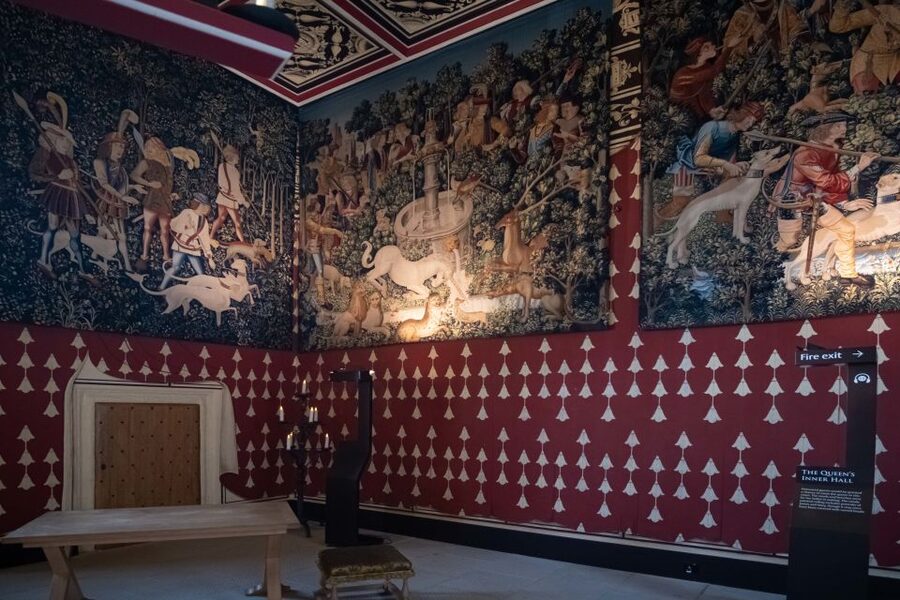
The palace is one of the most important stops because it shows the castle as a place of court life, not only war. Behind the defensive walls, kings and queens hosted ceremonies, made political decisions, and displayed their status.
The building is described as the first Renaissance palace in Britain. That gives you a useful clue about what makes it different from a purely medieval fortress. Its role was not only to keep enemies out. It was also designed to present the monarchy as cultured, wealthy, and connected to wider European ideas.
The guide’s explanation helps you read the palace as a political statement. A royal residence could project power through its rooms, ceremonies, and public events. You get a better sense of that ambition when the visit moves from military sieges to palace life.
Mary, Queen of Scots, is another major reason many people want to see Stirling. She lived here, and the castle was where she was crowned. That link gives the palace a strong personal connection to one of Scotland’s best-known monarchs.
The tour does not turn Mary into a simple legend. Her life is tied to the larger problems of royal succession, national independence, and political pressure. You will hear about the place where her coronation took place, making the visit more than a generic walk through old royal rooms.
If Mary is your main interest, you may want more time at the castle after the guided portion. The tour supplies context and points out the key connection, but 90 minutes is not designed as an exhaustive study of her life.
The Great Hall and the business of royal celebration
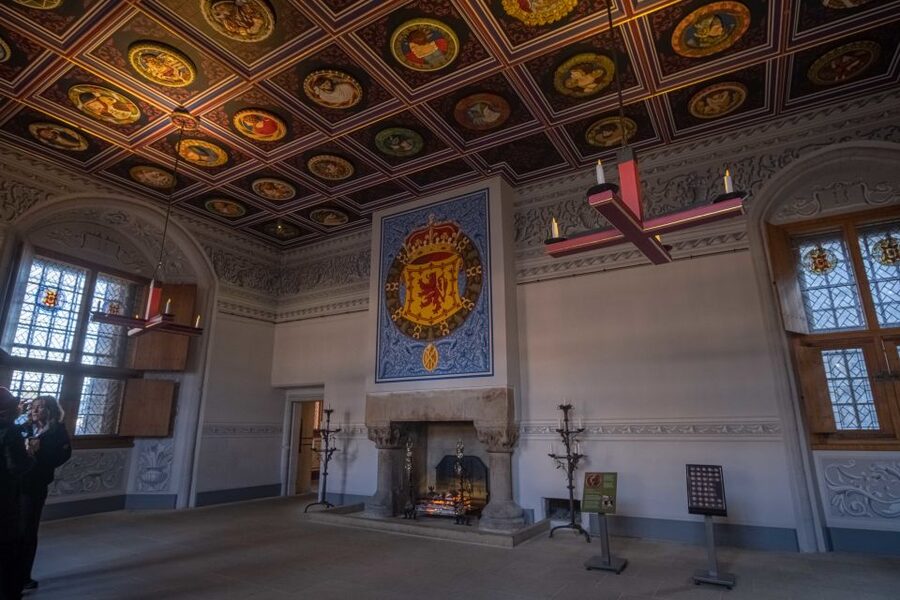
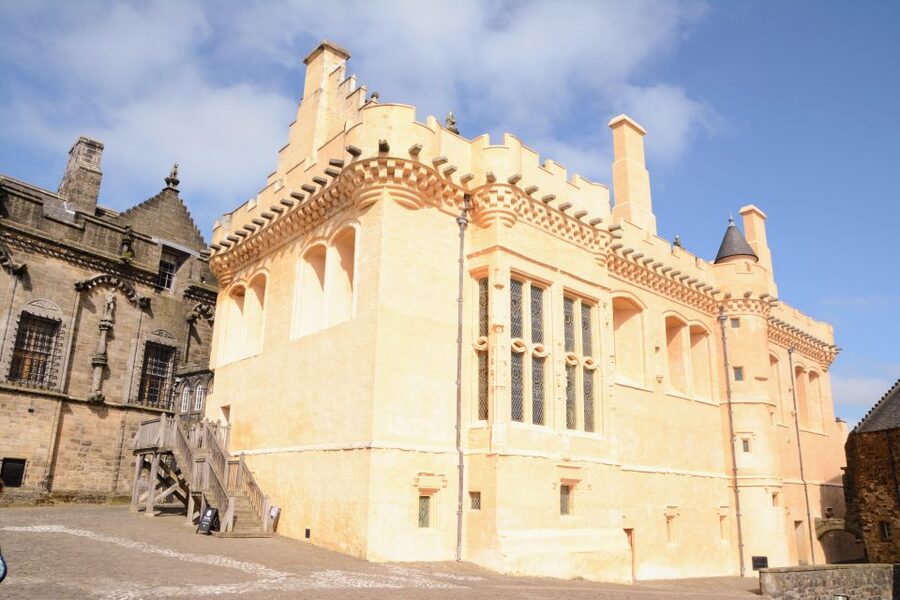
The Great Hall is one of the tour’s clearest windows into royal ceremony. Built in the 16th century, it hosted parties, feasts, and major court events.
One important occasion connected with the hall was the celebration of the baptism of the future king of Scotland. That detail shows how royal buildings worked as stages for public power. A feast was not just a meal. It was a chance to gather important people, display wealth, and confirm the importance of the royal family.
I find this part especially helpful for visitors who picture castles only as gloomy military sites. The Great Hall shifts your attention to music, food, formal gatherings, and spectacle. It also shows how the castle changed with the needs of the monarchy.
The hall can be busy, and the tour’s fixed time means you will not linger indefinitely. Still, a good guide can make the room easier to imagine in use. Fernando’s reported use of humor and poetry would fit this kind of stop well, giving the formal setting a human touch.
A different kind of day out entirely:
- Edinburgh: Loch Ness, Glencoe & the Scottish Highlands Tour
★ 4.6 · 17,446 reviews - From Edinburgh: Loch Ness, Glencoe & Scottish Highlands Tour
★ 4.7 · 11,381 reviews - Edinburgh: Glenfinnan Viaduct, Glencoe & Fort William
★ 4.8 · 3,366 reviews - Edinburgh: Loch Ness, Glencoe, Coos & the Highlands Day Tour
★ 4.6 · 2,539 reviews
John Damian, the bird-man of Stirling

Not every story on the tour is about battles or monarchs. In the 16th century, John Damian became known as the bird-man of Stirling Castle.
Damian wanted to fly to France. His attempt did not go far, thanks to what the account calls a couple of minor inconveniences. The story adds a welcome dose of absurdity to the visit, especially after the heavier material about war and royal politics.
This is the kind of detail you may remember after the dates and dynasties begin to blur. It also helps show that life at a royal court included ambition, experiment, entertainment, and eccentric personalities.
The guide’s presentation matters here. Told flatly, the story is a short anecdote. Told with timing and a little humor, it becomes one of the tour’s memorable moments. The positive comments about Fernando’s jokes and poems suggest that the guides know how to use these lighter stories to keep the group engaged.
Arthurian legend and the castle’s ghost stories
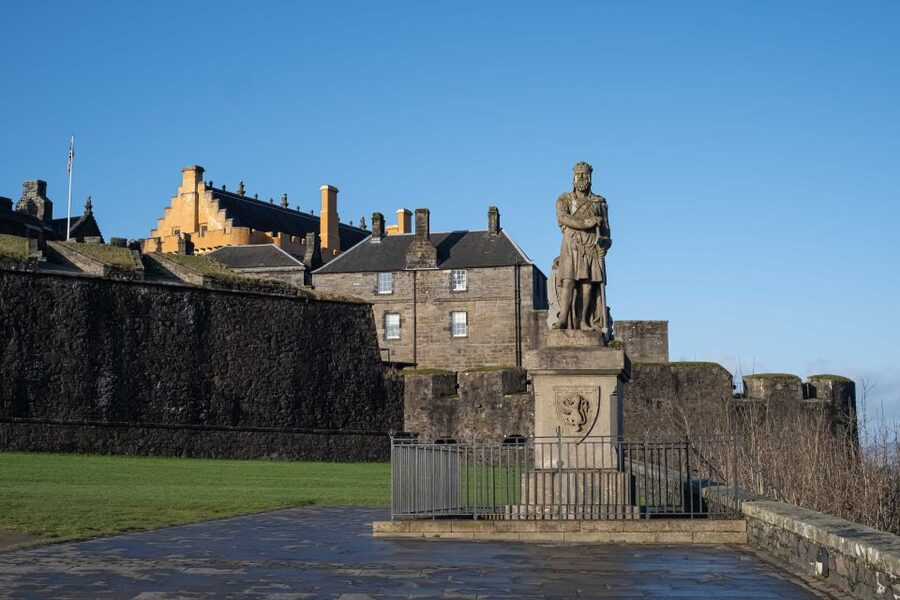
Stirling Castle also carries a connection to King Arthur. The English chronicler William of Worcester identified Stirling Castle as the home of Arthur’s Knights of the Round Table.
This is best understood as a medieval claim or legend, not as proof of Arthurian history. The value of the story is the glimpse it gives into how people interpreted important places in the past. A powerful castle naturally attracted heroic associations, and linking it with Arthur’s knights added prestige.
Ghost stories provide another layer of atmosphere. The experience includes tales of the castle’s ghosts alongside its kings and queens. These stories should appeal to you if you like historic sites with a little mystery, though they are an extra flavor rather than the main reason to visit.
The balance between documented events and legend is one of the tour’s strengths. You get sieges and royal ceremonies, then John Damian’s flight and Arthurian associations. The result is a more varied visit than a strict list of dates.
What the 90-minute format does well
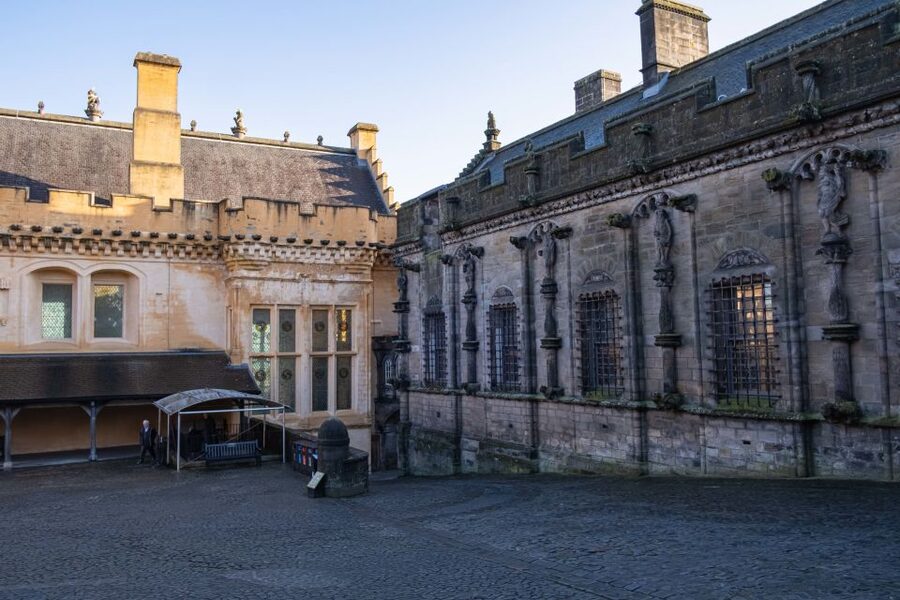
A 1.5-hour tour is long enough to cover the castle’s major themes without taking over your day. You hear about the fortress’s origins, its sieges, the Wars of Independence, the royal palace, the Great Hall, Mary, Queen of Scots, and several legends.
That makes the experience a good first visit or a useful orientation before exploring independently. You leave with a framework for understanding what you are seeing, rather than wandering through rooms without knowing why they matter.
The limit is depth. Stirling Castle has enough material for a much longer visit, and the guided route cannot give every room equal attention. If you want detailed architectural study, extended time for photographs, or a slow look at every display, you will need to continue on your own if access and timing allow.
I would treat the guided portion as the backbone of a castle visit. Listen closely to the major explanations, note the rooms and stories you want to revisit, and use any remaining time for your own interests.
Is the $45 price good value?
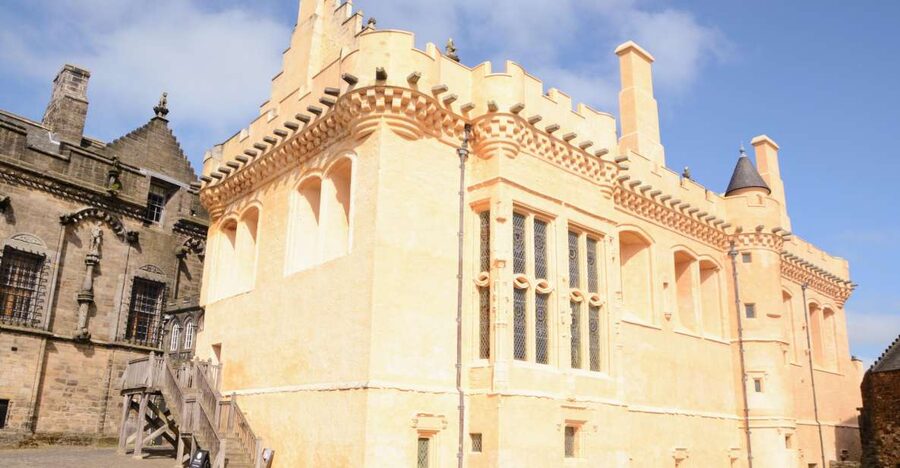
At $45 per person, the tour is not the cheapest way to see Stirling Castle. Its value comes from the combination of admission, skip-the-line access, a live Spanish-speaking guide, and a small group capped at 10 people.
The price makes the most sense if you want history explained in Spanish. A self-guided visit may cost less, but it will not give you the same direct storytelling or the chance to ask questions during the route.
Skip-the-line access also has practical value. Stirling Castle is Scotland’s second-most-popular tourist attraction according to the supplied information, so avoiding the ticket queue can protect your sightseeing time. The benefit is greatest on a busy day, though the tour does not promise that every part of the castle will be free of other visitors.
The small group is another point in the price calculation. Ten people is small enough for a more personal feel without the cost of a private tour. If you already know the castle well or prefer to read at your own pace, $45 may feel high. If you want a clear Spanish explanation and a guided route through the main highlights, the price is easier to justify.
Weather, bags, and accessibility
The tour operates in normal weather conditions, including rain and snow. The route may be adapted to reduce your exposure to bad weather, but extreme conditions can stop the experience because the castle itself will close.
Dress for changeable Scottish weather and expect some outdoor time at the start. You should not book this as an entirely indoor activity.
Large bags and luggage are not allowed. Leave suitcases elsewhere before arriving, since the meeting point and castle entrance are not intended for carrying bulky belongings.
The activity is listed as wheelchair accessible. If you have specific mobility needs, it is still sensible to confirm the current route when booking, especially because the path may change in poor weather.
Who should choose this tour?
I would recommend it most strongly to Spanish-speaking visitors who want the main story explained clearly and with personality. It also suits first-time visitors who want to understand the castle’s role before spending more time on their own.
Families and mixed-age groups may enjoy the variety. Battles, queens, feasts, ghosts, Arthurian legend, and John Damian’s flight attempt give the guide several ways to hold attention.
History fans should see this as a strong overview rather than a specialist seminar. You will hear about important events and people, but the short format leaves limited room for fine detail.
You may want a different plan if you dislike guided pacing, want to photograph every room slowly, or already know Stirling Castle well. In that case, the included guide may add less value than independent entry.
Should you book the Stirling Castle Spanish tour?
Book it if you want to enter efficiently, hear the story in Spanish, and keep the group small. The best evidence from the supplied comments points to strong guiding, with Fernando praised for his historical performance, jokes, and poems, and Alejandro praised for clear, friendly explanations.
The tour is especially useful when Stirling Castle is one stop among many in Scotland. In 90 minutes, you get the essential setting: medieval conflict, royal residence, Mary’s coronation, the Renaissance palace, the Great Hall, John Damian, Arthurian legend, and ghost stories.
Skip it if you want a full-day castle visit or prefer complete independence. For everyone else, the $45 cost is reasonable when Spanish storytelling, admission convenience, and a 10-person maximum are important to you.
FAQ
How long does the Stirling Castle tour last?
The tour lasts 1.5 hours.
What language is the tour conducted in?
The tour has a live guide who speaks Spanish.
Where is the meeting point?
Meet in front of The Portcullis Hotel. Look for the guide with the black umbrella.
How early should I arrive?
You should arrive at least 15 minutes before the tour begins.
Is entry to Stirling Castle included?
Yes. The experience includes skip-the-line entrance to Stirling Castle.
How many people are in the group?
The group is limited to 10 participants.
Is the tour wheelchair accessible?
Yes, the activity is listed as wheelchair accessible.
Can I bring luggage or a large bag?
No. Luggage and large bags are not allowed.
Does the tour operate in bad weather?
It operates in all weather conditions except extreme weather, when the castle is closed. The route may be adjusted to reduce exposure to rain or snow.
Just added in Scotland
- From Edinburgh: Best of Scotland Small-Group Day Tour★ 4.7 · 61 reviews
- Stornoway: Private Tour Isle of Lewis★ 5.0 · 2 reviews
- Stirling: Daily Guided Walking Tour (11am & 2pm)★ 4.7 · 66 reviews
- Stirling: Private Old Town & Castle Walking Tour★ 4.9 · 17 reviews
- Edinburgh: Stirling, Whisky & St Andrews Tour in Italian★ 3.9 · 14 reviews
- Stirling: Historical Walking Tour in Spanish★ 4.4 · 4 reviews
- From Glasgow: Standing Stones, Castles & Highlands Tour★ 4.8 · 44 reviews
- St. Andrews Spectral Soirée: Ghostly Echoes of History★ 5.0 · 1 review
Castle Tours, compared.

Isle of Skye and Eilean Donan Castle Day Trip
Read our review →
Windsor Castle, Stonehenge & Bath Full-Day Tour
Read our review →


Loch Lomond, Trossachs & Stirling Castle Tour
Read our review →
Other lists this tour turns up in