
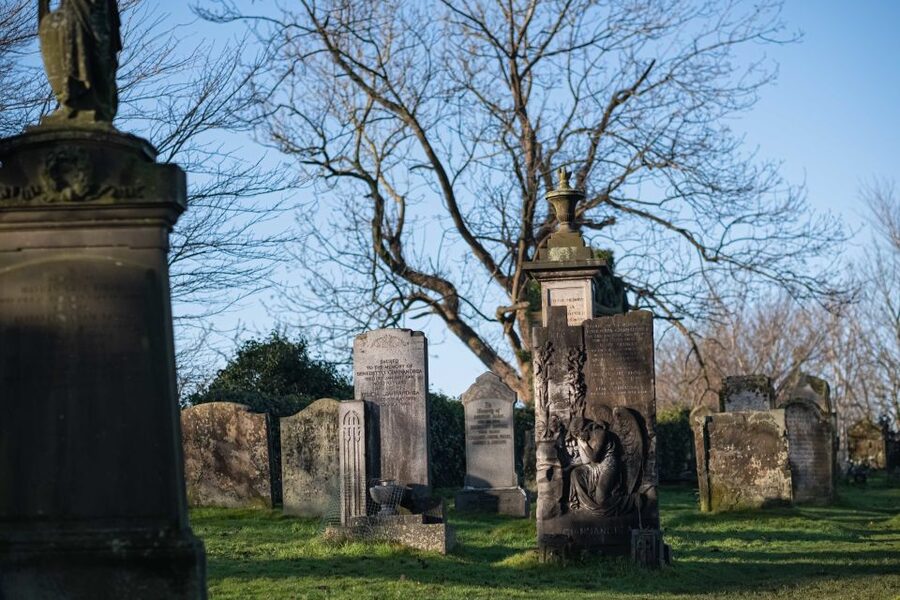
REVIEW · WALKING TOURS
Stirling: Historical Walking Tour in Spanish
Stirling’s old streets tell Scotland’s biggest stories. This 1.5-hour walking tour links the city’s medieval wall, royal church, old jail, market places, and role in the wars between Scotland and England, all with a Spanish-speaking local guide. I like the small group limit of 10, which should make it easier to ask questions, and I like the focus on places you can understand on foot rather than simply photograph.
The tour also offers strong value at $24 per person, especially if you want historical context without booking a long day trip. The main consideration is pace: one Spanish guide, Antonio Martínez, was praised for his attitude but described as speaking a little quickly. You should arrive ready to listen closely, particularly if your Spanish is not fully comfortable.
The route reaches Stirling’s highest part and takes place outdoors in all but extreme weather. That gives you a real feel for the city, but rain or snow can affect comfort. The route will be adjusted to reduce exposure when needed.
In This Review
- Key points to know before you book
- Why Stirling matters beyond its castle
- Starting at Caffe Nero and entering the old town
- King Street, poets, and Stirling’s civic heart
- The medieval wall and the climb to the highest part
- The Old Jail and Britain’s harshest prison conditions
- Mercat Cross, the Tollbooth, and public authority
- Holy Rude Church and the coronation of James VI
- The Old Cemetery, Pyramid Star, and quieter details
- What $24 gets you
- Who should book this Spanish walking tour?
- Final verdict: a smart first look at Stirling
- FAQ
- How long is the Stirling historical walking tour?
- What language is the tour conducted in?
- How much does the tour cost?
- Where is the meeting point?
- How early should I arrive?
- Is hotel pickup included?
- Is an audio guide provided?
- Is the tour wheelchair accessible?
- Does the tour operate in bad weather?
Key points to know before you book

- Stirling was one of Scotland’s 11 fortified cities, making its walls and high ground central to understanding the town.
- The Church of the Holy Rude hosted James VI’s coronation, an event that links Stirling to Scotland’s royal story.
- The Old Jail reveals the harsh side of 19th-century Britain, with prisoners ranging from children and debtors to murderers.
- The Spanish tour is limited to 10 participants, a useful size for a walking route through narrow historic streets.
- The route includes King Street, Mercat Cross, the Tollbooth, and the Old Cemetery, so you see more than Stirling Castle’s familiar silhouette.
- The meeting point is inside Caffe Nero, and you should arrive at least 15 minutes early for check-in.
Why Stirling matters beyond its castle

Stirling is often treated as a quick stop between Glasgow and the Highlands. That misses the point. Its location helped make it one of Scotland’s three most important strongholds, and the town’s high ground gave rulers control over routes between the Lowlands and the Highlands.
The tour’s central idea is simple: whoever controlled Stirling had a major say in Scotland. You will hear how the city figured in the 14th-century wars of independence between Scotland and England, then see how that political power was written into streets, walls, churches, prisons, and public squares.
I like this approach because it gives you a framework for the rest of your Scotland trip. Stirling is not just a collection of old buildings. It was a place where royal power, military strategy, religion, trade, punishment, and daily life met in a very small area.
A walking tour also suits Stirling well. The historic center is compact enough to explore on foot, but its slopes and layered buildings can be confusing if you simply wander without context. A local guide can point out what you might otherwise pass without noticing.
More History Tours in Scotland
- St Andrews: Golf Origins and Old Course History Tour
★ 4.7 · 322 reviews - St Andrews: Town, Golf, and Old Course History Tour
★ 4.7 · 162 reviews - Historic Orkney Private Odyssey Tour By a Native Islander
★ 5.0 · 42 reviews
Starting at Caffe Nero and entering the old town
The meeting point is inside Caffe Nero. Staff will be waiting there to check you in, so this is not a tour where you should arrive at the exact start time and hope to find the group on a busy street.
Plan to arrive at least 15 minutes early. That gives you time to find the café, use the facilities, and settle into the Spanish-speaking group before the walk begins. Hotel pickup and drop-off are not included, so you need to make your own way to the meeting point.
The tour lasts 90 minutes. That is long enough to cover a well-planned section of the historic center, but not long enough for unhurried visits inside every building. Think of it as a guided introduction to Stirling’s historic core, not a full museum day.
The small-group limit of 10 is useful here. Historic streets and crowded viewpoints are easier to manage with a handful of people, and you have a better chance of hearing the guide clearly. It also makes questions more practical than they would be in a large group.
King Street, poets, and Stirling’s civic heart
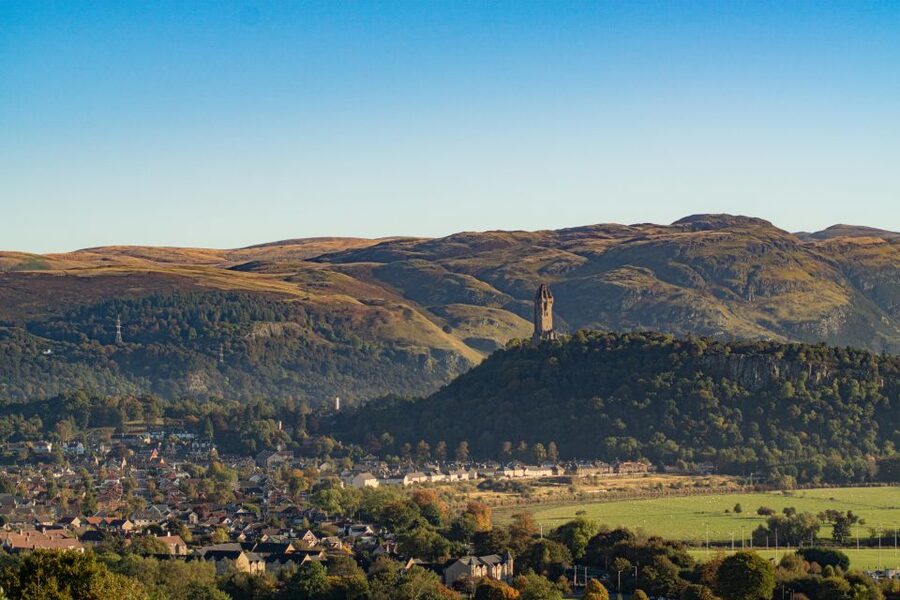
One of the first important streets is King Street. Here, the guide connects the buildings around you with famous poets and the people who shaped Stirling’s public life.
This is where a local guide can add real value. Old façades can look attractive without telling you much. The point of the stop is to understand why a particular street mattered, which buildings carried authority, and how Stirling’s cultural life developed alongside its political role.
You will encounter several notable civic sites during the route, including the Tollbooth and the John Cowane Hospital. These places help move the story beyond kings and battles. They show the town as a working community with systems for trade, government, charity, and public order.
The name John Cowane Hospital can sound like a medical building to modern ears, but the tour places it within Stirling’s older civic and charitable world. Listen for how the guide explains its purpose and connection to the town. With only 90 minutes, the explanation may be brief, but it gives you another piece of the city’s social story.
I also like that the route includes poets. Stirling is not presented only as a fortress or royal stage. The city’s identity includes people who wrote about Scotland, its politics, and its culture.
The medieval wall and the climb to the highest part
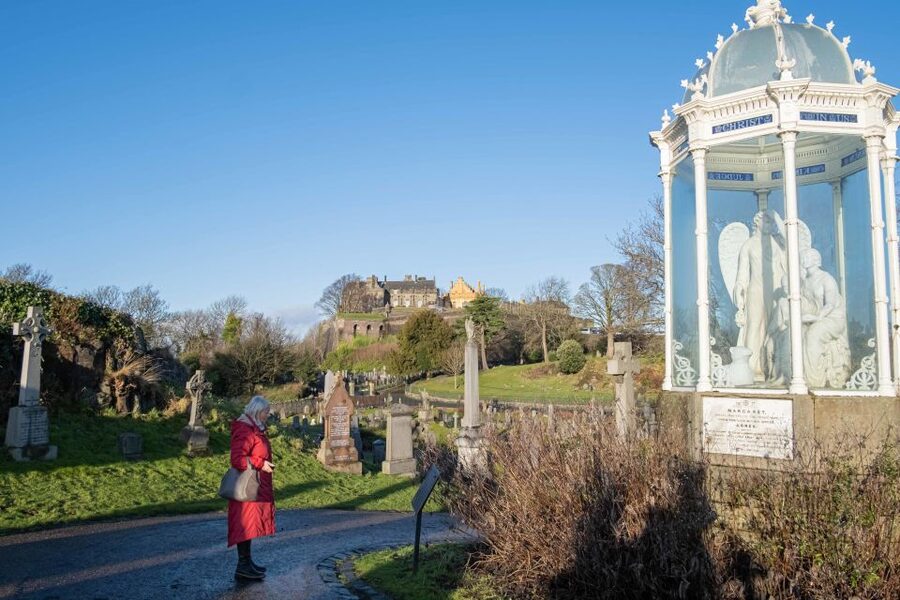
The medieval wall is one of the clearest reminders that Stirling was built for protection. Scotland had 11 fortified cities over its history, and Stirling was one of them. Walking beside or along this defensive setting helps you see why the city’s position mattered.
The route then goes up toward the highest part of the old town. This was where the medieval market was held, and it was also the place where public executions took place. That pairing says a lot about medieval and early modern public life: commerce, spectacle, punishment, and authority shared the same urban space.
The high point is also where the city’s power becomes easier to understand. From above, Stirling’s position between different parts of Scotland makes more sense. The tour materials identify the city as the Door to the Highlands, and this section explains why that nickname is more than travel-brochure language.
You should expect some uphill walking because the route reaches the highest part of the city. The experience is listed as wheelchair accessible, but anyone with mobility concerns should still confirm how the day’s route will be adapted. The guide may adjust the path in poor weather, and the tour operates in all weather except extreme conditions.
Rain is a real possibility in Stirling. Wear shoes with a good grip and bring waterproof clothing. The route may be changed to limit exposure to rain or snow, but this remains an outdoor walking tour.
More Walking Tours in Scotland
- Inverness: Guided Walking Tour with a Local
★ 4.7 · 430 reviews - Edinburgh: Loch Ness, Scenic Walk, Glencoe & Whisky Day Tour
★ 4.9 · 393 reviews - St Andrews: Top Sights Guided Walking Tour
★ 4.7 · 223 reviews - Glasgow: Glencoe, Scenic Walk & Scottish Highlands Tour
★ 4.9 · 121 reviews
The Old Jail and Britain’s harshest prison conditions
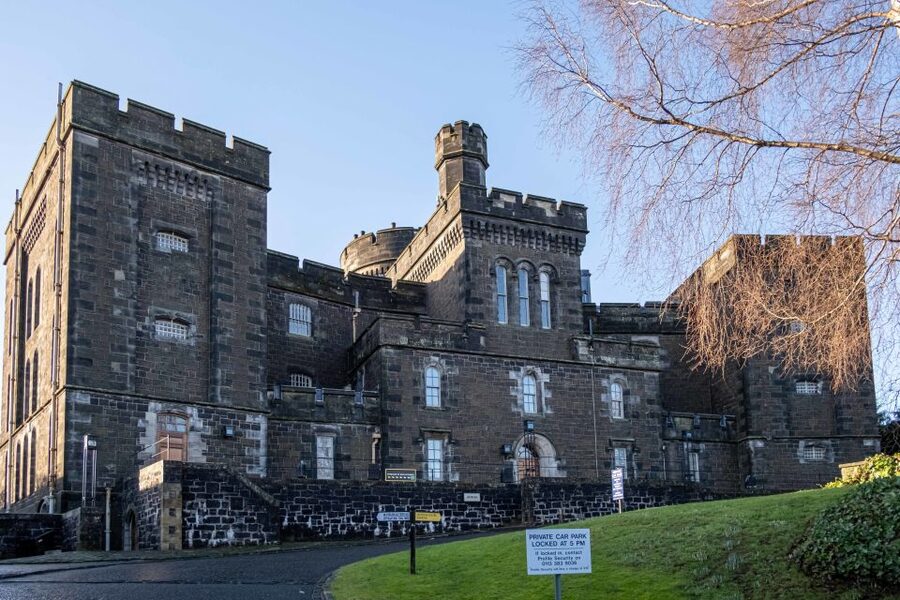
The Old Jail gives the tour its darkest stop. In the 19th century, Stirling had what was described as the worst jail in Great Britain, a wet and unpleasant place packed with prisoners.
The population included men, women, and children. Some were minor offenders, some were murderers, some were waiting for trial, and others were debtors. That mixture makes the jail more than an old building to glance at. It shows how badly different kinds of prisoners could be treated when the justice system offered little separation or protection.
I value this part of the route because it balances Stirling’s royal monuments. A city can celebrate coronations and famous rulers while ordinary people face hunger, debt, punishment, and confinement. The jail brings that uncomfortable contrast into view.
Do not expect a long prison tour with time to examine every room. The entire walking experience lasts 1.5 hours and includes many stops. Instead, you will get the jail’s place in Stirling’s story and a clear picture of the conditions that made it notorious.
This stop may be especially useful if you are interested in social history. It is less about grand architecture and more about what happened to people who had little power. The presence of children and debtors is a sharp reminder that imprisonment was not limited to violent crime.
Mercat Cross, the Tollbooth, and public authority
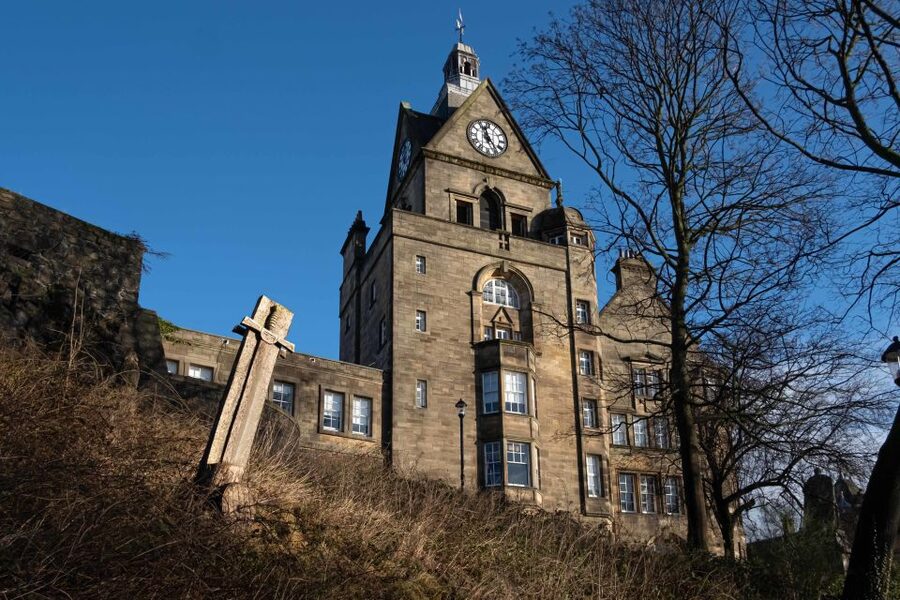
Mercat Cross was the medieval market area, and it also connects with the public execution ground described on the route. Markets were not merely places to buy goods. They were where news spread, officials made announcements, and the town displayed its authority.
The Tollbooth adds another layer. Its name points to the business of collecting tolls, but the building also belongs to the wider story of local government and public order. As you move between these sites, the tour shows how Stirling operated as a town, not only as a royal stronghold.
These are easy places to rush past if you are exploring independently. A guide helps you connect the street layout with the social rules that governed people’s lives. You may also find that the most memorable details are not the grandest ones, but the small explanations about who used a building and why.
The route’s focus on public spaces makes the experience practical for first-time visitors. You get your bearings in the old center while learning how the city developed. Afterward, you can return to any stop that deserves more time.
Holy Rude Church and the coronation of James VI
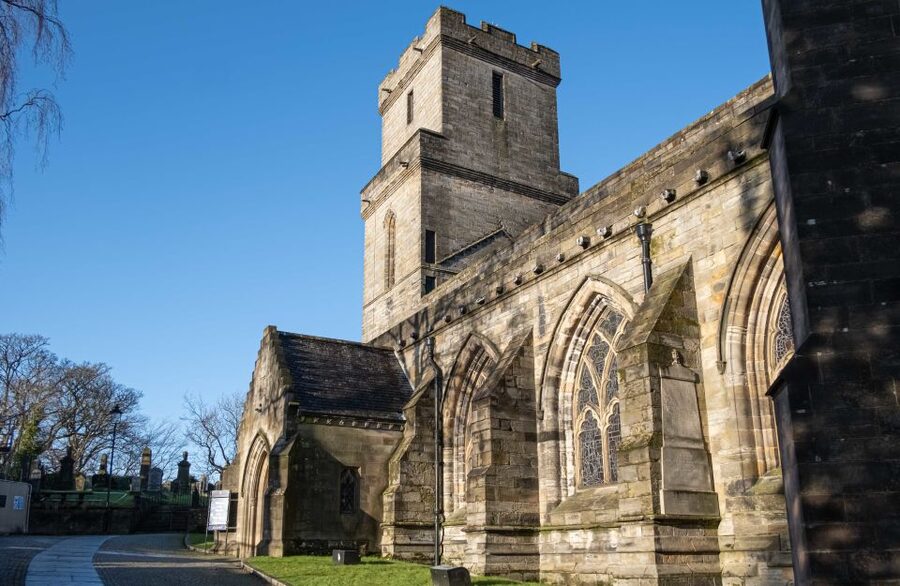
The Church of the Holy Rude is the tour’s great religious and royal highlight. King James VI, the son of Mary Stuart, was crowned here.
The church has a rare distinction. Alongside Westminster Abbey, it is one of the only churches still in use in Great Britain to have hosted such a coronation. That fact gives the building unusual weight. It is not simply an old church with attractive stonework. It remains part of a living religious setting while carrying a major event from Scotland’s royal past.
The Holy Rude also helps explain Stirling’s importance during periods of political change. Royal ceremonies were not held randomly. A coronation in Stirling reinforced the city’s place in Scotland’s political world.
The tour includes the church among several outdoor and historic sites. You should not assume that the 90-minute walk includes a lengthy interior visit or a full church service-style explanation. The guide will place Holy Rude within the route and explain why it matters, but you may want extra time afterward if you wish to study the building more carefully.
I like this stop because it ties together several themes from the walk: monarchy, religion, national identity, and the ongoing life of an old city. It also gives the route a strong finish after the more severe story of the jail.
The Old Cemetery, Pyramid Star, and quieter details
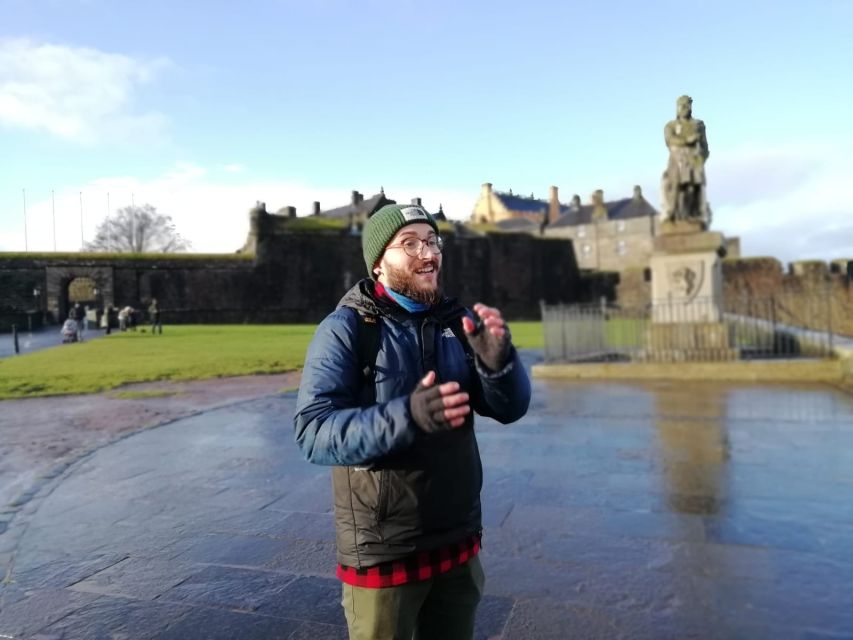
The Old Cemetery and Pyramid Star add less familiar stops to the route. These places show that Stirling’s historic center is not only a line of famous landmarks.
An old cemetery can reveal how a town remembered its leaders, mourned its dead, and organized public space. The Pyramid Star brings another distinctive feature into the walk. The supplied details do not specify its full story, so listen to the guide’s explanation rather than treating it as a quick photo stop.
This is one reason a Spanish-speaking local guide matters. Names and symbols often lose their meaning when you only read a sign in passing. A live explanation lets you ask what a place represents and how it fits with the better-known castle, church, and walls.
The tour provider is Scotland City Tours, also known as Somos Escocia. The guides named in the feedback include Ara and Lorena. Ara was praised for explaining the area well and adding anecdotes in an entertaining way, while Lorena was described as attentive. Those comments point to the kind of guiding style you may get: historical information mixed with local stories rather than a dry list of dates.
One practical note is worth keeping in mind. Antonio Jacinto Martínez praised the guide’s attitude but felt the Spanish was a little fast. If you need more time to process spoken Spanish, say so early and ask the guide to slow down or repeat key points.
What $24 gets you

At $24 per person, this is a reasonably priced way to get a structured introduction to Stirling. The fee includes a local Spanish-speaking guide, and the experience covers a substantial number of historic sites in only 90 minutes.
The value is strongest if you want orientation and context. You are paying for a guided route through a city where the meaning of the buildings is easy to miss. You are not paying for hotel transport, an audio guide, or a long attraction-by-attraction admission program.
That distinction matters. If you want to spend an hour inside every major site, this walk will feel too short. If you want a compact history lesson before exploring on your own, the price makes more sense.
The small group also improves the value. A limit of 10 participants gives you a better chance to hear the guide and ask questions, especially in narrow streets or near busy public areas. A large group might cost less per person, but it can make a Spanish explanation harder to follow.
Free cancellation up to 24 hours before the start gives you some flexibility, and you can reserve now and pay later. Those terms are helpful if your Scotland plans are still changing, but the main value remains the route and the guide.
Who should book this Spanish walking tour?
I would recommend it to Spanish-speaking visitors who want to understand Stirling before exploring the city independently. It is also a good fit if you prefer a small group, enjoy stories about politics and ordinary life, and want to see more than the headline attractions.
The tour suits first-time visitors especially well. You will cover King Street, the medieval wall, Mercat Cross, the Old Jail, the Tollbooth, John Cowane Hospital, the Old Cemetery, Pyramid Star, and Holy Rude Church. That gives you a useful map of the old center.
History fans should appreciate the range of subjects. The walk moves from the wars of independence to royal ceremony, from poetry to punishment, and from medieval markets to 19th-century prison conditions.
You may want a different option if you dislike walking in poor weather or need long, quiet stops at each building. The route runs in all weather except extreme conditions, and its short duration means the guide must keep things moving.
It is also worth considering your Spanish listening level. The pace may be brisk, and the stories are delivered live rather than through an audio guide. People who understand conversational Spanish should be comfortable, while beginners may need to ask for repetition.
Final verdict: a smart first look at Stirling
Book this tour if you want Stirling explained in Spanish, in a small group, for a fair price. Its strength is the way it connects the city’s defensive walls, royal church, civic buildings, prison, market, and cemetery into one clear story.
The experience is not designed for a slow, detailed inspection of every attraction. It is a focused 90-minute walk that helps you understand why Stirling mattered and where to spend more time afterward.
Arrive early at Caffe Nero, wear weatherproof clothing, and tell the guide if you need a slower speaking pace. With those expectations in place, this is a useful and enjoyable introduction to Scotland’s former seat of power.
FAQ
How long is the Stirling historical walking tour?
The tour lasts 1.5 hours.
What language is the tour conducted in?
The live tour guide speaks Spanish.
How much does the tour cost?
The listed price is $24 per person.
Where is the meeting point?
The meeting point is inside Caffe Nero, where staff will check you in.
How early should I arrive?
You should arrive at least 15 minutes before the tour starts.
Is hotel pickup included?
No. Hotel pickup and drop-off are not included.
Is an audio guide provided?
No. The experience includes a live local guide, but not an audio guide.
Is the tour wheelchair accessible?
Yes, the tour is listed as wheelchair accessible.
Does the tour operate in bad weather?
Yes. The tour takes place in all weather except extreme conditions, and the route may be adjusted to reduce exposure to rain or snow.
Just added in Scotland
- From Edinburgh: Best of Scotland Small-Group Day Tour★ 4.7 · 61 reviews
- Stornoway: Private Tour Isle of Lewis★ 5.0 · 2 reviews
- Stirling: Daily Guided Walking Tour (11am & 2pm)★ 4.7 · 66 reviews
- Stirling: Private Old Town & Castle Walking Tour★ 4.9 · 17 reviews
- Stirling Castle: Skip-the-Line Guided Tour in Spanish★ 4.8 · 19 reviews
- Edinburgh: Stirling, Whisky & St Andrews Tour in Italian★ 3.9 · 14 reviews
- From Glasgow: Standing Stones, Castles & Highlands Tour★ 4.8 · 44 reviews
- St. Andrews Spectral Soirée: Ghostly Echoes of History★ 5.0 · 1 review
Walking Tours, compared.

Magical London: Harry Potter Guided Walking Tour
Read our review →

University and City Walking Tour with Alumni Guide
Read our review →
Harry Potter Movies Walking Tour (Kids Go Free)
Read our review →
The Great British Rock and Roll Music Walking Tour
Read our review →
Jack the Ripper Walking Tour – Ripper Vision Tours
Read our review →
Other lists this tour turns up in