
REVIEW · WORKSHOPS
Woolf & Dickens: London Literary Tour & Writing Workshop
London rewards a slower look. This 90-minute literary walk turns Waterloo Bridge, Somerset House, St Mary Le Strand, and Doctor Johnson’s House into prompts for writing, not just places to photograph. I like the thoughtful mix of readings and city views, and I like that Joseph, an award-winning novelist with a PhD in Creative Writing, makes room for beginners as well as experienced writers.
The private format should feel personal, and the writing exercises give the tour a clear purpose beyond sightseeing. The main drawback is time: four literary stops and several writing activities in 1.5 hours can feel brisk, especially if you prefer long historical talks or unhurried time inside each place.
In This Review
- Key points to know before booking
- A literary walk with a writing task at every turn
- Starting near Waterloo Bridge and Somerset House
- Somerset House and the value of paying attention
- St Mary Le Strand, T.S. Eliot, and writing with time
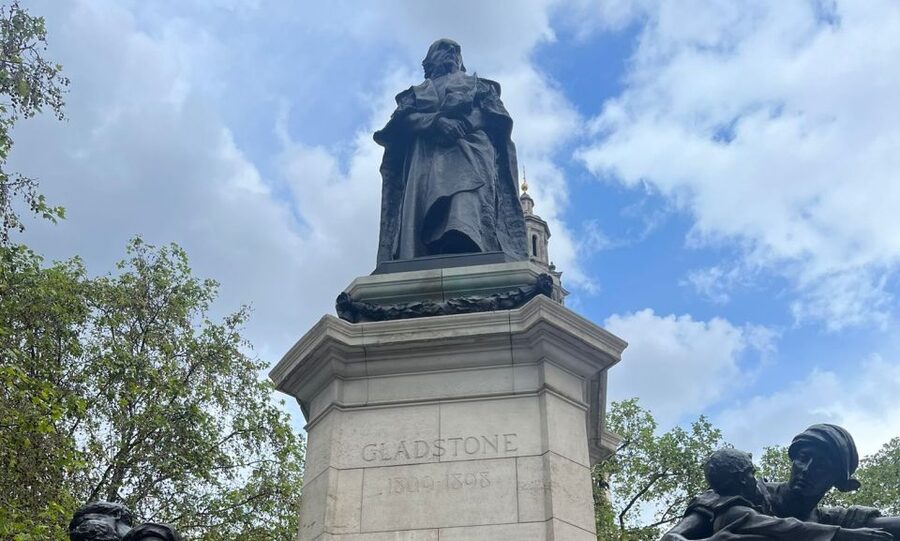
- Gladstone, facts, and the problem of political truth
- Doctor Johnson’s House and the shape of language
- What the writing workshop feels like in practice
- Is $101 good value for 90 minutes?
- Who will enjoy this London experience most?
- Practical details that shape the experience
- Should you book Woolf and Dickens?
- FAQ
- How long does the Woolf and Dickens literary tour last?
- Where does the tour meet?
- Is the experience conducted in English?
- Is the tour wheelchair accessible?
- Do I need to buy entry tickets?
- What should I bring?
- Can I cancel the booking?
Key points to know before booking
- Waterloo Bridge becomes a writing prompt: Virginia Woolf’s reflections help you look at the river, skyline, memory, and daily city life in a new way.
- You write during the walk: This is an active workshop with biographical sketches, ekphrasis, lists of facts, and other guided exercises.
- Somerset House offers a mindful pause: You use the setting for focused observation rather than simply passing through.
- St Mary Le Strand adds art and time: T.S. Eliot’s ideas about history lead into a response to the church’s grand interior.
- Politics and language enter the discussion: The statue of Gladstone and Samuel Johnson’s dictionary prompt questions about truth, power, religion, and identity.
- Bring simple supplies: Pack a pen, notebook, water, umbrella, and internet access.
A literary walk with a writing task at every turn
This is not a standard London walk where you listen quietly while someone points out plaques and buildings. The guide uses literature as a set of doors into your own thoughts.
You might hear a passage from Virginia Woolf, consider an idea from T.S. Eliot, read from Samuel Johnson’s dictionary, and then write your own response. The point is not to prove that you know the writers. The point is to notice how their words change the way you see the street in front of you.
That makes the experience suitable for several kinds of people. If you write often, you get prompts that can shake loose a new idea. If you are new to writing, the structure gives you somewhere to begin. You are not expected to produce polished work, and the tone is designed to be kind and inclusive.
The strongest praise for the experience centers on Joseph’s approach. One detailed account describes him as deeply read and passionate about literature and writing, while also creating a welcoming and safe place to learn. That combination matters. A writing exercise can feel exposed when you are asked to share ideas in a group, so a gentle guide is more important here than a flashy performance.
The private-group format also helps. You can ask questions, take a prompt in your own direction, and work at your own level. The activity is conducted in English, and no entry tickets are needed.
A few more options to weigh up in London
- London: The London Eye Entry Ticket
★ 4.6 · 35,875 reviews - From London: Harry Potter Warner Bros Studio Tour
★ 4.7 · 26,588 reviews - London: Westminster to Greenwich River Thames Cruise
★ 4.5 · 22,836 reviews
Starting near Waterloo Bridge and Somerset House
The meeting point is at the north end of Waterloo Bridge. Look for a slope on the right that goes behind Somerset House. That is the place to meet, so give yourself enough time to find it rather than arriving at the last minute with your notebook still in your bag.
The opening section uses the view from Waterloo Bridge to consider Virginia Woolf’s way of blending past and present. Her reflections are especially useful here because a bridge gives you a city view that is both immediate and layered. You see the river and buildings in front of you, while the writing asks you to think about memory, personal experience, and the passage of time.
The exercise is a biographical sketch inspired by the view. That does not mean you need to write a formal life story. You may instead connect the scene with a person, place, or moment from your own past.
I like this as an opening activity because it moves from public London to private memory without forcing a hard transition. You begin with a famous setting, then make it your own. It also gives you a quick sense of the workshop’s method: a literary passage, a physical place, and a short piece of writing built from both.
The limitation is practical. A bridge is an active urban setting, and the experience does not promise a long, quiet writing period. If you need silence to write, the sounds and movement around the meeting area may take some adjustment.
Somerset House and the value of paying attention
At Somerset House, the group practices a mindful writing experiment. The exercise encourages close attention to the setting and asks you to slow down before putting words on the page.
This can be surprisingly useful. Many writing problems begin with vague observation. You know a place is attractive, old, grand, or busy, but those broad labels do not give you much to work with. A mindful exercise pushes you toward smaller details and sharper reactions.
The setting also supports the tour’s larger idea that London can be read as a text. Its buildings carry layers of use and meaning, but your own response matters too. The workshop does not treat literature as a museum piece. It asks how art and place affect you now.
You should expect prompts rather than a lecture on Somerset House. The focus is on using the surroundings as material. That makes this stop valuable for anyone who wants practical help with observation, description, or personal reflection.
You will want a notebook that is easy to use while standing or moving between places. A small notebook and a pen are more useful than a phone for this kind of exercise, though internet access is also listed among the items to bring. Water is sensible, and an umbrella is worth carrying in London’s uncertain weather.
St Mary Le Strand, T.S. Eliot, and writing with time
The route continues to St Mary Le Strand, where T.S. Eliot’s study of time and history becomes part of the discussion. The church’s interior then provides the subject for an ekphrasis, a piece of writing prompted by a work of art or a physical space.
This is one of the clearest links between the tour’s literary content and its practical writing work. You are not just hearing what Eliot thought about time. You are asked to respond to a real interior, using what you see as the starting point for your own language.
A church is a good place for this exercise because it contains strong visual material. Grand interiors can tempt you into easy descriptions, but the prompt can help you move beyond familiar words such as beautiful or historic. You might pay attention to shape, light, order, scale, or your emotional response.
The reference to a timeline at Aldwych adds another layer. Eliot’s ideas about time and history are echoed by the visible sequence of events around the area. This gives the stop an intellectual thread without turning it into a formal philosophy class.
The church visit also brings a possible question about access and pace. The activity is wheelchair accessible, but the information provided does not give detailed access notes for every surface or interior feature. If you need specific arrangements, contact the provider before booking.
For you, the real benefit is practice. Ekphrasis is a useful tool for fiction, memoir, poetry, and even travel writing because it teaches you to translate visual impressions into precise words. You leave the church with more than a building description. You have tried a method you can use elsewhere.
A different kind of day out entirely:
- Magical London: Harry Potter Guided Walking Tour
★ 4.7 · 22,044 reviews - London: Madame Tussauds London
★ 4.6 · 20,915 reviews - London: Warner Bros. Studio Tour with Transfers
★ 4.7 · 17,586 reviews - London: Tower Bridge Entry Ticket
★ 4.7 · 15,560 reviews
Gladstone, facts, and the problem of political truth
The statue of William Gladstone shifts the tone from personal observation to politics and public memory. The group considers how truth and history change with perspective, then writes a list of facts that blends personal history with the surrounding environment.
A list may sound simple, but it can be a strong writing form. It gives you a clear frame and lets contradictions sit side by side. A factual statement about a statue or street can sit next to a fact about your own life. The contrast can reveal what you choose to notice and what you leave out.
This exercise also asks you to think about who gets remembered and how public figures are presented. Gladstone is not simply an object to identify. His statue becomes a prompt for asking how politics, biography, and historical judgment interact.
I value this part because it gives the tour a little edge. The writing is not only about beauty, atmosphere, or literary admiration. It also asks you to consider power and the way official stories are formed.
Do not expect a complete study of Gladstone or British politics in this short session. The stop works as a starting point for thought, not a full political history lesson. If you want detailed facts about the statue, this is probably not the right kind of tour. If you want a prompt that helps you examine public life through your own point of view, it earns its place on the route.
Doctor Johnson’s House and the shape of language
At Doctor Johnson’s House, the focus turns to language and the structures that help form us. The group reads from Johnson’s dictionary and considers how religion, politics, art, and language influence identity.
Samuel Johnson’s dictionary offers a particularly good writing prompt because definitions are never as neutral as they first appear. A word can carry humor, judgment, history, and personal feeling. Looking at an old dictionary can lead you to ask how meaning changes, who gets to define a term, and what your own definitions reveal.
This final stop brings several strands of the workshop together. Woolf opens a door into memory. Eliot raises questions about time. Gladstone leads toward politics and public truth. Johnson brings the group back to words, the tools used to describe all of those subjects.
The visit is not presented as a long house tour with a detailed account of every room. Instead, Doctor Johnson’s House serves the writing workshop. That is a strength if you want a focused literary experience. It may disappoint you if your main goal is a broad guide to the building.
The reading from Johnson’s dictionary is described as delightful, which suggests a lighter note after the more serious discussion of history and politics. A little humor helps. Literary study can become solemn very quickly, and Johnson’s language gives the group a chance to enjoy the oddness and character of words.
What the writing workshop feels like in practice
The exercises are designed for all levels, from a first-time writer to someone who has been working on novels for years. That promise is supported by the way the prompts are described. They leave room for you to follow your own interests instead of demanding one correct response.
You may write a short biographical sketch, a close description of an interior, or a list of facts. These are manageable forms for a 90-minute session. You are not being asked to complete a story or produce finished literary work in a single afternoon.
The guide also uses readings and questions to keep the activity moving. That mix matters because too much writing can feel like a class assignment, while too much explanation can turn the workshop into a passive talk. Here, the goal is a steady rhythm between listening, looking, thinking, and writing.
The atmosphere is meant to be inclusive. Joseph’s style, as described by a participant, leaves room for making each prompt your own. That is the quality I would value most if I were choosing this experience. You need enough direction to avoid staring at a blank page, but enough freedom to avoid writing something that feels forced.
You should still be honest about your preferences. If you do not enjoy writing, this will not become a sightseeing tour simply because it takes place outdoors. You will be asked to take part. If you enjoy books but want only literary facts, you may find the exercises more demanding than expected.
Is $101 good value for 90 minutes?
At $101 per person, this is not a budget walking tour. The price makes more sense when you treat it as a private writing workshop with a London route, rather than as a basic city walk.
You are paying for the guide’s time, literary preparation, live instruction, and tailored prompts. The experience is led by an award-winning novelist with a PhD in Creative Writing, and the group is private. Those details help explain the cost.
There are no entry tickets to add, which keeps the final price easier to understand. You also receive a compact itinerary that connects several well-known writers and ideas without requiring a full day.
Still, the value depends heavily on your interest in writing. If you will use the exercises and appreciate personal guidance, the price may feel fair. If you mainly want landmarks, photographs, and historical facts, a conventional walking tour will probably offer more sightseeing for less money.
The short duration is both an advantage and a limit. You can fit it into a busy London schedule, but you should not expect an extensive treatment of Woolf, Dickens, Eliot, Johnson, and Gladstone. The experience gives you selected prompts, not a complete course in English literature.
Who will enjoy this London experience most?
I would recommend it most strongly to:
- People who write fiction, memoir, poetry, or essays
- Beginners who want a supportive way to start writing
- Readers who like connecting books with real places
- Solo participants who want a focused, thoughtful activity
- Private groups looking for something quieter and more unusual than a standard walk
- Teachers, students, or book-club members seeking useful writing exercises
It may be less suitable if you want a long list of London facts, a pub stop, or a relaxed route with no participation. The workshop asks you to bring attention and a willingness to put words on paper.
The private-group format could also work well for friends or family members with different writing levels. The prompts are open enough for each person to respond in a different way. You do not need to compete or produce the best piece in the group.
Practical details that shape the experience
The activity lasts 1.5 hours and is conducted in English with a live guide. It is wheelchair accessible, and no entry tickets are needed.
Bring a pen, notebook, and water. An umbrella is recommended in case of rain, and internet access is listed as an item to bring. Since the route includes several stops and writing exercises, comfortable clothing and a notebook you can carry easily will make participation simpler.
The meeting point is specific: at the north end of Waterloo Bridge, find the slope on the right that runs behind Somerset House. Check the available starting times when booking.
You can cancel up to 24 hours in advance for a full refund, and you can reserve now while paying later. Those policies help if your London schedule is still changing, but the main decision should remain the content. Book this because you want a literary writing session, not just because the cancellation terms are flexible.
Should you book Woolf and Dickens?
Book it if you want London to act as a prompt for your own writing. The best features are the active exercises, Joseph’s welcoming teaching style, the private format, and the way the route connects Woolf, Eliot, Gladstone, and Johnson through memory, time, politics, and language.
Skip it if you prefer a conventional sightseeing walk or need a long, detailed lecture about each writer and building. Ninety minutes is enough for a stimulating introduction, but not enough for an exhaustive literary tour.
For the right reader, $101 buys more than a short walk. You get a guided way to look at familiar London places, plus writing tools you can carry into your next notebook session.
FAQ
How long does the Woolf and Dickens literary tour last?
The experience lasts 1.5 hours.
Where does the tour meet?
It meets at the north end of Waterloo Bridge, at the slope on the right that goes behind Somerset House.
Is the experience conducted in English?
Yes. The live tour guide and workshop are conducted in English.
Is the tour wheelchair accessible?
Yes, the activity is listed as wheelchair accessible.
Do I need to buy entry tickets?
No. The guided tour and writing workshop do not require entry tickets.
What should I bring?
Bring a pen, notebook, water, and internet access. An umbrella is also recommended in case of rain.
Can I cancel the booking?
Yes. You can cancel up to 24 hours in advance for a full refund. You can also reserve now and pay later.
Just added in London
- The Best of British Cooking Class & Dining Experience★ 5.0 · 1 review
- London: Live Comedy Show at Big Belly Bar and Comedy Club★ 4.5 · 80 reviews
- London: British Museum Highlights Guided Small Group Tour★ 4.9 · 113 reviews
- The Beatles London Walking Tour★ 4.2 · 147 reviews
- The Best Highlights of London Walking Tour & Boat Cruise★ 5.0 · 1 review
- The Authentic Walking Tour with Indian Tasting Meal★ 4.8 · 4 reviews
- Iconic London: Bard, Beatles, Bond & Baker Street★ 4.9 · 15 reviews
- London: Tate Britain Official Discovery Tour★ 4.7 · 7 reviews
Workshops, compared.

Traditional English Scone Making and Tea Workshop
Read our review →
Chocolate Bar Making Workshop at York Cocoa Works
Read our review →
East End Street Art Tour and Spray Painting Workshop
Read our review →



Other lists this tour turns up in