
REVIEW · BIRMINGHAM TOURS
Birmingham: Victorian Canals and Modern-Day Birmingham Tour
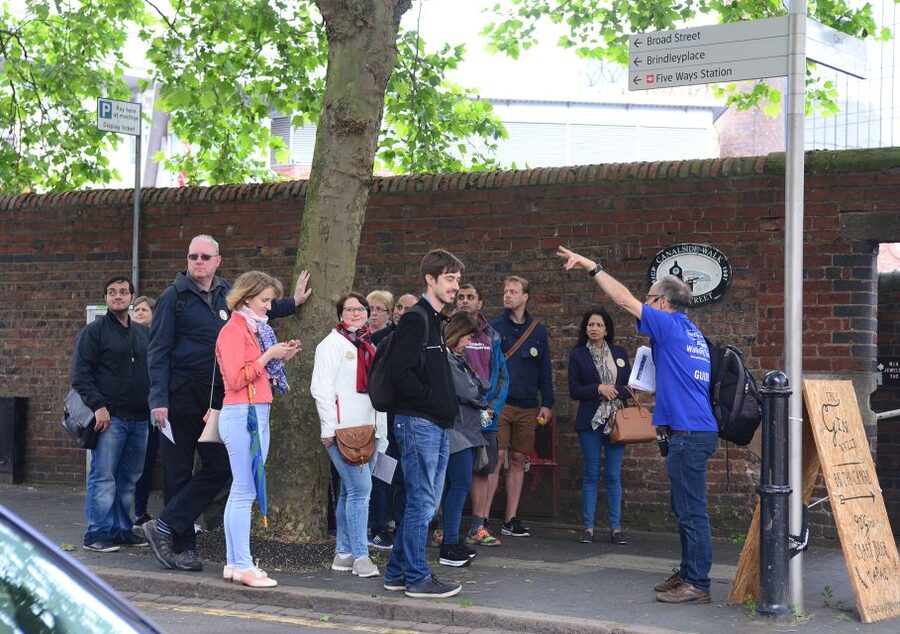
Birmingham makes more sense on foot. This two-hour walk links the city’s canals, public squares, public art, and grand civic buildings, showing how an industrial town became a modern cultural center. I especially like the way the tour connects old waterways with new city life, and the way guides explain buildings instead of simply pointing at them. The main drawback is exposure to weather: the route covers about 3 kilometers, and cold wind or rain can make the open canal sections less comfortable.
I also like the loaned audio receiver, which helps you follow the guide above traffic and city noise. Jonathan is often praised for his humor and clear explanations, while Michael Harrison brings the perspective of a former architecture lecturer. At $20 per person, this is a sensible introduction to central Birmingham, though it is best for people who want a walking tour with history and architecture rather than a quick list of photo stops.
In This Review
- Key points to know before you go
- Start at the Library of Birmingham in Centenary Square
- Symphony Hall and the International Convention Centre
- The canal opening that changed Birmingham
- Brindleyplace and Birmingham’s industrial afterlife
- The Civic Gospel and the Victorian city
- Four squares and many architectural voices
- What the two-hour pace feels like
- Is $20 good value?
- Who should book this Birmingham walk?
- Should you book the Victorian Canals and Modern-Day Birmingham Tour?
- FAQ
- Where does the tour start?
- Where does the tour finish?
- How long does the tour last?
- How far do you walk?
- What language is the tour in?
- Is an audio receiver provided?
- Should I bring headphones?
- What is included in the price?
Key points to know before you go
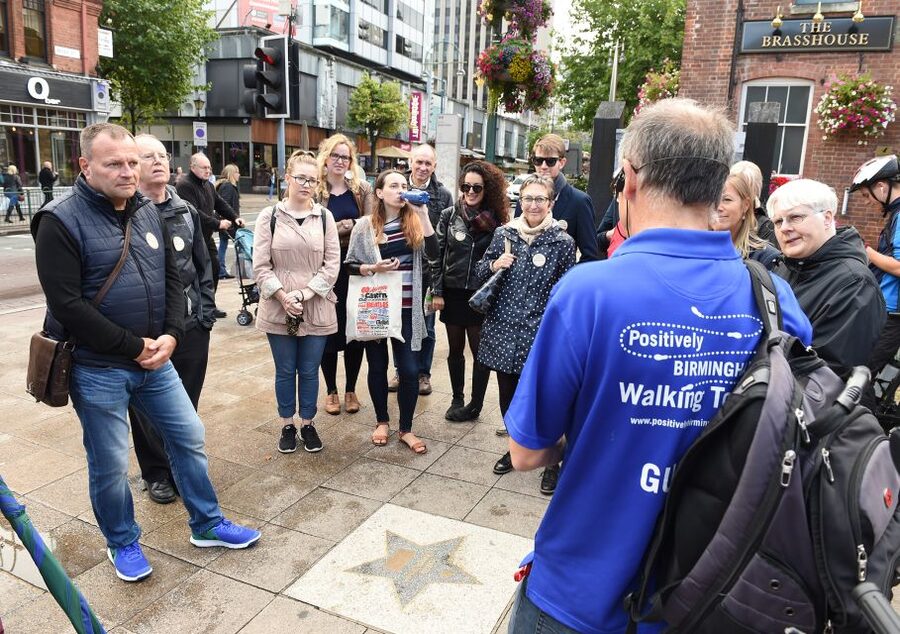
- The Library of Birmingham is both meeting point and orientation stop: Begin at the front entrance in Centenary Square, usually marked by a small pop-up stand.
- The canal story explains Birmingham’s rise: You learn why James Brindley’s canal opening in the 1770s changed the town’s fortunes.
- Modern and Victorian Birmingham share the route: Brindleyplace, Symphony Hall, the International Convention Centre, and older civic buildings all fit into one compact walk.
- Audio equipment makes a real difference: A receiver is supplied for the live commentary, and you should bring headphones.
- The route is short but not effortless: Three kilometers over two hours means frequent stops, but you should still wear comfortable shoes.
- The guides are the main strength: Jonathan is known for lively storytelling, while Michael Harrison offers strong architectural insight.
Start at the Library of Birmingham in Centenary Square
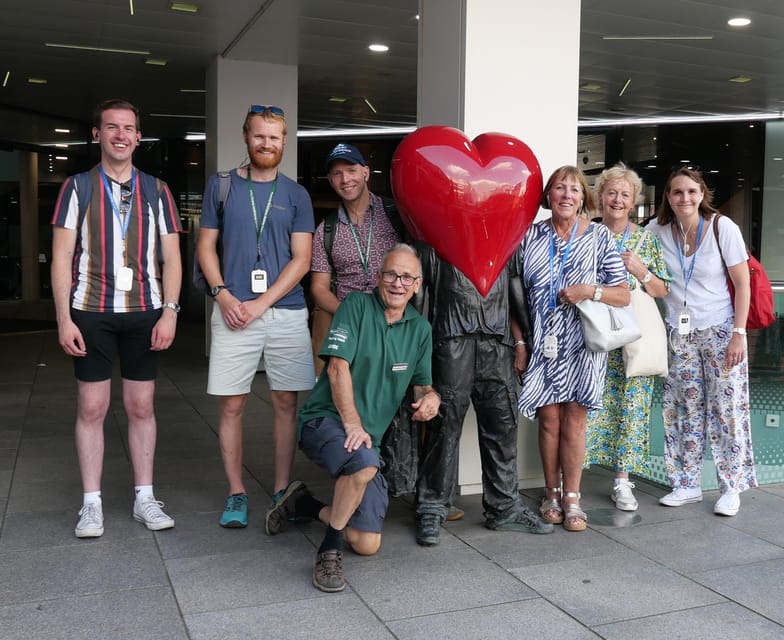
The tour begins at the front entrance of the Library of Birmingham, an easy central landmark in Centenary Square. Look for the usual pop-up stand near the entrance, then get ready for a walk that starts with modern Birmingham before reaching back into the city’s industrial past.
Centenary Square is a useful first lesson because it places public art, civic buildings, and recent redevelopment side by side. The square’s artwork offers early clues about Birmingham’s story, including its role in the Industrial Revolution and its long connection with manufacturing, trade, education, and the arts.
The Library itself gives the opening a modern feel. Around you, the architecture makes clear that Birmingham is not trying to preserve itself as a museum piece. The city has repeatedly rebuilt and repurposed its center, and the guide uses the square to explain how old ideas and new buildings share the same space.
I find this a better starting point than a tour that begins with a single old building. You get a broad sense of Birmingham first, then the details have somewhere to fit. If you have just arrived by train or are still learning the city center, this opening should help you get your bearings quickly.
A few more options to weigh up in Birmingham
- Birmingham: Cadbury World Entry Ticket
★ 4.4 · 230 reviews - Birmingham: Slogging Gangs Guided Walking Tour
★ 4.2 · 216 reviews - From Birmingham: Cotswolds Full-Day Tour
★ 4.7 · 215 reviews
Symphony Hall and the International Convention Centre
From the library, the walk heads through the International Convention Centre. This part of the route shows Birmingham’s modern civic and cultural ambitions, with conference facilities, performance spaces, and public areas built for a city that now welcomes business, music, education, and the arts.
The main highlight here is Symphony Hall, widely known for its excellent concert-hall acoustics. The tour does not simply treat it as an attractive modern building. You get a sense of why the hall matters and how it fits into Birmingham’s wider effort to make the center a place for serious music and public culture.
This is one of the tour’s useful habits: it gives modern buildings a proper place in the story. A city walk can easily focus only on old brickwork and famous statues, but Birmingham’s present-day identity depends just as much on concert halls, libraries, galleries, and civic projects.
You will not spend the full two hours inside attractions, so do not book this expecting an interior tour of Symphony Hall or the library. The value is in seeing how these places connect, hearing the guide’s explanation, and learning what to return to later.
The canal opening that changed Birmingham
The walk then turns toward Birmingham’s rejuvenated canals. This is where the city’s growth becomes easier to understand.
James Brindley’s canal reached Birmingham in the 1770s, and that connection was hugely important. Canals gave the town a practical way to move goods and materials, helping it take advantage of the industries developing across the West Midlands. The guide explains this change on location, beside the waterways that helped make the city’s expansion possible.
The canal is not presented as a decorative strip of water. It was working infrastructure, tied to Birmingham’s factories, workshops, trade, and growing population. That context gives the later redevelopment more meaning. You can see why a waterway that once served industry could later become a public space for restaurants, offices, events, and city walks.
The rejuvenated canals also provide a welcome change from busy streets. You move at a calmer pace, with time to look at the buildings and ask questions. The supplied audio receiver is especially useful here. The group may spread out along the path, and the receiver lets you hear the guide without crowding around him.
Bring your own headphones, as they are listed among the items to take. The equipment was praised for being easy to use and effective above the noise of the city. That is a small practical detail, but it can make the difference between catching every explanation and missing half of it.
Brindleyplace and Birmingham’s industrial afterlife
Brindleyplace shows how the canals have been given new uses. The area brings together water, modern buildings, public space, and leisure activity, while still keeping the canal at the center of the scene.
The tour uses this setting to look at both the present and the past. You see how Birmingham has turned former industrial routes into part of everyday city life, but you also hear about the effort and ambition that shaped the Victorian city around them.
This is where the tour’s title earns its keep. It is not only a canal walk, and it is not only a Victorian architecture walk. You keep shifting between the two, which gives you a more accurate picture of Birmingham. The city is made from layers of construction, demolition, reuse, and reinvention.
The canal section may be the most atmospheric part of the route, but it also has the clearest practical weakness. It is outdoors and exposed. One participant described a cold, windy day, while another noted changeable weather. Wear a warm layer and shoes that can handle a steady three-kilometer walk. You can enjoy the route in poor weather, but you will appreciate it more when conditions are kind.
A different kind of day out entirely:
- Birmingham: Winterbourne House and Garden Admission Ticket
★ 4.7 · 199 reviews - From Birmingham: Stonehenge & Bath Day Tour
★ 4.6 · 158 reviews - Birmingham: Guided City Center Walking Tour (10:30am & 2pm)
★ 4.8 · 147 reviews - Alton Towers Resort: Entrance Ticket
★ 4.2 · 96 reviews
The Civic Gospel and the Victorian city
A particularly useful part of the walk looks at Birmingham’s Victorian civic reform. The guide explains the Civic Gospel, a set of ideas linked to the Municipal Revolution and the belief that local government should improve daily life.
The subject becomes much more approachable when tied to specific city development. The emphasis was not just on building impressive public structures. It included education, clean water, and the removal of poor-quality housing. These efforts show how Birmingham’s leaders tried to respond to the problems created by rapid industrial growth.
That is an important balance. Industrial success brought wealth and influence, but it also brought crowded housing, public health problems, and serious pressure on the city. The tour helps you see that Victorian Birmingham was not simply a parade of handsome buildings. It was also a place trying to deal with the costs of becoming a major industrial center.
I value this section because it gives the architecture a human purpose. A civic building is more interesting when you understand what it was meant to provide. The tour also makes clear that urban improvement is not a one-time event. Birmingham has continued changing its public spaces and buildings long after the Victorian period.
Four squares and many architectural voices
The route includes Centenary, Oozells, Victoria, and Chamberlain Squares. Each square helps you read the city in a different way, and together they show how Birmingham’s center has been shaped across several periods.
Centenary Square provides the modern opening. Chamberlain Square brings together major cultural and civic buildings and helps explain the city’s public identity. Victoria Square offers another important central space, while Oozells Square connects the walk to the canal-side redevelopment around Brindleyplace.
You will look at public art as well as buildings. The guide points out how artworks contribute to the meaning of each space, rather than treating them as background decoration. This is helpful if modern art sometimes leaves you wondering what you are meant to notice.
The architectural mix is one of the walk’s strongest features. You see modern designs beside Victorian work, with different materials, shapes, and public uses sharing a fairly small area. The guide’s job is to explain those contrasts without turning the walk into a technical lecture.
Jonathan is particularly effective for visitors who like a lively guide. His humor, energy, and willingness to answer questions helped make the two hours feel shorter for many people. Michael Harrison, a former history of architecture lecturer, offers a different strength, with close attention to design and the city’s development.
The exact guide may vary, so do not book on the assumption that one named person will lead every departure. The consistent advantage is the live commentary and the chance to ask questions as you walk.
What the two-hour pace feels like
Three kilometers in two hours is a comfortable sightseeing pace, not a race. The frequent stops give you time to listen, look up at buildings, take photographs, and ask questions.
You should still expect to be on your feet for most of the experience. This is not a good choice if you want to avoid walking, but it suits you if you prefer a compact route with plenty of explanation.
The audio receiver lets the group spread out rather than forming a tight circle around the guide. That makes the walk easier to follow in busy areas and along the canal. It also means you can look at the building being discussed instead of keeping your eyes fixed on the guide.
The tour returns to the Library of Birmingham, so it is easy to continue sightseeing afterward. You can use the walk as a first introduction, then return to the places that caught your attention. The guide may also point out places to eat and other landmarks worth visiting, which is useful early in a Birmingham stay.
Is $20 good value?
At $20, the tour offers good value if you want context rather than transport. You are paying for two hours of live guiding, an audio receiver, and a tourist guide book, with no separate ticket queue to deal with.
The route covers several parts of central Birmingham that could be visited independently. You could walk from the library to the canal, Brindleyplace, and the main squares without paying for a guide. The difference is that you would need to research the canal’s industrial role, the Civic Gospel, the city’s architectural changes, and the meaning of the public art yourself.
That makes the price fair for first-time visitors, people with limited time, and local residents who have never stopped to examine the city properly. It is also a useful choice for anyone who has passed through Birmingham for conferences or train changes but never explored the center.
The value drops if you want access inside several attractions. This is an outdoor city walk, not a series of admissions. You are buying interpretation, local perspective, and a carefully connected route.
The experience has a rating of 4.7 from 92 reviews, with especially strong praise for the guides, the audio equipment, and the balance of history, art, and modern architecture. That matches what you should expect: the guide is more important than any single stop.
Who should book this Birmingham walk?
I would recommend it to first-time visitors who want a clear introduction without giving up half a day. The route is short enough to fit around other plans, yet broad enough to cover the canal story, Victorian reform, public art, and modern city design.
It also suits people who think Birmingham has little to see beyond shopping, business, or transport connections. The walk makes a strong case for slowing down and looking carefully at the center.
Architecture fans should get plenty from the contrast between historic and modern buildings. It also works for families and mixed-age groups if everyone is comfortable walking for two hours and listening to live commentary.
Local residents can benefit too. One participant who had lived in Birmingham for five years still found new things to notice, while another local pair had been considering a walking tour for years and found the experience worthwhile.
I would be more cautious if you dislike outdoor walking, need a fully sheltered activity, or prefer a tour focused on one narrow subject. The content moves from canals to public health, music venues, public art, architecture, and civic history. That variety is a strength for most people, but it may feel broad if you want only industrial heritage.
Should you book the Victorian Canals and Modern-Day Birmingham Tour?
Book it if you want Birmingham explained as a living city, not just a collection of old buildings. The strongest parts are the canal story, the connection between Victorian reform and modern public spaces, and the guides’ ability to make architecture understandable.
Choose a warmer, calmer day if you can, and bring headphones, comfortable shoes, and a layer for the canal. If your schedule allows only one guided walk in Birmingham, this $20 route gives you a useful first look and leaves you with clear ideas for what to explore next.
FAQ
Where does the tour start?
It starts at the front entrance of the Library of Birmingham in Centenary Square. A pop-up stand usually marks the meeting point.
Where does the tour finish?
The walking tour returns to the Library of Birmingham.
How long does the tour last?
The guided tour lasts two hours.
How far do you walk?
The total walking distance is approximately 3 kilometers.
What language is the tour in?
The live tour guide commentary is in English.
Is an audio receiver provided?
Yes. An audio receiver is loaned to help you hear the live guide commentary above city noise.
Should I bring headphones?
Yes. Headphones are listed as something to bring with you.
What is included in the price?
The price includes the tour guide, a loaned audio receiver, and a tourist guide book.
Just added in Birmingham
- Birmingham: City Center Highlights Private Guided Tour★ 5.0 · 4 reviews
- MATRIX VR – Virtual Reality Gaming Experience Session – 1hr★ 4.9 · 7 reviews
- Haunted Coventry Ghost Walk★ 5.0 · 6 reviews
- Coventry: Godiva’s Cathedral Quarter Guided Walking Tour★ 4.8 · 17 reviews
- Digbeth, Public art and Peaky Film Guided Walking Tour★ 4.7 · 11 reviews
- Birmingham : Must-see Attractions Private Walking Tour★ 5.0 · 3 reviews
- Birmingham: Legoland Discovery Centre Entry Ticket★ 4.1 · 74 reviews
- Birmingham : Private Custom Walking Tour With a Local Guide★ 4.3 · 2 reviews
Birmingham Tours, compared.

Guided City Center Walking Tour (10:30am & 2pm)
Read our review →

Other lists this tour turns up in